Michigan Wildlife Violation Penalties
It's an unfortunate truth that in the excitement and passion of hunting, or sometimes through honest mistakes and oversights, hunters can find themselves on the wrong side of the law. Navigating Michigan's hunting regulations can feel like a labyrinth, and the thought of facing penalties for a wildlife violation is a heavy burden that no one wants. This guide is here to shed light on Michigan's wildlife violation penalties, helping you understand the potential consequences and, more importantly, how to stay clear of them so you can enjoy the woods with peace of mind.
Understanding the Landscape of Michigan Hunting Laws
Michigan, with its diverse landscapes and abundant wildlife, has a comprehensive set of laws designed to protect its natural resources and ensure fair chase for all. These aren't just arbitrary rules; they're in place to manage game populations responsibly, prevent overharvesting, and maintain ethical hunting standards. However, the sheer volume and complexity of these regulations can sometimes be daunting. From specific season dates for different species and zones, to intricate antler point restrictions (APRs) by Michigan Antler Point Restrictions by DMU, or the ever-evolving Michigan Baiting and Feeding Rules, it's a lot to keep track of.
The Role of Conservation Officers
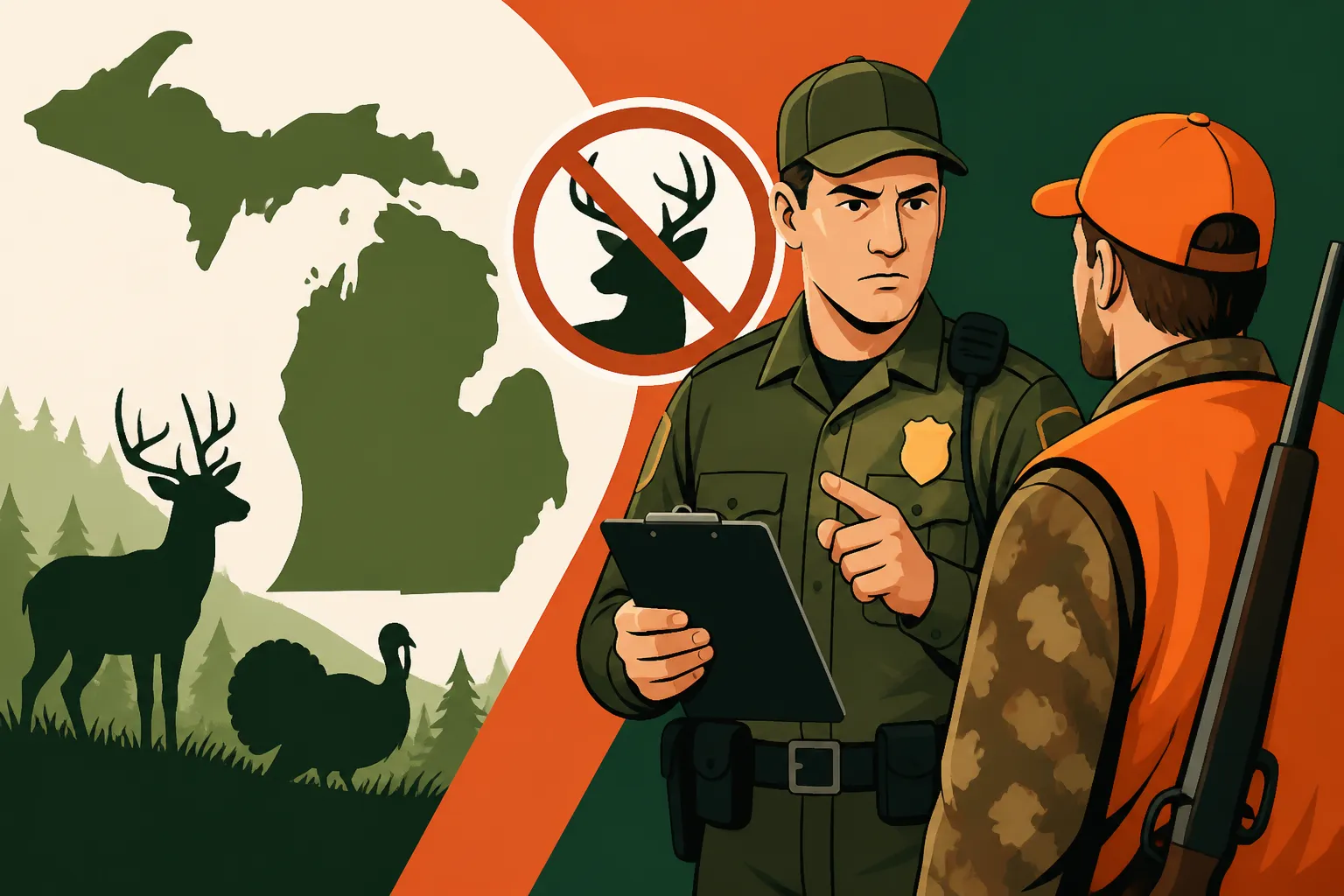
When you're out in the field, whether deep in the Upper Peninsula's big woods or on the edge of a cornfield in the Lower Peninsula, you might encounter a Michigan Department of Natural Resources (DNR) Conservation Officer (CO). These officers are state-certified law enforcement personnel, specifically trained in natural resource protection. Their job isn't just to issue tickets; it's to educate, assist, and enforce wildlife laws to safeguard Michigan's natural heritage. They have the authority to check licenses, inspect game, and enforce all state laws, not just those related to hunting and fishing. It's crucial to always be respectful and cooperative with a CO, as their interactions can greatly influence the outcome of any potential violation. Many seasoned hunters even use tools like GoHunt to keep a digital copy of their license and check local regulations on the fly, making interactions smoother.
Common Types of Violations Hunters Face
Wildlife violations in Michigan can range from minor infractions to serious felonies. It's not always about intentional wrongdoing; sometimes, an honest mistake, a misunderstanding of the law, or simply forgetting a crucial detail can lead to trouble.
- Licensing and Tagging Errors: This is perhaps the most common category. Forgetting to carry your valid Michigan Hunting Licences and What They Cost, not having the correct tag for the species or season, or failing to properly validate and attach your tag immediately after a harvest are all violations. Even something as seemingly small as not properly Reporting a Michigan Harvest in 72 Hours can land you in hot water.
- Method and Season Violations: Using an unlawful firearm in a restricted zone, hunting outside of legal shooting hours, or taking game out of season are significant issues. For instance, knowing the precise Michigan Firearm Deer Season Dates is paramount.
- Antler Point Restrictions (APRs) and Bag Limits: Miscounting antler points, or taking more than the allowed limit for a species, particularly for antlered deer in specific DMUs, can lead to stiff penalties. These rules are complex and vary, making it essential to double-check your specific hunting unit.
- Safety Zone and Trespassing Violations: Discharging a firearm or bow within a Michigan Safety Zone Rules (often 150 yards from an occupied dwelling) is a serious offense. Hunting on private land without explicit permission is trespassing, which carries both wildlife and civil penalties.
- Baiting and Feeding Violations: With Michigan's evolving baiting and feeding laws, especially in CWD management areas, misunderstanding these rules is a common trap for hunters. It's easy to accidentally create an attractive nuisance or unknowingly violate the feeding ban.
- Poaching and Illegal Take: This is the most severe category, involving the intentional, unlawful taking of game, often out of season, over limits, or by illegal means. This includes hunting at night with artificial lights, or taking protected species.
- Hunter Safety and Hunter Orange Violations: Failing to meet Michigan Hunter Safety Requirement or not wearing the required amount of How Much Hunter Orange Michigan Requires during specific seasons can also result in citations.
The Consequences: Penalties for Wildlife Violations
The penalties for wildlife violations in Michigan can be steep, designed to deter unlawful activities and ensure accountability. They often involve a combination of fines, court costs, restitution, license revocations, and in severe cases, even jail time or forfeiture of equipment. The exact penalty often depends on the severity of the offense, the species involved (protected or endangered species carry much heavier penalties), the number of animals taken, and whether it's a repeat offense.
Fines and Court Costs
Monetary penalties are a cornerstone of wildlife violation consequences. These fines can vary widely. A minor infraction, like not having your license immediately available, might be a relatively small fine, perhaps a few hundred dollars. However, taking an antlerless deer without a valid tag, or an antlered deer that doesn't meet APRs, could run into hundreds or even thousands of dollars in fines and court costs. For egregious offenses, such as poaching a trophy animal or taking multiple animals illegally, fines can quickly escalate into the tens of thousands.
License Revocation and Suspension
One of the most impactful penalties for a hunter is the loss of hunting privileges. The Michigan DNR, through the courts, has the authority to revoke or suspend your hunting, fishing, and trapping licenses. This isn't just for a single season; depending on the severity of the violation, you could lose your privileges for one year, three years, five years, or even permanently. This suspension can also be reciprocal with other states through the Interstate Wildlife Violator Compact, meaning a violation in Michigan could impact your ability to hunt in 48 other member states. Imagine not being able to participate in Michigan's November Firearm Deer Season for several years – for many, that's a truly heartbreaking consequence.
Restitution for Illegally Taken Wildlife
Beyond fines, Michigan law mandates restitution for illegally taken wildlife. This means you have to pay the state a calculated value for the animal you unlawfully took. These restitution values are set by the DNR and can be substantial, especially for larger game or protected species.
Michigan DNR Wildlife Restitution Values (Examples – subject to change, always check official sources):
| Species Type | Typical Restitution Value | Notes |
|---|---|---|
| Antlerless Deer | $1,000 | This is a base value; can increase with aggravating factors. |
| Antlered Deer (8 points or more) | $2,500 – $5,000+ | The value escalates significantly with antler size and rarity. A Boone and Crockett class buck could see much higher values, plus potential trophy surcharges. |
| Elk | $5,000 – $10,000+ | Elk are a managed, limited species in Michigan, so penalties are very high. |
| Bear | $1,500 – $3,000+ | Bear restitution depends on factors like size and location. |
| Wild Turkey | $200 | Turkey restitution is generally lower than big game but still significant. |
| Small Game (e.g., rabbit, squirrel) | $50 – $100 | While lower, multiple small game violations can still add up. |
| Protected/Endangered Species | $5,000 – $15,000+ | Illegally taking a protected species (e.g., Bald Eagle, Osprey) carries severe federal and state penalties, including very high restitution and potential federal charges. |
Note: These values are illustrative and can change based on legislative updates and specific case details. Always refer to current Michigan DNR regulations for the most accurate and up-to-date information.
Jail Time and Felony Charges
For severe violations, particularly repeat offenses or intentional poaching, hunters can face jail time. Felony charges are typically reserved for the most egregious crimes, such as chronic poaching, commercialization of wildlife (selling illegally taken game), or violations involving endangered species. A felony conviction has life-long consequences far beyond hunting, impacting employment, civil rights, and reputation. Misdemeanors can also carry jail sentences, often ranging from a few days to several months, depending on the specifics of the offense.
Forfeiture of Equipment
In cases of serious violations, especially those involving poaching or intentional disregard for the law, the courts can order the forfeiture of equipment used in the commission of the crime. This means your prized hunting rifle, shotgun, bow, vehicle, ATV, or even boat could be seized by the state. Imagine losing the very tools you love to hunt with – it's a stark reminder of the gravity of severe wildlife violations.
Staying on the Right Side of the Law
The best way to avoid these penalties is to be proactive, educated, and diligent. Ignorance of the law is never an excuse, and taking personal responsibility for understanding the rules is paramount for any ethical hunter.
Continuous Education and Due Diligence
Regulations change. Seasons shift slightly, new APRs are introduced, or baiting rules are updated. Make it a habit to review the current Michigan Hunting Digest every year, even if you think you know it all. The Michigan DNR website is an invaluable resource, offering the most up-to-date information. Consider using digital platforms like GoHunt that integrate regulations and land boundaries, which can be immensely helpful in the field. Regularly checking for updates on specific seasons like Muzzleloader Deer Hunting in Michigan or Michigan Black Bear Hunting can save you a lot of grief.
Understanding Your Hunting Area
Before you ever step foot in the woods, thoroughly understand the specific regulations for your hunting area. This includes knowing your Deer Management Unit (DMU), understanding if it's a limited firearm zone, and if there are any special local ordinances. Use tools like the Michigan Mi-HUNT map or onX Hunt to precisely identify land ownership and boundaries, preventing accidental trespass. This is especially critical when Hunting the Michigan Upper Peninsula for Deer where vast tracts of public and commercial forest land intersect.
When in Doubt, Ask!
If you ever find yourself uncertain about a specific regulation, don't guess. The Michigan DNR website provides contact information for local offices, and conservation officers are often available to answer questions. It's far better to make a quick phone call or send an email than to risk a violation. When you call, document who you spoke with and when. This proactive approach shows genuine effort to comply.
What to Do if You Receive a Citation
Receiving a citation can be stressful, but it's crucial to handle it correctly.
- Stay Calm and Cooperative: As mentioned, always be respectful and cooperative with a Conservation Officer. Arguing or being confrontational will not help your situation.
- Understand the Charge: Politely ask the officer to explain the specific violation you are being cited for.
- Do Not Admit Guilt: You have the right to remain silent. You can explain your actions without admitting guilt. Saying "I didn't know" is not a defense, but it's also not an admission of guilt.
- Seek Legal Counsel: For anything more than a minor civil infraction, especially if it involves potential license revocation, restitution, or criminal charges, consult an attorney specializing in environmental or wildlife law. They can advise you on your rights, potential defenses, and the best course of action.
- Review the Citation: Ensure all details on the citation are accurate. If you decide to plead guilty, understand the full implications, including fines, court costs, and potential license suspensions.
The consequences of wildlife violations in Michigan are serious and can profoundly impact your ability to enjoy the outdoors. By staying informed, being diligent, and acting responsibly, you can ensure your hunting adventures remain positive, ethical, and fully legal.
Disclaimer
The information provided in this guide is for general informational purposes only and does not constitute legal advice. Hunting regulations and penalties are subject to change. Always consult the most current Michigan Department of Natural Resources official regulations and, if facing legal action, seek advice from a qualified legal professional.