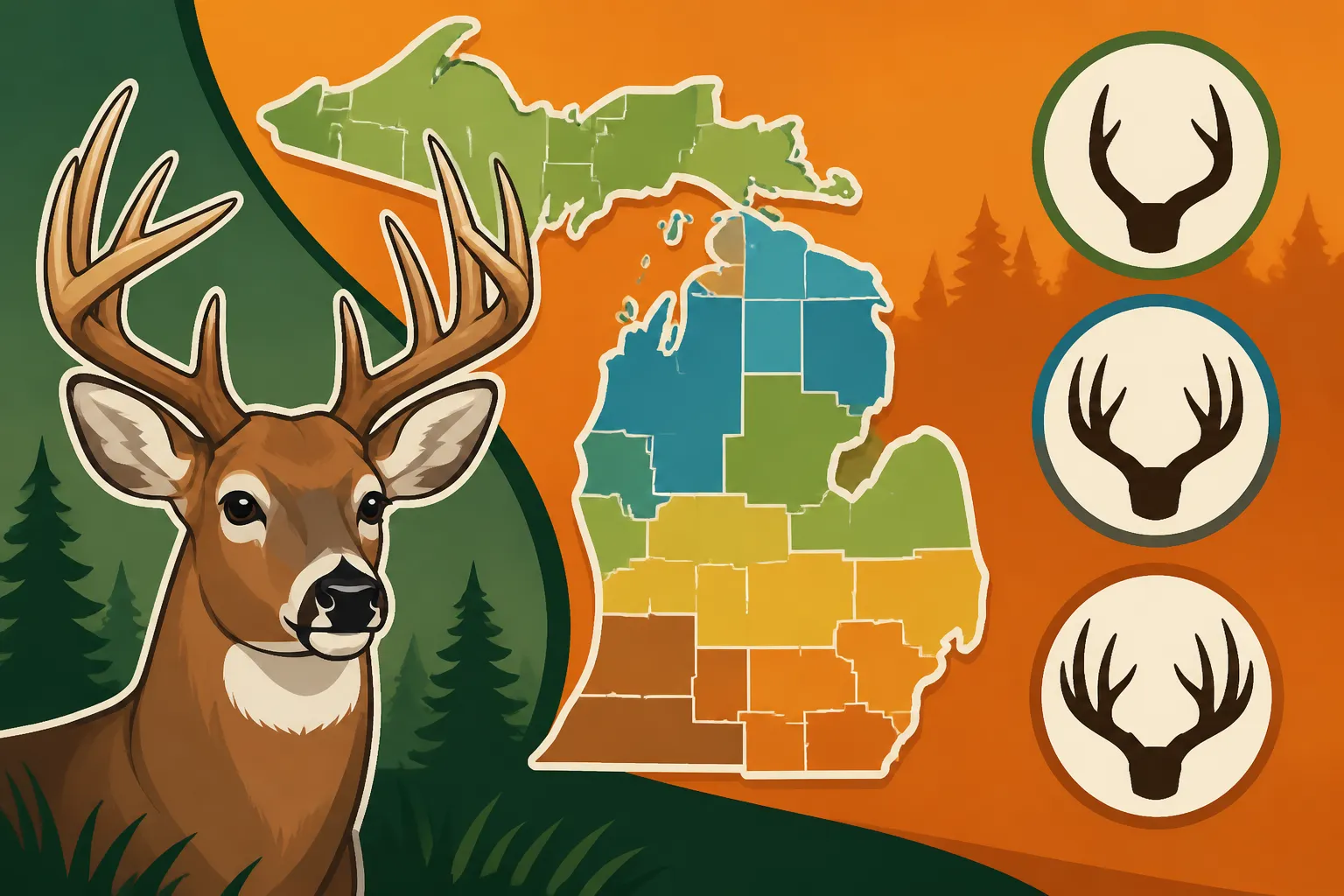
Michigan Antler Point Restrictions by DMU
Michigan's deer hunting landscape can sometimes feel like a maze, especially when you're trying to figure out which buck you can legally harvest. It's frustrating to spend countless hours scouting, hanging stands, and putting in the work, only to be unsure if the deer standing in front of you meets the legal antler point restrictions for your specific hunting area. This comprehensive guide is here to untangle the complexities of Michigan's Antler Point Restrictions (APRs) by Deer Management Unit (DMU), helping you hunt with confidence and clarity.
Understanding Michigan's Antler Point Restrictions (APRs)
Antler Point Restrictions can feel like a headache, adding another layer of complexity to an already challenging pursuit. You might ask, "Can't I just shoot any buck?" The simple answer is, not always, and that's where APRs come into play. They're designed with specific goals in mind, but they require every hunter to be vigilant and informed.
What Exactly Are Antler Point Restrictions?
At its core, an Antler Point Restriction (APR) is a regulation that dictates the minimum number of antler points a buck must possess on one side of its rack for it to be considered a legal harvest. In Michigan, these typically specify that an antlered deer must have a certain number of points, often three or four, measuring at least one inch from base to tip, on at least one antler. It's not about the total number of points on both sides; it's about the minimum on one side. This can be confusing. For example, a buck with two points on one side and four on the other would be legal under a three-point APR. However, a buck with two points on each side would not be. These rules are put in place to influence the age structure of the buck population, letting younger deer with fewer points mature for at least another year.
The definition of a "point" is crucial here, and it's a detail that often trips up even seasoned hunters. A point must be at least one inch long, measured from its base, and it must be longer than it is wide at one inch up from the base. This distinction helps differentiate true points from small knobs or burrs that aren't considered valid. It sounds straightforward, but when you're looking at a deer in low light, heart pounding, trying to make a quick decision, those inches can seem to shrink or grow. We've all been there, second-guessing ourselves, wondering if that little bump truly qualifies.
Why Michigan Implemented APRs
The Michigan Department of Natural Resources (DNR) didn't just wake up one morning and decide to make things harder for hunters. APRs were implemented after extensive research and public input, primarily to address specific deer management goals. The main objective was to allow a greater number of young bucks to survive their first hunting season, thus increasing the average age of the harvested bucks and, theoretically, the number of mature bucks in the population. The idea is simple: if more young bucks are protected, they'll have the chance to grow larger antlers in subsequent years.
Beyond just antler size, APRs are also a tool for enhancing hunter satisfaction. Many hunters express a desire to see and harvest older, larger-antlered bucks. By shifting the age structure, the DNR aims to provide more opportunities for these kinds of encounters. It's a balance, though, because while some hunters appreciate the opportunity for a "trophy," others prioritize venison for the freezer and might prefer the flexibility to harvest any legal buck. The DNR also uses APRs as part of their broader quality deer management strategy, which considers factors like herd health, habitat impacts, and social carrying capacity, trying to find a sweet spot that satisfies both the deer and the hunters who pursue them.
The Evolution of APRs in Michigan
APRs are not new to Michigan, but they've certainly evolved over the years. They started as a somewhat experimental concept in certain areas, often driven by local hunter demand. Initially, the DNR introduced APRs in specific DMUs, allowing for a localized assessment of their impact before considering wider implementation. This phased approach helped gauge hunter acceptance and biological outcomes. For a long time, the Upper Peninsula operated under a uniform APR, commonly known as "The Three-Point Rule," which has become almost synonymous with hunting deer north of the bridge. This rule essentially meant that any antlered deer harvested in the U.P. needed to have at least three points on one antler.
Over time, these regulations have been refined, expanded, or even relaxed in certain areas based on deer population trends, herd health concerns (like Chronic Wasting Disease), and ongoing hunter feedback. For instance, some areas in the Lower Peninsula have adopted APRs, while others have remained general antlered deer zones. This constant evaluation means that what was true five or ten years ago might not be true today, making it critical for hunters to check the most current regulations every single season. This adaptability, while necessary for sound wildlife management, can feel like a moving target for hunters just trying to keep up.
Navigating Michigan's Deer Management Units (DMUs)
Michigan is a big state with diverse habitats, from the sprawling forests of the Upper Peninsula to the agricultural lands of the Southern Lower Peninsula. To effectively manage deer populations across such varied terrain, the state is divided into specific Deer Management Units, or DMUs. Understanding these units is absolutely foundational to comprehending Michigan's APRs, as the rules often change from one DMU to the next.
What is a DMU and Why Does it Matter?
A Deer Management Unit (DMU) is essentially a geographical area within Michigan that the DNR designates for specific deer management objectives. Think of them as localized zones where wildlife biologists can implement tailored strategies, including harvest quotas, antlerless permit allocations, and, of course, Antler Point Restrictions. DMUs are typically defined by county lines or significant geographical features like major rivers or highways, making their boundaries somewhat intuitive, though sometimes a bit convoluted on the ground.
These units matter because they are the basis for almost all localized deer hunting regulations. The biological conditions, hunter pressure, and land use can vary wildly across Michigan. What works for deer management in the heavily wooded parts of the U.P. might not be appropriate for the farm country of Lenawee County. By using DMUs, the DNR can respond to localized issues, prevent overharvesting in some areas while encouraging it in others, and fine-tune their approach to achieve specific population goals. For a hunter, knowing your DMU is paramount; it dictates what kind of deer you can legally pursue, how many antlerless tags might be available, and whether an APR applies. This knowledge helps you understand the bigger picture of Michigan Deer Population Estimate and how your harvest contributes to it.
Finding Your DMU and Understanding its Boundaries
Identifying your specific DMU is the first critical step before heading into the woods. Thankfully, the Michigan DNR has made tools available to help with this, even if it still requires a bit of homework on your part. The most valuable resource is the DNR's Mi-HUNT map. This online interactive mapping system allows you to zoom in on any parcel of land in Michigan and see its corresponding DMU number, along with other crucial information like public land boundaries, habitat types, and even prescribed burn areas. It's a powerful tool that can take a lot of the guesswork out of determining where you stand, literally, in relation to the rules.
Beyond the official DNR maps, various hunting apps and GPS devices, like those offered by GoHunt, also provide layers that show DMU boundaries. These tools are incredibly helpful for quickly pinpointing your location and ensuring you're aware of the specific regulations for that area. Imagine you're hunting near a county line; without these resources, it would be incredibly difficult to know if the buck you're looking at is in DMU 001 (no APR) or DMU 002 (3-point APR). Always double-check your location before the season opens, and if you plan to hunt multiple spots, make sure you understand the regulations for each one. Knowing Using the Michigan Mi-HUNT Map effectively can make all the difference.
The Patchwork of APRs Across DMUs
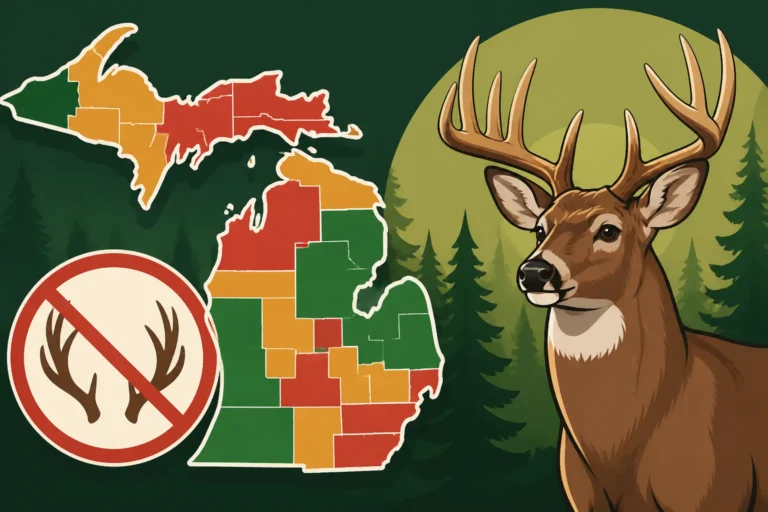
One of the most frustrating aspects of Michigan's APRs is how varied they are across the state. It's not a blanket rule, and that means a buck that's legal in one county might be illegal just a few miles down the road in another. This patchwork system can be incredibly confusing, especially for hunters who travel to different parts of the state. You might have a property in the Northern Lower Peninsula with a specific APR, and then hunt public land in the U.P. with a completely different set of rules.
This variability is a direct result of the DMU system, where specific regulations are applied to address local conditions and management goals. For example, some DMUs might have higher antlerless quotas to reduce population density, while others might focus on protecting young bucks with stricter APRs to improve buck age structure. It means you can't assume what's true for your home hunting grounds applies everywhere else. This constant need to re-familiarize yourself with the rules for each new area highlights why checking the current Michigan Hunting Digest is non-negotiable every year. It’s a bit of a burden, but it’s crucial for staying on the right side of the law and participating responsibly in deer management.
Specific APR Rules Across Michigan's Regions
The geography of Michigan is incredibly diverse, and so are its deer populations and hunting traditions. This diversity is reflected in the regional application of Antler Point Restrictions. What works in the vast wilderness of the Upper Peninsula often wouldn't make sense in the agricultural heartland of Southern Michigan, and vice versa. Let's break down some of the general trends you'll see as you move across the state.
APRs in the Upper Peninsula
The Upper Peninsula (U.P.) has long been the stronghold of Antler Point Restrictions in Michigan. For many years, a statewide APR for the U.P. required antlered deer to have at least three points on one side. This became a defining characteristic of Hunting the Michigan Upper Peninsula for Deer. This general 3-point rule was implemented with the goal of increasing the age structure of bucks, allowing more yearling deer to survive and grow. The U.P. faces unique challenges, including harsh winters that can significantly impact deer populations. Protecting younger bucks helps ensure a more resilient herd that can better recover from severe winter conditions.
However, even within the U.P., specific DMUs have seen variations or changes. It’s not always a monolithic rule. The DNR continually monitors deer populations, harvest data, and hunter feedback, sometimes leading to adjustments in certain areas. For example, some DMUs might have had even more restrictive APRs or been exempt from them entirely for specific reasons. Historically, the U.P. has also been a place where hunter tradition and conservation ethics run deep, with many hunters voluntarily passing smaller bucks even without a formal APR. The cultural acceptance of these regulations has generally been high, as most U.P. hunters understand the importance of managing the herd for long-term health in a challenging environment.
Northern Lower Peninsula APRs
Moving south across the Mackinac Bridge, the Northern Lower Peninsula (NLP) presents a different set of APR rules. While the U.P. has a long-standing history with a more universal APR, the NLP has seen a more localized, DMU-specific application. This means you need to be particularly diligent in identifying the exact DMU you're hunting in. As of recent regulations, several DMUs in the northern Lower Peninsula have implemented 3-point on one side APRs. These often include counties like Cheboygan, Emmet, Charlevoix, Antrim, Otsego, Montmorency, Alpena, Crawford, Oscoda, Roscommon, Ogemaw, Iosco, Kalkaska, Missaukee, Wexford, Clare, Gladwin, and Arenac.
This means if you're hunting deer in these counties, you're bound by the same 3-point rule as many U.P. hunters. The rationale here is similar: to allow younger bucks to mature, improve buck-to-doe ratios, and enhance the overall quality of the deer herd. However, not all NLP DMUs have APRs. Some areas, particularly those bordering counties without APRs or with different habitat characteristics, may still operate under general antlered deer rules, allowing the harvest of any antlered buck regardless of point count. This creates the "patchwork" effect that can be so tricky for hunters. Always consult the current Michigan Hunting Digest or a detailed map like those provided by GoHunt to confirm the rules for your specific hunting location in the NLP.
Southern Lower Peninsula APRs and Limited Zones
The Southern Lower Peninsula (SLP) generally has fewer widespread APRs compared to the northern regions. This area is characterized by more fragmented habitats, extensive agriculture, and higher deer densities in many locations. The management challenges and goals here often differ, with a greater emphasis on population control through antlerless harvests, particularly to mitigate agricultural damage and reduce deer-vehicle collisions. Because of these factors, many DMUs in the SLP operate under general antlered deer regulations, meaning any buck with an antler at least three inches long can be harvested.
However, there are always exceptions and specific scenarios to be aware of. While broad APRs are less common, localized APRs can still exist or be considered for specific areas due to unique management objectives or localized hunter demand. Additionally, it's crucial to remember that while APRs might not be prevalent for antlered deer, other restrictions, such as the Michigan Antlerless Deer Licences and quotas, are very much in play in the SLP. Hunters in the SLP must also be aware of the "Limited Firearm Deer Zone," which restricts the type of firearm that can be used for deer hunting. This zone, generally south of a line running from Muskegon to Bay City, requires hunters to use shotguns, muzzleloaders, or specific straight-walled cartridges, affecting Where Michigan Restricts Rifles for Deer. So, while APRs might be less of a direct concern for buck hunters in the SLP, other layers of regulation certainly exist, making it important to be informed about all local rules.
How to Count Antler Points in Michigan
Making the call on whether a buck is legal often comes down to accurately counting its antler points. This sounds simple enough, but in the heat of the moment, with adrenaline pumping and daylight fading, it can be surprisingly challenging. Misinterpreting the rules can lead to an illegal harvest, which nobody wants.
The Michigan Definition of a Legal Point
Michigan has a very clear definition of what constitutes a legal antler point. For a projection on an antler to count as a point, it must be at least one inch long, measured from its base. Furthermore, this projection must be longer than it is wide at a point one inch up from its base. This "longer than wide" clause is key to distinguishing true points from mere bumps, burrs, or abnormal growths that might otherwise be confused for a point.
This definition applies to typical points that grow off the main beam (like G-1, G-2, G-3 tines) as well as any abnormal points that might project from the main beam or other tines. The critical takeaway is the measurement: one inch in length and longer than wide at the one-inch mark. Hunters are responsible for being certain that a buck meets this standard before pulling the trigger. It’s a responsibility that requires patience and a good eye, and sometimes, the best decision is to let the deer walk if you're not absolutely sure.
Common Mistakes and Misinterpretations
Even with a clear definition, hunters can make common mistakes when counting points, especially under less-than-ideal conditions. One frequent error is counting a broken point. If a point has been broken off and doesn't meet the one-inch length requirement, it simply doesn't count. This can be heartbreaking if that broken point would have made the buck legal, but the rules are the rules. Similarly, small bumps or non-bony projections, often found near the base or on the burr, might look like points but fail the "longer than wide" test at the one-inch mark. They might be bony, but if they are wider than they are long at one inch from the base, they don't count.
Another area of confusion can arise with "abnormal" points, which are points that don't follow the typical pattern of growth. While these do count towards the total number of points on a side, they can sometimes be hard to distinguish or measure accurately, especially when they are small or irregularly shaped. This is where the one-inch rule and the "longer than wide" rule become your best friends. It's easy to get excited and quickly tally what you think you see, but taking that extra second to really scrutinize can prevent a costly mistake.
Making the Call in the Field
Making the decision to harvest or pass a buck in the field, under the pressure of the moment, is one of the most challenging aspects of hunting with APRs. You're trying to quickly assess antler configuration, estimate distances, judge body language, and then mentally apply the regulations—all while a magnificent animal stands before you. It's a lot to process. The most responsible approach is to always err on the side of caution. If you have any doubt, let that buck walk. There will be other deer, and the peace of mind knowing you've made a legal and ethical harvest is worth more than any antler.
Many experienced hunters recommend carrying binoculars or a good spotting scope specifically for antler assessment. This allows you to get a clearer view and confidently count points without alerting the deer. Practicing Counting Antler Points From a Stand with photos or videos before the season can also help sharpen your eye. If the deer is quartering away and you can't get a clear view of both sides, or if the light is poor, sometimes the best course of action is to simply watch it walk away. It's tough, but it's part of being a responsible hunter. Remember, if you are unsure, you are choosing to Passing a Buck You Cannot Count. It’s a mark of respect for the game and the regulations.
Impact of APRs on Hunters and Deer Management
Antler Point Restrictions aren't just lines on a map or rules in a book; they have tangible effects on both the deer herd and the hunting community. From how we approach our hunts to the makeup of the deer population itself, APRs influence many facets of Michigan hunting.
Hunter Challenges and Adaptations
For many hunters, APRs have necessitated significant changes in their approach to deer hunting. The most obvious challenge is the need for quick, accurate identification and point counting in the field. This adds a layer of stress that wasn't always present when any antlered buck was legal. Hunters have adapted by becoming more proficient with optics, spending more time pre-season scouting to understand typical antler development in their specific DMU, and practicing patience in the stand. It’s no longer just about seeing a buck; it’s about seeing a legal buck. This can mean letting numerous younger bucks walk by, which can be tough, especially if hunting success has been hard-won.
Another adaptation is the increased emphasis on deer behavior and movement patterns. Since you're looking for older, more mature bucks, understanding how they use the landscape, their bedding areas, and their feeding patterns becomes even more critical. Hunters are spending more time studying aerial maps, utilizing tools like GoHunt, and learning to interpret deer sign more effectively. There’s also a shift in focus from simply filling a tag to truly managing the deer on a specific property, whether public or private. This means more intentional scouting for specific buck sign, like rub lines or scrape lines along a two-track, that indicate mature buck presence.
Perceived Benefits and Drawbacks
From a hunter's perspective, the benefits of APRs often include the potential for seeing and harvesting larger-antlered bucks. Many hunters enjoy the challenge of pursuing more mature animals, and APRs are designed to provide more of those opportunities. There's also a satisfaction for some in contributing to a management strategy that aims for a healthier, more balanced deer herd. When more bucks are allowed to reach older age classes, it can lead to improved buck-to-doe ratios, which theoretically can contribute to a more efficient and condensed rut, leading to healthier fawns.
However, APRs also come with drawbacks. For hunters who prioritize venison for the freezer or simply enjoy the act of harvesting a deer, passing up multiple legal-to-harvest (but not APR-compliant) young bucks can be frustrating. It can also lead to reduced success rates for some, especially new hunters or those with limited time in the field. There's also the concern of increased hunting pressure on legal bucks, as hunters might pass up many deer, only to put more pressure on the few that meet the APR. Furthermore, misidentification can lead to accidental illegal harvests, resulting in fines and potentially losing hunting privileges, which is a stressful thought for any responsible hunter.
The DNR's Assessment of APR Effectiveness
The Michigan DNR continuously monitors the effectiveness of APRs through various data collection methods, including harvest reports, biological surveys, and hunter surveys. Their assessments often focus on several key metrics. One primary indicator is the shift in the age structure of harvested bucks. If APRs are working as intended, they should see a decrease in yearling (1.5-year-old) bucks in the harvest and an increase in older age classes (2.5 years and older). This data helps biologists understand if the regulations are achieving the goal of buck protection.
Another area of assessment is hunter satisfaction. The DNR conducts surveys to gauge whether hunters feel that APRs are improving their hunting experience, particularly in terms of seeing more mature bucks. While the biological outcomes can be measured, the social outcomes are equally important for long-term program success. The DNR also looks at the overall health of the deer herd, considering factors beyond just antlers, such as fawn recruitment, disease prevalence, and habitat impacts. This comprehensive approach helps them determine if APRs are truly beneficial for Michigan's deer population and the hunting tradition, weighing the biological gains against potential social and economic impacts.
Planning Your Hunt Around Michigan's APRs
Successful deer hunting in Michigan, especially in APR zones, requires careful planning and a strategic approach. It's not enough to just know the rules; you need to integrate them into every aspect of your hunt, from pre-season preparation to in-the-moment decision making.
Scouting and Research for APR Zones
Your pre-season scouting becomes even more critical when hunting in APR zones. Instead of just looking for general deer sign, you're looking for specific evidence of mature bucks. This means paying closer attention to larger tracks, bigger rubs on trees, and well-used scrape lines. Utilizing tools like Michigan's Mi-HUNT map or onX Hunt to understand habitat features like thick cover, clearcuts, and swamp edges can help you pinpoint areas where older bucks might be holding up. These maps also clearly delineate DMU boundaries, which, as we've discussed, is paramount.
Talking to locals, reviewing trail camera photos from previous seasons, and understanding the history of a specific property or public land parcel can also provide invaluable insights. Are there consistent sightings of older bucks? What are the typical antler characteristics for deer in that DMU? This research helps you build a mental picture of what a legal buck in that area might look like, reducing the guesswork when you're finally in the stand. Remember that understanding Reading Aerial Photos for Swamp Deer can give you an edge in finding those hidden pockets where older bucks feel safe.
Tagging Strategies and License Options
Understanding Michigan's deer license options is essential, especially with APRs in mind. Most hunters will purchase a "deer combo" license, which typically includes two deer tags: one regular antlered deer license and one restricted antlered deer license. The restricted license is where APRs come into play. If you're hunting in a DMU with an APR, your restricted antlered deer license can only be used for a buck that meets those specific antler point requirements. Your regular antlered deer license, however, usually allows you to harvest any antlered buck (with at least one 3-inch antler), regardless of the APRs, unless the entire DMU is under a mandatory APR for all antlered deer tags.
It's a nuance that can be confusing, but it's vital to grasp. Always review the current Michigan Hunting Digest for the most up-to-date information on Michigan Deer Licence and Combo Options. Some hunters strategically use their regular tag in a non-APR area or early in the season if they see a smaller buck they want to harvest, saving their restricted tag for a larger buck later in an APR zone. Others might choose to hunt exclusively in APR zones, hoping to maximize their chances for a mature buck. Understanding how these tags interact with DMU-specific APRs is a key component of your hunting strategy.
Dealing with Unforeseen Situations
No matter how well you plan, hunting often throws curveballs. One common unforeseen situation when dealing with APRs is encountering a buck with a broken antler. If a point that would have made the buck legal is broken off, and the remaining points don't meet the APR, that buck is no longer legal under the restriction. This can be incredibly frustrating. In such cases, the ethical and legal action is to let the buck walk. You cannot assume what its antler would have been; you must go by what it is at the time of the shot.
Another scenario involves making an ethical shot on a buck that, upon recovery, turns out not to meet the APR. This is a difficult situation, and it underscores the importance of being absolutely certain before taking the shot. If this occurs, immediately contact the DNR's Report All Poaching (RAP) hotline. Explain the situation honestly. DNR officers have discretion, and while there may still be consequences, being upfront is always the best course of action. Attempting to hide or butcher an illegal deer will only lead to more severe penalties. It's a tough lesson to learn, but being prepared for these possibilities is part of responsible hunting in a regulated environment.
Common Questions and Misconceptions About APRs
Despite how long APRs have been in place in Michigan, there are still quite a few questions and misunderstandings that pop up regularly. Let's tackle some of the most common ones to help clear the air.
The Three-Point Rule in Michigan Explained
The "three-point rule" is arguably the most common Antler Point Restriction you'll encounter in Michigan. It stipulates that an antlered deer must have at least three points on one side of its rack for it to be legally harvested. This means a buck with three points on its left antler and two on its right (a 3×2) would be legal. A buck with two points on each side (a 2×2) would not be legal under this rule. This rule is prevalent across the entire Upper Peninsula and in many of the designated DMUs in the Northern Lower Peninsula, as we discussed earlier.
This specific APR was chosen because it generally allows most yearling bucks (1.5 years old) to survive, as many of them will only have spikes or two points on each side. By protecting these younger bucks, the goal is to give them another year to mature, grow larger antlers, and contribute to the breeding population. It's a straightforward rule in its application, but it requires diligent counting in the field. Understanding The Three-Point Rule in Michigan is foundational for hunting in most APR areas.
APRs and Antlerless Deer Hunting
A common misconception is that Antler Point Restrictions somehow apply to antlerless deer. Let's be crystal clear: APRs only apply to antlered deer. When you're talking about harvesting an antlerless deer (does or fawns), the rules are entirely different. Antlerless deer harvests are managed through specific antlerless deer licenses, which are often limited in number and allocated by DMU. The goal of antlerless harvests is typically to manage deer population numbers, balance herd health, and address conflicts like agricultural damage or overbrowsing.
So, if you have an antlerless tag for a particular DMU, you can legally harvest an antlerless deer in that unit, provided you follow all other regulations (season dates, shooting hours, etc.). The number of points on a buck's head has absolutely no bearing on whether you can take a doe. This distinction is vital for hunters who are trying to manage local deer populations or simply put venison in the freezer. Always check the specific regulations for Michigan Antlerless Deer Licences for the DMU you intend to hunt, as quotas and availability can change annually.
Future of APRs in Michigan
Like all wildlife regulations, Antler Point Restrictions are not set in stone. The Michigan DNR continuously reviews and assesses their effectiveness and public reception. This means the future of APRs in Michigan could involve adjustments, expansions, or even relaxations in certain areas. Factors influencing these potential changes include ongoing biological data (such as deer population trends, buck age structure, and health), hunter satisfaction surveys, and public input.
There are always discussions and debates among hunter groups, conservation organizations, and legislative bodies regarding deer management strategies. Some advocate for more widespread APRs to further enhance buck quality, while others argue for fewer restrictions to give hunters more flexibility. Legislative efforts can also impact these regulations, as lawmakers sometimes introduce bills to change hunting rules. For example, there have been recent discussions surrounding the baiting ban, which while not directly related to APRs, shows that rules can change. Staying informed through official DNR channels and participating in public forums is the best way for hunters to have a voice in the ongoing conversation about Michigan's deer hunting future.
| DMU Number | General Location | Antler Point Restriction (APR) | Typical Antlered Deer Tag Usage |
|---|---|---|---|
| DMU 007 | Western Upper Peninsula | 3 points on one side | Restricted Tag must follow APR, Regular Tag follows APR |
| DMU 013 | Eastern Upper Peninsula | 3 points on one side | Restricted Tag must follow APR, Regular Tag follows APR |
| DMU 014 | Cheboygan/Emmet/Charlevoix Counties | 3 points on one side | Restricted Tag must follow APR, Regular Tag follows APR |
| DMU 022 | Crawford/Oscoda/Roscommon Counties | 3 points on one side | Restricted Tag must follow APR, Regular Tag follows APR |
| DMU 045 | Central Lower Peninsula | No APR (Any antlered deer with 3" antler) | Both Restricted & Regular Tags allow any antlered deer |
| DMU 081 | Southwest Lower Peninsula | No APR (Any antlered deer with 3" antler) | Both Restricted & Regular Tags allow any antlered deer |
Disclaimer
The information provided in this guide is for general informational purposes only and is subject to change. Hunting regulations, including Antler Point Restrictions, are updated annually by the Michigan Department of Natural Resources (DNR). It is the hunter's sole responsibility to consult the most current official Michigan Hunting Digest and any local ordinances before participating in any hunting activities. Failure to do so could result in fines, penalties, or loss of hunting privileges.