Michigan Deer Seasons and Tags
Michigan's deer hunting regulations can often feel like a tangled thicket, leaving even seasoned hunters scratching their heads trying to figure out what tags they need and when they can actually hit the woods. It's frustrating to invest time and money only to realize you've misunderstood a key rule. This guide is here to untangle that thicket, offering a deep dive into Michigan's deer seasons and the various tags you'll need to pursue whitetails across our beautiful state.
Navigating Michigan's Deer Seasons: A Primer
For many of us, deer season isn't just a time of year; it's a way of life. The anticipation, the scouting, the camaraderie – it all builds up to those precious weeks in the woods. But let's be honest, trying to keep track of Michigan's ever-evolving deer regulations can feel like a full-time job. One year you think you have it down, and the next, a new rule or zone change pops up. It’s enough to make you want to throw your hands up and just go fishing! But understanding these seasons and tags is crucial for a successful and legal hunt, so let's break it down piece by piece.
The Rationale Behind Michigan's Diverse Seasons
Michigan's Department of Natural Resources (DNR) doesn't just pull these season dates out of a hat. There's a lot of science and public input that goes into creating this complex calendar. Each season, from the quiet solitude of early archery to the bustling energy of the firearm opener, serves a specific purpose in managing our state's whitetail population. This multi-season approach allows for varied hunting experiences, helps spread out hunting pressure, and, most importantly, provides opportunities to manage deer numbers effectively across different regions and habitat types. Without these diverse seasons, we'd either have massive overpopulation leading to widespread disease and habitat destruction, or an underutilized resource. It’s a balancing act, and these different seasons are the tools to achieve it.
Consider the vast differences between the agricultural fields of the southern Lower Peninsula and the dense cedar swamps of the Upper Peninsula. A one-size-fits-all approach simply wouldn't work. The DNR uses these varied seasons, along with antler point restrictions and antlerless quotas, to fine-tune management strategies for specific areas. This adaptability is what keeps our deer herds healthy and robust, year after year, even if it means we have to spend a bit more time with the hunting digest.
Understanding the Annual Regulatory Changes
It feels like every year there’s a new tweak, doesn't it? Whether it's a subtle shift in a season start date, a change in an antler point restriction (APR) boundary, or an adjustment to antlerless quotas, these annual regulatory changes are a reality of hunting in Michigan. And frankly, they can be a real headache. Just when you've memorized the rules, it's time to re-learn them. But these changes aren't arbitrary; they're direct responses to population trends, disease outbreaks (like CWD and bovine TB), habitat conditions, and even public feedback.
The DNR monitors Michigan Deer Population Estimates meticulously through aerial surveys, harvest reports, and landowner input. If deer numbers are soaring in one area, they might increase antlerless opportunities. If a disease like Chronic Wasting Disease (CWD) is detected, you might see new carcass transport restrictions or mandatory testing areas. These aren't meant to complicate your life, but to protect the resource for future generations. That's why it's so critical to grab the latest Michigan Hunting Licences and What They Cost digest every year, or better yet, stay connected to the DNR's online resources or apps. Sometimes, it’s worth checking out resources like GoHunt, which often compile these changes in an easily digestible format, helping you stay ahead of the curve.
The Foundation: Michigan Deer Licences and Combo Options
Before you even think about which season you want to hunt, you need to make sure you have the right paperwork. This is where many new hunters, and even some veterans, can get tripped up. Michigan's licensing system can seem a bit convoluted with its base license, deer license, and combo options. It’s not just about paying a fee; it's about understanding what each piece of paper allows you to do. Without the proper tags, all that scouting and gear preparation is for naught.
Resident vs. Non-Resident Licence Structures
Let's face it, if you're not a Michigan resident, you're going to pay a bit more to hunt here. That's just the reality of wildlife management across most states. The Michigan Resident Base Licence Cost is a baseline fee that supports conservation efforts and gives you access to hunt small game, but it doesn't get you a deer. Non-residents pay a higher fee for their Michigan Nonresident Base Licence Cost, but the principle is the same. This tiered system helps fund the DNR's extensive wildlife management programs, which benefit all hunters, regardless of where they call home.
For deer, both residents and non-residents will then add specific deer licenses on top of their base license. While the Michigan Nonresident Deer Licence Cost is higher, the opportunities available are largely the same. It’s important to acknowledge that this price difference can be a point of frustration for out-of-state hunters, but it’s a standard practice that contributes significantly to the health of our wildlife. Just make sure you correctly identify your residency status when purchasing your licenses to avoid any issues down the road.
The Importance of the Base Licence
Think of the Michigan Base Licence Explained as your entry ticket to the hunting world in Michigan. It's the absolute first thing you need before you can even consider buying a deer tag, a turkey tag, or anything else with hooves or feathers. This license isn't specific to deer; it’s a general hunting license that covers small game and allows you to then purchase specific species licenses. It’s the backbone of the system.
Without a valid base license, any deer license you buy is essentially void. This is a common mistake new hunters make – they go straight for the deer tag, forgetting this foundational requirement. The revenue generated from base licenses is critical for funding the state's wildlife conservation efforts, habitat improvements, and law enforcement. So, while it might feel like an extra step, it's a vital part of supporting the wild places we love to hunt.
Unpacking the Deer Licence and Deer Combo
Once you have your base license, you're ready to pick your deer tags. Michigan offers a couple of key options here: the standard Deer Licence and the Deer Combo Licence.
- The Michigan Deer Licence: This is a single tag, allowing you to harvest one antlered deer during archery, firearm, or muzzleloader season (depending on the weapon type chosen and the season you are hunting). This is a great option if you only plan to harvest one buck or if you're primarily focused on antlerless hunting with separate tags.
- The Michigan Deer Combo Licence Price: This is often the more popular choice for hunters who want more flexibility. The combo license gives you two deer tags: one regular antlered deer tag and one restricted antlered deer tag. The regular tag can be used for any antlered deer during the appropriate seasons. The restricted tag, however, must be used on an antlered deer that meets specific antler point restrictions for the unit you are hunting. This often means a buck with at least four points on one side, but these rules vary by DMU.
The real beauty of the combo license is that it offers the flexibility to take an antlered deer in the early archery season, and then potentially hunt for another buck during the firearm season, adhering to the specific APRs. It really maximizes your opportunities in the field. Understanding these differences, and which one suits your hunting style and goals, is key to avoiding frustration when that big buck finally steps out.
| Licence Type | Number of Tags | Antlered/Antlerless | Restrictions | Use Case |
|---|---|---|---|---|
| Base Licence | 0 | N/A | Required to purchase any hunting license | Entry to hunting in Michigan, funds conservation |
| Deer Licence | 1 | Antlered (1) | Valid for one antlered deer, any legal weapon | Hunters only seeking one buck or focusing on antlerless |
| Deer Combo | 2 | Antlered (2) | One regular antlered, one restricted antlered (APRs apply) | Maximizes antlered deer opportunities across seasons |
| Antlerless Tag | 1 | Antlerless (1) | Specific DMU, private/public land, quota-based | For harvesting does, critical for herd management |
| Mentored Youth | Varies | Varies | For youth under 17, mentored by licensed adult | Introducing young hunters to all legal species |
Archery Season: The Silent Challenge
For many Michigan hunters, the archery season is the purest form of deer hunting. It kicks off in early October, often when the leaves are still vibrant and the air holds a crisp promise of autumn. It's a time of quiet dedication, close encounters, and the ultimate test of a hunter's skill and patience. There's nothing quite like drawing back your bow on a wary whitetail at spitting distance. This season also offers the longest window of opportunity, stretching across various phases of the deer's behavior, making it incredibly popular.
Early Archery: The October Thrill
When Michigan's Archery Season Opens, it's a palpable excitement in the air. That first day in the treestand, even if it's still T-shirt warm, is just special. Early archery, typically from October 1st through mid-November, is primarily a pattern-based hunt. Deer are still heavily focused on food sources – acorns, soft mast, and agricultural fields like corn or soybeans. The rut is still a distant dream, so bucks are often in bachelor groups, more predictable, and less driven by the erratic search for does.
This early period is all about meticulous scouting. Locating those prime food sources, understanding deer movement patterns between bedding and feeding areas, and finding those subtle pinch points or funnels are key. It’s also often a warmer period, which means vigilant meat care is essential after the shot. Hunters often find success by focusing on water sources during dry spells or targeting apple orchards that are dropping their bounty. Remember, deer are still relatively unpressured, making it a great time for establishing patterns.
The Michigan Archery Split and Its Impact
Now, this is where it can get a little tricky for some folks, and it's a perfect example of those annual regulatory nuances. Michigan operates with a split archery season. What does this mean exactly? Well, as we just discussed, the first portion runs from October 1st, but then it closes briefly for the firearm season in mid-November. Then, it reopens for a late archery segment. Understanding How Michigan's Archery Split Works is really important for planning your hunt.
The brief closure, which aligns with the general firearm season, can drastically change deer behavior. Deer that were once predictable become much more nocturnal and wary once the guns start booming. When the archery season reopens, you're hunting a different animal. This split also gives bowhunters a unique advantage if they adapt. During the firearm season, many bucks go into hiding, and when the pressure subsides, they can become more active again, albeit cautious. This means completely new scouting and strategy might be necessary for the late season.
Late Archery: Winter's Last Stand
After the hustle and bustle of firearm season, Michigan's Late Archery Season offers a return to solitude, often accompanied by colder temperatures and even snow. This season, typically running from December 1st through January 1st, can be incredibly rewarding, but it demands a different approach. The rut is long over, and deer are once again primarily focused on food, but now it's about caloric intake to survive the winter.
This means hunting specific, high-energy food sources becomes paramount. Standing corn, browse in cedar swamps, or any remaining agricultural waste can be goldmines. Deer will be focused on survival, often yarding up in thermal cover like thick pines or cedars. Cold weather sitting strategies are vital, as is the ability to track a deer in snow if necessary. While the days are short and the temperatures can be brutal, the rewards can be great, with mature bucks often letting their guard down slightly as they prioritize survival. It's a truly dedicated hunter who braves the Michigan winter with a bow, but the experience is unmatched.
Firearm Season: The November Tradition
When November rolls around in Michigan, the air is thick with anticipation. This is the big one for most hunters – the general firearm season. It's steeped in tradition, often bringing families and friends together at deer camp, and it’s undeniably the most popular and impactful deer hunting season in the state. For many, it's the highlight of the year. The woods come alive with hunters, and for good reason: it’s when many of Michigan's biggest bucks are taken.
The General Firearm Season: Michigan's Main Event
The main event of Michigan's deer hunting calendar is undoubtedly the general firearm season, which usually kicks off on November 15th. This is the season that gets everyone talking, planning, and often traveling to their favorite hunting grounds. For a comprehensive look at this period, our guide on Michigan's November Firearm Deer Season delves into the specifics.
This season coincides with the tail end of the rut and post-rut activity, meaning bucks are often still on the move, chasing does or recovering from their exertions. The sheer number of hunters in the woods during this period often moves deer, making them more vulnerable. This is where strategic treestand placement, understanding deer drives, and knowing how to adapt to pressure become crucial. Whether you're in the vast public lands of the Upper Peninsula or the patchwork of private farms in the Lower, the firearm season is an exhilarating, if sometimes crowded, experience.
Early Antlerless Firearm Weekend: Managing the Herd
Before the general firearm season even starts, there's often an opportunity for hunters to harvest antlerless deer during the Early Antlerless Firearm Weekend. This season is specifically designed to help the DNR manage local deer populations by increasing the harvest of does. This is particularly important in areas where deer numbers are high, leading to crop damage or increased risk of disease spread.
This weekend typically takes place in mid-October, meaning warmer weather and sometimes still plenty of foliage. Hunters participating in this special season need to have a specific antlerless tag for the unit they are hunting. It's a targeted effort, and while it might not carry the same excitement as chasing a trophy buck, it's a vital part of responsible deer management. Plus, it's an excellent way to fill the freezer early and secure some venison before the real cold sets in. If you're serious about contributing to herd health, this weekend is a great opportunity.
The Liberty and Independence Hunts: Youth and Disabled Opportunities
Michigan also offers special hunting periods designed to encourage participation from specific groups, recognizing the importance of introducing new hunters and providing accessible opportunities. These are the Liberty Hunt and the Independence Hunt.
The Liberty Hunt is a dedicated youth hunting weekend, typically held in late September. It allows properly licensed youth hunters (under 17 years old) to harvest deer with firearms. This is often their first opportunity to use a firearm for deer and can be a truly special family event. It's a less pressured environment than the general firearm season, which can be less intimidating for young hunters. Our article on Hunting the Michigan Liberty Hunt Weekend provides more details on making the most of this experience.
The Independence Hunt runs concurrently with the Liberty Hunt and is for hunters with disabilities. It provides an opportunity for hunters with specific physical challenges to hunt deer with a firearm during a less crowded time. Both of these hunts require specific licenses and adherence to their own unique rules, but they are incredibly valuable programs that foster inclusivity in Michigan's hunting heritage.
Muzzleloader and Late Antlerless: Extending the Opportunity
As the main firearm season winds down, many hunters pack away their gear until next year. But for those dedicated few who aren't ready to call it quits, Michigan offers a few more chances to fill a tag. These later seasons provide unique challenges and opportunities, appealing to hunters who appreciate tradition or those simply looking to extend their time in the field.
Muzzleloader Season: A Nod to Tradition
The Michigan Muzzleloader Season is a step back in time, typically running for about 10 days in early December. It's a season that appeals to purists and those who enjoy the added challenge and historical feel of hunting with a traditional muzzleloading firearm. The atmosphere is generally quieter than the firearm season, often with snow on the ground, creating a picturesque, if colder, hunting experience. For everything you need to know about this unique period, check out Muzzleloader Deer Hunting in Michigan.
Hunting during this time means embracing the cold. Deer are often starting to yard up in dense cover, especially in the northern parts of the state, focusing on survival and food. Tracking in fresh snow can be a significant advantage, helping hunters locate deer that have become more reclusive after earlier seasons. Keeping your powder dry in wet snow is a constant battle, but the reward of harvesting a deer with a muzzleloader adds an extra layer of satisfaction. It’s a truly unique experience that connects you with the hunting traditions of generations past.
Late Antlerless Firearm Season: Filling the Freezer
Following the muzzleloader season, there's often another chance to tag an antlerless deer during the Late Antlerless Firearm Season. This season usually runs from mid-December through January 1st, providing a final opportunity to harvest a doe. Like the Early Antlerless season, this is primarily a herd management tool, allowing hunters to target does in specific Deer Management Units (DMUs) where additional harvest is desired.
By this time, conditions can be quite severe, with deep snow and bitter cold common, especially in the northern Lower Peninsula and the U.P. Deer will be concentrated around the best available food sources and thermal cover. Hunters often focus on standing crops, deer yards, or areas with abundant winter browse. It’s not uncommon to see large groups of deer at this time of year, making it an effective time for filling the freezer. This season also offers a great opportunity for youth or new hunters to get out and experience late-season hunting without the pressure of trying to find an antlered buck.
Antler Point Restrictions (APRs): Decoding the Rules
Ah, APRs. If there's one topic that can spark a heated debate around a Michigan campfire, it's Antler Point Restrictions. These regulations are designed to influence the age structure of the buck population, allowing more young bucks to survive and mature, theoretically leading to more older, larger-antlered deer in the herd. However, they are also a frequent source of confusion and frustration for hunters.
How APRs Work by DMU
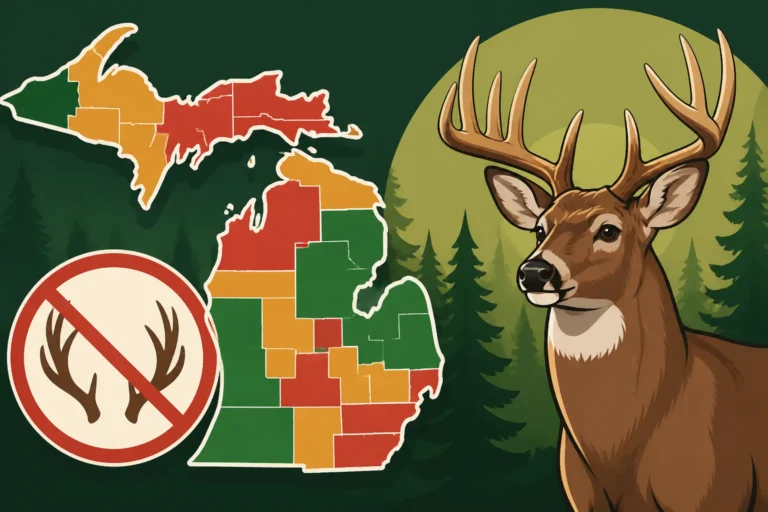
The critical thing to understand about APRs in Michigan is that they are DMU-specific. This means that what might be a legal buck in one county could be an illegal buck just a few miles down the road in a different DMU. This is precisely why it's so important to know your Michigan Deer Management Units and to check the regulations for the specific area you plan to hunt. Our comprehensive guide on Michigan Antler Point Restrictions by DMU is an invaluable resource for navigating these complex rules.
Some DMUs might have a "three-point on one side" rule, meaning a buck must have at least three points that are one inch or longer on at least one antler to be legally harvested with a regular buck tag. Other DMUs might have no APRs, or different requirements for restricted antlered tags. These varying rules are often implemented after years of biological studies and public input, attempting to tailor management to local conditions and hunter preferences. For example, some areas might have APRs to boost buck age structure, while others might focus on overall herd health. It's not always intuitive, but there's a method to the madness.
Counting Antler Points: What Really Counts
This is where the rubber meets the road, or more accurately, the antler meets the tape measure. The Michigan DNR has very specific rules about what constitutes an "antler point." Generally, an antler point must be at least one inch long, measured from the tip of the point to the nearest edge of the beam. It also needs to be longer than it is wide at its base.
This means those tiny nubs or little bumps that might be present on an antler often don't qualify as a legal point under Michigan regulations. This detail can lead to immense stress, especially when a buck steps out in low light, and you're trying to make a split-second decision. Did that G2 have enough length? Was that brow tine truly an inch? These are the moments that make hunters sweat. It's always better to be safe than sorry; if there's any doubt, it's often wise to pass, especially if you're holding a restricted antlered tag. You don't want to get into a situation where you've tagged an illegal buck because of a miscount.
The Impact of APRs on Deer Management
The goal of APRs is to protect younger bucks, allowing them to grow for another year or two, theoretically leading to an older age structure and potentially larger deer in the population. The idea is that if more young bucks survive, they'll eventually become those mature deer we all dream of.
From a management perspective, APRs have had mixed results. In some areas, they have indeed led to an increase in the number of older bucks and improved buck-to-doe ratios, which can be beneficial for breeding. However, critics argue that they can also put more pressure on younger, legal bucks, and that they can be confusing for hunters. They can also shift harvest pressure to antlerless deer, which is not necessarily a bad thing for herd control, but something hunters need to be aware of. The debate continues, but for now, APRs are a significant part of deer hunting in many parts of Michigan. Keeping tabs on these regulations, perhaps with the help of a tool like GoHunt, is essential for every Michigan deer hunter.
Antlerless Deer Licences and Quotas: Targeting the Does
While many hunters focus primarily on antlered deer, the management of antlerless deer (does and fawns) is arguably the most critical component of effective deer population control. Without sufficient antlerless harvest, deer populations can quickly outgrow their habitat, leading to widespread issues like disease, habitat degradation, and increased deer-vehicle collisions. Michigan makes it easy to obtain antlerless tags, but the specifics require attention.
Public vs. Private Land Antlerless Tags
Michigan offers both public and private land antlerless deer licences, and it's absolutely crucial to understand the difference before you head into the woods. A private land antlerless tag can only be used on private property, which you have legal permission to hunt. Conversely, a public land antlerless tag is valid only on state, federal, or Commercial Forest Act lands open to public hunting. You can't mix and match.
This distinction is important because the DNR sets quotas differently for public and private lands, recognizing the varying levels of hunting pressure and landowner tolerance. If you plan to hunt public land, ensure your tag explicitly states "public land." If you're fortunate enough to have access to private parcels, then a private land tag is what you need. This system allows for more precise management of localized deer populations, considering the unique dynamics of land ownership and access across the state. Check out Michigan Antlerless Deer Licences for more in-depth information.
Navigating Antlerless Quotas by DMU
Antlerless tags are not unlimited. The number of antlerless tags available in any given DMU is based on strict quotas set by the DNR. These quotas are determined by population estimates, harvest data from previous years, disease prevalence, and reported agricultural damage. If deer numbers are high, more tags might be available; if they're low, quotas will be reduced.
The process for obtaining an antlerless tag usually involves applying during a specific period or purchasing leftover tags after the application period closes. These tags are distributed by DMU, and some popular DMUs sell out very quickly. This can be a source of real frustration for hunters, especially if they wait too long to try and secure a tag for their preferred hunting area. Knowing Where Antlerless Quotas Are Set is vital, and staying on top of the application deadlines is paramount. Setting a reminder on your phone or marking your calendar is a smart move here, especially if you rely on public land opportunities.
Strategies for Securing Antlerless Licences
So, how do you maximize your chances of getting an antlerless tag? It starts with being proactive. First, identify the DMUs you plan to hunt and research their past quota availability. Second, apply early during the designated application period. Many hunters overlook this window, assuming they can just pick up a tag later. For high-demand DMUs, that's often not the case.
If you miss the initial application period or don't draw a tag, keep an eye out for leftover tag sales. These are usually available on a first-come, first-served basis, often starting in late summer or early fall. Be prepared to act quickly, as popular units can disappear within minutes of being released. Sometimes, less popular DMUs, particularly in the northern Lower Peninsula or parts of the U.P., will have antlerless tags available right up until the season. Utilizing the DNR’s online license purchasing system or a platform like GoHunt that sends out notifications for leftover tags can give you a significant advantage in securing those elusive permits.
Post-Harvest Requirements and Disease Monitoring
Congratulations! You've successfully harvested a deer. But the hunt isn't truly over yet. There are crucial steps you need to take after the shot to ensure you're compliant with Michigan law and to help the DNR monitor the health of our deer herd. Skipping these steps can lead to penalties and, more importantly, can hinder important wildlife management efforts.
Validating and Reporting Your Harvest
This is a non-negotiable step. As soon as you kill a deer, you must validate your tag by cutting out the appropriate notches for the month and day of harvest. This immediately invalidates the tag for further use. Then, you need to securely attach the tag to the deer in a visible location. This seems basic, but every year, hunters get into trouble because they forgot or neglected this step.
Beyond tagging, Michigan law requires you to Report a Michigan Harvest in 72 Hours. This can be done online through the DNR's website or via the Michigan DNR Hunt Fish App. It's a quick and simple process that asks for information like the date of harvest, county, DMU, type of deer (antlered/antlerless), and weapon used. This data is absolutely vital for the DNR to track harvest numbers, assess population health, and make informed management decisions for future seasons. It’s a simple act that has a huge impact on the future of hunting in Michigan.
Chronic Wasting Disease CWD and Carcass Movement
Chronic Wasting Disease (CWD) is a serious concern for Michigan's deer herd, and the DNR has implemented strict rules to prevent its spread. CWD is a neurological disease that is always fatal to deer, and once it's in an area, it's incredibly difficult to eradicate. Because of this, Michigan CWD Rules and Test Sites are in place, particularly in CWD surveillance areas, which include counties where the disease has been detected or is nearby.
If you harvest a deer in a CWD surveillance area, you will likely encounter specific carcass transport restrictions. Generally, you cannot move a whole deer carcass out of a CWD management zone unless it's going directly to a processor or taxidermist within that zone, or it's being taken to a DNR check station for testing. Often, only deboned meat, antlers (without brain matter), hides, and skulls (cleaned of all tissue) can leave these zones. This can be a major inconvenience, especially for hunters traveling long distances, but it's a necessary measure to protect the health of Michigan's deer. Always check the current CWD regulations for your hunting county before you hunt.
Bovine Tuberculosis TB in Specific Areas
While CWD is a widespread concern, Bovine Tuberculosis (TB) in Michigan Deer is a more localized issue, primarily affecting deer in a specific cluster of counties in the northeast Lower Peninsula, particularly Alcona, Alpena, Montmorency, and Oscoda counties. For hunters in these specific DMUs, there are additional regulations regarding deer carcass handling and testing.
Similar to CWD, if you harvest a deer in one of these Bovine TB management zones, you may be required to bring the head to a DNR check station for testing. This helps the DNR monitor the prevalence of the disease and prevents its spread to livestock or other deer populations. These regulations can add an extra step to your post-harvest routine, but they are crucial for protecting both wildlife and agricultural interests in the affected areas. It’s another example of why it’s so important to consult the current year’s hunting digest or the DNR website for the most up-to-date information for your specific hunting location.
Disclaimer
The information provided in this guide is for general informational purposes only and is not a substitute for the official Michigan Department of Natural Resources (DNR) hunting regulations. Hunters are responsible for knowing and adhering to all current state laws, rules, and regulations before participating in any hunting activity. Always consult the official Michigan Hunting and Trapping Digest or the Michigan DNR website for the most accurate and up-to-date information. Regulations, season dates, and license requirements can change annually.