Where Antlerless Quotas Are Set
It can feel like a bit of a maze, figuring out exactly where you can hunt antlerless deer in Michigan each season, and perhaps even more perplexing, understanding why some areas have abundant tags while others are as tight as a drum. You’ve probably spent hours poring over maps, trying to decipher regulations, only to feel like you’re missing a crucial piece of the puzzle. This comprehensive guide is here to unravel that mystery, explaining precisely where Michigan's antlerless quotas are set and why it all matters for your hunting plans.
The Basics of Michigan Antlerless Quotas
Before we dive into the nitty-gritty of maps and numbers, let's talk about what an antlerless quota actually is and, more importantly, why the Michigan Department of Natural Resources (DNR) goes through the extensive process of setting them. It's not just about limiting hunters; it's about a much bigger picture concerning the health of our deer herd and the entire ecosystem.
Balancing Deer Populations and Habitat Health
Imagine a vibrant forest, full of lush undergrowth, young saplings, and tender plants. This is prime deer habitat, offering abundant food and cover. Now, imagine what happens if the deer population in that area grows unchecked. Those same saplings get browsed down to nubs, the tender plants disappear, and eventually, the forest floor starts to look sparse and unhealthy. This is where antlerless quotas come into play. By managing the number of female deer (does) harvested, the DNR aims to keep deer populations in balance with the available habitat.
It’s a delicate dance. Too many deer can devastate agricultural crops, increase deer-vehicle collisions on our busy Michigan roads, and negatively impact forest regeneration. Conversely, too few deer can lead to a less robust herd, reduced hunting opportunities, and potential imbalances in the predator-prey dynamics. The quotas are a tool to ensure the long-term sustainability of the deer herd, making sure there's enough food and cover to go around, and that the deer themselves remain healthy and productive. This isn't just about the next season; it's about securing hunting opportunities for generations to come.
Understanding the DNR's Management Goals
The Michigan DNR doesn't just pull these numbers out of a hat. Their antlerless management strategy is based on extensive scientific research, population modeling, and ongoing field surveys. They're looking at things like fawn recruitment rates, overwinter survival, habitat quality, disease prevalence (especially concerns like Chronic Wasting Disease or CWD), and harvest data from previous years. The goal is multi-faceted:
- Maintain a Healthy Deer Herd: This is paramount. A healthy herd is resilient to disease and harsh Michigan winters, and it provides consistent hunting opportunities. You can learn more about the overall health and size of the herd in our article on Michigan Deer Population Estimate.
- Manage Deer Impacts: Reducing damage to agriculture and natural resources is a key objective. In areas with high deer densities, you'll often see more antlerless tags available to mitigate these impacts.
- Provide Hunting Opportunities: While conservation is primary, the DNR also aims to provide reasonable hunting opportunities for all Michigan residents and non-residents alike. The allocation of antlerless tags is a direct way to influence how many deer hunters can pursue each year.
- Address Specific Regional Concerns: Certain regions of Michigan might have unique challenges, such as CWD prevalence or significant agricultural damage. Quotas can be adjusted at a very local level to address these specific issues. For example, some DMUs with CWD may have higher quotas or different regulations to help control the spread, which is a big concern detailed in Chronic Wasting Disease in Michigan.
This complex analysis helps the DNR determine how many antlerless tags can be issued for each specific area to meet these objectives. It’s a science-driven approach, designed to protect our natural resources while still allowing for the recreational and traditional pursuit of Michigan whitetails.
Where Antlerless Quotas Are Determined: DMUs and Beyond
Now that we understand the 'why,' let's get into the 'where.' Michigan's system for setting antlerless quotas is highly localized, relying on a geographical framework that divides the state into distinct management zones. This ensures that management strategies can be tailored to the unique conditions of each area, rather than applying a blanket rule across the entire state.
Deer Management Units DMUs Explained
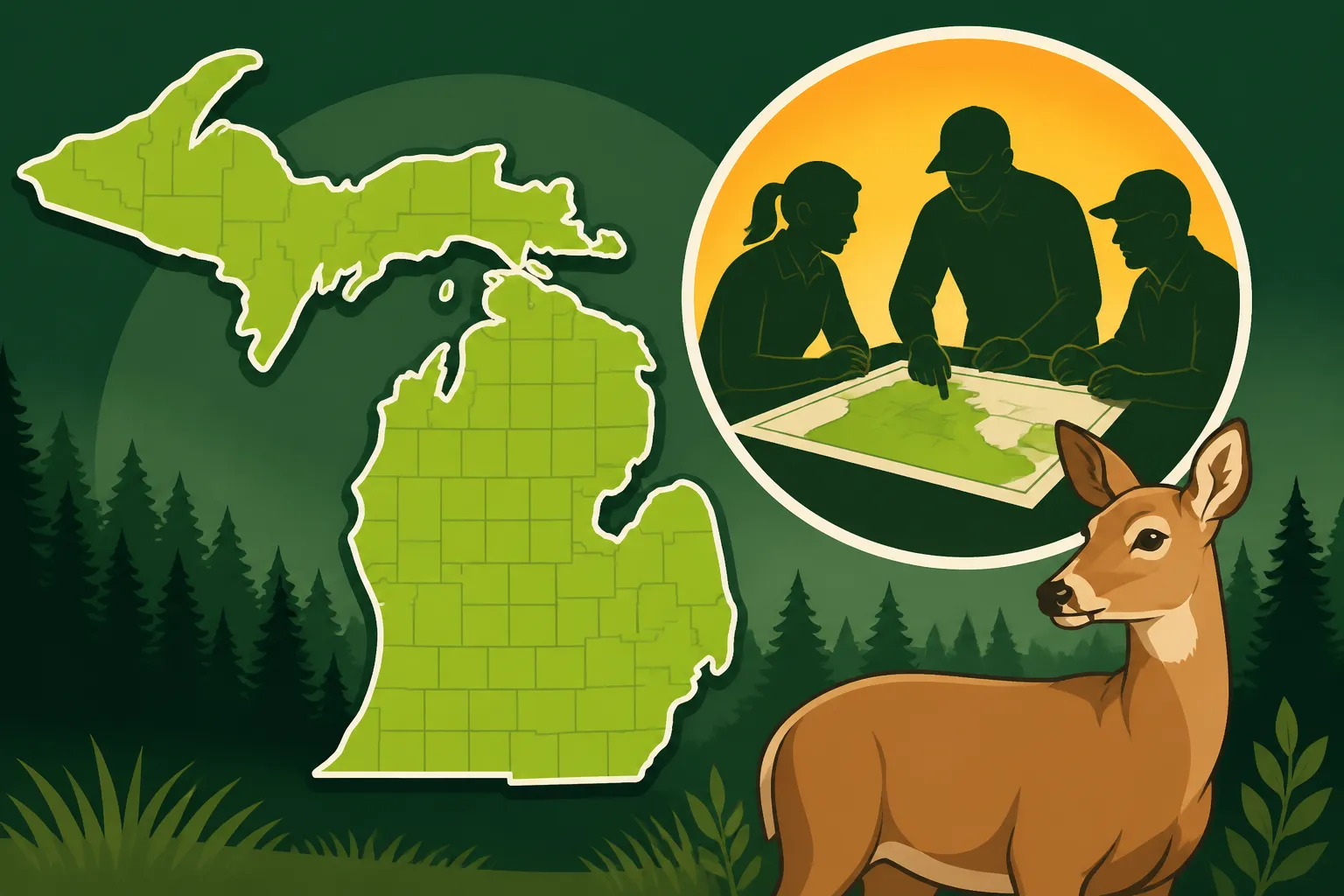
The cornerstone of Michigan's antlerless quota system is the Deer Management Unit (DMU). These are specific geographical areas, often defined by county lines, major roadways, or natural features, within which deer populations are managed with specific objectives. There are dozens of DMUs across Michigan, and each one has its own set of rules and, critically, its own antlerless quota. If you're wondering which specific unit you're in, check out our guide on Finding Your Michigan Deer Management Unit.
The DNR assesses each DMU individually. This means that even if two DMUs are geographically close, their antlerless quotas could be drastically different. Why? Because the deer population dynamics, habitat conditions, hunter pressure, and management goals can vary significantly from one unit to the next. For instance, a DMU primarily consisting of vast state forest in the Northern Lower Peninsula might have a different population objective than a DMU in the highly agricultural Southern Michigan Farm Country. The number of antlerless tags issued for each DMU is directly tied to these localized assessments. It's a precise approach, aiming to put the right number of tags in the right hands for the right areas.
Public Versus Private Land Quotas
Adding another layer of complexity to the system is the distinction between public and private land antlerless quotas. In many DMUs, the DNR will issue separate quotas for public land and private land. This is a crucial detail for Michigan hunters because it directly impacts where you can use your tag.
Here's how it generally works:
- Private Land Quotas: These are typically more generous, especially in agricultural areas where deer can cause significant crop damage. If you hunt on private land with permission, you'll likely find more opportunities to secure an antlerless tag. The logic here is that private landowners, especially farmers, are often keen to reduce deer numbers to protect their livelihoods, and issuing more tags facilitates this. You'll want to review our article on How Many Antlerless Tags You Can Buy for the full picture.
- Public Land Quotas: These are often more limited, particularly in areas with high hunter pressure or where the deer population is less robust. The DNR balances the desire for public hunting access with the need to maintain a sustainable herd on public land. This means that securing a public land antlerless tag can sometimes be more competitive. It's important to understand that in Michigan, you generally cannot use a private land antlerless tag on public land, though there are specific exceptions or rules depending on the DMU, as covered in Using a Private Land Tag on Public Land.
The distinction is vital for planning. A hunter with access to private agricultural land might have little trouble filling an antlerless tag, while a hunter relying solely on public land in a different DMU might find very few tags available, and those that are available might be quickly snatched up. Always double-check the specific regulations for your chosen DMU and land type before purchasing an antlerless license.
How Quotas Impact Your Michigan Deer Hunt
Understanding where antlerless quotas are set is one thing, but knowing how they influence your actual hunting experience is another. These quotas are not just bureaucratic numbers; they are fundamental to how you plan, apply for, and ultimately execute your deer hunt in Michigan.
Planning Your Hunt Around Tag Availability
Antlerless quotas directly dictate your opportunities to harvest a doe or fawn. If you have specific antlerless hunting goals—perhaps you want to fill your freezer, introduce a new hunter to success, or help manage the local deer population on your property—you absolutely need to factor these quotas into your planning.
- Early Research is Key: Before the season even begins, usually in late spring or early summer, the DNR releases the proposed and then final antlerless quotas for each DMU. This is your first alert. Use this information to identify DMUs with higher quotas if you prioritize antlerless opportunities. While powerful scouting tools like GoHunt can help you visualize land ownership and terrain features, the official quota numbers are published directly by the Michigan DNR. They’ll also detail specific rules like the Michigan Antler Point Restrictions by DMU if you're also chasing a buck.
- Consider Your Hunting Location: Are you hunting state land or private land? As discussed, public land tags are often scarcer. If you plan to hunt public land, you'll need to be especially diligent in checking the specific public land quotas for your chosen DMU. If you have private land access, the odds of drawing an antlerless tag are generally higher. This planning is crucial, especially if you're targeting areas known for good deer numbers, like those covered in Southern Michigan Farm Country Deer Hunting.
- Impact on Strategy: High antlerless quotas might encourage you to focus more on doe groups, especially early in the season before the rut, or later in the season during the Michigan Late Antlerless Firearm Season. Conversely, in DMUs with very limited or no antlerless tags, your hunting strategy will naturally shift to focus solely on antlered deer, making sure you adhere to the Michigan Antlered Deer Limits.
Think of the quota numbers as a roadmap. They tell you which roads are open and which might be closed for antlerless hunting, allowing you to plot the most successful course for your season.
Navigating the Application and Purchase Process
Securing an antlerless tag in Michigan isn't always as simple as walking into a retailer and buying one. In many DMUs, especially those with limited quotas, tags are allocated through an application and lottery system.
Here’s a general overview of the process:
- Application Period: The DNR announces an application period, typically in July or August, where hunters can apply for an antlerless deer license for a specific DMU and land type (public or private). You can often apply for multiple DMUs, prioritizing your choices.
- Drawing: If more applications are received than available tags in a particular DMU, a random drawing is held. This can be a tense time for hunters, waiting to see if their application was successful. The results are usually announced a few weeks after the application deadline.
- Leftover Tags: Not all tags are taken in the drawing. Sometimes, DMUs have leftover tags. These are then sold on a first-come, first-served basis, often starting in early September. This is a critical period for hunters who missed the drawing or want additional tags. Many hunters keep a close eye on the DNR website and The Michigan DNR Hunt Fish App for these announcements.
- License Purchase: Once you're drawn or if you purchase a leftover tag, you then complete the purchase of your Michigan Antlerless Deer Licences.
It’s important to note that the application process requires attention to detail regarding DMU codes, land types, and deadlines. Missing a deadline or incorrectly filling out an application can mean missing out on antlerless opportunities for the year. This whole process is explained in more detail through Michigan's Michigan Deer Licence and Combo Options.
To help illustrate the variation in quotas, here's a simplified table showing hypothetical antlerless tag allocations for a few example DMUs in a given year. Please remember these numbers are illustrative and do not reflect current or actual quotas.
| DMU (Example) | Public Land Quota | Private Land Quota | Total Quota | Primary Land Type | Typical Deer Density |
|---|---|---|---|---|---|
| 100 (Upper Peninsula Forest) | 100 | 50 | 150 | Heavily Forested | Low to Medium |
| 200 (Northern Lower Farm) | 250 | 1,500 | 1,750 | Mixed Forest/Ag | Medium to High |
| 300 (Southern Lower Ag) | 50 | 5,000 | 5,050 | Heavily Agricultural | High |
| 400 (CWD Zone) | 750 | 2,500 | 3,250 | Mixed, Targeted Mgmt | Medium to High |
(Note: These numbers are purely illustrative for understanding purposes. Always check current Michigan DNR regulations for actual, up-to-date quotas.)
This table highlights how the quotas can vary dramatically based on the DMU's characteristics and management objectives. Always consult the official Michigan DNR website for the most current and accurate quota information for your target DMU.
Staying Informed: Finding the Latest Quota Information
With so much riding on these antlerless quotas, staying informed is paramount for any Michigan hunter. The good news is that the DNR provides robust resources to help you navigate the system. It’s about knowing where to look and when to look.
Leveraging the Michigan DNR Website and Resources
The absolute best and most reliable source for antlerless quota information is the official Michigan DNR website. This is where the magic happens and all the crucial details are released. Don't rely on hearsay or outdated forums; go straight to the source.
Here’s what you should look for:
- Annual Deer Hunting Digest: Every year, the DNR publishes a comprehensive hunting digest. This document is a must-read, containing all the season dates, regulations, and often, the antlerless quotas for the upcoming season. It's usually available online as a PDF and in print at license retailers.
- Antlerless Deer License Quota Page: The DNR maintains a dedicated page on its website specifically for antlerless deer quotas. This page will be updated with the current year's numbers, broken down by DMU, and often includes public vs. private land allocations. They also typically post maps showing the DMUs, which is invaluable for understanding your hunting area.
- Application and Drawing Information: Details about when to apply for antlerless licenses, application deadlines, drawing dates, and how to check drawing results will all be posted on the DNR site. This is where you'll also find information about leftover tags and when they become available for purchase.
- Press Releases and News Alerts: The DNR frequently issues press releases announcing important dates, regulation changes, or noteworthy information regarding deer management. Subscribing to their email newsletters or regularly checking their news section can keep you ahead of the curve.
- The Michigan DNR Hunt Fish App: This mobile application is incredibly useful. It allows you to purchase licenses, report harvests (which is a Michigan Deer Tag Validation Rules requirement), and often provides quick access to regulations and season dates right from your phone, even when you're out in the field.
Make it a habit to check these resources well in advance of the season. Being prepared with accurate information can save you a lot of headaches and ensure you don't miss out on vital hunting opportunities.
Community Wisdom and Peer Insights
While the DNR website is your official source, there's immense value in tapping into the Michigan hunting community. Local knowledge, shared experiences, and peer insights can provide practical context and tips that complement the official information.
- Online Hunting Forums and Social Media Groups: Michigan-specific hunting forums and Facebook groups are buzzing with activity. Here, you'll find discussions about antlerless quotas, application strategies, and reports on deer activity in various DMUs. While always cross-reference official regulations, these platforms can offer real-time insights and a sense of what's happening on the ground. Hunters often share tips on Scouting Michigan Public Land Before Season or even strategies for Hunting Without Bait in the Lower Peninsula.
- Local Bait Shops and Sporting Goods Stores: These are often hubs of local hunting knowledge. The folks behind the counter, and the hunters congregating there, often have a finger on the pulse of local deer populations and tag availability. They can offer advice on which DMUs might have more tags, or if there's a strong local demand for specific areas.
- Hunting Mentors and Experienced Peers: If you're new to Michigan deer hunting or a specific area, connecting with experienced hunters can be invaluable. They can offer guidance on understanding the nuances of the quota system, navigating the application process, and even tips for Hunting the Michigan Rut in November if you're planning a buck hunt too.
Remember, always prioritize official DNR information, but don't underestimate the power of a well-informed and connected hunting community. Between official resources and community insights, you'll be well-equipped to understand where antlerless quotas are set and how to maximize your hunting success in Michigan.
Disclaimer
The information provided in this guide is for general informational purposes only and is not intended as legal advice. Hunting regulations, season dates, and quotas in Michigan are subject to change. Always consult the official Michigan Department of Natural Resources (DNR) website and current year's hunting digest for the most accurate and up-to-date information before planning any hunting activities.