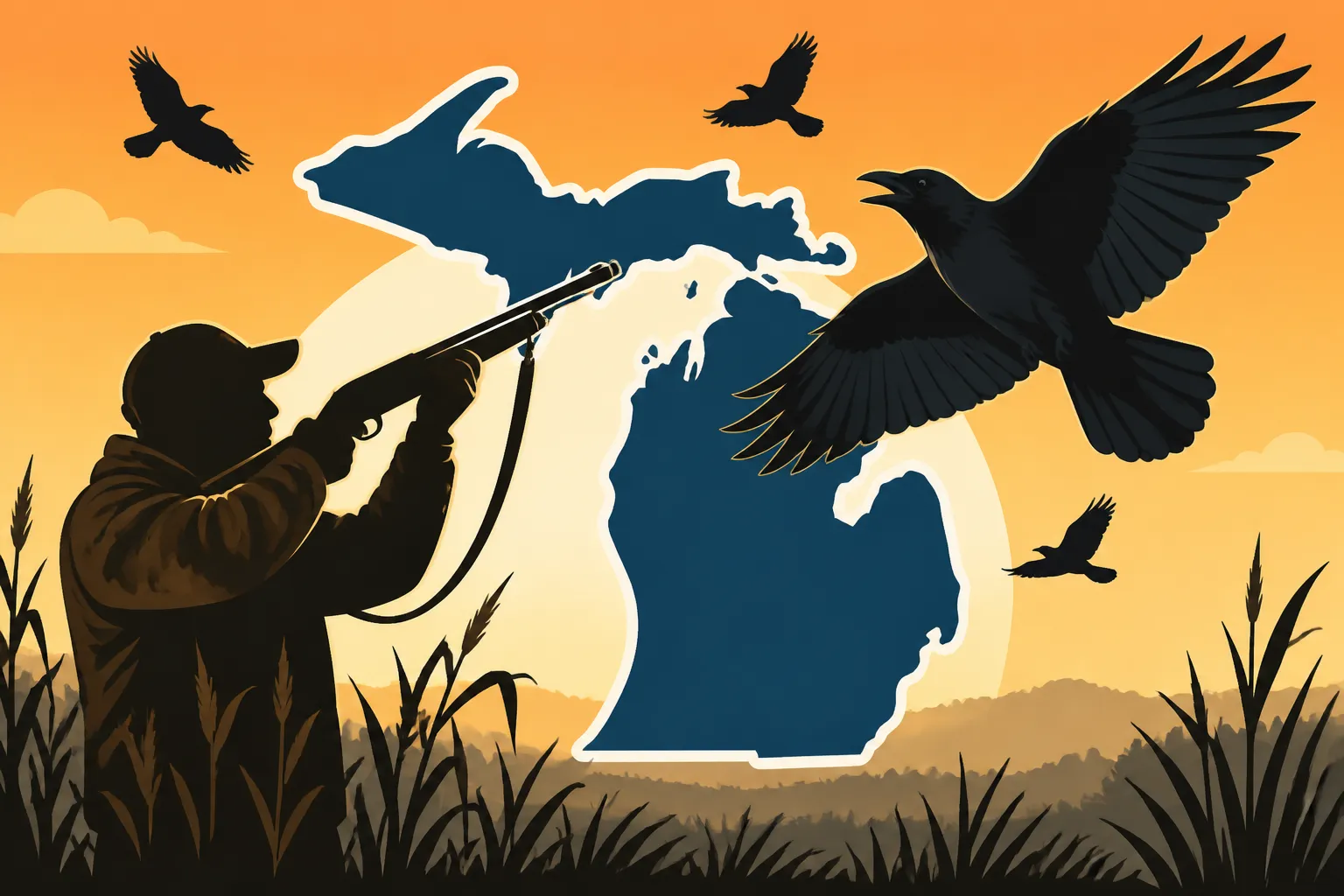
Michigan Crow Season Dates
Let's be honest, trying to keep track of all the hunting seasons here in Michigan can feel like navigating a maze blindfolded. Deer, turkey, waterfowl—they all have their specific dates, zones, and rules. But then you hear whispers about crow hunting, and suddenly it's a whole new ballgame, often leaving folks scratching their heads about when and how they can even pursue these intelligent birds. This guide is here to untangle the specifics of Michigan's crow season dates, break down the often-overlooked regulations, and even share some practical tips for heading out into the field.
Understanding Michigan's Crow Hunting Seasons
Crows are fascinating birds, incredibly smart and resilient, and they offer a unique hunting challenge. Unlike many game species, their seasons are often less publicized, leading to confusion among hunters. The key thing to remember is that crows are considered migratory birds under federal law, meaning their hunting seasons are set within a framework established by the U.S. Fish and Wildlife Service, then implemented by the Michigan Department of Natural Resources (DNR). This federal oversight is why their seasons aren't just an "open all year" free-for-all, despite what some might assume.
Why Crows Have Unique Regulations
The Migratory Bird Treaty Act of 1918 is the big one here. It's a foundational piece of legislation that protects migratory birds in the United States, Canada, Mexico, Japan, and Russia. While many species are fully protected, certain birds like crows, which can become agricultural pests or pose other management challenges, are allowed to be hunted under specific regulations. The federal framework typically dictates an overall maximum number of hunting days and general periods when states can set their seasons.
Because of this, individual states, including Michigan, get to establish their specific season dates within those federal guidelines. This flexibility allows the Michigan DNR to tailor crow seasons to local populations, agricultural concerns, and general hunting opportunities. It's not just arbitrary; it’s a balance between conservation and allowing hunters to pursue a species that can impact crops and other wildlife populations when their numbers get too high.
Official Michigan Crow Season Dates
If you’re looking to get out and hunt crows in Michigan, you’ll find that the season is typically split into two distinct periods, offering quite a bit of opportunity throughout the year, especially outside of the main firearm deer seasons. These dates can shift slightly year to year, so always check the most current Michigan DNR Hunting and Trapping Digest, but the general structure remains consistent.
The first crow hunting period typically runs from August 1st through September 30th. This early season is a fantastic time to get out before the hustle and bustle of deer season really kicks in, offering warm weather hunting opportunities. You'll often find crows still in larger family groups or congregating in feeding areas after the summer breeding season.
The second, and much longer, season usually begins around October 10th and extends all the way through March 31st. This is your prime time for consistent crow hunting, covering everything from the tail end of fall into the colder winter months and early spring. During this period, crows often gather in massive roosts, which can be incredible to witness and offer different hunting challenges and strategies. There is no daily or season bag limit for crows in Michigan, which is a significant difference from almost all other game species.
Special Considerations and Exceptions
While the dates are generally consistent, there are always a few nuances to consider. One common question hunters have is about Sunday hunting. Michigan allows hunting on Sundays for crows, just as it does for most other game species. This is a welcome change from historical restrictions and opens up more weekend opportunities for busy hunters.
Another point of clarity revolves around specific areas. While crow hunting is broadly permitted statewide, you should always be mindful of local ordinances, safety zones, and any specific land management rules. For instance, hunting might be restricted in certain urban or highly populated areas, even if it's technically within the season. Always check with local authorities or land managers if you're unsure about a particular spot. When planning your hunt, it's a good idea to consult Michigan's Mi-HUNT Map to confirm public land access and any specific area restrictions that might apply.
Essential Rules Beyond Just Dates
Knowing the season dates is just the first step. Like any hunting endeavor in Michigan, there are other crucial regulations that crow hunters must follow to stay legal and ethical in the field. Ignoring these details can lead to fines, loss of privileges, and give hunters a bad name.
Legal Shooting Hours and Equipment
Michigan sets specific legal shooting hours for most hunting seasons, and crows are no exception. Generally, you can hunt crows from one-half hour before sunrise to one-half hour after sunset. This is critical to remember; hunting outside these hours, even by a few minutes, can result in a violation. Always carry a reliable light source, like a headlamp, and know your sunrise/sunset times, which are readily available on weather apps or through the DNR's resources.
When it comes to equipment, crow hunting offers a lot of flexibility. You can use shotguns, rifles, or even archery equipment. Shotguns are a popular choice, especially when crows are flying overhead or in close quarters, with common shot sizes ranging from 7.5 to 6. Electronic calls are legal for crow hunting in Michigan, which is a huge advantage for attracting birds. Decoys, whether full-body or silhouettes, are also perfectly legal and highly effective at luring in wary crows. Unlike many other species, there are no specific caliber or gauge restrictions for crows, giving hunters freedom in their weapon choice, but always prioritize safety and ethical shot placement.
Hunter Orange and Safety Zones
One common point of confusion for crow hunters is the requirement for hunter orange. During the firearm deer season (November 15-30) and the early antlerless firearm weekend, or the late antlerless hunting in Michigan, all hunters on lands where firearm deer hunting is permitted are required to wear hunter orange. However, outside of these specific firearm deer seasons, hunter orange is generally not required for crow hunting.
Despite not being required for much of the crow season, wearing hunter orange is still a smart safety practice, especially if you're hunting on public land or in areas where other hunters might be present pursuing different small game species or even just enjoying the outdoors. Safety zones are another critical rule: you cannot discharge a firearm within 150 yards (450 feet) of an occupied dwelling, structure, or building, unless you have permission from the owner or occupant. This rule applies year-round to all hunting, so always be mindful of your surroundings. Understanding the nuances of Michigan Hunter Safety Requirement is crucial for any hunter venturing into the woods.
Public vs. Private Land Access
Michigan boasts a vast amount of public land, from state forests to state game areas, providing ample opportunities for crow hunting. However, it's vital to know the rules specific to public land, as they can sometimes differ from private land. For instance, while baiting is generally prohibited for deer on public land, it's not a common tactic for crows, but always double-check current regulations if you consider any attractants. Finding suitable public land to hunt can be made easier with tools like the GoHunt app or website, which provides detailed maps, land ownership information, and even some habitat data. This can be invaluable for pinpointing remote spots away from pressure.
If you plan to hunt on private land, you must obtain permission from the landowner before stepping foot on their property. This isn't just common courtesy; it's the law in Michigan. Violating Michigan Trespass and Permission Law can lead to serious consequences. A simple knock on the door, explaining your intentions for crow hunting, often goes a long way. Many farmers welcome crow hunters who can help mitigate crop damage. Always carry your hunting license and any necessary permits, and be prepared to show them if requested. Understanding Public Hunting Land in Michigan versus private options is a key part of responsible hunting.
Strategies for a Successful Crow Hunt in Michigan
Beyond the dates and regulations, successful crow hunting requires strategy and understanding of crow behavior. These birds are incredibly intelligent, with excellent eyesight and a strong social structure. Just walking into the woods and hoping to stumble upon them is rarely effective.
Scouting for Crow Roosts and Feeding Areas
Like deer, successful crow hunting often begins with good scouting. Crows follow predictable patterns, especially once winter sets in. They will often have large communal roosts where hundreds, if not thousands, of birds gather to sleep. Identifying these roosts is a game-changer. Listen for their distinctive caws at dusk and dawn, which can lead you to their general location. In the evening, watch the flight paths of incoming birds; they'll often come from all directions, converging on a specific woodlot.
During the day, crows disperse to feeding areas. These can be agricultural fields (especially corn or silage fields), landfills, or even suburban areas where food is abundant. Pay attention to telephone wires, dead trees, and open fields, where crows frequently perch and forage. Using aerial photos from mapping tools like GoHunt or the DNR's Mi-HUNT map can help you identify potential roosting cover (dense conifers or heavy hardwoods) and feeding fields. A little preseason detective work can make all the difference when the season opens.
Calling Tactics and Decoy Setups
Crows are highly vocal, and calling is arguably the most effective tool in a crow hunter's arsenal. Electronic calls, being legal in Michigan, are incredibly versatile. You can mimic a variety of crow sounds: distress calls to provoke an aggressive response, rally calls to bring in a flock, or even sounds of a dying crow to tap into their predatory instincts. Start with softer calls and increase volume as needed. Often, a "fight in a flock" or "distress" call can bring birds in quickly, curious or eager to join the fray.
Decoy setups enhance your calling efforts dramatically. Crows are visual animals. A few full-body crow decoys or silhouettes placed strategically in an open field or on tree branches can make your setup look more natural and inviting. Some hunters even incorporate owl or hawk decoys (predators of crows) to elicit an aggressive mobbing response from passing flocks. Place your decoys within shotgun range, typically 20-30 yards, to ensure ethical shots. Combining good calling with a realistic decoy spread can lead to fast and furious action, particularly during the longer Michigan Small Game and Furbearer Seasons.
Seasonal Considerations and Weather
The time of year and prevailing weather conditions can significantly impact crow behavior and, therefore, your hunting strategy. During the early season (August-September), crows are often in smaller family groups and may be less responsive to aggressive calling. They might be focused on local food sources and require a more subtle approach. Early morning hunts are often productive as birds move from roosts to feeding grounds.
As the season progresses into late fall and winter (October-March), crows start to congregate in larger numbers. This is when the big roosts form, and the birds become more susceptible to aggressive calling. Cold, clear days can be excellent for hunting, as crows are often actively foraging. However, extreme cold or heavy snow can make them hunker down, making them harder to locate. Hunting after a fresh snowfall can be advantageous, as their tracks and concentrations become more apparent, and the snow creates a stark contrast for decoys. Just like with Coyote Calling in Michigan Winter, understanding the impact of weather on animal behavior is key to success.
Common Questions and Misconceptions
There are always a few lingering questions and persistent myths about crow hunting that deserve clarification. Addressing these can help hunters plan more effectively and ensure they are always within the bounds of Michigan law.
Can You Hunt Crows Year-Round?
This is perhaps the most common misconception: that crows can be hunted all year long. The answer, definitively, is no. While Michigan’s crow seasons are quite generous, spanning many months of the year, there are specific closed periods. The primary closed periods are usually from April 1st through July 31st, and a brief break between late September and early October. These closed periods are crucial for allowing the birds to breed and raise their young without undue pressure.
Disregarding these closed periods is not only illegal but also unethical. It’s important to respect wildlife management practices and ensure sustainable populations. Always consult the current year's Michigan DNR hunting digest for the exact start and end dates of the seasons. Thinking that because there's no bag limit means there's no season is a dangerous assumption that can land you in trouble, potentially incurring Michigan Wildlife Violation Penalties.
Reporting Requirements and Bag Limits
Unlike deer, turkey, or bear, there are no specific harvest reporting requirements for crows in Michigan. You don't need to tag them, validate a license, or report your kill to the DNR. This simplification is largely due to the management philosophy for crows, which focuses more on nuisance control and recreational hunting opportunities rather than strict population quota management.
As mentioned earlier, there is also no daily or season bag limit for crows in Michigan. This means that if you have a particularly hot setup and the birds are responding, you can continue hunting as long as you're within legal shooting hours and not violating any other regulations. While there's no limit, ethical hunters will always consider their intent and how many birds they can reasonably use or dispatch cleanly. This lack of a bag limit is a notable difference when comparing crow hunting to almost all other Michigan Small Game and Furbearer Seasons.
Michigan Crow Season Overview
To help you keep track of the main points, here's a quick reference table for Michigan's crow hunting season. Always double-check the current Michigan DNR Hunting and Trapping Digest for any last-minute changes before heading out.
| Season Period | Start Date | End Date | Daily Bag Limit | Season Bag Limit | Legal Shooting Hours | Hunter Orange Required | Electronic Calls Legal |
|---|---|---|---|---|---|---|---|
| Early Season | August 1 | Sept 30 | None | None | 1/2 hr before sunrise to 1/2 hr after sunset | No (unless during firearm deer seasons) | Yes |
| Late Season | Oct 10 | March 31 | None | None | 1/2 hr before sunrise to 1/2 hr after sunset | No (unless during firearm deer seasons) | Yes |
Disclaimer
This guide is intended for informational purposes only and is not a substitute for the official Michigan Department of Natural Resources hunting regulations. All hunters are responsible for knowing and abiding by all current state and federal hunting laws. Regulations can change annually, so always consult the most recent Michigan Hunting and Trapping Digest before engaging in any hunting activities.