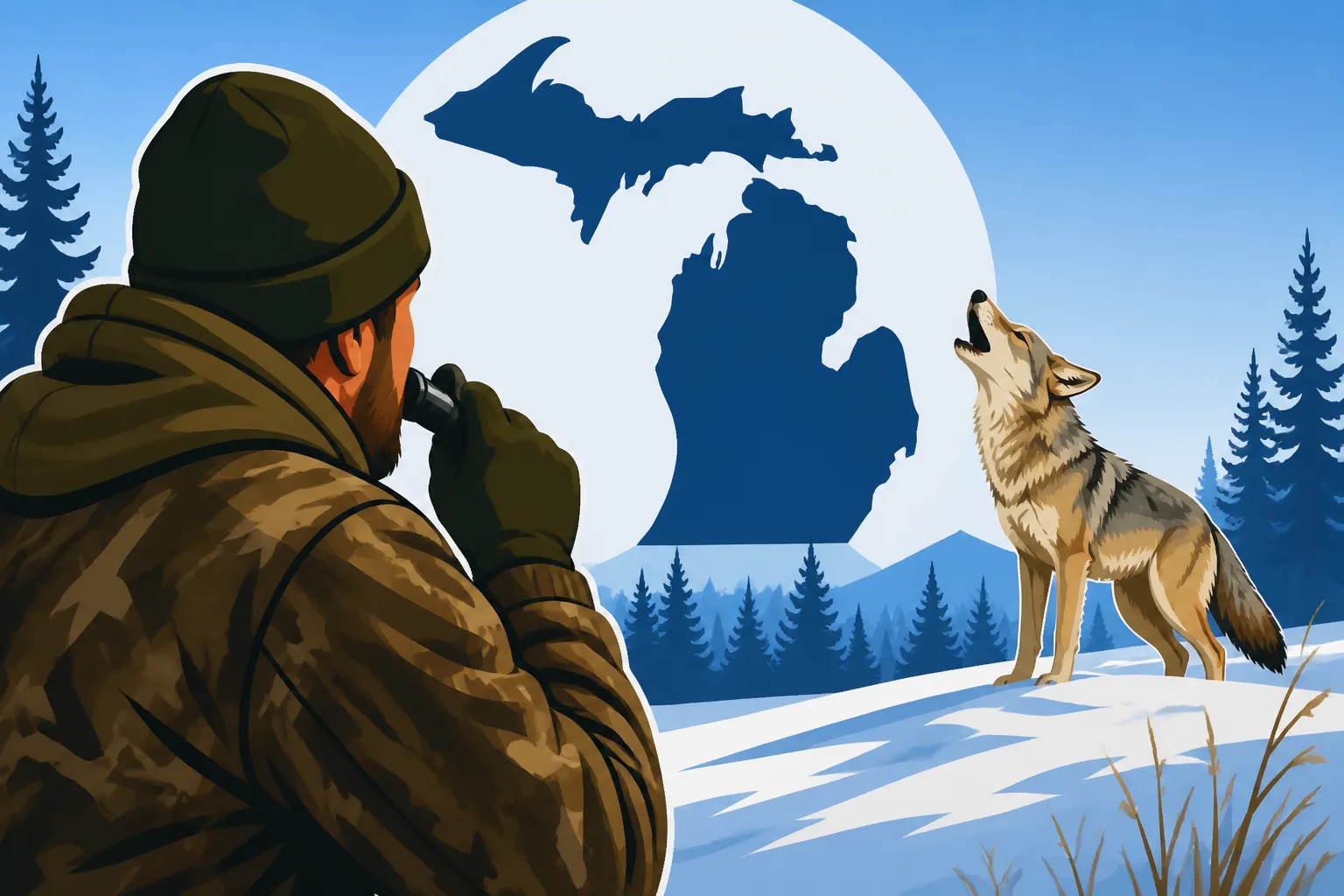
Coyote Calling in Michigan Winter
Winter in Michigan brings a stark beauty to our landscapes, but for many hunters, it also presents a brutal challenge: targeting coyotes when the mercury plummets and snow blankets the woods. These elusive canids are wary year-round, but the cold and scarcity of food in winter can make them even more cunning and difficult to lure. This guide is dedicated to helping you master the art of coyote calling in the depths of a Michigan winter, offering proven strategies and gear tips to fill your freezer or simply enjoy the thrill of the chase.
Understanding Michigan's Winter Coyotes
Before you even think about setting up a call, you need to understand the critter you're after. Michigan's coyotes are intelligent, adaptable predators, and their behavior shifts significantly once the snow flies. Ignoring these changes is a surefire way to come home empty-handed and frozen.
How Winter Impacts Coyote Behavior
When Michigan's famous mild autumns give way to the bitter chill of December, January, and February, a coyote's life becomes a constant calculation of energy in versus energy out. Food becomes scarcer, and every calorie spent must contribute to survival. This makes them both more cautious and, paradoxically, more susceptible to a well-executed call that mimics an easy meal or a vulnerable rival. They'll often shift their hunting patterns, focusing on areas where smaller prey like rabbits and rodents might be more concentrated, or where deer, weakened by harsh conditions, present an easier target. You'll find them traveling more efficient routes, often along frozen creek beds, old logging roads, or ridge lines where the snow isn't as deep. Their need to conserve energy means they're less likely to chase a distant sound, so your setup and approach become even more critical.
The breeding season also begins to factor in as winter progresses, typically peaking from late January through March. This introduces a whole new set of vocalizations and territorial behaviors. While food calls remain effective, understanding the subtle nuances of how coyotes interact during this time can unlock additional calling opportunities. Male coyotes become particularly aggressive towards rivals, and both sexes will respond to distress calls, especially if they believe it’s a younger, weaker animal. Keeping tabs on the current temperatures and snowfall, perhaps even using a mapping tool like those offered by GoHunt to check historical weather data for your area, can help you predict where coyotes might be holed up or moving.
Prime Winter Habitat for Coyotes
Coyotes don't just wander aimlessly in the winter; they gravitate towards specific types of habitat that offer them both food and shelter from the elements. Think about areas that break the wind, hold prey, or provide good vantage points. In the northern Lower Peninsula and throughout the Upper Peninsula, this often means dense conifer stands like cedar swamps or pine plantations. These areas provide thermal cover, blocking the brutal winds and accumulating less snow on the forest floor, making travel easier for them and offering refuge for their prey. You might find pockets of deer yarding up in these swamps, which also attracts coyotes looking for a struggling fawn or a winter-killed adult.
In Southern Michigan farm country, coyotes will frequent woodlots, river bottoms, and brushy fence rows that dissect agricultural fields. These spots are crucial travel corridors and often hold rabbits, pheasants, and mice—all vital winter food sources. The edges of cornfields, even after harvest, can be goldmines as they often still contain scattered kernels or serve as cover for rodents. Don't overlook old farmsteads or abandoned buildings, either; these can offer surprisingly good shelter and harbor small game. When scouting public land before season, look for areas where different habitat types converge, creating a diverse food and cover matrix that coyotes will exploit.
Reading Winter Sign and Scat
Snow is a gift to the winter coyote hunter. It acts as a blank canvas, recording every movement and telling a story if you know how to read it. Fresh tracks are your most valuable clue, showing you recent coyote activity and travel routes. Look for tracks that are generally straighter than a dog's, with a more purposeful gait, often in a "direct register" where the hind paw falls exactly on the front paw's print. You'll often see them following deer trails, two-tracks, or fence lines – paths of least resistance that save energy. Pay attention to how fresh the tracks are; a light dusting of new snow over older tracks tells a different story than crisp, well-defined prints from a few hours ago.
Beyond tracks, look for scat. Coyote scat in winter can often contain fur, bone fragments, and even deer hair, indicating their recent meals. The size and consistency can give you clues about the animal's health and what it's been eating. Additionally, keep an eye out for "postings" – areas where coyotes mark their territory with urine or scat, often on elevated spots like old stumps or snowdrifts. These spots can indicate travel corridors or areas where multiple coyotes might be present. Learning to distinguish coyote sign from domestic dog sign is crucial, and it's a skill that improves with every hour spent in the woods. By thoroughly reading the winter canvas, you can narrow down your hunting areas dramatically, avoiding unproductive stands and focusing on high-probability zones.
Essential Gear for Michigan Winter Calling
Michigan winters are no joke. Sub-zero temperatures, biting winds, and deep snow can quickly turn a productive hunt into a miserable ordeal if you're not properly prepared. The right gear isn't just about comfort; it's about staying safe and effective in the field.
Cold Weather Clothing and Comfort
Staying warm and dry is paramount when you're sitting motionless for extended periods in Michigan's winter. Forget cotton; it holds moisture and loses its insulating properties. Instead, embrace a comprehensive layering system. Start with a moisture-wicking base layer, ideally merino wool or a good synthetic blend, to pull sweat away from your skin. Next, add an insulating mid-layer, like a fleece jacket or a puffy synthetic vest, to trap warmth. For your outer layer, you need something windproof, waterproof, and well-insulated. A quality hunting parka and bibs or insulated pants are essential. Companies like Sitka, First Lite, or Cabela's offer excellent cold-weather options designed for hunting.
Don't forget the extremities. A warm hat that covers your ears is non-negotiable; you lose a significant amount of heat from your head. Invest in insulated, waterproof gloves or mittens with finger access for shooting, and consider hand warmers to keep your digits functional. For your feet, insulated, waterproof boots are critical, paired with thick wool socks. Make sure your boots are roomy enough to allow for good circulation, even with thick socks. Sitting still for a long time, especially on frozen ground, demands excellent insulation from below. A small, insulated sitting pad can make a huge difference in comfort and body temperature retention. When considering your gear, think about a Cold Weather Sitting Strategy that keeps you warm and alert.
Firearms and Ammunition Choices
When it comes to firearms for winter coyote hunting, reliability and accuracy are key. Many hunters opt for flat-shooting centerfire rifles like a .223 Remington, .22-250 Remington, or even a .204 Ruger. These calibers offer excellent velocity, minimal recoil, and the precision needed for a clean kill on a wary coyote. A good quality scope with decent low-light gathering capabilities is also important, as coyotes often move during dawn and dusk. For those hunting in areas with more restrictive firearm regulations, a shotgun loaded with buckshot can be effective in close quarters, though ranges will be significantly shorter. Straight-wall cartridges, like the popular .450 Bushmaster, are also legal in Michigan's limited firearm zone, and while perhaps overkill for coyotes, they offer versatility if you're also deer hunting.
Ammunition choice is equally important. Look for bullets designed for varmints, which typically expand rapidly upon impact, delivering maximum energy and a humane kill without excessive pass-through. Companies like Hornady, Federal, and Winchester offer excellent varmint-specific loads. Practice shooting in cold weather with your chosen setup to ensure you're comfortable and accurate, especially when wearing bulky gloves. Consider adding a sling to your rifle for easier carrying across snowy terrain, and perhaps even shooting sticks for a stable rest when a shot opportunity arises. Remember to check local ordinances and Michigan's legal shooting hours before heading afield.
Electronic Callers Versus Hand Calls
The choice between electronic callers and hand calls, or often a combination of both, depends on your hunting style and the situation. Electronic callers, like those from Foxpro or ICOtec, offer a vast library of sounds—everything from rabbit distress to pup barks and howls. They allow you to project sound at higher volumes, crucial on windy days or across large open areas. Many modern e-callers can be controlled remotely, letting you position the speaker away from your hiding spot, drawing the coyote's attention away from you. This is a significant advantage, especially for wary winter coyotes. Investing in a quality e-caller with durable construction for harsh weather is a smart move.
Hand calls, on the other hand, offer unparalleled realism and the ability to instantly adjust the tone, volume, and cadence of your calls based on the coyote's reaction. A good open-reed distress call or a closed-reed howler can be incredibly effective. They're also lightweight, compact, and don't require batteries, making them reliable in extreme cold. Many successful coyote hunters use both: an e-caller for the initial, louder sequences, and then transition to a hand call for the final, subtle coaxing once a coyote commits and gets closer. Practice with both extensively to become proficient. Having a variety of calls at your disposal allows for maximum adaptability to different scenarios and coyote moods.
Mastering Winter Calling Techniques
Calling coyotes in winter isn't just about making noise; it's about telling a convincing story. The sounds you choose, how you deploy them, and how you react to environmental factors all play a critical role in success.
Decoy Placement and Visuals
While sound is your primary tool, visual elements can often be the final convincing factor for a hesitant coyote. A well-placed decoy can provide a focal point, drawing the coyote's attention away from your hiding spot and giving you a better shot opportunity. In winter, simple decoys mimicking a distressed rabbit or a small, injured bird work well. Their movement, even subtle, can be incredibly enticing. Place your decoy upwind of your position, ideally 20-50 yards out, so the coyote must expose itself as it approaches. If you're using an e-caller, sometimes placing the speaker near the decoy enhances the illusion.
Consider the backdrop for your decoy. Against a snowy field, a dark decoy might stand out better, while in brush, something with more movement might be key. Decoys with natural fur or feather components can add realism. Remember that coyotes have excellent eyesight, so ensure your decoy blends naturally into the environment without looking out of place. Some hunters even experiment with small, portable flags or feathers that flutter in the breeze to simulate movement, especially in areas with little natural cover. The goal is to make the scene as convincing as possible, creating a visual confirmation of the distress call they are hearing.
Calling Sequences and Volume
The art of coyote calling lies in the sequence and volume of your calls. In winter, coyotes are often spread out and may be less active, so your initial calls need to be loud enough to grab their attention from a distance, but not so aggressive that it spooks them. Start with a series of distress calls, mimicking a rabbit, fawn, or bird in trouble. Use short bursts of high-pitched squeals and screams, followed by periods of silence (30 seconds to a minute) to listen for a response. If you don't hear anything, increase the volume and try again, perhaps varying the type of distress sound.
Once you have a coyote's attention or see one approaching, you need to adjust your strategy. If it's coming in hot, you might back off the volume or even go silent, letting its curiosity bring it the rest of the way. If it hangs up at a distance, a softer, more pleading distress call, or even a few subtle whimpers, might be enough to draw it in closer. During the late winter breeding season, incorporating some coyote vocalizations like female invitations, pup distress, or even a challenging howl can be incredibly effective. Just be careful not to overcall; sometimes less is more. Many successful hunters will call for 1-2 minutes, then listen for 3-5 minutes, repeating this sequence for 20-30 minutes per stand. This is where a good mapping and weather tool, such as those available on GoHunt, can help you plan your stands and anticipate wind conditions that might carry or dampen your calls.
Adapting to Wind and Snow
Michigan's winter winds can be your best friend or your worst enemy when coyote calling. A steady breeze can carry your calls further, but a swirling wind can make it impossible for coyotes to pinpoint the source of the sound, or worse, carry your scent directly to them. Always try to set up with the wind in your face or quartering, so your scent blows away from the area you expect coyotes to approach from. Use natural terrain features like ridges, hills, or thick timber to help funnel your calls and block your scent.
Deep snow can also muffle your calls, requiring more volume. However, it also creates quieter conditions, making it easier for you to hear distant responses and for coyotes to hear your calls. When snow is falling, coyotes might be less active, but a break in the storm can trigger movement. If you're calling after a fresh snowfall, tracks will be exceptionally clear, giving you even more precise information on their movements. Consider using a ground blind on Michigan State Land to break up your silhouette against the snow and provide a little extra protection from the elements. Don't be afraid to experiment with slightly different calling locations if the wind or snow conditions change, always prioritizing scent control and sound projection.
Strategic Setup and Approach in Winter
Finding the right spot and approaching it correctly can often be more important than the call itself. In winter, with fewer leaves on the trees and vast stretches of open snow, visibility is both a blessing and a curse.
Entry and Exit Routes on Snow
Your approach to a calling stand in winter needs to be meticulously planned. Every step leaves a track, and every sound can carry further in the cold, crisp air. Always plan your entry route to be as quiet and concealed as possible, preferably using terrain features like creek beds, ditches, or dense tree lines to hide your movement. Avoid walking directly through open areas where you might skyline yourself or leave obvious tracks that could alert a wary coyote. A long, circuitous route that keeps you out of sight is often better than a short, direct one that exposes you.
Consider the wind for your approach as well, ensuring it doesn't carry your scent into the area you intend to call. If possible, use trails or old logging roads that might already be compacted, reducing the crunch of your boots on fresh snow. Once you're in position, try to keep your tracks to a minimum around your setup. Your exit strategy is equally important. Once you finish calling, don't just stand up and walk out. Scan the area thoroughly for any coyotes that might be circling downwind or hung up out of sight. Plan your exit to also take you away from the area without spooking any animals that might be responding slowly.
Concealment and Shot Lanes
Winter offers less natural concealment, making your choice of setup crucial. Look for areas with good cover behind you, like a dense cedar stand, a large downed tree, or a rock outcrop. This breaks up your silhouette and minimizes your visibility from behind. You want to be able to see a significant distance, especially downwind, but also have enough foreground cover to break up your shape. A sparse evergreen provides excellent concealment in winter.
Identify your primary and secondary shot lanes before you even start calling. These are the corridors where you expect a coyote to approach and where you have a clear, unobstructed shot. Clear away any small branches or obstructions that might deflect a bullet. Remember that snow can create glare, so consider setting up where you have some shade or where the sun won't be directly in your eyes. A small ground blind or even natural brush can make all the difference in breaking up your outline and allowing you to move subtly without being detected. With the trees bare, movement is easily spotted, so remain as still as possible.
The Importance of Patience in the Cold
Patience is a virtue in all hunting, but it becomes an absolute necessity when coyote calling in a Michigan winter. Coyotes are often lethargic in extreme cold, and it can take them longer to respond to calls. They might also circle widely, taking their time to scent-check the area before committing. Don't give up on a stand too quickly. Many experienced callers recommend staying on stand for at least 20-30 minutes, sometimes even longer, especially if conditions are calm. It's not uncommon for a coyote to appear 15-20 minutes into a stand, sometimes even later.
This extended sitting time underscores the importance of proper cold-weather gear. If you're shivering uncontrollably or constantly shifting to stay warm, you'll be less effective. Dress warmly, bring a hot beverage, and mentally prepare for a quiet vigil. The rewards of a successful winter coyote hunt, often involving a beautiful prime pelt and the satisfaction of outsmarting a cunning predator, are well worth the wait. It's a testament to your endurance and skill. While you're waiting, consider looking up other Michigan hunting methods, like Predator and Furbearer Hunting in Michigan or even Night Hunting Rules for Michigan Coyotes for different seasonal approaches.
Post-Call Considerations and Ethical Practices
Taking a coyote is just one part of the hunt. What you do afterward, from recovery to respecting other hunters, is equally important. Ethical practices ensure the sustainability of the sport and positive interactions within the hunting community.
Tracking and Recovery in Snow
A clean kill is always the goal, but sometimes, even with a good shot, a coyote might run. This is where snow becomes your friend again. Tracking a coyote in fresh snow is generally much easier than in bare ground. Look for blood sign, drag marks, or changes in the coyote's gait that indicate it's wounded. Follow the tracks patiently and methodically, marking the last known blood or track with a piece of flagging tape if you lose the trail. If the tracks indicate the coyote is bedding down or moving slowly, give it some time before pushing it, especially if it's wounded.
If you lose the blood trail or tracks, try widening your search in circles around the last confirmed sign. Coyotes, like deer, will often try to find dense cover or water when wounded. If snow is actively falling, your window for tracking is shorter, so act quickly. Having a partner can significantly aid in recovery, as one person can focus on the tracks while the other scans ahead. Always carry a good flashlight or headlamp, especially if you're hunting near dusk, as tracking can quickly extend into darkness. Knowing how to properly track game in Michigan snow is an invaluable skill.
Public Land Ethics and Other Hunters
Much of Michigan's prime coyote hunting ground is public land, shared with deer hunters, bird hunters, trappers, cross-country skiers, and snowmobilers. Being a responsible hunter means respecting these other users and practicing good public land etiquette. Always wear hunter orange during any firearm deer season or other seasons where it's required. Michigan requires a certain amount of hunter orange to be visible, often 50% of your outermost clothing above the waist, including a hat, during the firearm deer season. Even outside those seasons, wearing a bit of orange when moving through public land is a good safety practice.
Be mindful of other hunters' setups. If you see parked vehicles or obvious signs of deer hunters in an area, consider moving to a different spot. Sound travels far in winter, so be aware that your calls might carry further than you expect. Pack out everything you pack in, including spent shell casings. If you're using a game camera, be sure to adhere to all Trail Camera Rules on Michigan Public Land. Leave the area better than you found it. Respect for other users and the land itself ensures that we all have continued access to these valuable resources. If you utilize mapping programs like GoHunt to scout and delineate public and private lands, you're already ahead of the game in terms of responsible access.
Reporting Your Success and Data
While coyotes aren't a species that requires mandatory harvest reporting in Michigan like deer or bear, contributing data can still be valuable. If you participate in any organized coyote hunting contests or simply keep personal records, consider sharing that information with local wildlife biologists if given the opportunity. This can help them track population trends, understand local distribution, and manage the species more effectively.
If you harvest a coyote, consider what you'll do with the animal. The pelts are often prime in winter, making them valuable for tanning or sale to fur buyers. Learning proper skinning and fleshing techniques will maximize the value of your harvest. Many hunters also save the skulls as trophies. If you plan to consume the meat, which is safe, remember that coyote meat has a strong flavor and is often best used in recipes that mask this, like chili or stew. Handling any game meat safely is critical, and winter's cold temperatures can certainly help in the process. Remember, every successful hunt contributes to the story of hunting in Michigan.
| Call Type | Best Use Cases in Winter | Pros | Cons |
|---|---|---|---|
| Electronic Caller | Long-range attraction, high wind, diverse sounds | Hands-free, remote control, large sound library, loud | Requires batteries, can be expensive, less "personal" |
| Open-Reed Hand Call | Realistic distress, close-range coaxing | Realistic, nuanced sounds, no batteries, affordable | Requires practice, lower volume |
| Closed-Reed Hand Call | Howls, barks, pup distress, locator calls | Good for coyote vocalizations, durable, no batteries | Limited sound range compared to open-reed calls |
| Lip Squeak | Final close-range stop, subtle distress | No equipment needed, highly realistic, very subtle | Very short range, requires calm conditions |
Disclaimer
Please be aware that hunting regulations, seasons, and licensing requirements can change. Always consult the most current Michigan Department of Natural Resources (DNR) regulations before heading afield. This guide is for informational purposes only and does not supersede official DNR guidelines.