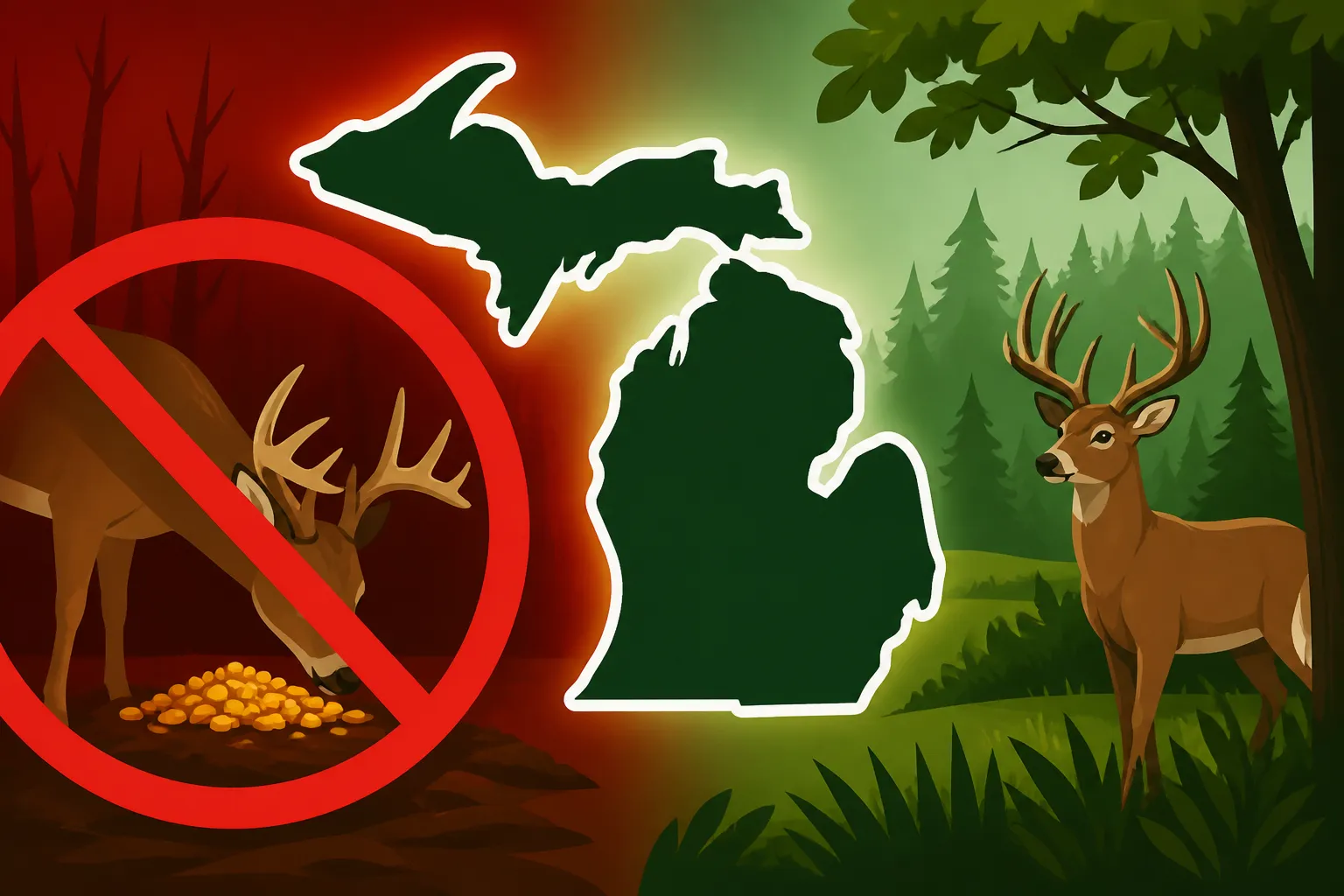
Why Michigan Banned Baiting
It's no secret that Michigan's baiting ban has been a hot topic around deer camps and sporting goods stores for years, leaving many hunters scratching their heads and feeling frustrated about why a tradition so deeply ingrained in our hunting culture was suddenly taken away. Understanding the science and the reasoning behind this significant change is key to adapting your hunting style and continuing to find success in the woods. This guide aims to pull back the curtain on why Michigan banned baiting, delve into the details of the ban, and offer practical, effective strategies for hunting Michigan's deer herd without the aid of a bait pile.
The Unseen Threat: Chronic Wasting Disease and Deer Baiting
The single most significant driver behind Michigan's baiting ban is the presence and ongoing threat of Chronic Wasting Disease (CWD). This isn't just some abstract concept; it's a real and devastating neurological disease that affects cervids, including white-tailed deer, elk, and moose. It's always fatal, and there is no known cure or vaccine. Once an animal contracts CWD, its brain and nervous system slowly degenerate, leading to behavioral changes, emaciation, and ultimately, death. It's a truly heartbreaking thing to witness in a deer, and it’s something no hunter wants to see proliferate in our cherished herds.
The terrifying thing about CWD is how it spreads. It's caused by abnormal proteins called prions, which can be shed through saliva, urine, and feces. These prions can persist in the soil for years, meaning an area where an infected deer once stood can remain infectious long after the animal is gone. Now, think about what happens when you introduce a bait pile. Suddenly, deer that might otherwise be spread out across the landscape are congregating in one small area. They're all licking the same corn, eating from the same mineral block, and exchanging bodily fluids directly and indirectly. This essentially turns a bait pile into a disease super-spreader event, creating a perfect storm for CWD prions to be transmitted from one deer to another, and to contaminate the environment for future deer. It's like putting a bunch of kids with the flu in a sandbox and telling them to share toys – you know what's going to happen.
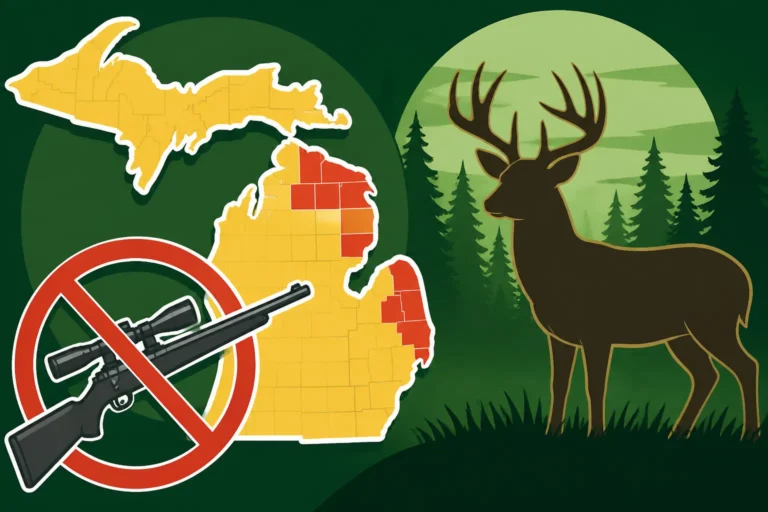
Michigan first detected CWD in a free-ranging white-tailed deer in 2015 in Meridian Township, Ingham County. This discovery immediately raised alarms within the Michigan Department of Natural Resources (DNR) and the scientific community. Prior to this, CWD had been detected in captive cervid facilities, but a wild deer positive meant the disease was actively circulating in the free-ranging herd. The stakes were instantly higher, as managing a disease in wild animals is exponentially more challenging than in contained populations. The detection prompted an urgent re-evaluation of all practices that could contribute to its spread, with baiting being at the very top of that list due to the overwhelming scientific consensus on its role in disease transmission. Understanding the specifics of Chronic Wasting Disease in Michigan is vital for any deer hunter operating in the state today.
The Evolution of Michigan's Baiting and Feeding Regulations
Michigan's journey with baiting regulations has been a dynamic one, shifting as scientific understanding of CWD improved and the disease spread within the state. For decades, deer baiting was a common practice across Michigan, particularly in the Lower Peninsula where agricultural fields and smaller woodlots are prevalent. Hunters often used corn, apples, and other attractants to draw deer into range, a tactic that became a deeply ingrained part of many hunting traditions, especially for those who primarily hunted close to home.
The initial response to CWD detection wasn't an immediate statewide ban. Instead, the DNR implemented baiting bans in specific disease management units (DMUs) and counties where CWD was detected or considered a high risk. This created a patchwork of regulations that, while scientifically sound, could be confusing for hunters. One county might be under a ban, while its neighbor was not, leading to questions about fairness and effectiveness. Over time, as CWD continued to pop up in new areas, the scientific evidence against baiting as a disease vector became undeniable. The decision was made to expand the ban significantly. As it stands today, deer baiting and feeding are largely prohibited in Michigan's Lower Peninsula. This includes placing bait to attract deer for hunting, as well as supplemental feeding outside of hunting season, due to the continuous risk of disease transmission. The only exception in the Lower Peninsula is for hunters with disabilities who meet specific criteria and obtain a special permit, allowing them to use a limited amount of bait within a CWD-free area.
However, it’s important to note that the Upper Peninsula operates under different rules due to its lower deer density and, historically, the absence of CWD in its wild deer herd. In the U.P., baiting is permitted, but with strict quantity limits – no more than two gallons of bait can be present at any time, scattered on the ground, and it must be dispersed over an area of at least 10 square feet. This distinction highlights the DNR's adaptive management approach, where regulations are tailored to specific regional disease risks and ecological conditions. It’s crucial to know Which Michigan Counties Have CWD and the specific rules in your hunting area. Hunters must remain vigilant and refer to the most current Michigan DNR hunting digests for specific Michigan CWD Rules and Test Sites and boundary information for different Michigan Deer Management Units.
A significant point of discussion and legislative debate has revolved around the possibility of lifting or modifying the baiting ban. There have been several attempts by lawmakers to overturn the ban, often driven by hunter sentiment and economic concerns of businesses that rely on bait sales. However, the DNR and wildlife disease experts have consistently advised against repealing the ban, citing the ongoing threat of CWD and the scientific evidence supporting baiting as a significant contributor to its spread. While public discourse and legislative efforts continue, the ban remains largely in place throughout the Lower Peninsula as a critical tool in managing the health of Michigan's deer herd. This ongoing conversation is a good example of the complex balance between hunter tradition, economic impact, and sound wildlife management.
Adapting to Bait-Free Hunting: Strategies for Success
The baiting ban undoubtedly forced many Michigan hunters to rethink their approach, but it also opened the door to rediscovering traditional hunting skills and exploring new, equally effective strategies. The core shift is from attracting deer to a specific spot to understanding and intercepting their natural movement patterns. This makes you a more skilled and knowledgeable hunter in the long run.
One of the most effective ways to adapt is by focusing heavily on natural food sources. Deer are constantly on the move, searching for the best forage, and in a bait-free environment, their movements are dictated much more by what the land naturally provides. This means scouting for acorns, especially during early archery and throughout the firearms season when these high-energy nuts are a prime food source. Look for oak ridges and individual mast-producing trees. Similarly, agricultural fields like corn, soybeans, and alfalfa are massive magnets for deer. Identifying travel corridors leading to and from these fields – often pinch points, creek bottoms, or fence rows – becomes paramount. Learning Late-Season Food Sources for Whitetails is particularly important as the natural bounty dwindles.
Beyond natural food, habitat features play a much larger role. Deer utilize thick cover for bedding and security, and their movements between these bedding areas and food sources create predictable patterns. Funnels, which are natural constrictions in the landscape like narrow strips of woods between two open fields or along the edge of a swamp, are excellent ambush points. Ridge lines, especially those with varying terrain, can also serve as highways for deer movement. Utilizing modern mapping tools like GoHunt can help you identify these untouched pockets of cover and potential funnels that deer use for travel and bedding. A detailed map overlay on a platform like GoHunt will reveal subtle changes in topography and vegetation types that might otherwise be overlooked, giving you a serious edge in your scouting. You can even explore creating Food Plots Instead of Bait on private land, which can mimic natural food sources and provide sustained nutrition for deer.
Still-hunting Michigan Cedar Swamps or simply still-hunting through timber is another tactic that becomes more effective in a bait-free landscape. Instead of waiting for deer to come to you, you slowly and deliberately move through the woods, pausing frequently to observe and listen. This method requires patience, stealth, and a keen eye for deer sign. By moving with the wind and observing subtle cues like fresh tracks, rubs, and scrapes, you can often intercept deer moving between bedding and feeding areas. Similarly, calling tactics like Rattling and Grunting in Michigan can be highly effective during the rut, mimicking deer vocalizations to draw in curious bucks. These strategies require you to be an active participant in the hunt, constantly reading the landscape and anticipating deer behavior.
For those hunting public land, the challenge of finding deer that haven't been pressured by other hunters becomes more critical. This means going where others won't, often walking deeper into state forests or accessing areas that are harder to reach. Before you even step foot in the woods, utilizing scouting apps like GoHunt can be invaluable for identifying potential access points and remote areas. Learn to read aerial photos for subtle habitat changes, potential bedding cover, and travel routes. Dedicate time to Scouting Michigan Public Land Before Season to identify key sign, natural funnels, and potential stand locations. Many hunters find the transition challenging, but with dedicated scouting and the right tools, perhaps even a subscription to GoHunt's advanced mapping, success is absolutely achievable. The goal is to understand the deer's natural patterns, rather than trying to override them with artificial attractants.
Understanding Michigan's Baiting Regulations by Region
While the statewide baiting ban is largely in effect for the Lower Peninsula, it's crucial for hunters to understand the nuances and regional differences, especially if you hunt in the Upper Peninsula or specific disease management areas. Michigan's DNR maintains specific regulations for different parts of the state, often delineated by county lines or larger geographic zones.
The most significant distinction is between the Lower Peninsula and the Upper Peninsula. As of the most recent regulations, baiting and feeding deer (and elk) is illegal in the entire Lower Peninsula, with only very limited exceptions for hunters with disabilities, as mentioned earlier. This means no corn, no apples, no sugar beets, no mineral blocks, nothing designed to attract or feed deer. This rule applies whether you're hunting private land in Lenawee County or state land in Crawford County. The intent is to minimize deer congregation across the entire region where CWD poses the greatest threat and has been most widely detected.
In contrast, the Upper Peninsula has different rules. Baiting is permitted here, but not without strict limitations designed to prevent excessive congregation. Hunters in the U.P. are allowed to use a maximum of two gallons of bait at any given time, and it must be scattered over an area of at least 10 feet by 10 feet. This dispersal requirement is crucial because it prevents deer from funneling into a single, tight spot, which reduces nose-to-nose contact and the direct exchange of bodily fluids. Common bait materials used in the U.P. include shelled corn, carrots, apples, and sugar beets. However, it's always critical to consult the most current Michigan DNR hunting guide for the precise regulations, as these rules can change based on disease surveillance or legislative action. The DNR also specifically prohibits using any bait that contains materials from cervids (like urine or glands), which could potentially transmit prions.
It's also important to differentiate between baiting for deer and feeding for other species. While deer baiting is restricted, certain activities related to small game or furbearers might involve attractants, but these are governed by different rules and typically do not apply to large cervids. For instance, trapping furbearers or hunting coyotes with specific lures is separate from deer baiting.
Here's a simplified breakdown of the general regulations:
| Region | Deer Baiting Status (Lower Peninsula) | Deer Baiting Status (Upper Peninsula) | Rationale |
|---|---|---|---|
| Lower Peninsula | Illegal. No baiting or supplemental feeding of deer (or elk) at any time. Limited exception for hunters with disabilities (permit required, CWD-free area). | Permitted with restrictions. Max 2 gallons of bait, scattered over a 10×10 ft area. No cervid-derived attractants. | High CWD risk; to prevent congregation and slow disease spread. |
| Upper Peninsula | N/A | Permitted with restrictions. Max 2 gallons of bait, scattered over a 10×10 ft area. No cervid-derived attractants. | Lower deer density and historically CWD-free; limited baiting allowed with strict spread requirements. |
Remember, this table provides a general overview, and hunters should always double-check the latest Michigan DNR regulations for the most up-to-date information for their specific hunting unit. Laws regarding What Michigan Requires After You Kill a Deer and general Michigan Hunter Orange Rules still apply across the state, regardless of baiting status.
The Broader Impact and Future Outlook
The baiting ban, while rooted in sound wildlife science, hasn't been without its share of controversy and challenges. Many hunters, especially those who grew up with baiting as a customary practice, felt a sense of loss and frustration. The perceived impact on hunting success, particularly for youth, elderly hunters, or those with physical limitations, was a common complaint. Retailers who relied heavily on bait sales also felt a significant economic pinch. This tension highlights the delicate balance between wildlife management, hunter satisfaction, and economic considerations.
From a wildlife management perspective, the ban is a proactive measure to protect the long-term health and viability of Michigan's deer herd. CWD isn't just a concern for hunters; it's a threat to the entire ecosystem and a significant challenge for conservationists. By reducing the artificial concentration of deer, the hope is to slow the spread of the disease, providing more time for research into potential solutions and for deer populations to develop some level of natural resistance. The DNR continues to monitor Michigan Deer Population Estimate and the prevalence of CWD through extensive surveillance programs, including mandatory or voluntary testing in certain CWD areas. This ongoing data collection is critical for informing future management decisions.
What does the future hold for baiting in Michigan? It's a question without a simple answer. The scientific community generally agrees that baiting increases the risk of disease transmission. Unless there's a significant breakthrough in CWD eradication or a widespread natural resistance develops within the deer herd, it's unlikely that a full repeal of the ban will occur in the Lower Peninsula. However, regulations are always subject to review and potential modification based on new scientific data, shifts in CWD prevalence, or legislative changes. For instance, there have been ongoing discussions and proposed legislation regarding The Bill to Lift the Michigan Baiting Ban, reflecting the persistent public interest in the issue.
For hunters, the ban has encouraged a return to more traditional, skill-based hunting methods. It fosters a deeper connection to the land and a better understanding of deer behavior. Hunters are becoming more adept at Reading Aerial Photos for Swamp Deer, scouting for natural food sources, and understanding thermal currents and wind patterns, rather than simply relying on an attractant. While the initial adjustment period can be tough, many hunters have found renewed satisfaction in the challenge of outsmarting a deer on its own terms. The availability of tools like The Michigan DNR Hunt Fish App and commercial mapping solutions helps hunters navigate these new challenges. Ultimately, the long-term health of our deer herd relies on the collective efforts of all Michigan hunters to adhere to these regulations and embrace responsible hunting practices.
Disclaimer
The information provided in this guide is for general informational purposes only and is subject to change. Hunting regulations, including those pertaining to baiting and disease management, are established by the Michigan Department of Natural Resources (DNR) and can be updated annually or as conditions warrant. Hunters are solely responsible for knowing and adhering to all current hunting laws and regulations. Always consult the official Michigan DNR Hunting and Trapping Digest or their website for the most accurate and up-to-date information before engaging in any hunting activities.