Food Plots Instead of Bait
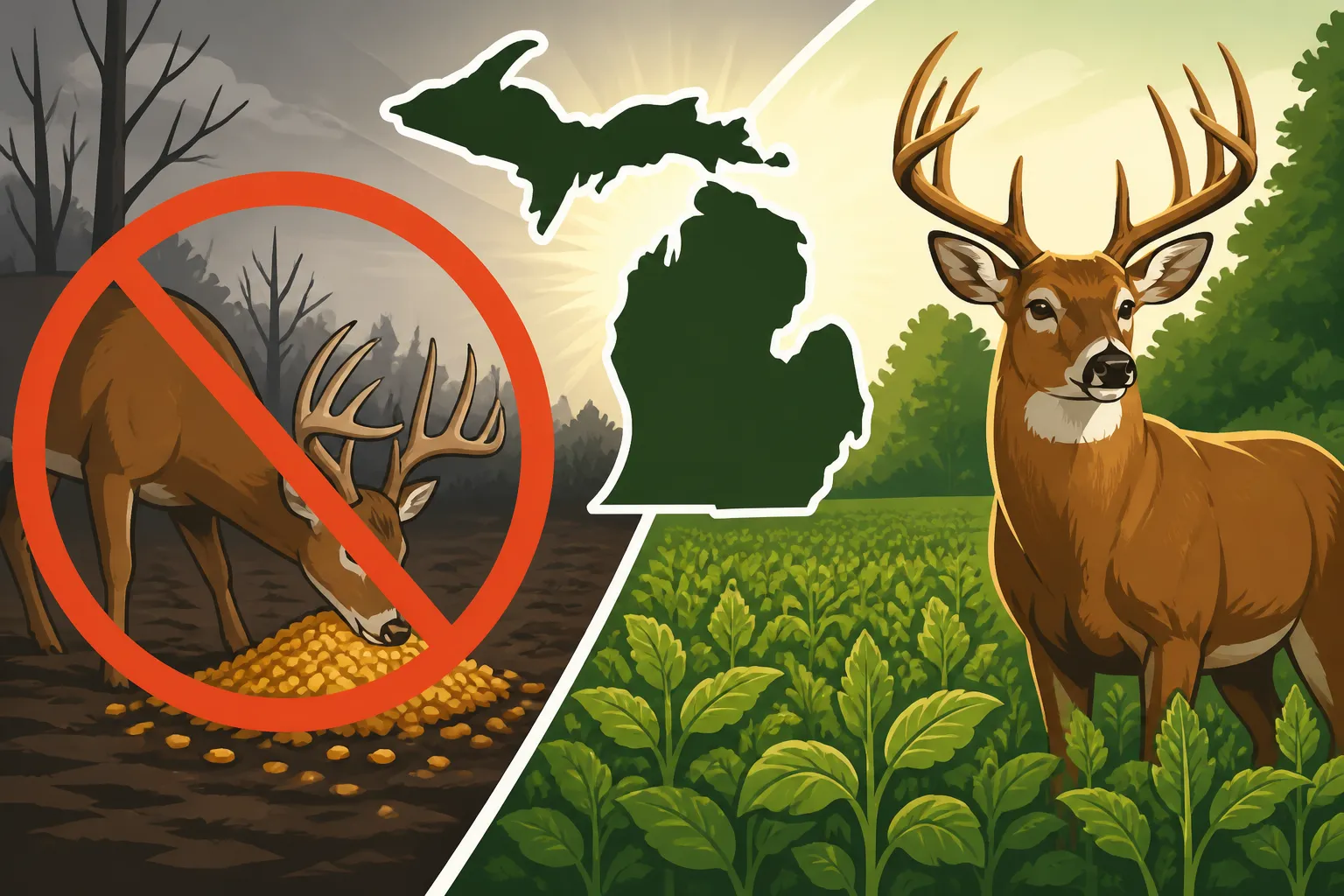
The shift in Michigan's deer hunting regulations, particularly the widespread ban on baiting across much of the Lower Peninsula, left many hunters scratching their heads, wondering how they'd consistently attract deer. It's a real challenge when you've relied on a tactic for years, only to have it suddenly become illegal. But don't despair! This guide is all about diving deep into a far more sustainable, ethical, and frankly, more rewarding alternative: establishing and managing food plots.
The Shift from Baiting to Sustainable Food Sources
Let's be honest, for a long time, baiting was a staple for many Michigan deer hunters. It was simple, effective, and provided a predictable way to bring deer into range. Then came the widespread bans, primarily driven by concerns over Chronic Wasting Disease (CWD) and Bovine Tuberculosis (bTB). These new rules, while sometimes frustrating to navigate, pushed us to think differently. The good news is, for those willing to put in a little elbow grease, food plots offer an incredibly powerful and legal way to not only attract deer but also to improve the overall health and quality of your local deer herd.
Understanding Michigan's Baiting and Feeding Rules
Before we get too deep into food plots, it's crucial to have a clear grasp of Michigan's current baiting and feeding regulations. The rules can be a bit of a moving target, so staying informed is key. Generally, in the Lower Peninsula, baiting deer and elk is prohibited, with very few exceptions. This is largely due to the efforts to mitigate the spread of diseases. The idea is that concentrating deer at a bait pile increases nose-to-nose contact, making disease transmission more likely. For a detailed breakdown, you might want to check out information on Why Michigan Banned Baiting.
However, this doesn't mean you can't provide supplemental food. It simply means you need to do it in a way that aligns with the regulations and promotes healthier herd dynamics. This is where food plots shine. They aren't a bait pile; they're a living, growing food source that provides nutrition over a much larger area, reducing the intense concentration of animals often seen at traditional bait sites. They are designed to mimic and enhance natural forage, rather than being a single, easily depleted pile of processed feed.
Why Food Plots are a Superior Alternative
While bait piles were a quick fix, they often led to unhealthy congregation and made deer vulnerable. Food plots, on the other hand, offer a sustainable, legal, and often more effective approach, providing consistent nutrition and drawing deer naturally. Many hunters use advanced scouting tools like GoHunt to analyze terrain and potential plot locations, taking the guesswork out of where to start.
Here's why food plots rise above:
- Sustainability: A well-managed food plot provides nutrition for weeks or even months, unlike a bait pile that's gone in a few days. This consistent food source helps deer maintain condition, especially during periods of stress like late winter or early spring.
- Healthier Deer: By diversifying their diet and encouraging more natural foraging patterns over a broader area, food plots contribute to healthier deer. A balanced diet can improve antler growth, fawn survival rates, and overall herd vigor.
- Legal Compliance: This is a big one. As long as they are cultivated and growing, food plots are a legal way to attract and hold deer in areas where baiting is prohibited. This gives you peace of mind that you're hunting ethically and lawfully.
- Habitat Improvement: Food plots aren't just for hunting; they are a form of habitat management. They can fill nutritional gaps that might exist in your hunting area, making your property more attractive and beneficial for wildlife year-round. This is especially true on smaller tracts of private land or areas where natural forage might be limited.
- Increased Deer Activity: While a bait pile might bring deer in for a quick snack, a diverse food plot can encourage them to spend more time in the area – browsing, resting, and interacting. This means more consistent deer activity on your property, leading to better scouting opportunities and more encounters. For more on strategies without bait, consider exploring Hunting Deer Without Bait in Michigan.
Choosing the Right Food Plot for Michigan's Diverse Landscapes
Michigan is a diverse state, from the sandy soils and big woods of the northern Lower Peninsula and Upper Peninsula to the rich agricultural lands of the south. This means there's no single "best" food plot. What works in one area might not thrive in another. The key is to select plants that are well-suited to your specific soil, climate, and the time of year you want to attract deer.
Annual Food Plot Options
Annuals are plants that complete their life cycle within one growing season. They are fantastic for short-term attraction and can provide a burst of high-quality forage.
- Brassicas: This family includes plants like radishes, turnips, kale, and rape. They are incredibly popular for late-season hunting because they become sweeter and more palatable to deer after a few hard frosts.
- Pros: Highly attractive in late fall and winter, good cold tolerance, provide excellent forage volume.
- Cons: Require good soil fertility, deer might not hit them hard until after a frost, generally need to be replanted every year.
- Michigan Specifics: Brassicas do well in most Michigan soils, but really thrive with adequate moisture and good fertility. Planting in late summer (late July to early September, depending on your region) gives them enough time to mature before the cold really sets in. They're an excellent addition for those looking to improve Late-Season Food Sources for Whitetails.
- Cereal Grains: Oats, wheat, and rye are robust and relatively easy to grow. They offer good forage and are often used as a "nurse crop" for establishing perennials.
- Pros: Quick to establish, relatively inexpensive, provide attractive green forage in fall and spring, oats are palatable immediately.
- Cons: Can be quickly browsed down by high deer densities, less forage volume than brassicas.
- Michigan Specifics: Oats are a great choice for early fall attraction, planted in late summer. Wheat and rye are very cold-hardy and can provide excellent forage well into winter and early spring, making them ideal for drawing deer even when snow covers other food sources.
- Annual Clovers and Peas: These provide high protein and are quickly utilized by deer.
- Pros: Fast growth, high palatability, good protein content.
- Cons: Can be expensive, may not tolerate heavy browsing as well as other options.
- Michigan Specifics: Austrian winter peas are a solid choice for fall, providing quick attraction. Different varieties of annual clovers can work in specific soil conditions but often require more attention than perennial clovers.
Perennial Food Plot Choices
Perennials return year after year, making them a lower-maintenance option in the long run. They are excellent for establishing long-term feeding areas.
- Clovers (White, Ladino, Medium Red): Clover is arguably the most popular perennial food plot choice for good reason. It's highly nutritious, palatable to deer, and relatively tolerant of various soil conditions.
- Pros: Long-lasting (3-5+ years), high protein, drought tolerant (once established), deer love it, can tolerate moderate browsing.
- Cons: Can be slow to establish, requires regular mowing, needs good pH and fertility, susceptible to weed competition.
- Michigan Specifics: White and Ladino clovers are excellent for Michigan, especially in the richer soils of the southern Lower Peninsula. Medium red clover is more tolerant of slightly poorer soils and shade, making it a good option for transition zones or partial clearing in timber. Planting in early spring or late summer is usually best.
- Chicory: Often planted in a blend with clover, chicory is a deep-rooted perennial that offers excellent drought tolerance and high protein.
- Pros: Very drought tolerant, provides forage during dry spells, high protein, deer readily consume it.
- Cons: Can be aggressive and outcompete other plants, some varieties can become stemmy if not mowed.
- Michigan Specifics: Chicory thrives in Michigan's variable weather. Its deep taproot helps it pull nutrients and moisture from deeper in the soil, making it a reliable food source even when other plants struggle.
Considering Soil and Climate
Michigan's landscape runs from sandy, acidic soils in the northern regions and the U.P. to rich, fertile loams in the southern agricultural belt. Your soil type will heavily influence what grows best.
Sandy soils drain quickly and have lower fertility, often requiring more lime and fertilizer. Loamy soils are generally more forgiving.
The climate also dictates planting times and plant choices. The growing season is shorter in the Upper Peninsula compared to the southern Lower Peninsula. Always choose varieties that are known to do well in your specific USDA Plant Hardiness Zone. For those of us dedicated to understanding deer movement and habitat, resources like GoHunt offer invaluable mapping layers and data to help pinpoint areas that might be ideal for a plot, considering factors like soil type, sunlight, and proximity to bedding areas.
Here's a quick comparison of popular Michigan food plot options:
| Food Plot Type | Primary Appeal | Ideal Planting Time | Relative Cost | Ease of Establishment | Longevity |
|---|---|---|---|---|---|
| Brassicas | Late-season draw | Late Summer | Medium | Medium | Annual |
| Cereal Grains | Early/Late season forage | Late Summer | Low | Easy | Annual |
| Clover | Year-round protein | Early Spring / Late Summer | Medium | Medium | Perennial |
| Chicory | Drought tolerance, protein | Early Spring / Late Summer | Medium | Medium | Perennial |
The Practicalities of Establishing a Michigan Food Plot
So, you're convinced that food plots are the way to go. Now, how do you actually get one in the ground? It's more than just tossing some seeds out; it requires careful planning and execution.
Site Selection and Preparation
Choosing the right location is paramount. A poorly located plot, even with the best seeds and soil, will likely fail.
- Sunlight: Most food plot crops require at least 6 hours of direct sunlight per day. Avoid heavily shaded areas, which are common in Michigan's dense timber. Look for natural clearings, old logging landings, or areas on the edge of fields.
- Water Access: While you won't be irrigating a large plot, proximity to a water source can be beneficial, especially during dry spells. More importantly, consider natural drainage – you don't want a plot that consistently floods.
- Existing Vegetation: What's currently growing there? You'll need to clear existing weeds, brush, and small trees. This can involve anything from chainsaws and brush hogs for larger clearings to herbicides for persistent weeds. For larger plots, machinery like tractors with plows or disks will be necessary. For smaller, more remote plots, an ATV with a small disk or even hand tools can work.
- Access and Wind: Think about how you'll access the plot for planting and hunting. Can you get equipment in easily? Where will your stand go to account for prevailing winds? An effective plot also needs effective Entry Routes on Flat Michigan Ground.
Soil Testing and Amendment
This is arguably the single most important step for a successful food plot, yet it's often overlooked. You can't know what your soil needs until you test it.
- Why Test? A soil test tells you two critical things: your soil's pH (acidity/alkalinity) and its nutrient levels (nitrogen, phosphorus, potassium, and micronutrients). Different plants thrive at different pH levels. For example, most clover prefers a pH between 6.0 and 7.0. If your soil is too acidic (common in forested areas), your plants won't be able to absorb nutrients effectively, no matter how much fertilizer you apply.
- How to Test: Contact your local Michigan State University Extension office or a reputable soil testing lab. They'll provide instructions and a kit. You'll typically take several samples from different spots in your plot, mix them, and send them in.
- Amending Your Soil:
- Lime: If your pH is too low (acidic), you'll need to add agricultural lime. This can take several months to work, so plan ahead. Apply it in the fall for spring planting, or early spring for late summer planting.
- Fertilizer: Based on your soil test results, you'll get recommendations for fertilizer. Nitrogen (N) promotes leafy growth, phosphorus (P) is good for root development and seed production, and potassium (K) helps with overall plant health and disease resistance. Don't just guess; applying the wrong fertilizer or too much can be a waste of money and even harm your plot. When it comes to planning, don't just guess. Tools from GoHunt can overlay soil maps with topographical features, helping you choose the best spot.
Planting Methods and Timing
Once your site is prepped and your soil is ready, it's time to plant!
- Broadcasting: This involves scattering seeds over the prepared ground. It's simpler and requires less specialized equipment. After broadcasting, you'll need to use a cultipacker or roller to ensure good seed-to-soil contact. For smaller plots, a hand spreader or ATV spreader works well.
- Drilling: A seed drill plants seeds at a precise depth and spacing. This typically results in better germination and less wasted seed but requires more specialized (and expensive) equipment.
- Timing: This is critical.
- Spring Planting: For most perennial clovers and chicory, early spring (April-May) is ideal, allowing them to establish before summer heat.
- Late Summer/Fall Planting: This is prime time for annual brassicas, oats, wheat, and rye. Planting in late July to early September (earlier in the U.P., later in southern Michigan) gives these plants enough time to grow robustly before hard frosts. For annuals, you want them to be established enough to be attractive when hunting season rolls around.
Maximizing Your Food Plot's Hunting Potential
A lush food plot is great, but its true value comes when you can translate that attraction into successful hunting opportunities. This requires smart hunting strategies and ongoing management.
Hunting Strategies Around Food Plots
Simply having a food plot doesn't guarantee success; you need to hunt it wisely. The biggest mistake many hunters make is over-pressuring their food plots, turning a prime feeding area into a deterrent.
- Stand Placement: Position your treestand or ground blind downwind of the primary feeding area, ideally overlooking trails leading into the plot. Consider prevailing winds and thermals. In Michigan, especially in swampy areas or river bottoms, thermals can be tricky, dropping in the evening and rising in the morning. Having multiple stand options for different wind directions is crucial. For detailed advice, look into Treestand Setups in Michigan Hardwoods or Using a Ground Blind on Michigan State Land.
- Entry and Exit Routes: Plan silent, concealed routes to and from your stand that minimize disturbance to the deer. Avoid walking directly through the plot or through bedding areas. Use terrain features, ditches, or dense cover to hide your approach.
- Hunting Time: Often, the best time to hunt a food plot is during the last hour or two of daylight, when deer are moving out of bedding areas to feed. Morning hunts can be effective if you can get in before deer arrive and aren't disturbed, but exiting without spooking them can be challenging.
- Don't Overhunt: This is paramount. Hunt your plots sparingly. If deer consistently encounter human scent or pressure, they will go nocturnal or simply avoid the plot altogether. Sometimes, less is more.
Year-Round Deer Management Through Plots
Food plots are more than just a hunting tool; they are a year-round deer management asset.
- Supplemental Nutrition: They provide critical forage during periods of natural forage scarcity. This could be in late winter when deep snow covers natural browse, or during dry summer months when native plants are stressed. This consistent nutrition helps with herd health, antler development, and fawn rearing.
- Holding Deer on Your Property: By providing a reliable, high-quality food source, you give deer a reason to stay on or frequently visit your property. This can be particularly important if surrounding properties lack quality forage or receive heavy hunting pressure.
- Scouting and Observation: Even outside of hunting season, food plots are fantastic places to observe deer, learn their habits, and estimate population numbers and buck quality. Trail cameras can be incredibly effective here, but remember Michigan's rules on trail camera placement on public land if you're managing a plot there. This kind of observation is crucial for Scouting Michigan Public Land Before Season.
- Integrating with Natural Habitat: Think of food plots as part of a larger habitat mosaic. They complement natural food sources like acorns, browse, and soft mast, providing a balanced diet for deer. For example, if you know your area suffered from Hunting After an Acorn Failure, a diverse food plot can become even more vital.
Common Challenges and Troubleshooting
Even with the best intentions, food plots can present challenges.
- Weed Competition: Weeds are the bane of any food plot manager. They compete with your desired crops for nutrients, sunlight, and water.
- Solution: Proper site preparation (herbicides before planting), using a selective herbicide (check labels carefully for your specific crop), and regular mowing can help. For clover plots, mowing every 4-6 weeks can suppress weeds and promote new, tender growth.
- Drought: Michigan's summers can be notoriously dry, especially in the northern parts.
- Solution: Choose drought-tolerant species like chicory or certain clover varieties. Deeper roots help plants access moisture. Planting during periods of consistent rain can also improve establishment.
- Deer Over-browsing: Too many deer can wipe out a small plot quickly, especially if it's the only game in town.
- Solution: Consider planting larger plots if possible, or multiple smaller plots. If your deer density is extremely high, you may need to increase your antlerless harvest to balance the herd with the available food. Electric fences can protect young plots until they are established, though this is often not practical for hunting plots.
- Equipment Breakdowns: Anyone who's worked land knows that equipment can be finicky.
- Solution: Maintain your equipment, have spare parts for common failures, and consider renting larger equipment if you only need it occasionally. For smaller plots, a walk-behind tiller or even hand tools are always reliable backups.
- Poor Germination: Seeds not sprouting can be heartbreaking.
- Solution: Ensure good seed-to-soil contact (cultipack), proper planting depth, and adequate moisture. Double-check your seed's expiration date.
- Pests and Disease: While less common than with row crops, food plots can occasionally suffer from insect pests or plant diseases.
- Solution: Crop rotation can help break disease cycles. Healthy soil and strong plants are generally more resistant.
And remember, a food plot isn't a 'set it and forget it' deal. It requires ongoing attention, and even with the best plans, sometimes the deer hit it harder than expected. Keeping track of observations, perhaps noting them in a detailed hunting log or mapping tool like GoHunt, can help you refine your approach year after year. Establishing food plots truly represents a proactive and rewarding approach to deer hunting and wildlife management in Michigan. It's an investment in your property, your deer herd, and your hunting future, moving beyond the simple allure of a bait pile to a more comprehensive and satisfying experience.
Disclaimer
The information provided in this guide is for general informational purposes only and does not constitute legal advice. Hunting regulations in Michigan are subject to change, and it is the hunter's responsibility to review and comply with all current rules and regulations set forth by the Michigan Department of Natural Resources (DNR) before engaging in any hunting activities. Always prioritize safety and ethical hunting practices.