Hunting After an Acorn Failure
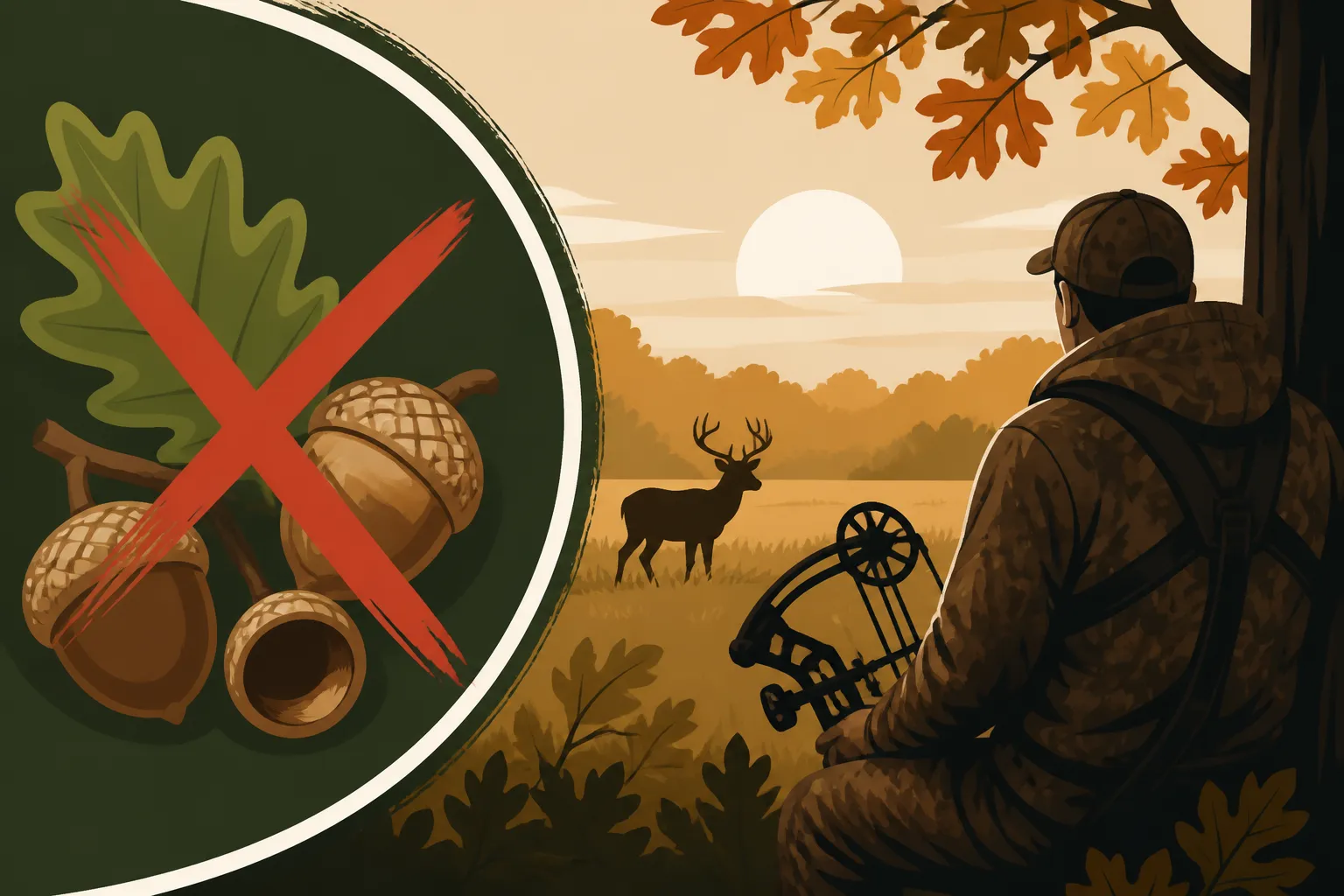
There's nothing quite as frustrating as heading into the woods, full of anticipation, only to find that your go-to oak ridge, which usually rains down acorns like gold, is barren. An acorn failure can completely flip the script on your Michigan deer hunting plans, leaving you scratching your head about where the deer have gone. This comprehensive guide is here to help you navigate those challenging seasons, understand why these failures happen, and most importantly, equip you with the knowledge and tactics to find success when the oak trees aren't cooperating.
Understanding Acorn Failures in Michigan
When you've scouted your hunting property for weeks, perhaps even months, marking down those promising oak stands, a widespread acorn failure can feel like a punch to the gut. It's not just a minor inconvenience; it's a fundamental shift in the deer's primary food source, and understanding why it happens and how to spot it early is your first step toward adapting. This isn't just about a few less acorns; it's often a near-total absence that sends deer scrambling for alternatives.
The Biology of Michigan Oaks and Mast Cycles
Michigan is home to various oak species, and each plays a role in the mast crop, but they don't all operate on the same timetable. Generally, you're looking at two main groups: red oaks (including northern red, black, and pin oaks) and white oaks (like white oak, swamp white oak, and bur oak).
Red oaks typically produce acorns every two years, and their acorns take two seasons to mature. These acorns have a higher tannin content, which makes them less palatable initially, but they last longer into the winter, often providing a critical food source when other options are scarce. White oaks, on the other hand, produce acorns annually, and their acorns mature in a single season. These have lower tannin levels, making them sweeter and highly preferred by deer as soon as they drop. This difference in palatability means deer often hit the white oaks first, then move to red oaks as the season progresses.
Mast cycles, the periodic production of large acorn crops, are complex and not fully understood. It's often referred to as "masting," and it's notoriously unpredictable. One year, a particular stand might be raining acorns, and the next, it's completely empty. What causes these failures? Early spring frosts can kill developing flowers before they even have a chance to turn into acorns. Drought conditions during the crucial development period can also stress trees, causing them to drop immature acorns or simply not produce many at all. Pests, like gypsy moths or acorn weevils, can also significantly impact the crop, often going unnoticed by hunters until it's too late. It's a delicate balance of environmental factors that determines the bounty, and when that balance is off, hunters feel the ripple effect.
Scouting for Acorn Abundance (or Lack Thereof)
The key to hunting effectively after an acorn failure is to know it's happening, and ideally, to know it early. Waiting until opening day to discover your favorite oak flat is bare is a recipe for frustration. Early season scouting, even in late summer, becomes absolutely critical.
Start by visually inspecting the trees themselves. Look up into the canopy. Are there any acorns hanging? Even small, green acorns are a good sign. If you see very few or none at all, that's a red flag. Then, look down. Walk through your oak stands. Are there any dropped acorns on the ground, even from earlier in the summer? If the ground under what should be prime oak trees is completely clear of hulls or whole nuts, you're likely facing a failure. Don't just focus on one or two trees; cover a significant portion of your intended hunting area. Remember, some trees may produce while others don't, so a broad assessment is important.
Trail cameras can be incredibly useful here. Place them in your traditional oak feeding areas well before the season starts. If your cameras aren't capturing deer consistently feeding in those spots, and you're not seeing physical evidence of acorns, it's a strong indicator that deer are already shifting their patterns. These cameras offer objective, around-the-clock monitoring that your quick scouting trips might miss. Many hunters use sophisticated mapping tools, often integrating with platforms like GoHunt, to mark potential mast crop areas and then cross-reference those spots with camera intel to get a clearer picture of the local food situation. This data-driven approach helps you verify whether the acorns are truly absent or if you're just not seeing the signs.
How Deer React to a Scarce Acorn Crop
Deer are incredibly adaptable creatures, and while they might prefer a buffet of delicious white oak acorns, they won't starve if those aren't available. Instead, they'll simply shift their focus to other reliable food sources. This change in diet has a cascading effect on their behavior, impacting everything from where they feed to their daily travel routes and even their bedding locations. For the diligent hunter, understanding these shifts is paramount.
Deer's Alternative Food Sources
When acorns are scarce, deer will quickly pivot to the next best thing. In many parts of Michigan, especially the southern farmlands, this means agricultural crops become paramount. Standing cornfields, for example, offer not only a high-calorie food source but also incredible cover. Deer will bed right within these fields, emerging only to feed. Soybean fields, once the leaves yellow and drop, provide a protein-rich meal. Alfalfa fields also attract deer, especially during times of the year when other green browse is less abundant. If you hunt areas with mixed agriculture and timber, an acorn failure will almost certainly push deer harder into these ag fields. You can read more about Hunting a Standing Cornfield in the Thumb for specific tactics in these areas.
Beyond agriculture, deer rely heavily on natural browse. Young forest regeneration, like tender maple saplings, dogwood, or aspen sprouts, can become critical. Look for areas that have been recently logged or clear-cut; these can be browse factories that hold deer when other food is gone. Michigan's diverse forest types provide a variety of woody browse that deer will consume. Even certain soft mast, like wild apples or beechnuts (if those happen to be having a good year), can become hot spots. It's not just about finding any food, but finding the highest quality and most concentrated alternative food sources in your area. This knowledge helps when you're considering Food Plots Instead of Bait on private land, as a well-planned food plot can serve as a magnet when natural food is scarce.
Re-evaluating Deer Movements and Bedding
An acorn failure doesn't just change what deer eat; it dramatically alters where they eat and how they get there. Traditional travel corridors leading to oak ridges might become ghost towns. Instead, deer will start funneling towards the new primary food sources. This means their core home range, at least temporarily, might shift to encompass these new feeding areas.
If deer were previously bedding near a secluded oak flat, they might now bed closer to a dense conifer thicket bordering an alfalfa field or deep within a standing cornfield. Their travel routes will reflect this change, creating new patterns between these fresh food sources and their secure bedding cover. You'll want to adjust your scouting efforts to identify these new movement corridors. Look for fresh tracks, rub lines, and droppings leading into and out of these alternative food hubs. Sometimes, these changes can be subtle, but a detailed mapping tool, like one available through GoHunt, can help you identify these shifts by overlaying different habitat types and potential travel routes.
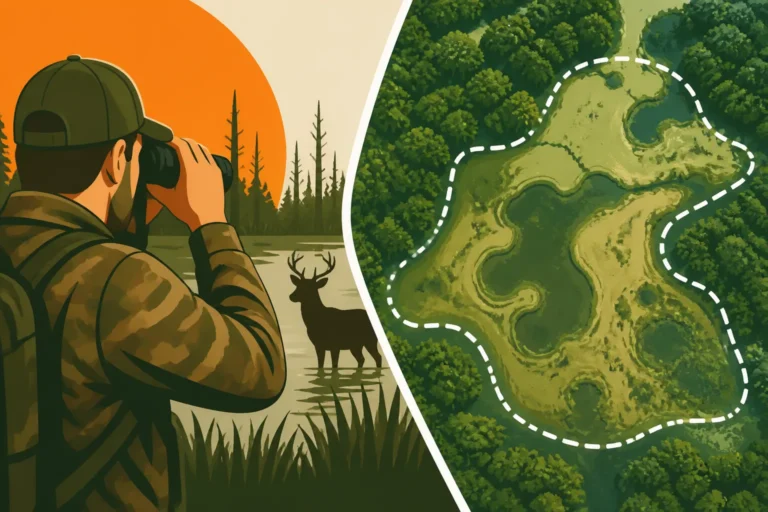
Water sources also become more critical during these times, especially during drier periods in the fall. While deer get a lot of moisture from their food, easily accessible water can become another focal point, particularly if their primary food is dry browse or agricultural crops. Reading Aerial Photos for Swamp Deer or identifying other water features on a map can reveal overlooked spots where deer might concentrate during a food shortage. Understanding these nuanced shifts is the difference between an empty stand and a successful hunt.
Tactical Adjustments for Hunters
Discovering an acorn failure isn't a reason to despair; it's an opportunity to adapt and outsmart the deer. Your traditional hunting spots might be dead, but new ones will emerge. The key is to be proactive and shift your tactics to where the deer are now, rather than clinging to where they should be. This requires a flexible mindset and a willingness to scout new areas or re-evaluate familiar ones with fresh eyes.
Pinpointing and Hunting Alternative Food Hubs
Once you've confirmed an acorn failure, your immediate goal is to identify and zero in on those alternative food sources. This is where diligent scouting really pays off. If you hunt near agricultural areas, drive slowly by corn, soybean, or alfalfa fields in the early mornings and late evenings. Look for deer entering or exiting the fields. Talk to local farmers, if possible; they often have the best intel on deer activity. Remember, on public land, finding these ag fields can be tougher, but many state game areas have food plots or old farm fields that revert to deer-preferred forage.
For natural browse, focus on areas with recent timber cuts, young forest growth, or edges where different habitat types meet. These are often transitional zones where deer feel secure moving between cover and feeding. Look for evidence of browsing – nipped twigs, especially on preferred species like maple, dogwood, and aspen. Tools like Michigan's Mi-HUNT Map are invaluable here, as they often show timber harvest data, allowing you to pinpoint recent cuts that will have prime browse. You might find pockets of wild apple trees, honeysuckle thickets, or even old farmsteads with overgrown fruit trees that suddenly become magnets for deer. This takes legwork, but finding that alternative "honey hole" can turn a slow season into a memorable one. While Michigan has a statewide baiting ban in the Lower Peninsula, hunters can still implement strategies for Hunting Without Bait in the Lower Peninsula by focusing on these natural and agricultural food sources.
Adjusting Stand Placement and Hunting Times
With deer movements dictated by new food sources, your stand placement needs a serious overhaul. Forget the old oak ridge. Now, you need to focus on travel corridors leading to and from agricultural fields, browse regeneration areas, or even the subtle funnels around late-season food sources. This might mean setting up along a fence row next to a cornfield, on the edge of a fresh clear-cut, or where a thick swamp meets a new feeding area. Instead of hunting the open oak woods, you might be looking at dense cover where deer feel more secure moving during daylight. For help with these adjustments, consider tips on Treestand Setups in Michigan Hardwoods and adapt them to these new scenarios, especially in areas with denser cover.
Your hunting times might also need to be adjusted. When acorns are plentiful, deer often feed throughout the night and hit the oaks hard at dawn and dusk. With alternative food sources, especially those in open fields, deer might be more nocturnal due to pressure. However, in areas with good cover or during the Hunting the Pre-Rut in Late October, you might find deer feeding longer into the morning or even mid-day as they try to get enough calories. If you're hunting an agricultural field, the first few hours of daylight and the last few hours before dark are still prime. But if you've found a secluded browse thicket, a mid-day sit might just catch a deer moving between bedding and a secondary feeding area. Flexibility in both location and timing is key to punching that tag.
| Food Source Type | Palatability (Deer Preference) | Availability After Acorn Failure | Optimal Hunting Time | Stand Location Strategy |
|---|---|---|---|---|
| White Oak Acorns | High (Sweet) | Low / None | Early Morn/Late Eve | Overlooking oak flats (if available) |
| Red Oak Acorns | Medium (Bitter) | Low / None | Mid-day / All Day | Transition areas between oaks and bedding |
| Standing Corn | High (Energy) | High | Early Morn/Late Eve | Field edges, pinch points, cover inside fields |
| Soybeans (Mature) | High (Protein) | High | Early Morn/Late Eve | Field edges, travel corridors near bedding |
| Alfalfa Fields | High (Nutrient) | High | Early Morn/Late Eve | Field edges, transition zones, hidden pockets |
| Young Forest Browse | Medium | High | Mid-day / All Day | Thick cuts, clearings, edges of dense cover |
| Wild Apples | High (Sweet) | Variable (Seasonal) | Early Morn/Late Eve | Near old orchards, forgotten homesteads, secluded clearings |
| Beechnuts | High (Fat) | Variable (Cyclical) | Early Morn/Late Eve | Beech ridges, transition zones |
Broader Implications and Long-Term Strategies
While tackling an acorn failure in the immediate season is about adaptation, these events also offer valuable lessons for long-term hunting success. They underscore the importance of diverse habitats, continuous scouting, and a flexible approach that goes beyond year-to-year expectations. A single season's setback can actually make you a more well-rounded and effective hunter in the long run.
The Importance of Habitat Diversity
One of the biggest takeaways from an acorn failure is the undeniable importance of diverse habitat. If your hunting area is nothing but mature oak trees, you're setting yourself up for disappointment in a bust year. A landscape that offers a variety of food sources – mature mast trees, active agricultural fields, regenerating clear-cuts for browse, and even planted food plots – provides resilience. Deer always have options, even if their number one choice isn't available. This distribution of resources helps maintain a healthier deer population and provides more consistent hunting opportunities year after year.
Michigan's DNR works to promote habitat diversity on state land through various management practices, including timber harvests and prescribed burns, which create new browse. If you hunt private land, you might consider how you can enhance habitat diversity, perhaps by planting a variety of mast trees or a diverse mix of annual and perennial food plots. Even small efforts can make a big difference in ensuring deer always have something to fall back on. Understanding how to interpret satellite imagery to identify varied habitat types is a crucial skill, and platforms like GoHunt provide invaluable layers for this, helping you pinpoint these diverse areas even before you step foot in the woods. This knowledge contributes to a better understanding of the Michigan Deer Population Estimate and how deer survive various seasonal challenges.
Mastering Adaptability for Consistent Success
Deer hunting in Michigan, especially on public land, is often described as a big, ever-changing puzzle. Acorn failures are just one piece of that puzzle that moves around. The most successful hunters aren't necessarily those with the best gear or the fanciest setups; they're the ones who can adapt. They understand that what worked last year might not work this year, and they're willing to put in the effort to figure out the new patterns.
This means continuous learning and scouting throughout the season, not just before opening day. It means using resources like topographical maps, aerial photos, and digital scouting tools to their fullest potential. Technologies like those offered by GoHunt allow hunters to mark observations, track deer movements, and identify potential food and cover patterns in real-time, helping you make informed decisions when unexpected challenges, like an acorn failure, arise. It's about being observant, interpreting sign, and being willing to pick up and move your stand if the situation dictates. The ability to adapt to changes in food availability, deer pressure, and weather conditions is what separates consistent success from hit-or-miss seasons.
Disclaimer
The information provided in this guide is for informational purposes only and is not a substitute for official regulations. Always consult the most current Michigan Department of Natural Resources (DNR) hunting regulations and local ordinances before engaging in any hunting activities. Hunting laws and conditions can change rapidly.