Michigan CWD Rules and Test Sites
The emergence of Chronic Wasting Disease (CWD) has undeniably added a layer of complexity and concern for Michigan hunters. It's frustrating to face ever-evolving regulations, especially when you just want to enjoy your time in the woods and bring home healthy venison. This comprehensive guide aims to cut through the confusion, providing a clear understanding of Michigan's CWD rules, the reasoning behind them, and exactly where you can get your deer tested to ensure you're compliant and doing your part for the herd.
The Reality of Chronic Wasting Disease in Michigan
There's a lot of chatter about CWD, and it's easy to feel overwhelmed by the science and the implications. But at its heart, understanding CWD is crucial for every hunter who cares about the long-term health of Michigan's deer herd and our hunting traditions.
What is CWD and Why It Matters
Chronic Wasting Disease is a fatal neurological disease that affects cervids, including white-tailed deer, elk, and moose. It's caused by abnormal proteins called prions, which slowly damage the brain and nervous system of infected animals. Unlike bacteria or viruses, these prions are incredibly resilient, resisting conventional disinfectants, freezing, and even high heat. This means they can persist in the environment for years, making CWD a particularly stubborn challenge.
For deer, CWD is always terminal. Animals infected with CWD might appear healthy for a long time, but eventually, they will develop symptoms like drastic weight loss, stumbling, lethargy, drooling, and a lack of fear of humans. The insidious nature of CWD lies in its slow progression and the fact that an infected animal can shed prions through saliva, urine, and feces long before showing visible signs of illness, spreading the disease to other deer and contaminating the environment. This makes it a critical concern for wildlife managers and hunters alike, threatening the very future of healthy deer populations.
CWD's History and Current Status in Michigan
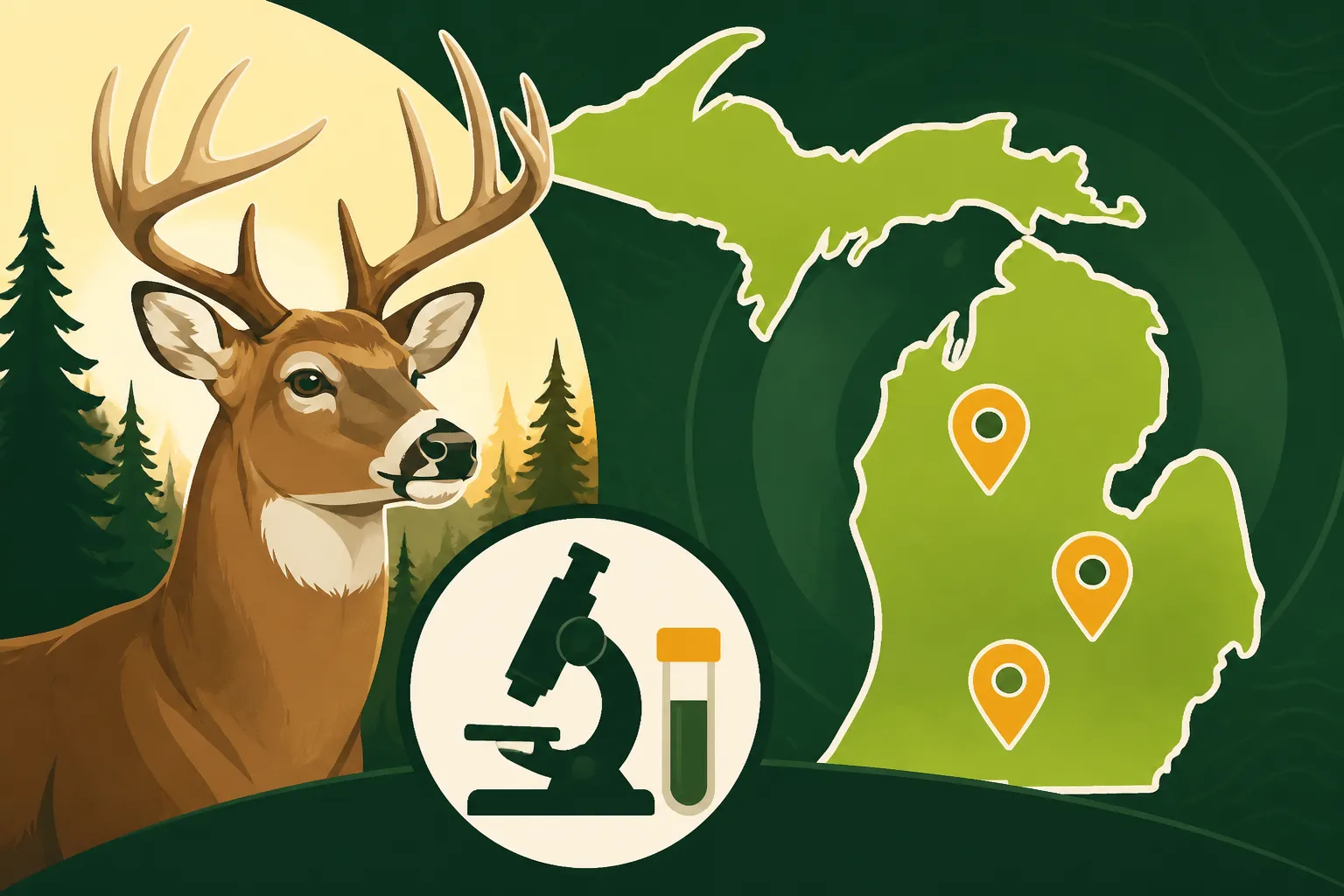
Michigan's battle with CWD began in May 2015 when the disease was first confirmed in a free-ranging white-tailed deer in Meridian Township, Ingham County. This discovery immediately triggered a series of changes in hunting regulations, surveillance efforts, and research initiatives by the Michigan Department of Natural Resources (DNR). Since then, CWD has been detected in several other counties across the Lower Peninsula, primarily concentrating in the central and southern regions.
The disease isn't uniformly spread across the state; rather, it pops up in specific areas. As of early 2024, the Michigan DNR continues to monitor positive detections, with significant CWD activity noted in counties like Kent, Montcalm, Jackson, Clinton, Ionia, and Eaton, among others. The number of affected counties and the specific Deer Management Units (DMUs) with CWD detections can change over time as surveillance continues. For the most up-to-date information on where CWD has been found and what specific DMUs are impacted, the DNR provides current maps and data. While the overall prevalence of CWD in Michigan's herd remains relatively low compared to some other states, every new detection is taken seriously, guiding the DNR's ongoing management strategies. For a deeper dive into the disease's footprint, you can explore the statistics on Chronic Wasting Disease in Michigan.
Understanding Michigan's CWD Regulations
Living with CWD means adapting to new hunting rules. These regulations, while sometimes feeling inconvenient, are Michigan's best defense against the widespread proliferation of the disease. They're designed to help monitor CWD's spread, reduce transmission risk, and ensure the long-term health of our deer herd.
Mandatory Testing Zones and Requirements
In areas where CWD has been detected, the Michigan DNR often designates CWD Management Zones or core surveillance areas. In these specific zones, mandatory testing requirements may be implemented during certain periods, especially during opening weekends of firearm season. If you harvest a deer in one of these designated CWD Management Zones, you are typically required to submit the deer's head for CWD testing within a certain timeframe or at a specific check station. These zones are fluid, changing as new CWD detections occur or as surveillance efforts shift.
The purpose of mandatory testing is to gather as much data as possible from high-risk areas. This data helps wildlife biologists understand the prevalence of the disease, track its movement, and inform future management decisions. Non-compliance can lead to penalties, so it's absolutely crucial for hunters to know if the area they are hunting falls within a mandatory testing zone. Before heading out, always check the latest DNR regulations for your specific hunting location, as these can impact your Michigan Deer Seasons and Tags.
Voluntary Testing and Hunter Responsibility
Even if you're hunting outside a mandatory CWD testing zone, you still have an important role to play in monitoring the disease. The DNR strongly encourages all hunters, regardless of their location, to voluntarily submit their harvested deer for CWD testing. This voluntary participation provides valuable data from a broader geographical range, helping to detect new CWD positive deer early and track its potential spread into new areas.
Voluntary testing isn't just about compliance; it's about being a responsible steward of Michigan's wildlife. Submitting your deer for testing helps biologists paint a more complete picture of Michigan CWD Prevalence Rates, allowing them to make informed decisions that benefit the entire deer population. Moreover, it offers peace of mind for you and your family, knowing that the venison you're consuming has been tested for CWD. The process for voluntary testing is generally straightforward, often involving dropping off the deer head at a designated station or a participating processor.
Navigating Carcass Transport Restrictions
One of the most significant changes for many hunters, particularly those who travel across different parts of Michigan or come from out-of-state, involves carcass transport restrictions. These rules are a direct response to the resilient nature of CWD prions and their ability to persist in certain parts of a deer's anatomy, thus preventing the accidental spread of the disease to new, unaffected areas.
Why Carcass Restrictions are in Place
The logic behind carcass restrictions is rooted in science. CWD prions are most concentrated in the brain, spinal cord, lymph nodes, and spleen of an infected animal. These parts are often left behind during field dressing or butchering. If a hunter harvests a CWD-positive deer in one area and then transports its entire carcass, including these high-risk parts, to a different, currently CWD-free area, there's a risk of contaminating that new environment with prions. Once prions are in the soil, they can remain infectious for many years, potentially infecting other deer that forage in the area.
By restricting the movement of certain carcass parts, the DNR aims to contain the disease within known affected areas and prevent its introduction into healthy populations. This proactive measure, while requiring hunters to change some long-standing habits, is a critical component of the overall CWD management strategy. The goal isn't to make hunting harder, but to safeguard the future of Michigan's deer herd from a disease that has no known cure.
Rules for Moving Deer Carcasses Within Michigan
Michigan has specific regulations governing the movement of deer carcasses, especially when harvested from CWD Management Zones. Generally, you are allowed to transport a whole deer carcass within a CWD Management Zone. However, if you harvest a deer in a CWD Management Zone and intend to take it out of that zone, you must first process the carcass to remove all high-risk parts.
This means you can only transport the following out of a CWD Management Zone:
- Deboned meat: All meat that has been completely separated from the bone.
- Clean skull plate or skull: A skull plate must have antlers attached, and all brain and nervous tissue removed. A full skull must also be completely cleaned of all meat and tissue.
- Hides: Untanned hides are permitted as long as no brain or spinal cord tissue is attached.
- Antlers: If completely separated from the skull plate.
- Teeth: As long as no tissue is attached.
Many hunters choose to field dress their deer at the harvest site and properly dispose of the internal organs. For further processing, it's often easiest to take the deer to a processor or taxidermist located within the CWD Management Zone or process it yourself according to the guidelines. Ignoring these Michigan Carcass Transport Restrictions could result in fines or other penalties, not to mention contributing to the spread of CWD.
Transporting Deer Across State Lines
For non-resident hunters or Michigan residents hunting in other states, understanding cross-state carcass transport rules is even more complex. Each state has its own specific CWD regulations, and what's legal to transport out of Michigan might not be legal to bring into another state, and vice-versa. Generally, most states have similar rules to Michigan, only allowing processed meat, clean skull plates, hides, and antlers.
If you are hunting in Michigan and plan to return to another state, or if you're hunting elsewhere and plan to bring a deer into Michigan, it is absolutely essential to check the CWD regulations for both states. A quick call to the wildlife agency in your home state and Michigan's DNR before your hunt can save you a lot of hassle and potential legal trouble. The goal is always to prevent the inter-state spread of CWD, protecting deer populations beyond Michigan's borders.
Where to Get Your Deer Tested for CWD
Getting your deer tested for CWD is a crucial step for both compliance and peace of mind. The Michigan DNR has worked to make the process as accessible as possible through various channels, understanding that convenience is key to encouraging hunter participation.
DNR Drop-Off Locations and Check Stations
The primary way to get your deer tested is by utilizing the Michigan DNR's extensive network of drop-off locations and check stations. During peak hunting seasons, especially the firearm deer season, the DNR often sets up temporary check stations in CWD Management Zones. These stations are typically staffed by DNR personnel who can quickly and efficiently collect the necessary samples (usually from the deer's brainstem and lymph nodes). You'll need to bring your valid hunting license and deer kill tag, as the location of harvest and other details are vital for data collection when you Report a Michigan Harvest in 72 Hours.
Even outside of dedicated check station periods, the DNR maintains permanent deer drop-off locations at various state parks, field offices, and other designated sites throughout the CWD surveillance area. These locations often feature self-service kiosks where you can securely deposit your deer head and fill out a submission form. Always check the DNR's official website or utilize resources like The Michigan DNR Hunt Fish App for the most current list of active testing sites and their operating hours before you plan your hunt.
Partner Processors and Taxidermists
Recognizing the importance of convenience for hunters, the DNR also partners with many private deer processors and taxidermists across the state. These businesses are trained and authorized to collect CWD samples from harvested deer. This can be a fantastic option if you're already taking your deer to a processor, as they can handle the sampling process for you as part of their services. It streamlines the post-harvest routine, especially for those who might not have a DNR drop-off location nearby or prefer professional handling.
When choosing a processor or taxidermist, it's a good idea to confirm ahead of time that they are a CWD testing partner and understand their process and any associated fees. This collaboration between the DNR and local businesses is a testament to the community-wide effort to monitor and manage CWD. It's a prime example of how Michigan hunters and local businesses work together to ensure the health of our wildlife.
Using Tools like GoHunt for Information
In today's digital age, finding up-to-date information on CWD regulations and testing sites is easier than ever. While the Michigan DNR website is the official source, platforms like GoHunt can also be incredibly helpful resources for hunters. GoHunt often provides detailed maps and tools that overlay CWD Management Zones, helping you quickly identify if your chosen hunting area falls within a mandatory or high-priority surveillance zone. This kind of mapping can be invaluable for pre-hunt planning, allowing you to understand the regulations you'll need to follow before you even step into the woods.
Many hunters use apps or websites like GoHunt to scout and plan their hunts, and having CWD information integrated into those tools can be a real time-saver. By checking such platforms, alongside official DNR channels, you can ensure you have the most current information regarding specific regulations for your Michigan Deer Management Units and nearby testing options. Being prepared with this information is the first step in responsible hunting in a CWD-affected landscape.
Here's a simplified table summarizing the typical CWD testing and carcass transport guidelines:
| Scenario | Testing Requirement | Carcass Transport Rules |
|---|---|---|
| Harvest in Mandatory CWD Zone | Mandatory | Whole carcass can be transported within the CWD zone. To transport out of the CWD zone, all high-risk parts (brain, spinal cord, lymph nodes, spleen) must be removed. Only deboned meat, clean skull plate/skull, hide, antlers, teeth are permitted. |
| Harvest in Voluntary CWD Zone | Voluntary | No restrictions on whole carcass transport within Michigan, but careful disposal of high-risk parts is recommended. When traveling out of state, follow destination state's rules. |
| Harvest Outside CWD Surveillance Zones | Voluntary (Recommended) | No restrictions on whole carcass transport within Michigan. For interstate travel, check destination state's rules carefully, as many states have universal restrictions on importing whole cervid carcasses. |
| Out-of-State Hunters into Michigan | N/A | Only deboned meat, clean skull plate/skull, hide, antlers, and teeth from cervids harvested outside Michigan can be brought into the state. |
What Happens After a CWD Positive Test
Learning that a deer you harvested has tested positive for CWD can be incredibly disheartening. It's a somber moment for any hunter, bringing with it concerns about food safety, the local deer population, and the future of hunting in that area.
Notification Process for Hunters
If your deer tests positive for CWD, the Michigan DNR will contact you directly. This notification usually comes via phone call or email, outlining the test results and providing guidance on the next steps. The DNR aims to notify hunters as quickly as possible, but processing times can vary depending on the volume of samples. Typically, it can take anywhere from 2-4 weeks to receive results, though this can be longer during peak hunting seasons. When submitting a sample, make sure your contact information is accurate to ensure prompt notification.
This news can be tough to hear, and the DNR staff are usually prepared to answer questions and provide support. They understand the emotional impact this has on hunters and are committed to clear communication about what a positive test means for you and for the wider conservation effort. This communication is part of Michigan's robust Michigan Wildlife Disease Monitoring program.
Handling a CWD Positive Carcass
Upon a positive CWD test result, the DNR will provide specific instructions regarding the handling and disposal of the remaining carcass and venison. Current scientific understanding suggests that CWD has not been shown to be transmissible to humans, but the Centers for Disease Control and Prevention (CDC) and the World Health Organization (WHO) advise against consuming meat from CWD-infected animals. As such, the DNR will recommend against consumption.
Disposal options typically involve double-bagging the carcass and taking it to a landfill or following specific instructions for burial on private land where the risk of environmental contamination is minimized. This difficult decision of disposing of a harvested animal is a stark reminder of the challenges CWD poses, but it's a necessary step to prevent further spread of the prions. The DNR might also offer guidance on cleaning equipment that came into contact with the deer.
Public Health and Wildlife Management Implications
While there have been no confirmed cases of CWD crossing the species barrier to humans, public health officials continue to monitor the situation. The precautionary recommendation to avoid consuming CWD-positive venison underscores the seriousness with which this disease is treated. For wildlife management, a positive CWD test in a new area triggers increased surveillance efforts. This often means more mandatory testing, expanded CWD Management Zones, and potentially new hunting regulations designed to help manage the disease, such as increased antlerless harvest opportunities to reduce deer density.
The discovery of a positive deer can lead to a concentrated effort in that specific area to understand the extent of the infection and implement targeted strategies. It impacts local deer populations and can influence What Biologists Say Limits U.P. Deer (or Lower Peninsula deer, in this context), guiding the DNR's long-term management plans to sustain healthy wildlife populations while mitigating the risks of CWD.
The Broader Impact on Michigan Hunters
CWD is more than just a disease; it's a game-changer for hunting in Michigan. It challenges our traditions, calls for increased responsibility, and shapes the future landscape of deer management. It's a long-term problem that requires the ongoing commitment of every hunter.
The Ethical Responsibilities of Hunters
Hunters are undeniably on the front lines of CWD surveillance and management. Our actions directly influence the disease's trajectory. This means that adhering to all CWD regulations—whether it's mandatory testing, carcass transport rules, or proper disposal—is not just about avoiding a ticket; it's an ethical imperative. Responsible hunters play a vital role in slowing the spread of CWD by submitting their deer for testing, reporting sick-looking animals, and educating fellow hunters.
Beyond direct compliance, it also means making informed choices, like considering alternatives to traditional baiting in areas where it's still legal, as congregation of deer can facilitate CWD transmission. Every hunter has a stake in the health of Michigan's deer herd, and taking an active, ethical approach to CWD management is paramount. Platforms like GoHunt can help provide current regulatory information, making it easier for hunters to stay informed and uphold their ethical responsibilities.
Changes to Hunting Traditions and Practices
CWD has undeniably altered many aspects of Michigan's hunting traditions. The casual sharing of an entire deer carcass among friends and family, once common, now comes with specific guidelines. Field dressing practices have changed, with many hunters now opting to do all processing, including removing high-risk parts, at the kill site, especially in CWD zones. Processor choices are now influenced by whether they are CWD testing partners. Deer camps might need to adjust their internal rules for handling and sharing venison.
Even the simple act of planning a hunt now involves checking CWD maps and understanding regulations specific to your intended Finding Your Michigan Deer Management Unit and local DNR rules. While these changes can feel like a burden, they are necessary adaptations to ensure that the cherished tradition of deer hunting in Michigan can continue for generations to come.
Looking Ahead: CWD and the Future of Michigan Hunting
The fight against CWD is a marathon, not a sprint. The disease is complex, and there is no simple cure or easy solution. The future of Michigan hunting will continue to be shaped by ongoing research into CWD, adaptive management strategies by the DNR, and the continued cooperation of the hunting community. We'll likely see further refinements to regulations, new testing technologies, and continued educational efforts.
The resilience of Michigan's deer population, coupled with the dedication of its hunters, gives hope that CWD can be managed. By staying informed, actively participating in testing, and adapting our practices, we contribute to a collective effort to safeguard our wildlife heritage. This long-term commitment to understanding and mitigating CWD is essential for ensuring that future generations can enjoy the rich hunting experiences Michigan offers. Every action a hunter takes, from checking the regulations to getting a deer tested, helps gather the critical data that allows wildlife managers to make the best decisions for our deer.
Disclaimer
This guide is intended for informational purposes only and does not constitute legal advice. Hunting regulations, including those pertaining to Chronic Wasting Disease (CWD), can change frequently. Always consult the official Michigan Department of Natural Resources (DNR) website or their most current hunting digest for the most up-to-date and legally binding regulations before participating in any hunting activities.