Michigan Carcass Transport Restrictions
Trying to figure out exactly what you can and can't do with your deer carcass after a successful hunt in Michigan can feel like navigating a complex maze. Between the state's ongoing battles with Chronic Wasting Disease (CWD) and Bovine Tuberculosis (bTB), the rules for transporting your harvest have gotten stricter and, let's be honest, a little confusing for many of us. This comprehensive guide is here to clear the air, breaking down Michigan's carcass transport restrictions so you can focus on the hunt without worrying about compliance.
Understanding the "Why" Behind Michigan's Carcass Transport Rules
It’s easy to get frustrated with all the regulations, but understanding why these rules are in place can make them a bit easier to swallow. Michigan’s Department of Natural Resources (DNR) isn't just trying to make things harder for hunters; they're working diligently to protect the health of our deer herd and, in the case of Bovine TB, the livestock industry. These diseases pose serious threats, and limiting the movement of certain carcass parts is a critical tool in their management strategy.
What is Chronic Wasting Disease (CWD)?
Chronic Wasting Disease is a nasty neurological disease that affects deer, elk, and moose. It’s caused by abnormal proteins called prions, which can persist in the environment for a very long time, even years, and can be transmitted directly through animal-to-animal contact or indirectly through contaminated soil, water, or feed. CWD is always fatal, and there's no known cure or vaccine.
The major concern with CWD, beyond its devastating impact on deer populations, is its potential to spread rapidly once established in an area. When deer carcasses, especially those containing spinal cord or brain material, are moved from an infected zone to a clean one, they can inadvertently introduce the disease to new areas. Michigan has been working hard to contain CWD since it was first detected in a free-ranging deer in 2015. You can learn more about where the disease was first found in Michigan and its impact by looking into "Chronic Wasting Disease in Michigan." The DNR's strategy focuses heavily on preventing this geographical spread, and that's where carcass transport restrictions come into play. It's about containing the problem to give our deer the best chance at a healthy future.
Bovine Tuberculosis (bTB) in Michigan Deer
Bovine Tuberculosis, or bTB, is another significant disease affecting Michigan's deer herd, primarily concentrated in a specific area of the northeastern Lower Peninsula. Unlike CWD, which is a prion disease, bTB is a bacterial disease. It can affect a wide range of mammals, including deer, other wildlife, and, critically, cattle. The concern here is twofold: protecting wild deer and preventing the spread to domestic livestock, which would have severe economic consequences for Michigan's agricultural industry.
The bTB endemic area has unique carcass transport rules because the bacteria can be present in various tissues, including lymph nodes and lungs. The head of a deer harvested in a bTB zone is particularly important for testing, as the lymph nodes in the head and throat area are key indicators. This is why Michigan has strict requirements for "Bovine TB Rules in Northeast Michigan" and specific carcass handling in the affected counties like Alpena, Alcona, Montmorency, and Oscoda. Hunters in these areas play a vital role in surveillance by submitting specific samples, ensuring the DNR has the data needed to track and manage the disease.
General Carcass Transport Rules for All Michigan Hunters
Even if you're hunting outside a designated disease management zone, there are still fundamental rules regarding how you can transport your deer. These are often misunderstood, leading to confusion and potential violations. The core idea is to prevent the unnecessary spread of any potential disease agent, not just CWD or bTB, by limiting the movement of high-risk tissues.
Basic State-Wide Regulations
For deer harvested in areas not designated as CWD or bTB zones, the general rule of thumb is that you can transport the entire carcass. However, it’s always a good practice, and often much more convenient, to remove certain parts before crossing county lines, especially if you plan to process the deer elsewhere. The key takeaway for healthy zones is flexibility, but with an underlying push towards responsible handling.
What you always want to consider removing before transport, if possible, are the brain and spinal cord. While not strictly mandated outside of CWD zones, this practice minimizes any risk. This means deboned meat, hides, antlers, and cleaned skull caps are always safe for transport anywhere in the state. If you plan to take your deer to a processor, make sure they are aware of any zones you've hunted in, as they might have their own best practices for handling. Always check the Michigan DNR’s current regulations or refer to tools like GoHunt, which often have integrated maps showing current disease zones, before heading out.
The Importance of Immediate Processing
One of the best ways to simplify carcass transport and ensure compliance, regardless of where you hunt in Michigan, is to process your deer at the kill site or very close to it. This means reducing the carcass down to its essential, transportable parts as soon as possible after harvest. For many seasoned hunters, this is already standard practice, but it's especially critical when dealing with disease management zones.
Deboning the meat in the field, for instance, allows you to leave the skull, spine, and other potentially high-risk materials right where the deer was harvested, assuming you're on your own private land or within public land regulations that permit this. All you're left with are clean, deboned meat, antlers, and the hide. Not only does this reduce weight and make transport easier, but it also completely bypasses many of the specific carcass movement restrictions. Think about it: if you're only moving deboned meat, you're pretty much always in the clear. This practice also helps with proper game care, especially during warmer early archery seasons. You can find detailed instructions on "Field Dressing a Deer in Cold Weather" or "Butchering a Deer at Camp" which often includes steps for field deboning.
Specific Rules for CWD Management Zones
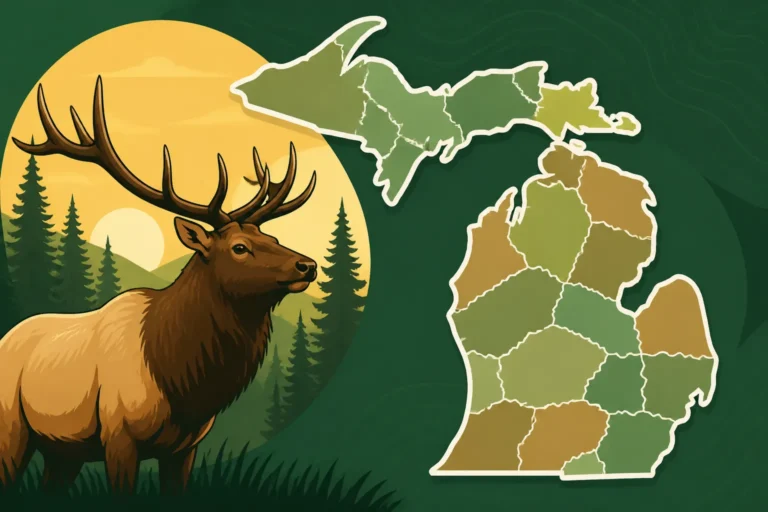
CWD is a serious threat, and Michigan has designated specific Deer Management Units (DMUs) as CWD Management Zones. These zones have the most stringent carcass transport restrictions, designed to prevent the movement of prions out of infected areas and into healthy deer populations. It's crucial for hunters in these areas to be fully aware of the rules before they even pull the trigger.
Identifying CWD Management Units (DMUs)
The first and most critical step for any hunter is to know if the area they are hunting in falls within a CWD Management Zone. These zones can change, so relying on last year's knowledge isn't good enough. The Michigan DNR provides up-to-date maps on their website and through the Michigan DNR Hunt Fish App. This app is a game-changer, allowing you to quickly check your location against CWD zones right from your phone.
Before your hunt, take the time to zoom in on your specific hunting location using the DNR maps or a robust hunting app like GoHunt. These tools can show you exactly which DMU you're in and if it's considered a CWD zone. It's a small investment of time that can save you a huge headache later. Remember, ignorance of the rules isn't an excuse, and violations carry penalties. Knowing your DMU is also important for other regulations, such as "Michigan Antler Point Restrictions by DMU."
Transporting a Harvest Out of a CWD Zone
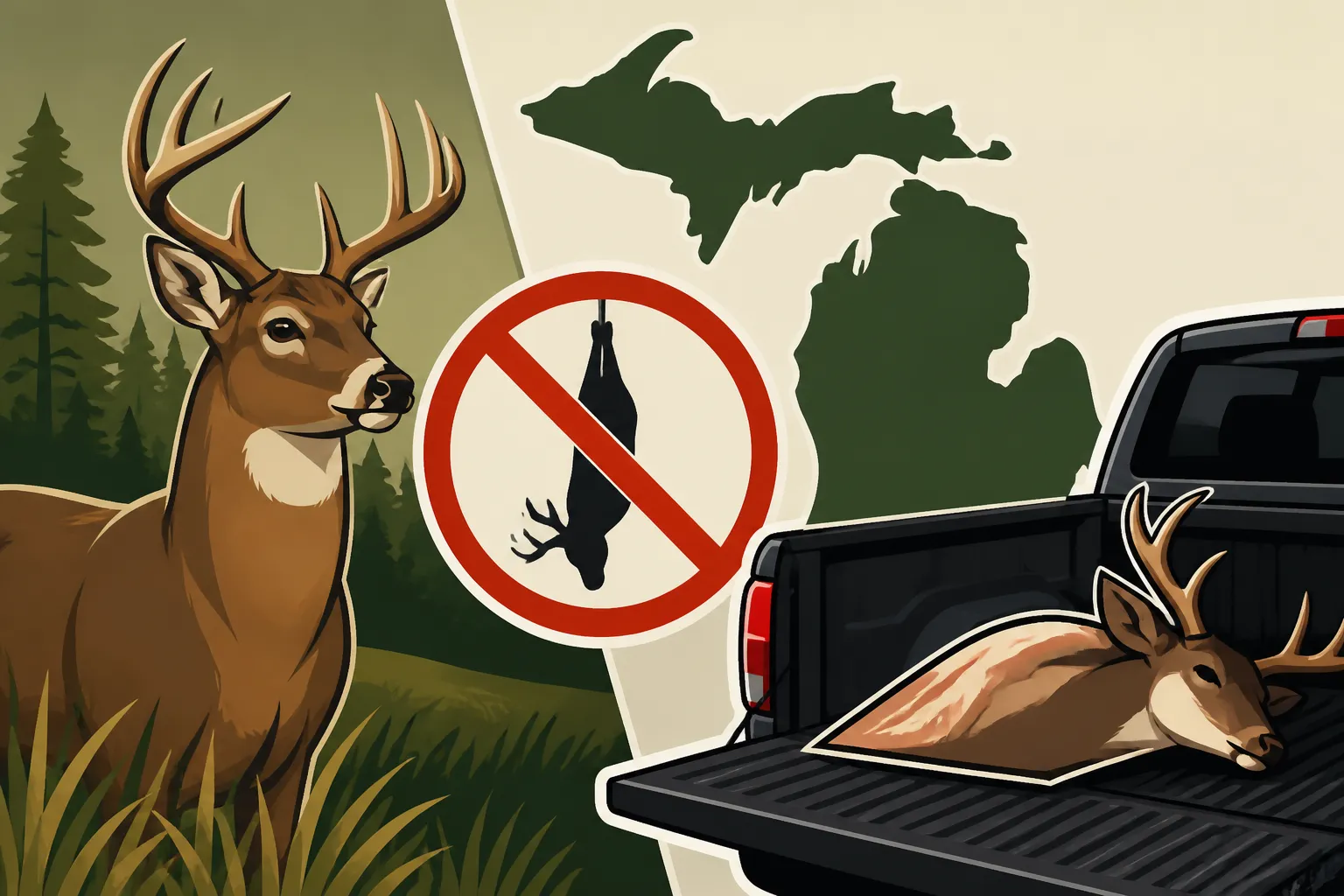
This is where things get really specific. If you harvest a deer within a CWD Management Zone, there are strict limitations on what parts of that carcass can leave the zone. The goal is to leave all high-risk materials behind to prevent the spread of CWD prions.
Permitted Parts (Can Leave a CWD Zone):
- Deboned meat: This is always your safest bet. If you can debone the entire carcass in the field, you're good to go.
- Antlers: These are generally allowed, but they must be completely free of brain or tissue material. A cleaned skull plate (the portion of the skull that the antlers are attached to) is also fine, as long as it's visibly clean.
- Hides: Hides can be transported if they are free of any head or spinal column material.
- Cleaned teeth: Taxidermy-ready teeth are usually permissible.
- Finished taxidermy products: Once fully processed, these are typically fine.
Prohibited Parts (Cannot Leave a CWD Zone, unless directly to a CWD testing site or processor within the CWD zone):
- Entire carcasses: No whole deer (or even field-dressed deer with the spine/head intact) can leave a CWD zone.
- Heads: Deer heads (including the brain and lymph nodes) are considered high-risk material.
- Spinal columns: The vertebral column is also high-risk.
- Other nervous system tissue: Any part containing brain, spinal cord, or nervous tissue.
If you want to have your deer tested for CWD, which is highly encouraged in these zones, you must take the head to a designated CWD testing drop-off site within the CWD Management Zone. These sites are clearly marked and are crucial for the DNR's surveillance efforts. You can often find a list of these locations on the Michigan DNR website or through the Michigan DNR Hunt Fish App. Submitting your deer for testing is a vital step in "Michigan CWD Testing for Hunters."
Here's a quick reference table for CWD zones:
| Carcass Part | Can Leave CWD Zone? | Notes |
|---|---|---|
| Deboned Meat | Yes | Always recommended. |
| Antlers | Yes | Must be cleaned of all brain/tissue material. |
| Skull Plate | Yes | Must be visibly clean. |
| Hide | Yes | Must be free of head/spinal material. |
| Whole Carcass | No | Only to processor/testing site within the CWD zone. |
| Head (intact) | No | Only to processor/testing site within the CWD zone. |
| Spinal Column | No | High-risk material. |
| Finished Taxidermy | Yes | Once fully processed and cleaned. |
Rules for Bovine TB Management Areas
The bTB management area in Michigan's northeastern Lower Peninsula presents its own set of specific rules for deer carcass transport. While not as widespread as CWD concerns, the bTB zone has been a persistent challenge for decades, and the rules are tailored to manage this specific bacterial threat, which can also affect cattle.
Locating Bovine TB Counties
Currently, the primary counties designated as the bTB management area are Alpena, Alcona, Montmorency, and Oscoda. These counties are often referred to as the "core bTB area" in Michigan. While the focus is on these four, regulations might extend to adjacent counties or change based on ongoing surveillance. It's vital to confirm the current boundaries annually, as with CWD zones. The Michigan DNR website is the authoritative source for these boundaries, and again, mobile apps like the Michigan DNR Hunt Fish App can be invaluable in the field.
Hunters in these areas are not just participating in a recreational activity; they are actively assisting in a long-term wildlife health management program. Your compliance helps to monitor the disease and prevent its spread to other deer populations and local farms. These are the same counties that face specific rules for "Bovine TB Rules in Northeast Michigan."
Special Handling Requirements for bTB Areas
The specific rules for transporting deer from the bTB management area revolve around surveillance and testing. Unlike CWD, where the main concern is neurological tissue, bTB can manifest in various internal organs and lymph nodes, particularly those in the head and thoracic cavity.
If you harvest a deer in the bTB Management Area (Alpena, Alcona, Montmorency, Oscoda counties):
- Mandatory Head Submission (Certain Seasons/Areas): The most significant difference here is the requirement to submit the heads of all deer (antlered and antlerless) harvested in these specific counties for bTB testing during certain periods, usually during the firearm seasons. This is crucial for monitoring the disease's prevalence.
- Whole Carcass Transport: You can transport a whole deer carcass from the bTB zone, but it must be taken directly to a DNR check station within the bTB zone or a cooperating meat processor who will handle the head submission.
- Permitted Parts for Transport (Outside the Zone): Similar to CWD, you can always transport deboned meat, antlers (cleaned), hides (free of head/spinal material), and cleaned skull plates outside the bTB zone. The key is to remove the high-risk parts (head and internal organs) before leaving the designated counties.
- Heads for Taxidermy: If you wish to keep the head for taxidermy, you must still present it at a DNR check station within the bTB zone or a cooperating processor for lymph node removal and testing. They will remove the necessary lymph nodes, and you can then take the skull for processing.
The DNR check stations in the bTB area are well-versed in these procedures and are set up to make the process as smooth as possible for hunters. They understand the value of a trophy and will work with you to ensure testing is completed while preserving your rack. Hunters submitting deer for testing are often helping monitor "How Bovine TB Reached Michigan Deer" and its current spread.
Preparing Your Harvest for Transport
Responsible transport begins long before you load your deer into the truck. Proper field dressing, processing, and packaging are not just about game care; they are essential for complying with Michigan's carcass transport restrictions and ensuring the health of the broader deer herd.
Field Dressing and Deboning Techniques
When you're faced with strict carcass transport rules, or simply want to lighten your load, field dressing and deboning become incredibly valuable skills. Instead of dragging or hauling a whole deer, you can reduce it to manageable, legal parts right where it lies.
Field Dressing: This is the first step for any deer, regardless of transport rules. Remove the internal organs immediately to cool the carcass and prevent spoilage. This is standard practice and universally recommended.
Field Deboning: This takes it a step further. Instead of just gutting, you systematically remove all the muscle meat from the bones in the field.
- Skinning: Start by carefully skinning the deer. This can be done with the deer on its back or by hanging it.
- Quarters: Once skinned, you can begin to remove the muscle groups. Start with the hindquarters, carefully cutting around the ball joint and separating the muscles. Then move to the front shoulders.
- Backstraps and Tenderloins: Don't forget the prized backstraps (along the spine on the outside) and the tenderloins (inside the body cavity, along the spine).
- Neck Meat: If allowed and desired, you can also debone the neck meat.
- Separate and Pack: As you debone, place the clean meat into breathable game bags. This protects the meat from dirt and insects while allowing it to cool.
By deboning, you leave the spine, rib cage, skull (unless you want the antlers and skull plate), and other bones in the field. This significantly reduces weight and, more importantly, eliminates the high-risk parts that fall under many transport restrictions. This technique is particularly useful if you're "Getting a Deer Out of a Michigan Cedar Swamp" or from other remote locations.
Packing and Storage for the Journey Home
Once you've field-dressed or deboned your deer, proper packing and storage are crucial, especially if you have a long drive home or if the weather is warm. This prevents spoilage and maintains the quality of your venison.
- Game Bags: Always use good quality, breathable game bags for your meat. These protect the meat from flies, dirt, and debris while allowing air circulation for cooling. Avoid plastic bags directly on warm meat, as they trap heat and can cause spoilage.
- Cooling: Rapid cooling is paramount. If deboned, place the meat directly into coolers with plenty of ice. Ensure the ice doesn't melt and sit in direct contact with the meat for too long, as this can waterlog it. Use Ziploc bags or dedicated dry ice containers within the cooler if possible, or elevate the meat slightly. For whole carcasses (only allowed if moving within permitted zones or to specific check stations), place ice in the body cavity to aid cooling.
- Sanitation: Keep everything clean. Use clean knives, gloves, and work surfaces during processing. Prevent dirt, hair, or gut material from contaminating the meat.
- Separate Parts: If you're transporting parts that are allowed from a restricted zone (e.g., a cleaned skull plate for taxidermy and deboned meat), keep them separated. Labeling coolers or bags can prevent confusion later on.
- Vehicle Preparation: Line your vehicle's cargo area with tarps or heavy plastic to contain any blood or moisture. This makes cleanup easier and prevents odors. For longer drives, consider adding more ice at a gas station stop to keep things adequately chilled. "Coolers and Game Bags for Early Archery" become absolutely essential.
Best Practices for Responsible Carcass Transport
The rules can be complex, but adhering to best practices not only keeps you legal but also contributes to the health of Michigan's deer herd and the future of hunting in our state. It boils down to being informed, prepared, and proactive.
Understanding Your DMU Before You Hunt
This cannot be stressed enough. Far too many hunters only think about carcass transport after they've harvested a deer, often while standing over their animal in a remote location with poor cell service. By then, it might be too late to make the best decisions or comply fully with the law.
Before you ever step into the woods, especially if you're hunting in a new area or a county you're less familiar with, know which Deer Management Unit (DMU) you're in. This is critical for understanding "Michigan Deer Management Units" and all associated rules.
- Consult the DNR: The Michigan DNR website is the official source for all regulations, including up-to-date maps of CWD and bTB zones.
- Use Technology: Download the Michigan DNR Hunt Fish App to your smartphone. This app uses your phone's GPS to show you exactly where you are relative to CWD and bTB zones, even without cell service if you download the maps in advance. Other powerful hunting apps like GoHunt also provide excellent map overlays that clearly delineate these zones and show testing site locations.
- Plan Ahead: If you're hunting in a restricted zone, make a clear plan before the hunt for how you will handle a harvested deer. Will you debone in the field? Where are the nearest CWD or bTB drop-off points? Having a plan removes stress and ensures compliance.
Knowing your DMU and its specific regulations is not just about avoiding a ticket; it's about being a responsible conservationist.
Utilizing Designated Drop-Off Points and Check Stations
Michigan has invested in a network of drop-off points and check stations to facilitate disease surveillance. These facilities are your friend, especially if you harvest a deer in a CWD or bTB zone.
- CWD Drop-Off Points: If you harvest a deer in a CWD zone and wish to have it tested, these sites are where you bring the head for sampling. They are typically unstaffed collection barrels or designated bins where you can leave the head, along with required information (license number, harvest location, date). The DNR collects these regularly for testing. These are explicitly designed for "Michigan CWD Rules and Test Sites."
- Bovine TB Check Stations: In the bTB core area, check stations are often staffed, particularly during the firearm seasons. You bring your whole deer (or at least the head) to these stations for mandatory bTB testing. DNR staff will collect the necessary lymph node samples. This is also where you would register your harvest for "Michigan Harvest Report Deadline" if you haven't done so via the app.
- Cooperating Processors and Taxidermists: Many meat processors and taxidermists in or near restricted zones are authorized to collect samples or accept specific parts for proper disposal. Always verify their current authorization and procedures before taking your deer to them.
Using these designated facilities ensures that critical disease monitoring can occur efficiently. It's an important part of doing your part as a hunter to help manage these diseases and safeguard Michigan's deer herd for future generations. Don't hesitate to contact the DNR directly if you have any questions about the closest drop-off points or specific regulations in your hunting area.
Disclaimer
Please remember that hunting regulations can change. While this guide provides comprehensive and current information regarding Michigan's carcass transport restrictions, it is crucial to always consult the official Michigan Department of Natural Resources (DNR) hunting regulations and website for the most up-to-date rules and specific management unit boundaries before you hunt. This article is for informational purposes only and should not be considered a substitute for official DNR guidance.