Grouse and Woodcock Hunting in Michigan
There's a special kind of frustration that comes with hunting Michigan's upland birds. One moment, you're enjoying the crisp autumn air, dog quartering beautifully, and the next, a ruffed grouse explodes from the brush like a feathered rocket, leaving your heart pounding and your shotgun still shouldered. Or perhaps you've walked countless miles through thick alders, hoping for a glimpse of the elusive woodcock, only to find the flight hasn't arrived or has already moved on. This guide is for every hunter who's felt that rush, that challenge, and that deep connection to the wild places these incredible birds call home. We'll dive deep into understanding Michigan's grouse and woodcock, where to find them, how to hunt them, and the gear that'll help you succeed.
Understanding Michigan's Upland Birds
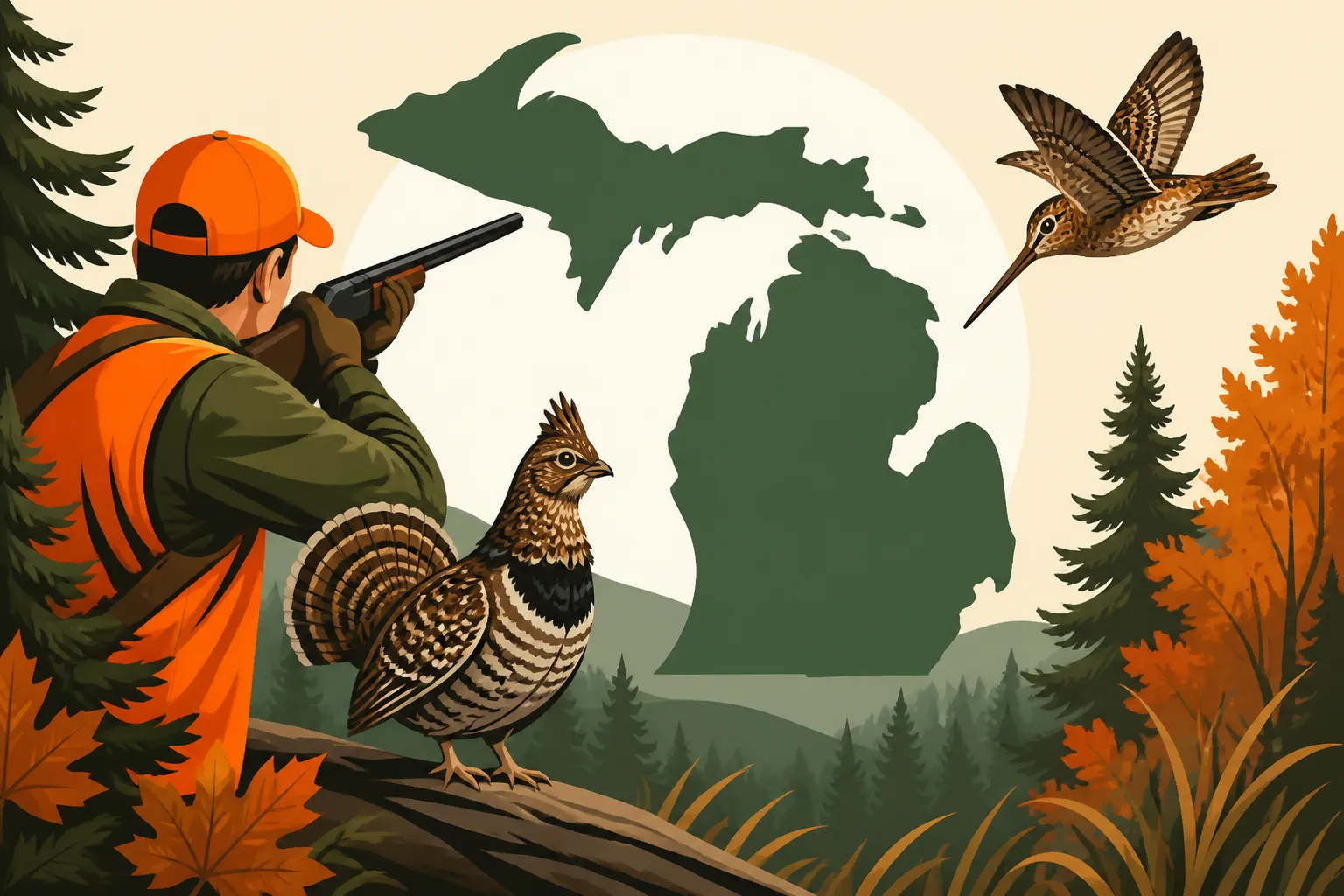
Michigan is a truly special place for upland bird hunters, offering opportunities for both the explosive ruffed grouse and the secretive American woodcock. While they often share the same general haunts, understanding their individual characteristics and preferences is key to filling your game vest. It's not just about walking; it's about reading the cover, anticipating the flush, and appreciating the wildness they embody.
The Ruffed Grouse: King of the Coverts
Ah, the ruffed grouse. Many refer to it as the "king of the coverts," and for good reason. These birds are legendary for their explosive takeoffs and their uncanny ability to put a tree or a thicket between you and them in a fraction of a second. Hunting grouse in Michigan is less about bagging a limit and more about the experience – the dog work, the beautiful fall scenery, and the sheer challenge of hitting such a fast-moving target in dense cover.
Their habitat preferences are quite specific, often revolving around young forest ecosystems. You'll primarily find them in areas of regenerating aspen, mixed hardwoods with a dense understory, and even older clearcuts that are now choked with saplings and brush. These spots provide both the food sources they need, like buds, catkins, and berries, and the crucial overhead cover that protects them from avian predators. A mature stand of timber, while beautiful, typically won't hold many grouse unless there's a good patch of dense undergrowth or an old logging road offering varied habitat. Often, the best grouse cover is so thick you can barely walk through it, which is exactly why they thrive there and why hunters find them so frustratingly exhilarating.
Behaviorally, grouse are masters of camouflage and stealth. They're much more likely to walk or run away from pressure than to flush prematurely. They'll hold tight, often letting you walk right past them, before erupting from underfoot with a thunderous wing beat that'll make you jump. This "holding tight" behavior is what makes a good bird dog so invaluable for finding them. They're also known for their drumming display in the spring, where males stand on a log and beat their wings to create a low thumping sound to attract mates and defend territory. This sound is iconic to the Michigan woods, even if it happens long before hunting season.
The challenges of hunting ruffed grouse in Michigan are legendary. They are incredibly fast, and their flight path often mimics a corkscrew through the densest part of the forest. You'll often hear them before you see them, and by the time you shoulder your shotgun, they're already disappearing behind a wall of timber. It takes quick reflexes, practiced gun mounting, and an intimate knowledge of how to swing through thick cover. Missing is far more common than hitting, and that's just part of the allure. Every grouse in the game vest feels like a hard-earned trophy.
The American Woodcock: Timberdoodle Tales
The American woodcock, affectionately known as the "timberdoodle," is a bird that often flies under the radar for many hunters, overshadowed by its flashier cousin, the grouse. But those who dedicate time to these migratory shorebirds know just how unique and rewarding they can be to hunt. They're a bit of an enigma, looking like a plump, overgrown snipe with oversized eyes and a long, flexible bill perfectly adapted for probing soft earth.
Unlike grouse, which prefer drier, upland cover, woodcock are drawn to moist, young deciduous forests, particularly areas dominated by alder runs, willow thickets, and young aspen stands found near swamps, streams, or low-lying fields. Their diet consists almost entirely of earthworms, which means they need soft, moist soil where they can easily probe with their specialized bills. If you find a patch of alders with damp ground and tell-tale probing holes, you're likely in a woodcock hotspot. These areas often appear to be featureless tangles to the untrained eye, but to a woodcock hunter, they're gold. To truly unlock these areas, understanding the nuances of Woodcock Hunting Michigan Alder Runs is crucial.
Their migration patterns are a crucial aspect of hunting them in Michigan. Woodcock are migratory birds, breeding in the northern states and Canada, then heading south to warmer climates as cold weather sets in and the ground freezes. This means that successful woodcock hunting often depends on "timing the flight" – being in the right place when a fresh wave of birds pushes through the state. Early in the season, you'll find resident birds, but the real excitement often begins in mid-to-late October when the northern birds start arriving. The exact timing can vary year to year based on weather fronts and cold snaps, adding another layer of challenge and excitement.
The unique flight patterns and smaller size of woodcock present their own set of challenges. When flushed, a woodcock typically flies slower and often higher than a grouse, with a distinctive, twittering whistle from its wings. They tend to weave through the trees, making for surprisingly challenging shots, especially when they first explode from tight cover. Their smaller body size means a good, open pattern is beneficial, and their often unpredictable flight can make even seemingly easy shots turn into misses. Don't be fooled by their seemingly slow flight compared to a grouse; they can be incredibly agile and difficult to pin down.
Michigan's Upland Bird Cycles
It’s easy to get discouraged when you head out year after year and notice variations in bird numbers. The truth is, Michigan’s upland birds, particularly grouse, are subject to natural population cycles and environmental factors that can make one season boom and the next seem bust. This isn't just bad luck; it's a dynamic ecological reality that every hunter needs to understand.
Ruffed grouse populations are notoriously cyclical, often following a 7-10 year pattern of boom and bust. While the exact causes are complex and debated, it's believed to be a combination of predator-prey dynamics, habitat quality, and disease. In recent years, West Nile Virus (WNV) has emerged as a significant concern for grouse populations, particularly in the eastern and midwestern states. This mosquito-borne illness can cause mortality in grouse, and its impact varies regionally and annually based on mosquito populations and bird immunity. Additionally, harsh winters can impact survival, and wet, cold springs can lead to poor brood survival, meaning fewer young birds entering the fall population. This natural fluctuation means that some years, you might walk for miles for a few flushes, while in others, the coverts seem alive with birds.
Woodcock numbers, while not as dramatically cyclical as grouse, also experience fluctuations. Their populations are primarily influenced by habitat availability and quality, both on their breeding grounds in Michigan and along their migratory routes and wintering grounds in the southern states. The continued loss of young forest and wetland habitats due to development or maturation of forests is a long-term concern for woodcock. Weather patterns during migration can also have a significant impact; strong cold fronts can push birds quickly through the state, meaning you might miss the peak, or they might hold up for longer if the weather is mild. Drought conditions can also make their preferred feeding grounds too hard for probing, forcing them to move. Organizations like the American Woodcock Society (AWS) and the Ruffed Grouse Society (RGS) conduct banding studies and habitat projects to monitor these populations and work towards ensuring their future.
Prime Michigan Habitat and Where to Find It
Finding grouse and woodcock in Michigan isn't a random endeavor; it's about understanding their preferred real estate. These birds are creatures of specific cover types, and knowing how to identify and locate these areas, especially on public land, is paramount to success. Michigan offers vast tracts of public hunting land, but not all of it holds upland birds.
Aspen Regeneration: Grouse Magnets
If there's one word that makes a Michigan grouse hunter's ears perk up, it's "aspen." Regenerating aspen stands are the quintessential grouse magnet, and understanding why and how to find them is the key to consistent flushes. Aspens are pioneer species; they thrive after disturbances like clearcutting or fire, rapidly growing in dense thickets that create ideal habitat.
The best grouse cover often comes from clearcuts that are anywhere from 8 to 20 years old. In the early stages (1-7 years), the trees might be too short, not providing enough overhead cover. Beyond 20 years, the canopy starts to close, shading out the dense understory that grouse depend on for food and protection. That sweet spot of dense saplings, thick brush, and ground cover offers everything a grouse needs to evade predators and find sustenance. Look for areas with a mix of aspen of different ages – a patchwork of cuts ensures a continuous supply of prime habitat as older stands mature.
Identifying these areas on maps is a game-changer. Forget driving aimlessly down two-tracks; modern mapping tools are your best friend. Services like GoHunt, onX Hunt, and even the DNR's own Using the Michigan Mi-HUNT Map allow you to pore over aerial photos and timber harvest data from the comfort of your home. Look for tell-tale squares or rectangles of varying shades of green, indicating different ages of forest regeneration. Lighter greens often signify younger, denser growth. Pay attention to the edges of these clearcuts, especially where they transition into mature timber, swamps, or old logging roads. These edges are often travel corridors and feeding areas for grouse. Don't be afraid to zoom in and look for blow-downs, old logging equipment, or even deer trails that might indicate a path through the dense stuff.
Alder Swales and Wet Thickets: Woodcock Havens
While grouse prefer drier, dense aspen, woodcock are drawn to much wetter environments. Their preferred habitat consists of alder swales, willow thickets, and young, moist aspen stands, often found alongside streams, in low-lying pockets within larger forests, or bordering swamps. These areas are characterized by moist soil, which is absolutely critical for their primary food source: earthworms.
Identifying these specific wet thickets requires a keen eye, even on aerial maps. Look for sinuous lines of dense, darker green vegetation running through otherwise dryer woods, often following creek beds, drainages, or depressions. These are frequently alder or willow carrs. Swamps and low areas where water tends to collect are also prime candidates. When you're boots on the ground, you'll recognize woodcock cover by the sheer density of the alders, the often boggy or damp ground underfoot, and the tell-tale "splats" of woodcock droppings, which are surprisingly noticeable and white-washed. You might also spot their probing holes in the soft earth. Many times, you'll be walking through a grouse covert and suddenly drop down into a low, wet area – that's often where the woodcock are hiding. This dual habitat opportunity means you can often hunt both species in the same general area, truly getting the most out of your time afield. Our comprehensive guide on Woodcock Hunting Michigan Alder Runs offers even more specific insights into these unique areas.
State Forests and Game Areas: Public Land Gems
Michigan is incredibly generous with its public lands, offering millions of acres for hunters to roam. This is a blessing for upland bird hunters, as much of the best grouse and woodcock habitat is actively managed by the state or federal agencies. You're not going to find these birds in sprawling farm fields; you'll find them in the wild, rugged, and often remote corners of the state.
The vast Michigan State Forest system, particularly in the Northern Lower Peninsula and the Upper Peninsula, is a treasure trove of upland cover. These forests are actively managed for timber, creating a mosaic of clearcuts, regenerating stands, and mature timber that benefits grouse and woodcock. Regions like the Huron-Manistee National Forest or the various state forests in the Northern Lower, such as the Pere Marquette State Forest or Jordan Valley State Forest, are excellent starting points. In the Upper Peninsula, areas within the Hiawatha National Forest or Copper Country State Forest can be incredibly productive, though often more remote. If you're looking for more details on hunting these specific regions, guides like Hunting the Michigan Upper Peninsula for Deer or Hunting the Northern Lower Peninsula often highlight the broader forest characteristics that are also beneficial for upland birds.
Michigan State Game Areas are another excellent option, especially for hunters in the Southern Lower Peninsula who might have less access to vast tracts of state forest. These areas are specifically acquired and managed for wildlife, and many have dedicated upland habitat projects. While often smaller and potentially facing more pressure, they can still hold excellent numbers of birds. Checking the Michigan DNR website or using your Michigan Mi-HUNT Map app will show you boundaries, recent timber cuts, and other habitat features that indicate prime bird territory.
When exploring these public land gems, always be mindful of hunting pressure. The best tactic is often to walk farther than most, push into areas that are harder to access, or utilize the middle of the week when crowds are thinner. Scout thoroughly, using those maps, to identify likely areas of dense, young cover away from obvious access points. GoHunt can be particularly helpful here, overlaying recent timber harvests with public land boundaries, allowing you to pinpoint those fresh cuts that might be overlooked by others. Don't be afraid to put on some miles; the rewards are often found in the most challenging terrain.
Key Seasons and Regulations
Understanding Michigan's hunting seasons and regulations for grouse and woodcock is as crucial as knowing your habitat. These are not open-ended hunts, and compliance with state and federal rules ensures you're hunting legally and contributing to conservation efforts. Missing a detail can turn a great day into a costly one, so always double-check the current year's hunting digest.
Michigan Grouse Season Dates and Bag Limits
The Michigan grouse season is often a long and generous one, usually opening in mid-September and extending through the firearm deer season and into the first few days of January. This extended season allows hunters to experience grouse hunting in a variety of conditions, from the vibrant colors of early fall to the quiet, snow-covered woods of late season. The early season, from mid-September to mid-November, is incredibly popular, offering milder weather and the full autumn foliage. The season typically closes for a period during the November firearm deer season in some areas to reduce conflicts and then reopens for a late-season hunt. Always check the current year's Michigan DNR Hunting Digest for the precise dates, as they can shift slightly.
Daily bag and possession limits are set to ensure sustainable harvest. For ruffed grouse, the typical daily bag limit is 5 birds, with a possession limit of 10 birds. This means you can harvest 5 birds in a day, and you can have up to 10 birds in your freezer at home, representing two days' worth of hunting. These limits are generous enough for most hunters, especially given the difficulty of bagging grouse. There might also be specific zone regulations, particularly in the Upper Peninsula versus the Lower Peninsula, so always confirm for your hunting area.
A critical regulation to be aware of, especially during the firearm deer season, is the hunter orange requirement. While not required during the early archery or small game seasons, once the firearm deer seasons begin (including the youth hunt, early antlerless, and regular firearm seasons), all hunters afield for any game, including grouse, must wear hunter orange. The rule generally states that 50% of your outermost clothing above the waist, including your hat, must be hunter orange. This is a non-negotiable safety measure to ensure visibility in the woods when deer hunters are present. Even if you're out strictly for grouse in late October or early November, you must comply.
Michigan Woodcock Season Dates and Federal Regulations
Hunting American woodcock introduces an additional layer of regulation because they are migratory birds, falling under federal protection and management by the U.S. Fish and Wildlife Service. This means you’ll need more than just a state small game license.
The woodcock season in Michigan typically opens shortly after the grouse season, usually in late September or early October, and runs for a set number of days. The season dates are determined in coordination with federal guidelines and are often shorter than the grouse season. These dates are critical, as they dictate when you can legally pursue woodcock, which can often coincide with the peak of their migration through Michigan. To truly maximize your chances, a deep understanding of Timing the Michigan Woodcock Flight is essential.
Daily bag limits for woodcock are generally lower than for grouse, often set at 3 birds per day, with a possession limit of 9 birds. Again, these limits are designed for sustainable harvest of a migratory species. These birds can be incredibly challenging to hit, so even with a lower bag limit, it’s a rare and satisfying day to reach it.
Beyond your standard Michigan hunting licenses, there are two crucial federal requirements for woodcock:
- Federal Migratory Bird Hunting and Conservation Stamp (Federal Duck Stamp): This stamp, often referred to as a "Duck Stamp," is required for hunting all migratory waterfowl and other migratory birds, including woodcock, snipe, coots, and cranes. It's a physical stamp you purchase and sign across the face.
- Harvest Information Program (HIP) Certification: This is a separate, free certification that you must obtain annually. It's a simple process where you answer a few questions about your previous year's migratory bird hunting success (or lack thereof). This data helps wildlife agencies monitor harvest trends and set future seasons. You usually get your HIP certification when you purchase your hunting license, but it's important to confirm you've completed it.
Failing to have either of these federal requirements can result in fines, so always ensure you're fully compliant before heading afield for woodcock.
License Requirements and HIP Certification
Before you even step foot in a Michigan covert, you need the right paperwork. This isn't just bureaucracy; it's how conservation is funded, and it's essential for tracking hunter participation and harvest data.
For Michigan residents, your primary requirement will be a Michigan Base License and a Small Game License. The base license is your foundational license, required for any hunting activity, and the small game license specifically covers game birds and small mammals. Non-residents will also need a non-resident base license and a non-resident small game license. These can be purchased online through the Michigan DNR website, at a licensed retailer (like your local sporting goods store), or via the Michigan DNR Hunt Fish App on your smartphone.
As mentioned, if you plan to hunt woodcock, you will also need the Federal Migratory Bird Hunting and Conservation Stamp and the HIP (Harvest Information Program) certification. The federal stamp can typically be purchased at any post office, many sporting goods stores, or online. The HIP certification is usually completed as part of your hunting license purchase process through the Michigan DNR. It's a quick survey about what migratory birds you hunted last year and how many you harvested. It helps wildlife agencies manage migratory bird populations more effectively. Don't overlook it!
It’s always a good practice to carry your physical licenses and stamps with you while hunting, or have them readily accessible on your phone via the DNR app. Conservation officers frequently check for proper licensing, especially during peak seasons in popular hunting areas. Being prepared ensures a smooth, enjoyable hunt without any unnecessary interruptions or legal issues.
Essential Gear for Upland Success
Upland hunting in Michigan is a physical pursuit, demanding gear that can withstand the rigors of dense cover, varying weather, and long miles. Having the right tools won't guarantee a limit, but it will certainly make the experience more comfortable, safer, and ultimately more enjoyable. Don't skimp on the essentials; your gear is your partner in the field.
Shotguns and Ammunition: Fast, Light, and Accurate
When it comes to upland shotguns for Michigan grouse and woodcock, speed and maneuverability are paramount. These birds don't offer long, leisurely shots; they explode and vanish in a blink.
-
Gauge Choice:
- 20 Gauge: This is arguably the most popular and versatile choice for Michigan upland hunters. It offers a good balance of light weight, manageable recoil, and sufficient pattern density for these smaller birds. A 20 gauge with 7/8 oz or 1 oz loads of shot is perfectly capable.
- 28 Gauge: Gaining popularity for its incredibly light weight and quick handling. With modern loads, a 28 gauge can deliver surprisingly effective patterns and is a pure joy to carry through thick cover all day.
- .410 Bore: While challenging, the .410 can be a rewarding choice for experienced hunters, especially in dense cover where shots are extremely close. It's often recommended for those looking for an extra challenge or for youth hunters with reduced recoil needs. However, the small shot charge demands precise shooting.
- 12 Gauge: While effective, many hunters find a 12 gauge a bit heavy and slow-swinging for fast-flushing upland birds in tight cover. If you opt for a 12 gauge, choose a lighter field model with shorter barrels.
-
Shot Size: For grouse and woodcock, you want smaller shot that produces a dense pattern.
- #7.5 Shot: This is a fantastic all-around choice. It provides a good balance of pellet count and energy for both grouse and woodcock.
- #8 Shot: Often preferred for woodcock due to their smaller size, #8 shot delivers a very dense pattern, increasing the chances of hitting the bird. It's also excellent for grouse at closer ranges.
- #6 Shot: While effective on grouse, it might be a bit heavy and sparse for woodcock, especially in open chokes.
-
Choke Choices: The vast majority of grouse and woodcock shots are close-range, often within 30 yards.
- Improved Cylinder (IC): This is the workhorse choke for upland hunting. It provides an open pattern that is forgiving at close range but still effective out to moderate distances.
- Skeet or Cylinder: Even more open, these chokes are excellent for incredibly tight cover where birds are flushing within 15-20 yards. They're particularly useful for woodcock.
- Double Barrels (Side-by-side or Over/Under): Many upland hunters prefer double-barreled shotguns because they allow you to have two different chokes (e.g., Skeet/IC or IC/Modified). This gives you a fast-opening shot for close flushes and a slightly tighter pattern for the second shot if the bird gets out a bit.
Ultimately, the best shotgun is one you can carry comfortably all day, mount quickly, and shoot instinctively. Lighter guns with shorter barrels (26 inches is a common sweet spot) are generally preferred for navigating dense Michigan cover. For even more detail, our article on Best Shotgun Gauge for Michigan Grouse can help you make an informed decision.
Clothing and Footwear: Comfort in the Cover
Michigan upland hunting can be physically demanding, often involving slogging through thick, thorny cover, wet swamps, and varying terrain. Your clothing and footwear aren't just about fashion; they're about protection, comfort, and safety.
- Durable Brush Pants: This is perhaps the most crucial clothing item. Standard hunting pants will be shredded by Michigan's brambles, thorns, and multiflora rose in a single outing. Invest in high-quality brush pants with reinforced briar-proof facings, often made of tough nylon, canvas, or even waxed cotton. Brands like Orvis, L.L.Bean, and Filson offer excellent options that will stand up to the abuse. Look for pairs that allow for good range of motion, as you'll be bending, stepping over logs, and climbing.
- Upland Vests: A good upland vest is indispensable. It needs to comfortably carry essentials like water, extra shells, a compass or GPS, and ideally have a large, blood-proof game bag in the back for your birds. Look for vests with plenty of pockets, comfortable shoulder straps, and good ventilation. Many vests also incorporate hunter orange, which is a big plus for visibility.
- Layering System: Michigan weather in the fall can be incredibly variable. A warm, sunny morning can quickly turn into a cold, rainy afternoon. A proper layering system is key:
- Base Layer: Moisture-wicking material (merino wool or synthetics) to pull sweat away from your skin.
- Mid-Layer: A fleece or lightweight insulated jacket for warmth.
- Outer Layer: Your brush shirt and vest, or a light jacket if needed. If hunting during firearm season, ensure your outer layer complies with the 50% hunter orange rule.
- Waterproof, Comfortable Boots: You'll be walking miles, often through damp or wet conditions. Waterproof boots are essential. Look for boots that offer:
- Ankle Support: To prevent twists and sprains on uneven ground.
- Waterproofing: Gore-Tex or similar membranes are a must.
- Comfort: Try them on with the socks you'll be wearing. Break them in well before your hunt to avoid blisters.
- Traction: A good lugged sole will provide grip on slick leaves, mud, and logs. Many hunters prefer a comfortable, durable hiking boot style, while others opt for rubber boots if they anticipate very wet conditions. Brands like Irish Setter, Danner, and LaCrosse are popular among upland hunters.
- Socks: Don't underestimate the importance of good socks. Wool or synthetic blends that wick moisture and provide cushioning are far superior to cotton, which can cause blisters when wet.
All this specialized clothing is thoroughly discussed in our Upland Gear for Michigan Grouse Cover guide, providing even more granular details to optimize your setup.
Navigation and Safety Tools
Getting lost in Michigan's sprawling state forests and game areas is a real possibility, especially when you're focused on following a flushing bird or dog. Being prepared with navigation and safety tools isn't just a good idea; it's a necessity.
- GPS Units or Phone Apps:
- Dedicated GPS Units: Devices like Garmin's Alpha or Sport PRO series are popular, especially for dog handlers, as they integrate dog tracking. They are rugged, waterproof, and have excellent battery life.
- Smartphone Apps: Apps like onX Hunt, GoHunt, and even the basic Google Maps or Michigan DNR Mi-HUNT app have revolutionized navigation. They offer satellite imagery, property lines, public/private land distinctions, and often feature layers for timber cuts or specific habitat types. GoHunt, in particular, offers detailed mapping and tools that can help you scout and navigate effectively in unfamiliar territory. Make sure to download offline maps before you head out, as cell service is often nonexistent in prime upland cover. Carry a portable power bank to keep your phone charged.
- Compass and Map: Always carry a physical compass and a paper map of the area, even if you rely primarily on electronic devices. Batteries die, and electronics fail. Knowing how to use a compass and map is a fundamental bushcraft skill that could save you.
- First Aid Kit: A compact but well-stocked first aid kit is essential. You're deep in the woods, far from immediate help. Include items for cuts, scrapes, blisters, insect bites, and any personal medications.
- Whistle: A whistle can be used to signal for help if you're lost or injured. Three short blasts are a universal distress signal. It's also useful for communicating with a hunting partner or recalling a dog.
- Water and Snacks: Dehydration and low blood sugar can impair judgment and lead to fatigue. Carry enough water for the day, and pack high-energy snacks like granola bars or trail mix.
- Hunter Orange: As mentioned before, always adhere to Michigan's hunter orange requirements, especially during any firearm season. This means wearing at least 50% hunter orange above the waist, including your hat. It's a critical visual safety measure for you and others in the woods. Even if not legally required during early archery season, consider wearing a bright orange hat for added visibility.
- Knife/Multi-tool: Useful for a variety of tasks, from field dressing a bird to cutting cordage or making emergency repairs.
- Fire Starter: A simple lighter or waterproof matches can be vital in a survival situation for warmth or signaling.
Being prepared with these tools allows you to focus on the hunt itself, knowing you have the means to navigate and stay safe in Michigan's wild upland country.
Hunting Strategies and Tactics
Stepping into the Michigan coverts with a shotgun in hand requires more than just decent gear; it demands strategy, patience, and an understanding of how these birds behave. Whether you're a seasoned veteran or a newcomer, refining your tactics will increase your chances of success and deepen your appreciation for the hunt.
Still-Hunting vs. Dogs: Different Approaches
The decision to hunt with or without a dog is one of the biggest differentiators in upland hunting, each offering its own unique rewards and challenges. Both methods are effective, but they demand different approaches and skill sets.
- Hunting Without a Dog (Still-Hunting): This method, often called "boot hunting" or "still-hunting," relies entirely on the hunter's ability to read the cover, move quietly, and anticipate flushes. It's a demanding way to hunt, both physically and mentally. The key here is to walk slowly, often pausing for 15-30 seconds every 20-30 yards. Grouse, in particular, will often hold tight, and by pausing, you might startle them into flushing or cause them to move, revealing their location. The rhythmic stop-and-go also allows you to catch your breath and listen for the tell-tale wing beats. Focus on working edges, old logging roads, and areas where cover changes abruptly. When a bird flushes, your reaction time needs to be lightning-fast. The challenge of Flushing Grouse Without a Dog is real, but the rewards are immense when you connect. When a bird is down, marking its exact location is critical, as retrieving a small bird from thick cover can be incredibly difficult without a dog. Be prepared to spend a good deal of time searching.
- Hunting With a Dog: For many, upland hunting is synonymous with bird dogs. A well-trained setter, pointer, Brittany, or even a flushing retriever like a Springer Spaniel can dramatically increase your success and add an immeasurable layer of enjoyment to the hunt.
- Pointing Breeds: Dogs like English Setters or German Shorthaired Pointers excel at finding birds, locking up on point, and holding them for the hunter. This allows you to approach the dog, get into position, and prepare for the flush. The dance between dog and hunter is a beautiful thing.
- Flushing Dogs: Springer Spaniels or Labrador Retrievers work closer to the hunter, busting birds from cover and retrieving them. While you don't get the classic "point," a good flushing dog will work methodically and ensure more birds are found and retrieved.
A dog's nose can find birds that you would walk right past, and their retrieval skills are invaluable in preventing lost game in dense cover. The biggest challenges with dogs are training, conditioning, and managing them in thick cover, but the benefits often outweigh the effort. A hunting dog isn't just a tool; it's a companion that shares the passion of the hunt.
Working the Cover: Patterns and Pointers
Once you're in promising habitat, how you move through it can make all the difference. Upland birds aren't spread evenly; they're concentrated in specific microhabitats within the larger cover.
-
Walking Techniques:
- Zigzag or Grid Pattern: Instead of walking straight lines, try to zigzag through the cover. This allows you to cover more ground and flush birds from different angles. If hunting with partners, spread out in a line, maintaining visual contact, and systematically push through a section of cover. This is especially effective for grouse.
- Working Edges: Grouse and woodcock often utilize edges – where a clearcut meets mature timber, where a swamp transitions to drier ground, or along old two-tracks and logging roads. These edges offer easy travel and access to different food sources and cover types. Pay particular attention to dense hedgerows, brushy creek bottoms, and thickets bordering open areas.
- Into the Wind: Whenever possible, try to hunt into the wind. This allows your scent to blow behind you, making it less likely for birds to detect you. More importantly, if you're hunting with a dog, it allows the dog to pick up scent more effectively.
- Sun at Your Back: If feasible, try to keep the sun at your back. This can help you spot birds more easily against the bright background and make it harder for birds to see you silhouetted.
-
Focusing on Transition Zones: These are goldmines. Think about where different types of cover meet: a patch of young aspen adjacent to an alder swamp, a dense cedar stand bordering a hardwood ridge, or the edge of a standing cornfield next to a brushy woodlot. These "transition zones" often provide a rich diversity of food, water, and escape cover, making them attractive to both grouse and woodcock. You can often hunt Hunting Grouse and Woodcock Together in these areas, finding a mix of both species as you navigate the varying cover. Don't overlook old apple orchards or abandoned farmsteads with overgrown brush; these can be incredible pockets of upland activity.
-
Importance of Scent and Wind: A dog relies heavily on scent, which is why hunting into the wind is so crucial. Even without a dog, paying attention to wind direction can help you anticipate where a bird might flush from or how it might fly. On cold, damp days, scenting conditions are often better for dogs, while on hot, dry days, birds might hold tighter. Learn to "read" the wind in the coverts, as it impacts everything from bird behavior to your approach.
Shot Placement and Retrieving Game
The flush is only half the battle; connecting with the bird and ensuring a clean retrieve is equally important. In Michigan's dense cover, this can be deceptively challenging.
- Quick Shots, Leading Birds: Upland hunting often boils down to instinct. Birds explode, and you have fractions of a second to react. You generally want to lead the bird by swinging through it and firing. Don't aim directly at it; aim where it's going to be. Practice mounting your gun smoothly and quickly, bringing it to your shoulder and cheek in one fluid motion. Focus on the bird, not the bead.
- The Second Barrel Advantage: If you're using a double-barreled shotgun, you have an immediate follow-up shot. Often, the first shot is at a bird exploding from cover, and the second is at a bird that's gained a little distance but might be offering a slightly cleaner shot. Don't hesitate to use it.
- Marking the Fall Accurately: This is arguably the most critical part of successful retrieval, especially when hunting without a dog. When a bird falls, fix your eyes on the exact spot where it lands. Pick out a landmark – a specific tree, a rock, a downed log. Walk directly to that spot, don't deviate. Even a slight deviation can make a small bird disappear into the thick leaves and brush. If hunting with a partner, both of you should try to mark the fall from different angles.
- Dealing with Cripples and Ethical Retrieval: Occasionally, a bird might be wounded but not killed outright. This is where a good dog is invaluable for tracking and retrieving. If hunting without a dog, prioritize immediately pursuing a crippled bird. Move quickly and try to get another shot if possible to humanely dispatch it. Ethical hunting demands that we do everything we can to recover every bird we shoot. Lost game is not only a waste but also disrespectful to the resource.
- Post-Shot Search Pattern: If you mark a bird and can't immediately find it, don't give up. Broaden your search in a systematic grid pattern around the mark. Get down on your hands and knees and visually inspect every inch of the ground. Look under logs, in thick brush, and in depressions. Grouse and woodcock can be incredibly hard to find due to their camouflage. Take your time, be patient, and be thorough.
Challenges and Conservation
Upland hunting in Michigan is an exhilarating pursuit, but it's not without its challenges. Understanding the pressures facing grouse and woodcock, and the efforts being made to conserve them, is part of being a responsible hunter. These birds face threats beyond just hunting pressure, and our continued engagement is vital for their future.
Declining Habitat and Population Concerns
Perhaps the most significant long-term challenge for both ruffed grouse and American woodcock is the decline and fragmentation of suitable habitat. These birds are specialized; they need young, regenerating forest, and that type of habitat is increasingly becoming less common across Michigan.
- Loss of Young Forest Habitat: Grouse are creatures of young, disturbed forests, particularly aspen and mixed hardwoods in the 8-20 year age class. However, in many areas, mature forests are no longer being harvested or actively managed to create this early successional habitat. As forests mature without disturbance, the dense understory fades, and the habitat becomes less suitable for grouse. This "aging forest syndrome" is a widespread problem in many parts of the state and contributes to localized declines in grouse numbers. Forest management plans, timber sales, and prescribed burns are crucial tools to create the mosaic of forest ages that grouse need, but these are often underfunded or face public opposition.
- Impact of West Nile Virus (WNV): As briefly mentioned, West Nile Virus, a mosquito-borne illness, has been identified as a factor in grouse mortality, particularly in the Lower Peninsula. While not typically causing widespread population collapse, WNV can suppress populations, especially in years with high mosquito activity. The long-term impact on grouse populations is still being studied, but it adds another layer of vulnerability to a species already facing habitat challenges.
- Challenges for Woodcock with Wetland Degradation: Woodcock face similar habitat challenges, though often focused on moist soil and early successional wetland edges. Drainage of wetlands for agriculture or development, as well as the maturation of alder and willow thickets into older, less dense forests, all contribute to a reduction in prime woodcock feeding and breeding grounds. Protecting and restoring these damp, brushy areas is essential for their migratory survival.
These habitat declines are often slow and insidious, making them difficult for hunters to pinpoint on a year-to-year basis. However, the cumulative effect can be significant, leading to a general downward trend in bird numbers in areas that once were robust.
Predator Management and Hunter Impact
While habitat is the dominant factor, predation and human impact also play roles in the lives of Michigan's upland birds. Understanding these dynamics offers a more complete picture of the ecosystem.
- Role of Predators: Grouse and woodcock are prey animals, and their populations are naturally kept in check by a variety of predators. Avian predators like goshawks and great horned owls are efficient grouse hunters, especially during winter when cover is thinner. Terrestrial predators such as coyotes, foxes, bobcats, and even raccoons and opossums can impact nests and young birds. While these predator populations are part of a healthy ecosystem, a significant increase in predator numbers, especially coupled with declining habitat, can put additional pressure on upland birds. Michigan actively manages many predator species. For instance, while wolves are not typically found in traditional grouse country in the Lower Peninsula, their presence in the Upper Peninsula is a factor in deer management, as discussed in How Michigan Manages Its Wolf Population, and they certainly play a role in the broader predator landscape.
- Hunter Pressure on Public Land: Michigan's generous public land system is a double-edged sword. While it provides immense access, popular areas can experience significant hunting pressure, especially on opening weekend and during peak migration. High pressure can disperse birds, make them "wilder" (flushing at greater distances), and force hunters to search harder for less-pressured areas. This is where scouting, going off the beaten path, and hunting during weekdays can make a substantial difference.
- Finding Ground Others Walk Past: This is where the experienced hunter earns their stripes. Instead of parking at the first pull-off and walking a well-worn two-track, look for areas that require more effort to reach. Study your maps for remote clearcuts, small pockets of alder swamps tucked away from main roads, or areas accessible only by walking a mile or two. Often, the best grouse and woodcock hunting isn't found along the road, but deep in the cover, away from the crowds.
Supporting Conservation Efforts
The future of grouse and woodcock hunting in Michigan rests squarely on the shoulders of conservation efforts. As hunters, we have a vital role to play, both through our direct actions and our financial contributions.
- Role of Conservation Organizations: Organizations like the Ruffed Grouse Society (RGS) and the American Woodcock Society (AWS) are at the forefront of upland bird conservation. They fund habitat projects, advocate for sound forest management, support research into bird populations and diseases, and educate the public on the importance of young forest ecosystems. Becoming a member of these organizations directly supports their critical work on the ground in Michigan and across the birds' range.
- Importance of Licenses and Stamps: Every hunting license and stamp you purchase, from your Michigan Base License to your Federal Duck Stamp, directly contributes to wildlife conservation. A significant portion of these funds goes towards habitat acquisition, research, enforcement, and management programs by the Michigan DNR and federal agencies. It’s a direct investment in the resource we cherish.
- Sustainable Forestry Practices: As hunters, we can also advocate for and support sustainable forestry practices that create and maintain quality upland habitat. This means understanding that logging, when done responsibly and with wildlife in mind, is not inherently bad; it's often essential for creating the diverse forest structures that benefit grouse, woodcock, and many other wildlife species. Supporting private landowners who engage in these practices and encouraging public land managers to prioritize early successional habitat are crucial steps.
- Hunter Mentorship: Passing on the tradition of upland hunting also includes teaching new hunters about conservation ethics and the importance of habitat. Mentoring a new hunter means instilling a love for the birds, the dogs, and the wild places, ensuring that future generations will continue to be advocates for grouse and woodcock.
By actively participating in these efforts, we help ensure that the thrill of a grouse flush and the unique twitter of a woodcock will continue to be a part of Michigan's wild soundscape for years to come.
Grouse vs. Woodcock: A Quick Comparison
To help differentiate between these two fantastic upland birds and tailor your approach, here's a quick comparison of their key characteristics:
| Feature | Ruffed Grouse | American Woodcock |
|---|---|---|
| Preferred Habitat | Young aspen cuts (8-20 yrs), mixed hardwoods, dense brush, edges | Moist alder swales, willow thickets, young aspen near water, damp ground |
| Primary Diet | Buds, catkins, berries, leaves, insects | Earthworms (probed from soft soil) |
| Flight Speed | Very fast, explosive, often corkscrewing | Slower, erratic, twittering whistle from wings |
| Size | Larger, chicken-like (1.2-1.8 lbs) | Smaller, plump, snipe-like (0.5-0.7 lbs) |
| Appearance | Fan-shaped tail with black band, ruffs on neck | Long, flexible bill, large eyes, mottled brown |
| Season Opener | Mid-September | Late September / Early October |
| Bag Limit (Daily) | Typically 5 birds | Typically 3 birds |
| Special Licenses | MI Base + Small Game | MI Base + Small Game + Federal Duck Stamp + HIP |
| Best Time to Hunt | All season, but early fall is popular for weather | Peak migration (often mid-to-late October) |
Disclaimer
Always consult the current year's Michigan Hunting and Trapping Digest for the most up-to-date regulations, season dates, and license requirements. Wildlife laws and regulations can change annually. The information provided here is for general guidance and educational purposes only and should not be considered legal advice.