Upland Gear for Michigan Grouse Cover
Oh, the crisp fall air, the scent of damp leaves, and that heart-stopping flush in the Michigan woods! There's nothing quite like chasing grouse, but anyone who's spent a day busting through thick aspen cuts and tangled alder swamps knows it's a brutal test for your gear. You've walked miles, sweated buckets, and probably wrestled with more briars than you care to remember, only to realize your boots are soaked, your pants are shredded, or your game vest can't hold another bird. This guide is all about helping you conquer Michigan's challenging grouse cover with the right upland gear, ensuring you stay comfortable, safe, and ready for every single flush.
The Essential Upland Shotgun for Michigan Cover
When you're slogging through the thickets and popple stands that grouse call home in Michigan, your shotgun isn't just a tool; it's an extension of yourself. It needs to be quick to shoulder, light enough to carry all day, and rugged enough to handle bumps, scrapes, and the occasional dunk in a swampy ditch. Forget those long-barreled field guns; we're talking about a fast-handling machine designed for close-range, explosive action.
Gauge and Choke Considerations
For grouse hunting in Michigan, where shots are often measured in feet rather than yards, the traditional advice holds true: open chokes are your best friend. Most grouse are flushed at incredibly close range, often rocketing out from under your feet or just ahead of your dog. A tight choke will pattern too densely, turning a quick shot into a missed bird or, worse, a mangled one. Cylinder, Skeet, or Improved Cylinder chokes are the order of the day. Many hunters even opt for two different chokes in a double gun, like an Improved Cylinder in the first barrel and a Light Modified in the second, to cover slightly longer flushing distances if a bird slips through the initial blast.
As for gauge, while a 12-gauge is always an option, many dedicated grouse hunters prefer the lighter recoil and quicker handling of a 20-gauge or even a 28-gauge. The 20-gauge, loaded with 7.5 or 8 shot, offers plenty of knockdown power for these feisty birds without the heavy thump of a 12-gauge, which can become tiresome after a hundred shots. The 28-gauge is a pure delight to carry and swing, often called the "gentleman's gauge," but ammunition can be a bit pricier and harder to find in some local shops. Ultimately, it's about what you shoot best and can carry comfortably. Just remember, these aren't doves; you'll be shooting into thick cover, so a dense pattern of smaller shot is often more effective than sparse larger pellets. For more on getting your shotgun dialed in, check out Choke Choice for Fast Flushes.
Action Types and Barrel Length
The type of shotgun action you choose often comes down to personal preference, but each has its pros and cons in the grouse woods. Over/under (O/U) and side-by-side (SxS) shotguns are often favored for their balance, quick second shot, and easy safety access. A double gun allows you to have two different chokes instantly available, which is a significant advantage. Semi-automatic shotguns offer minimal recoil and three quick shots, but they can be longer and a bit more prone to jamming if not kept meticulously clean in dusty or muddy conditions. Pump-action shotguns are incredibly reliable and economical but require more manipulation between shots, which can be tough when a bird is zipping through the timber.
Barrel length is another critical factor. While 28-inch barrels are common for waterfowl or trap shooting, they're simply too long and unwieldy for navigating dense Michigan grouse cover. You'll constantly be snagging it on branches or wrestling it through tangles. Most upland hunters prefer barrels in the 24- to 26-inch range. This shorter length makes the gun much faster to shoulder and swing in tight quarters, and it's less likely to get caught up when you're making quick movements through the brush. Remember, you're not trying to hit long-range targets; you're trying to get on a bird that just exploded from three feet away and is disappearing into the trees in a blink.
Shotgun Fit and Carrying Comfort
This is often overlooked, but a shotgun that fits you well is paramount for fast, instinctive shooting. If the comb height, length of pull, or cast are off, you'll be fighting the gun every time you try to get a shot off, especially when you're tired from walking miles. Consider getting your shotgun professionally fitted if you're serious about upland hunting. Even small adjustments can make a world of difference in how naturally the gun comes to your shoulder and how accurately you point it.
Beyond fit, how you carry your shotgun is crucial for all-day comfort. Some hunters prefer to carry their gun in their hands, ready for an instant shot. Others, especially when covering long distances or traversing particularly rough terrain, appreciate a good sling. A comfortable sling can distribute the weight and free up your hands for pushing through brush or navigating tricky footing. Just ensure the sling doesn't interfere with your ability to quickly detach it or shoulder the gun when that unexpected flush occurs. After all, the goal is to keep your energy up so you're still sharp when the opportunities arise, whether you're hunting Grouse Hunting Michigan Aspen Cover or busting birds in a thick alder swamp.
Protective and Functional Upland Clothing
Michigan's grouse cover isn't for the faint of heart, or the thin of fabric. The same places that hold birds—dense aspen regeneration, thorny briar patches, thick young hardwoods, and alder runs—are also excellent at snagging, tearing, and soaking your clothes. Dressing right means staying protected, comfortable, and dry, allowing you to focus on the hunt, not on your discomfort.
Briar Pants and Chaps
If there's one piece of clothing that separates the serious Michigan grouse hunter from the casual bird chaser, it's a good pair of briar pants or chaps. The sticker bushes, multiflora rose, and thorny branches that dominate many prime grouse spots will absolutely shred ordinary hunting pants in a single outing. Briar pants are typically made from incredibly durable, tightly woven materials like canvas, Cordura, or a blend of synthetics, often with a waterproof or water-resistant treatment. They feature reinforced fronts and legs, designed specifically to resist punctures and tears.
Chaps offer a similar level of protection but are worn over your existing pants. This can be a great option for flexibility; you can wear comfortable, lighter pants underneath and add the heavy-duty protection when you hit the thick stuff. Look for chaps that fit snugly enough not to sag but loose enough for a full range of motion. Many hunters combine briar pants with a water-resistant finish, understanding that even on a dry day, you'll be pushing through dew-laden brush or crossing damp areas. Investing in a quality pair will save you countless headaches, ruined pants, and scratched legs. For more on this critical piece of gear, see Brush Pants for Michigan Alder.
Upland Vests and Game Bags
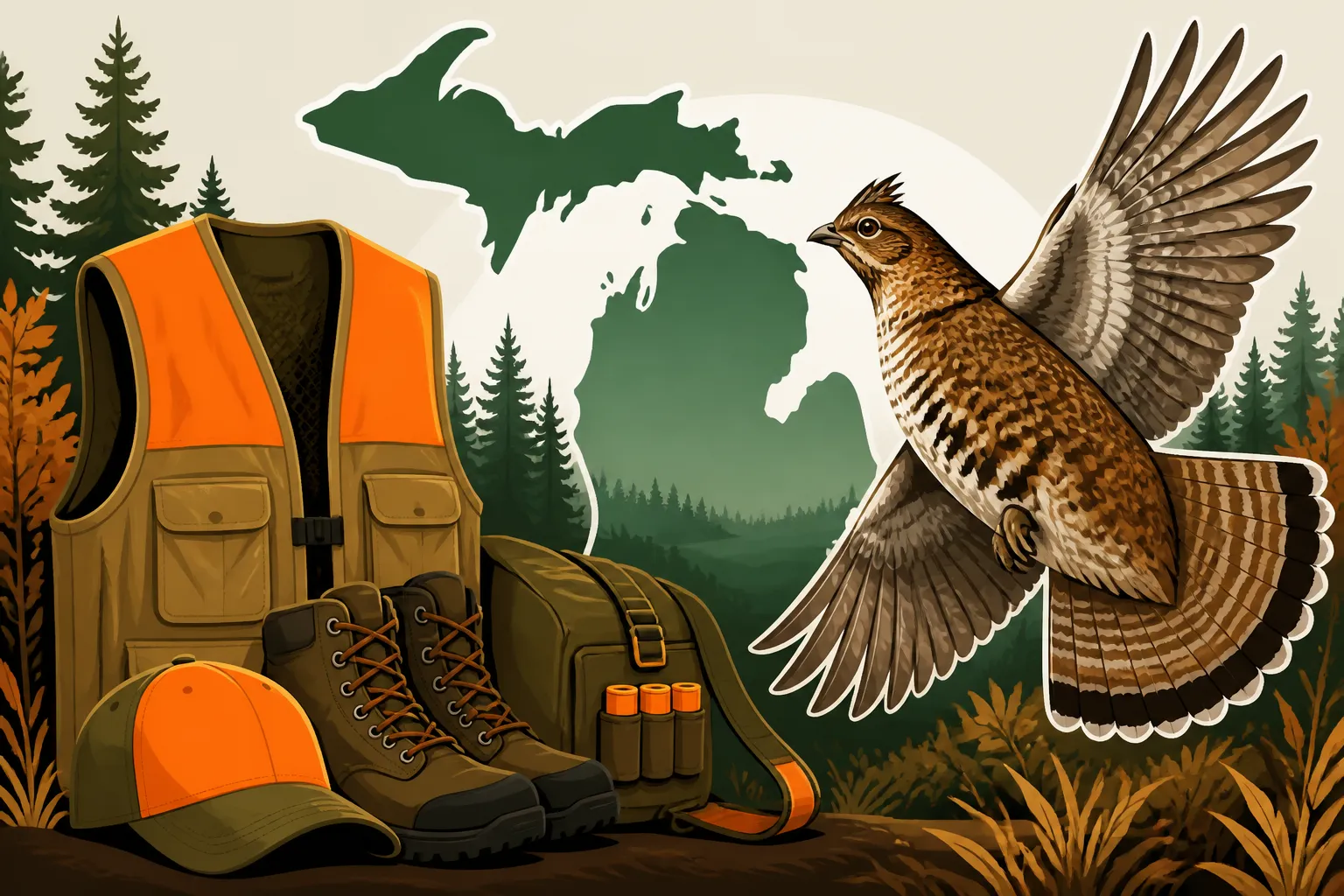
An upland vest is essentially your mobile command center in the field. It needs to carry everything you need for a full day's hunt: shotgun shells, water, snacks, a compass, and, most importantly, your birds. A good vest distributes weight evenly across your shoulders and back, rather than concentrating it at your waist like a traditional belt-style pack, which can become uncomfortable after miles of walking. Look for vests with large, easily accessible front pockets for shells, and secure interior pockets for your license, keys, and phone.
The game bag on the back is perhaps the most critical feature. It should be roomy enough to hold several birds comfortably without crushing them, and ideally, it should be lined with a waterproof or blood-resistant material that's easy to clean. Ventilation is also key to prevent birds from overheating, especially on warmer early season days. Some vests come with hydration pockets or integrated water bottle holders, which are incredibly useful for staying hydrated, especially if you're hunting with a dog. For a deep dive into what makes a good vest, check out Upland Vests With Water Capacity.
Layering for Michigan Weather
Michigan weather in the fall is notoriously fickle. You can start the day with a heavy frost, be shedding layers by mid-morning, and then face a pop-up rain shower by afternoon. The key to staying comfortable is layering. Begin with a moisture-wicking base layer that pulls sweat away from your skin, preventing that chilling effect when you stop moving. A mid-layer, like a fleece or wool shirt, provides insulation. Your outer layer should be durable, briar-resistant, and ideally water-resistant or waterproof, especially if you're not wearing chaps over waterproof pants.
Think about fabrics that move silently through the brush. Wool and modern synthetics are great choices. Avoid noisy materials that can give away your position to wary birds. Don't forget a hat—a blaze orange hat is often required for visibility and safety, and it helps retain body heat or shield you from the sun. Gloves can also be important, protecting your hands from thorns and cold, but ensure they allow for good dexterity with your shotgun. The ability to adapt your clothing to changing conditions is vital for an enjoyable, full day of hunting in Michigan's dynamic environment.
Boots Built for Michigan Grouse Habitat
Your feet are your engines in the grouse woods. You'll be covering miles, traversing uneven terrain, stepping over logs, pushing through mud, and perhaps even wading through shallow water. If your boots aren't up to the task, your hunt will be miserable, short-lived, and potentially painful. A good pair of upland boots must provide comfort, support, and impenetrable protection against water and thorns.
Waterproofing and Material Choices
Michigan's grouse cover, especially in low-lying areas, can be incredibly wet. Even on dry days, dew-soaked brush or unexpected muddy patches can quickly lead to soaked feet if your boots aren't truly waterproof. Look for boots with reliable waterproof membranes like GORE-TEX or similar proprietary technologies. While no boot is waterproof forever without proper care, a quality membrane will keep your feet dry for many seasons.
As for materials, leather boots are classic for their durability and ability to mold to your feet over time. However, they require more maintenance, needing regular conditioning to remain supple and waterproof. Synthetic materials are often lighter, quicker to dry, and require less maintenance, but they might not offer the same longevity as high-quality leather. Many modern boots combine the best of both worlds, using durable synthetic uppers with leather accents. Whatever material you choose, ensure the seams are well-sealed and the construction is robust. For more on keeping your feet dry and comfortable, check out Boots for Walking Michigan Aspen Cuts.
Ankle Support and Traction
Walking over downed logs, navigating hidden stumps, and traversing slippery, leaf-covered inclines demands excellent ankle support. A twisted ankle far from the trailhead can ruin a hunt and create a serious safety issue. Look for boots with a high enough cuff to provide solid ankle stability without restricting natural movement. Lace-up designs that allow you to cinch down the ankle area are often superior in this regard.
Traction is equally important. The fallen leaves, wet mud, and mossy logs of Michigan's grouse woods are notorious for causing slips and falls. Your boot soles should have an aggressive lug pattern that can grip a variety of surfaces. Deep, self-cleaning lugs are best, as they shed mud and debris rather than packing up and losing their grip. Vibram soles are a popular choice known for their durability and grip. Test boots on uneven terrain if possible before committing to a pair. The better your traction, the more confidently you can navigate the cover, allowing you to keep your eyes peeled for flushes.
Break-in Period and Comfort
Never, ever wear brand-new boots on a multi-mile grouse hunt. This is a recipe for blisters, hot spots, and general misery. Upland boots, especially those made of leather, require a significant break-in period. Wear them around the house, on short walks, and gradually increase the distance and terrain difficulty. This allows the boots to conform to your feet and identify any pressure points.
Equally important are your socks. Invest in good quality, moisture-wicking wool or synthetic socks. Cotton socks absorb sweat and stay wet, leading to blisters and cold feet. A good sock will cushion your feet, manage moisture, and help prevent friction. Many hunters prefer a thinner liner sock under a thicker wool blend sock for maximum comfort and blister prevention. Remember, comfort means miles, and miles mean more opportunities to flush birds, so don't skimp on this essential part of your gear system.
Navigation and Communication Tools
Michigan's state forests and game areas can be vast and disorienting, especially when you're head-down, following a dog, or pushing through thick cover. Getting turned around is a common frustration, and losing communication with hunting partners can be dangerous. Reliable navigation and communication tools are not just convenient; they are critical safety gear.
GPS Devices and Mapping Apps
Gone are the days when a paper map and compass were your only reliable option (though you should still carry them as a backup!). Today, dedicated handheld GPS units or advanced mapping apps on your smartphone are indispensable for upland hunting. A good mapping app like those offered by GoHunt, or a dedicated GPS unit, allows you to track your movement, mark points of interest (like a good flush spot or where you parked the truck), and most importantly, show you property boundaries. This is especially vital when hunting public land that borders private property. Being able to quickly confirm you're on legal hunting ground is invaluable. onX Layers for Michigan Land Status is an excellent tool for understanding public and private land boundaries, trails, and cover types.
While dedicated GPS units offer robust features and longer battery life, many modern smartphones with good apps are more than capable. Just be sure to download maps for offline use before you head out, as cell service can be spotty to non-existent in many remote Michigan grouse covers. Always carry a portable power bank to recharge your phone, as GPS use drains batteries quickly. A reliable navigation system will help you stay oriented, efficiently work cover, and get back to your vehicle with confidence, allowing you to hunt deeper and explore new areas without fear of getting lost. Don't forget to familiarize yourself with Michigan's Mi-HUNT Map for a wealth of public land information.
Communication in the Field
When hunting with partners, especially if you're spreading out to work cover more effectively, reliable communication is essential. Cell service often drops off in the thick timber of Michigan's northern reaches, making cell phones unreliable for real-time communication. Two-way radios are an excellent solution. They allow for instant, consistent communication over short to medium distances, perfect for coordinating movements, alerting others to a flush, or simply checking in.
Choose radios that are durable, water-resistant, and have good battery life. Many models offer privacy codes, ensuring clear communication only with your group. Establishing clear communication protocols before you head out, such as specific channels and call signs, can prevent confusion. While internal discussions about "two-way radios on a deer drive" might seem different, the principle of maintaining contact in dense cover with hunting partners remains the same for upland hunting. Keeping in touch ensures safety and enhances the overall hunting experience, allowing you to keep tabs on each other even when you can't see each other through the thick stuff.
Safety Essentials
Beyond navigation and communication, a few other safety items are absolute must-haves. A small, lightweight first-aid kit is essential for treating minor cuts, scrapes, and blisters—all common occurrences in the grouse woods. Include things like antiseptic wipes, bandages, moleskin, and pain relievers. If you're hunting with a dog, a separate kit with dog-specific first aid items is also a good idea (more on that below).
A whistle is another simple but incredibly effective safety tool. Three short blasts are a universal signal for distress, and it's far louder and more consistent than shouting, especially if you're trying to attract attention over a distance or against the wind. A small fire starter or waterproof matches, along with a lightweight emergency blanket, are also wise additions, especially if you plan to hunt in more remote areas or if unexpected weather rolls in. Always tell someone your hunting plans, including where you're going and when you expect to return. Being prepared for the unexpected is part of being a responsible hunter.
Bird Dog Gear
For many, grouse hunting isn't just about the birds; it's about the partnership with a well-trained bird dog. These incredible animals find birds that you'd walk right past, but they also require their own set of specialized gear to keep them safe, effective, and comfortable in the demanding Michigan cover.
E-Collars and Training Aids
An e-collar is an indispensable tool for responsible dog handlers in the grouse woods. It allows you to communicate with your dog instantly and effectively, even when they're out of sight or ignoring verbal commands in the excitement of a scent. This is critical for controlling a dog's range, preventing them from chasing deer or other non-target species, and ensuring they come back to you quickly when called. When considering an e-collar, look for models with good range, reliable waterproofness, and multiple stimulation levels (including tone and vibration) so you can match the correction to the situation.
However, an e-collar is not a substitute for proper training. It's a reinforcement tool. Your dog should understand basic commands like "here," "whoa," and "leave it" before you ever introduce an e-collar. Consistent training, both at home and in the field, is key to developing a well-behaved and effective grouse dog. For guidance on appropriate use and ethical considerations, be sure to review topics like E-Collar Use on Public Ground to understand Michigan's regulations and best practices. Always use an e-collar responsibly and with your dog's welfare in mind.
Protective Vests and Visibility
The same briars and thorns that shred your pants can injure your dog. A protective vest, often made from Cordura or similar tough materials, can shield your dog's chest and belly from cuts and abrasions. These vests also often come in bright orange or other high-visibility colors, making your dog much easier to spot in thick cover, which is a crucial safety feature, especially when hunting with multiple people.
Look for vests that fit snugly but don't restrict your dog's movement or breathing. They should be easy to put on and take off, and durable enough to withstand repeated abuse from brush. Some vests also offer floatation, which can be a nice bonus if you're hunting near water. Ensuring your dog is visible not only helps you keep track of them but also signals their presence to other hunters, reducing the risk of accidental injury.
Dog First Aid and Hydration
Just like you need a first-aid kit, your dog needs one too. Paw pads can get cut, thorns can get embedded, and muscles can get strained. A dog-specific first-aid kit should include items like paw balm, antiseptic spray, bandages, self-adhesive wrap, tweezers for thorn removal, and dog-safe pain relievers (under veterinary guidance). Knowing basic dog first aid can literally be a lifesaver in the field.
Hydration is also paramount. Dogs exert an incredible amount of energy in the field and can quickly overheat or become dehydrated, especially on warmer early season hunts. Carry plenty of fresh water for your dog and offer it frequently. Collapsible water bowls are lightweight and convenient. If you're hunting alone, consider a hydration pack with a hose, making it easier to share water with your dog without stopping. Never let your dog drink from stagnant or questionable water sources, as these can harbor parasites or bacteria. A well-hydrated, healthy dog is a happy and effective hunting partner.
Scouting and Ancillary Tools
While many focus on the immediate gear for the hunt, smart grouse hunters know that success often starts long before the season opens. Pre-season scouting and carrying a few non-obvious tools can give you a significant advantage in finding and flushing birds.
Pre-Season Scouting Gear
You can't shoot a grouse if you don't find them, and finding them often begins with good scouting. While boots-on-the-ground is ideal, modern technology allows for incredibly effective pre-season scouting from your couch. Tools like those provided by GoHunt can help you analyze satellite imagery, topography, and public land boundaries to identify promising cover. Look for areas with young aspen regeneration, dense alder swamps, clearcuts from 5-15 years ago, and areas with diverse habitat edges. These are the prime locations where you'll find Ruffed Grouse and Woodcock in Michigan.
When you do hit the woods for scouting, a good pair of binoculars can be useful for surveying distant cover, identifying food sources like wild berries or acorns, and spotting signs of wildlife activity. A notepad or a digital app for taking notes and marking waypoints on your GPS can help you remember promising locations. Remember, scouting isn't just about finding birds; it's about understanding the habitat, identifying potential travel corridors, and planning your approach routes to maximize your chances when the season opens. For more detailed scouting techniques, refer to Scouting Michigan Public Land Before Season.
Calls (Limited Use)
Unlike turkey or predator hunting, grouse calling isn't a primary tactic. Grouse don't typically respond to calls in the same way. However, a good whistle is still a crucial piece of gear, particularly if you're hunting with a dog. It's much more effective than your voice for getting your dog's attention over distance, wind, or the sound of rushing water. A simple plastic or metal whistle is lightweight, durable, and can be heard much farther than a shout.
Some hunters might carry a crow call or an owl hooter to locate potential roosting spots for other game or simply to break the silence of the woods, but these are not used to call grouse directly. For the most part, grouse hunting is about stealth, knowing the habitat, and putting your dog in the right places, not about vocalizations. Your primary "call" will be your presence and the work of your dog.
Essential Accessories and Miscellaneous Gear
Beyond the major items, there are always those small, often overlooked accessories that can make or break a day in the field. Paying attention to these details ensures you're fully prepared for whatever Michigan's grouse woods throw at you.
Field Care for Birds
Once you've successfully harvested a grouse, proper field care is essential to ensure the meat is in prime condition. While small, grouse can spoil quickly on a warm day if not handled correctly. A small pair of game shears can be incredibly useful for field dressing birds, making the process quick and clean. Many hunters prefer to breast out their birds in the field, especially if they're trying to reduce weight in their game bag.
Always carry a few dedicated game bags. These lightweight, breathable bags protect the meat from dirt, leaves, and insects, while allowing air circulation to help cool the bird down. On warmer days, consider carrying a small, soft-sided cooler with an ice pack back at the truck to quickly chill your birds. Getting the birds cooled down as soon as possible after the shot is the best way to preserve their quality and flavor.
Eye and Ear Protection
Safety should always be a top priority. When you're in the field with a shotgun, eye and ear protection are non-negotiable. While the recoil and muzzle blast of lighter gauges are less severe than larger calibers, repeated exposure can still damage your hearing. Lightweight, comfortable earplugs or electronic hearing protection that amplifies ambient sounds while suppressing gunshots are both excellent options. The electronic versions are particularly useful as they allow you to hear dog bells, flushes, and conversation while still protecting your ears when the shot breaks.
Eye protection, often in the form of shooting glasses, shields your eyes not only from muzzle flash and stray pellets (though rare, it's possible) but also from stray branches and thorns as you push through thick cover. Clear lenses are fine for overcast days or deep timber, while amber or vermillion lenses can enhance contrast on brighter days or in low light. These are small investments that provide huge returns in safety and comfort.
Day Packs vs. Vests
The choice between a dedicated day pack and an upland vest often depends on the length and intensity of your hunt. For most grouse hunts, especially those focusing on Grouse and Woodcock Hunting in Michigan where you're covering a lot of ground in a single day, a good upland vest with ample storage is usually sufficient. It keeps essentials close at hand and distributes weight effectively.
However, if you're planning an extended outing, covering vast stretches of the Michigan Upper Peninsula for Deer (adapted to grouse context for internal linking) that are also rich in grouse, or if you need to carry extra layers, more water, or additional dog gear, a small, lightweight day pack worn in conjunction with or instead of a vest might be appropriate. Look for packs that are durable, quiet, and don't interfere with your shotgun mounting or arm movement. Some hunters even opt for a hybrid vest-pack system that offers the best of both worlds. The key is to carry what you need without being overloaded, ensuring you remain agile and unencumbered in the dense grouse cover.
Disclaimer
This article is for general informational purposes only and does not constitute professional advice. Laws, prices and regulations vary by location and change over time. Consult a qualified professional for guidance on your specific situation.