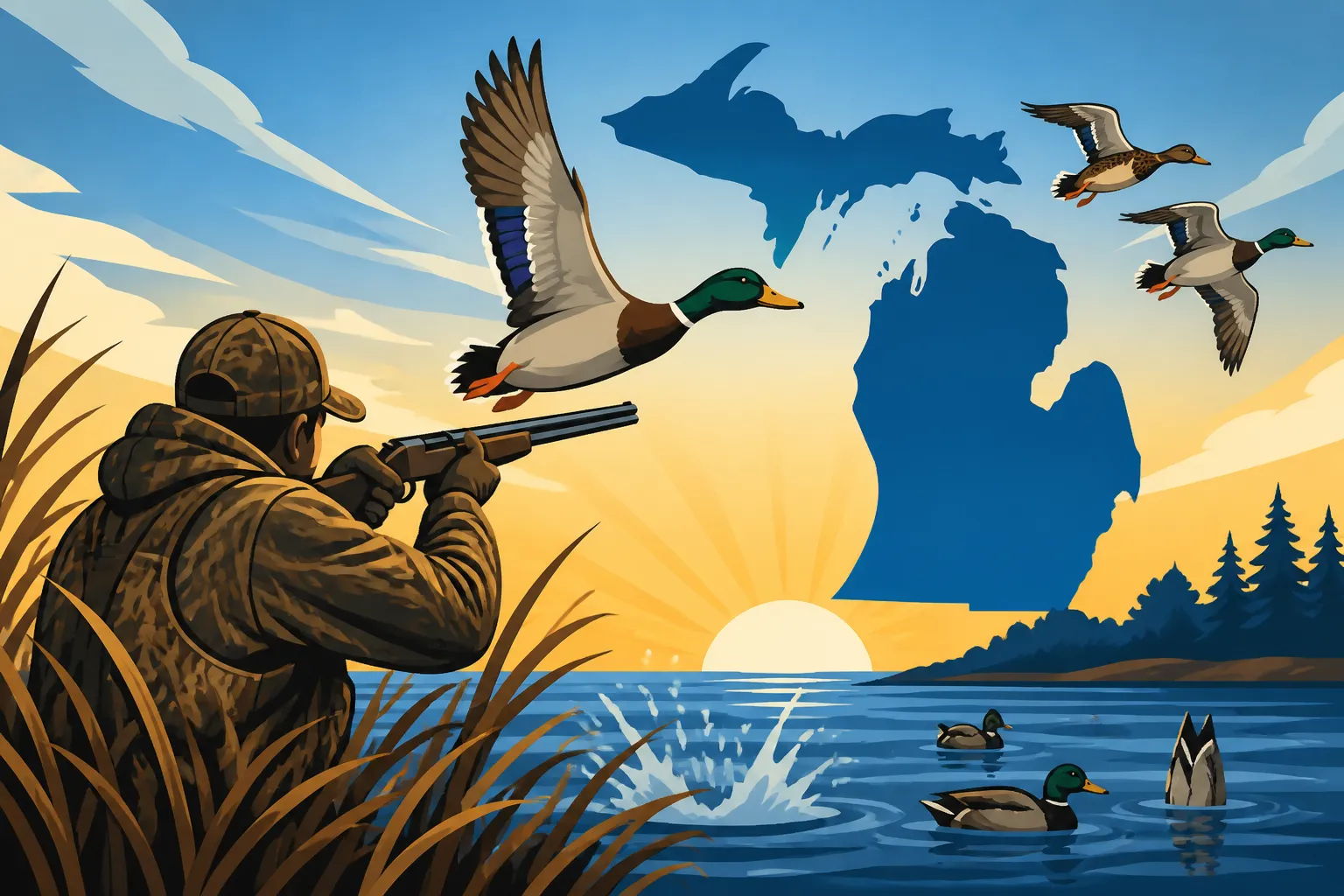
Great Lakes Waterfowl Hunting in Michigan
There's a special kind of thrill that comes with chasing waterfowl on Michigan's vast Great Lakes, but let's be honest, it's not for the faint of heart. The sheer scale, the unpredictable weather, and the unique challenges of big water hunting can feel overwhelming to even seasoned hunters. This comprehensive guide is here to unravel the complexities of Great Lakes waterfowl hunting, helping you understand the regulations, gear up appropriately, master critical safety protocols, and employ effective strategies to make your next big water hunt a success.
Understanding Michigan's Great Lakes Waterfowl Zones
Michigan's diverse geography means that waterfowl hunting regulations aren't a one-size-fits-all deal, especially when you're talking about the Great Lakes. Ignoring these distinctions can lead to frustration, missed opportunities, or worse, legal trouble. It's crucial to understand which zone you're in and how that impacts your season dates and bag limits, because what flies in the Saginaw Bay might not apply down on Lake Erie.
Michigan's Three Duck Zones
Our beautiful state is divided into three distinct duck zones: the North Zone, the Middle Zone, and the South Zone. These zones are designed to account for the varying migration patterns and timing of waterfowl as they push south each fall. The seasons open progressively later as you move south, giving birds time to arrive and ensuring hunting opportunities throughout the migration. For instance, the North Zone, covering the entire Upper Peninsula and the northernmost tip of the Lower, typically sees the earliest opener, followed by the Middle Zone, which stretches across the central Lower Peninsula. Finally, the South Zone, encompassing the lower half of the Lower Peninsula, opens last, often coinciding with peak migration for many species. Knowing Which Michigan Duck Zone You Are In is your absolute first step in planning any waterfowl hunt.
This staggered approach means hunters have options, and if you're willing to travel, you can essentially extend your season. Many hunters with the time and resources will start their season up north, chasing early migrating teal and mallards, and then shift their focus south as the cold weather pushes more birds down. This strategy allows them to hunt fresh birds throughout a longer period. However, it also means you absolutely must double-check the specific dates for your intended hunting location. The Michigan DNR website, or a reliable hunting app like GoHunt, will always have the most current Michigan Duck Season Dates by Zone available.
Special Regulations for Coastal Waters
While the zones dictate general season dates, the Great Lakes themselves often come with unique considerations. These aren't always hard-and-fast "special regulations" in the sense of different bag limits, but rather practical and legal distinctions due to the nature of hunting large bodies of water. For example, hunting on the Great Lakes and their connecting waters (like the Detroit River or St. Clair River) often involves specific rules about motor size, distance from shore, and the use of layout boats, which we'll delve into later. The sheer size of these waters means that birds are often out in the open, requiring specialized tactics and equipment that might not be necessary on a small inland pond.
Another aspect to consider is the potential for shared boundaries. Hunting near state lines, especially on Lake Erie or the Detroit River, means you need to be acutely aware of not just Michigan's regulations but also those of neighboring states like Ohio or Canada. While you might not be crossing an international border to chase ducks, being knowledgeable about nearby regulations ensures you don't inadvertently find yourself in a tricky situation. Always assume stricter rules apply if there's any doubt, and prioritize safety and legal compliance above all else when hunting these expansive and dynamic environments.
Essential Gear for Big Water Hunting
Venturing out onto the Great Lakes for waterfowl isn't like slinging a decoy bag over your shoulder for a marsh hunt. The conditions demand specialized gear, and cutting corners here can be a recipe for disaster. From the vessel you use to the loads you shoot, every piece of equipment plays a crucial role in both your success and, more importantly, your safety.
Layout Boats and Tender Boats
For many serious Great Lakes diver duck hunters, the layout boat is the quintessential piece of equipment. These low-profile boats are designed to be virtually invisible on the water, allowing hunters to lie prone, nestled among a large spread of decoys, right where the birds want to be. The concept is brilliant: you become part of the decoy spread, a natural-looking lump among the bobbing fakes. However, hunting from a layout boat is inherently dangerous if not done correctly. They are small, offer little freeboard, and are extremely vulnerable to changing weather conditions. This is where the tender boat comes in.
The tender boat is your command center, your safe haven, and your transportation. It's typically a larger, more stable craft – often a well-equipped duck boat or even a small cabin cruiser – that deploys and retrieves the layout boats and hunters, and serves as a critical safety vessel. It carries all your gear, extra fuel, safety equipment, and usually at least one non-hunting crew member (the "tender operator") who stays vigilant while the layout hunters are out. The tender operator is responsible for watching weather, other boat traffic, and ensuring the safety of the layout hunters at all times. Understanding Layout Boats for Great Lakes Divers and the vital role of the tender boat is paramount for a safe and successful big water hunt. They aren't just an accessory; they're an essential part of the system, acting as a floating base of operations and a critical lifeline.
Decoy Spreads for Divers
Diver ducks like canvasbacks, redheads, and bluebills often congregate in vast rafts on open water, so your decoy spread needs to mimic that scale and movement. Forget your dozen mallard blocks; you'll likely need dozens, if not hundreds, of diver decoys to create a truly convincing spread. These birds are looking for large groups of their own kind, and a small spread simply won't cut it on the expansive Great Lakes. The decoys should be rigged on long lines, often with several decoys per line, anchored with heavy weights to prevent them from drifting in strong currents or winds.
The configuration of your spread is also key. Diver ducks often "work" a spread by circling downwind and then landing into the wind, often in the open water just upwind or within the edge of the spread. Therefore, setting up an open "landing zone" within or just downwind of your main body of decoys is critical. Many hunters use a "J" or "U" shape, with the open end facing the direction they expect the birds to approach from. Mixing in a few confidence decoys, like coots or even a goose or two, can add to the realism, but the vast majority should be diver species. Investing in quality, realistic diver decoys that hold up to tough big water conditions is essential. Learning about Diver Decoy Spreads and Long Lines is a huge step in improving your success rates.
Waders, Warmth, and Waterfowl Loads
When you're hunting the Great Lakes, you're dealing with serious cold, often compounded by wind and spray. Your clothing system needs to be robust. Layering is non-negotiable, starting with moisture-wicking base layers, followed by insulating mid-layers, and topped with a waterproof and windproof outer shell. Neoprene or insulated breathable waders are essential for anyone who might be wading to set decoys or retrieve birds. Even if you're primarily in a boat, you never know when you might need to step into the frigid water, so good waders are a must.
Your shotgun and ammunition choices are equally important. A reliable 12-gauge shotgun is standard, capable of handling cold and wet conditions without failure. As for loads, non-toxic shot is legally required for all waterfowl hunting, and for big water divers, you'll want something with plenty of knockdown power and range. Steel shot in BBB or #1 is common, but increasingly, hunters are turning to denser alternatives like bismuth or tungsten-super-shot (TSS) for their superior energy retention and tighter patterns at longer distances. These premium loads can make a significant difference on high-flying ducks in windy conditions. Always be sure to use Waterfowl Loads for Michigan Divers that are appropriate for the species you are targeting and the conditions you expect, and remember Where Nontoxic Shot Is Required in Michigan (everywhere for waterfowl). Don't forget a good pair of gloves and a warm hat; keeping your extremities warm is crucial for comfort and safety.
Navigating Great Lakes Waterfowl Safety
Let's be brutally honest: the Great Lakes are beautiful, but they are also unforgiving. Every year, hunters underestimate their power, leading to dangerous situations or even tragedies. Safety isn't a suggestion out here; it's the absolute foundation of a successful and responsible hunt. No duck is worth risking your life over.
Weather Awareness and Marine Forecasts
This cannot be stressed enough: the weather on the Great Lakes changes in an instant. A calm morning can turn into a white-capping gale within an hour, stranding unprepared hunters or capsizing boats. Before you even think about loading your boat, you must check the marine forecast for your specific area. Don't just look at the general land forecast; use dedicated marine weather resources. The National Weather Service provides detailed marine forecasts, including wave heights, wind speed and direction, and small craft advisories. Pay close attention to wind shifts, which can quickly make an area previously sheltered suddenly exposed and dangerous.
It's not enough to check the forecast once in the morning. Conditions can deteriorate rapidly, so continuous monitoring is essential throughout the day. A handheld weather radio, or a marine radio with weather channels, is a critical piece of gear. Many experienced Great Lakes hunters have a strict "no go" policy if winds are predicted to exceed a certain speed or if wave heights are above a certain threshold for their particular vessel. Having the discipline to call off a hunt, even if you've driven hours and invested significant effort, is a sign of true experience and responsible hunting. Never, ever push your luck with the Great Lakes weather.
US Coast Guard Regulations and Best Practices
When you're operating a boat on the Great Lakes, you're under the jurisdiction of the U.S. Coast Guard, and their regulations are serious. This means having all required safety equipment on board:
- Life Jackets: Not just one for everyone, but readily accessible and properly sized. For layout hunting, it's often recommended that hunters wear inflatable life jackets at all times in the layout boat.
- Visual Distress Signals: Flares (day/night) or an electronic visual distress signal.
- Sound Producing Devices: A whistle or air horn.
- Fire Extinguisher: If your boat has an enclosed engine compartment.
- Navigation Lights: If operating between sunset and sunrise, or in periods of restricted visibility.
- Registration and Documentation: Your boat must be properly registered and display its numbers.
Beyond the legal requirements, there are best practices that can literally save lives. File a float plan with someone reliable on shore, detailing your hunting location, expected return time, and number of people in your party. Consider taking a boater safety course; it's not just for pleasure boaters, but for anyone who operates a vessel on public waters. Remember to always inform your tender operator about Life Jackets for Layout Hunting and all other safety gear they should have readily available. The Great Lakes are no place for shortcuts when it comes to boat safety.
Emergency Preparedness and Communication
Even with the best planning, emergencies can happen. Being prepared can make the difference between a close call and a catastrophic event. Beyond the required safety gear, consider carrying extra provisions:
- First Aid Kit: Comprehensive and easily accessible, with supplies for severe cold exposure.
- Extra Clothing/Blankets: Even if not wet, hypothermia is a constant threat in cold weather.
- Tool Kit: Basic tools for minor boat repairs.
- Anchor and Line: A secondary anchor can be a lifesaver if your primary fails or you lose power.
Communication is absolutely paramount. While cell phones are useful, they can lose signal or run out of battery. A marine VHF radio is a much more reliable form of communication on the Great Lakes. Channel 16 is for hailing and distress calls. A satellite messenger device (like a Garmin InReach or Spot device) is an excellent investment, allowing you to send messages and, crucially, an SOS signal from anywhere, even without cell service. Ensure everyone in your party knows how to use these devices. Being able to communicate your distress and location is critical for search and rescue efforts, which can be challenging on such vast waters. Thinking through Tender Boats and Safety on Big Water inherently means considering robust communication plans.
Key Species and Prime Hunting Locations
Michigan's Great Lakes offer a waterfowl smorgasbord, but knowing what you're hunting and where to find them is key to a productive trip. Different species prefer different habitats, and the sheer size of the lakes means you need to be strategic in your scouting and setup.
Diver Ducks: Canvasbacks, Redheads, Bluebills
When most people think of Great Lakes waterfowl hunting, they're picturing divers. Canvasbacks, often called the "King of Ducks," are highly prized for their beauty and speed. Redheads are another stunning diver, typically found in large rafts, sometimes mixed with cans. Bluebills (Scaup), both greater and lesser, are arguably the most numerous divers, offering fast-paced action. These birds feed on submerged aquatic vegetation, mollusks, and insects, often in deeper, open water areas, which is why they respond so well to large decoy spreads in expansive bays.
These species are true open-water ducks. They prefer large, unobstructed areas where they can feed and raft up in relative safety. When scouting for divers, look for vast stretches of open water, particularly in bays and offshore shoals, where they can escape hunting pressure more easily. Saginaw Bay, Lake St. Clair, and portions of Lake Erie are legendary for their diver populations. These areas provide the crucial food sources and expansive open water these birds require. Learning their flight patterns, especially how they approach and leave feeding areas, is vital. Often, they will fly relatively low over the water, hugging points or shorelines as they travel.
Puddle Ducks and Geese in Coastal Marshes
While divers dominate the open water, the Great Lakes also boast extensive coastal marsh systems that are absolute magnets for puddle ducks and geese. Mallards, black ducks, wood ducks, and various teal species utilize the shallow, vegetated edges of the lakes, particularly in protected bays and river mouths. These areas provide abundant emergent vegetation, invertebrates, and agricultural crops (in adjacent fields), offering both food and sanctuary. Geese, primarily Canada geese, also flock to these coastal marshes and adjacent farm fields, often providing excellent jump-shooting or field hunting opportunities.
Hunting these areas often involves different tactics than open water diver hunting. Instead of layout boats, you might be using traditional marsh boats, sneaking into cattail edges, or setting up in strategically placed blinds on shore or within the marsh itself. Smaller, more varied decoy spreads featuring mallards, pintails, and goose decoys are typically effective. Key locations for fantastic marsh hunting include the vast deltas and protected bays of Lake Erie (like the iconic Pointe Mouillee State Game Area), portions of Saginaw Bay's southern shore, and the myriad marsh complexes along the Lake Michigan coastline. These spots are often managed waterfowl areas, so pay close attention to the specific rules and drawings if you plan to hunt them. You might find great success Field Hunting Geese in Southern Michigan near these coastal wetlands.
Notable Great Lakes Hunting Hotspots
Michigan is blessed with an incredible amount of Great Lakes shoreline, and with it, numerous hotspots for waterfowl. Each area presents its own unique challenges and opportunities, but a few stand out as consistently productive.
- Saginaw Bay: This massive bay on Lake Huron is renowned for its diverse waterfowl hunting. The shallow, fertile waters attract immense numbers of divers, especially canvasbacks and redheads, while the extensive marshes along its southern shore hold impressive numbers of puddle ducks and geese. Access can be found through various public launch sites and even Saginaw Bay Public Access Sites managed waterfowl areas.
- Lake St. Clair: Often called the "Sixth Great Lake," Lake St. Clair is a waterfowl paradise, particularly famous for its diver hunting. Canvasbacks, redheads, and bluebills flock to its shallow, food-rich waters. It's a busy lake, so navigating other boat traffic and respecting property lines is essential. Public access is plentiful, including via Lake St. Clair Boat Access for Hunters.
- Lake Erie: Michigan's portion of Lake Erie, especially around Monroe County, offers some of the best marsh hunting in the state, particularly for mallards, black ducks, and Canada geese. The Lake Erie Marsh Access in Michigan is legendary, with areas like Pointe Mouillee and Sterling State Park offering managed hunts and extensive public marshland. It's also a significant area for open-water divers.
- The Upper Peninsula Great Lakes Shoreline: While often overlooked for its big water hunting compared to the lower peninsula, the U.P. offers incredible opportunities, especially for puddle ducks in its more sheltered bays and river mouths, and even some diver action closer to the Big Water. The vast, remote nature of much of the U.P. coastline means less pressure but requires more self-sufficiency.
Regardless of where you choose to hunt, always research the area thoroughly, understand its specific regulations, and prioritize safety on these powerful bodies of water. A tool like GoHunt can be incredibly helpful for mapping out potential public access points and understanding land ownership around these key locations.
Effective Strategies for Big Water Success
Hunting big water is a chess match against cunning birds and often challenging conditions. It’s not just about showing up with a boat and decoys; it's about understanding the environment, the birds, and adapting your tactics.
Scouting and Reading the Water
Successful Great Lakes waterfowl hunting starts long before opening day, with diligent scouting. This isn't just a casual drive-by; it means using binoculars and spotting scopes to observe where birds are resting, feeding, and flying. Pay attention to the prevailing wind directions and how they influence bird movement and wave action. Look for subtle changes in bottom contour that create current breaks or areas where submerged vegetation thrives, as these are natural feeding grounds for divers. When on the water, observe current lines, water depths, and any underwater structure that might concentrate birds or provide safe havens.
Reading the water also involves understanding current weather patterns and how they push birds. A strong north wind after a period of calm might push birds further south or closer to shore. A prolonged cold snap will freeze up smaller, shallower waters, forcing birds onto the larger, deeper Great Lakes. Utilize navigation charts, aerial imagery (which tools like GoHunt often integrate), and even talking to local bait shop owners or other experienced hunters for insights. Knowing where the birds want to be, rather than just where you want to hunt, is the biggest secret to consistent success. This often means putting in the time to scout both from land and from a boat, meticulously noting flight paths and raft locations.
Decoy Placement and Motion Spreads
We've already touched on the importance of large spreads for divers, but the precise placement of those decoys is equally critical. For diver ducks, the goal is often to create a visible, enticing cluster that draws birds from a distance, then guides them into a safe landing zone within shooting range. Many hunters use an "arc" or "J" shape, with the main body of decoys out towards open water and the curve sweeping back towards the layout boat. This creates a natural funnel. The open water inside the "J" acts as the landing strip, giving incoming birds a clear, unobstructed path to pitch in.
Adding motion to your spread can be a game-changer, especially on calm days or when birds are pressured. Spinning wing decoys aren't as effective for open-water divers as they are for puddle ducks, but subtle motion can still work wonders. Jerk rigs that cause a string of decoys to swim and dive, or even battery-operated swimming decoys, can mimic the natural activity of a feeding flock and attract the attention of passing birds. These motion decoys should be placed strategically within the landing zone or along the edges of the spread to draw focus. Remember, the goal is to create an illusion of a vibrant, safe feeding area that birds feel compelled to join.
Calling Tactics for Divers and Puddlers
While calling is absolutely essential for puddle ducks, its role in diver hunting is a bit different. Diver ducks are generally not as responsive to calling as mallards or geese. For divers, your spread and hide are far more important. However, a little calling can still make a difference. Short, sharp "brrrrrrrt" calls, often made on a whistle or a specialized diver call, can mimic the sound of a feeding flock and sometimes get the attention of high-flying birds, especially bluebills. The key is subtlety; don't overdo it.
For puddle ducks in coastal marshes, calling becomes a primary tool. Loud, aggressive greetings with a mallard call can grab attention, followed by softer, contented feeding chuckles to bring them in. Adding a pintail whistle or a teal "dink-dink" can be very effective when those species are in the area. Geese, of course, require dedicated goose calls, mimicking honks, clucks, and moans to build realistic conversations. Regardless of the species, always remember to call less as the birds get closer. Too much calling at close range can often flare birds. Practice your calling often, and don't be afraid to experiment with different cadences and volumes based on the birds' reactions.
Public Access and Regulatory Considerations
One of the great things about Michigan is the sheer amount of public land and water available to hunters. However, knowing how to access it, and what rules govern its use, is essential for a smooth and legal hunt on the Great Lakes.
Michigan's Managed Waterfowl Areas
Michigan boasts several exceptional managed waterfowl areas, many of which are located adjacent to or directly on the Great Lakes. These areas, like Pointe Mouillee State Game Area on Lake Erie, Nayanquing Point State Wildlife Area on Saginaw Bay, and Fish Point Wildlife Area also on Saginaw Bay, are meticulously managed to provide optimal waterfowl habitat and hunting opportunities. They often feature extensive impoundments, managed water levels, and designated hunting zones. However, hunting these areas usually requires participation in a managed draw system.
The draw system can be competitive, especially for prime dates. Hunters apply, and spots are allocated through a lottery or daily draw process. You'll need to pay close attention to application deadlines and understand the specific rules for each area, which can vary significantly. Some areas might allow specific methods (e.g., walk-in only, small boats allowed), while others might have restrictions on decoys or shot size. While these managed areas can require extra planning, they often provide unparalleled hunting experiences due to their prime habitat and concentrated bird populations. Check the DNR website for details on Michigan Managed Waterfowl Area Draws well in advance of the season.
Great Lakes Bottomlands and Public Access
A unique aspect of hunting Michigan's Great Lakes is the concept of public "bottomlands." Essentially, the land under the Great Lakes up to the ordinary high water mark is generally considered public trust land. This means that hunters, subject to certain restrictions, can set up decoys and hunt over these public waters. However, it's not a free-for-all. You cannot trespass across private property to access the public bottomlands, and you must respect property lines once you're on the water.
Access points are often public boat launches, state game areas, or dedicated public access sites. It's critical to know where these access points are and how to legally get your boat to the hunting spot. Utilizing mapping tools like the DNR's Mi-HUNT or GoHunt, which show public land boundaries and Great Lakes bottomland boundaries, can be incredibly valuable. Understanding the nuances of Michigan Great Lakes Bottomlands Hunting means you can access incredible hunting opportunities that might otherwise seem off-limits. Always be mindful of safety zones around residences or occupied buildings, and ensure your setup doesn't interfere with navigation or other recreational users.
Licensing, Stamps, and Reporting Requirements
Before you even think about setting foot (or boat) on the Great Lakes to hunt waterfowl, you need to ensure all your paperwork is in order. This includes:
- Michigan Base License: The fundamental license required for hunting anything in Michigan.
- Michigan Waterfowl License: A specific license for hunting ducks, geese, and other migratory birds.
- Federal Migratory Bird Hunting and Conservation Stamp (Federal Duck Stamp): A physical stamp you must sign and carry. This money goes directly to wetlands conservation. You can read more about Michigan Federal Duck Stamp Rules.
- Harvest Information Program (HIP) Certification: This is a free registration process that gathers data on migratory bird hunters for management purposes. You need to register annually. Don't forget your Michigan HIP Certification for Bird Hunters.
After a successful hunt, you are also required to validate your waterfowl license by tearing or cutting the appropriate notch and recording the date and time of harvest. While there's no immediate requirement to report individual waterfowl harvests to the DNR (unlike deer), you are often asked to participate in federal wing surveys or leg band reporting, which are crucial for managing migratory bird populations. Always carry your licenses, stamps, and photo identification, and be prepared to present them to a conservation officer if requested. Compliance with these regulations is not just about avoiding fines; it's about being a responsible hunter and contributing to the conservation of this incredible resource.
Hunting Pressure and Ethical Considerations
The popularity of Great Lakes waterfowl hunting means that pressure can be high, especially in easily accessible areas. Navigating this, and maintaining a high ethical standard, is crucial for everyone's enjoyment and for the reputation of hunters as a whole.
Dealing with Crowds on Popular Bays
If you've ever hunted Saginaw Bay or Lake St. Clair on a bluebird day in November, you know what I'm talking about: boats everywhere, decoy spreads stretching for miles, and ducks running a gauntlet of shot. It can be frustrating when you feel like every bird is being targeted by multiple parties. The key to dealing with crowds is patience, respect, and a willingness to adapt. Trying to muscle into someone else's spot or setting up too close is a surefire way to ruin everyone's hunt and create conflict.
Instead, look for less obvious spots, areas that might require a longer boat ride or a more challenging setup. Sometimes, moving just a few hundred yards from the main cluster of boats can put you into birds that are trying to escape the pressure. Pay attention to how birds are reacting to the pressure; they might be flaring from certain areas, indicating an opportunity elsewhere. Also, consider hunting during weekdays if possible, when pressure is often significantly lighter. Remember that on Opening Day Crowds on Michigan State Land can be intense, and this definitely extends to popular waterfowl spots too.
Respecting Other Hunters and Private Property
The golden rule of hunting applies tenfold on the Great Lakes: treat other hunters as you'd like to be treated. This means giving other spreads ample space. Generally, a minimum of 400-500 yards is a good rule of thumb, but more is always better. Don't cut across another hunter's spread to retrieve a bird, and avoid setting up in their line of fire. Communicate clearly with nearby hunters if you need to pass through an area or retrieve a bird that drifted towards their setup. A quick wave and a friendly chat can prevent a lot of aggravation.
Equally important is respecting private property. While the bottomlands are public, accessing them often requires crossing or setting up near private land. Be absolutely sure of property boundaries and never trespass. Michigan's safety zones (typically 150 yards from an occupied dwelling) apply on the water as well, so ensure your shots are directed safely and away from any structures or people. Adhering to these principles not only makes for a more pleasant hunting experience but also helps maintain a positive image for the hunting community.
Practicing Responsible Harvest and Conservation
As hunters, we are the frontline conservationists, and that responsibility extends to our actions on the Great Lakes. This means several things:
- Only Take Clean Shots: Avoid "sky-busting" at birds that are out of range. This only wounds birds and wastes ammunition. Wait for birds to commit to the decoys and be within effective shotgun range.
- Retrieve All Cripples: A wounded bird is a wasted bird. Work diligently to retrieve any crippled birds immediately. This might mean quickly running your tender boat or having a well-trained retriever dog.
- Know Your Bag Limits: Understand the daily bag limits and possession limits for each species. Do not exceed them. The DNR sets these limits to ensure sustainable populations.
- Report Banded Birds: If you harvest a bird with a leg band, report it to the U.S. Fish and Wildlife Service. This data is invaluable for migratory bird management and helps biologists understand migration patterns, survival rates, and harvest impacts.
- Leave No Trace: Pack out everything you pack in, including spent shotshells, food wrappers, and any broken decoy lines. Leave the Great Lakes cleaner than you found them.
By practicing responsible harvest and adhering to these ethical guidelines, we ensure that Great Lakes waterfowl hunting remains a vibrant tradition for generations to come. It’s about more than just filling a strap; it's about cherishing the resource and respecting the pursuit.
Disclaimer
The information provided in this guide is for educational purposes only and should not be considered legal advice. Hunting regulations, season dates, and licensing requirements can change. Always consult the most current Michigan Department of Natural Resources (DNR) regulations and federal migratory bird regulations before engaging in any hunting activities. Safety is paramount; be aware of weather conditions, practice safe firearm handling, and always wear appropriate safety gear.