Recovering a Deer From a Swamp
There’s nothing quite like the rush of a successful shot on a Michigan whitetail, but that triumph can quickly turn to dread when you realize your deer has bolted into the nastiest, most impenetrable swamp nearby. The thought of losing your hard-earned venison to the muck and tangled alders is a real hunter's nightmare. This guide will walk you through proven strategies and essential tips to help you effectively recover a deer from the challenging, often unforgiving, swamp environments Michigan has to offer.
Understanding the Challenge of Michigan Swamps
Michigan’s landscape is dotted with countless swamps, from sprawling cedar bogs in the Upper Peninsula to dense tag alder thickets and cattail marshes in the Lower. These areas, while excellent deer habitat, present significant challenges for hunters attempting to recover game. It’s not just about getting wet; it's about navigating treacherous terrain, fighting thick vegetation, and often, battling dwindling daylight and dropping temperatures.
The Nature of Michigan Swamps: Cedar, Tag Alder, Cattail
Each type of swamp presents its own unique set of obstacles. Cedar swamps, common in the northern Lower Peninsula and throughout the U.P., are often characterized by dense stands of cedar trees, spongy moss underfoot, and ankle-deep to waist-deep water. The ground here can be incredibly unstable, making every step a potential stumble or an accidental dunking. There are often hidden holes, submerged logs, and tangles of roots that make walking a slow, exhausting process. If you've spent any time Reading a Michigan Cedar Swamp for Deer, you know how disorienting they can be even without a deer on the ground.
Tag alder swamps, frequently found along river bottoms and wetland edges, are a different beast altogether. These areas are choked with thick, intertwined alder bushes, often forming an almost impenetrable wall of vegetation. Movement is incredibly difficult, forcing you to push and crawl through the brush, losing sight of your partner or even your own tracks within a few yards. The ground can be muddy and soft, sucking at your boots with every step. Cattail marshes, particularly prevalent in southern Michigan’s agricultural areas and around the Great Lakes, are usually shallower in terms of water depth but can be incredibly dense. The tall, stiff cattails block visibility, and the matted ground can conceal deeper water or boggy areas, making for slow, noisy progress.
Why Deer Seek Refuge in Swamps After a Shot
Deer, even when mortally wounded, possess an incredible will to live and an instinct to seek cover. Swamps offer precisely that: dense cover and often a sense of security from predators, including us hunters. A wounded deer will often try to put as much distance and as many obstacles as possible between itself and the threat. The cool, dense cover of a swamp can also help regulate their body temperature, especially if they are running on adrenaline after a stressful encounter. They know these areas intimately and can navigate them with far greater ease than a human, even when injured. This means that a short dash into what looks like a small swamp can quickly turn into a significant tracking challenge.
The Dangers and Difficulties for Hunters
Beyond the obvious discomfort of getting soaked and muddy, recovering a deer from a Michigan swamp carries real dangers. Hypothermia is a serious risk, especially during colder seasons like late archery or muzzleloader, where prolonged exposure to cold water and wind can quickly drop your core temperature. Twisted ankles, falls, and getting stuck in deep mud or hidden holes are also common. The dense vegetation can make it easy to get disoriented, especially if you’re focusing on a blood trail. You might even find yourself in an area where cell service is non-existent, making communication or calling for help problematic. It's a true test of grit, patience, and preparation.
Preparation and Initial Steps for Tracking
When a deer runs into a swamp after the shot, your immediate reaction should be tempered with a methodical approach. Rushing in blindly is almost always a mistake, risking further pushing the deer or losing the trail entirely. Proper preparation and initial steps can significantly increase your chances of a successful recovery.
Marking the Shot Location and Initial Blood Trail
This is arguably the most critical first step. As soon as you take the shot, mark your exact position. Use a small piece of flagging tape, a brightly colored hat, or even your bow or rifle laid down if you have another to carry. Then, walk slowly to where you believe the deer was standing when you shot it. This is your "point of impact." Mark this spot with distinct flagging tape. From there, begin to search for blood, hair, bone fragments, or disturbed earth. Every speck of evidence is vital. Once you find the first sign, mark it, and then slowly follow, marking each piece of evidence you find. Think of it like connecting the dots. If you lose the trail, go back to your last marked spot and search in a wider circle. This detailed process is crucial, as the initial blood trail is often the strongest before the deer pushes deep into the swamp.
Giving the Deer Time and Assembling Your Gear
Patience is a virtue, especially when a deer runs into a swamp. Unless you saw the deer fall within sight or know it was a definite heart shot, giving the deer time is almost always the best strategy. For a gut shot, this could mean 6-8 hours, or even overnight if conditions allow (cool temperatures). For a liver shot, 3-4 hours might be sufficient. If you push a wounded deer, especially one that is gut-shot, it can travel miles, making recovery exponentially harder. While waiting, use this time wisely.
Assemble your recovery gear. This includes:
- Bright flagging tape: Essential for marking the trail.
- Powerful headlamp or flashlight: Even if it’s daylight, dense swamp cover can be dark, and you might be out after dark.
- Good quality rubber boots or waders: Invest in something reliable. Boots for Michigan Swamps and Snow are critical; chest waders are often ideal for deep water.
- Gloves: Protect your hands from briars, sharp sticks, and cold water.
- Water and snacks: Tracking can be strenuous and time-consuming.
- A friend or two: An extra set of eyes and hands can make a world of difference for both tracking and extraction.
- A compass or GPS device: Essential for maintaining direction and avoiding getting lost.
Utilizing Technology for Tracking: GPS, Apps like GoHunt
Modern technology can be an absolute game-changer for swamp recoveries. A handheld GPS unit is invaluable for marking your starting point, the deer's last known location, and critical points along the blood trail. Most importantly, it gives you a bearing to walk out on if you get disoriented. Smartphone apps like GoHunt offer similar functionality, providing detailed satellite imagery, topographic maps, and the ability to drop waypoints. You can track your path as you go, ensuring you always know how to get back to solid ground or your vehicle. Before heading into the field, make sure you've downloaded offline maps for your hunting area, as cell service is often spotty or non-existent in remote Michigan swamps. Scouting with tools like Michigan's Mi-HUNT Map before the season can also help you identify potential escape routes and recovery challenges. These apps can even help you plan your initial approach, showing you higher ground or less dense sections of the swamp.
Tactics for Navigating and Recovering in a Swamp
Once you’ve given the deer enough time and gathered your recovery team and gear, it’s time to enter the swamp. This phase demands patience, keen observation, and smart navigation.
Slow, Methodical Tracking Through Dense Cover
Forget everything you know about walking quickly through open woods. In a swamp, every step is a deliberate act. Move slowly, deliberately. Focus on the ground immediately in front of you, looking for any disturbance. Blood can be harder to spot on wet, dark muck or decaying leaves, so look for disturbed vegetation, broken branches, or even bubbles in standing water. Walk alongside the actual blood trail, not directly on it, to avoid disturbing vital evidence. If you're tracking with a partner, spread out slightly, but maintain visual or vocal contact. One person can focus on the blood, while the other scans ahead for the deer itself or a clearer path.
If the blood trail becomes sparse, expand your search. Deer often follow paths of least resistance, even when wounded, so look for game trails or slight rises in the terrain. They might also pause to bed down, which can leave a pool of blood or a "death bed" with significant sign. When you find these areas, mark them with flagging tape, even if they don't lead directly to the deer. These markers are invaluable for keeping your bearings and for future reference if you need to re-evaluate your strategy. Remember, the goal is to make consistent forward progress, even if it's only a few yards at a time. This methodical approach is particularly important when dealing with challenging scenarios like Blood Trailing After Dark in Michigan, where every bit of light is precious.
Dealing with Water and Soft Ground
Michigan swamps are defined by their wetness. You'll encounter standing water, muddy sections, and perhaps even soft, unstable ground that feels like quicksand. Wear appropriate footwear, as mentioned earlier. Chest waders are often your best friend here, especially in deeper cattail marshes or when navigating water-filled ditches that cut through the swamp. Test the ground ahead with a stick before stepping into unknown areas. What looks like solid ground might be a deceptive layer of moss over deep muck.
If you encounter deeper water that seems impassable, don't give up. Deer, even when wounded, are strong swimmers. They might cross a small creek or a flooded section of the swamp. Look for entry and exit points on the banks, and try to find where the trail resumes on the other side. This is where using GoHunt or your GPS to mark your position and then circling around might be necessary if the water is too deep or dangerous to cross. Always prioritize safety over speed.
Strategies for Locating a Downed Deer
While following the blood trail is primary, sometimes you'll lose it completely. This is where knowing deer behavior in swamps comes into play. Wounded deer often try to find the thickest, nastiest cover available to them to expire in peace. This might be a dense cluster of cedar saplings, a tangle of downed trees, or a particularly thick patch of tag alders near a water source. Look for unnatural bumps or shapes in the vegetation. Keep an eye out for circling vultures or crows, which can sometimes indicate the presence of a carcass.
One effective strategy, especially with a team, is a grid search. Once you've exhausted the blood trail, designate a starting line and have your team walk abreast, slowly combing through the area. Use your GPS or GoHunt app to mark your starting point and the lines you're walking to ensure you cover the area thoroughly and don't miss anything. Call out to each other regularly to maintain spacing and direction. The person on the "compass" or GPS should be in charge of keeping the line straight. This can be exhausting, but it's often the last resort for finding a deer in truly impenetrable cover.
Extracting Your Deer from the Swamp
Finding your deer is a huge relief, but the work isn't over. Getting a deer out of a Michigan swamp can be as challenging, if not more so, than the tracking itself.
Field Dressing Considerations in Wet Environments
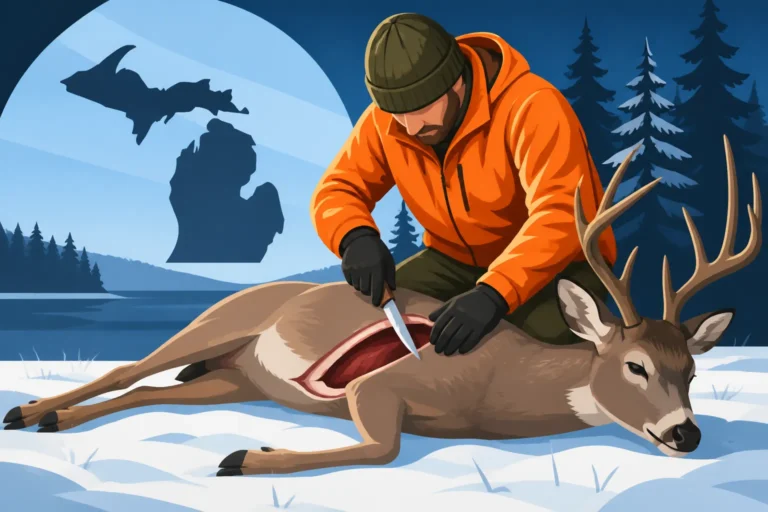
Normally, you’d field dress a deer quickly to cool the meat. In a swamp, this might not be straightforward. The ground is often wet, muddy, or submerged, making it difficult to keep the carcass clean during the process. If possible, try to find the driest, highest spot available, even if it’s just a slightly elevated hummock. Lay out a tarp or large contractor bag to keep the deer as clean as possible while you work.
Consider the "gutless method" for field dressing if conditions are particularly bad. This involves skinning and quartering the deer without opening the body cavity, which can significantly reduce contamination from mud, water, and stomach contents. While it requires a bit more skill and different tools (a good game saw can be helpful), it's excellent for keeping the meat clean in a dirty environment. After you've done the initial work, you'll need to know Handling Bear Meat Safely or venison, especially if temperatures are warm.
Using Sleds, Drags, and Teamwork
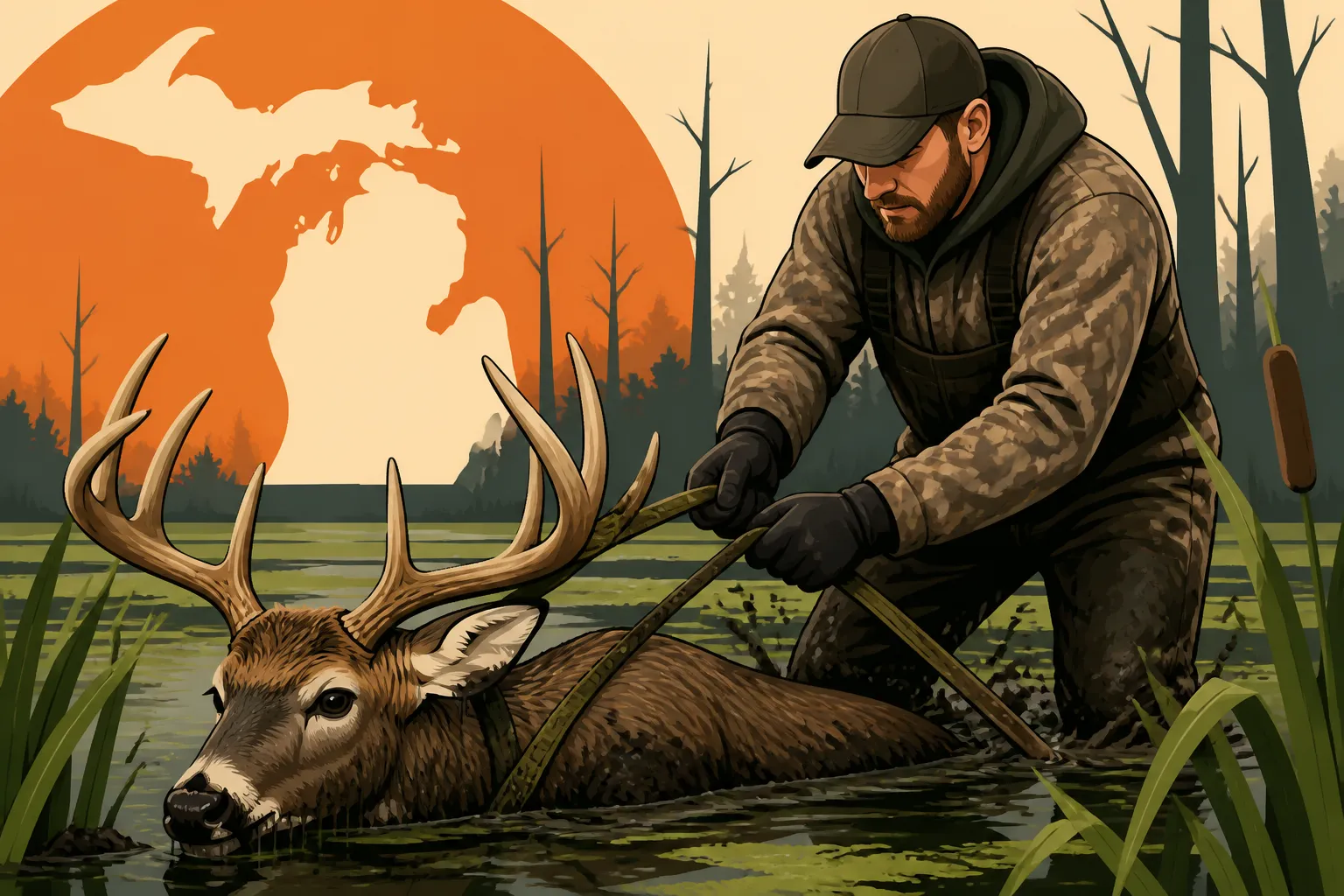
Dragging a deer through dense swamp vegetation and mud is incredibly difficult, if not impossible, alone. This is where teamwork truly shines. A dedicated deer sled, like a Jet Sled, can be invaluable. Even in minimal snow, a sled will glide over mud, water, and small obstacles much more easily than dragging the deer directly. Lash the deer securely into the sled to prevent it from flopping out.
If you don't have a sled, a heavy-duty tarp can serve a similar purpose, especially in muddy conditions. Two or more people can grab the corners or edges, lifting and sliding the deer. Specialized deer drags with shoulder straps can also help distribute the weight and make pulling more efficient. For larger bucks, or particularly rough terrain, having three or four people on the drag can be the difference between success and exhaustion. Remember, Michigan swamps are unforgiving; plan your extraction route carefully. If you're looking for more general tips, our guide on Dragging a Deer Through Michigan Snow offers some relevant advice, even if you’re not dealing with snow.
Planning Your Exit Route
Before you even start dragging, take a moment to plan your exit. Look at your GPS or GoHunt map. Is there a slightly drier ridge you can follow? An old two-track that might be closer than you think? A slightly less dense section of timber? The path you took to get in might not be the easiest way out, especially with a heavy deer. Try to find the path of least resistance. This might involve circling a particularly dense patch of alders or navigating along the edge of a water feature rather than trying to cut straight through. Every decision you make here will impact the effort required to get your deer out. Sometimes, taking a slightly longer but easier path is much more efficient than a shorter, brutal one.
Consider the time of day, too. If it's getting dark, getting a deer out of a swamp can become incredibly dangerous. If you have to, consider leaving the deer and returning in the morning with more help, provided temperatures are cool enough to prevent spoilage. Just be sure to mark the location precisely with your GPS and ensure it's not visible from any public access points if you plan to leave it overnight. The mental and physical toll of getting a deer out of a swamp can be immense, but with the right preparation, tools, and mindset, it's a rewarding challenge.
Essential Gear for Michigan Swamp Deer Recovery
| Item | Purpose | Key Features |
|---|---|---|
| Chest Waders/Rubber Boots | Staying dry and warm in water and mud | Durable, puncture-resistant material (neoprene, rubber), insulated for cold weather, good traction on slippery surfaces. Look for brands known for quality like LaCrosse, Muck, or Irish Setter. |
| GPS Device/Smartphone with Mapping App (e.g., GoHunt) | Navigation, marking trail, avoiding getting lost | Waterproof, long battery life, pre-loaded/offline maps (topographic, satellite), waypoint marking. |
| Powerful Headlamp/Flashlight | Illuminating blood trails and navigating in low light or darkness | High lumen output, long battery life, hands-free operation (headlamp), red light option for stealth/night vision preservation. |
| Flagging Tape | Marking blood trail, shot location, and downed deer | Bright, visible color (orange, pink), durable, easy to tie. |
| Game Cart or Deer Sled | Transporting deer over mud, water, and dense vegetation | Durable plastic construction, low friction, capacity for deer size, secure tie-down points. Jet Sled is a popular choice for its versatility in various terrain. |
| Gloves (waterproof/heavy-duty) | Protecting hands from cold, water, thorns, and sharp objects | Insulated, waterproof, good grip, cut-resistant for field dressing. |
| First-Aid Kit | Addressing minor injuries, cuts, scrapes, hypothermia | Essential medications, bandages, antiseptic wipes, emergency blanket, whistle. Especially vital for First Aid Kits for Remote Upper Peninsula Ground. |
| Water & Snacks | Maintaining hydration and energy during prolonged exertion | High-calorie, easy-to-eat snacks (energy bars, nuts), plenty of water. |
| Knife/Bone Saw | Field dressing, quartering (especially with the gutless method) | Sharp, durable blade, gut hook option, folding bone saw. Consider a fixed blade for reliability. |
| Tarp/Large Contractor Bag | Keeping deer clean during field dressing, extra pulling/sliding aid | Heavy-duty, large enough to fully cover a deer or lay underneath it. |
| Fire Starter/Lighter | Emergency heat source or signaling (use with extreme caution) | Waterproof matches, ferro rod, lighter. |
| Rope/Deer Drag Harness | Assisting with pulling and distributing weight | Strong, durable rope (50ft+), comfortable shoulder harness. |
Disclaimer
Hunting is an inherently unpredictable activity. This guide provides general information and recommendations; however, conditions in Michigan's swamps can vary greatly. Always prioritize safety, exercise good judgment, and adhere to all Michigan DNR regulations. The author and publisher are not responsible for any incidents or injuries that may occur during your hunting or recovery efforts.