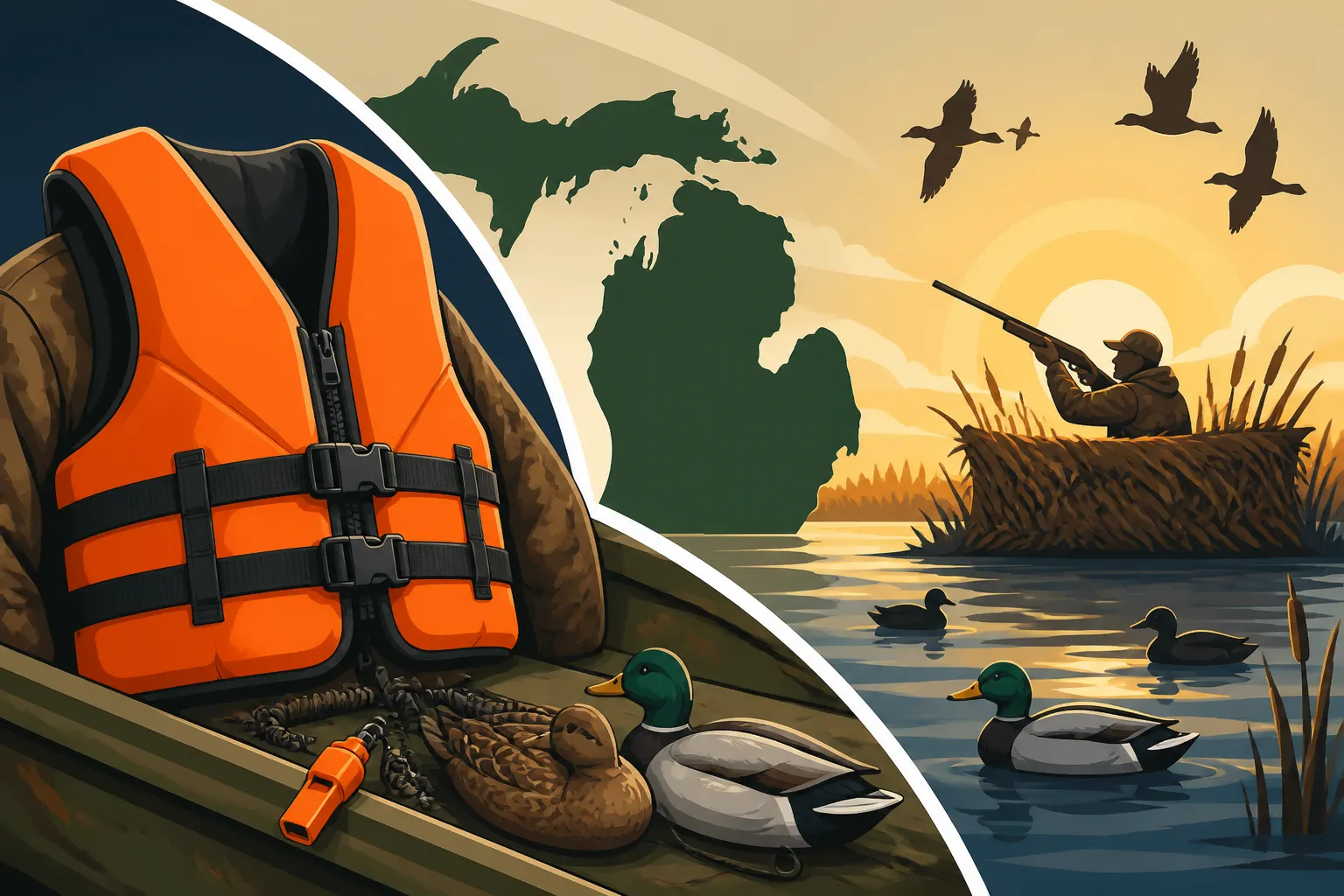
Life Jackets for Layout Hunting
There's nothing quite like the rush of a bluebird sky over the big water, the wind picking up, and a flock of divers cupping their wings, preparing to commit to your decoy spread. Layout hunting for ducks and geese on Michigan's vast Great Lakes or expansive bays is an experience unlike any other, demanding a unique blend of skill, patience, and unwavering attention to safety. However, this thrilling pursuit comes with inherent risks, not least of which is the unforgiving nature of cold, open water. One wrong move, a sudden rogue wave, or an unexpected equipment malfunction can turn an exciting hunt into a life-threatening ordeal in a matter of seconds. This guide is all about one crucial piece of gear that stands between you and disaster: the life jacket, or Personal Flotation Device (PFD), and why it's absolutely non-negotiable for anyone venturing out in a layout boat.
Why a Life Jacket is Non-Negotiable for Michigan Layout Hunting
Let's be real, when you're bundled up in layers, battling the elements, and focused on the ducks, the last thing you want is a bulky life jacket getting in the way. Many hunters, myself included, have been tempted to skip it or just have it "nearby" in the tender boat. But the brutal truth is, Michigan's big water doesn't care about your comfort or your hunting ambition. It's cold, it's often rough, and accidents happen faster than you can react.
The Realities of Cold Water Shock
Imagine tumbling out of your layout boat into the frigid waters of Lake St. Clair or Saginaw Bay in late October. The initial gasp reflex, the sudden, paralyzing cold that takes your breath away, that's cold water shock. This isn't just discomfort; it's a physiological response that can lead to involuntary gasping, hyperventilation, and disorientation. Without proper buoyancy, your head might go underwater during this critical phase, leading to aspiration. Even if you're a strong swimmer, the shock can render you temporarily helpless, making it impossible to swim, much less get back into your boat or signal for help. This is where a PFD acts as your immediate lifeline, keeping your airway clear while your body adjusts to the cold.
The average water temperatures in Michigan's Great Lakes during hunting seasons are far below what the human body can comfortably endure for long. Even on a seemingly "warm" fall day, the water below can be dangerously cold. Hypothermia isn't an immediate concern for the first few minutes, but the immediate threat of cold water shock and its impact on your ability to breathe and stay afloat is paramount. A good PFD buys you those precious moments to regain composure and start thinking clearly about self-rescue or waiting for your tender boat.
The Unpredictability of Big Water and Gear Failure
You might have the most seaworthy layout boat and a meticulous Tender Boats and Safety on Big Water plan, but the Great Lakes are notorious for their sudden mood swings. A calm morning can turn into a white-capping gale in minutes, especially in wide-open areas like Lake Michigan. A rogue wave, a collision with floating debris, or even a sudden shift in your boat's weight can capsize a layout boat faster than you can say "ducks!" In these chaotic moments, finding and donning a stowed life jacket is virtually impossible. It needs to be on you, secured, and ready to go the moment you hit the water.
Beyond environmental factors, gear can fail. Your waders could leak, your boat could take on water, or you could simply lose your balance reaching for a downed bird. In the event of a capsize, your hunting gear – heavy waders, insulated jacket, boots – will immediately drag you down. These items, designed to keep you warm and dry, become dangerous anchors in the water. A PFD provides the necessary lift to counteract this weight, giving you the buoyancy you need to stay afloat and conserve energy.
Choosing the Right Life Jacket for Layout Hunting
Selecting a life jacket for layout hunting isn't about grabbing the first orange vest you see. It's about finding one that offers maximum safety without impeding your ability to hunt effectively. There are different types, and each has its pros and cons for this specific, demanding activity.
Inflatable PFDs: The Hunter's Choice for Mobility
For many layout hunters, an inflatable PFD is the preferred choice, and for good reason. These devices are designed to be compact and less restrictive than traditional foam vests, which is a huge benefit when you're trying to stay low in a layout boat, swing a shotgun, or reach for calls. They are worn like a small vest or even a belt pack, and they inflate either automatically upon immersion or manually by pulling a cord. This low-profile design allows for much greater freedom of movement, which is critical when you're trying to stay hidden from sharp-eyed waterfowl.
When considering an inflatable PFD, you'll generally find two main types: manual and automatic. Manual inflatables require you to pull a cord to deploy the CO2 cartridge, which can be a vital feature if you want to avoid accidental inflation from spray or light rain. Automatic inflatables, on the other hand, deploy as soon as they are submerged in water. For layout hunting, where you might be splashed or experience light rain but aren't necessarily in the water, a manual inflatable often provides a good balance of safety and control. However, if you're concerned about being unconscious or too disoriented to pull the cord, an automatic inflation model might offer greater peace of mind. Many hunters consult resources like GoHunt to compare models and read reviews before making this important choice.
Foam PFDs: Reliability and Simplicity
While inflatable PFDs offer superior mobility, traditional foam PFDs have their own distinct advantages, primarily their inherent buoyancy. There's no CO2 cartridge to check, no re-arming kits to worry about, and no mechanism to fail. They simply float, all the time. This makes them incredibly reliable and straightforward. However, the bulk of foam PFDs can be a significant drawback in a layout boat, where staying concealed and having full range of motion are paramount.
For layout hunting, if you opt for a foam PFD, look for Type III "flotation aids." These are designed for comfort and wearability during extended periods, and they still provide excellent buoyancy. However, they typically won't turn an unconscious person face up as reliably as a Type I offshore PFD. The challenge is finding one that is low-profile enough not to interfere with your shooting or remaining hidden. Some manufacturers design specialized hunting vests with integrated foam flotation that are camouflaged and offer pockets for calls and shells, attempting to blend functionality with safety. While a little more restrictive than an inflatable, they offer peace of mind knowing you're always buoyant.
Key Features to Look for in a Layout Hunting Life Jacket
Beyond the basic type of PFD, several features can make a significant difference in comfort, effectiveness, and overall safety when you're out on Michigan's open water. Prioritizing these details will help ensure your PFD is a tool, not a hindrance.
Comfort and Mobility
This cannot be stressed enough. If your life jacket is uncomfortable, you're less likely to wear it, and an unworn PFD is useless. For layout hunting, where you're often lying prone or semi-reclined for hours, and then rapidly sitting up to shoot, comfort is paramount. Look for designs that allow for full arm movement and don't ride up around your ears when you're leaning back. Padded shoulder straps, soft materials, and adjustable straps for a snug fit are all crucial. Inflatable models generally excel here, as they are often hardly noticeable until deployed. When researching options, sites like GoHunt often highlight user reviews that touch on real-world comfort during activities like hunting.
The profile of the PFD is also critical. A bulky PFD can catch the wind, making it harder to stay low, or snag on your gun or decoys. A trim, ergonomic design that doesn't interfere with your shooting posture or your ability to keep a low profile is essential. Some inflatable PFDs even come in camouflage patterns or subdued earth tones, which is a nice bonus for waterfowl hunters trying to blend in with their environment.
Buoyancy and USCG Approval
All PFDs sold in the United States must be approved by the U.S. Coast Guard (USCG). This approval ensures they meet specific standards for buoyancy and performance. You'll see different "Types" (I, II, III, V) on PFDs, indicating their intended use and minimum buoyancy. For layout hunting, a Type III (flotation aid) or a Type V (special use device, often an inflatable that converts to a Type III when inflated) is generally appropriate. These offer at least 15.5 lbs of buoyancy, which is enough to keep most adults afloat.
| PFD Type | Description | Key Features for Hunters | Pros for Layout Hunting | Cons for Layout Hunting |
|---|---|---|---|---|
| Type I | Offshore PFD | High buoyancy, turns unconscious face up. | Max safety in rough, remote water. | Very bulky, restrictive. |
| Type II | Near-Shore Buoyant Vest | Moderate buoyancy, may turn unconscious face up. | More comfortable than Type I. | Still bulky, less reliable for turning. |
| Type III | Flotation Aid | Designed for comfort, good buoyancy, will NOT turn unconscious face up. | Comfortable, good for active use. | Less buoyancy, no face-up turning. |
| Type V | Special Use Device | Designed for specific activities (e.g., inflatables). | Can be very low profile, high buoyancy when deployed. | Requires re-arming for inflatables, may need manual activation. |
Always check the label to ensure the PFD is USCG-approved and has sufficient buoyancy for your weight and the conditions you expect to encounter. Given the extreme cold of Michigan's waters and the heavy gear worn, opting for a PFD with slightly more buoyancy than the minimum requirement can provide an extra margin of safety.
Durability and Pockets
Your PFD will take a beating out on the water. It needs to withstand exposure to sun, saltwater or freshwater, mud, and general wear and tear from hunting. Look for rugged outer shells, heavy-duty zippers (if applicable), and strong stitching. Denier ratings for fabric can give you an idea of durability.
Integrated pockets can be a game-changer for layout hunters. Having a small, zippered pocket for a whistle, a small knife, or even your Headlamps for Walking Out After Dark in a waterproof pouch can be incredibly useful. Some hunting-specific PFDs might even have loops for attaching calls or other small accessories. Think about what you absolutely need to have on your person, even if you go into the water, and choose a PFD that can accommodate those essentials. A whistle, in particular, is an inexpensive but vital piece of safety equipment, allowing you to signal your tender boat or other nearby vessels if you're in distress.
Maintenance and Best Practices for Your PFD
Having the right life jacket is only half the battle; knowing how to care for it and use it properly is just as critical. A poorly maintained or improperly worn PFD is a false sense of security.
Regular Inspection and Testing
Your PFD should be inspected regularly, not just at the start of the season, but before every single trip out on the water. For foam PFDs, check for rips, tears, or excessive fading in the fabric, which can indicate material degradation. Make sure all zippers, buckles, and straps are in good working order and aren't corroded. Squeeze the foam to ensure it hasn't become stiff, brittle, or waterlogged, which can reduce its buoyancy.
For inflatable PFDs, the inspection is even more critical. Check the CO2 cartridge to ensure it hasn't been punctured or discharged – there's usually a small indicator to tell you. Confirm that the hydrostatic release mechanism (if it's an automatic model) is intact and within its expiration date. Inflate your PFD manually at least once a season (or according to manufacturer instructions) to check for leaks and ensure it holds air. This also gives you vital experience in how it feels when deployed. Remember, re-arming kits are specific to your PFD model, so always have spares on hand and know how to properly reload them. Many hunting forums and even guides on GoHunt emphasize the importance of having these kits.
Proper Fit and Wear
A PFD only works if you wear it, and if it fits correctly. It should be snug, but not uncomfortably tight, and all buckles and straps should be fastened. To test for a proper fit, lift your arms straight up over your head. If the PFD rides up past your ears, it's too loose or too big, and it could slip off in the water. Adjust the straps until it stays securely in place. Never modify your PFD by cutting straps or removing foam, as this can compromise its effectiveness and void its USCG approval.
Always wear your PFD over all your other layers, including your Clothing for a Michigan November and Waders and Boats for Michigan Marshes. If you put it under your waders or heavy coat, it won't provide the necessary buoyancy, and it might not even inflate properly if it's an inflatable model. The few seconds it takes to properly don your PFD are a small investment for your safety on Michigan's challenging waters.
Cleaning and Storage
After each outing, especially on saltwater bays like Saginaw Bay, rinse your PFD with fresh water to remove any salt, mud, or debris. Allow it to air dry completely, away from direct sunlight or heat sources, before storing it. Never store a wet PFD, as this can lead to mold and mildew, which can degrade the fabric and internal components. Store your PFD in a cool, dry place where it won't be exposed to extreme temperatures or harsh chemicals. Keeping it out of direct sunlight also helps prolong the life of the materials. Proper care ensures that your life jacket will be ready and reliable when you need it most, giving you peace of mind as you pursue Great Lakes Waterfowl Hunting in Michigan on Michigan's magnificent, yet unforgiving, waterways.
Disclaimer
This article is for general informational purposes only and does not constitute professional advice. Laws, prices and regulations vary by location and change over time. Consult a qualified professional for guidance on your specific situation.