Which Michigan Duck Zone You Are In
It can be incredibly frustrating trying to figure out which Michigan duck zone you're actually in, especially when you're just trying to plan your season and stay on the right side of the law. You've heard folks talk about the "Southern Zone" or the "Northern Zone," but what do those lines on a map really mean for your hunting plans? This comprehensive guide will walk you through Michigan's waterfowl zones, help you pinpoint exactly where you stand, and explain why knowing your zone is absolutely critical for a successful and legal duck hunting season.
Understanding Michigan's Waterfowl Zones
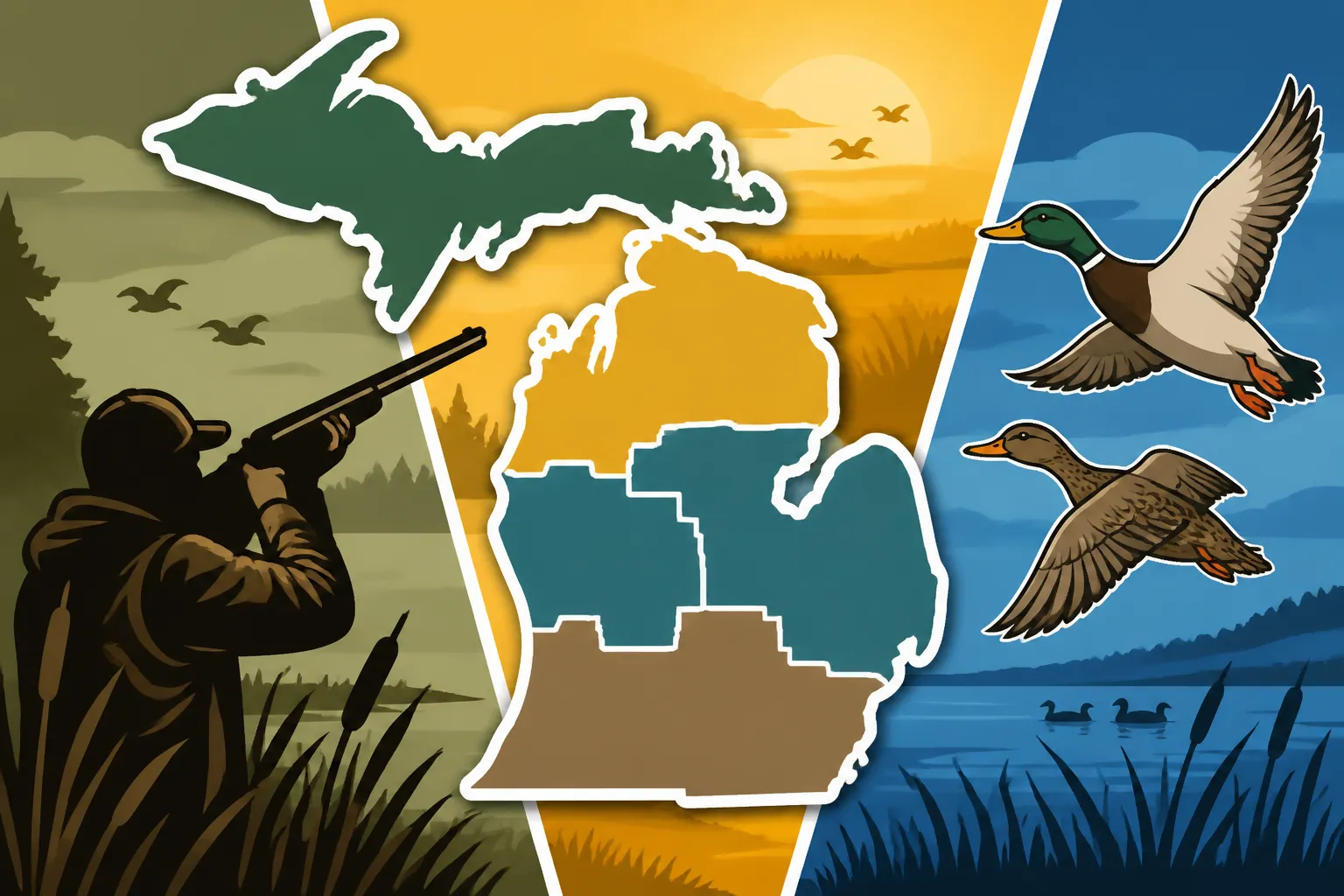
Michigan's diverse geography, stretching from the northern reaches of the Upper Peninsula down to the agricultural lands bordering Ohio and Indiana, means that waterfowl migration patterns and local populations vary dramatically. To effectively manage these resources and provide fair hunting opportunities, the state divides its Lower Peninsula into three distinct waterfowl zones: Northern, Middle, and Southern. The Upper Peninsula is entirely within the Northern Zone for ducks. This system isn't just arbitrary; it's a carefully considered approach to adapt hunting seasons to the realities of the birds themselves.
The Rationale Behind Duck Zones
Imagine trying to set one duck season for the entire state. It simply wouldn't work. The ducks that are still comfortably feeding in the marshes of Monroe County in late October might have already pushed through the Upper Peninsula weeks earlier due to colder temperatures and freezing waters. The Michigan Department of Natural Resources (DNR), in cooperation with the U.S. Fish and Wildlife Service, establishes these zones based on a multitude of factors, including:
- Migratory Bird Behavior: Different species of ducks and geese have varying migration timetables. Some species, like blue-winged teal, move south much earlier than mallards or diving ducks. Zones allow for specific season dates that align with when these birds are present in a given area.
- Habitat Conditions: The freezing dates of wetlands and small lakes vary significantly across the state. The Upper Peninsula and northern Lower Peninsula often experience hard freezes much earlier than the southern part of the state, necessitating earlier season closures in those regions.
- Biological Data: DNR biologists gather extensive data on breeding populations, harvest rates, and wintering grounds. This information helps them determine appropriate season lengths and bag limits within each zone to ensure sustainable populations for years to come.
- Hunter Opportunity: The zone system aims to maximize hunting opportunities across the state while still protecting the resource. It acknowledges that hunters in different regions will encounter different bird availability at different times.
Without these zones, hunters would either have seasons that are too short in some areas, missing prime migration, or too long in others, potentially overharvesting local birds or running into frozen conditions that make hunting impractical.
A Brief History of Michigan's Zones
The concept of waterfowl zones isn't new, but the specific boundaries and regulations are regularly reviewed and sometimes adjusted based on new data, climate trends, and hunter feedback. Historically, states have moved from simpler, broader regulations to more nuanced, regional approaches as our understanding of waterfowl biology and management has grown. Michigan's current three-zone system has been in place for a good while, proving effective in balancing conservation needs with hunter access. These boundaries are fixed for consistency, allowing hunters to plan, but the season dates within them are what fluctuate annually, requiring a fresh look at the hunting digest each year. It’s a dynamic system designed to be responsive, making it all the more important for us as hunters to stay informed.
Identifying Your Specific Duck Zone
Pinpointing which duck zone you're in is perhaps the most critical step before heading out to the marsh or a field edge. A quick look at a map might seem straightforward, but those lines on paper can sometimes be confusing when you're standing on the ground. Understanding the exact boundaries is crucial, as being in the wrong zone on the wrong date can lead to serious legal trouble.
Northern Zone Boundaries
The Northern Zone encompasses the entire Upper Peninsula and the northern portion of the Lower Peninsula. For the Lower Peninsula, the boundary is generally defined as:
North of a line beginning at the mouth of the Pere Marquette River in Mason County; then east on US-31 to US-10 at Ludington; then east on US-10 to M-66 at Remus; then north on M-66 to M-55 at Lake City; then east on M-55 to US-23 at Tawas City; then north on US-23 to the Arenac/Iosco County Line; then east along the Arenac/Iosco County Line to Lake Huron.
Essentially, if you're hunting north of a rough line stretching across the northern part of the Lower Peninsula (think above Ludington, Clare, and Tawas City), you're in the Northern Zone. This includes popular hunting grounds in counties like Mason, Lake, Osceola, Clare, Gladwin, Arenac, and everything north of those, including the vast public lands found in areas like the Huron-Manistee National Forest. Hunters planning a trip to the Upper Peninsula for goose or duck hunting should always remember that the entire U.P. falls under the Northern Zone regulations.
Middle Zone Boundaries
The Middle Zone is the central band of the Lower Peninsula, nestled between the Northern and Southern Zones. Its boundaries are defined as:
South of the Northern Zone line (as described above) and north of a line beginning at the mouth of the Grand River in Ottawa County; then east on I-96 to I-196; then east on I-196 to US-131; then north on US-131 to M-50 at Grand Rapids; then east on M-50 to M-179 at Caledonia; then east on M-179 to M-37 at Battle Creek; then east on M-37 to I-94; then east on I-94 to I-69; then north on I-69 to I-96; then east on I-96 to US-23; then south on US-23 to M-153 (Ford Road); then east on M-153 to Lake St. Clair.
This can feel like a lot of highways and specific points, but if you're generally hunting in the Saginaw Bay region, or counties like Muskegon, Kent, Ottawa, Ionia, Clinton, Gratiot, Saginaw, Tuscola, or Huron, you're likely in the Middle Zone. This zone often offers a balance, with seasons that open later than the Northern Zone but earlier than the Southern, catching a different wave of migratory birds as they move south. Many hunters in this region take advantage of the productive wetlands and managed waterfowl areas.
Southern Zone Boundaries
The Southern Zone is the southernmost part of the Lower Peninsula, and it's where much of Michigan's agriculture and heavily populated areas lie, but also some incredibly productive wetlands. The Southern Zone is simply defined as:
South of the Middle Zone line (as described above).
This includes counties like Berrien, Van Buren, Kalamazoo, Calhoun, Jackson, Lenawee, Monroe, Wayne, Oakland, Macomb, St. Clair, and parts of Genesee and Livingston. These areas often have later season dates, designed to coincide with the main push of waterfowl through the Great Lakes flyway as winter truly sets in. This is prime territory for Field Hunting Geese in Southern Michigan or for Diver Ducks on Saginaw Bay and Lake St. Clair, where birds stage for extended periods.
Resources for Pinpointing Your Location
Trying to figure out these exact lines in the field can be a real headache. Thankfully, modern technology makes it much easier.
- Michigan DNR Hunt Fish App: This official app is a must-have for any Michigan hunter. It provides access to hunting digests, regulations, and often has mapping features that can show you your current location relative to various hunting boundaries, including duck zones.
- Michigan DNR Website: The DNR website (Michigan.gov/DNR) is always your authoritative source. They publish detailed maps of the duck zones, often with county lines and major highways clearly marked. It’s a good idea to download and print these for reference, or at least save them to your phone.
- Mapping Applications: Tools like GoHunt or OnX Hunt are incredibly valuable. They offer detailed satellite imagery, property line overlays, and often include specific hunting zone boundaries. With GPS functionality, you can see your exact location on the map and confirm which zone you are standing in, giving you real-time confidence. This is especially useful when hunting near a zone boundary, where a matter of a few hundred yards could put you in a different season. Before you head out, use these apps to scout your planned hunting spot and verify its zone status.
Why Your Duck Zone Matters for Hunting
Knowing your duck zone isn't just about avoiding a ticket; it's about making the most of your hunting opportunities and truly understanding the regulations that govern your pursuit. The zones directly dictate when you can hunt, what you can harvest, and even how you might approach your strategy. Ignoring these distinctions is like trying to use a recipe without knowing the ingredients – it's just not going to turn out right.
Season Dates by Zone
The most significant impact of Michigan's duck zones is on the specific opening and closing dates for waterfowl seasons. These dates can vary by weeks between zones, meaning a hunter planning a trip needs to verify the correct season for their chosen hunting location. For instance, the Northern Zone typically has the earliest opening dates and earliest closures, designed to align with the first pushes of ducks south before the early winter sets in. The Southern Zone, conversely, usually has later opening and closing dates, extending the season into December to capitalize on the later migration of birds. The Middle Zone falls somewhere in between.
It’s important to remember that while the zones themselves are static, the dates within those zones can shift slightly year to year. Always consult the current year's Michigan Waterfowl Hunting Digest for the precise dates. Here's a general idea of how season lengths compare, but this is a generalization – always check the current DNR digest for exact dates.
| Zone | Typical Season Start (Ducks) | Typical Season End (Ducks) | General Duration |
|---|---|---|---|
| Northern | Late September / Early October | Late November | Shorter |
| Middle | Early October | Mid-December | Medium |
| Southern | Late October | Late January | Longer |
These date differences are precisely why you might hear hunters lamenting that "the ducks haven't arrived yet" in the Southern Zone while friends up north are already having great hunts. It also means you might have opportunities to hunt multiple season openers if you're willing to travel between zones, extending your time in the blind. For more specific details, you'll want to review the Michigan Duck Season Dates by Zone to plan your outings.
Bag Limits and Species Restrictions
While the general daily bag limits for ducks (which are typically 6 ducks per day, with specific species restrictions) are usually consistent across all zones, there can sometimes be nuances or special early seasons that are zone-specific. For example, the Michigan Teal Season Dates are an early season that often precedes the regular duck season, and its dates can differ by zone or even be limited to certain zones. Similarly, regulations for species like Canada geese often have their own specific zones (like the Goose Management Units) and varying season lengths that might overlap with or differ from duck zones.
It's not just about how many ducks, but which ducks. Restrictions on species like mallards (especially hens), pintails, black ducks, or canvasbacks are federal mandates, but their specific opening dates or daily limits can sometimes be tied to the state's zone structure or be particularly critical during certain periods within a zone's season. Before you head out, make sure you understand the Michigan Duck Daily Bag Limit and any specific species restrictions for your chosen zone and date.
Staying Compliant and Avoiding Fines
The legal ramifications of hunting in the wrong zone or outside the legal dates can be severe. Hunting out of season is a serious violation that can result in significant fines, confiscation of equipment (including your firearm or boat), and the loss of your hunting privileges for a period of time. It's not worth the risk. The conservation officers in Michigan are well-versed in these regulations and are actively patrolling during hunting seasons.
Think of it this way: knowing your zone and the corresponding season dates is as fundamental as having your Michigan Federal Duck Stamp Rules or your Michigan HIP Certification for Bird Hunters. These aren't optional extras; they're foundational elements of responsible and legal hunting. When in doubt, always refer to the official Michigan DNR regulations. Don't rely on word-of-mouth or outdated information. Use reliable tools like the GoHunt app to quickly double-check your location and the regulations specific to it before you even set foot in the marsh.
Planning Your Hunt Around Zone Regulations
Now that we understand the critical importance of Michigan's duck zones, let's talk about putting that knowledge into practice. Effective planning isn't just about having the right gear or knowing where to find birds; it's about seamlessly integrating zone regulations into every aspect of your hunting strategy.
Pre-Season Scouting and Zone Verification
Before you ever load your shotgun, you should be doing your homework. Pre-season scouting is about more than just finding birds; it's about confirming the legalities of your chosen spot.
- Map Research: Start with online maps. Use the Michigan DNR Mi-HUNT map or a robust mapping application like GoHunt. These tools allow you to zoom in on potential hunting areas and see the overlay of the duck zone boundaries. If you're targeting a specific marsh or lake, verify which zone it falls into.
- Physical Reconnaissance: If possible, visit the area in person. Sometimes, landmarks on a map make more sense when you're standing there. Are you on one side of a county line that forms a boundary? Is the major highway defining the zone clearly visible? This level of detail helps solidify your understanding.
- Double-Check Dates: Once you know your zone, immediately check the current year's waterfowl digest for the exact season dates for that specific zone. Don't assume. Dates can shift by a few days from year to year, and that small change can mean the difference between a legal hunt and a violation.
This pre-season verification prevents the sinking feeling of realizing you're out of season or in the wrong zone when you're already set up in the blind. It also informs what kind of hunting you'll be doing. For instance, if you're targeting early-season teal, you'll want to focus on Northern Zone locations that open earlier. If you're after late-season mallards, the Southern Zone will be your prime target.
Adjusting Hunting Strategy Based on Zone
Your chosen duck zone doesn't just impact dates; it can influence your entire hunting strategy, from species targeting to gear selection and even Michigan Waterfowl Migration Timing.
-
Species Focus:
- Northern Zone: With earlier season closures, the Northern Zone often means targeting local birds, early migrants like teal and wood ducks, and the first waves of mallards and divers pushing south. Your strategy here might focus more on jump-shooting smaller waters or setting up on wild rice marshes. You might find yourself focused on Grouse and Woodcock Hunting in Michigan in the uplands before pivoting to waterfowl in the colder weather.
- Middle Zone: This zone often sees a broader spectrum of ducks as migration progresses. You might have opportunities for early season teal, mid-season mallards, and even some divers later in the year. Hunting managed waterfowl areas like Nayanquing Point or Fish Point, which are often within the Middle Zone, can be very productive for Hunting a Marsh After the Morning Draw.
- Southern Zone: The extended season here caters to the later stages of migration and the presence of wintering birds. This is where you'll often encounter large numbers of divers on the Great Lakes, or field-feeding geese. Your strategy might heavily involve layout blinds in cornfields for geese or Layout Hunting Michigan Big Water for canvasbacks and bluebills on Lake Erie or Lake St. Clair.
-
Gear Considerations: The later seasons in the Southern Zone often mean colder weather and potentially ice, which will influence your gear choices, from Waders and Boats for Michigan Marshes to heavier insulation and warmers. Conversely, an early Northern Zone opener might mean less clothing but still good rain gear. Think about the types of Waterfowl Loads for Michigan Divers you might need depending on the species and conditions prevalent in your zone during its prime hunting window.
-
Scouting for Pressure: Public lands, especially in the more accessible Southern and Middle Zones, can see significant pressure. Understanding when other hunters might be out based on zone openers can help you plan to either hit areas before the crowds or find spots that see less traffic. Using mapping apps like GoHunt can help you identify remote pockets of public land, even in heavily hunted areas.
By thinking proactively about your duck zone, you're not just adhering to the law; you're developing a more informed, effective, and ultimately more enjoyable hunting plan that maximizes your chances of success while respecting Michigan's precious waterfowl resources. This kind of thoughtful preparation is the hallmark of a truly skilled Michigan hunter.
Disclaimer
The information provided in this guide is for general informational purposes only and is not intended as legal advice. Hunting regulations, season dates, and zone boundaries in Michigan are subject to change. Always consult the most current official Michigan DNR Hunting and Trapping Digest and relevant state laws before engaging in any hunting activities. Hunters are responsible for knowing and abiding by all applicable regulations.