Michigan State Game Area Acreage
It's no secret that finding reliable hunting land in Michigan can feel like an endless quest. Between navigating private property restrictions and deciphering confusing public land maps, many of us spend more time scratching our heads than actually scouting. But fear not, because Michigan's State Game Areas (SGAs) offer a fantastic network of public hunting grounds, and understanding their acreage and unique characteristics is key to unlocking some incredible opportunities right here in our home state. This guide is all about helping you understand these vital public lands, how to find them, and how to make the most of what they offer.
Understanding Michigan's State Game Areas
Michigan boasts an impressive amount of public land, and a significant portion of that is dedicated to our State Game Areas. These aren't just random parcels; they're managed specifically for wildlife habitat and public recreation, with hunting being a primary focus. Many hunters, especially those new to public land, might lump all state-owned property together, but SGAs have their own distinct flavor and management philosophy compared to, say, a State Forest.
What Defines an SGA?
State Game Areas are parcels of land, often purchased or acquired over decades, with the explicit goal of enhancing wildlife populations and providing public access for hunting, trapping, and other outdoor pursuits. Think of them as dedicated wildlife havens, managed intensively by the Michigan Department of Natural Resources (DNR) Wildlife Division. This means you'll find management practices focused on creating and maintaining diverse habitats, whether that's through controlled burns, food plot development, or timber management specifically geared towards various game species. Unlike a sprawling State Forest where timber production might be a more central goal, SGAs prioritize the wildlife first.
The sheer diversity within these areas is remarkable. One SGA might be predominantly marshland, teeming with waterfowl, while another could be a patchwork of old farm fields, brushy hedgerows, and young woodlots perfect for pheasants, rabbits, or even deer. This mosaic of habitats, often in close proximity to agricultural land or residential areas, makes them incredibly valuable to hunters, particularly in the more densely populated southern Lower Peninsula.
The Purpose Behind These Public Lands
The primary purpose of Michigan's State Game Areas is to provide public hunting and wildlife viewing opportunities. This is a crucial distinction. While you can hunt in State Forests and National Forests, the management goals there are often broader, encompassing timber harvesting, mineral extraction, or larger-scale recreation like off-road vehicle trails. In SGAs, almost every management decision circles back to creating better conditions for game animals and easier access for hunters.
These areas are often vital stepping stones or pockets of habitat in areas where private land dominates. They act as refuges and travel corridors for deer, turkeys, and small game, connecting larger habitat blocks or providing critical winter cover. The DNR staff actively works on projects within SGAs to ensure they remain productive for hunting season after season. This might involve planting mast-producing trees, creating brush piles for rabbit cover, or maintaining wetlands for ducks and geese. It's a continuous, hands-on effort to keep these areas vibrant hunting destinations.
The Sheer Scale: Why Acreage Matters to Hunters
When you start looking at maps of Michigan's State Game Areas, you'll quickly realize that their acreage varies wildly. Some are massive, spanning thousands of acres, while others are relatively small, maybe just a few hundred. This difference in scale profoundly impacts how you approach hunting them and what you can expect to find.
From Small Tracts to Expansive Wilderness
Consider an SGA in the heart of southern Michigan farm country. These might be small, fragmented parcels—a few hundred acres here, a couple of hundred there—often nestled between private crop fields and woodlots. Don't let their size fool you, though. These smaller SGAs can act as magnets for deer, drawing them in from surrounding private land for bedding, cover, or water. For a hunter trying to gain access in an area dominated by "No Trespassing" signs, these smaller public parcels are gold. You might not have endless room to roam, but a well-placed stand or blind on a natural pinch point can be incredibly effective.
On the other hand, venture north into the Lower Peninsula or the Upper Peninsula, and you'll find SGAs that blend seamlessly into larger State Forests or National Forests, offering thousands of contiguous acres. Places like the Allegan State Game Area, for instance, are vast, providing a true "big woods" feel even though they're technically a State Game Area. These larger tracts offer opportunities for still-hunting, extended hikes, and finding pockets of unpressured game far from roads. Understanding the difference in scale helps you set realistic expectations for your hunt and plan your tactics accordingly. Hunting the Michigan Upper Peninsula for Deer or even Northern Michigan farm country deer hunting can often involve these varied SGA landscapes.
Impact of Size on Deer and Other Game
The size and layout of an SGA directly influence how game animals use it and, consequently, how you should hunt it. In smaller, more fragmented SGAs, game animals, especially deer, are often transient. They might bed on public land during the day and move to private crop fields at night, or vice-versa, depending on hunting pressure and available food sources. This means a hunter needs to be acutely aware of these movement patterns, often focusing on transition zones, pinch points, and cover that provides security close to food. These areas can sometimes offer exceptional morning or evening hunts as deer move between properties.
In larger SGAs, particularly those with extensive timber or wetland features, deer and other game might live their entire lives within the public boundaries. This allows for different strategies, such as focusing on bedding areas deep within the property, identifying extensive trail networks, or even planning a deer drive with a few trusted partners. Deer Drives With Three or Four Hunters can be particularly effective in these larger, blockier parcels. The expansive nature means game might be less wary of human scent from roadsides, leading to opportunities to find undisturbed animals deeper inside.
| Public Land Type | Typical Acreage Range | Management Focus | Hunting Experience |
|---|---|---|---|
| State Game Area | 100s to 10,000s of acres | Wildlife habitat & public hunting | Diverse, can be high pressure or remote, depending on size |
| State Forest | 1,000s to 100,000s of acres | Timber, recreation, wildlife | More expansive, often less concentrated pressure |
| National Forest | 10,000s to millions of acres | Conservation, timber, recreation | Vast wilderness, lowest pressure in remote sections |
Navigating and Accessing State Game Areas
One of the biggest frustrations for new public land hunters is simply figuring out where they can actually hunt. Michigan's SGAs, while clearly marked, can still present navigation challenges. Understanding how to use modern tools and respecting established boundaries is crucial for a successful and legal hunt.
Using Mapping Tools to Find Your Way
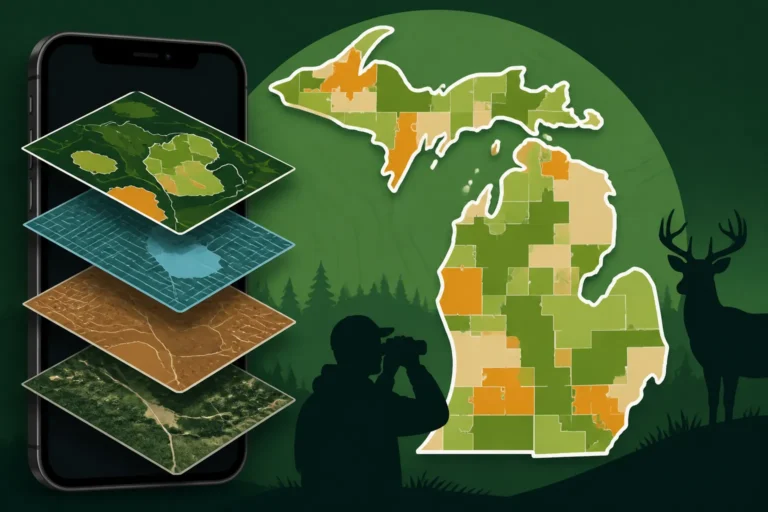
Gone are the days when a crumpled paper map and a compass were your only guides (though knowing how to use them is still smart!). Today, digital mapping applications are your best friend when hunting Michigan's SGAs. Tools like onX Hunt are invaluable. They overlay public and private property boundaries directly onto satellite imagery, showing you exactly where you stand in relation to public land lines. This is especially critical in those smaller, fragmented SGAs where private parcels can checkerboard the landscape. You can see precisely where the SGA ends and a farmer's cornfield begins, preventing accidental trespassing.
These apps also help you identify features within the SGA that might not be obvious on a generic map. You can scout from your couch, looking for subtle terrain changes, water sources, old clearings, or even potential bedding areas, long before you ever step foot in the woods. Many also include layers showing different habitat types or forest cover, which can be critical for species like grouse or rabbits. Before season, taking the time to digitally scout with a tool like onX Hunt can save you countless hours of walking unproductive ground. For more general public land information, Using the Michigan Mi-HUNT Map is another excellent resource directly from the DNR.
Respecting Boundaries and Rules
While SGAs are open to the public, they aren't a free-for-all. Every SGA has specific rules and regulations that hunters must follow, and these can sometimes differ slightly from general state land rules. Always check the DNR's most current hunting guide for the area you intend to hunt. This includes understanding Baiting Rules on Michigan Public Land, vehicle access limitations, and specific regulations regarding treestand placement. For instance, temporary treestands are often allowed, but leaving them year-round or causing permanent damage to trees is usually prohibited.
Crucially, always respect the boundaries of the SGA. That private property line isn't just a suggestion; it's a legal demarcation. Even if a deer runs onto private land after being shot, you cannot pursue it without permission from the landowner. Having your mapping app open on your phone, with the property lines clearly visible, is your best defense against inadvertently crossing onto private property. Remember, a courteous hunter who respects boundaries contributes to a positive image for all of us and helps maintain good relationships with neighboring landowners.
Hunting Opportunities and Challenges in SGAs
Michigan's State Game Areas offer a wealth of hunting opportunities for various species, but they also come with their own set of challenges, particularly when it comes to dealing with other hunters.
Species You'll Encounter
The diversity of habitats within SGAs means you can target a wide array of game. White-tailed deer are undoubtedly the most popular pursuit, and many SGAs, especially in the southern Lower Peninsula, hold surprisingly healthy deer populations. Don't underestimate these public land bucks; they get smart fast due to pressure. You'll also find excellent opportunities for wild turkeys, both in spring and fall, particularly in SGAs that feature a mix of woodlands and open fields. Michigan Spring Turkey Applications and Units can help you determine the best areas to apply for.
Small game hunting is another cornerstone of SGA use. Rabbits thrive in brushy cover and old fields, while squirrels are plentiful in oak and beech woodlots. Upland birds like pheasants and grouse (in northern SGAs) also call these areas home. Many SGAs are specifically managed for waterfowl, boasting extensive wetlands, marshes, and flooded timber. Hunters often enjoy fantastic duck and goose hunting, especially in managed waterfowl areas within or adjacent to SGAs. Great Lakes Waterfowl Hunting in Michigan often details how these managed areas function.
Dealing with Hunting Pressure
Let's be real: public land means other people. Hunting pressure is perhaps the biggest challenge you'll face in many Michigan State Game Areas, especially during popular seasons like the firearm deer opener. It can be frustrating to hike deep into a beautiful piece of public land, only to find another hunter's vehicle parked where you thought you'd be alone. This is just a reality of public land hunting, but it doesn't mean success is impossible.
Instead of being deterred, view pressure as a factor to be understood and strategized against. Deer, especially, quickly adapt to hunter presence. They'll shift their bedding areas, become more nocturnal, or seek out overlooked pockets of cover that other hunters ignore. This is where your scouting and understanding of terrain become crucial. Learning to identify these "sanctuaries" – thick, nasty cover, swamps, or areas far from easy access – is often the key to finding mature deer. Hunting Pressure on Michigan State Land explores this topic in more detail. Even if an SGA is popular, there's always a corner that gets overlooked, or a different approach that fewer hunters consider.
Maximizing Your Success in Michigan SGAs
Hunting State Game Areas successfully requires a blend of diligent preparation, adaptability, and a willingness to work a little harder than the next guy. It's not always easy, but the rewards of tagging a public land animal are incredibly satisfying.
Scouting Strategies for Public Land
Your scouting starts long before hunting season, even if it's just digitally. Use online mapping tools to identify potential access points, dense cover, water sources, and any unique terrain features that might funnel deer or provide security for other game. Pay close attention to subtle details like changes in topography or vegetation type.
Once you're on the ground, focus on finding actual game sign. Look for rubs, scrapes, tracks, and droppings. Identify natural travel corridors, such as saddlebacks, creek bottoms, or edges between different habitat types. Don't be afraid to put on some miles. Many hunters stick to the easy access points, so venturing a half-mile or more off the beaten path often puts you into less disturbed areas. Scouting Michigan Public Land Before Season is invaluable reading for any public land hunter. Remember, game animals are creatures of habit, and their habits are often dictated by security and food, both of which can be found in abundance if you know where to look.
Adapting to Different Terrain and Cover
Michigan's SGAs present a fantastic array of terrain and cover types, from dense cedar swamps and open marshes to rolling hills and thick aspen regeneration. Being able to adapt your hunting style to these varied landscapes is a huge advantage. If you're hunting a swamp edge, you'll need different tactics and gear than if you're set up on the edge of a standing cornfield. Hunting Michigan Swamp Edges for Deer requires rubber boots and patience, while Hunting a Standing Cornfield in the Thumb might call for a ground blind and an early morning setup.
The key is to understand how each type of cover provides food, water, or security for the game you're pursuing. For instance, a thick, regenerating clearcut might be a pheasant paradise and excellent deer bedding, whereas a mature hardwood forest could be prime for squirrels and offer less dense cover for deer. Don't get stuck in a single way of thinking. Be versatile, observe what the land offers, and tailor your approach to match the environment. This adaptability, combined with solid scouting, will significantly increase your odds of success in Michigan's diverse State Game Areas.
Disclaimer
This article is for general informational purposes only and does not constitute professional advice. Laws, prices and regulations vary by location and change over time. Consult a qualified professional for guidance on your specific situation.