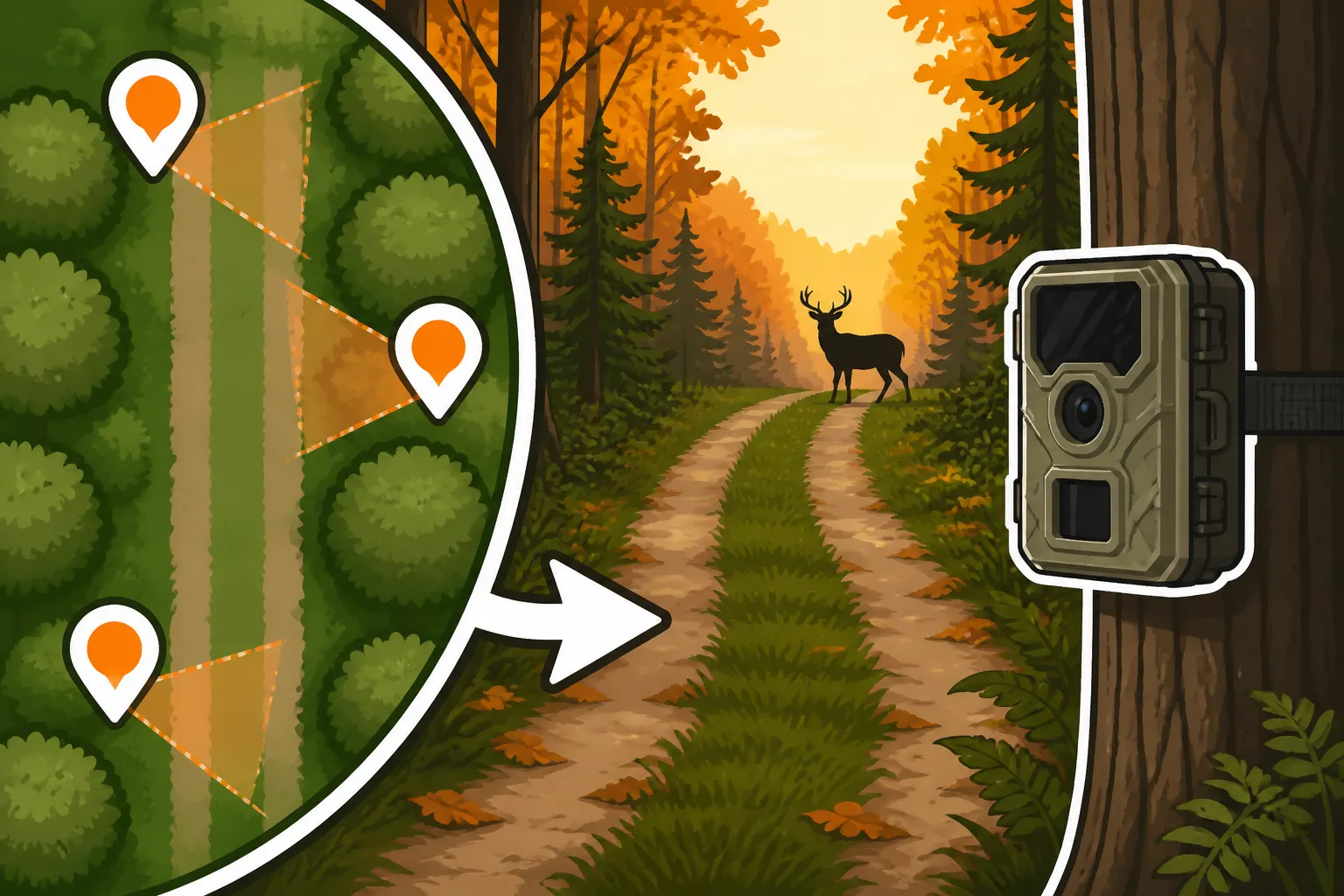
Where to Hang a Camera on a Two-Track
Alright, let's talk trail cameras and those often overlooked two-tracks here in Michigan. It's a common dilemma, right? You've found a promising two-track, maybe on state land or bordering private property, and you know deer use it, but you're scratching your head wondering if hanging a camera there is just asking for it to get stolen, or if you'll just spook every deer in the county. This guide is all about helping you strategically place your trail cameras on two-tracks to gather intel effectively, without undue risk, and actually get those elusive pictures you're after.
Understanding Two-Tracks and Their Appeal to Deer
Michigan's landscape is crisscrossed with countless two-tracks – those old logging trails, gas lines, power lines, or forgotten access routes. They're everywhere, from the vast expanses of the Huron-Manistee National Forest to the smaller state game areas. While we humans see them as rough roads, deer often see them as convenient travel corridors, especially where they offer easy walking through thick cover, or lead to crucial resources. However, their very accessibility for us makes them a double-edged sword for trail camera placement.
Why Deer Love Two-Tracks for Travel
Think about it from a deer's perspective. Why fight through dense underbrush, briars, and thickets when there's a relatively clear path already cut? Two-tracks provide an obvious travel lane, often connecting bedding areas to food sources, or allowing bucks to cruise during the rut. In areas with high hunting pressure, deer might even use these paths more at night, but they definitely still use them. They offer a clear line of sight, which can be both a benefit and a drawback for a deer. They'll use them to scent check wind currents, especially if the two-track runs parallel to a ridge or through a low-lying area where thermals are predictable. Furthermore, two-tracks often create subtle funnels, particularly where dense timber bottlenecks into a more open section, or where they cross a natural pinch point like a creek crossing or a rise in terrain. These natural features, amplified by the presence of a two-track, are goldmines for deer movement.
The Human Element: Managing Risk
Now, here's the kicker: if it's easy for deer to use, it's easy for people to use. Two-tracks, especially those accessible by vehicle, see human activity. This could be other hunters, mushroom foragers, hikers, dirt bikers, or even folks just out for a scenic drive. The unfortunate reality is that trail camera theft is a very real concern, particularly on publicly accessible lands. It's a frustrating aspect of hunting public ground, and it's a valid worry for anyone investing in gear. So, our strategy isn't just about finding deer, but about finding deer discreetly. We want to place cameras where they are out of casual sight, making it harder for opportunistic thieves or even well-meaning people who might accidentally disturb them. Using mapping tools like the Mi-HUNT map or a robust app like GoHunt can help you identify sections of two-tracks that might be less traveled, perhaps deeper into state forest land, or those that dead-end, reducing through-traffic. Always check the current Trail Camera Rules on Michigan Public Land to ensure you're compliant with any regulations regarding public land camera use.
Strategic Camera Placement Along Two-Tracks
Placing a trail camera effectively on a two-track requires more than just strapping it to the nearest tree. You need to think about the wind, the sun, deer behavior, and that ever-present human pressure. The goal is to capture clear images of deer, especially mature bucks, without alerting them to the camera's presence or making the camera easily visible to passersby.
Identifying Ideal Intersections and Pinch Points
The best spots aren't always directly on the two-track itself. Instead, look for where the two-track interacts with other features that inherently funnel deer. These are often subtle, but deer instinctively use them.
- Crossing Points: A deer trail crossing the two-track is a prime candidate. This indicates a consistent travel route. Look for well-worn paths entering and exiting the two-track from dense cover. This is especially true if the deer trail leads to or from a suspected bedding area or a known food source.
- Edge Cover: Deer, especially mature bucks, are wary. They don't typically like to expose themselves in wide-open areas during daylight. Instead, they'll skirt the edges of cover. If a two-track runs alongside a dense cedar swamp or a thick aspen cut, look for points where deer might naturally move from the security of that cover onto the two-track for a short stretch, or cross it to get to another block of cover. Think of the transition zone as the sweet spot. You might be interested in knowing more about Hunting Michigan Swamp Edges for Deer for more on this.
- Funnels: These are natural bottlenecks in the landscape. Perhaps the two-track runs through a narrow strip of woods between two large clearings, or between a body of water and a steep ridge. Any place where the terrain or vegetation forces deer into a tighter travel corridor is a fantastic spot. Even a fallen log or a dense cluster of pines on one side of the two-track can create a mini-funnel that steers deer closer to your camera.
When you're trying to figure out where big woods bucks bed in Michigan, understanding how these funnels and crossing points relate to security cover is key. You might also want to look at how to approach Hunting a Funnel Between Two Swamps for advanced strategies.
Concealment and Camera Angle for Stealth
This is where many hunters drop the ball. A camera staring straight down a two-track is not only obvious to people but also often results in less-than-ideal deer pictures due to direct sunlight or an awkward angle.
- Off-Set Placement: Instead of placing your camera directly on the two-track, pull it back 10-15 yards into the woods, aimed diagonally across the two-track at a key crossing point or where you expect deer to pass. This makes the camera much harder to spot from the two-track itself, reducing the risk of theft. You're effectively creating a "side shot" rather than a head-on or tail-on shot.
- Camouflage: Don't rely solely on the camera's factory camo pattern. Use natural elements to break up its outline. Lean a few dead branches against the tree, or use some dead leaves to obscure the sides. Just make sure you don't block the camera's sensor or lens. Some hunters even spray-paint their cameras with dull, natural colors to better blend them into the Michigan woods.
- Background and Sun Angle: Position your camera so the sun won't be directly in its lens during peak deer movement times (morning and evening). This usually means aiming North or South to avoid direct East or West sun glare. Also, consider the background. You want a clear background for good photos, not a tangled mess of branches that triggers false captures. Aiming towards an open, clear patch of woods or even a distant field edge can improve photo quality.
- Height and Tilt: Elevate your camera higher than eye level, perhaps 7-8 feet up, and then tilt it downwards. This makes it much harder for people to spot from the ground. It also gives you a better, more encompassing view of the deer, often capturing their full body rather than just their mid-section. You might need a small step ladder or climbing sticks to achieve this. Just make sure the detection zone covers the area you want to monitor at that downward angle.
- Minimal Impact Entry/Exit: Always think about your entry and exit routes to the camera. The fewer times you walk directly on the two-track to check your camera, the better. Approach from an unexpected direction, perhaps paralleling the two-track through the woods, or using a different, less traveled access point. Consider the wind when you're checking your camera too; you don't want to blow your scent through the area you're trying to monitor. This kind of careful planning mirrors the attention you'd give to Entry Routes on Flat Michigan Ground when hunting.
| Placement Aspect | Recommendation | Why It Works |
|---|---|---|
| Location | At least 10-15 yards off the two-track, aimed diagonally. | Reduces visibility to humans, provides better angle for deer movement. |
| Height | 7-8 feet high, angled down. | Prevents theft, provides full-body shots of deer, less likely to spook. |
| Sun Angle | Aim North or South. | Avoids sun glare in morning/evening, resulting in clearer photos. |
| Cover/Camouflage | Use natural vegetation (branches, leaves) to break up outline. | Increases stealth, makes camera harder to spot for both deer and people. |
| Target Area | Deer trails crossing the two-track, pinch points, cover edges. | Focuses on high-traffic areas, maximizing relevant captures. |
| Security | Python cable lock (Master Lock is a popular brand), hidden placement. | Deters theft and prevents tampering. |
| Battery Life | Consider lithium batteries for cold Michigan winters. | Ensures continuous operation in harsh weather. |
| SD Card Size | Use large capacity cards (32GB+) to minimize trips. | Less disturbance to the area, more time gathering intel. |
Maximizing Success and Minimizing Risk
You've put in the effort to find a good spot and hide your camera. Now, let's talk about the long game: making sure it actually gives you valuable information over time and stays put.
Regular Monitoring and Data Analysis
Once your camera is out, the waiting game begins. But don't just check it haphazardly. Establish a schedule, keeping in mind the impact of your presence.
- Minimal Intrusion: The less you visit your camera, the less scent and disturbance you leave. In the early archery season, when deer are more nocturnal, you might be able to get away with checking it every 1-2 weeks. During the pre-rut and rut, when deer are moving more during the day, you might want to check it more frequently to get up-to-the-minute intel, but still be mindful of your impact. If you're hunting the pre-rut in late October, you'll want to know what bucks are doing!
- Optimal Timing: Check your cameras during the middle of the day, when deer activity is generally at its lowest. Also, always try to approach and leave when the wind is favorable, blowing your scent away from the area you expect deer to be. This is crucial whether you're scouting or hunting.
- Pattern Recognition: Don't just look at individual pictures. Look for patterns. Are deer using this two-track primarily at night? Are specific bucks moving through at certain times of day? Is there a particular wind direction that correlates with increased activity? This data is invaluable for planning your hunts. A sophisticated mapping app like GoHunt can help you plot these movements and even overlay them with weather data, giving you a comprehensive understanding of deer behavior. This kind of meticulous scouting is a cornerstone of Scouting Michigan Public Land Before Season.
Protecting Your Investment
Trail cameras aren't cheap, and losing one to theft is a gut punch. While you can't eliminate all risk, you can significantly reduce it.
- Security Devices: Python cable locks are your friend. Thread these through the camera's security slot and around the tree. While not impenetrable, they deter casual theft. Some cameras also come with metal security boxes that can be bolted to a tree and then locked.
- Off-Season Retrieval: If you're not actively scouting or hunting a particular area in the off-season, pull your cameras. This is especially true on public land. The longer a camera is out, the more chances there are for it to be found.
- Blending In: As mentioned, camouflage is key. Don't make your camera stick out like a sore thumb. Avoid shiny surfaces or anything that could reflect light. Even a small piece of burlap or moss strategically placed can help.
- Legal Considerations: Always be aware of Michigan's regulations for trail cameras on public land. These rules can change, so a quick check with the Michigan DNR website or their Hunt Fish App before placing cameras is always a good idea. For instance, knowing what Michigan Hunter Safety Requires is just as important as knowing camera rules. Also, understanding Michigan Trespass and Permission Law is critical if the two-track borders private property. While you might be on public land, aiming your camera at private property, even inadvertently, could lead to issues.
- Location, Location, Location: Revisit the idea of less-traveled two-tracks. Perhaps a two-track that requires a longer walk in, or one that's known to dead-end, might see less human traffic. Using your GoHunt map to identify roads that don't connect major points, or ones marked as "seasonal" or "unmaintained," could lead you to those hidden gems. Similarly, when you're looking for Finding Ground Others Walk Past, these less obvious two-tracks often hold the key.
By thoughtfully applying these strategies, you can transform those unassuming two-tracks into valuable scouting assets, helping you gain the edge you need for a successful Michigan hunting season. Just remember to be patient, be stealthy, and always respect the land and fellow outdoors enthusiasts.
Disclaimer
The information provided in this guide is for general informational purposes only and is not intended as legal advice or as a substitute for official regulations. Always consult the current Michigan Department of Natural Resources (DNR) hunting regulations and local ordinances before engaging in any hunting activities or placing trail cameras. Laws and regulations can change, and it is the hunter's responsibility to stay informed and comply with all applicable rules.