Climbing Sticks for Michigan Hardwoods
The Michigan hardwoods can be some of the most challenging, yet rewarding, places to chase whitetails. You spend hours scouting, finally pinpoint a promising rub line or a hidden acorn flat, only to realize the perfect tree for your stand is surrounded by thick brush, has a few gnarly limbs, or is just too tall for your old ladder stand. This guide is here to unravel the mysteries of climbing sticks, helping you confidently and safely access those hard-to-reach spots, making your next hunt in Michigan's forests more successful and less frustrating.
Why Climbing Sticks are Essential for Michigan Hardwoods
When you're deep in the timber, far from any paved road, traditional treestand setups often fall short. Michigan's forests, especially on public land, demand versatility and stealth. Climbing sticks are truly a game-changer for hunters who want to adapt to the terrain and the deer's movements, rather than being limited by cumbersome equipment. They empower you to be a more agile and effective hunter, which is crucial when hunting pressured deer.
The Limitations of Fixed Stands and Ladders
Think about it: that huge, clunky ladder stand you might use on private land, with its wide stance and multiple sections, just isn't practical for hauling a mile into the woods. Fixed-position stands, while lighter, still require a method of ascent, and many hunters are limited by strapping on screw-in steps, which can damage trees and are often prohibited on public land. These traditional methods confine you to easily accessible trees, which are often the first spots pressured deer learn to avoid. The static nature of these setups means you're tied to one location, unable to quickly adapt if the wind shifts or deer patterns change even slightly.
Furthermore, ladder stands can be noisy to set up, and their bulk makes silent, undetected entry difficult. They also leave a significant footprint, which can be a red flag for wary deer in areas with heavy hunting pressure. If you're hunting smaller parcels or land where you want to minimize your impact, the permanence of a ladder stand might not align with your hunting philosophy. Treestand Setups in Michigan Hardwoods covers this in more detail.
Accessing Remote and Public Land
Michigan boasts millions of acres of public land, from the vast expanses of the Huron-Manistee National Forest to numerous State Game Areas. Much of this land requires you to walk in, sometimes for miles, to get away from the road warriors. Carrying a heavy ladder stand or a cumbersome one-piece climber is simply not feasible for these long treks. Climbing sticks, however, break down into manageable, lightweight sections that strap neatly to a pack. This portability allows you to reach those hidden pockets of cover, those overlooked swamp edges, or those remote ridges that often hold mature bucks.
On public land, flexibility is king. Deer patterns can change overnight due to pressure, weather, or food sources. Being able to pack up your sticks and hang-on stand and move to a new location with minimal effort means you're always hunting where the deer are, not where you have to be. This adaptability is critical for success, especially during peak times like the rut when deer can be highly mobile. You're no longer limited to areas with straight, branch-free trees; climbing sticks give you options on a wider variety of trees, which is a huge advantage on state land.
Adapting to Diverse Tree Species
Michigan's hardwoods aren't just one type of tree. You've got towering oaks, sturdy maples, flaky barked hickories, and occasionally some softer poplars or aspens mixed in. Each tree presents its own set of challenges for climbing. Climbing sticks, with their various attachment systems, are designed to grip securely on a much wider range of tree diameters and bark textures than, say, a traditional climbing stand. A climber can struggle immensely with trees that aren't perfectly straight or have significant lower limbs, common occurrences in mature Michigan forests.
The adaptability of climbing sticks means you can pick the best tree for concealment and shot opportunities, not just the easiest one to climb. This is especially important when you're trying to set up on a rub line that snakes through a mixed stand of timber, or when you're looking for an isolated mature oak on a ridge where deer are feeding. The ability to navigate these diverse species, finding solid attachment points, allows for more strategic stand placement and ultimately, better hunting positions. Reading Aerial Photos for Swamp Deer can help identify these varied habitats from afar.
Types of Climbing Sticks and Their Features
The market for climbing sticks has expanded dramatically, offering a range of options to suit every hunting style and budget. Understanding the differences between these types is crucial for making an informed decision that will serve you well in the Michigan woods. Each design has its strengths and weaknesses, particularly when considering portability, stability, and ease of use in varying conditions.
Sectional Sticks and Their Portability
Sectional climbing sticks are arguably the most popular choice for Michigan hunters, especially those who venture onto public land or pack deep into remote areas. These sticks break down into multiple, usually 3-5 foot, sections that stack neatly together. This design makes them incredibly portable, allowing you to strap them to your pack without excess bulk or awkwardness. They're often made from lightweight aluminum, further enhancing their packability. For hunters who might walk a mile or more to their stand, reducing weight and bulk is paramount.
The downside? More sections can mean more connection points, which, if not designed well, could potentially introduce a bit more wobble or noise compared to a single-piece stick. However, modern sectional sticks are engineered with tight tolerances and secure locking mechanisms to minimize these issues. Brands like Lone Wolf, Hawk, and XOP offer excellent examples of well-designed sectional sticks that are both lightweight and sturdy. The flexibility of having individual sections also means you can choose to carry only the number you need for a specific tree height, further customizing your setup for the day's hunt.
Single-Piece Sticks and Stability
While less common for deep woods hunting, single-piece climbing sticks offer unparalleled stability. As the name suggests, they don't break down into smaller sections; they are typically one continuous unit, often reaching heights of 10-15 feet. This monolithic design means fewer joints and connection points, translating to a rock-solid feel against the tree. For hunters who primarily hunt from the same few trees on private land, or who only have a short walk from their vehicle, these can be a great option.
The obvious trade-off for this enhanced stability is portability. A 10-foot single-piece stick can be cumbersome to transport, especially through dense Michigan underbrush. They're generally heavier due to their construction and might require specialized vehicle racks for transport. However, if your priority is absolute rigidity and you don't mind the transport challenge, a single-piece stick can provide a very confident climb. They are also often preferred by hunters who set up semi-permanent stands for the season and only need to carry the sticks in once.
Material Considerations: Aluminum vs. Steel
The material used in your climbing sticks significantly impacts their weight, durability, and cost.
- Aluminum: This is the go-to material for most serious mobile hunters. Aluminum sticks are remarkably lightweight, making them easy to carry long distances. They are corrosion-resistant, which is a huge plus in Michigan's often wet and humid hunting conditions, preventing rust that can weaken steel. However, aluminum can be more expensive than steel, and while durable, it can bend or deform under extreme stress if not properly cared for. The quietness of aluminum also tends to be better than steel, as it transmits less sound if accidentally bumped.
- Steel: Steel sticks are generally more robust and durable than aluminum, often coming with a lower price point. They are less prone to bending or breakage under heavy loads. The main drawback, as you might guess, is weight. Steel sticks are significantly heavier than their aluminum counterparts, making them less ideal for hunters who value extreme portability. Steel is also susceptible to rust if its protective coating is scratched or compromised, which can lead to degradation over time. For hunters operating close to their vehicle or on a tighter budget, steel can be a viable option, but the weight penalty is substantial for extended walks.
Here's a quick comparison:
| Feature | Aluminum Climbing Sticks | Steel Climbing Sticks |
|---|---|---|
| Weight | Lighter, excellent for long hauls | Heavier, better for short walks or semi-permanent |
| Portability | Highly portable, packs easily | Cumbersome, less portable |
| Durability | Durable, but can bend under extreme stress | Very robust, less prone to bending or breakage |
| Corrosion | Excellent resistance to rust | Susceptible to rust if coating is compromised |
| Noise | Generally quieter | Can be noisier if sections clang or hit against tree |
| Cost | Typically higher | Generally lower |
Key Features to Look for in Michigan Hardwood Climbing Sticks
Selecting the right set of climbing sticks involves more than just picking a brand. It's about evaluating specific features that directly impact your safety, comfort, and success in the diverse and often rugged Michigan hunting environment. From how easily they pack to how securely they attach, every detail matters when you're 20 feet up a tree in November.
Weight and Packability for Long Hauls
If you're planning to hunt Michigan's vast public lands, especially those requiring substantial walks, weight and packability are paramount. Every ounce adds up when you're carrying a pack, a bow or rifle, and your stand setup. Look for sticks made from lightweight aluminum, and pay attention to the overall weight per section. A stick that weighs 2-3 pounds per section is excellent. The total weight of a set of 4-5 sticks should ideally be under 15 pounds for comfortable long hauls.
Beyond just weight, consider how the sticks nest together. Do they stack tightly, or are there awkward protrusions? Some designs allow for sections to be joined end-to-end for a more streamlined profile, while others might stack side-by-side. A compact, quiet package that can be securely fastened to your backpack is essential. You don't want sticks clanging together as you navigate through brush or dense cedar swamps. Think about how they integrate with your existing pack system; some sticks even come with dedicated carrying straps or bags.
Attachment Methods: Straps, Chains, and Cams
The security of your climbing sticks relies entirely on their attachment system. There are a few common methods, each with pros and cons:
- Cam Straps: These are perhaps the most common and widely used. A cam strap is a heavy-duty nylon or polyester strap with a cam buckle that cinches tight. They are relatively quiet, easy to use, and can be very secure if cinched properly. The length of the strap is important – you need enough to go around larger Michigan hardwoods. Ensure the buckle is robust and provides a strong, non-slip grip. Some cam straps have a small hook at the end to aid in placement.
- Ratchets: While less common for the sticks themselves (more often seen on ladder stands), some heavy-duty systems might incorporate ratchets. Ratchets provide an incredibly strong, no-slip hold. However, they can be noisy when tightening or loosening, which is a major drawback for stealthy setups. They also tend to be heavier than cam buckles.
- Chains/Cables: A few specialized systems use chains or cables, often with a tensioning device. These offer extreme durability and resistance to animal chewing, but they can be heavier and potentially noisier than straps. They also might not be as forgiving on irregularly shaped trees.
- Locking Mechanisms (Built-in): Some stick designs integrate a locking mechanism directly into the stick itself, such as a self-leveling cam or a post that presses into the tree when weight is applied. These can be very fast and efficient to deploy but require careful inspection for wear and tear.
Regardless of the system, always inspect your straps or chains for wear, fraying, or damage before each hunt. This is a critical safety consideration. Safety Harnesses and Lifelines are just as important as secure sticks.
Step Design and Grip in All Conditions
Once the stick is secured, your boot needs to find purchase. The design of the steps is crucial for both safety and comfort, especially in Michigan's variable weather.
- Width and Depth: Wider and deeper steps provide more stable footing. This is particularly valuable when wearing bulky hunting boots or when climbing in the dark. Narrow, shallow steps can feel precarious, especially if they're slippery.
- Texture and Aggressiveness: The step surface should have an aggressive texture or pattern to prevent slipping, even when wet, icy, or muddy. Serrated edges, raised patterns, or even small traction pins can make a huge difference. Avoid smooth, flat steps, as these become incredibly dangerous in adverse conditions.
- Angle: Steps should ideally be angled slightly upward or be flat and perpendicular to the tree, allowing your foot to sit firmly. Steps that angle downward can be uncomfortable and less secure.
- Double vs. Single Steps: Some sticks feature steps on both sides, allowing you to climb up either side. Others have steps only on one side. Double-sided steps can offer more flexibility in climbing technique and make it easier to position your body, especially around crooked trees. Single-sided steps are generally lighter and often less expensive.
Consider how your specific hunting boots will interact with the steps. If your boots have very aggressive treads, they might catch on some step designs, while very flat-soled boots might slip more easily.
Noise Reduction and Stealth
In the quiet Michigan woods, any unnatural sound can alert wary deer. Your climbing sticks should be as silent as possible during transport, setup, and use.
- During Transport: As mentioned earlier, good packability helps reduce noise. Many hunters wrap their sticks in camouflaged athletic tape or felt to dampen any clanging or rattling. Ensure all moving parts are tight and don't jingle.
- During Setup: The attachment method should be quiet. Cam straps are generally quieter than ratchets. Pay attention to how the stick connects to the tree – does it bang loudly, or can it be placed gently? Avoid sticks with loose parts that can rattle. Even the sound of tightening a strap can carry in still air, so practice quiet setup.
- During Ascent: Once you put weight on the sticks, they should remain silent. Any creaking or groaning means either the stick isn't properly secured or there's a flaw in its design. This is where quality construction and tight tolerances really pay off. Some sticks include rubber stoppers or anti-vibration features to keep them silent against the tree trunk. A quiet ascent is paramount, especially when heading up to your stand in the pre-dawn darkness.
Using a good mapping app like GoHunt on your phone can help you identify ideal stand locations away from typical hunter entry points, further enhancing your need for stealthy gear.
Mastering the Setup: Techniques for Michigan Trees
Setting up climbing sticks correctly and safely in Michigan's diverse woodlands is an art form that takes practice. It's not just about getting to height; it's about doing it quietly, efficiently, and in a way that maximizes your shot opportunities while minimizing your detection. The nuances of tree selection and stick placement can make or break a hunt.
Safe and Efficient Installation Practices
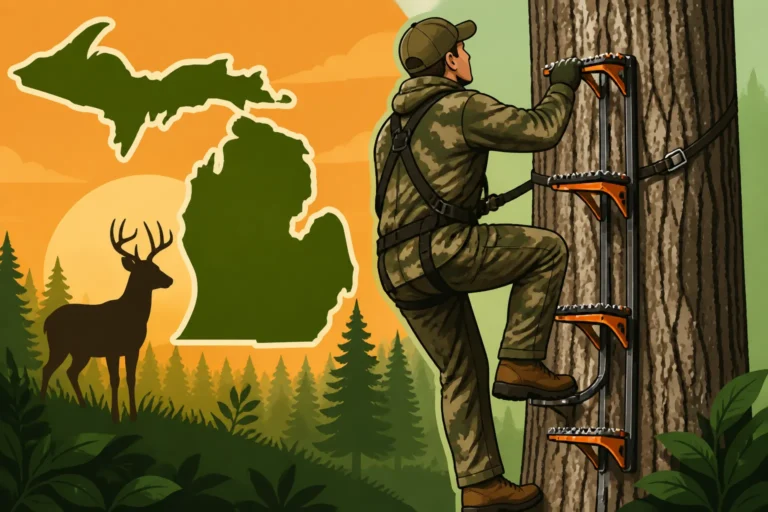
Safety should always be your number one priority. Before you even think about climbing, always wear a full-body safety harness and use a lifeline. This should be a non-negotiable part of your routine. Attach your harness to the tree before you start climbing the sticks, using a lineman's belt to maintain three points of contact as you ascend and attach each stick.
When installing, start from the bottom. Place your first stick low enough to step onto comfortably from the ground, ensuring it's level. Work your way up, attaching each subsequent stick one at a time. As you attach a new stick, secure it tightly, then use your lineman's belt to remain safely attached to the tree while you reach for the next section. Overlap sticks slightly if possible, creating a sturdy, continuous ladder. Test each stick's stability with your weight before proceeding to the next one. Many experienced hunters will use a pull rope to hoist their stand up after the sticks are set, preventing unnecessary noise and freeing up their hands during the climb.
Practice is key. Set up your sticks in your backyard or a local woodlot before hunting season. Get comfortable with the motions, the sounds, and the feel of climbing. This not only builds confidence but also helps identify any potential gear issues in a safe environment.
Overcoming Crooked and Irregular Trees
Michigan's hardwoods aren't always perfectly straight telephone poles. You'll encounter trees with limbs, leans, and irregular barks. This is where climbing sticks shine compared to a traditional climbing stand.
- Navigating Limbs: If a small limb is in the way, you can often place a stick just above or below it. For larger limbs, you might need to offset a stick to one side, or even skip a section and use a longer step between sticks. The key is to find secure contact points for the straps or chains, even if it means placing the stick slightly off-center on the trunk.
- Leaning Trees: When dealing with a leaning tree, ensure your sticks are still oriented vertically to maintain comfortable and safe footing. The straps should be able to cinch tightly around the lean without slipping. Sometimes, a slightly wider stance with the sticks can help distribute weight and maintain stability on a non-vertical trunk.
- Irregular Bark: Trees like mature oaks can have very rough, deeply furrowed bark. While this offers excellent grip for friction-based systems, it can sometimes interfere with straps finding a flat purchase. Look for areas where the bark is relatively consistent, and always double-check that your strap is fully seated and not just resting on a high point of bark. Softer barked trees, like some aspens, might require extra vigilance to ensure the stick isn't digging in too much or slipping.
Remember, the goal is a safe and stable climb. If a tree feels too unstable or presents too many challenges, it’s always better to find another tree. There are always other options, especially when you're using tools like Scouting Michigan Public Land Before Season to pinpoint multiple potential stand sites.
Strategic Placement for Optimal Hunting Angles
Beyond just getting up the tree, where you place your sticks dictates your entry and exit paths, and ultimately, your shooting lanes.
- Shot Angles: Before you even start climbing, visualize your likely shot opportunities. Place your stand and sticks so that you have clear lanes to where you expect deer to approach. This might mean climbing on the side of the tree that faces away from the primary deer trail, allowing you to draw your bow or shoulder your rifle without being silhouetted.
- Concealment: Use the tree's natural cover to your advantage. Try to climb on the side of the tree that offers the most limb structure or foliage for concealment. Even bare branches can help break up your outline in late season.
- Entry and Exit: Your sticks create your path to and from the stand. Consider prevailing wind direction and how your approach path will affect deer. Try to make your entry path as quiet and concealed as possible. If you need to walk along a field edge, ensure your stick setup is hidden from view until you're ready to climb. Remember, the top section of your sticks should be easily accessible from your stand platform. For Michigan's notorious swamp edges, thoughtful placement is key. Hunting Michigan Swamp Edges for Deer highlights how crucial this can be.
A common mistake is placing sticks in a perfectly straight line directly up the tree. Often, a slight spiral around the trunk or a slight offset can provide better concealment, break up your silhouette, and make it easier to reach your stand platform without making excessive noise.
Combining Sticks with Different Stand Types
Climbing sticks truly shine when paired with other stand systems, offering a versatility that’s hard to beat in the Michigan woods. Whether you prefer the solid stance of a hang-on or the minimalist approach of a saddle, sticks provide the foundation for a stealthy and adaptable hunting setup. Understanding how to integrate them effectively is key to maximizing their potential.
Paired with Hang-On Stands
The most common and effective pairing for climbing sticks is with a hang-on treestand, sometimes called a "fixed-position" stand. This combination is a staple for mobile hunters across Michigan. You climb the sticks, reach your desired height, and then hoist your hang-on stand up with a rope, securing it to the tree just above your last stick.
The advantage here is immense. Hang-on stands are generally lighter than climbing stands, especially those designed for mobile hunting. They offer a stable platform, and once secured, they provide a comfortable perch for long hours on stand. With sticks, you can position your hang-on stand in virtually any tree, regardless of its straightness or the presence of lower limbs, which would be impossible with a traditional climber. This freedom allows you to pick the absolute best tree for your setup, optimizing for cover, wind direction, and shot opportunities. Hanging a Stand on a Swamp Edge discusses how this versatility can be a lifesaver.
When setting up, ensure the top stick is close enough to your hang-on stand to allow a smooth, safe transition from the stick to the stand platform. You should be able to step onto your platform without reaching or straining, maintaining three points of contact. Always use your lineman's belt to remain secure while hanging your stand.
Integrating with Saddle Hunting Systems
Saddle hunting has exploded in popularity, and climbing sticks are an integral part of this minimalist, ultra-mobile approach. A saddle hunter uses climbing sticks to ascend the tree, but instead of a large stand platform, they often use a very small platform or even just one of their top stick steps to stand on, while being tethered to the tree via their saddle.
This system offers incredible 360-degree shot capability, as you can pivot around the tree with your saddle. Climbing sticks are perfect for this because they are lightweight and packable, complementing the minimalist nature of saddle hunting. Many saddle hunters will use fewer sticks than a hang-on hunter, focusing on getting to a certain height and then often repositioning their climbing aid (like an aider attached to a stick) to gain additional height or better foot placement.
The key to integrating sticks with a saddle is to understand your desired hunting height and how to quietly and efficiently set your tether and platform. The sticks get you up, and the saddle keeps you safe and mobile around the tree. This combo is exceptionally good for hunters who need to adapt constantly, like during the peak of the rut, or when hunting highly pressured public land where deer are constantly moving and unpredictable. Hunting the Peak Rut Week in Michigan demands such flexibility.
Considerations for Ground Blinds (as an alternative/complement)
While not a direct pairing with climbing sticks, it's worth noting that if tree access proves impossible or conditions demand it, ground blinds offer a completely different solution. Sometimes, despite all your efforts, you simply can't find a suitable tree, or the cover on the ground is so dense that a ground blind offers superior concealment.
However, even when using a ground blind, understanding terrain and scouting for entry/exit routes remains paramount. And for some hunters, having a set of lightweight climbing sticks in the truck or at camp offers a fallback plan – if the ground blind isn't working out, or if a better tree-stand opportunity presents itself unexpectedly, they have the gear to go vertical. This shows the general flexibility that mobile hunting gear provides, allowing hunters to adapt to whatever Michigan's varied landscape throws at them. Using a Ground Blind on Michigan State Land is a good resource for these alternative strategies.
Maintenance and Longevity of Your Climbing Sticks
Your climbing sticks are vital pieces of safety equipment, and like any other critical gear, they require proper care and maintenance to ensure they perform reliably season after season. Neglecting your sticks can lead to premature wear, potential safety hazards, and frustration in the field. A little attention off-season can save you a lot of headaches come hunting season.
Post-Season Cleaning and Storage
Once the hunting season wraps up, it's tempting to just toss your gear in the garage and forget about it. Resist that urge! Taking a little time to clean and properly store your climbing sticks will significantly extend their lifespan.
- Clean Thoroughly: Remove all mud, dirt, sap, and any other debris from your sticks. A stiff brush and warm soapy water usually do the trick. Pay close attention to pivot points, cam buckles, and strap attachment areas where grime can build up and impede function. For aluminum sticks, this also helps prevent corrosion from prolonged exposure to dirt and moisture. For steel sticks, cleaning off moisture is crucial to prevent rust, especially if any protective coatings are scratched.
- Dry Completely: After cleaning, ensure your sticks are completely dry before storing them. Trapped moisture is the enemy, leading to corrosion on metal components and degradation of straps. Hang them in a well-ventilated area for a day or two.
- Inspect Straps: Carefully examine all straps for fraying, cuts, excessive wear, or UV damage. If a strap looks questionable, replace it. It's much cheaper and safer to replace a strap than to risk a fall.
- Lubricate Moving Parts: If your sticks have any pivot points or cam buckles, a light spray of a dry lubricant (like silicone spray) can keep them operating smoothly and quietly. Avoid oily lubricants that can attract dirt.
- Store Properly: Store your sticks in a cool, dry place, away from direct sunlight. Excessive heat and UV exposure can degrade plastics and webbing over time. If they came with a carry bag, use it to protect them from dust and dings. Stacking them neatly helps prevent damage and keeps your gear organized for the next season.
Inspecting for Wear and Tear
Before every hunt, and certainly before the start of each season, give your climbing sticks a thorough inspection. This isn't just about cleaning; it's about actively looking for potential failures.
- Metal Components: Check for cracks, bends, or deformities in the aluminum or steel. Pay special attention to welded joints or areas where sections connect. Even a hairline crack can compromise the structural integrity. Check step welds or rivets to ensure they are secure.
- Attachment Hardware: Examine all buckles, pins, and connection points. Do the cam buckles still grip firmly, or do they slip? Are any pins bent or worn? If your system uses nuts and bolts, ensure they are tight.
- Webbing/Straps: Look closely at the entire length of each strap. Fraying near buckles, cuts from sharp bark, or discoloration from sun exposure are all red flags. A strap that has lost its strength won't hold. If there's any doubt, replace it.
- Noise Check: Give the sticks a shake when assembled. Do they rattle or creak? Identify the source of the noise and address it. Sometimes it's a loose bolt, other times it might indicate a worn connection point. A quiet system is a safe and effective system.
This meticulous inspection becomes second nature over time, and it's a small price to pay for peace of mind when you're 20 feet up in a tree waiting for a Michigan buck.
Field Repairs and Emergency Fixes
While proper maintenance minimizes the need for field repairs, things can happen in the woods. Being prepared for minor issues can save a hunt.
- Broken Strap: Always carry a spare cam strap or a length of heavy-duty rope in your pack. If a strap breaks or frays beyond repair, you need an immediate replacement. Make sure the replacement is strong enough for the job.
- Loose Bolt/Pin: A small multi-tool with various wrenches and screwdrivers can tighten loose bolts or adjust pins. A roll of electrical tape or heavy-duty zip ties can temporarily secure rattling parts until you can make a permanent repair.
- Stuck Sections: If sectional sticks become difficult to separate or assemble due to dirt, a small, collapsible cleaning brush or a damp cloth can help clean out the connection points. A little patience and gentle wiggling are often more effective than brute force, which can bend components.
Remember, field repairs are usually temporary. Once you're out of the woods, assess the damage and decide whether the stick needs professional repair or replacement. Never compromise on safety. If a critical component breaks and you can't make a secure, reliable field repair, don't climb the tree. It's far better to hunt from the ground or pack it in for the day than to risk injury. For extended backcountry hunts in the Upper Peninsula, these small emergency kits are even more critical. First Aid Kits for Remote Upper Peninsula Ground is a good read on broader preparedness.
Disclaimer
This article is for general informational purposes only and does not constitute professional advice. Laws, prices and regulations vary by location and change over time. Consult a qualified professional for guidance on your specific situation.