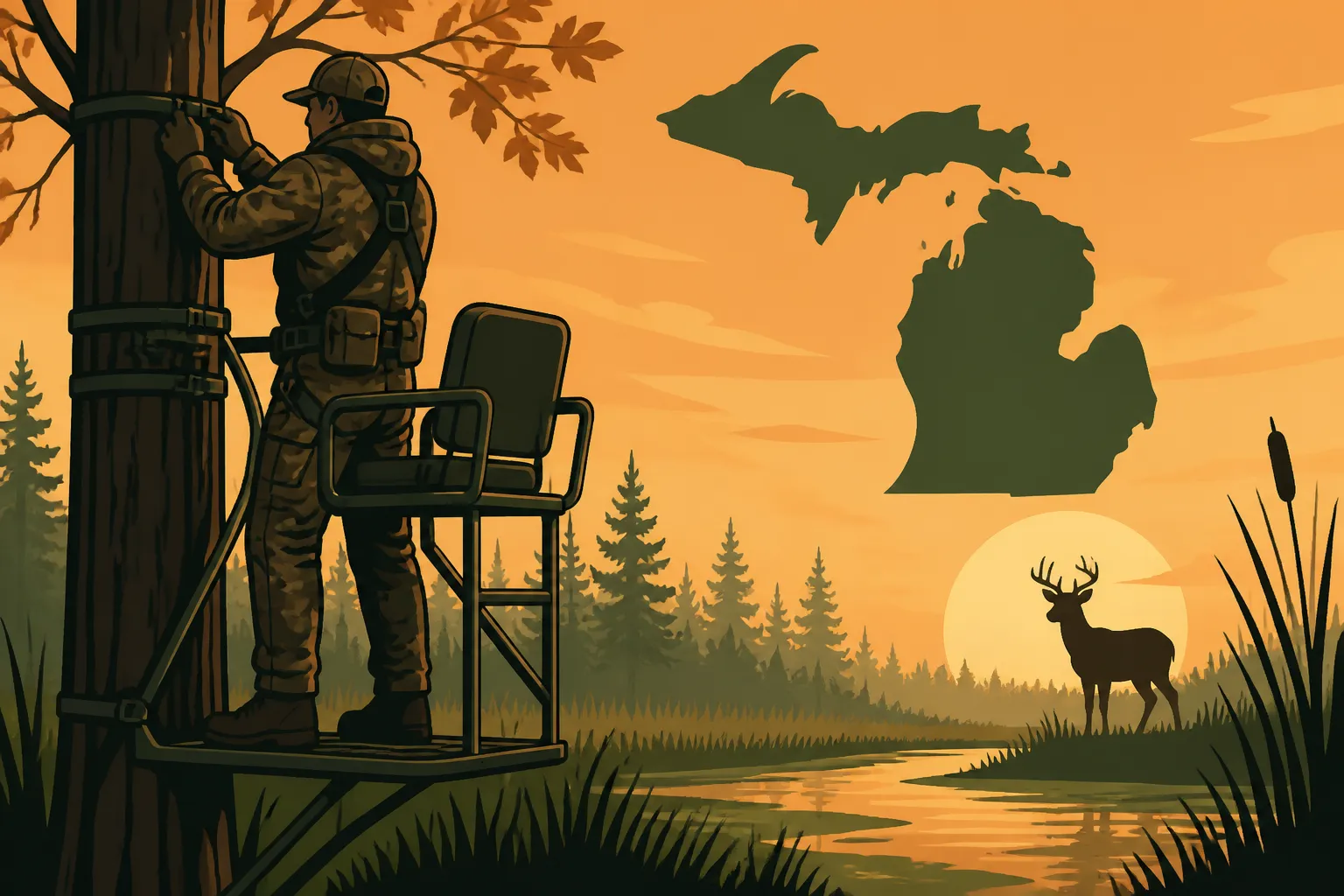
Hanging a Stand on a Swamp Edge
Finding that perfect spot where a mature buck feels safe enough to travel during daylight hours, especially on heavily pressured public land here in Michigan, can feel like searching for a needle in a haystack. But if you're willing to get your boots wet and brave some thick cover, swamp edges often hold the key to consistent deer encounters. This guide will walk you through everything you need to know about effectively scouting, selecting, and hanging a stand on these incredibly productive interfaces between wet and dry ground.
Why Swamp Edges are Deer Magnets in Michigan
Swamp edges are, without a doubt, some of the most overlooked and productive areas for deer hunting in Michigan. Many hunters shy away from the dense, often soggy environment, but that's precisely why deer love them. These unique habitats offer a combination of security, resources, and predictable travel routes that are hard to beat, especially when the hunting pressure ramps up.
The Draw of Cover, Food, and Water
Michigan's swamps, whether they're sprawling cedar lowlands, tag alder thickets, or cattail marshes, provide an unparalleled sense of security for whitetails. Deer know that most humans are reluctant to push through the mucky, brushy terrain, especially when it gets cold. This thick cover acts as a sanctuary, allowing deer to bed, browse, and move with a sense of safety that open hardwoods or agricultural fields just can't offer. You'll often find deer bedding deep inside these swamps, only to emerge along the edges to feed.
Beyond security, swamps are often incredibly rich in food sources. While it might not always be the acorns or standing corn you're used to, browse in a swamp can be abundant year-round. Think about dogwood, willow, various sedges, and young saplings that thrive in moist conditions. These plants provide vital nutrition, particularly during the late season when other food sources have been depleted or covered by snow. And, of course, a swamp is a perpetual water source. Deer don't have to venture far for a drink, making these edges prime locations for activity, especially in drier years or during the warmer parts of the hunting season. This combination of shelter, sustenance, and hydration makes swamp edges a complete package for deer survival.
Natural Travel Corridors and Funnels
One of the most critical aspects of swamp edges is their role as natural travel corridors and funnels. Deer, like all animals, are creatures of efficiency. They will always take the path of least resistance when moving from point A to point B, especially if that path offers security. The transition zone, or edge, where a swamp meets drier ground – be it a hardwood ridge, a pine plantation, or even a field – creates a natural highway. Deer will skirt these edges, using the dense cover of the swamp for concealment while still being able to observe their surroundings on the drier, more open side.
During the rut, these edges become even more crucial. Bucks will cruise these corridors, scent-checking for does that might be moving in and out of the swamp. You'll often find well-worn trails running parallel to the swamp line, sometimes with multiple parallel trails indicating heavy usage. Think of pinch points where the swamp narrows, or where it extends a finger into a more open area; these are classic funnels that can concentrate deer movement significantly. Identifying these key travel routes is paramount to successful stand placement. We cover more on how deer use these areas in our guide on Hunting the Michigan Rut in November.
Scouting and Locating Your Ideal Stand Site
You can't just blindly pick a tree along a swamp edge and hope for the best. Effective scouting is the backbone of success, allowing you to understand deer movement patterns and pinpoint the exact spot for your stand. It's about putting in the groundwork before the season starts, leveraging both digital tools and good old-fashioned boot leather.
Reading the Landscape: What to Look For
When you're walking a swamp edge, you're not just looking at trees; you're trying to read the story the deer are telling. Start by identifying well-used deer trails. Look for beaten-down paths, fresh tracks in mud or soft earth, and droppings. Pay close attention to where these trails intersect or bottleneck. Are they leading from thick bedding cover deep in the swamp to a known feeding area? Are they connecting two different pockets of cover? In our guide Reading a Michigan Cedar Swamp for Deer, we dive deeper into understanding these unique habitats.
Next, keep an eye out for rubs and scrapes, especially as the pre-rut and rut approach. Rubs on trees along the edge indicate that bucks are actively using that travel corridor. Scrapes, particularly large ones, are communication hubs for deer. If you find a series of scrapes along a swamp edge, you've likely found a major travel route. Also, consider the specific type of swamp edge you're scouting. A hard edge where a cedar swamp abruptly meets a hardwood ridge will often concentrate deer more than a gradual transition zone. Tools like satellite imagery from platforms such as GoHunt, or the Michigan DNR's Mi-HUNT map, can be invaluable for identifying these transitional zones and potential funnels from the comfort of your home. You can often spot subtle topographical changes or changes in timber type that indicate a productive edge.
Entry and Exit Strategy Considerations
Once you've identified a promising spot, the real strategic work begins: planning your entry and exit. This is where many hunters unknowingly spook deer, ruining their hunt before it even starts. The goal is to approach and leave your stand completely undetected. Your first consideration should always be the wind. Deer have an incredible sense of smell, so you must plan your approach and hunt with a consistent wind direction that carries your scent away from where you expect deer to be. Remember that thermals can play a significant role, especially in hilly terrain or during early morning and late evening hunts, causing air currents to rise or fall. Understanding Wind and Thermals on Michigan Ridges is crucial, even if your swamp edge is relatively flat, as air currents will still move across the landscape.
Think about your access route. Can you use a ditch, a creek bed, or a dense line of brush to sneak in? Is there a two-track or old logging road that can get you close without disturbing the core area? The less ground you cover where deer are actively moving, the better. Consider setting your stand up so your primary shooting lanes are not along your entry and exit paths. This minimizes the chance of spooking deer as you come and go. Sometimes, the best entry might involve a slightly longer walk to ensure you're approaching from the downwind side and staying hidden. It's a delicate balance, but a well-executed entry and exit strategy can be the difference between seeing deer and seeing nothing but squirrels. Our article on Entry Routes on Flat Michigan Ground offers more specific advice.
The Art of Hanging a Stand on a Swamp Edge
You've scouted, you've located the sweet spot, now it's time to get that stand up. This isn't just about finding any old tree; it's about selecting the right one, ensuring your safety, and making sure your setup provides the best possible advantage without alerting the keen senses of a whitetail.
Choosing the Right Tree and Stand Type
The tree you choose for your stand on a swamp edge is paramount. First and foremost, it must be alive, sturdy, and healthy enough to safely support you and your gear. Avoid any trees with visible rot, large dead limbs overhead, or signs of disease. Look for a tree that offers natural cover and breaks up your silhouette. A gnarly oak or a multi-trunked maple often works better than a perfectly straight, bare poplar. Ideally, you want a tree that's on the edge of the swamp, offering you views into the swamp itself and out onto the drier ground, giving you maximum visibility of those crucial travel corridors.
When it comes to stand types, hang-on stands are often the most versatile for swamp edges, especially if you're hunting public land. They are relatively lightweight, allow for precise placement, and with a good set of climbing sticks, you can get into almost any suitable tree. Ladder stands can work if you have a more permanent setup on private land or an easily accessible public land spot, but their bulk makes them less ideal for deep incursions into thick cover. Ground blinds can also be highly effective along swamp edges, especially for those who prefer not to hunt from a height or where suitable trees are scarce. Just remember to brush them in thoroughly for maximum concealment, as discussed in Using a Ground Blind on Michigan State Land. Always use a full-body safety harness from the moment your feet leave the ground until they touch back down. It's not optional; it's essential.
Table: Stand Type Considerations for Michigan Swamp Edges
| Stand Type | Pros | Cons | Ideal Use Case |
|---|---|---|---|
| Hang-On | Lightweight, portable, precise placement, good for public land, adaptable to many trees. | Requires climbing sticks, more setup time, can be tiring to carry in. | Mobile hunter, scouting new spots, irregular-shaped trees, public land. |
| Ladder | Stable, comfortable, easy access once set up, good for all-day sits. | Heavy, bulky, difficult to move, limited to trees with clear access, less stealthy. | Private land, permanent setups, easily accessible areas, youth hunting. |
| Ground Blind | Highly portable (pop-up), excellent concealment, comfortable, good for multiple hunters. | Limited visibility, scent containment can be an issue, requires thorough brushing in. | Pressured areas, lack of suitable trees, cold weather, accessible edges. |
Optimizing Shooting Lanes and Concealment
Once your stand is securely hung, the next critical step is to optimize your shooting lanes and ensure maximum concealment. The goal here is to trim just enough to give you clear shots at anticipated deer travel routes, but not so much that you stand out like a sore thumb. A common mistake is to over-trim, essentially creating a "hole" in the canopy that screams "hunter!" Instead, trim only what is absolutely necessary, focusing on lanes that give you a clear shot to the vitals of a deer at various distances and angles. Think about your bow or gun clearances at full draw or while shouldering, especially if you're hunting with a crossbow.
Beyond trimming, actively work to break up your outline. Utilize natural branches and foliage around your stand to create a "blind" effect. You can even strategically tie in some natural camo from the surrounding area (e.g., cedar boughs or cattails) if permitted and done subtly. Your clothing, including your hunter orange during firearm season, also plays a critical role. Ensure you're not silhouetted against the sky or a light background. Being one with the tree and its surroundings is key. Remember, deer are constantly looking for unnatural shapes and movements. A well-concealed stand, even if it feels a little tight, will always be more effective than a wide-open setup. We've got more tips on effective Treestand Setups in Michigan Hardwoods that apply to edges as well.
All-Season Strategies for Swamp Edge Stands
Swamp edges aren't just good for one phase of the hunting season; they offer consistent opportunities from early archery right through Michigan's late antlerless seasons. Understanding how deer utilize these areas at different times of the year is crucial for maximizing your chances.
Early Season to Mid-Season Tactics
During the early archery season, when Michigan's weather can still be warm, deer are often highly focused on available food and water. Swamp edges that border agricultural fields, oak ridges, or areas with abundant soft mast (like crabapples or wild berries) become incredibly active. In these early weeks, deer movement is often predictable, centered around feeding patterns. Your swamp edge stand should ideally be positioned where deer transition from thick swamp bedding to a preferred food source. Consider morning hunts when deer are moving back into the swamp to bed after feeding all night, or evening hunts as they emerge.
As mid-season approaches, leading up to Michigan's critical How Michigan's Archery Split Works, deer activity can sometimes slow down, but the swamp edges remain vital. Bucks might start making more rubs and scrapes, indicating the impending rut. Focus on those funnels and pinch points you scouted earlier, as deer are now starting to expand their home ranges and travel more. The consistent cover and water in the swamp means deer are always nearby, making these edges reliable even when other areas go quiet. It's a great time to be sitting, especially if you've got a detailed map from GoHunt that shows bedding areas in the swamp relative to nearby food.
Rut and Late Season Opportunities
When Michigan's rut really kicks into high gear in November, coinciding with much of Michigan's November Firearm Deer Season, swamp edges become absolute hotspots. Bucks are now actively seeking does, and they'll use these secure travel corridors to move efficiently and safely. A buck cruising a swamp edge can pop out at any moment. Your stand placement should anticipate these cruising routes. Look for areas where the swamp forms a finger into drier ground or where two sections of swamp almost meet, creating a natural bottleneck. These are prime locations for intercepting a mature buck looking for a hot doe. The security offered by the swamp cover is especially appealing to older, wiser bucks who are wary of open areas during daylight.
As the late season rolls in, often after the main firearm seasons, and hunters are targeting deer during Michigan Late Antlerless Firearm Season, swamp edges continue to produce. While deer movement can become more limited due to cold weather and snow, these areas provide crucial thermal cover. Cedar swamps, in particular, offer dense canopy that traps heat and provides shelter from harsh winds and heavy snow. Deer will yard up in these areas, concentrating their activity. Finding swamp edges that offer both thermal cover and access to any remaining food sources, like standing browse or overlooked pockets of acorns, can lead to late-season success. Understanding Late-Season Food Sources for Whitetails is essential for positioning your stand correctly during these colder months. The deer's need for security and warmth will often draw them to these edges.
Disclaimer
Hunting is an inherently dangerous activity. Always prioritize safety by wearing a fall-arrest system when hunting from a treestand, inspecting your equipment regularly, and being aware of your surroundings. Consult the latest Michigan Department of Natural Resources regulations before every hunting season, as rules and dates can change. The information provided here is for educational purposes and should not replace professional guidance or official state regulations.