Which Michigan Counties Restrict Rifles
It's incredibly frustrating when you're trying to plan a deer hunt in Michigan, only to discover there are different rules for different parts of the state. One of the biggest head-scratchers for many hunters, especially those new to Michigan or coming from areas with fewer restrictions, is the "Limited Firearm Deer Zone." You’ve got your favorite rifle, your trusty ammunition, and then suddenly you hear whispers of certain counties where your go-to setup might not be legal. This guide is all about clearing up that confusion, specifically addressing which Michigan counties have rifle restrictions and what it means for your hunting plans and gear choices.
Pinpointing Michigan's Limited Firearm Deer Zone
Michigan, with its diverse landscapes ranging from dense northern forests to sprawling southern farmlands, has a unique approach to firearm regulations, especially concerning deer hunting. The primary reason for these restrictions boils down to public safety and population density. In areas with a higher concentration of homes, roads, and non-hunting recreational users, the state implemented rules designed to reduce the risk of a high-powered rifle bullet traveling long distances. This led to the creation of what's often referred to as the "Limited Firearm Deer Zone," or sometimes just the "shotgun zone."
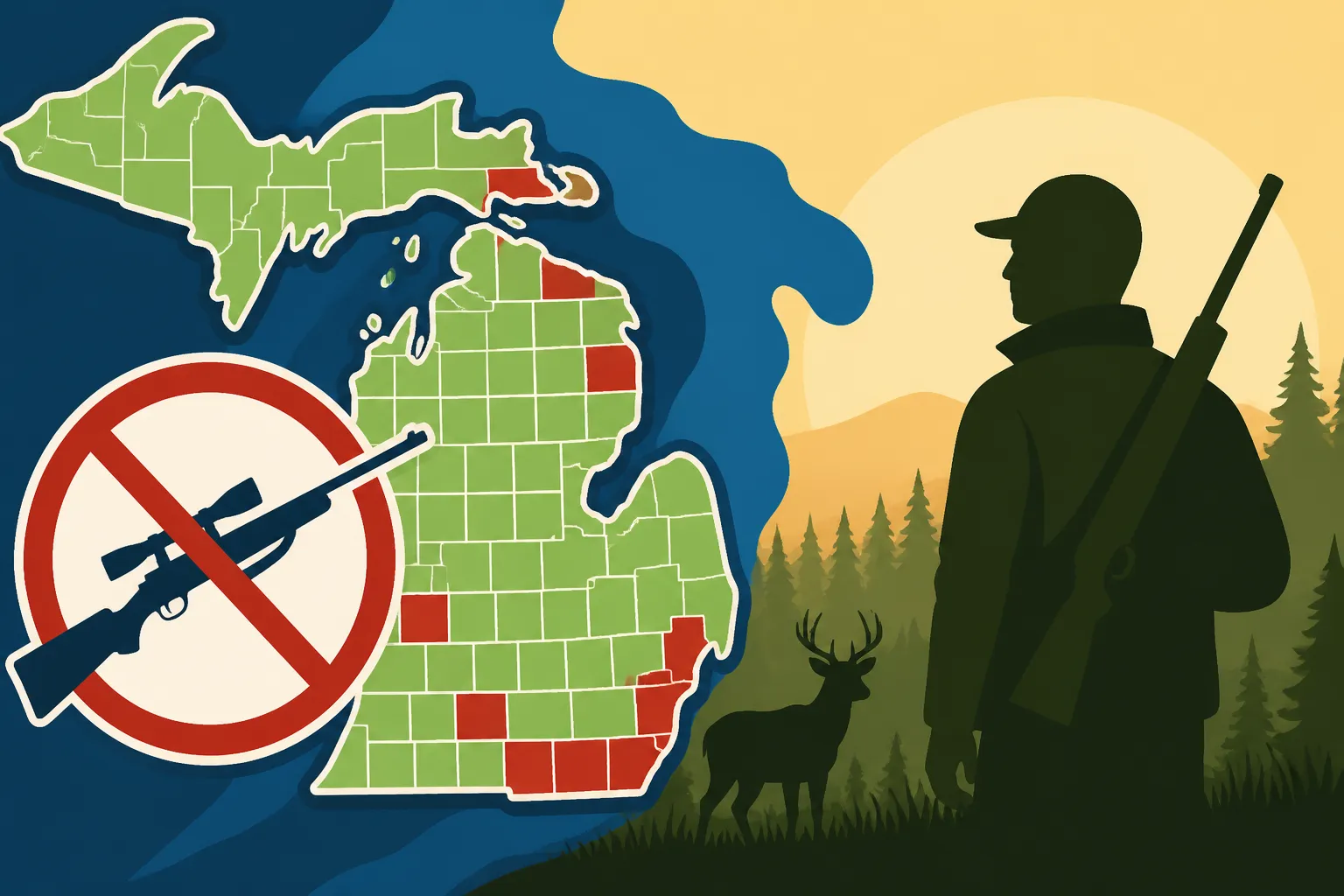
This zone encompasses a significant portion of the Lower Peninsula, primarily the southern two-thirds. Geographically, it generally lies south of a line that begins at the southern border of Oceana County, runs east across the state, and then goes north along the eastern side to include parts of the Thumb region. Understanding this line is crucial, as crossing it, even by a few miles, can mean the difference between a legal firearm and one that's not. The counties entirely or partially within this zone are numerous, and it's essential for hunters to know if their intended hunting ground falls under these specific regulations.
Historically, this zone was strictly "shotgun-only" for deer hunting during the firearm season. This rule was established decades ago when shotguns, particularly those firing slugs, were perceived to have a more limited range compared to rifles, making them safer for more densely populated areas. Over time, advancements in slug technology and the introduction of specialized slug guns blurred these lines somewhat, but the fundamental restriction remained. The underlying principle was always about minimizing the potential for stray bullets to travel far and wide, particularly in areas with more people and infrastructure.
The counties entirely within this zone include, but are not limited to: Allegan, Barry, Bay, Berrien, Branch, Calhoun, Cass, Clinton, Eaton, Genesee, Gratiot, Hillsdale, Huron, Ingham, Ionia, Jackson, Kalamazoo, Kent, Lapeer, Lenawee, Livingston, Macomb, Monroe, Montcalm, Muskegon, Oakland, Ottawa, Saginaw, Sanilac, Shiawassee, St. Clair, St. Joseph, Tuscola, Van Buren, Washtenaw, and Wayne. Additionally, some northern counties have their southern portions within this zone, such as Oceana, Newaygo, Mecosta, Isabella, Midland, and Arenac. It's truly a substantial part of the Lower Peninsula, affecting a huge number of hunters.
Understanding Legal Firearm Options in the Restricted Zone
So, if your go-to deer rifle isn't allowed, what can you use in Michigan's Limited Firearm Deer Zone? The rules have evolved over time, offering hunters more versatile options beyond just traditional slug shotguns. The key is understanding the ballistic characteristics and limitations that Michigan's regulations aim to enforce.
Traditionally, shotguns loaded with slugs were the primary legal firearm for deer during the firearm season in this zone. We're not talking about birdshot here; these are specialized, heavy projectiles designed for deer. Modern slug guns, especially those with rifled barrels, can be incredibly accurate out to 150-200 yards, which is a significant improvement over the smoothbore shotguns of old. Many hunters still prefer their slug guns, having grown up using them, and they are perfectly effective deer getters in the often thick cover found in Southern Michigan Farm Country.
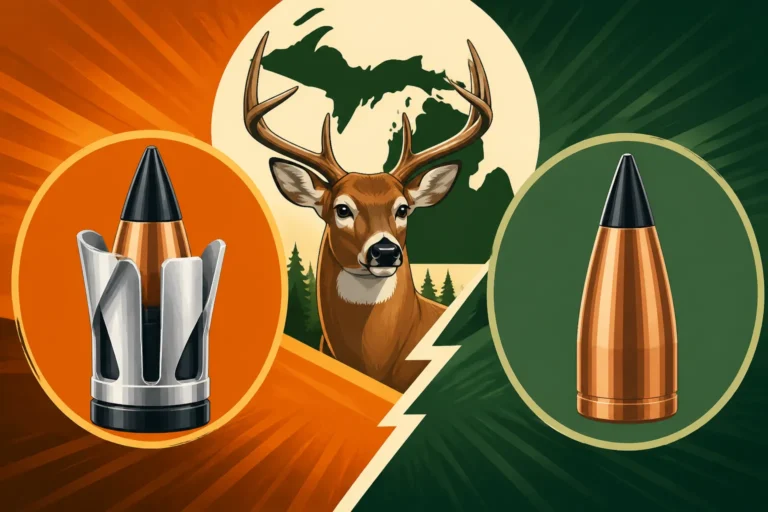
However, in recent years, Michigan significantly expanded the legal options by allowing certain straight-wall pistol cartridges to be used in rifles. This change was a game-changer for many hunters. Straight-wall cartridges, unlike bottleneck rifle cartridges (e.g., .30-06, .270, .223), have a case that is the same diameter from base to mouth, or very nearly so. They are typically used in handguns or lever-action rifles, and their ballistic profile tends to result in a quicker drop and less extreme range than bottlenecked rifle cartridges, thus fitting the safety rationale of the restricted zone. The popularity of cartridges like the .450 Bushmaster, .350 Legend, and .44 Magnum in a rifle has skyrocketed among Michigan hunters. These cartridges offer better accuracy, lighter recoil, and often more effective range than many traditional slug setups, all while adhering to the state's safety guidelines. For a deeper dive into the specifics, check out Straight-Wall Cartridges Legal in Michigan.
Beyond shotguns and straight-wall rifle cartridges, hunters also have the option of using muzzleloading firearms and handguns chambered in certain calibers. Muzzleloaders, which are single-shot firearms loaded from the muzzle, have their own dedicated season but are also legal during the general firearm season. They typically fire a large, heavy projectile, and their effective range is comparable to or slightly less than modern slug guns. Handguns, on the other hand, offer a compact option, though their effective range for humane deer hunting is generally much shorter, usually limited to under 100 yards, depending on the caliber and the shooter's proficiency.
Here's a quick comparison of the common legal firearm types in Michigan's Limited Firearm Deer Zone:
| Firearm Type | Ammunition Type | Typical Effective Range (Deer) | Key Characteristics |
|---|---|---|---|
| Shotgun | Lead or Copper Slugs | 75-200 yards | Versatile, affordable, modern slug guns offer good accuracy. |
| Straight-Wall Rifle | .450 Bushmaster, .350 Legend, .44 Mag, etc. | 150-250 yards | Rifle platform accuracy, lower recoil than some slugs, extended range. |
| Muzzleloader | Black powder/substitute, conical or sabot | 75-150 yards | Single-shot, traditional hunting, effective for close to moderate ranges. |
| Handgun (Revolver/Pistol) | .357 Mag, .44 Mag, 10mm Auto, etc. | 50-100 yards | Compact, challenging, requires excellent marksmanship for ethical shots. |
It's crucial to always verify the most current regulations, as cartridge legality can sometimes be a nuanced topic. A great tool for this is the official Michigan DNR hunting guide or the Michigan DNR Hunt Fish App.
Optimizing Your Gear and Strategy for Restricted Zones
Hunting in Michigan's Limited Firearm Deer Zone definitely influences your gear choices and how you approach your hunt. Since you're often in areas with more fragmented cover, smaller woodlots, and sometimes closer proximity to roads or homes, your setup needs to be tailored for these conditions.
When it comes to selecting your primary hunting firearm, the decision often comes down to personal preference and what you're most comfortable and accurate with. If you're coming from a state where bottlenecked rifles are the norm, embracing a straight-wall cartridge like the .450 Bushmaster in a modern bolt-action or AR-style platform might feel the most familiar. These rifles offer excellent accuracy and power, making them a top choice for many. If you prefer the tradition or feel of a shotgun, a dedicated slug gun with a rifled barrel and good optics can be incredibly effective. Consider the typical distances you expect to shoot; in many woodlots and swamp edges, shots are often under 100 yards anyway. A Rifle Scopes for Low-Light Swamps setup can perform just as well on a straight-wall carbine or slug gun as it would on a traditional rifle.
Optics considerations are paramount, regardless of whether you choose a slug gun or a straight-wall rifle. While you might not be taking 300-yard shots, you'll often be hunting in dense timber, heavy brush, or during low-light conditions at dawn and dusk. A scope with good light-gathering capabilities and a relatively low magnification range (e.g., 1-4x, 2-7x, or 3-9x) is ideal. Over-magnifying for close to mid-range shots can actually make it harder to acquire your target quickly in thick cover. An illuminated reticle can be a huge asset in the dark shadows of a cedar swamp or under a heavy canopy. Remember, in Michigan, you're looking for deer in every nook and cranny, and a clear sight picture is vital. You should still Zeroing a Rifle for Woods Distances properly, even if those distances are shorter.
Your tactical adjustments for hunting in these more populated or fragmented areas are equally important. This often means focusing on smaller pockets of cover, hunting transition zones between agricultural fields and woodlots, and paying extra attention to scent control and quiet movement. Deer in these areas are often highly pressured and pattern hunters quickly. Using natural funnels, pinch points, and understanding deer movement between bedding and feeding areas is critical. Stealth becomes even more important when you're working smaller parcels or navigating areas where deer have constant human interaction. Tools like a rangefinder, while always useful, become essential for confirming those shorter distances that might be deceiving in dense cover. Planning your Entry Routes on Flat Michigan Ground to avoid disturbing deer and being unseen by other hunters is crucial.
Resources for Staying Compliant and Informed
Navigating hunting regulations can feel like a full-time job, but staying compliant is non-negotiable. Michigan's rules, particularly concerning the Limited Firearm Deer Zone, are designed for public safety, and adherence is taken seriously.
First and foremost, always make it a habit to consult the current Michigan Hunting and Trapping Digest. This is your authoritative source for all regulations, season dates, and specific firearm rules. Regulations can change from year to year, so relying on outdated information or word-of-mouth is a recipe for trouble. The DNR usually publishes the new digest in late summer, well before archery and firearm seasons begin.
Beyond the official digest, digital mapping tools have become indispensable for Michigan hunters. Applications like GoHunt or onX Hunt offer detailed property line information, public/private land distinctions, and critically for this topic, often overlay the Limited Firearm Deer Zone boundaries directly onto the map. This visual aid can be incredibly helpful for confirming whether your hunting location falls within the restricted zone. Imagine you're hunting near a county line; a quick glance at your phone can confirm if you need to be carrying your straight-wall rifle or if your traditional bottlenecked rifle is legal. You can also use onX Layers for Michigan Land Status to confirm boundaries, especially on state land.
Understanding the physical boundaries on the ground is also vital. While maps are great, being aware of road signs, changes in landscape, and even talking to local conservation officers can provide practical, on-the-ground knowledge. Many county lines are marked, and understanding which side of a specific road or river you are on can be the determining factor. It’s not just about what firearm you carry, but also understanding Michigan Safety Zone Rules around buildings and occupied structures, which are even more relevant in these more populated areas.
Finally, talking to experienced local hunters can be an invaluable source of information. While always double-check against official regulations, seasoned hunters often have practical insights into how these rules are interpreted and enforced locally. They can also provide tips on navigating local nuances, such as Finding Ground Others Walk Past or dealing with Opening Day Crowds on Michigan State Land. Being well-informed means you can hunt confidently, legally, and ethically, making your time in the Michigan deer woods much more enjoyable. Don't forget, Michigan Hunter Orange Rules still apply in this zone during the firearm seasons, so be sure you're wearing enough to be seen!
Disclaimer
This article is for general informational purposes only and does not constitute professional advice. Laws, prices and regulations vary by location and change over time. Consult a qualified professional for guidance on your specific situation.