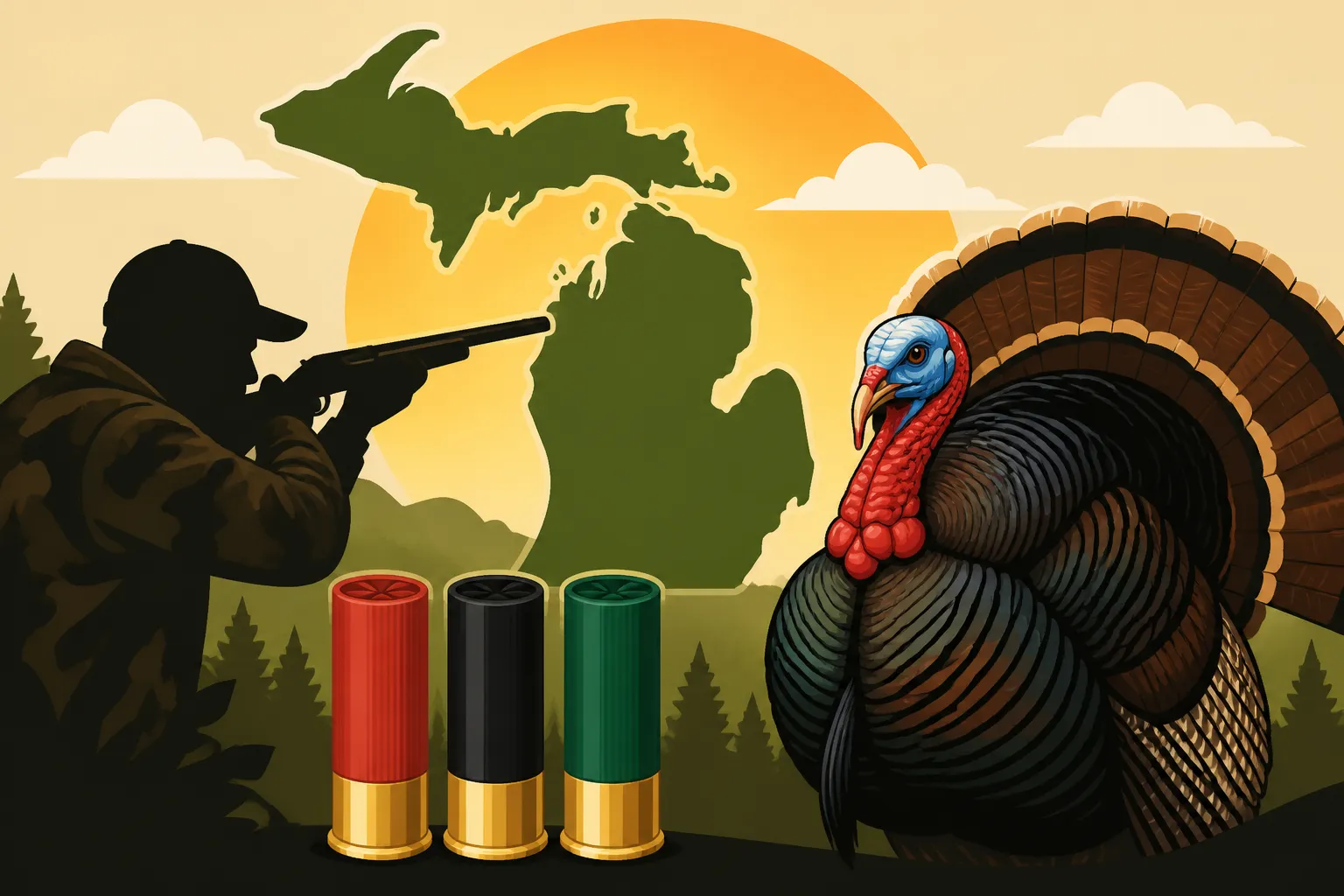
Turkey Shotgun Gauge Choice
One of the most common dilemmas Michigan turkey hunters face isn't just finding a gobbler, but feeling confident in the gear they carry when they do. With all the advancements in ammunition and shotgun technology, choosing the right gauge for your turkey shotgun can feel overwhelming. This guide will cut through the noise, helping you understand the pros and cons of different gauges so you can make an informed decision and step into the Michigan woods with the perfect setup for bagging your spring longbeard.
The Classic 12-Gauge: Power and Versatility
For decades, the 12-gauge has been the undisputed king of the turkey woods, and for good reason. It offers an incredible balance of power, range, and ammunition versatility that many hunters still swear by.
Why the 12-Gauge Remains King
The primary advantage of the 12-gauge is its sheer knockdown power and the density of its shot pattern. With a larger hull, a 12-gauge can hold more shot, whether you're talking about traditional lead, heavier-than-lead alloys, or the increasingly popular tungsten super shot (TSS). This means a greater number of pellets hitting the target, which translates to a denser pattern and more energy delivered to a gobbler's head and neck area. When that Michigan longbeard finally struts into view, whether it's at 25 yards or pushing out to 40, you want maximum confidence in your shot. The 12-gauge consistently delivers that.
Furthermore, the ammunition options for a 12-gauge are simply unmatched. Every major ammunition manufacturer produces a wide array of specialized turkey loads for the 12-gauge, from budget-friendly options to premium high-density loads. This variety allows you to fine-tune your pattern with different shot sizes and compositions, ensuring you find the perfect match for your specific shotgun and choke combination. This availability means you're rarely scrambling for ammo before the season, a common frustration for hunters using less popular gauges. It’s also adaptable; if you're out Hunting Michigan's Fall Turkey Season, you might want a slightly different load than during the spring.
The versatility of the 12-gauge extends beyond just ammunition. While you're likely setting up for a specific shot at a turkey, the 12-gauge platform itself is capable of handling everything from waterfowl to deer slugs. This means a single shotgun could potentially serve multiple hunting purposes, if that's a consideration for your gear locker. It’s a workhorse that many Michigan hunters already own, making it a familiar and comfortable choice.
Considering Recoil and Weight
Now, let's be realistic: the power of the 12-gauge comes with a trade-off, and that's recoil. Firing heavy 3-inch or 3.5-inch magnum turkey loads from a relatively light shotgun can feel like a mule kick, especially when you're hyped up on adrenaline after calling in a gobbler. This is a legitimate concern for many hunters, as excessive recoil can lead to flinching, poor shot placement, and a generally less enjoyable experience at the patterning board. It's not uncommon for hunters to develop a psychological aversion to shooting these heavy loads, which can impact their confidence in the field.
However, there are ways to mitigate this. Modern shotguns often come with advanced recoil pads that do an excellent job of absorbing felt recoil. Aftermarket pads are also available and can make a world of difference. Additionally, some hunters opt for heavier shotguns, as the added mass helps soak up some of that recoil energy. While a heavier gun might be less ideal for extensive Run-and-Gun Turkey Tactics on State Land, it can be a blessing in disguise if you're primarily sitting in a blind or Setting Up Against a Big Oak.
The weight of a 12-gauge shotgun is another factor. While not excessively heavy, a fully loaded 12-gauge, especially one equipped with an optic and sling, can feel substantial after a long hike through Michigan's sprawling state forests or a tough slog through swamp edges. For hunters who prioritize mobility or have physical limitations, this weight can be a deterrent. You need to weigh the benefits of its power against the comfort of carrying it all day, particularly when you might be Scouting Michigan Public Land Before Season for your ideal setup location.
The Agile 20-Gauge: Lighter, Faster, Just as Lethal?
For a long time, the 20-gauge was considered primarily a youth gun or a light upland gun, not a serious turkey slayer. But times have changed dramatically, and the 20-gauge has undergone a renaissance, becoming a highly effective and increasingly popular choice for turkey hunters, including many seasoned veterans.
The Rise of the 20-Gauge for Turkeys
The transformation of the 20-gauge can be largely attributed to the advent of modern ammunition, specifically tungsten super shot (TSS). TSS is incredibly dense, much denser than lead, which means smaller pellets retain more energy and penetrate deeper. A #9 TSS pellet from a 20-gauge can perform as well, if not better, than a larger lead pellet from a 12-gauge in terms of pattern density and penetration at typical turkey hunting ranges. This technological leap has truly leveled the playing field, making the 20-gauge a legitimate contender.
What this means for the hunter is that you get all the lethality needed for a clean kill, but in a much lighter and more manageable package. No longer do you need to compromise on killing power just to reduce weight or recoil. This is a game-changer for many, especially those who spend a lot of time on their feet, actively Run-and-Gun Turkey Tactics on State Land through various terrains, from mature timber to thick aspen cuts. The ability to carry a lighter firearm without sacrificing effective range or pattern density is a huge advantage.
The 20-gauge also offers a significant reduction in felt recoil compared to its 12-gauge counterpart, particularly when firing those heavy turkey loads. While still not recoil-free, the difference is noticeable and can greatly improve a hunter's comfort and confidence, both at the patterning board and in the field. This reduced recoil makes it an excellent choice for hunters who are sensitive to heavy punishment, or for those who simply want a more pleasant shooting experience.
Practical Advantages in the Field
The primary practical advantage of the 20-gauge is its reduced weight and improved maneuverability. Picture yourself deep in Michigan's public land, trying to slip through dense thickets or navigating tangled blowdowns to get into position on a gobbler that's hung up. A lighter shotgun is easier to carry for miles, less cumbersome to swing in tight spots, and quicker to shoulder when a turkey unexpectedly pops into view. This can be crucial when you're trying to Calling a Michigan Gobbler Off the Roost and need to quickly adjust your position without alerting the bird.
For youth hunters, the 20-gauge is an absolute blessing. It allows them to participate fully in the hunt without being overwhelmed by a heavy, hard-kicking firearm. When introducing new hunters to the sport, especially through programs like the Michigan Mentored Youth Licence Rules, providing them with a comfortable and effective tool is paramount to fostering a lifelong passion. A youth hunter who can confidently shoulder their shotgun and place an accurate shot is far more likely to enjoy the experience and want to return to the woods.
Furthermore, the more compact nature of many 20-gauge shotguns can be beneficial when hunting from a ground blind. In the confined space of a blind, a shorter, lighter shotgun is much easier to manage, reducing the chance of bumping the blind walls or struggling to get into a comfortable shooting position. This allows for smoother, more deliberate movements when that gobbler finally makes his appearance. Don't underestimate how vital ergonomics can be during those tense moments when everything has to come together perfectly.
Smaller Gauges: Beyond the Big Two
While the 12-gauge and 20-gauge dominate the turkey hunting scene, the advancements in ammunition have also opened doors for even smaller gauges like the 28-gauge and the .410 bore. These are definitely niche choices, but with the right approach and expectations, they can be surprisingly effective.
The 28-Gauge and .410: Niche but Capable
The 28-gauge, traditionally a favorite among upland bird hunters for its elegant swing and mild recoil, has found a new lease on life in the turkey woods, again thanks to TSS. While the payload is significantly smaller than a 12 or 20, the extreme density of TSS pellets means that a well-patterned 28-gauge can deliver enough energy and pellet count to humanely dispatch a turkey at reasonable ranges. We're talking about very specific, carefully constructed loads, but the capability is there.
Similarly, the .410 bore, once considered suitable only for squirrels or very close-range birds, has been completely transformed by TSS. A .410 loaded with high-density TSS can produce a surprisingly tight and lethal pattern out to 30-35 yards, sometimes even further depending on the gun and choke. This is a testament to how far ammunition technology has come. These smaller gauges demand a higher degree of precision in shot placement and a much stricter adherence to known range limitations. You absolutely must pattern your gun thoroughly at various distances to understand its maximum effective range. Turkey Chokes and Patterning becomes even more critical with these smaller gauges.
Hunting with a 28-gauge or .410 adds a significant challenge and a different dimension to the hunt. It forces the hunter to be incredibly patient, call turkeys closer, and execute a perfect setup. It's not a gauge for a casual long-range shot; it's for the hunter who thrives on the intricate chess match of getting a gobbler right into their lap. The margin for error is much smaller, which can be exhilarating for experienced hunters looking to push their skills.
Who These Gauges Are For
These smaller gauges are definitely not for everyone, but they cater to specific types of hunters. They are excellent options for experienced hunters seeking an ultimate challenge, a true testament to their calling and woodcraft abilities. If you consistently find yourself bringing gobblers within 20 yards through expert calling and stealth, a .410 could be a thrilling choice. It forces you to embrace the purest form of turkey hunting – getting them in tight.
For hunters with significant recoil sensitivity or those with physical limitations that make handling a larger shotgun difficult, the 28-gauge and .410 offer a viable pathway to turkey hunting. The virtually negligible recoil from these small bores, even with heavy turkey loads, can make the difference between an enjoyable hunt and one marred by discomfort. This ensures that more people can participate in the Michigan spring turkey season, regardless of their physical stature or aversion to heavy recoil.
Youth hunters, particularly smaller children or those just starting out, might also benefit from these ultra-light setups, again, with the understanding that shot opportunities will need to be at very close range. When considering a smaller gauge, remember that patience, precise shot placement, and a thorough understanding of your gun's capabilities are non-negotiable. It's about ethical hunting and ensuring a clean kill, and with these gauges, that means being disciplined about your shot distance.
Matching Gauge to Your Hunting Style and Location
Ultimately, the "best" turkey shotgun gauge isn't about what's most popular or most powerful; it's about what best suits you, your hunting style, and the specific Michigan terrain you'll be pursuing gobblers in.
Evaluating Your Typical Hunting Scenarios
Think about where and how you typically hunt turkeys in Michigan. Are you primarily Turkey Tactics for Southern Michigan Farms, often setting up on field edges or in a blind overlooking a food plot? In these scenarios, longer shots might be more common, and the extra reach and pattern density of a 12-gauge could offer an advantage. You might not be covering vast distances on foot, so gun weight might be less of a factor. Conversely, if you're hunting smaller, pressured parcels, Decoy Placement for Pressured Birds becomes crucial, and you might need a gun that patterns extremely well at more moderate ranges.
Or perhaps your hunting style is more akin to Run-and-Gun Turkey Tactics on State Land through the vast public lands of the northern Lower Peninsula or the Upper Peninsula. Here, you're covering a lot of ground, often through dense timber, hilly terrain, or swampy areas. In these situations, a lighter, more maneuverable 20-gauge or even a 28-gauge could be a significant asset, reducing fatigue and allowing you to move more silently and quickly into position. When you're trying to outmaneuver a cagey gobbler that just won't commit, every ounce and every inch matters.
Consider the typical ranges at which you get shots. Do you pride yourself on Calling a Michigan Gobbler Off the Roost and consistently bringing them within 25 yards? If so, a 20-gauge or even a smaller gauge with quality TSS loads would be more than sufficient. If, however, you anticipate or are willing to take shots out to 40 yards or more, a 12-gauge might provide a wider margin of error and more confidence. Your personal comfort level and ethical boundaries for shot distance should always dictate your choice.
Ammunition and Choke Tube Considerations
Regardless of the gauge you choose, the right ammunition and choke tube combination is paramount. This isn't just a suggestion; it's a critical step that cannot be skipped. Modern turkey chokes are designed to constrict the shot pattern dramatically, maximizing the number of pellets within a gobbler's kill zone (head and neck) at specific ranges. You wouldn't use a waterfowl choke for turkeys, just as you wouldn't use a deer slug for grouse. The importance of Turkey Shotguns and Chokes cannot be overstated.
With the advent of TSS, patterning your shotgun has become even more important. TSS loads often perform best with tighter chokes, but every gun is unique. What patterns beautifully in one 12-gauge might be mediocre in another. The same applies to 20-gauge and smaller. You absolutely must take your chosen shotgun, a variety of turkey loads, and several choke tubes to the range. Shoot at 10, 20, 30, and 40 yards to see how your patterns hold up. This process, often referred to as Turkey Chokes and Patterning, will reveal your gun's true capabilities and its maximum effective range with your chosen setup.
Don't be afraid to experiment. You might find that your 20-gauge with a specific brand of #9 TSS and an extra-full choke outperforms your friend's 12-gauge with standard lead loads. The key is knowing your gun and your load. Investing the time and money in patterning before the season starts is not just about confidence; it's an ethical responsibility to ensure a clean, humane kill. This rigorous testing will make you a much more effective and responsible turkey hunter, no matter if you're hunting in the early season When Michigan Gobblers Go Quiet or later in the hunt.
| Gauge | Pros | Cons | Typical Max Effective Range (with modern loads) | Ideal For |
|---|---|---|---|---|
| 12-Gauge | Maximum power, dense patterns, wide ammo availability, versatile platform | Higher recoil, potentially heavier | 40-50+ yards | Long-range shots, stationary setups, experienced hunters comfortable with recoil |
| 20-Gauge | Reduced recoil, lighter weight, excellent maneuverability, good power with TSS | Less ammo variety than 12-gauge, generally shorter range with lead loads | 35-45 yards | Run-and-gun hunters, youth hunters, recoil-sensitive hunters, dense cover |
| 28-Gauge | Very low recoil, extremely lightweight, great for challenging hunts with TSS | Limited ammo availability, requires extreme precision, shorter effective range | 30-35 yards | Expert callers, minimalist hunters, those seeking a challenge, very recoil-sensitive |
| .410 Bore | Minimal recoil, ultralight, ultimate challenge with TSS | Very limited ammo, demands perfect shot placement, shortest effective range | 25-30 yards | Extreme challenge, very small youth hunters, very close-range specialists |
Ultimately, the best turkey shotgun for you is the one you shoot most accurately and comfortably. Whether it's the classic thump of a 12-gauge, the agile performance of a 20-gauge, or the precise challenge of a smaller bore, make your choice, pattern it religiously, and then get out there and enjoy the magic of spring turkey hunting in Michigan.
Disclaimer
This article is for general informational purposes only and does not constitute professional advice. Laws, prices and regulations vary by location and change over time. Consult a qualified professional for guidance on your specific situation.