Layout Boats and Big Water Safety
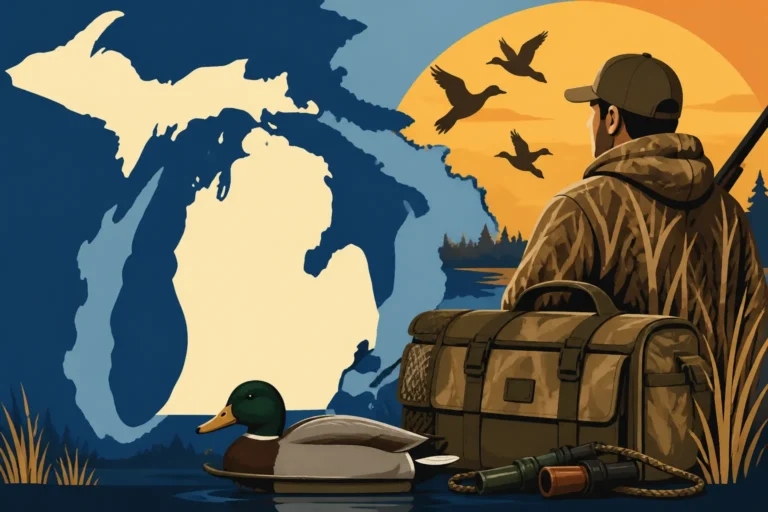
Michigan's Great Lakes offer some of the most exciting, yet inherently dangerous, waterfowl hunting opportunities in the entire country. The allure of diver ducks pouring into a well-placed layout spread is powerful, but the unforgiving nature of big water demands respect and meticulous preparation. This guide will walk you through the specifics of layout boat hunting, emphasizing the critical safety measures you need to take to ensure a successful and, most importantly, safe experience on Michigan's vast inland seas.
The Allure and Risks of Layout Hunting on Michigan's Great Lakes
What is Layout Hunting?
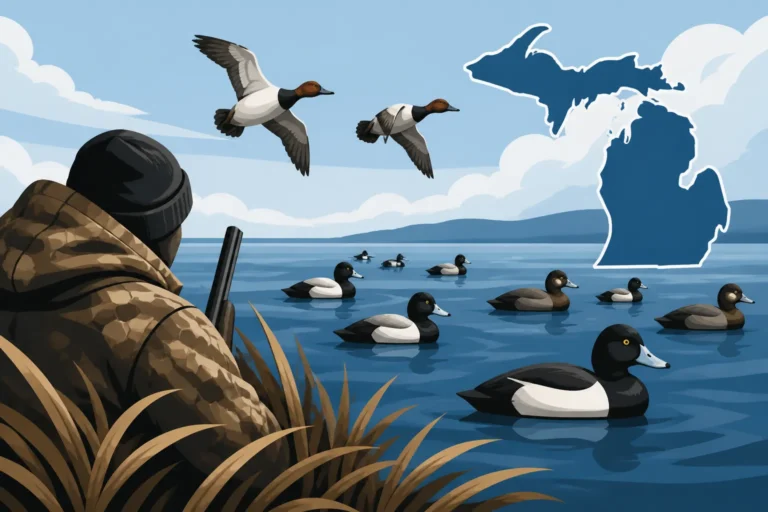
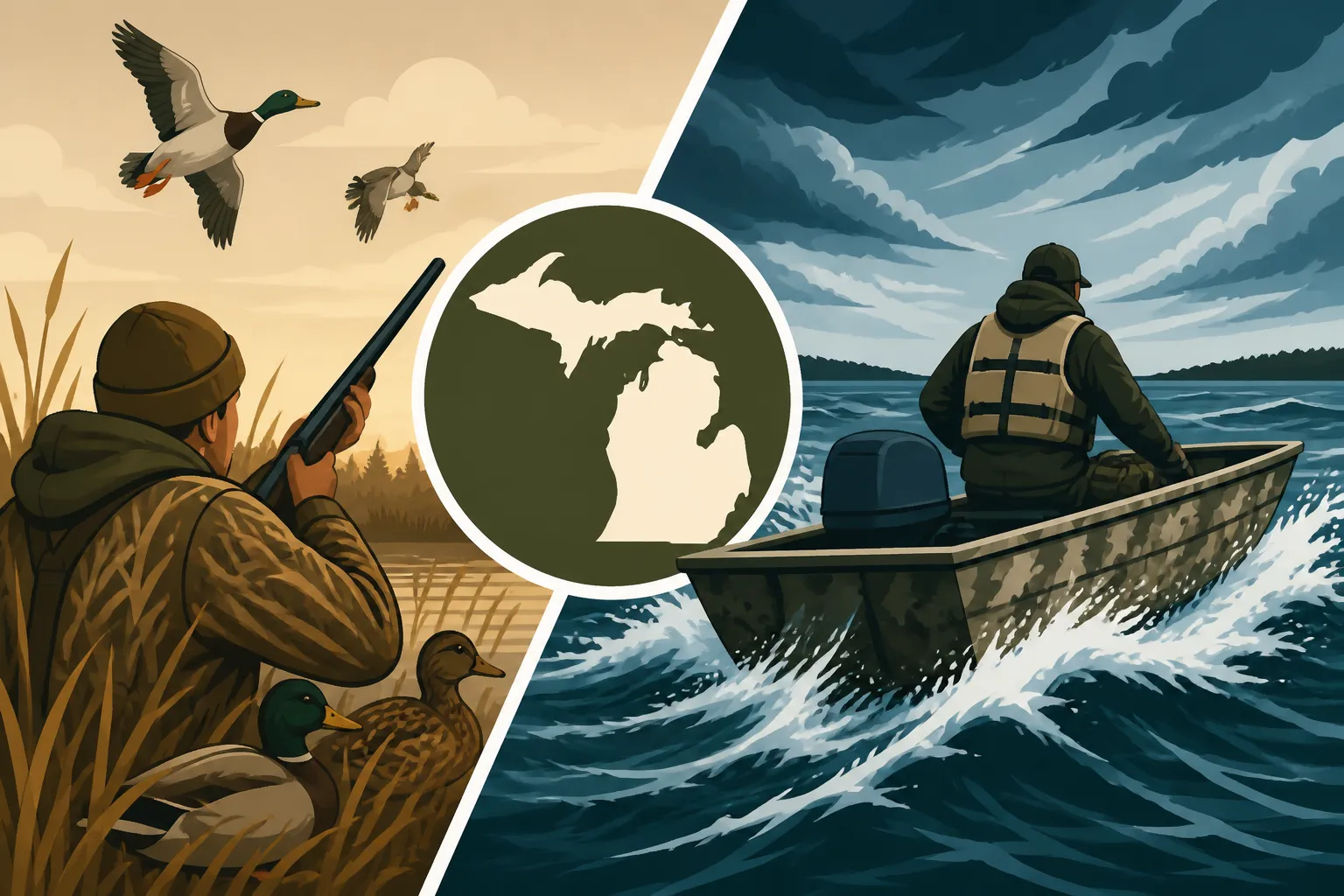
Layout hunting is a specialized form of waterfowl hunting where hunters lie prone in small, low-profile boats, often barely visible above the waterline, surrounded by a large decoy spread on big open water. The idea is to create a seamless, natural-looking spread that ducks, especially those wary diver species like bluebills, canvasbacks, and redheads, feel comfortable dropping into. You become part of the environment, a camouflaged lump among the waves, waiting for those fast-flying birds to commit. It’s an incredibly intense and rewarding experience, offering up-close encounters with birds that often shy away from traditional shore blinds or boat blinds.
Unlike hunting from a large boat blind that offers shelter and height, layout boats are designed for stealth and integration into the water. The hunter is essentially on the water's surface, offering an unparalleled perspective as ducks cup their wings and descend directly over the spread. This method allows access to prime feeding and resting grounds far from shore, areas that are often inaccessible or too deep for wading and too exposed for conventional boat blinds. The rush of a flock of ringnecks dropping into the decoys just feet from your head is something truly unforgettable. For many Michigan waterfowl fanatics, layout hunting represents the pinnacle of the sport, a test of skill, endurance, and nerve.
The true magic of layout hunting lies in its effectiveness on pressured birds. These ducks have seen it all – shore blinds, cornfield pits, even conventional boat blinds moving around the bay. But a static, nearly invisible layout boat nestled within a massive spread of decoys, miles from any shoreline, can be incredibly convincing. It creates an illusion of complete safety that often causes even the wariest of diver ducks to commit. It’s this unique advantage that draws so many hunters to the challenge, despite the significant logistical and safety considerations involved. If you're looking for that truly immersive, big water diver experience, Diver Ducks on Saginaw Bay is a great place to start, but remember the unique demands.
Why Michigan's Big Water Demands Respect
Michigan isn't just a state with big water; it's practically defined by it. Bordered by four of the five Great Lakes – Superior, Michigan, Huron, and Erie – along with massive inland bodies like Saginaw Bay and Lake St. Clair, our state offers unparalleled opportunities for open-water waterfowl hunting. However, these aren't your typical calm, protected lakes. These are vast, deep, and often unpredictable inland seas that can turn from glass-smooth to raging tempest in a matter of minutes. Many hunters, especially those new to big water, tragically underestimate the sheer power and rapid changes these environments can present.
The sheer scale of these waters is difficult to grasp until you're miles from shore, with no land in sight, watching a storm roll in. Wind, current, and wave action combine to create truly dangerous conditions. A seemingly gentle breeze on shore can translate into significant chop and even whitecaps miles out. Water temperatures, even in early fall, can be lethally cold, making immersion a critical emergency. The deep currents can pull anchor, shift decoy spreads, and make navigation incredibly challenging. It's not enough to be a good duck hunter; you must also be a competent and safety-conscious boater, prepared for anything these massive bodies of water can throw at you.
One of the biggest frustrations for Michigan hunters trying to break into big water layout hunting is this relentless unpredictability. You might plan a perfect hunt, check the forecast diligently, and still find yourself caught off guard by a sudden shift in wind or a quickly building chop. It's why seasoned big water hunters develop a profound respect for the conditions and prioritize safety above all else. They know that no duck is worth risking a life, and they understand that humility and caution are the most important tools in their tackle box when facing Great Lakes Waterfowl Hunting in Michigan.
Choosing the Right Layout Boat for Michigan Waters
Types of Layout Boats
When you're contemplating getting into layout hunting on Michigan's vast waters, one of the first big decisions you'll face is choosing the right type of layout boat. These specialized craft are designed for a singular purpose: to conceal a hunter on open water while remaining stable enough to shoot from. They're built low to the water, often with a coffin-like shape, to minimize their profile. The two primary types you'll encounter are hard-shell boats and inflatable boats, each with its own set of advantages and considerations for Michigan's unique hunting environment.
Hard-shell layout boats are typically constructed from fiberglass, rotomolded plastic, or aluminum. They are known for their exceptional durability, stability, and longevity. These boats are rigid, making them incredibly stable platforms for shooting, even in moderately choppy conditions. Their robust construction means they can withstand bumps and scrapes from ice, rocky shorelines, or submerged debris without much fuss. However, their size and weight mean they usually require a dedicated trailer or need to be transported on a larger "tender" boat. For hunters who have a primary big water boat and a permanent place to store the layout, a hard-shell boat is a fantastic, long-term investment.
Inflatable layout boats, on the other hand, offer the distinct advantage of portability. Made from heavy-duty PVC or Hypalon, they can be deflated, rolled up, and easily transported in a truck bed or even the trunk of a car. This makes them ideal for hunters who might not have a large tender boat or who need to transport their gear to different launch sites. While modern inflatables are remarkably tough, they are still susceptible to punctures, which can be a serious concern on big water. They also tend to be lighter, which can sometimes translate to a less stable platform in very rough seas, though many designs now incorporate ballast systems for improved stability.
Features to Prioritize for Safety and Success
Regardless of whether you lean towards a hard-shell or an inflatable, certain features are paramount for safety and success when hunting Michigan's big water. First and foremost is stability. You're going to be lying in this boat, potentially for hours, in shifting winds and waves. A wide beam and a low center of gravity are crucial to prevent capsizing. Look for designs that offer excellent lateral stability, allowing you to comfortably sit up and shoot without feeling like you're going to tip over. Some boats even incorporate self-bailing designs to shed any water that comes over the gunwales, a minor but crucial detail.
Next, consider visibility – a seemingly contradictory feature for a boat designed to be invisible. While the layout boat itself is low-profile, your tender boat, which serves as your command center and recovery vessel, must be highly visible. Bright orange or yellow flags, strobes, and high-visibility paint are essential for the tender boat, especially in low light or fog. For the layout boat, while camouflage is king, a small, collapsible orange flag that can be raised if another vessel approaches or in an emergency can literally be a lifesaver. You want to disappear to the ducks, but be seen by fellow boaters.
Finally, think about storage and comfort. Long hours on big water, especially during Michigan's colder Michigan Duck Season Dates by Zone, require a lot of gear: extra shells, snacks, water, calls, and crucially, warm layers. Ensure the boat has enough dry storage for these essentials. Comfort is also key; you'll be lying down for extended periods. Padded backrests, adjustable headrests, and enough room to shift positions can make a huge difference in your endurance and focus. Remember, a comfortable hunter is a more patient, and ultimately, more successful hunter.
| Feature | Hard-Shell Layout Boat | Inflatable Layout Boat |
|---|---|---|
| Durability | Excellent, robust fiberglass/plastic | Good, but potential for punctures |
| Stability | Very high, solid platform | High, but can feel more flexible |
| Portability | Low, requires trailer/tender | Very high, collapsible |
| Storage (Deflated) | Bulky, takes up space | Compact, easy to store |
| Stealth | Excellent, low profile | Excellent, low profile |
| Initial Cost | Generally higher | Generally lower |
| Maintenance | Minimal, occasional repairs | Requires care to prevent damage |
| Ideal Use | Dedicated big water hunters with tender | Versatile, transportable, single-hunter |
Essential Safety Gear for Big Water Hunting
Personal Flotation Devices PFDs
Let's be blunt: if you are layout hunting on Michigan's big water and you aren't wearing a PFD, you are making a potentially fatal mistake. This isn't just a recommendation; it's an absolute, non-negotiable requirement. The water temperatures in the Great Lakes, even on a sunny October day, are cold enough to induce cold water shock and incapacitate you in minutes, leading to hypothermia. A PFD buys you precious time and keeps your head above water, allowing you to breathe and signal for help, even if your body goes numb. It's the most basic, yet most critical, piece of safety gear you own.
There are different types of PFDs, and choosing the right one is important. Many big water hunters opt for automatic inflatable PFDs. These are comfortable and less bulky, allowing for freedom of movement and easy shooting. They inflate automatically upon water immersion, though they also have a manual inflation cord. However, for extreme cold or rough conditions, a traditional foam-filled PFD, especially one designed for cold weather with extra insulation, might be a more reliable choice. The key is to select one that is Coast Guard approved, properly fitted, and, most importantly, worn at all times while in the layout boat and on the tender boat.
The reality of cold water immersion is grim. Imagine falling into 40-degree F water. Your body immediately gasps for air, a reflexive action that can cause you to inhale water. Your muscles become useless, and within minutes, you lose the ability to swim or even tread water. This is why just having a PFD on board is not enough; it must be worn. Don't let comfort or a misplaced sense of machismo overrule common sense. Your life, and the lives of those hunting with you, depend on this simple piece of gear. For more specific guidance on staying safe in these conditions, refer to Life Jackets for Layout Hunting.
Communication and Navigation Tools
In the vast expanse of Michigan's Great Lakes, reliable communication and precise navigation are not luxuries; they are fundamental safety nets. Cell phones are notoriously unreliable miles from shore, with spotty service and batteries that drain quickly in the cold. A VHF marine radio is your primary lifeline. It allows direct communication with your tender boat, other vessels in the area, and crucially, the U.S. Coast Guard. Invest in a waterproof, handheld model with sufficient range and ensure all members of your hunting party know how to use it. Consider equipping both the layout boat (if feasible) and the tender boat with a VHF.
For navigation, a dedicated GPS/chartplotter on your tender boat is essential. This device should have pre-loaded marine charts, allowing you to see depth contours, navigation markers, and potential hazards. Before you even leave the dock, mark your intended hunting location, the launch ramp, and any emergency rendezvous points. This allows you to navigate safely in fog, darkness, or rapidly deteriorating weather. While general mapping apps like onX Hunt or even GoHunt can offer aerial imagery for scouting potential shoreline access points or broad features, they are not substitutes for marine-specific navigation tools on the open water, especially regarding accurate depth information and real-time marine weather. Always cross-reference with actual marine charts and a compass as a backup.
Beyond electronics, simple, non-powered communication and signaling devices are crucial. A whistle or air horn can alert nearby boats or your tender operator to an immediate problem. Signal flares (both aerial and handheld smoke flares) are vital for attracting attention over long distances in an emergency. Always carry a strong, waterproof headlamp or spotlight with extra batteries for pre-dawn setups and post-dusk retrievals. In a truly dire situation, a mirror can reflect sunlight to signal distant aircraft or boats. Redundancy in communication and navigation is key; if one system fails, you need another to fall back on.
Emergency and Survival Equipment
Beyond PFDs and communication, a well-stocked emergency kit is a non-negotiable for big water layout hunting. Think about what you would need if your boat broke down, you were stranded, or someone was injured. Start with dry bags – multiple of them. These should contain complete changes of warm, non-cotton clothing (wool or synthetics), spare hats, gloves, and socks. Pack a comprehensive first-aid kit capable of handling everything from minor cuts to severe trauma. Include any personal medications that might be needed. High-energy emergency rations and bottled water are also essential; you never know how long you might be out there.
Don't forget about your boat's specific needs. For your tender boat, carry spare parts and tools for common issues: a spare kill switch lanyard, extra shear pins for the prop, basic wrench sets, and electrical tape. A small anchor and sufficient line (at least 3-4 times the depth of the water you expect to hunt) are critical for both your layout boat and tender boat. In an emergency, a spare anchor could be the only thing keeping you from drifting into a dangerous area. Always ensure your anchor line has an easily accessible quick-release mechanism for your layout boat, allowing you to instantly detach and move if necessary.
Finally, consider the most basic survival tools. A good, sharp knife is always useful. A small trowel and toilet paper for personal needs. A bucket or hand pump for bailing water if your boat takes on water. Even a small paddle or oar for your layout boat can get you out of a sticky situation if your tiny trolling motor (if you use one) fails or its battery dies. For an exhaustive overview of how to prepare for the worst, read Big Water Safety in a Layout Boat. It's about being prepared for anything because on big water, anything can happen.
Understanding Michigan's Big Water Conditions
Weather Forecasting and Observation
Hunting Michigan's big water successfully, and safely, starts long before you ever leave the dock. It begins with an almost obsessive focus on weather forecasting. Michigan's proximity to the Great Lakes means our weather is notoriously volatile and can change with alarming speed. A forecast that looks benign at 4 AM can become a dangerous gale by 9 AM. You simply cannot rely on a single weather app or a quick glance out the window. You need to become a meteorologist, checking multiple sources and understanding the nuances of marine forecasts.
Prioritize marine forecasts, which provide specific information on wind speeds, wave heights, and small craft advisories for the Great Lakes. Look at hourly predictions, not just daily averages. Pay close attention to wind direction and how it might interact with the specific body of water you're hunting. A north wind on Saginaw Bay, for instance, can create drastically different wave conditions than an east wind. Also, note the air and water temperatures; a sharp drop in either can significantly impact your safety and comfort. Radar apps are your friend, allowing you to track approaching storms in real-time. If there's any doubt, any at all, err on the side of caution.
Beyond the forecast, learn to read the water and sky yourself. Before you even launch, observe the wave patterns at the ramp. Is there a consistent chop? Are whitecaps forming? Look to the horizon; are there dark, fast-moving clouds? Does the wind feel stronger than forecast? Your own senses are a critical last line of defense. If the conditions just don't feel right, if that gut feeling is telling you something, listen to it. No duck is worth risking your life. Many seasoned hunters have cancelled a hunt just by observing subtle changes that weren't fully captured by the forecast, opting for safety over a few extra birds.
Currents, Depths, and Bottom Structure
Beyond the immediate weather, understanding the underlying dynamics of Michigan's big water – its currents, depths, and bottom structure – is crucial for both safety and effective hunting. The Great Lakes are not static bathtubs; they have powerful, often unseen, currents that can make anchoring a challenge and even create dangerous situations if you're not prepared. These currents are particularly strong near channels, river mouths (think the Saginaw River emptying into Saginaw Bay, or the St. Clair River into Lake St. Clair Waterfowl Access), and points of land. A strong current can drag your decoy spread, put strain on anchor lines, and make tender boat operations incredibly difficult. Always consider how current will affect your setup and retrieval plan.
Depths are another critical factor. Layout boats are typically used in relatively shallow to moderate depths where ducks are feeding, often 5 to 20 feet, but sometimes deeper. Knowing the precise depth of your hunting spot is essential for selecting the right length of anchor line for both your layout boat and decoys. You don't want to be caught short, nor do you want excessive line fouling up your spread. Rapid changes in depth can also create unpredictable wave action, as deep water suddenly becomes shallow. Always use a reliable depth finder on your tender boat and consult detailed marine charts or a mapping app with contour lines to understand the underwater topography of your chosen area.
The bottom structure beneath your spread will dictate your anchoring strategy. Is it a soft, muddy bottom where a traditional mushroom anchor will sink in and hold? Or is it a rocky, hard bottom where a grapple anchor or a Danforth style might be more appropriate? Knowing this beforehand prevents the frustration of anchors dragging and your spread shifting. Submerged hazards like old cribs, rock piles, or even sunken logs can also be present, especially in historical shipping channels or areas near old fishing grounds. Using a tool like GoHunt for general topographical views of the surrounding land and looking at any available satellite imagery for underwater features, though less effective than marine charts, can provide some context for Scouting Michigan Public Land Before Season when planning your big water adventures.
Deployment and Retrieval Strategies
Safe Launch and Tender Boat Operation
Getting safely out to your layout spread on Michigan's big water is an art form, especially when dealing with multiple boats and heavy gear. The journey starts at the launch ramp. Always choose a launch site that offers some protection from the wind and waves, if possible. Trying to launch a tender boat with a layout boat in tow directly into a stiff crosswind or pounding waves is a recipe for disaster. Take your time, ensure all gear is properly stowed and secured on the tender boat, and check that the layout boat is tethered securely for the tow.
Your tender boat isn't just a taxi; it's your mobile command center and, most critically, your rescue vessel. It needs to be seaworthy, well-maintained, and equipped with an engine powerful enough to handle the conditions, even if they worsen. Regularly check fuel levels, battery charge, and engine function. A kicker motor, even a small one, is a wise investment for redundancy on big water. Have a designated tender boat operator who is experienced, calm under pressure, and fully understands the hunting plan, safety protocols, and, most importantly, how to quickly and safely retrieve hunters from the layout boats. Their job is to constantly monitor the conditions and ensure the safety of the layout hunters.
Before you even leave the ramp, every member of the hunting party should know the plan: where you're going, how you'll communicate, and what to do in an emergency. The tender operator should understand their role in positioning the layout boat, setting the spread, and retrieving hunters. Remember, the tender boat is essentially an escape route; it must remain operational and accessible. This meticulous planning and preparation are fundamental to a safe and successful Layout Hunting Michigan Big Water experience.
Setting the Spread and Anchoring the Layout
Once you reach your hunting location, the real work begins. First, the tender boat should find a safe, stable position, preferably upwind or upcurrent from where the layout boats will be, but far enough away not to spook incoming birds. This position should allow the tender operator to observe the layout hunters and quickly respond if needed. Next, deploy your decoy spread. This can involve hundreds of decoys, often set on long lines, mimicking a raft of feeding ducks. Consider the wind and current direction to ensure your spread looks natural and functions effectively. Use heavy anchors for your decoy lines to prevent them from dragging in the current or shifting in the wind.
After the decoys are in place, it's time to position the layout boats. Each layout boat needs to be securely anchored. A robust anchor with ample chain and line (often two anchors for greater security) is critical, especially in strong winds or currents. The anchor line should be long enough to allow for some flex with wave action but not so long that it causes the boat to drift excessively. Many hunters use a bungee section in their anchor line to absorb shock from waves. Always ensure your layout boat has an easily accessible, quick-release mechanism for the anchor line. This allows you to rapidly detach from the anchor in an emergency, such as a rogue wave, an approaching large vessel, or if you need to quickly retrieve a downed bird.
The final step is for the tender boat to drop off the hunters, one by one, into their layout boats, ensuring they are settled and have their gear readily accessible. The tender boat then retreats to its designated observation point, remaining attentive. This whole process, from launching to dropping off, needs to be practiced and executed with precision. Any fumbling or miscommunication in the choppy, cold conditions of Michigan's big water can quickly escalate into a dangerous situation, turning a hunt into a frantic rescue operation.
Efficient Retrieval and Breakdown
The end of the hunt, especially when conditions are deteriorating, can be the most dangerous phase of a big water layout trip. Retrieving hunters from their layout boats must be done swiftly, smoothly, and with utmost caution. Communication between the layout hunter and the tender boat operator is absolutely paramount. The tender boat should always approach the layout boat from downwind or downcurrent, allowing for a controlled, slow approach. This minimizes the risk of the tender boat being pushed into the layout boat by waves or wind, and it makes it easier for the layout hunter to grab on.
Once alongside, the layout hunter should transfer their shotgun and any other critical gear to the tender boat first, then carefully board the tender. This process needs to be practiced in calm water so that it becomes second nature, especially when performed in rough seas and with numb fingers. The tender operator needs to maintain position and stability while the transfer happens, ensuring the layout boat doesn't get swamped or drift away. Only once the hunter is safely aboard the tender should the layout boat be secured or retrieved.
Breaking down the decoy spread and getting off the water quickly is paramount if conditions worsen. Don't linger for "just one more flock" if the wind is picking up or fog is rolling in. Gathering hundreds of decoys in rough water is exhausting and can put hunters at risk. Have a pre-determined signal for when it's time to pack up. Being efficient and disciplined during retrieval and breakdown is a hallmark of experienced big water hunters. It’s far better to pack up early and safely than to push the limits and risk a life-threatening incident on Michigan's unforgiving waters.
Emergency Preparedness and What to Do When Things Go Wrong
Hypothermia and Cold Water Shock
On Michigan's big water, particularly during the colder hunting months, hypothermia and cold water shock are not just abstract dangers; they are very real, very lethal threats. Even if the air temperature feels mild, the water temperature in the Great Lakes is often in the 40s or 50s Fahrenheit, cold enough to be fatal. Cold water shock is your body's immediate, involuntary response to sudden cold immersion – a gasp reflex, hyperventilation, and a rapid increase in heart rate and blood pressure. This can lead to disorientation, difficulty breathing, and even heart attack. After the initial shock, your body rapidly loses heat, leading to hypothermia, where your core body temperature drops dangerously low.
Prevention is the absolute best defense. Always dress in layers of insulating material like wool or synthetics; never cotton, which loses its insulating properties when wet. Many serious big water hunters wear dry suits or at least waterproof outer layers over insulating inner layers. And as emphasized before, always, always wear a properly fitted PFD. This buys you critical time and keeps your head above water, allowing you to focus on self-rescue or signaling for help. Remember, your PFD won't keep you warm, but it will keep you afloat long enough for rescue. For more specific advice on dressing for the cold, check out Layering for a Michigan Deer Stand.
If you find yourself in the water, the first 60 seconds are critical for surviving cold water shock. Fight the urge to hyperventilate. Focus on controlling your breathing. Once the initial shock subsides, conserve your energy. Limit movement, as thrashing around increases heat loss. If possible, get as much of your body out of the water as you can. Signal for help using your whistle or flares. If multiple people are in the water, huddle together to share body heat. The key is to stay calm, stay afloat, and call for rescue. Knowing the signs of hypothermia (shivering, confusion, slurred speech, lethargy) in yourself and others is also crucial for early intervention.
Man Overboard Procedures
A "man overboard" situation is every boater's worst nightmare, and on Michigan's big water, it requires immediate, decisive action. Every person on your tender boat and every layout hunter should be briefed on the man overboard (MOB) procedure before leaving the dock. This is not a situation to improvise. When someone falls in, the immediate actions are critical:
- Shout "Man Overboard!" to alert everyone.
- Throw a PFD directly to the person in the water, even if they are already wearing one. This provides extra flotation and a visible target.
- Keep Eyes on the Person: Designate one person to constantly point at the individual in the water. Never take your eyes off them, even for a second.
- Mark the Location: If your GPS has an MOB function, hit it immediately. This drops a waypoint at the exact spot the person went in.
The tender boat operator's next task is to safely and quickly turn the boat around and retrieve the person. This can be incredibly challenging in rough seas. Approach from downwind/downcurrent if possible, being careful not to run over the person. Once alongside, getting a person, especially a fully dressed hunter, back into a boat can be incredibly difficult. Practice a retrieval method: a strong rope with a loop, a swim platform, or even specialized rescue slings. The goal is to get the person out of the water as fast as humanly possible to combat hypothermia. This is where a pre-practiced retrieval drill truly pays off, ensuring no time is wasted in a dire situation.
Tender Boat Breakdown or Capsize
What happens if your tender boat, your lifeline to shore, breaks down or, even worse, capsizes? This terrifying scenario underscores the absolute necessity of redundancy and a robust emergency plan. If your primary engine fails, a small kicker motor is invaluable for getting you back to safety or at least a more protected area. If you don't have a kicker, ensure you have heavy-duty oars or a paddle capable of moving your boat, even against a current or chop. Always have a fully charged battery, and consider carrying a portable jump pack specifically for marine use.
If the tender boat capsizes, the most crucial rule is: stay with the boat. A capsized boat, even if partially submerged, is a much larger and more visible target for rescuers than a lone person in the water. It also provides some flotation and a surface to cling to. Use any available emergency signaling devices immediately – your VHF radio (if waterproof and still functional), signal flares, whistle, and air horn. Activate your personal locator beacon (PLB) or EPIRB if you have one. These devices transmit your exact location to rescue authorities via satellite, greatly increasing your chances of being found, especially in remote areas or dense fog.
This is where a float plan becomes your ultimate backup. Before every big water hunt, tell someone reliable on shore (a family member, friend, or local marine patrol) your exact hunting location, your intended route, the description of your boat(s), and your expected return time. Instruct them on when to call for help if they don't hear from you. This simple step ensures that if the worst happens and all your on-board systems fail, someone knows you're missing and where to start looking. Being prepared for a tender boat breakdown or capsize is the ultimate act of responsible big water hunting, ensuring that you and your hunting partners return safely, regardless of the challenges posed by Michigan's mighty Great Lakes.
Disclaimer
This article is for general informational purposes only and does not constitute professional advice. Laws, prices and regulations vary by location and change over time. Consult a qualified professional for guidance on your specific situation.