Upland Guns for Aspen and Alder
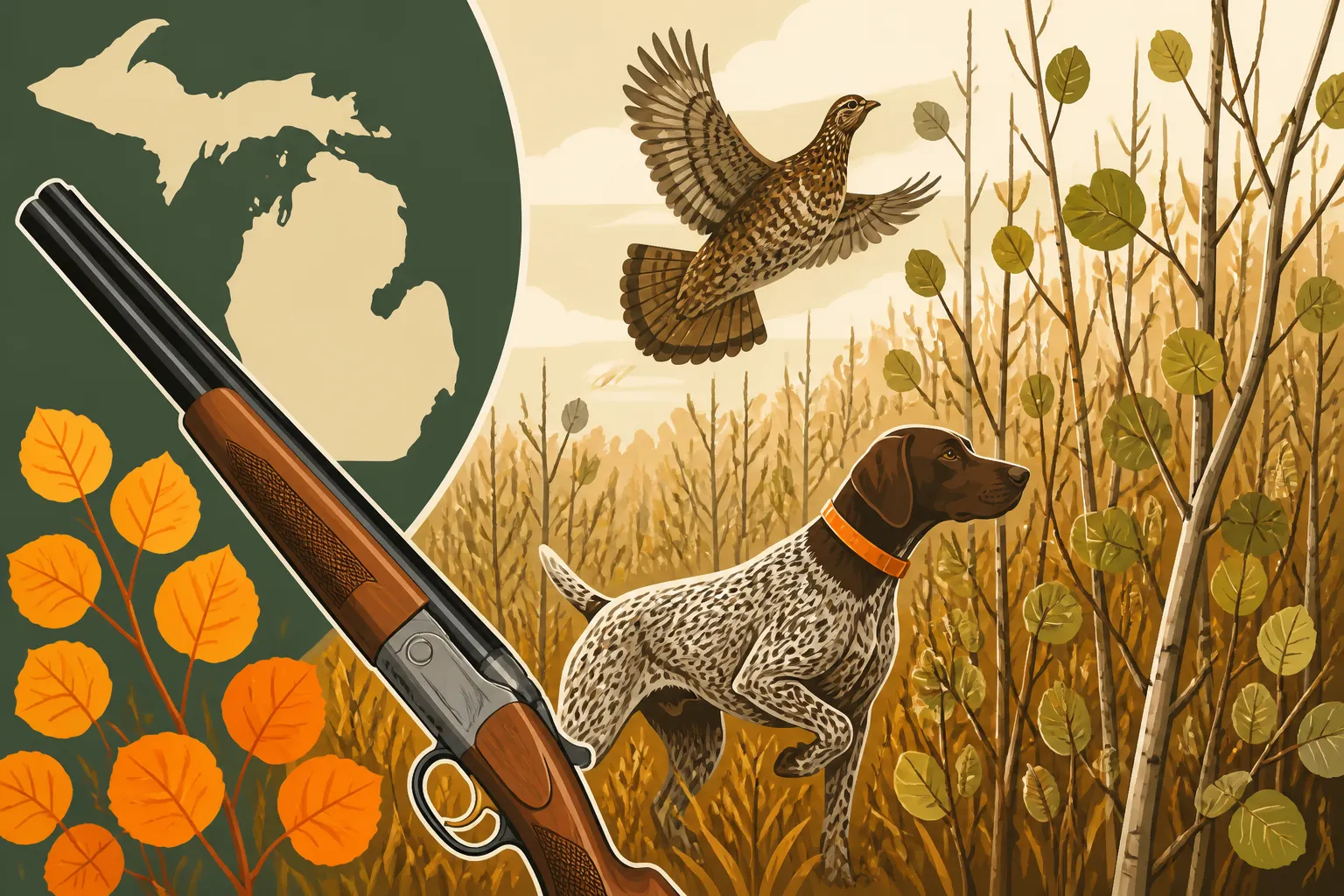
If you've ever found yourself busting brush in a tangled Michigan alder run or navigating a dense aspen stand in pursuit of ruffed grouse or woodcock, you know that the right shotgun can make all the difference. It's not just about hitting the bird; it's about being able to get the gun up quickly, swing through the tight spots, and endure miles of rugged terrain. This guide is here to help you cut through the confusion and figure out what kind of upland gun truly excels in our unique Michigan cover.
Understanding Michigan's Upland Cover: Aspen and Alder
Michigan's upland hunting experience is defined by its diverse and often challenging cover. We're not talking about wide-open pheasant fields here, though we have those too. For grouse and woodcock, it's all about the thick stuff: the young aspen clearcuts and the wet, tangled alder runs. These environments demand a very specific kind of firearm if you want to be successful and, frankly, enjoy your hunt.
The Challenges of Thick Cover
When you step into a Michigan aspen stand that's been recently cut, you're immediately hit with a wall of young trees, often no thicker than your wrist, growing so densely that you can barely see twenty feet in front of you. Alder runs are even worse, frequently boggy underfoot, with horizontal branches that snag your gun, your clothes, and your resolve. Visibility is severely limited, meaning your shots are almost always going to be at close range, often within 15 to 25 yards. The birds—especially grouse—are masters of exploding out of this cover like a feathered rocket, giving you mere seconds to react. This isn't a place for slow, heavy guns; it's a place where quick mounting and a fast, instinctive swing are paramount. Trying to navigate this kind of terrain with a long-barreled, heavy target gun is a frustrating, bruising experience that will leave you with more missed opportunities than full game vests.
Common Game Species and Their Habits
Our primary targets in these thickets are the magnificent ruffed grouse and the elusive American woodcock. Ruffed grouse thrive in successional forests, particularly young aspen stands that provide dense cover for protection and ample food sources. They are famous for their explosive flush, often startling hunters and disappearing into the timber before a shot can be taken. Their flight path is typically short and erratic, twisting through the trees.
Woodcock, on the other hand, prefer moist, dense habitats like alder thickets and riparian zones. They tend to hold tighter than grouse, often flushing almost at your feet, but their flight is also fast and often spirals upwards before leveling off. Because both birds are typically encountered at very close ranges, and their flight paths are obstructed by vegetation, the gun you carry needs to throw a wide pattern quickly. Understanding these habits is crucial to selecting the right gun for Grouse Hunting Michigan Aspen Cover or Woodcock Hunting Michigan Alder Runs, as it directly influences decisions about gauge, barrel length, and choke.
Key Characteristics of an Ideal Upland Gun for Michigan
When you're slogging through miles of dense cover, every ounce and every inch of your shotgun makes a difference. The "ideal" upland gun for Michigan's aspen and alder isn't just a matter of personal preference; it's about maximizing your chances in conditions that are inherently difficult. We need a gun that can be mounted quickly, swing effortlessly, and put a dense, wide pattern on a fast-disappearing bird.
Gauge and Shot Size Considerations
Choosing the right gauge is one of the most debated topics among upland hunters. For Michigan's close-range grouse and woodcock, the trend is generally towards smaller, lighter gauges. The 20-gauge is arguably the king of the Michigan grouse woods for many hunters. It offers a good balance of lighter weight, reduced recoil compared to a 12-gauge, and sufficient payload to cleanly take birds. You'll find plenty of ammunition options, and a 20-gauge gun is typically more nimble.
The 12-gauge is still a popular choice, especially for those who might also use it for waterfowl or pheasants, but many hunters find it a bit too heavy and cumbersome for all-day carrying in dense cover. Recoil can also be more pronounced, which might lead to flinching on quick shots. The 28-gauge is a delightful choice for experienced hunters, offering very light weight and mild recoil, but its ammunition can be pricier and harder to find, and the smaller payload requires more precise shooting. The .410, while incredibly light, is often considered a specialist's gun due to its extremely small pattern and limited range, making clean kills challenging for most.
As for shot size, for grouse and woodcock, smaller shot is usually better. You want a dense pattern of small pellets rather than fewer, larger pellets that might miss the vital area. Typically, 7.5, 8, or even 9 shot are excellent choices. For Shot Size for Grouse and Woodcock, number 8 shot is a fantastic all-around option that provides plenty of pellets for a good pattern without being overkill. Some hunters might drop to 9 for woodcock, especially in very tight cover, or move up to 7.5 if they expect a few longer shots at grouse in more open areas.
Barrel Length and Balance for Maneuverability
Barrel length is critical when you're weaving through thick brush and trying to get a shot off in a fleeting window. Longer barrels (say, 28-30 inches) are great for maintaining a smooth swing on distant targets, like in a duck blind or on the trap range, but they are an absolute nightmare in a thick aspen cut. They snag on branches, feel front-heavy, and make it nearly impossible to quickly pivot and get on a flushing bird.
For Michigan's upland hunting, shorter barrels are almost universally preferred. We're talking in the range of 24 to 26 inches. A 24-inch barrel on a 20-gauge feels incredibly lively and quick to the shoulder. It reduces the overall length of the gun, minimizing snags and allowing for rapid target acquisition. More importantly, it shifts the balance point of the gun further back, making it feel less like a lead pipe out front. This improved balance allows for a much faster and more intuitive swing, which is exactly what you need when a grouse explodes twenty yards away. When considering Barrel Length for Walking Thick Cover, remember that every inch matters when you're battling the dense Michigan woods.
Choke Selection for Close-Range Flushes
Given the close-range nature of most grouse and woodcock shots in Michigan, choke selection is perhaps one of the most important aspects. Chokes constrict the shot pattern, influencing how tight or spread out the pellets are when they reach the target. For our type of hunting, you almost always want a very open choke.
Improved Cylinder (IC) is a fantastic all-around choice for the first shot, offering a fairly wide pattern that gives you a good margin for error on those sudden, close flushes. Skeet choke is even more open and can be excellent, particularly for woodcock that often flush incredibly close. Cylinder bore, the most open choke, provides the widest pattern at close range but can run out of steam quickly.
Many hunters running a double-barreled gun will opt for an Improved Cylinder in the first barrel and a Modified (Mod) in the second. This allows for a wide pattern on the initial, closest flush, and then a slightly tighter pattern for a follow-up shot if the bird has gained a little distance. For single-barrel guns (pumps or semi-autos), an Improved Cylinder or even Skeet choke is usually the way to go. Forget about Full or even Modified chokes for your first shot in the thick stuff; they will produce patterns that are too tight for the quick, close shots you'll encounter, leading to more misses or excessively damaged birds. When thinking about Choke Choice for Fast Flushes, remember that a wider pattern gives you a better chance to connect in Michigan's dense cover.
Popular Upland Gun Types for Michigan Cover
The market is flooded with various types of shotguns, and each has its proponents and detractors. For Michigan's upland hunting, certain action types tend to shine due to their inherent characteristics. Let's break down the most common contenders and see how they stack up against the demands of our challenging cover.
Over-and-Under (O/U) and Side-by-Side (SxS) Shotguns
These traditional double-barreled guns hold a special place in the hearts of upland hunters, and for good reason. Both designs offer the distinct advantage of having two barrels, allowing you to quickly select between two different chokes (e.g., Improved Cylinder for the first shot, Modified for the second) without having to manually swap choke tubes in the field. This versatility is incredibly useful when you might encounter a bird flushing at 15 yards and another at 30 yards.
Over-and-Under (O/U) shotguns stack their barrels vertically. They offer a single sighting plane, which many shooters find intuitive and consistent. O/Us tend to be robust and well-balanced, often feeling "alive" in the hands. Quality O/Us can be quite expensive, but their durability means they can last for generations. The quick second shot is a major advantage for fast-flushing grouse. For example, if you're exploring different options, a good 20-gauge O/U like those often discussed in forums or on platforms like GoHunt can be a fantastic companion for the Michigan woods. You can read up on discussions about optimal setups for specific cover types.
Side-by-Side (SxS) shotguns, with their barrels horizontally aligned, are often considered the classic "gentleman's gun" for upland hunting. They typically have a wider, flatter profile, and some hunters find they point more naturally. They can also be very quick to get on target, especially on birds flushing to the side. The main difference in handling often comes down to personal preference for the sight picture and feel. Both O/Us and SxSs, particularly in 20-gauge, are highly effective in Michigan's cover, offering rapid follow-up shots and the flexibility of two chokes. A lightweight 20 Gauge Doubles for Aspen Cover can be an absolute joy to carry all day. The main drawbacks are usually their price point and, for some, the weight if not carefully selected.
Semi-Automatic Shotguns
Semi-automatic shotguns operate by using a portion of the gas or recoil from the fired shell to cycle the action, ejecting the spent hull and loading a fresh round from the magazine. This means less felt recoil for the shooter, as some of the energy is absorbed by the cycling mechanism. They also offer a faster follow-up shot than a pump-action, as you don't have to manually manipulate the fore-end. Many semi-autos can hold more than two rounds (though for hunting, typically only three rounds are allowed: one in the chamber, two in the magazine).
The reduced recoil is a big plus for high-volume shooting or for hunters sensitive to recoil, allowing for quicker recovery between shots. Semi-autos can be very reliable, but they do tend to be more complex mechanically, meaning they might require more diligent cleaning, especially after being exposed to the mud, moisture, and debris of Michigan's cover. Some models can also be a bit heavier and longer than their double-barreled counterparts, which can be a disadvantage in truly thick spots. However, a well-balanced semi-auto in 20-gauge can be a formidable tool, offering quick follow-ups and less shooter fatigue.
Pump-Action Shotguns
The pump-action shotgun is the workhorse of the hunting world. Renowned for its rugged reliability, simplicity, and affordability, the pump gun has taken countless game animals over the years. They are virtually indestructible and can function reliably in conditions that would cause more complex actions to falter. If you value a gun that can be dropped in the mud, picked up, and still fire, a pump-action is a solid choice.
The main drawback for upland hunting is the need to manually cycle the action between shots. This means a slower follow-up shot compared to a semi-auto or a double gun. For a fast-flushing grouse, that fraction of a second can mean the difference between a full game vest and an empty one. However, for hunters on a budget or those who prioritize absolute reliability and don't mind the manual action, a pump-action shotgun, especially a lightweight 20-gauge, is a perfectly capable upland tool for Michigan. Its versatility also means it can pull double duty for deer, waterfowl, or even home defense, making it a great value proposition for many Michigan hunters.
The .410 Bore: A Niche Choice
The .410 bore shotgun stands apart from the rest. It's the smallest of the common shotgun gauges, and its inherent characteristics make it a very specialized tool. Weighing almost nothing, a .410 is incredibly light to carry all day through the most punishing cover. Its recoil is practically non-existent, making it pleasant to shoot. However, the trade-off is significant: the .410 delivers a very small payload of shot, creating a much smaller and less dense pattern than any other gauge.
This means that clean kills require exceptional shooting skill, precise lead, and an intimate understanding of your gun's pattern. For the average hunter, especially those just starting out or hunting in Michigan's dense cover where quick, instinctive shots are the norm, the .410 can be incredibly frustrating. It's truly a gun for the expert, or for someone looking for an extra challenge. When a bird flushes just feet away, its small pattern means you have very little room for error. While it's lightweight and easy to carry, the demanding nature of the .410 often makes it a less practical choice for consistent success in the grouse and woodcock woods of Michigan unless you are genuinely an expert wing shooter.
Choosing the Right Fit and Ergonomics
Beyond the gauge and action type, how a shotgun fits you personally is paramount, especially in upland hunting where snap shots and quick movements are common. An ill-fitting gun will fight you every time you try to mount it, leading to missed birds and unnecessary frustration.
Stock Fit and Length of Pull
The stock of your shotgun is your primary interface with the firearm, and its dimensions have a huge impact on your shooting performance. The most critical measurement is the length of pull (LOP), which is the distance from the center of the trigger to the middle of the buttstock. If the LOP is too long, the gun will snag on your clothing, feel clumsy, and you'll struggle to quickly shoulder it. If it's too short, you might feel more recoil, and your face won't align properly with the rib, causing you to shoot high or low.
For upland hunting, where you often wear multiple layers of clothing in cold Michigan weather, a slightly shorter LOP can be beneficial to ensure a quick mount. Ideally, when you shoulder the gun with your eyes closed, and then open them, your eye should be perfectly aligned down the rib, looking straight at the front bead. This ensures consistent point of impact. Many modern shotguns come with adjustable stocks or interchangeable recoil pads to help tailor the LOP. Don't underestimate the importance of proper fit; it's often more crucial than the brand name on the barrel.
Weight Distribution and Carrying Comfort
Upland hunting in Michigan is often a physically demanding endeavor. You're likely to walk many miles in a day, up and down hills, through thick brush, and sometimes over uneven, boggy ground. A heavy, poorly balanced gun quickly becomes a burden, turning a joyful hunt into a tiring chore.
For this reason, weight distribution is just as important as the overall weight. A gun that is too "muzzle-heavy" (front-heavy) will feel sluggish and difficult to swing, while one that's too "whippy" (back-heavy) can be hard to control. The ideal upland gun for Michigan's cover should feel balanced, with the balance point typically around the hinge pin or just forward of it on a break-action. This allows the gun to be carried comfortably for extended periods and makes it feel lighter in the hands when you need to mount it quickly.
Lighter overall weight is always a plus, especially when paired with good balance. Many 20-gauge shotguns specifically designed for upland hunting prioritize lightweight construction, often using aluminum receivers or thinner barrel profiles. When you're considering Boots for Walking Michigan Aspen Cuts, remember that a lightweight gun will also contribute significantly to your overall comfort and stamina over a long hunting day.
Durability and Weather Resistance
Michigan's hunting seasons often overlap with less-than-ideal weather conditions. From crisp, clear fall days to sleet, rain, and even early snow, your upland gun will be exposed to the elements. Durability and weather resistance are not luxuries; they are necessities.
You need a gun that can withstand being bumped, scraped, and potentially even dropped in the mud or wet leaves. Wood stocks are classic and beautiful, but they require more care to prevent water damage and scratches. Synthetic stocks are often more rugged, shrugging off moisture and impacts with ease. The metal components should have a durable finish, like matte bluing or a tougher ceramic coating, to resist rust and corrosion from humidity and moisture. Internally, the action should be designed to function reliably even with some grit or moisture present. While you should always clean your gun after a hunt, a truly weather-resistant upland gun gives you peace of mind that it will perform when called upon, even if it's been a long, wet day in the alder swamps.
Accessories and Maintenance for Your Upland Gun
Having the perfect upland gun for Michigan's varied terrain is only half the battle. To maximize your success and ensure the longevity of your firearm, you'll need the right accessories and a consistent maintenance routine. This is where attention to detail pays off in the field.
Essential Accessories for the Field
Just like you wouldn't head into the woods without your Upland Vests With Water Capacity or durable Brush Pants for Michigan Alder, there are a few key accessories that will significantly enhance your upland hunting experience:
- Gun Sling: While many traditionalists prefer to carry their shotgun by hand, a good quality sling is invaluable for Michigan's extensive walking. It frees up your hands for navigating difficult terrain, using binoculars, or simply resting your arms. Look for a comfortable, non-slip sling that allows for quick detachment or adjustment.
- Quality Gun Case: Protecting your investment during transport is crucial. A soft, padded case is usually sufficient for vehicle travel to the hunting spot, but a more robust hard case might be considered for longer trips or if you're frequently exposing your gun to rough handling.
- Shell Pouch/Vest: Forget fumbling in your pockets. A dedicated shell pouch or the integrated pockets in a good upland vest keep your ammunition organized, easily accessible, and protected from the elements.
- Cleaning Kit: Even the most durable gun needs regular cleaning. A basic kit with a cleaning rod, bore brush, patches, solvent, and gun oil is essential. We'll dive into this more in the next section.
- Eye and Ear Protection: While not directly gun accessories for the field, they are absolutely critical for patterning your shotgun and for any clay target practice you do. Don't skip these for your own safety.
Remember, every piece of gear, including your chosen accessories, should serve a purpose and enhance your ability to hunt effectively and safely in the Michigan woods.
Cleaning and Care in Harsh Michigan Conditions
Michigan weather is unpredictable, and your upland shotgun will inevitably be exposed to moisture, dirt, and debris. Neglecting cleaning and care can lead to rust, corrosion, and ultimately, malfunctions.
Here's a basic routine:
- Field Strip (if applicable): After each hunt, especially if the gun got wet or dirty, lightly field strip your shotgun according to the manufacturer's instructions. This usually involves removing the barrel and, for semi-autos, the bolt assembly.
- Clean the Bore: Run a patch soaked in bore solvent through the barrel until it comes out clean. Follow with a bore brush a few times, then more solvent patches, and finally dry patches until the bore is spotless.
- Wipe Down Exterior: Use a cloth with a light coat of gun oil to wipe down all exterior metal surfaces. Pay close attention to areas where moisture might collect, like around the receiver and under the fore-end. This creates a protective barrier against rust.
- Lubricate: Apply a thin layer of gun oil or grease to friction points in the action, like the locking lugs or rails on a semi-auto. Avoid over-lubricating, as it can attract dirt.
- Stock Care: For wood stocks, wipe off any moisture immediately. Consider applying a good stock wax or oil periodically to protect the wood. Synthetic stocks simply need a wipe-down.
This routine, particularly after a wet day, will ensure your upland gun remains reliable and looks good for years to come.
Patterning Your Shotgun
Patterning your shotgun is often overlooked, but it's one of the most important things you can do to truly understand your firearm's performance. It involves shooting your chosen load and choke combination at a large paper target (usually 30-40 inches square) at a realistic hunting distance (20-30 yards for grouse and woodcock).
The goal is to see how your pellets are distributed. Is the pattern centered where you aim? Is it dense enough to ensure multiple pellet strikes on a bird, or are there large gaps a bird could fly through? You might find that one brand of shell or one particular choke tube performs better than others in your specific gun. Different shot sizes also pattern differently. For instance, you might find that your Improved Cylinder choke with number 8 shot creates an ideal spread at 25 yards for aspen grouse.
Patterning helps you:
- Verify point of impact: Does your gun shoot where you look?
- Understand choke effectiveness: See the actual spread of different chokes.
- Optimize ammunition: Find the best performing load for your gun and intended game.
- Build confidence: Knowing what your gun can do at specific ranges is invaluable in the field.
Don't skip patterning. It’s a vital step in becoming a more effective and ethical upland hunter in Michigan.
Budget and Brand Considerations
Stepping into the world of upland shotguns, especially for Michigan's demanding cover, can feel a bit overwhelming given the sheer number of options. There's a wide range of price points and brands, and it's important to navigate these choices wisely to find a gun that fits both your needs and your wallet.
New vs. Used Upland Guns
When it comes to purchasing an upland gun, you've essentially got two paths: buying new or buying used. Both have their distinct advantages.
New guns offer the peace of mind of a manufacturer's warranty, the latest features, and often a pristine finish. You know exactly what you're getting, and you're the first owner. Many reputable brands offer excellent new upland models that are perfectly suited for Michigan hunting. However, the price tag will generally be higher. For a dedicated grouse gun, investing in a new firearm can be a great long-term choice, especially if you plan to keep it for decades.
Used guns can offer incredible value. The secondary market is full of fantastic shotguns that might have a few cosmetic blemishes but are mechanically sound and perfectly functional. You can often get a much higher quality firearm for the same budget compared to buying new. Classic double guns, for instance, often retain their value and can be found at reasonable prices. When considering a used gun, always:
- Inspect it thoroughly: Check for rust, pitting in the bore, loose actions, and overall wear.
- Cycle the action: Ensure it functions smoothly.
- Check for proper lockup: On break-actions, make sure the barrels lock up tightly to the receiver with no wobble.
- Seek professional opinion: If you're unsure, have a reputable gunsmith inspect the firearm before purchase.
A well-maintained used gun can be an absolute gem and a fantastic partner for your Michigan upland adventures, often at a fraction of the cost of a new one.
Reputable Brands for Upland Shotguns
The market is rich with shotgun manufacturers, and many produce excellent upland-specific models. While I can't recommend a specific model or price, I can certainly point you towards brands that have a long-standing reputation for quality in upland firearms.
For over-and-under and side-by-side shotguns, you'll often hear names like Browning, Beretta, Franchi, and Winchester. These companies have a history of producing finely crafted double guns that balance well and hold up to years of use. Stoeger and CZ also offer more budget-friendly double gun options that can be quite functional.
In the semi-automatic category, brands like Benelli, Beretta, Remington, Winchester, and Browning are highly regarded. Benelli, in particular, is known for its inertia-driven systems that are often praised for their reliability and ease of cleaning, a big plus for Michigan's often muddy conditions. Franchi offers some very lightweight semi-autos that are purpose-built for upland hunters.
For pump-action shotguns, Remington, Mossberg, and Winchester have dominated the market for decades with their reliable and affordable models. While perhaps not as elegant as a fine double gun, their ruggedness is undeniable.
When researching, reading reviews, and checking out what other hunters are using, resources like GoHunt or dedicated upland hunting forums can provide a wealth of real-world feedback on specific models and brands. Don't just look at the price; consider the gun's balance, weight, fit, and track record of reliability. Ultimately, the "best" brand is the one that produces a gun that fits you, performs reliably in the field, and brings you joy during your Michigan upland hunts.
| Gauge | Common Barrel Length | Recommended Choke (First Shot) | General Price Range (New) | Pros | Cons |
|---|---|---|---|---|---|
| 12-Gauge | 26-28 inches | Improved Cylinder | Mid to High | Versatile, abundant ammo | Can be heavy, more recoil |
| 20-Gauge | 24-26 inches | Improved Cylinder / Skeet | Mid to High | Excellent balance, lighter | Slightly less pellet count |
| 28-Gauge | 24-26 inches | Skeet / Improved Cylinder | Mid to High | Very light, low recoil | Limited ammo, specialist |
| .410 Bore | 24-26 inches | Full (often fixed) | Low to Mid | Extremely light, very low recoil | Small pattern, challenging |
Disclaimer
This article is for general informational purposes only and does not constitute professional advice. Laws, prices and regulations vary by location and change over time. Consult a qualified professional for guidance on your specific situation.