Best Michigan Ground for Public Land Grouse
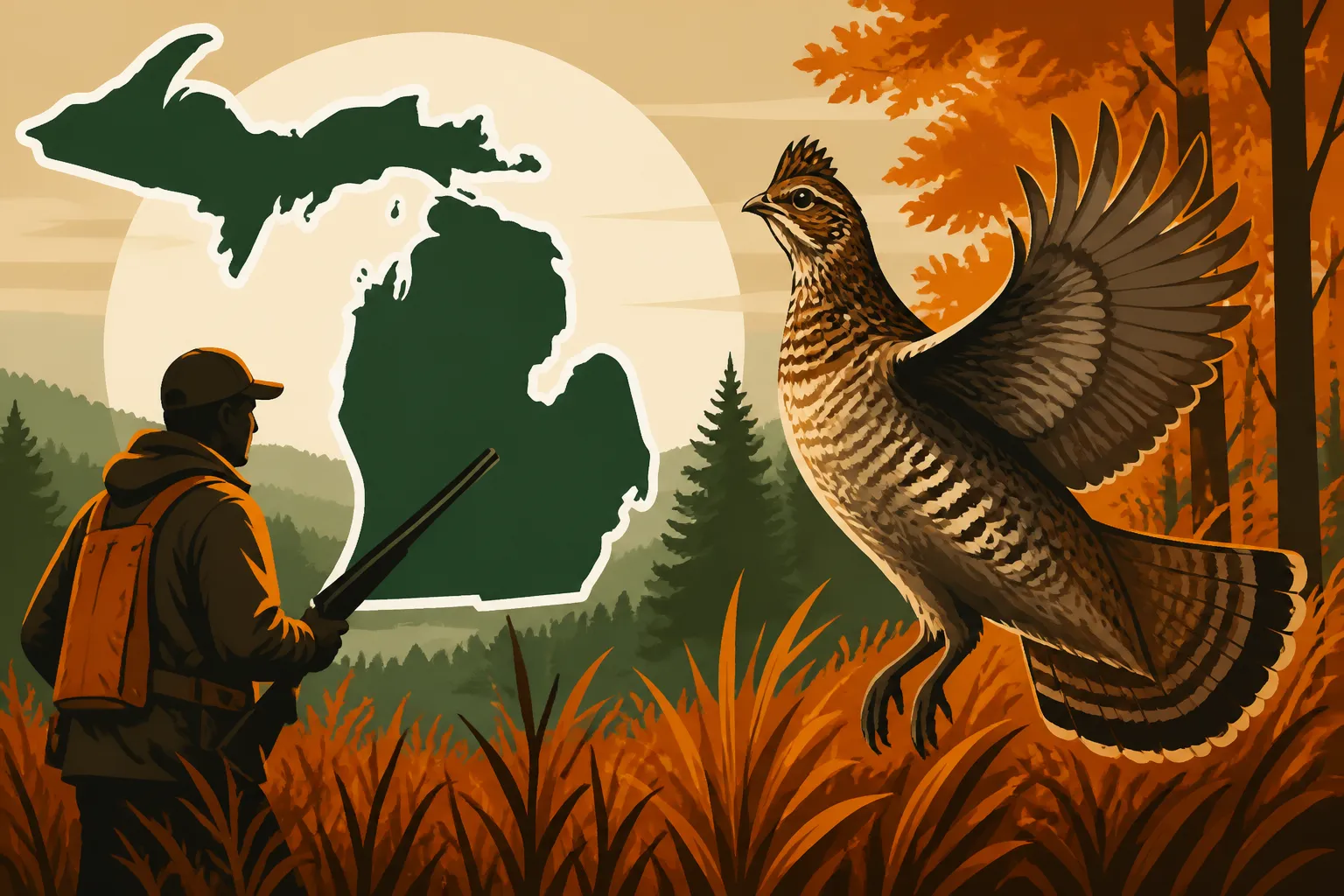
It can feel like a real wild goose chase, or in this case, a wild grouse chase, trying to pinpoint those elusive ruffed grouse on Michigan's vast public lands. You've probably spent countless hours busting brush, only to hear a distant flush or see a fleeting glimpse of a bird you couldn't get a shot at. This guide is dedicated to helping you unravel the mystery of Michigan's public land grouse hunting, digging deep into the habitat, regions, and strategies that will put more birds in front of your barrel.
Understanding the Ruffed Grouse World: Habitat is King
If there's one thing you need to understand about chasing ruffed grouse in Michigan, it's that they are absolute creatures of specific habitat. They aren't going to be just anywhere in the woods. They thrive in particular types of forest, relying on a mosaic of cover for food, nesting, and escape from predators. Walking aimlessly through big, mature timber is a surefire way to get a lot of exercise and see very few birds. You need to know what to look for, and then seek out those specific pockets of perfection.
The cornerstone of prime grouse habitat in Michigan is young, regenerating forest. Think aspen stands that have been recently clearcut, or mixed hardwood areas where logging has occurred in the last 10 to 25 years. These young forests offer dense overhead cover, which protects grouse from aerial predators like hawks and owls, and also provides a rich understory of brush and saplings for them to feed on. Without this thick cover, grouse populations simply can't flourish. It's a tough environment for a human to walk through, no doubt, but that's precisely why the grouse love it.
Another critical component of grouse habitat is the presence of drumming logs. Male grouse use these logs, often fallen trees or stumps, as elevated platforms to perform their drumming display, which attracts hens and establishes territory. While you won't necessarily see a grouse on a log during hunting season, finding areas with plenty of downed timber and larger logs can be a strong indicator that you're in good grouse country. These areas also provide excellent escape cover and foraging opportunities when the snow flies. It's all about finding that perfect blend of food, cover, and refuge.
Water sources, while not as critical for grouse as for some other game species, can also be a factor. Small streams, seeps, or marshy edges within their preferred young forest habitat can draw in insects and other food sources, concentrating birds. Additionally, dense conifer stands, especially cedar swamps or thick pines, provide crucial thermal cover during harsh Michigan winters. Grouse will dive into soft snow under these conifers to escape extreme cold, so finding patches of evergreens adjacent to young aspen or mixed hardwoods is often a winning combination. Ruffed Grouse and Woodcock in Michigan delves deeper into the life cycle and needs of these birds.
Prime Public Land Territories for Michigan Grouse Hunters
Michigan boasts an incredible amount of public land, a blessing for grouse hunters. However, not all public land is created equal when it comes to grouse. The key is to target state forests and state game areas that are actively managed with timber harvests, specifically those that create that crucial young forest habitat. The northern Lower Peninsula and the entire Upper Peninsula are generally considered the strongholds for ruffed grouse in Michigan due to their vast tracts of managed forest land.
In the northern Lower Peninsula, counties like Antrim, Charlevoix, Otsego, Montmorency, Oscoda, and Kalkaska often come to mind for good grouse hunting. These areas feature extensive state forest lands, such as the Jordan Valley State Forest or the Mackinaw State Forest, which have historical logging activity. You'll find a mix of aspen, oak, maple, and conifer stands. Look for recent clearcuts or areas marked for future timber sales on public land maps. Even older clearcuts, now growing into dense thickets, can hold birds. Hunting the Northern Lower Peninsula often includes insights into these forested regions.
The Upper Peninsula, however, is often considered the undisputed king of Michigan grouse hunting. Counties like Marquette, Baraga, Iron, Gogebic, and Dickinson have massive expanses of state and national forest land that are inherently wilder and less pressured. Here, you'll find vast tracts of aspen, birch, and mixed conifer forests. The sheer scale of the U.P. means there are endless opportunities to find productive grouse coverts. The Ottawa National Forest and the Hiawatha National Forest are prime examples of large public land areas with excellent grouse potential. Hunting the Michigan Upper Peninsula for Deer covers some of these same expansive forest systems.
Beyond just the big state and national forests, don't overlook dedicated state game areas in the northern parts of the Lower Peninsula and the U.P. While some state game areas in the south might be more focused on pheasants or deer, those farther north are often managed for a broader array of wildlife, including grouse. These areas often have smaller, more accessible parcels of public land that still contain the right mix of habitat. The trick is to find those that have undergone recent timber management, as that's where the grouse will be.
Here's a quick look at some general regions and what to expect:
| Region | Primary Habitat Types | Key Counties (Examples) | General Access |
|---|---|---|---|
| Western U.P. | Large aspen, birch, mixed hardwood, conifer | Iron, Baraga, Gogebic, Ontonagon | Vast state/national forests, remote two-tracks |
| Eastern U.P. | Aspen, cedar swamps, mixed hardwoods | Marquette, Delta, Menominee | Extensive state forest, some commercial forest |
| Northern Lower (NW) | Aspen, oak, maple, conifer, cherry | Antrim, Charlevoix, Kalkaska | State forests, well-maintained roads, some pressure |
| Northern Lower (NE) | Aspen, pine, oak, mixed hardwoods | Otsego, Montmorency, Oscoda | State forests, good timber management, good access |
Remember, the goal is to find that specific type of habitat. While a particular county might be known for grouse, you still need to seek out the correct age class of timber within its public boundaries.
Strategies for Scouting and Hunting Michigan's Grouse Coverts
Once you have an idea of where to look geographically, the next step is to get granular with your scouting and hunting strategy. This isn't like deer hunting where you might sit still for hours. Grouse hunting is an active pursuit, requiring you to cover ground and put yourself in positions to flush birds.
First and foremost, scouting, even if it's just from your armchair, is crucial. Look at aerial maps. Identify large blocks of public land, then zoom in. You're looking for clear-cut areas, especially those with irregular shapes or those adjacent to older growth timber, conifer swamps, or dense brushy creek bottoms. The edges where young growth meets old growth are often hotspots, as grouse use the thick young cover for safety but might venture into the older woods for food, especially during periods of heavy mast production like acorns or beechnuts. Knowing How Old a Cut Should Be for Grouse can greatly narrow down your search.
When you're actually out in the field, move slowly and deliberately. Grouse can hold incredibly tight, sometimes not flushing until you are practically stepping on them. Pay close attention to your dog if you have one; a good bird dog is an invaluable asset for finding and holding grouse. If you're hunting without a dog, learn to read the cover. Walk through areas with good food sources, such as blackberry brambles, hawthorn thickets, or areas with wild grapes, especially if these are nestled within or adjacent to the thick aspen or alder growth. Grouse Hunting Michigan Aspen Cover provides more specific tactical advice for this habitat.
Focus on edges. Walk along the edges of aspen cuts, where they meet a stand of pines, or where a thicket borders a logging road. These transition zones offer both food and escape cover. Don't be afraid to push into the thickest stuff; that's often exactly where the grouse are trying to hide. Remember, you want to flush the bird within shotgun range, so being in dense cover means you'll have less reaction time, but often a better chance of a shot once they burst out. Often, the best strategy is to walk just inside the densest cover, giving yourself a bit more room to swing.
Always be aware of your surroundings, both for safety and for anticipating flushes. If you're hunting with a partner, communicate your movements. One person can push through a thicket while the other walks the edge, ready for a bird to break out. Pay attention to drumming activity earlier in the year, as this often indicates resident birds. Even during the fall, those drumming logs provide vital cover. Hunting after a light snow can also be incredibly productive, as you can see tracks and determine general travel patterns, although fresh snow often means quieter walking for you and better detection of hidden birds.
Tools and Technology for Locating Productive Grouse Ground
Gone are the days when you relied solely on crumpled paper maps. Modern technology has revolutionized how we scout and locate prime public land for grouse hunting in Michigan. Embrace it; it's a game-changer.
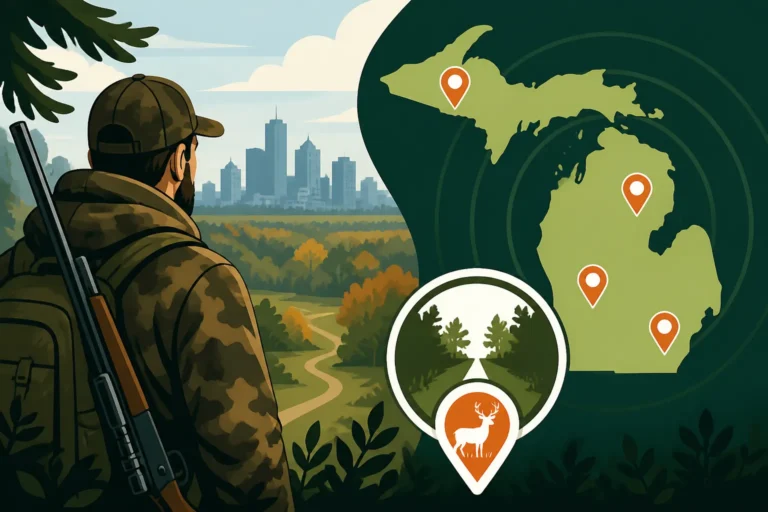
The first essential tool is a robust mapping application for your smartphone or GPS device. Brands like onX Hunt offer incredibly detailed land ownership maps, showing you exactly where public land begins and ends, which is critical when you're pushing through thick cover. More importantly for grouse, these apps also often have satellite imagery layers that allow you to identify timber cuts, clearings, and different forest types from your couch before you ever step foot in the woods. You can mark potential coverts, access points, and even parking spots, making your time in the field much more efficient. I can't tell you how many times I've used onX Hunt to scout new areas or to double-check boundaries when I'm deep in the woods.
Beyond just land ownership and satellite views, many mapping applications offer layers that can show you timber harvest data or forest type classifications. While not always perfectly current, these layers can give you a strong indication of where recent logging has occurred, guiding you to those crucial young aspen stands. Look for areas that have a patchwork appearance on the satellite imagery – these often indicate past timber management, creating the varied age classes of trees that grouse prefer.
Another valuable resource is the Michigan DNR's Mi-HUNT map. This online tool provides an incredible amount of information, including public land boundaries, forest stand types, and even prescribed burn locations. While it might take a little getting used to, the data available can be instrumental in identifying areas with high grouse potential, especially for those looking to expand beyond commonly hunted spots. Using Scouting Michigan Public Land Before Season with tools like Mi-HUNT can save you days of unproductive walking.
Finally, don't underestimate the power of word-of-mouth and connecting with other local hunters, but always verify information with your own scouting. Sometimes, the best grouse coverts are found by simply talking to loggers, foresters, or long-time locals who know the history of the land. Just be sure to cross-reference their tips with your mapping apps to confirm public access and current habitat conditions. And remember, the grouse populations fluctuate with cycles, so what was hot last year might be quiet this year. Michigan Ruffed Grouse Cycles helps explain these natural ebbs and flows.
By combining an understanding of grouse habitat needs with strategic use of public land resources and modern mapping technology, you'll significantly increase your odds of finding those drumming devils on Michigan's public ground. It takes effort, but the thrill of a bursting flush makes every step worth it.
Disclaimer
This article is for general informational purposes only and does not constitute professional advice. Laws, prices and regulations vary by location and change over time. Consult a qualified professional for guidance on your specific situation.