Best Michigan Counties for Public Land Deer
Hunting Michigan's public land for deer can feel like an overwhelming puzzle, especially when you're trying to figure out where the "best" opportunities truly lie. So many of us have driven countless miles, blindly pulling into two-tracks, hoping to stumble upon that perfect spot, only to find orange vests already lining the woods. This guide is here to cut through the guesswork, helping you understand which Michigan counties offer some of the most consistent and promising public land deer hunting experiences, and how to approach them effectively.
Understanding Michigan's Public Land Deer Hunting Landscape
Michigan is blessed with an incredible amount of public land, far more than many hunters in the eastern United States realize. This means that while some areas certainly hold more deer or bigger deer, the sheer accessibility offers a unique challenge and reward. It’s not just about picking a county; it’s about understanding the nuances of the habitat, the deer, and the pressure that comes with shared hunting grounds.
The Divide: Upper Peninsula vs. Lower Peninsula
When we talk about deer hunting in Michigan, there's an immediate, almost legendary, split in perception: the vast, rugged Upper Peninsula (U.P.) versus the diverse, often farm-laced Lower Peninsula (L.P.). Each offers a distinctly different public land experience. The U.P. is characterized by immense tracts of state and federal forest, challenging terrain, and often severe winters that heavily influence deer populations. Hunters here often seek a true wilderness experience, though deer densities can be lower than in parts of the L.P.
In contrast, the Lower Peninsula, particularly the northern half, offers a mix of state forests, state game areas, and interspersed private lands. While less wild than the U.P., it often boasts higher deer densities and a wider variety of habitat types. The southern Lower Peninsula, rich in agriculture, has impressive deer numbers, but public land can be more fragmented and heavily pressured, though gems certainly exist within specific state game areas or through programs like the Michigan Hunting Access Program Farms. It's a trade-off: more wilderness and fewer deer versus more deer and more people.
Factors Influencing Deer Density and Quality
Several key factors dictate where you'll find healthy deer populations and, consequently, better public land hunting. Foremost among these is habitat quality. Deer thrive where they have access to diverse food sources – acorns, browse, agricultural crops – coupled with adequate cover for bedding and security. Think about areas with a good mix of mature timber, young aspen clearcuts, thick swamps, and maybe even some unpressured field edges.
Winter severity also plays a massive role, especially in the U.P. and the northern L.P. Harsh winters with deep, prolonged snow can significantly impact deer survival, reducing overall numbers. What Severe Winters Do to Michigan Deer is a critical read if you plan on hunting these northern reaches. Hunting pressure is another huge factor. Public land, by its very nature, is accessible. The "best" counties are often known, leading to more hunters. Success often comes down to finding overlooked pockets, or being willing to walk further than others. Finally, deer management units (DMUs) and antler point restrictions (APRs) can influence the age structure and quality of bucks in certain areas. It pays to know the specific rules for the DMU you plan to hunt.
Top Counties for Public Land Deer in the Northern Lower Peninsula
The northern Lower Peninsula (NLP) is often where many Michigan hunters cut their teeth on public land. It's a vast region, encompassing dense state forests and numerous state game areas. While not as rugged as the U.P., it presents its own challenges and exceptional opportunities.
The Big Woods Advantage
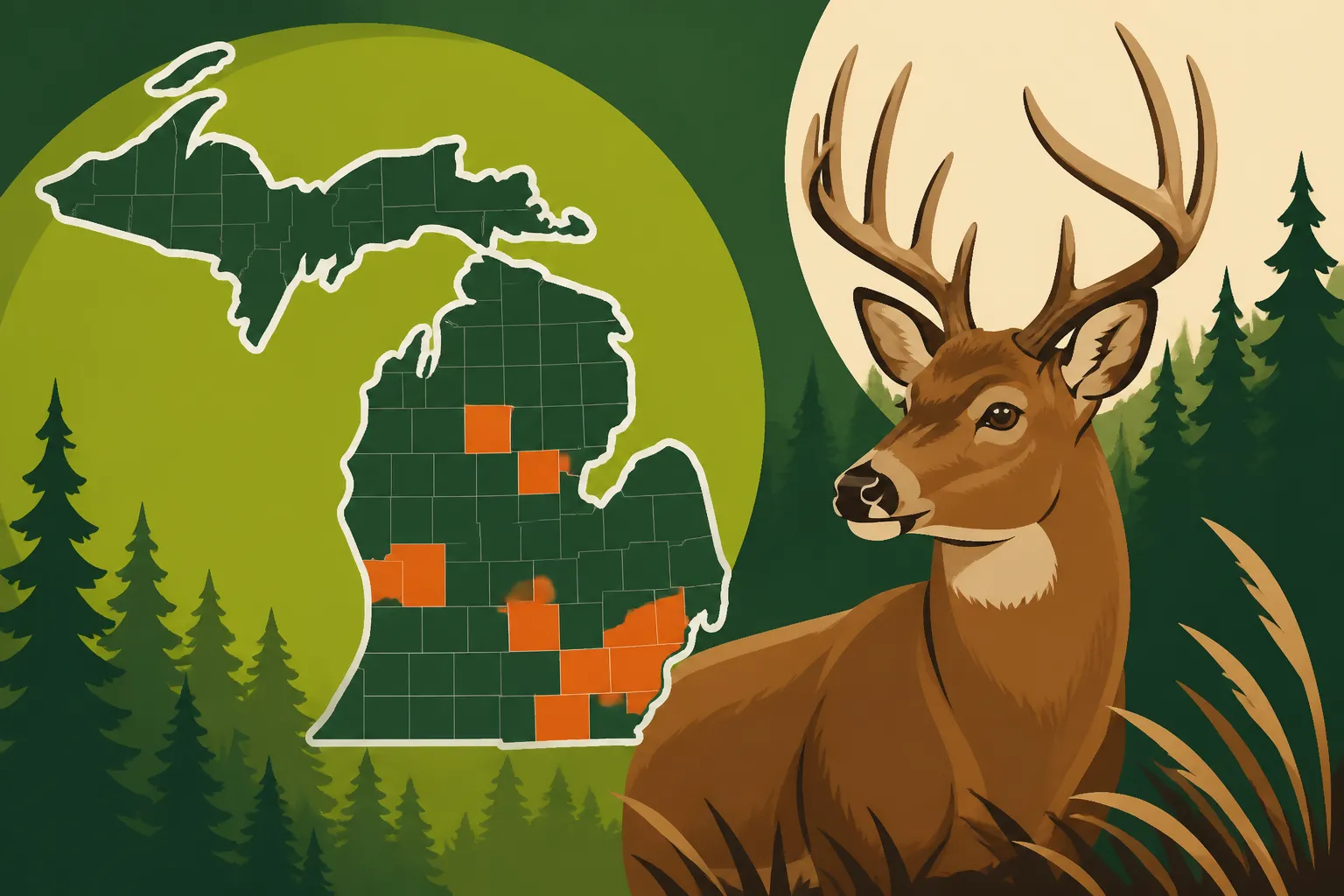
Counties like Oscoda, Montmorency, Crawford, Kalkaska, and Alcona consistently rank high for public land deer. These counties are home to massive tracts of state forest – part of the Michigan State Forest Hunting system – offering thousands upon thousands of acres of contiguous hunting ground. This "big woods" environment means deer often have more room to roam, and can sometimes escape immediate hunting pressure by simply moving deeper into the timber. You'll find a mix of hardwoods (oak, maple, beech), conifer swamps (cedar, spruce), and aspen stands. The key here is often to find areas that are a half-mile or more from any road or two-track, places where the average hunter simply won't venture. Tools like onX Hunt are indispensable for navigating these vast areas, helping you identify property lines, access points, and potential bedding or feeding areas that others might overlook.
Here's a quick look at why these counties stand out:
| County Name | Dominant Habitat Type | Public Land Acreage (Approx.) | Key Advantage for Deer | Typical Hunting Pressure |
|---|---|---|---|---|
| Oscoda | Mixed Forest, Aspen | High (State Forest) | Vast, diverse cover | Moderate to High |
| Montmorency | Hardwood, Cedar Swamp | High (State Forest) | Pockets of mature bucks | Moderate |
| Crawford | Pine Plains, Swamps | High (State Forest) | Good transition areas | Moderate |
| Kalkaska | Mixed Forest, Lowland | High (State Forest) | Excellent browse | Moderate |
| Alcona | Pine, Oak, Farmland | High (State Forest/SGA) | Diverse food sources | Moderate to High |
Targeting Transition Areas and Aspen Stands
Within these NLP counties, smart hunters focus on specific habitat features. Transition areas, where one cover type meets another, are always deer magnets. This could be where a dense cedar swamp abuts an oak ridge, or where a pine plantation gives way to an aspen clearcut. Deer use these edges for travel, feeding, and bedding. Hunting a Funnel Between Two Swamps is a prime example of capitalizing on these natural corridors.
Aspen clearcuts, especially those 5-15 years old, are absolute goldmines. The dense new growth provides incredible bedding cover and abundant browse, making them attractive to deer. Hunting Michigan Clearcuts and Aspen Cuts delves into the specifics of how to hunt these areas. Look for edges of these cuts, especially those near heavier cover or water. While these areas can attract hunters, the thick nature of the cover often means deer are right inside, making still-hunting or carefully placed ground blinds effective. Scouting these areas for old rubs, scrapes, and well-used trails before the season even starts (which you can do effectively with a service like GoHunt's mapping tools) will significantly increase your odds.
Top Counties for Public Land Deer in the Upper Peninsula
The Upper Peninsula offers a wilder, more remote public land hunting experience, appealing to those who crave solitude and a true test of their hunting skills. It’s not for the faint of heart, but the rewards can be significant, including the chance at a truly magnificent U.P. buck.
Wilderness and Winter Challenges
Counties like Iron, Baraga, Gogebic, and Marquette offer immense public land opportunities within the U.P.'s vast forests. These are true "big woods" counties, dominated by national forests (like the Ottawa and Hiawatha National Forests) and expansive state forests. The terrain can be rugged, featuring rolling hills, deep valleys, and dense conifer stands interspersed with hardwood ridges. The sheer scale of the land means hunting pressure, while present, can be diluted, especially if you're willing to go deep.
However, the U.P. presents a significant challenge: winter. Severe winters are a regular occurrence, with deep snow and prolonged cold taking a toll on deer populations. Upper Peninsula Deer Yarding and Winter Movement explains how deer survive these harsh conditions, often concentrating in specific wintering complexes (known as deer yards) where conifer cover offers thermal protection and some browse. While deer numbers might not match the Lower Peninsula's prime agricultural areas, the mature age structure of the surviving bucks, combined with the vast unpressured areas, makes these counties attractive for trophy potential.
Focus on Deer Yards and Early Successional Growth
Successful U.P. deer hunting often revolves around understanding these wintering patterns and focusing on habitat diversity. During the hunting season, deer will be scattered, but they gravitate towards the best available food and cover. Look for areas adjacent to or within historical deer yards, even outside of winter. These areas often have a higher deer density year-round due to the inherent quality of the habitat.
Additionally, seek out areas with early successional growth – younger clearcuts, beaver swamps with new growth, or areas impacted by logging a decade or two ago. Just like in the Lower Peninsula, these offer crucial browse and bedding cover. The deep snows of winter can push deer into specific micro-climates, making areas with dense conifer cover invaluable for bedding and security. Hunting the Michigan Upper Peninsula for Deer often requires a different mindset and more robust gear, including knowledge of how to navigate vast, unbroken forests. Using detailed mapping like that offered by onX Hunt can help you pinpoint these subtle changes in terrain and cover, giving you an edge in these massive tracts of wilderness.
Strategies for Success on Michigan's Public Lands
Finding the right county is just the first step. True success on Michigan's public land, regardless of location, hinges on smart strategy, relentless scouting, and an adaptable approach.
Leveraging Technology for Scouting
In today's hunting world, digital tools are invaluable for public land hunters. Services like onX Hunt and GoHunt provide detailed aerial imagery, topographical maps, property lines, and often information on public land boundaries and habitat types. Before you even set foot in the woods, you can use these tools to:
- Identify Access Points: Find legal parking and walk-in access points, avoiding private land.
- Locate Cover and Food Sources: Use aerial maps to spot dense conifer swamps, recent clearcuts, oak ridges, and old field edges.
- Pinpoint Funnels and Chokepoints: Identify natural travel corridors, creek crossings, or saddles that deer might use.
- Estimate Walking Distance: Plan out long walks into unpressured areas, understanding the terrain you'll encounter.
- Mark Historical Sign: If you've scouted an area before, mark rub lines, scrape areas, or bedding thickets to build a comprehensive map of deer activity.
These tools allow you to "e-scout" from your couch, drastically cutting down on wasted time in the field and helping you prioritize your physical scouting efforts. They are essential for Scouting Michigan Public Land Before Season to develop a solid plan.
Adapt Your Tactics to Pressure and Habitat
Public land inherently means hunting pressure. The trick isn't to avoid it entirely, but to understand how deer react to it and use that to your advantage.
- Walk Further: This is perhaps the most critical piece of advice. Most hunters stick close to roads and easy access points. By walking a mile or two (or more) into public land, you'll often find less pressured deer and more natural movement patterns. Consider Hunting Pressure on Michigan State Land and how to differentiate your approach.
- Hunt Thick Cover: Deer retreat to the nastiest, thickest cover when pressured. This could be a dense cedar swamp, a regenerating clearcut, or a forgotten tangle of blown-down trees. Don't be afraid to get into these spots, as mature bucks often hide there all day.
- Utilize Mid-Day Hunting: Many hunters come out for morning and evening sits. Mid-day movement, especially in thick cover or during the rut, can be highly productive as deer shift between bedding and feeding.
- Scout Continually: Deer patterns change throughout the season due to food availability, weather, and hunting pressure. Be prepared to adapt your strategy, moving stands or ground blinds as conditions dictate. Keep an eye out for new rubs, fresh scrapes, and changing food preferences.
- Understand Thermals and Wind: On public land, especially in hilly terrain or near swamps, understanding how wind and thermals affect scent dispersal is crucial. Always approach your stand or blind with the wind in your favor, especially in the mornings and evenings when thermals are rising or falling. Wind and Thermals on Michigan Ridges is a great resource for understanding this dynamic.
Ultimately, finding the "best" public land deer hunting in Michigan isn't just about a specific county; it's about combining knowledge of deer behavior, understanding habitat, leveraging modern tools, and being willing to put in the effort that others might not.
Disclaimer
This article is for general informational purposes only and does not constitute professional advice. Laws, prices and regulations vary by location and change over time. Consult a qualified professional for guidance on your specific situation.