Timber Cuts and Where Deer Move After
You show up to your familiar hunting woods, full of anticipation, only to find the roar of chainsaws has replaced the rustle of leaves, and what was once dense cover is now a jumble of stumps and slash piles. It’s a gut-wrenching feeling, seeing your tried-and-true spots transformed. This unexpected change can leave many Michigan hunters feeling lost, wondering where the deer have gone and if their favorite hunting ground is ruined. But here's the truth: while timber cuts initially disrupt the landscape, they often create incredible new opportunities for whitetails, and for us hunters willing to adapt. This guide will help you understand deer movement patterns after logging, how to read the newly shaped habitat, and develop strategies to find success in these dynamic environments.
The Immediate Aftermath and Long-Term Benefits of Timber Cuts
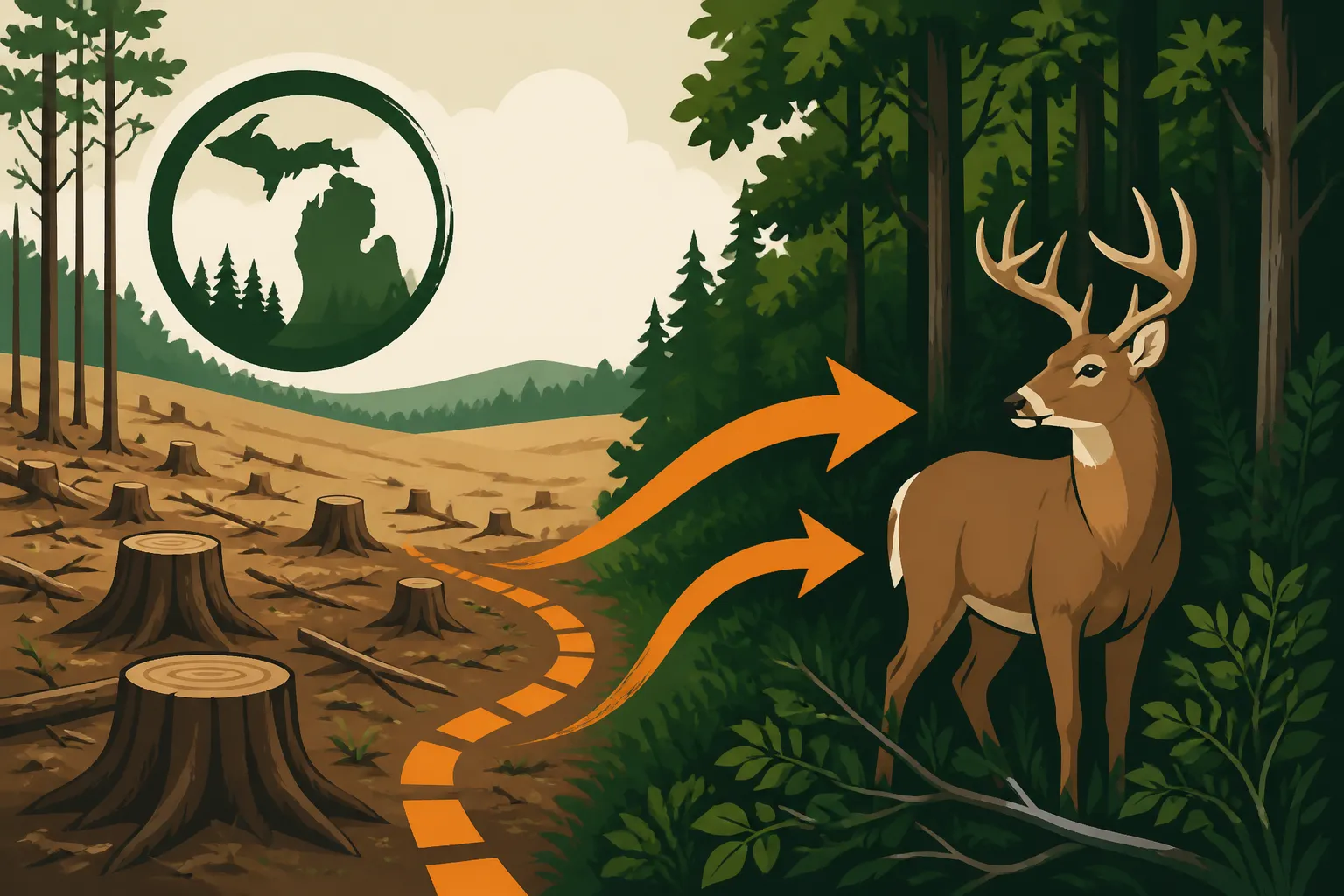
When the logging trucks pull out, it can feel like a bomb went off in the woods. The silence after the heavy machinery leaves is deafening, and the landscape often looks ravaged. However, this initial shock is temporary, and for deer, it's often the start of a new, abundant buffet and improved security. Understanding this cycle is key to predicting where Michigan deer will move and how they'll utilize these altered areas.
Initial Disturbance Versus Future Potential
Think about it from a deer's perspective. During the actual logging operation, the noise, the human activity, the smell of diesel, and the sheer destruction of their immediate home range are incredibly disruptive. Most deer will scatter, moving to adjacent, undisturbed cover. They might stick to thick creek bottoms, nearby cedar swamps, or simply push deeper into any remaining mature timber where they feel safe. This is often the period when hunters mistakenly write off a logged area, assuming it's "dead." However, this immediate flight response doesn't mean the area is permanently abandoned. It simply means the deer need some time for the disturbance to subside and for new growth to emerge.
Once the loggers are gone and nature begins to reclaim the disturbed earth, the long-term benefits for deer start to kick in. Sunlight, which was previously blocked by the canopy, now floods the forest floor. This instantly triggers a massive burst of new growth: grasses, forbs, blackberry brambles, aspen sprouts, maple saplings, and all sorts of other woody browse that deer absolutely love to eat. Within just a season or two, what looked like a wasteland transforms into a deer cafeteria. Furthermore, as these young plants grow, they create incredibly dense, low-level cover, perfect for bedding and fawning. This combination of abundant food and security cover makes timber cuts, especially clear-cuts or heavy thinnings, prime deer habitat for years to come.
The Dynamics of Food and Cover Generation
The magic of a timber cut, from a deer habitat perspective, lies in its ability to simultaneously generate massive amounts of food and cover. Before logging, a mature Michigan forest might have a high canopy, with very little sunlight reaching the ground. This means limited understory growth and less food at a deer's level. After a cut, the forest essentially "reboots."
In the first year, you'll see a flush of annuals, weeds, and grasses. These are decent food sources, but they're just the beginning. By the second and third year, woody browse species like aspen, maple, oak (from stump sprouts), and various shrubs really start to take off. These young, tender shoots are highly palatable and nutritious, providing critical sustenance for deer, especially through tough Michigan winters. As these plants grow, they also create an increasingly dense matrix of stems and branches. This thick growth provides security, allowing deer to move, feed, and bed without being easily seen by predators or hunters. It's a natural cycle that transforms older, less productive timber into a vibrant, deer-centric ecosystem.
Deciphering Different Logging Operations in Michigan
Not all timber cuts are created equal, and understanding the type of logging operation that occurred can give you a significant advantage in predicting deer movement and habitat use. Michigan's diverse forests see various logging practices, each with a distinct impact on the landscape and, consequently, on the deer.
Clear-Cuts: From Devastation to Deer Heaven
A clear-cut is perhaps the most dramatic form of logging. It involves removing nearly all trees from a designated area, leaving behind a field of stumps, slash (logging debris), and exposed earth. Initially, these areas look stark and unappealing. The immediate impact is a mass exodus of deer from the cut area itself. However, clear-cuts are incredibly beneficial for deer in the long run.
Within a year or two, the sheer amount of sunlight hitting the forest floor leads to an explosion of herbaceous plants, grasses, and, most importantly, woody browse. Young aspen stands are a classic example of this, often regenerating in incredibly dense thickets. These areas quickly become premier deer habitat, offering both abundant food and unparalleled security cover. Deer will bed down in the thickest parts of the clear-cut, only emerging at the edges to feed on the richer browse or move into adjacent, mature timber for acorns or other mast. Hunters should focus on the transition zones – the edges where the clear-cut meets standing timber, especially where deer trails enter and exit the dense new growth. Consider Hunting Michigan Clearcuts and Aspen Cuts for more detailed tactics.
Select Cuts and Thinning: Subtle Shifts
Select cuts, or thinnings, are much less visually drastic than clear-cuts but still have a profound effect. In a select cut, only specific trees are removed, often those that are diseased, undesirable, or ready for harvest. This leaves a mosaic of standing timber, opening up the canopy in patches. The goal is often to promote the growth of remaining desirable trees or encourage natural regeneration of certain species.
For deer, these types of cuts create a more subtle shift. The initial disturbance is less severe, so deer may not entirely abandon the area. Instead, the increased sunlight reaching the forest floor in specific spots will stimulate new understory growth, creating scattered pockets of browse. The remaining mature trees still provide shelter and mast. Deer might browse these new growth patches more frequently, and the thinned areas might become easier to navigate while still offering decent cover. Look for areas where sunlight has created new browse thickets or where logging trails have opened up access to denser sections. These areas can be excellent for still-hunting, as the woods are more open but still offer plenty of hiding spots.
Edge Feathering and Logging Roads: Niche Opportunities
Beyond the main logging areas, two other features created by timber operations can be incredibly productive: edge feathering and logging roads/landings.
- Edge Feathering: While not always a direct result of commercial logging, sometimes landowners will "feather" the edges of fields or clear-cuts by hinge-cutting trees or allowing shrubby growth to take over. This creates a soft transition zone between open areas and dense timber. Deer love these edges for travel, feeding, and staging before entering open fields. They offer cover right up to the food source, providing a sense of security. If you find a clear-cut that borders an agricultural field, pay close attention to this transitional edge.
- Logging Roads and Landings: These are the temporary paths and open areas created for machinery and stacking logs. Once logging is complete, these areas often get seeded with grasses or left to natural succession. Initially, the open ground of a landing might see some deer browsing on tender young shoots or leftover mast. Old logging roads, once quiet, can become natural travel corridors for deer once the human activity dies down, especially if they connect different types of cover or food sources. They also provide relatively easy walking for hunters to access deeper into the woods, though this can also mean increased hunting pressure if the roads are easily accessible. Using a mapping app like onX Hunt can reveal these subtle features, which are often overlooked by other hunters.
| Type of Timber Cut | Immediate Impact on Deer | Long-Term Benefit for Deer | Hunting Strategy Focus |
|---|---|---|---|
| Clear-Cut | High disturbance, deer scatter to adjacent cover | Explosive new browse and dense bedding cover within 1-3 years | Edges where new growth meets mature timber, funnels |
| Select Cut/Thinning | Moderate disturbance, deer may shift but remain nearby | Pockets of new browse, improved accessibility within timber | New browse patches, distinct travel corridors, denser sections |
| Edge Feathering | Minimal disturbance, often an enhancement | Transition cover, staging areas, and year-round food | Directly on the edge, especially where deer enter fields |
| Logging Roads/Landings | High disturbance during operation | New access routes, temporary food sources, open ground | Travel corridors, intersections with heavy cover |
Deer Habitat Progression: How Cuts Evolve for Whitetails
The transformation of a logged area isn't a static event; it's a dynamic progression. Deer will utilize these areas differently depending on how far along the regrowth cycle they are. As a Michigan hunter, learning to "read" these stages will help you understand where deer are likely to be bedding, feeding, and traveling throughout the season.
Years 1-3: The Early Feast
In the first one to three years after a significant timber cut, the area is essentially a giant salad bar for deer. With the canopy removed, sunlight reaches the forest floor, stimulating a rapid proliferation of succulent, tender plants. You'll see a flush of annual weeds, grasses, and pioneer species that quickly colonize the bare earth. More importantly, countless woody browse plants like aspen, maple, cherry, and various shrubs will begin to sprout from seeds or stump roots. These young shoots are highly digestible and packed with nutrients, making them incredibly attractive to deer.
During this stage, deer will primarily use the cut-over area as a feeding ground. They might still bed in adjacent, heavier cover, moving into the cut during low-light hours to browse. You'll see abundant sign: clipped stems, tracks, and scat, especially along the edges and in any small pockets of remaining cover within the cut. Focus your efforts on these edges where deer transition from dense bedding areas to the new food source. Establishing stand locations on trails leading into these young cuts, particularly those coming from known bedding cover like a Michigan cedar swamp, can be very effective.
Years 3-10: Dense Security and Bedding Gold
As the clear-cut or heavily thinned area matures into the three-to-ten-year range, it becomes incredibly dense. The young saplings, shrubs, and brambles grow tall and thick, forming impenetrable thickets. This is when the area transitions from primarily a feeding ground to a prime bedding and security cover haven. Deer, especially mature bucks, seek out the densest cover they can find to escape predators and hunting pressure. These thickets provide excellent thermal cover in winter and shade in summer, along with a secure place to bed down.
While deer still browse within these areas, the focus shifts more towards bedding. They will often create intricate trail networks through these dense tangles, moving from small, sheltered bedding pockets to more open feeding areas, or to water sources. Hunting these areas requires patience and careful entry/exit routes. Look for subtle openings, old logging skid trails, or natural funnels within the thickets. The edges are still critical, but also consider strategically placed ground blinds or carefully selected treestands on the interior of the cut, especially where a small island of mature timber or a slight elevation change offers a vantage point over dense bedding. Where Big Woods Bucks Bed in Michigan covers similar concepts of mature buck bedding preferences.
Years 10+: Transition and Ongoing Benefits
Beyond ten years, the dynamics of a timber cut continue to evolve. The most aggressive growth in the clear-cut begins to thin out naturally as some trees grow taller and shade out the understory, while others don't make it. What was once an impenetrable thicket might become a more open pole timber stand, still offering browse but with less overall density.
Deer will still use these areas, but their patterns might change again. They may browse more sparingly throughout the stand, or use the slightly more open conditions for travel corridors, especially if it connects to newer clear-cuts or other prime habitat. The edges remain important, but the core of the older cut might see less concentrated bedding. However, these older cuts often produce soft mast trees like wild apple, thornapple, or cherry that become food sources in their own right, drawing deer back during specific times of the season. Keep an eye on the successional stages of the forest; where one cut is maturing, another might be starting, creating a continuous cycle of beneficial habitat.
Strategies for Scouting and Hunting Logged Areas
Hunting timber cuts requires a different approach than hunting mature, undisturbed woods. The dynamic nature of these areas means that what worked one year might need adjustment the next. Success hinges on thorough scouting and adaptable tactics.
Pre-Season Scouting: Reading the New Landscape
Before you even step foot in a logged area with your hunting gear, extensive pre-season scouting is crucial. Start by using aerial imagery from resources like onX Hunt or Michigan's own Using the Michigan Mi-HUNT Map. Zoom in on your desired hunting parcels and look for areas that have been recently logged. The tell-tale signs are usually stark, lighter-colored patches within a darker forest canopy, or distinct lines where logging has occurred.
Once you've identified potential areas, use the mapping tools to study them closely. Look for the transition lines between the cut and standing timber. Identify any unlogged islands or strips of trees within the cut that might serve as bedding cover. Pinpoint old logging roads, skid trails, or natural funnels that could become deer travel corridors. Pay attention to topography—even a slight ridge or dip within a flat clear-cut can become a preferred bedding spot or travel route. A great approach is to compare satellite images from different years to see how the vegetation has grown since the logging occurred. This can help you estimate which of the "habitat progression" stages the area is in.
On-the-Ground Reconnaissance: Finding the Hot Spots
With your aerial intelligence gathered, it's time to hit the woods. Your first few trips should be purely for scouting, not hunting. Walk the edges of the cut, looking for well-used deer trails. Pay close attention to where trails enter and exit the dense new growth. These pinch points are prime locations for stand setup. Venture into the cut itself, focusing on the densest areas. Look for bedding sign: flattened grass, rubs, scrapes, and heavy concentrations of droppings. Often, deer will bed on the downwind side of a thicket, using the cover for security and their nose to detect danger approaching from the open side.
When walking these areas, use your mapping app to mark every piece of sign you find: fresh tracks, browse lines, rubs, scrapes, and especially bedding areas. These data points will help you build a comprehensive picture of how deer are using the new habitat. Don't be afraid to push into the thick stuff; that's often where the biggest bucks will hide. Also, look for any features that break up the monotony of the cut, such as old brush piles, isolated clumps of unlogged trees, or even a small swampy depression—these can all be magnets for deer looking for a slightly different type of cover or food. You'll be amazed at the amount of sign you'll find if you venture just a little further than the casual hunter.
Adaptable Hunting Strategies for Logged Terrain
Hunting timber cuts successfully often requires a flexible mindset. Forget your old habits of sitting on a food plot edge if the deer aren't there anymore.
- Edge Hunting: As mentioned, the edges where the new growth meets mature timber are always hot. Deer will stage in the cover of the clear-cut and slip into the timber to feed on acorns or browse, or vice-versa. Setting up a stand or ground blind on these well-used entry and exit trails, especially those that cross a creek or follow a subtle ridge, can be highly effective. Consider Hanging a Stand on a Swamp Edge if the cut borders a wet area.
- Hunting the Interior Thickets: For more aggressive hunters, pushing into the dense interior of a several-year-old clear-cut can pay dividends. This is where you might find a mature buck bedded. This often involves still-hunting very slowly, taking a few steps, and then pausing for several minutes to scan for movement. The sheer density makes long shots impossible, so focus on close-range opportunities. A ground blind can also be highly effective in these thick areas, allowing you to get deep into the cover before daylight and wait for deer movement. Remember to use a mapping tool like onX Hunt to ensure you're on public land or have permission if it's private.
- Utilizing Logging Roads and Funnels: Old logging roads, once abandoned, can become fantastic travel corridors, especially if they connect different pockets of good cover or lead to a food source. Position yourself on these roads where they intersect with dense cover or where deer trails cross them. Look for funnels within the cut itself—narrow strips of cover that deer are forced through, perhaps between two sections of super dense growth or where the cut bottlenecks into a smaller area. These are natural ambush points. For deer drives with a small group, these roads and funnels can also be used to direct deer toward standers. Deer Drives With Three or Four Hunters provides excellent advice on this.
- Wind and Thermals: These areas can be tricky with wind. Open clear-cuts are often windier than dense timber, and thermals can be less predictable, especially on warm days. Always play the wind, considering how it will swirl around the edges and within the regenerating forest. In flatter terrain, thermals might not be as pronounced, but in areas with even subtle elevation changes, they will still dictate how deer approach.
- Adapt to Pressure: Logged areas on public land can sometimes attract more hunters, especially initially. If you notice heavy pressure on the most obvious trails or edges, don't be afraid to put in the extra effort to find the less-traveled spots. Sometimes, the truly dense, gnarly areas that other hunters avoid are where the deer are hiding. Finding Ground Others Walk Past offers insights into this strategy.
By understanding the progression of habitat in timber cuts and adapting your scouting and hunting strategies, these seemingly ruined areas can become some of the most productive deer hunting grounds Michigan has to offer. They're not just scars on the landscape; they're dynamic, evolving ecosystems that reward the observant and persistent hunter.
Disclaimer
This article is for general informational purposes only and does not constitute professional advice. Laws, prices and regulations vary by location and change over time. Consult a qualified professional for guidance on your specific situation.