Hunting Michigan Swamp Edges for Deer
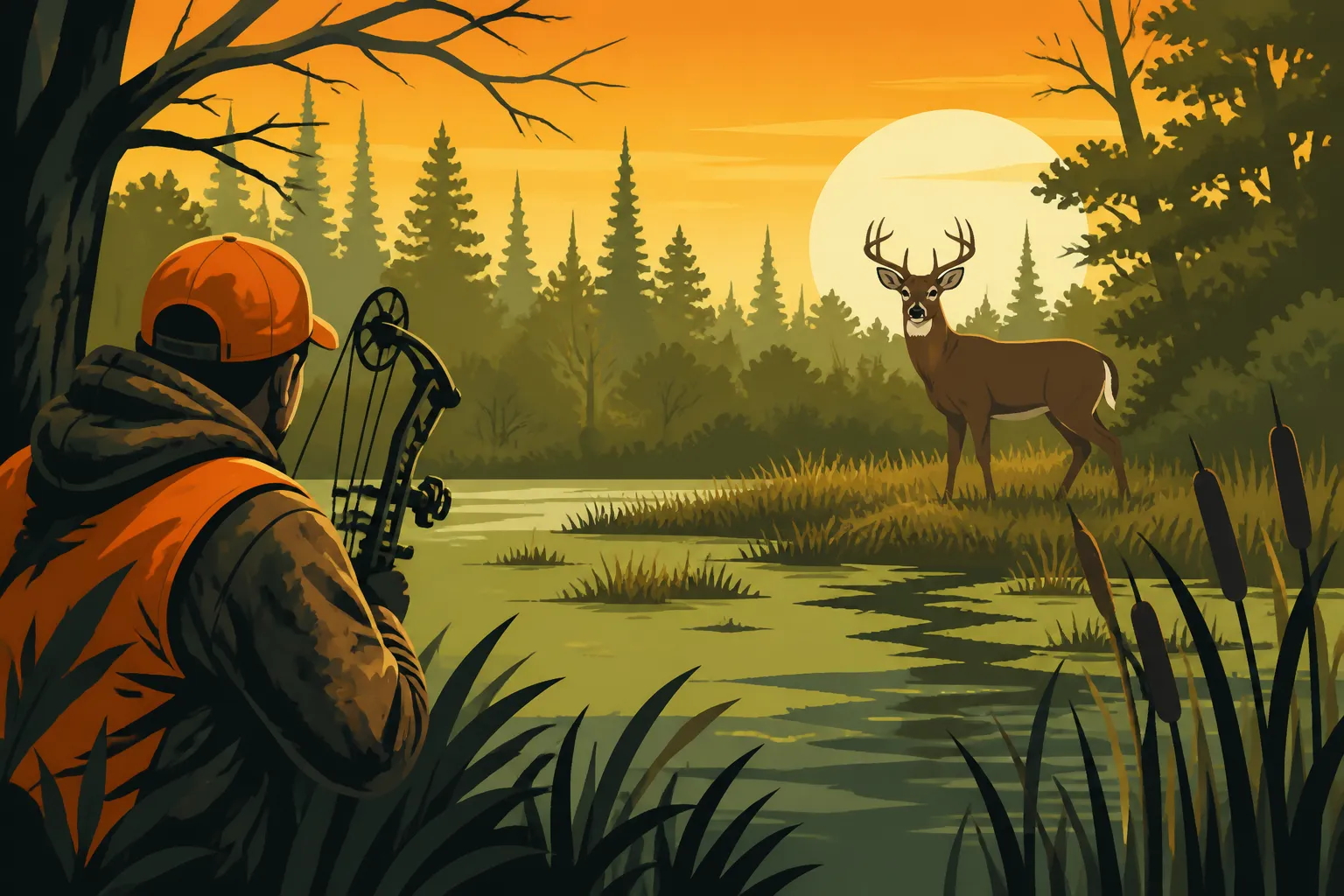
Oh, the Michigan swamp edge. If you've spent any time hunting our great state, you know the feeling. That dense, impenetrable tangle of tag alders, the dark, foreboding cedars, or the endless cattail marshes that seem to swallow deer whole. It's frustrating to know big bucks call these places home, but getting to them feels impossible. This guide is all about demystifying those swamp edges, helping you understand why deer love them, and, most importantly, how to effectively hunt them without getting lost or eaten alive by mosquitoes.
The Irresistible Draw of Michigan Swamps for Whitetails
Michigan's landscape is dotted with incredible swamp systems, from the sprawling cedar swamps of the Upper Peninsula to the often-overlooked pockets of lowland brush in the Lower. These areas, while a nightmare to navigate for us, are an absolute haven for whitetails, especially mature bucks. Understanding why they are so attractive is the first step to figuring out how to hunt them successfully.
Security Cover Beyond Compare
Think about it from a deer's perspective: where do you go when you want to feel safe? Not an open hardwood ridge, that's for sure. Swamps offer unparalleled security. The thick, often thorny vegetation creates a natural fortress where deer can bed down, move undetected, and escape pressure. This is especially true on public land where hunting pressure can push deer into the deepest, nastiest cover available. A big buck knows he can melt into a dense cedar swamp and be virtually invisible. This is where he'll spend his daylight hours, only venturing out under the cover of darkness or during the peak of the rut.
Imagine hunting a relatively flat piece of public land in southern Michigan. You see signs on the edges – rubs, scrapes, tracks – but the deer seem to vanish. Chances are, they're disappearing into a nearby swamp. The dense canopy and low visibility make it difficult for predators, including human hunters, to move quietly or see far. This provides a constant sense of safety for the deer, allowing them to relax and conserve energy, knowing they're well-hidden. It’s this secure bedding that makes the edges of these sanctuaries so potent.
Food and Water Resources in Abundance
While security is paramount, swamps also often provide vital resources. Many swamp ecosystems are rich in diverse vegetation, offering browse, mast, and other food sources that might not be available in drier, higher ground, especially later in the season. Think about willow shoots, dogwood, various aquatic plants, and even the tender tips of young cedars. During droughts or late season when other food sources are scarce, these wet areas can be a life raft for deer.
Beyond food, swamps, by their very nature, mean water. Constant access to water is crucial for deer, and having it readily available right where they bed and feed minimizes their travel and exposure. This combination of food, water, and security makes a swamp edge a prime piece of real estate for any whitetail. You might not find a sprawling agricultural field within the swamp, but the edges often transition into different timber types or even smaller clearings that can hold surprising amounts of forage. It's not always about finding a lush food plot; sometimes, it's about finding the subtle, natural smorgasbord that only the swamp can offer.
Decoding the Swamp Edge: Identifying Prime Transition Zones
Okay, so we know deer love swamps. But you can't just dive headfirst into a quagmire and expect to find success. The real magic happens along the edges – those transition zones where the swamp meets dryer ground, agricultural fields, or different timber types. These are the highways and pit stops for deer moving in and out of their security blanket.
The "Hard Edge" Versus the "Soft Edge"
Not all swamp edges are created equal. You'll encounter what I like to call "hard edges" and "soft edges," and each requires a slightly different approach.
-
Hard Edges: These are abrupt transitions, like a cedar swamp suddenly butting up against a cornfield, a mature hardwood ridge, or a steep elevation change. Deer tend to funnel tightly along these lines, creating distinct travel corridors. Imagine a deer coming out of a dense cedar thicket directly into a standing cornfield in the Michigan Thumb region. They’re not going to wander far down the swamp line; they're going to hit the corn. These pinch points are fantastic for stand placement, as deer movement is concentrated. Look for heavily worn trails, significant rub lines, and multiple scrapes where these hard edges meet. These are often high-traffic zones, especially during the low-light hours of dawn and dusk. Using an app like GoHunt to scout aerial imagery can help you identify these sharp, undeniable edges before you ever step foot in the woods. You can often see the distinct change in vegetation type, making it easier to pinpoint potential funnel areas.
-
Soft Edges: These are more gradual transitions where the swamp slowly gives way to less dense cover, like an area of scattered brush, younger timber, or perhaps a slight rise in elevation that isn't a dramatic ridge. Deer movement here can be more dispersed, but these areas often serve as staging zones. A buck might emerge from the swamp into a soft edge, browse for a bit, maybe make a few rubs, and scent check for does before fully committing to open ground. These areas can be excellent for still-hunting or setting up ground blinds, as deer might linger longer here before heading to more exposed feeding areas. The sign might not be as concentrated as a hard edge, but it can be spread out over a wider area, indicating more relaxed, pre-feeding activity.
Reading the Sign: Trails, Rubs, and Scrapes
Once you've identified a promising edge, it's time to become a detective. Deer sign tells a story, and nowhere is that story more vivid than along a swamp edge.
-
Trails: The most obvious sign are trails. Look for well-worn paths leading directly into and out of the swamp. Pay attention to how many trails converge, indicating a major travel corridor. Sometimes, you'll find a single, dominant trail that looks like a cattle path. Other times, it's a network of smaller, intersecting trails, all pointing towards the swamp. These trails aren't just for movement; they're also communication hubs. During the rut, bucks will cruise these trails, checking for does.
-
Rubs: Rubs along a swamp edge are gold. They indicate a buck is actively using that area and often show his travel direction. Are the rubs facing towards the swamp or away? What size are the trees he's rubbing? Bigger rubs on larger trees often signify a more mature buck. Multiple rubs clustered together can indicate a staging area where a buck is expending some energy before moving to a feeding location or cruising for does.
-
Scrapes: Scrapes are the ultimate communication tool for whitetails. A fresh scrape along a swamp edge, especially with an active "licking branch" overhead, means a buck is marking his territory and checking for estrous does. These are prime locations for a stand, particularly during the pre-rut and peak rut. A line of scrapes along a two-track or edge of a swamp is like a billboard for deer activity, announcing that bucks are present and looking for action. Knowing how to read a scrape line along a two-track can drastically increase your odds.
-
Other Sign: Don't forget tracks, droppings, and even bedding areas. While finding beds deep inside the swamp can be tough, sometimes bucks will bed right on the drier fringes of the edge, using the swamp cover as a quick escape. Fresh tracks leading from the swamp to a nearby food source are a clear indicator of recent activity.
Strategic Access and Stand Setup
So, you've pinpointed a killer swamp edge, read the sign, and feel good about your chances. Now comes the critical part: getting in and setting up without alerting every deer in the county. This requires meticulous planning and a stealthy approach.
Entry and Exit Routes: The Stealth Mission
This is perhaps the most overlooked aspect of hunting swamp edges. You might find the perfect spot, but if your entry and exit routes blow deer out every time, you're just educating them.
- Wind is King: Always, always, always consider the wind. This is non-negotiable. Deer will smell you long before they see or hear you, especially when they're tucked into their security cover. Plan your approach so the wind carries your scent away from where you expect deer to be moving. This might mean taking a longer, more circuitous route, but it's worth it.
- Use Natural Cover: Utilize ditches, creek beds, dense timber, or elevation changes to conceal your movement. If you're hunting a swamp edge that borders a field, try to approach from the timbered side or use the field edge cover to your advantage in low light.
- Water Access: Sometimes, the best entry is by water. If the swamp edge borders a navigable stream or river, a canoe or kayak can offer an incredibly silent and scent-free way to get deep into an area that others can't access. Remember to keep a muzzleloader dry in wet snow, and the same principle applies to all your gear when dealing with water.
- Time of Day: For morning hunts, approach well before daylight, giving yourself ample time to get settled. For evening hunts, go in during the midday lull when deer are typically bedded. The goal is to be in your stand before deer start moving, and out after they've dispersed or it's fully dark.
Stand Placement for Maximum Advantage
Once you're in, where do you hang that stand? This isn't just about picking a tree; it's about anticipating deer movement and maximizing your shot opportunities.
- Funnels and Pinch Points: These are your bread and butter. Look for areas where the swamp edge naturally constricts deer movement. This could be where two swamp fingers come close, or where the swamp meets a hard barrier like a road or a steep hill. A funnel between two swamps is a classic big buck hot spot.
- Downwind of Trails: Ideally, you want to be downwind of the main deer trails exiting the swamp. This way, any deer using those trails won't pick up your scent. However, sometimes the prevailing wind makes this impossible. In those cases, consider a crosswind setup or a more forgiving location.
- Overlooking Staging Areas: If you've identified a soft edge that acts as a staging area, place your stand to overlook it. Deer will often mill around these spots, browsing and scent-checking before committing to a more open feeding area. This can give you a crucial few extra minutes to assess a deer and get ready for a shot.
- Access to Key Sign: Set up within bow or gun range of significant rubs or scrapes. If a buck is regularly refreshing a scrape, he's likely to return. Remember, a treestand setup in Michigan hardwoods offers a vantage point that ground hunting simply can't match, allowing you to see deer approaching through thicker cover and giving you an advantage for shot angles.
- Ground Blinds: Don't discount ground blinds, especially if suitable trees are scarce or if you need to conceal movement more effectively. Brushing in a blind on a field edge near a swamp exit can be incredibly effective, especially if you set it up well in advance to allow deer to get used to its presence.
Effective Hunting Tactics for Swamp Edges
With your setup perfected, it's time to talk tactics. Hunting swamp edges isn't just about sitting and waiting; sometimes, it requires a more proactive approach.
Still-Hunting the Fringes
Still-hunting is one of my favorite methods for swamp edges, especially those "soft" edges where deer movement is more dispersed. It's about slow, deliberate movement, blending into the environment, and picking apart the cover piece by piece.
- Slow and Steady Wins the Race: This isn't a stroll in the park. You should be moving at a snail's pace, pausing frequently to observe, listen, and scan. Take one step, then stop for a minute or two, scanning ahead with your binoculars. Look for horizontal lines (a deer's back) in a vertical world (trees and brush).
- Use the Wind and Thermals: Always still-hunt into the wind. In hilly areas, remember that thermals drop in the morning and rise in the afternoon. This means adjusting your movement to keep your scent from blowing ahead of you. Understanding wind and thermals on Michigan ridges is critical, and the same principles apply to the subtle elevation changes around swamp edges.
- Focus on Cover: Target the slightly drier pockets or ridges within the swamp, or the dense brush lines that deer use for concealment. These are often where deer will bed or move through during daylight. Still-hunting Michigan cedar swamps can be tough, but focusing on the transitions within the swamp itself can pay off.
- Patience is Key: You're not trying to cover miles; you're trying to cover ground effectively. The goal is to see the deer before it sees you. This requires immense patience and attention to detail. Listen for subtle sounds – a twig snap, a rustle in the leaves, the soft blowing of a deer.
Calling and Rattling: Provoking a Response
Calling and rattling can be incredibly effective along swamp edges, especially during the rut, because bucks often feel secure enough in their cover to investigate.
- Grunt Calls: A simple grunt call can pique a buck's curiosity. A tending grunt might draw in a buck looking for a hot doe, while an aggressive grunt can challenge a territorial buck. Rattling and grunting in Michigan can be extremely productive, particularly in these areas where bucks are holed up. Keep the volume appropriate for the cover – in thick swamp edges, you don't need to be extremely loud. Grunt calls in mature timber are a nuanced art, and the same applies to swamp edges; match the intensity to the environment.
- Rattling Antlers: Rattling simulates a fight between two bucks and can draw in curious or aggressive bucks. Again, volume is key. In thick cover, subtle rattling can be more effective than crashing them together like a freight train. Start soft, then gradually increase the intensity if you don't get a response. Focus on short, sharp bursts rather than prolonged engagements. A buck might be bedded only a short distance into the swamp and will investigate if he feels the need. Remember, rattling volume in thick cover needs to be adjusted; you're trying to sound like two bucks fighting nearby, not across a field.
- Timing: The pre-rut and peak rut are prime times for calling and rattling, as bucks are actively looking for does and are more susceptible to these tactics. However, don't be afraid to try a soft grunt or rattle during other seasons if you know there's a good buck in the area.
Drive Hunting (Carefully)
Deer drives can be controversial, but when done ethically and safely, they can be an effective way to move deer out of dense swamp cover, especially on larger parcels of public land.
- Small, Controlled Drives: Forget the massive, yelling drives you see on TV. For swamp edges, think small, controlled pushes with just a few hunters. One or two "pushers" slowly and quietly move through the swamp, while "posters" are strategically placed on the known travel corridors along the edge. Deer drives with three or four hunters can be surprisingly effective.
- Know Your Escape Routes: Deer using swamps have established escape routes. The goal of the pushers isn't to run deer, but to gently nudge them onto these routes where the posters are waiting. This requires good communication and knowledge of the terrain. Posting a drive on a Michigan swamp requires intimate knowledge of the area and understanding how deer will try to evade pressure.
- Safety First: Communication is paramount. Everyone needs to know where others are, and safety zones must be respected. This tactic is best reserved for groups of experienced hunters who know each other's habits and the specific piece of land well.
Overcoming Challenges and Maximizing Your Odds
Hunting swamp edges isn't always easy. You'll face unique challenges, but with the right preparation and mindset, you can turn those frustrations into success.
Dealing with Hunting Pressure
Public land, especially around popular swamp systems, can see a lot of hunting pressure. Deer quickly learn to avoid easy access points and human activity.
- Go Deeper, Work Harder: The deer that are consistently seen on swamp edges are often the ones that can be accessed with minimal effort. The big, mature bucks learn to push deeper into the most difficult-to-reach areas of the swamp. You have to be willing to walk further, often through wet, nasty terrain, to find these unpressured pockets. Finding ground others walk past is a crucial skill for public land hunting in Michigan.
- Hunt Mid-Week/Bad Weather: Weekends bring crowds. If you can, hunt during the week when pressure is lighter. Also, embrace bad weather. A light rain, a steady snowfall, or even strong winds can keep other hunters home and make deer feel more secure in moving. Still-hunting after a Michigan snow can be incredibly productive, as snow deadens sound and highlights fresh tracks.
- Scout Smarter: Use tools like GoHunt or Michigan's Mi-HUNT map to identify areas that look less accessible. Look for terrain features that naturally deter human traffic – dense pockets, deep water, or areas far from roads. Scouting Michigan public land before season is an absolute must, and paying attention to these details can reveal hidden gems.
Weather and Terrain: Being Prepared
Michigan weather can be unpredictable, and swamp terrain is notoriously difficult. Preparation is key to staying safe and comfortable.
- Dress in Layers: You'll be sweating getting into position, then sitting cold. Layering is crucial. Start with a moisture-wicking base layer, add insulating layers like fleece or wool, and finish with a waterproof/windproof outer shell. Wool versus synthetics in wet snow is a debate, but both have their place in a good layering system.
- Waterproof Everything: Seriously, everything. Your boots, your outer layers, your pack contents. Assume you're going to get wet. Good rubber boots for swamp walking are non-negotiable. Insulated boots for all-day sits in cold weather are also essential.
- Navigation Tools: A GPS unit or a reliable phone app like GoHunt with offline maps is an absolute must. Swamps can be disorienting, and it's easy to get turned around. Always carry a compass and a physical map as a backup.
- Safety Gear: A first-aid kit, fire-starting materials, a headlamp for walking out after dark, and plenty of water are non-negotiables, especially if you're venturing into remote Upper Peninsula ground. Tell someone where you're going and when you expect to return.
Essential Gear for Swamp Edge Hunters
Having the right gear won't guarantee you a deer, but it will make your hunt safer, more comfortable, and ultimately more enjoyable. Don't skimp on these critical items.
Footwear and Clothing
Your feet and your core are your biggest priorities in the swamp. Stay dry, stay warm, and stay comfortable.
- Rubber Boots: Forget your fancy leather hiking boots for the swamp. You need knee-high, waterproof rubber boots. Brands like LaCrosse or Muck Boots are popular for a reason – they keep your feet dry when sloshing through muck and shallow water. This is where "Boots for Michigan swamps and snow" become your best friend. Look for models with good traction to navigate slippery roots and mud.
- Waterproof Outerwear: A high-quality waterproof and windproof jacket and pants are essential. Gore-Tex or similar membranes will keep you dry without turning into a sweatbox. Remember, even a light drizzle can soak through inferior gear, and being cold and wet is a quick way to end a hunt.
- Layering System: As mentioned, intelligent layering with moisture-wicking base layers (merino wool or synthetics), insulating mid-layers (fleece or puff jackets), and your waterproof outer shell is critical. This allows you to adjust to changing temperatures and activity levels, preventing both overheating and chilling.
Optics and Navigation
Seeing deer and knowing where you are are fundamental to success.
- Binoculars: An 8x or 10x binocular is perfect for scanning the dense cover of a swamp edge. Look for quality glass that performs well in low light, as deer often move at dawn and dusk. Binocular power for timber hunting is usually around this range, offering a good balance of magnification and field of view.
- Rangefinder: While shots in thick cover are often close, a rangefinder is still invaluable. It helps you accurately judge distances to shooting lanes or potential deer paths, eliminating guesswork. Rangefinders under 100 yards are highly useful in Michigan's often-dense woods.
- GPS/Mapping App: This is your lifeline in the swamp. A dedicated GPS unit or a robust smartphone app like GoHunt with downloaded offline maps is non-negotiable. Mark your vehicle, your stand location, and any key sign you find. This will prevent you from getting lost and help you navigate quietly in the dark. Finding Michigan property lines is also a huge benefit of these apps, ensuring you stay legal.
Scent Control and Field Care
Don't let your efforts go to waste by neglecting scent control or proper game care.
- Scent Control: Deer in security cover are notoriously sensitive to human odor. Shower with scent-free soap, wash your hunting clothes in scent-free detergent, and store them in airtight containers. Use scent-eliminating sprays on your boots and outer layers before heading out. Every little bit helps.
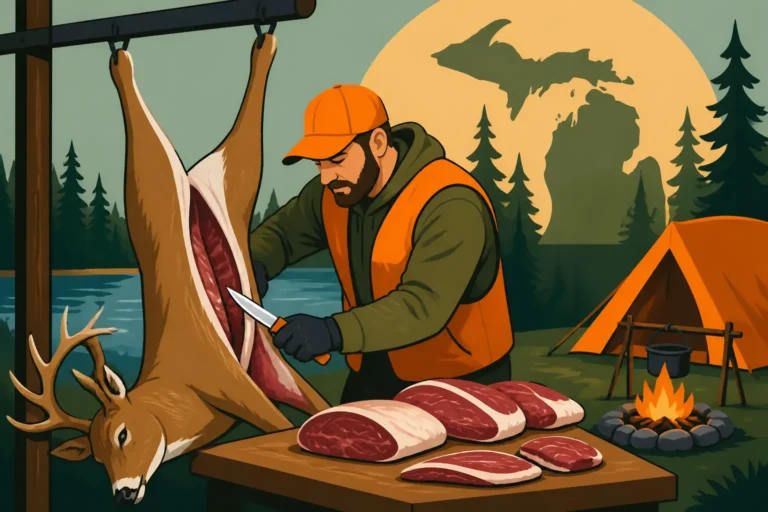
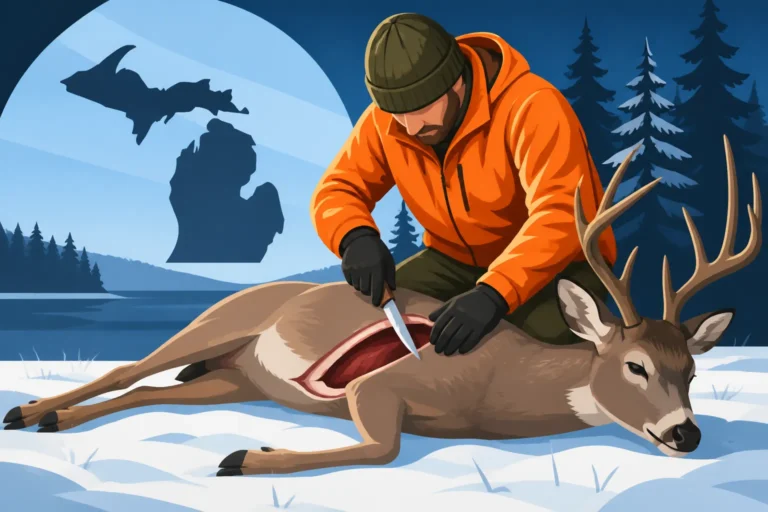
- Field Dressing Kit: A sharp field dressing knife (or two) and a bone saw or gutting tool are essential. For early archery season, when temperatures can still be warm, have game bags ready to protect the meat from flies and dirt. Learn the gutless method for handling a bear after the shot, or even a deer, especially if you're deep in the swamp and need to lighten the load for the drag out.
- Deer Drag/Sled: If you're lucky enough to harvest a deer, getting it out of a Michigan cedar swamp or any thick swamp can be a monumental task. A deer sled for snow country or a deer cart on Michigan two-tracks can save your back and make the recovery process much easier, even in mud or light snow.
Hunting Michigan swamp edges for deer is a challenging but immensely rewarding endeavor. It demands patience, meticulous scouting, and a willingness to work harder than most. But the payoff – a mature Michigan buck taken from his secure daytime sanctuary – is a memory that will last a lifetime. Get out there, embrace the challenge, and unlock the secrets of the swamp.
Disclaimer
Hunting is an inherently dangerous activity. Always prioritize safety, follow all Michigan hunting regulations, and ensure you have the necessary licenses and permits. Be aware of your surroundings, know your target and what is beyond it, and never hunt alone in remote areas without informing someone of your plans. This guide provides general information and recommendations; individual hunting conditions and regulations may vary.