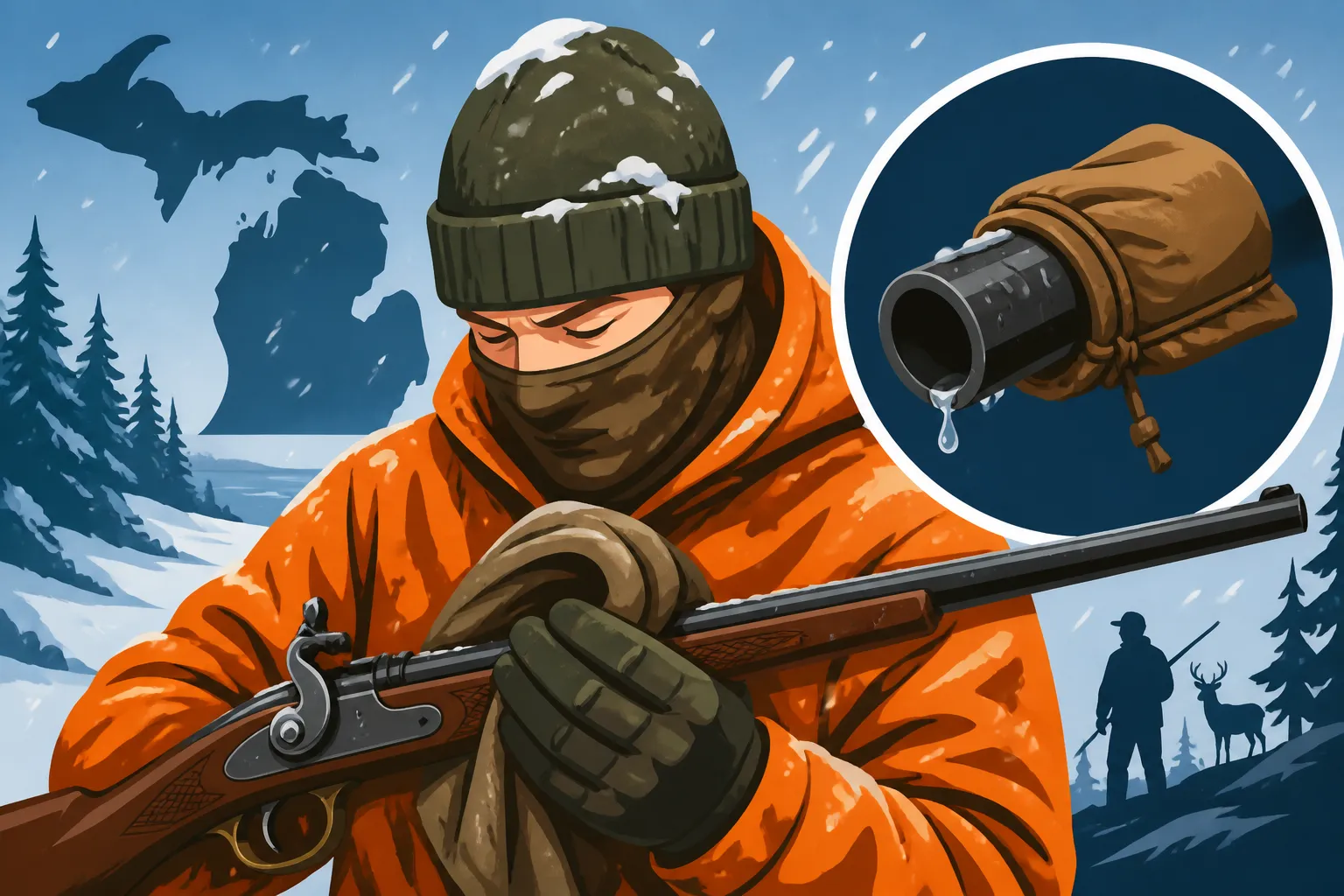
Keeping a Muzzleloader Dry in Wet Snow
There's nothing quite like a cold, crisp Michigan December morning when the snow is falling, promising perfect tracking conditions. But for us muzzleloader hunters, that beautiful, wet snow can quickly turn a hopeful day into a frustrating one if our trusty front-stuffer decides to act like a wet matchstick. The challenge of keeping your muzzleloader dry in wet snow isn't just about comfort; it's about ensuring your shot goes off when that deer finally steps out. This guide will walk you through proven strategies to keep your powder dry and your hunt successful, even when Mother Nature throws everything she's got at you.
The Unique Challenge of Wet Snow for Muzzleloaders
Michigan's late muzzleloader season often brings with it unpredictable weather. One moment it's a light flurry, the next it's a heavy, wet snow that clings to everything. Unlike modern cartridge firearms, muzzleloaders have several critical points where moisture can wreak havoc, leading to misfires or hangfires. It's a real heartbreaker to see a magnificent buck, only to hear a click instead of a bang because of a little bit of melted snow.
Understanding Moisture's Impact on Black Powder
Black powder and its modern substitutes are incredibly sensitive to moisture. Even a tiny amount of water can significantly degrade its ability to ignite reliably. When snow melts and seeps into your barrel, or worse, into your powder charge, it can clump the powder, prevent the spark from igniting the main charge, or cause a dangerously delayed ignition. This isn't just a matter of convenience; it's a safety concern. A hangfire means the powder takes a moment longer to ignite, leading to an unexpected discharge that could throw off your aim or, in extreme cases, be unsafe. Imagine that heart-stopping moment when you pull the trigger, and nothing happens for a second, then boom – you've already lowered the gun, or the deer is gone.
The primary issue is the hygroscopic nature of black powder, meaning it readily absorbs moisture from the air and any contact. When it gets wet, the chemical structure needed for rapid combustion is compromised. While modern substitutes like Hodgdon Triple Seven or Pyrodex are less hygroscopic than traditional black powder, they are by no means immune to the effects of moisture. They still rely on a clear, unobstructed path for the ignition source – whether that's a percussion cap or a 209 primer – to ignite the main charge efficiently. If you're exploring different types of muzzleloaders and their uses in Michigan, our guide on Muzzleloader Deer Hunting in Michigan offers a deep dive into the specifics of hunting with these traditional firearms.
Common Failure Points: Primers, Breech, and Flash Hole
Identifying where water can enter your muzzleloader is the first step to preventing misfires. The most common culprits are the primer or percussion cap area, the breech plug, and the flash hole.
- Percussion Caps/Primers: This is the most exposed part of many muzzleloaders. On a traditional cap-and-ball or percussion rifle, the cap sits directly on the nipple. Wet snow can easily melt and drip onto the cap, soaking it or preventing the hammer from striking it effectively. For 209 primer systems, while more enclosed, the small gap where the primer seats can still allow moisture to enter, especially if it's not perfectly sealed. The primer itself is generally waterproof, but the powder behind it is not, and any moisture that gets into the breech area can contaminate it.
- Breech Plug: The breech plug is where the primer ignites the main powder charge. Even if your primer stays dry, if water gets past the breech plug threads or through the flash hole, your shot is compromised. A loose or improperly sealed breech plug can allow moisture to seep into the barrel from the rear, making your powder wet before you even load it.
- Flash Hole: This tiny hole in the breech plug is the critical pathway for the primer's flash to reach the powder charge. If this hole becomes obstructed by moisture, oil, or carbon buildup, ignition will be delayed or fail entirely. Wet snow can condense inside the barrel, dripping back onto the flash hole, or even get in through the muzzle and run down.
Understanding these vulnerabilities helps us develop a comprehensive strategy for waterproofing. Knowing about these sensitive areas is crucial, especially when you're out hunting in conditions that demand special attention, like those during Muzzleloader Tactics in December Cold.
Proactive Waterproofing: Before You Hit the Snow
The best defense against a wet muzzleloader is a good offense. Taking the time to properly prepare your firearm before you even step foot in the snowy woods can save you a world of grief. Think of it like winterizing your truck – a little effort now prevents major headaches later.
Sealing the System: From Breech to Muzzle
Waterproofing your muzzleloader starts with addressing its most vulnerable points. This isn't about submerging your rifle; it's about preventing casual moisture intrusion from melting snow.
- Breech Plug and Threads: Before assembly, apply a good quality anti-seize compound or a specialized breech plug grease to the threads of your breech plug. This not only prevents galling but also creates a tight seal against moisture. Ensure the plug is tightened snugly but not over-torqued. Some hunters even apply a thin layer of beeswax or plumber's tape to the threads for an extra seal.
- Primer/Cap Area:
- For 209 Primer Systems: Look for rubber O-rings or seals that might be missing or worn around the primer pocket. Replace them if necessary. Many inline muzzleloaders come with a small rubber washer that fits snugly around the primer to seal the ignition channel. A small dab of silicone grease or even chapstick around the base of the primer before inserting it can create an excellent, temporary water barrier. Some hunters carry a small piece of electrical tape to put over the primer and part of the breech, creating a makeshift waterproof seal.
- For Percussion Caps: This is trickier as the cap is fully exposed. The classic trick is to use a finger cot or a piece of medical tubing stretched over the cap and nipple. You can even use a small piece of a balloon. This creates a barrier, but you have to remember to remove it quietly before the shot, which can be challenging in a high-pressure situation. Another method is to lightly coat the cap and nipple with a waterproof grease, though this can make removal for reloading messy.
- Muzzle: This often overlooked entry point can allow snow and rain directly into your barrel. A small piece of electrical tape or masking tape over the muzzle is a simple and effective solution. Just make sure the tape doesn't interfere with the bullet's path and is easily shot through without obstruction. Some hunters prefer purpose-made muzzle caps, often made of rubber or plastic, that fit snugly. A piece of an old inner tube or a dedicated "bore cap" can work wonders.
- Lock and Stock: While not directly affecting ignition, a wet lock can lead to rust and stiff action. Lightly oil the external moving parts of the hammer and lock plate with a moisture-displacing oil. The stock, especially if it's wood, should be well-sealed with a good quality stock finish to prevent water absorption and warping. Synthetic stocks are much less prone to this, but still benefit from periodic checks for cracks or worn finishes.
Custom Covers and Carry Solutions
Beyond sealing the firearm itself, how you carry and store your muzzleloader in the field plays a huge role in keeping it dry. You don't want to carry it openly in a downpour, letting snow accumulate in every crevice.
- Muzzleloader Cases/Socks: For carrying to and from your stand, a waterproof soft case or a muzzleloader "sock" is invaluable. These protect your entire rifle from the elements during transport. Make sure it's easy to remove quickly and quietly. Some companies, like Cabela's or Bass Pro Shops, offer affordable water-resistant gun socks that fit muzzleloaders well.
- Barrel Sleeves/Covers: While actively hunting, a full case is impractical. This is where a lightweight, easily removable barrel sleeve or cover comes in. Many hunters fashion these from old pant legs, waterproof fabric, or even a heavy-duty garbage bag. The goal is to cover the action and breech area, and ideally, the full length of the barrel, while still allowing for quick shouldering and aiming. You want something that can be quickly slipped off or pushed down with minimal noise. A simple elastic band can hold it in place.
- Backpack Carry: If you're still-hunting or moving through thick timber, carrying your muzzleloader slung across your back, muzzle down, can offer some protection. Just be mindful of snow accumulation on your back or shoulders that could then melt onto the action. However, for serious backcountry excursions or longer hikes, a dedicated rifle scabbard on your backpack, preferably with a waterproof cover, can keep your firearm secure and dry. Services like GoHunt offer detailed topographical maps that can help you identify areas with dense cover and less exposure to the elements, which can indirectly aid in keeping your gear dry.
- Strap Management: Ensure your rifle sling is not soaking wet. A wet sling against your shoulder can transfer moisture to the stock or receiver. Consider a synthetic or leather sling that resists water absorption better than cotton or canvas. When you're thinking about the best setup, consider how you'll manage your gear in cold weather. Our guide on Choosing a Muzzleloader for December Cold provides additional tips on selecting the right firearm for these challenging conditions.
By taking these proactive steps, you'll dramatically increase your chances of having a fully functional muzzleloader when that once-in-a-lifetime buck appears.
Field Tactics for Staying Dry During the Hunt
Even with the best preparation, Michigan's weather can be relentless. Once you're out in the field, you need a set of strategies to keep your muzzleloader dry in real-time, adapting to changing conditions.
Protecting Your Muzzleloader on the Stand or Stalk
Whether you're sitting patiently in a stand or slowly navigating through the snowy woods, constant vigilance is key to moisture control.
- In a Treestand: If you're perched high, snow and freezing rain can accumulate quickly.
- Positioning: Try to position your muzzleloader under the treestand platform if possible, or lean it against the tree trunk on the side that offers the most shelter from prevailing winds and snow. Avoid laying it flat on the platform where snow can pile up.
- Covers: Keep your barrel sleeve or a simple garbage bag over the action and muzzle. Many hunters use an old sock or a commercial muzzle cap on the barrel end. The goal is to prevent snow from entering the barrel or soaking the primer/cap.
- Towels/Rags: A small, absorbent towel or shammy kept in a sealed bag can be invaluable. Periodically wipe down any visible moisture from the barrel and action.
- Ground Blinds: If you're using a ground blind, you've got a much better chance of staying dry. A good quality ground blind offers excellent protection from snow, wind, and rain. Make sure it's brushed in well and has a waterproof roof. For more on setting up a blind, check out Using a Ground Blind on Michigan State Land.
- Still-Hunting/Stalking: When you're moving, your muzzleloader is more exposed, and the physical exertion can also create condensation.
- Muzzle Down: Carry your muzzleloader with the muzzle pointed down. This prevents snow or rain from entering the barrel directly. Many slings are designed for this "muzzle-down" carry.
- Under Your Arm: If the snow is light, carrying it under your arm can offer some protection, using your body as a shield.
- Quick Checks: Make a habit of regularly checking the primer/cap and muzzle. A quick wipe with a dry cloth or gloved hand can remove accumulated snow before it melts. When you're deep in the woods, far from your vehicle, ensuring your gear stays dry is paramount. This ties into broader cold weather strategies, like those detailed in Cold Weather Sitting Strategy. Many hunters also find that keeping their core warm helps them stay focused on gear, and layering strategies discussed in Layering for a Michigan Deer Stand can be a huge benefit.
Reloading in the Field Under Adverse Conditions
The worst time for your muzzleloader to get wet is right after you've taken a shot and need to reload for a follow-up. Wet snow makes this process even more challenging.
- Pre-Measured Charges: Always carry your powder in pre-measured, sealed containers. Small vials, plastic tubes, or speed loaders are perfect. These protect the powder from moisture until the moment you need it. Ensure these containers are truly waterproof, not just water-resistant.
- Loading Procedure in Snow:
- Seek Shelter: If possible, move to a spot with some overhead cover (dense evergreens, a fallen log, or even just ducking behind a large tree) to minimize direct snow falling into the barrel.
- Dry Hands: Ensure your hands are as dry as possible. Wear waterproof gloves or remove a glove temporarily to handle the powder and bullet.
- Wipe Bore: Before pouring powder, quickly run a dry patch down the barrel to remove any residual moisture.
- Careful Pour: Slowly and carefully pour the powder charge into the barrel. Avoid spilling any, as wet powder is wasted powder.
- Bullet and Sealing: Seat your bullet firmly. If you're using a muzzle cap or tape, reapply it to the muzzle immediately after loading.
- Primer/Cap Protection: Place a fresh, dry primer or percussion cap. If you use a finger cot or electrical tape, apply it now.
- Emergency Primer Storage: Always carry spare primers or caps in a completely waterproof container, like a small pill bottle with a tight-fitting lid, or a dedicated primer caddy. These should be stored in an inside pocket of your hunting jacket to keep them warm and dry against your body heat.
| Muzzleloader Component | Waterproofing Method | Materials/Tips | Frequency |
|---|---|---|---|
| Primer/Cap Area | Sealing & Cover | Electrical tape, finger cot, silicone grease, O-rings | Pre-hunt & after shot |
| Breech Plug | Anti-seize/Grease, Tight Seal | Specialized breech plug grease, beeswax, plumber's tape | Pre-hunt (monthly) |
| Muzzle | Tape/Cap | Electrical tape, rubber muzzle cap, inner tube piece | Pre-hunt & after shot |
| Powder Charges | Waterproof Containers | Pre-measured vials, speed loaders, sealed plastic tubes | Always |
| Barrel (External) | Wax/Oil | Wax-based gun protectant, light gun oil | Pre-hunt (weekly) |
| Stock (Wood) | Quality Finish | Linseed oil, polyurethane, regular waxing | Seasonally |
Even if you're out scouting with modern mapping tools like GoHunt, visualizing the terrain for natural shelters can be a part of your dry-hunting strategy. Knowing where a dense stand of pines might offer a quick refuge can make all the difference when a snow squall rolls in.
Post-Hunt Care and Maintenance After a Snowy Day
The hunt isn't truly over until your gear is properly cared for. A muzzleloader that got wet in the snow, even if it fired flawlessly, needs immediate attention to prevent rust and ensure it's ready for the next outing. Neglecting this step can lead to expensive damage and unreliable performance down the road.
Immediate Drying and Dehumidification
As soon as you're back in the warmth of your truck, cabin, or home, the clock starts ticking. Melting snow creates moisture, and moisture combined with steel is a recipe for rust.
- External Wipe Down: The very first thing to do is remove any snow and external moisture. Use a dry rag or towel to thoroughly wipe down every exterior surface of your muzzleloader – barrel, action, stock, and scope. Pay extra attention to crevices and moving parts where water can hide.
- Disassemble Key Components: For best results, carefully remove the breech plug. This allows you to inspect the flash hole and the internal barrel near the breech for moisture. If your firearm uses a percussion nipple, remove that as well.
- Internal Drying:
- Barrel: Run several dry patches down the barrel to absorb any moisture. If you suspect significant water intrusion, use a patch soaked in a water-displacing solvent (like Ballistol or Break-Free CLP) followed by dry patches.
- Breech Plug/Nipple: Use cotton swabs or small pipe cleaners to dry the flash hole and the inside of the breech plug/nipple.
- Primer Pocket: For inline muzzleloaders, ensure the primer pocket is completely dry. Use compressed air if available, or cotton swabs.
- Air Drying: Once wiped down, stand your muzzleloader upright (muzzle down, if possible, to allow any remaining water to drain, or muzzle up to allow solvents to drain into a rag) in a warm, dry area. Avoid direct heat sources like open flames or high-heat vents, which can damage the stock or finish. A gentle fan can help circulate air and speed up drying. For added dehumidification, place a desiccant pack or two near the action or inside the gun safe once it's completely dry.
- Don't Rush Storage: Never put a muzzleloader that has been exposed to moisture directly back into a sealed gun case or safe without ensuring it's completely dry. This will trap moisture and accelerate rust.
Thorough Cleaning and Rust Prevention
Once your muzzleloader is dry, a thorough cleaning and application of rust preventative are essential, especially if you had to fire it in wet conditions. Even if you didn't fire, moisture can still get into the bore.
- Complete Cleaning: Follow your manufacturer's instructions for a full cleaning. This usually involves using a specialized muzzleloader solvent to remove powder fouling, which can attract and hold moisture. Pay close attention to the bore, breech plug, and all internal mechanisms. For more general advice, our article on Cleaning a Rifle After a Wet Sit offers some excellent tips that can be adapted for muzzleloaders.
- Rust Inhibitor: After cleaning, apply a high-quality rust-inhibiting oil or wax to all metal surfaces, both inside and out. Products like Eezox, Corrosion X, or Renaissance Wax are excellent choices for long-term rust protection. Ensure a thin, even coat.
- Lubrication: Lightly lubricate all moving parts with a suitable gun oil. This ensures smooth operation and adds another layer of moisture protection.
- Storage: Once clean, dry, and protected, your muzzleloader can be safely stored. A gun sock treated with a rust inhibitor can offer additional peace of mind within your gun safe. Remember, proper care after the hunt extends the life of your firearm and guarantees its readiness for the next adventure. Looking forward to your next hunting trip? Make sure you know all the details about Michigan Muzzleloader Season Dates so you can plan accordingly.
By dedicating time to both pre-hunt waterproofing and diligent post-hunt care, you can tackle Michigan's wet, snowy conditions with confidence, knowing your muzzleloader will perform when it counts. Happy hunting!
Disclaimer
The information provided in this guide is for informational purposes only and is not a substitute for professional advice or proper training. Always consult official Michigan Department of Natural Resources (DNR) regulations and guidelines before hunting. Adhere to all firearm safety rules and regulations. The author and publisher are not responsible for any accidents, injuries, or legal issues that may arise from the use of this information.