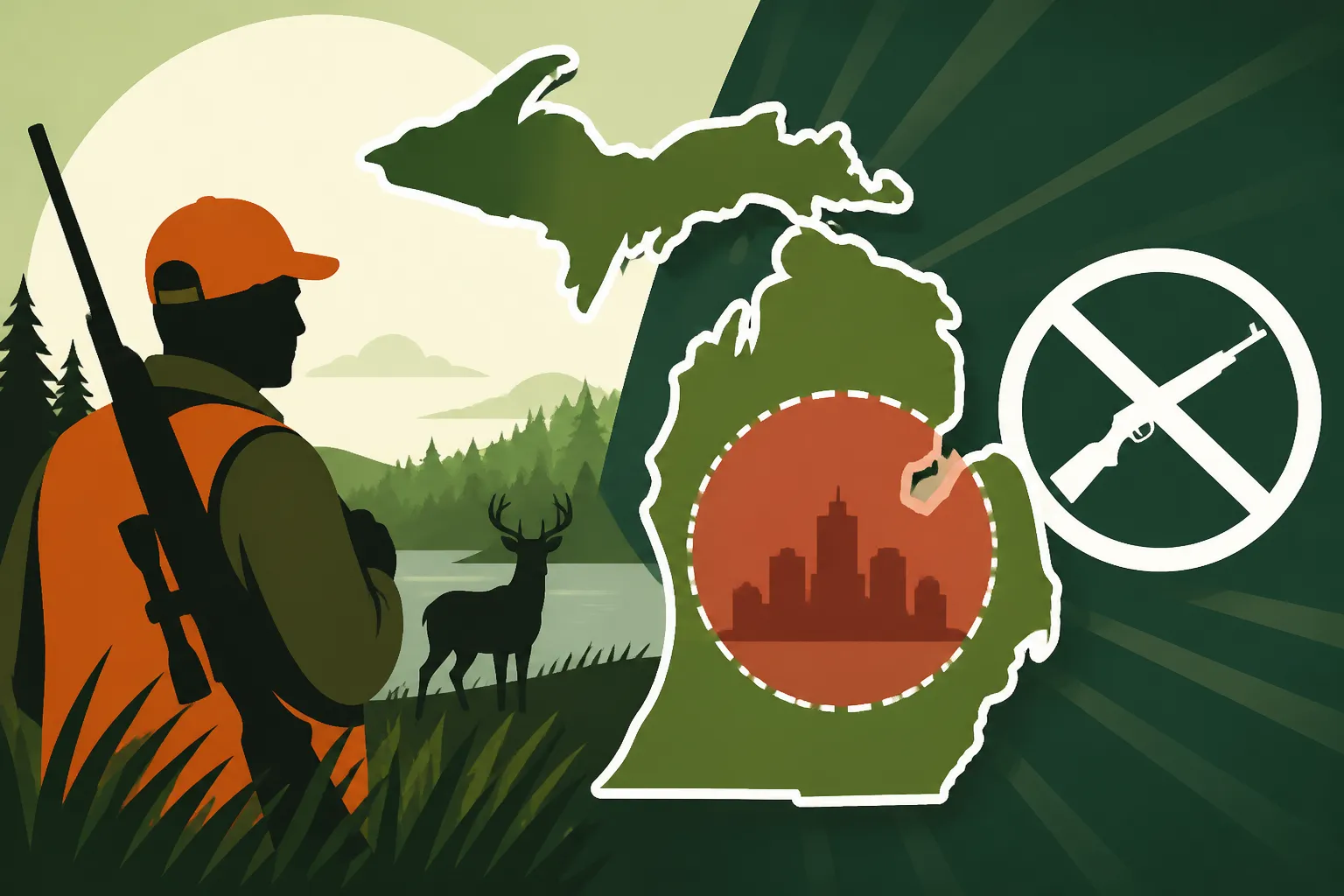
What the Michigan Limited Firearm Zone Means
For Michigan hunters, few things cause as much head-scratching and whispered debates around the deer camp as the state's "Limited Firearm Zone." It's a source of genuine confusion for many, especially those new to hunting or traversing different parts of the state, wondering if their trusty rifle is legal where they plan to hunt. This guide is here to untangle the nuances of this specific regulation, helping you understand exactly what it means for your hunting pursuits in Michigan.
Michigan's Unique Firearm Zone: What It Is and Why It Matters
Michigan is a state of diverse landscapes, from the dense forests of the Upper Peninsula to the rolling farmlands and growing suburban sprawl of the Lower Peninsula. This varied terrain, coupled with differing population densities, led to the implementation of specific hunting regulations designed to ensure safety while preserving hunting opportunities. The Limited Firearm Zone is a prime example of this tailored approach.
The Line in the Sand: Defining the Limited Firearm Zone
So, where exactly is this elusive line? Essentially, Michigan is divided into two main zones for firearm hunting: the Limited Firearm Zone and the All Rifles Zone. The Limited Firearm Zone covers the southern portion of the Lower Peninsula. Imagine a line generally drawn along M-20 from the west coast, eastward to US-10, and then continuing along US-10 to the east coast. Everything south of that imaginary line falls within the Limited Firearm Zone.
This isn't just a suggestion; it's a hard and fast boundary that dictates what types of firearms you can legally use for deer hunting. Many hunters use mapping applications, like those offered by GoHunt, or the Michigan DNR's own Scouting With Michigan's Mi-HUNT Map, to precisely locate these boundaries when planning their trips. It's not uncommon for a hunter to own land that straddles the line, making it crucial to know which part of their property falls into which zone. This isn't a small detail; using an illegal firearm can lead to severe penalties.
The Rationale: Why Michigan Has These Rules
The existence of the Limited Firearm Zone isn't arbitrary; it's rooted in public safety. The southern Lower Peninsula is significantly more populated than the northern parts of the state. It features a higher density of residential areas, roads, and smaller parcels of private land. In such an environment, the concern is that high-powered rifle projectiles, which can travel for miles, pose an unacceptable risk to non-hunters and property beyond the immediate hunting area.
Think about a typical hunting scenario in southern Michigan farm country: you might be hunting a woodlot bordered by a cornfield, with houses or a busy road not far beyond. A bullet from a traditional centerfire rifle could easily travel far beyond your target and the property you're hunting, potentially endangering someone kilometers away. The regulation aims to mitigate this risk by restricting hunters to firearms that generally have a shorter effective range and whose projectiles lose energy more quickly. It's a balancing act: allowing hunting in populated areas while minimizing the risk to the general public.
Permitted Firearms in the Limited Firearm Zone
The "limited" in Limited Firearm Zone doesn't mean you can't hunt with a firearm; it just means you need to be mindful of what you're carrying. There are still plenty of effective and popular options available for deer hunters in this region.
Shotguns and Straight-Walled Cartridges: Your Primary Options
Historically, the shotgun was the undisputed king of deer hunting in Michigan's southern counties. Loaded with slugs, these firearms have been responsible for countless harvests. Modern slug guns, especially those with rifled barrels, can be incredibly accurate out to 150-200 yards, making them formidable deer tools. However, the game changed significantly with the introduction of straight-walled centerfire cartridges.
Michigan expanded its regulations to allow specific straight-walled cartridges for deer hunting within the Limited Firearm Zone. This was a huge win for hunters who desired rifle-like performance without violating the intent of the zone's safety rules. These cartridges, typically used in lever-action rifles, single-shot rifles, or even AR-platform firearms, offer excellent ballistics with projectiles that generally don't travel as far as traditional bottle-necked rifle cartridges.
Common examples of legal straight-walled cartridges include:
- .450 Bushmaster: A true powerhouse, offering significant knockdown power.
- .350 Legend: A very popular choice, known for its mild recoil and good ballistics for deer.
- .44 Magnum: A classic handgun cartridge, also effective in rifles.
- .357 Magnum: Another handgun cartridge that performs well in a rifle platform.
- Other calibers: There are many others, but the key is that the cartridge case is straight-walled, meaning it doesn't have a shoulder like a typical rifle cartridge (e.g., .30-06 or .270).
When considering a firearm for the Limited Firearm Zone, it's absolutely crucial to consult the Michigan DNR regulations for the most current list of Straight-Wall Cartridges Legal in Michigan and to ensure your specific firearm and ammunition combination complies. Many hunters appreciate the increased accuracy and effective range that these cartridges offer compared to traditional shotguns, giving them more confidence on longer shots in open field edges or power line cuts.
Handguns, Muzzleloaders, and Archery: Other Legal Choices
Beyond shotguns and straight-walled rifles, hunters in the Limited Firearm Zone have several other options:
- Handguns: Many centerfire handguns, chambered in calibers like .44 Magnum, .357 Magnum, .41 Magnum, .45 Colt, and even some specialized wildcat cartridges, are legal for deer hunting. These can present a unique challenge and require significant practice to achieve ethical shot placement, especially at distances beyond 50 yards. However, for those who master them, handgun hunting offers a unique experience.
- Muzzleloaders: Black powder firearms are a time-honored tradition in Michigan, and they are perfectly legal in the Limited Firearm Zone. Muzzleloader season, often held after the main firearm season, provides a fantastic opportunity. You'll need to check the specific Michigan Muzzleloader Season Dates, but these primitive weapons add an extra layer of challenge and satisfaction to the hunt. Just like with modern firearms, ensuring your muzzleloader is sighted in and you understand its effective range is paramount.
- Archery Equipment: Bowhunting is permitted statewide during its designated seasons, regardless of whether you're in the Limited Firearm Zone or the All Rifles Zone. This includes traditional bows, compound bows, and crossbows. Bowhunting requires a different skill set, focusing on close-range encounters and precise shot placement. The early archery season can be a fantastic time to be in the woods before the general firearm pressure starts. Bowhunting Michigan's Split Archery Season details these opportunities.
The flexibility in legal methods means that hunters in the southern Lower Peninsula still have a wide array of choices to pursue deer. Your specific hunting style, comfort with different firearms, and the type of terrain you hunt will often dictate your preference.
What's Restricted: Understanding the Prohibited Firearms
While many firearm types are permitted, the core of the Limited Firearm Zone regulation lies in what is not allowed for deer hunting. Understanding these restrictions is just as important as knowing what you can use.
Traditional Rifles: The Main Limitation
The primary restriction in the Limited Firearm Zone is on traditional, bottle-necked centerfire rifles. This includes many of the most common and popular hunting calibers across the country and in the northern part of Michigan, such as:
- .30-06 Springfield
- .270 Winchester
- .308 Winchester
- 6.5 Creedmoor
- .243 Winchester
- 7mm Remington Magnum
These cartridges are characterized by their "bottleneck" shape, where the case narrows down to hold a smaller diameter bullet. This design allows for higher velocities and longer effective ranges, which is precisely why they are restricted in the more densely populated southern Michigan. If you typically hunt in the Upper Peninsula or the northern Lower Peninsula, you might be used to carrying one of these rifles. However, bringing such a firearm into the Limited Firearm Zone for deer hunting is a violation of the law. It's a mistake that can be easily made by hunters unfamiliar with the specific boundaries and could lead to confiscation of your firearm and significant fines. Checking the rules annually is always a good practice, and resources like GoHunt often update their digital maps with the latest regulations.
The Science Behind the Restriction: Projectile Range Concerns
The Michigan DNR bases these restrictions on the potential danger presented by the maximum effective range and terminal velocity of different projectiles. A bullet from a .30-06, for instance, can travel several miles, retaining enough energy to be lethal far beyond what a hunter can visually confirm or reasonably control. In contrast, shotgun slugs and straight-walled rifle cartridges, while powerful at ethical hunting distances, shed their energy and drop much more rapidly.
Consider a scenario: a hunter takes a shot at a deer in a small woodlot in St. Clair County. If they were using a .270 rifle, and the shot missed or passed through the animal, that bullet could potentially travel over three miles. In a densely populated area, the chances of that bullet landing in a residential backyard, a farm building, or even hitting a person are significantly higher than in the remote big woods of the Upper Peninsula. The regulations are a proactive measure to prevent such incidents, prioritizing public safety over the convenience of using long-range firearms everywhere.
It's important to differentiate. This restriction applies specifically to deer hunting. For other game species, like coyotes or other predators, traditional centerfire rifles may be legal to use in the Limited Firearm Zone, but always check the specific regulations for the species and time of year you intend to hunt. The rules for deer are the most stringent due to the popularity and prevalence of deer hunting.
Practical Considerations for Hunters in the Zone
Navigating the Limited Firearm Zone requires thoughtful preparation and a commitment to understanding the rules. It's not just about avoiding legal trouble; it's about being a responsible and ethical hunter.
Gear Selection and Strategic Planning
Your choice of firearm in the Limited Firearm Zone will directly impact your hunting strategy. If you're using a shotgun with slugs, you'll want to practice extensively at ranges out to 100-150 yards to understand its capabilities. For those embracing straight-walled cartridges like the .450 Bushmaster or .350 Legend, you might find your effective range extends a bit further, perhaps to 200 yards with practice and a good optic. However, even with these, it's critical to know your personal limits and the firearm's capabilities.
- Optics: Given the typical hunting environments in southern Michigan – woodlots, field edges, thick cover – a good quality scope with decent low-light gathering capabilities is invaluable. You might not need extreme magnification, but clarity is key.
- Ammunition: Test various loads to find what performs best in your firearm. Ammunition for straight-walled cartridges can be popular, so plan ahead.
- Stand Placement: When setting up a treestand or ground blind, always consider your background and potential bullet trajectory. Even with shorter-range firearms, ethical hunting demands a clear understanding of what lies beyond your target. This is particularly crucial in areas with a mix of public and private land, or near roads and residences. GoHunt's mapping features often show property lines and residential areas, which can be invaluable for strategic planning.
Remember, Rifle Setups for Michigan Deer might look different depending on which zone you're in. A setup ideal for northern Michigan's wide-open spaces might be overkill or illegal in the south.
Staying Legal: Resources and Responsibilities
Ignorance of the law is never an excuse. As a hunter, it's your personal responsibility to know and abide by all Michigan hunting regulations.
- DNR Website and Regulations Handbook: The Michigan DNR's website and their annual hunting and trapping digests are the authoritative sources for all regulations. Always review these before heading afield, as rules can change.
- Mapping Apps: Apps like GoHunt, which integrate parcel data and public land boundaries, are extremely helpful for identifying whether you are within the Limited Firearm Zone. They allow you to pinpoint your exact location and see the zone lines, preventing accidental violations.
- Ask Questions: If you're unsure, ask a conservation officer, an experienced hunter, or contact the DNR. It’s always better to clarify before you hunt. New hunters should seriously consider enrolling in a Michigan Hunter Safety Requirement course, which covers many of these essential rules.
- Carrying a Copy of Regulations: Keeping a digital or physical copy of the current regulations handbook with you while hunting is a smart move.
The state also requires all harvested deer to be reported. Knowing your zone and compliance with firearm rules is part of this overall responsibility, tied into your Michigan Hunting Licences and What They Cost.
The Impact on Hunting Strategies
The Limited Firearm Zone doesn't just dictate your equipment; it can subtly influence your hunting approach. Since shot distances are generally shorter with legal firearms, a greater emphasis is often placed on getting closer to the deer.
- Still-Hunting and Drives: These tactics become more viable. In southern Michigan, where small woodlots and swamps are common, working with a small group of hunters for a deer drive, or carefully still-hunting, can be effective in getting deer within range of your shotgun or straight-walled rifle.
- Funnel Points: Identifying natural funnels – narrow strips of cover between fields, pinch points between swamps and roads – becomes even more critical. These areas increase the likelihood of a close-range encounter.
- Food Sources: Hunting over late-season food sources like standing corn or leftover beans can bring deer into predictable, closer ranges, suitable for the firearms allowed in the zone.
While the restrictions might seem daunting at first, they've fostered a specific style of hunting in southern Michigan that prioritizes woodsmanship and strategic placement. Hunters in these areas have adapted and continue to enjoy highly successful deer seasons.
| Firearm Type | Limited Firearm Zone (South of M-20/US-10) | All Rifles Zone (North of M-20/US-10) |
|---|---|---|
| Traditional Rifles | Generally Prohibited for Deer Hunting | Permitted for Deer Hunting |
| (e.g., .30-06, .270, .308) | ||
| Shotguns (with slugs) | Permitted for Deer Hunting | Permitted for Deer Hunting |
| Straight-Walled Rifles | Permitted for Deer Hunting | Permitted for Deer Hunting |
| (e.g., .450 Bushmaster, .350 Legend) | ||
| Muzzleloaders | Permitted for Deer Hunting | Permitted for Deer Hunting |
| Handguns | Permitted for Deer Hunting | Permitted for Deer Hunting |
| Archery Equipment | Permitted for Deer Hunting | Permitted for Deer Hunting |
| (Bows, Crossbows) |
Disclaimer
This article is for general informational purposes only and does not constitute professional advice. Laws, prices and regulations vary by location and change over time. Consult a qualified professional for guidance on your specific situation.