Diver Decoy Spreads and Long Lines
For many Michigan waterfowl hunters, the thought of diver ducks conjures images of vast, open water, crashing waves, and the sheer challenge of coaxing these fast-flying birds into a spread. It's a completely different ballgame from puddler hunting in a calm marsh, and often leaves hunters feeling overwhelmed by the gear, the logistics, and the sheer power of the Great Lakes. This guide is all about demystifying diver decoy spreads and long lines, giving you the practical knowledge and confidence to tackle Michigan's big water for bluebills, canvasbacks, redheads, and more.
Understanding Diver Duck Behavior and Habitat in Michigan
Diver ducks are a fascinating and challenging quarry, distinct from their dabbling cousins in almost every way. To successfully hunt them on Michigan's vast waters, you first need to understand them – their biology, their habits, and why they choose the specific habitats they do.
The Lure of Michigan's Big Water Divers
Michigan is truly blessed with incredible waterfowl resources, and our Great Lakes are a magnet for migrating diver ducks. Species like Greater and Lesser Scaup (bluebills), Canvasbacks, Redheads, Common Goldeneyes, and Buffleheads make incredible journeys, and many stage or pass through our waters. What sets divers apart is their feeding mechanism: they literally dive underwater, often to considerable depths, to find their food. This isn't just a quick dunk; they can stay submerged for quite a while, propelling themselves with their large feet. Their diet typically consists of aquatic vegetation, seeds, and most importantly, small invertebrates like mussels, snails, and insect larvae found on the lake bottom. This feeding habit is precisely why you'll find them in deeper, more open water environments, rather than the shallow, vegetated margins where mallards and wood ducks prefer to tip up.
The sheer speed and direct flight path of a diver duck can be breathtaking. They often fly low over the waves, sometimes seemingly immune to strong winds, presenting a thrilling challenge for wingshooters. Understanding that they need specific submerged food sources will guide your scouting; look for areas with healthy aquatic mussel beds or expansive underwater grass flats. These birds are built for the big water, and their presence is a clear indicator of a healthy, productive Great Lakes ecosystem.
Reading the Water: Ideal Diver Hunting Spots
Hunting divers isn't about finding a pothole; it's about reading the vastness of our lakes and pinpointing those crucial areas where divers congregate. On Saginaw Bay, Lake St. Clair, or the shorelines of Lake Huron and Lake Michigan, the best spots often aren't immediately obvious from shore. You're looking for underwater structure that funnels birds or provides consistent feeding opportunities. Think about prominent points that jut out into the lake, natural reef systems, shoals that rise from deeper water, or deep channels that run relatively close to shore. These features act like underwater highways and rest stops for migrating divers.
Current and wind are your constant companions on the big water, and they play a massive role in diver hunting. Divers will often "loaf" or stage in areas where the current is manageable but still provides a steady supply of food. Wind creates chop, which can hide your blinds and make decoys more lifelike, but too much wind can make deployment and retrieval dangerous, not to mention creating whitecaps that make birds impossible to spot. Learning to read wave patterns and understand how current interacts with underwater structure is key. A valuable tool like GoHunt's mapping features can show you bathymetric contours (water depth), helping you identify those submerged reefs and drop-offs that divers favor. Always consider how these elements will affect your spread and your ability to safely retrieve downed birds.
Essential Gear for Diver Decoy Spreads on Michigan's Great Lakes
Hunting diver ducks requires a specialized approach, and that extends directly to your gear. Forget your mallard dekes and short anchor lines; big water demands robust equipment designed to withstand the elements and effectively lure in fast-moving birds.
The Right Decoys for Diver Ducks
When it comes to diver decoys, realism and visibility are paramount, especially on expansive water. Unlike puddlers that might mill around a small pond, divers are often flying at speed over vast distances. You'll want species-specific decoys that accurately represent the birds you're targeting. For bluebills, that means the classic black, white, and gray body with a blue bill. Canvasbacks, with their distinctive sloped forehead and red head, need to be easily identifiable. Redheads and goldeneyes also have unique profiles that should be represented. Mix your spread with a variety of these species, leaning heavily towards the most common birds in your area, like scaup and canvasbacks, during the migration.
Size matters, too. In the choppy conditions of the Great Lakes, standard puddle duck decoys can disappear. Larger, "magnum" or "super magnum" diver decoys offer increased visibility from a distance, making your spread stand out against the waves. Ensure your decoys have solid, stable keels that allow them to ride the waves naturally without spinning excessively or flipping over. While "more is more" is a common adage for diver hunting, the practical reality of deploying and retrieving a massive spread means you'll need to balance numbers with manageability. A good starting point might be 3-5 dozen, but some hardcore diver hunters run hundreds. If you're just getting started, focus on quality over quantity and gradually build your spread.
Long Lines, Anchors, and Retriever Systems
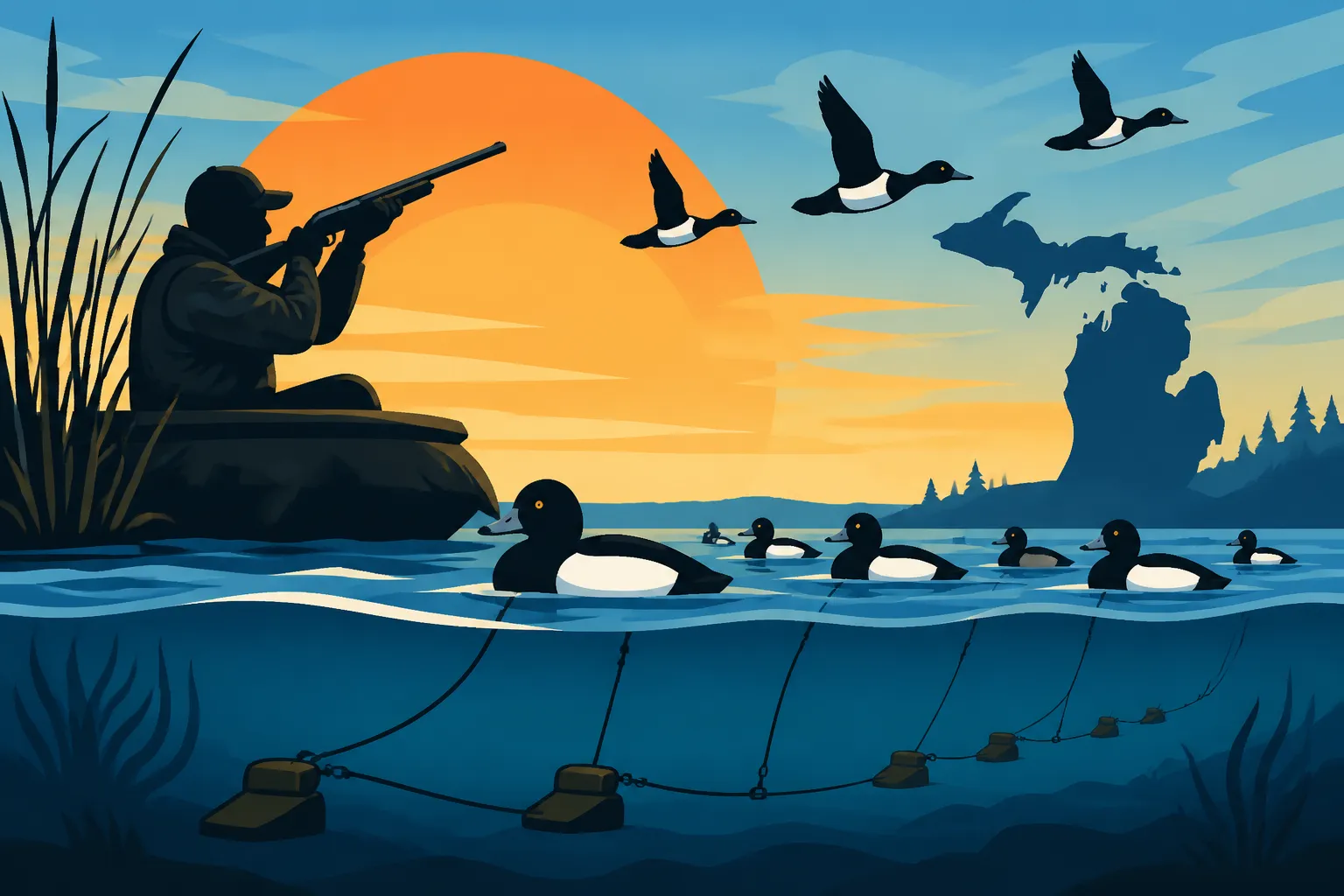
This is where diver hunting truly diverges (pun intended!) from typical marsh setups. Long lines are the backbone of a diver spread. Instead of individual decoy lines, you'll string multiple decoys onto a single main line, typically 50 to 100 feet long or more. This allows for much quicker deployment and retrieval of dozens of decoys at once. The material for your long lines should be robust; tarred trotline is a classic choice, durable and less prone to tangling, or heavy-gauge monofilament for its low visibility. You'll need spacers (often small plastic clips or swivels) that attach to your main line, allowing you to clip individual decoys at consistent intervals, usually 8-12 feet apart.
Each end of your long line needs a substantial anchor. Forget lead weights for a single decoy; we're talking about mushroom anchors, sash weights, or even concrete blocks that weigh 5-10 pounds each. These heavy anchors are essential to hold your spread against strong currents and high winds. When the hunt is over, retrieving these lines and anchors can be a challenge. A grappling hook attached to a sturdy rope is indispensable for snagging the main lines. Specialized poles with hooks or nets can also help with individual decoys or anchors that become dislodged. Remember, you're often working in cold water, sometimes with waves, so having a well-rehearsed system for deployment and retrieval is vital for safety and efficiency. This system prevents a nightmare of tangled lines and lost gear, especially when the weather decides to turn on you quickly.
Crafting Effective Diver Decoy Spreads in Michigan Waters
Once you have your gear, the real artistry of diver hunting comes into play: arranging your decoys to maximize their appeal to passing birds. It’s not just about throwing them out there; it’s about creating an illusion that speaks directly to a diver’s instincts.
The "J" Hook and Other Classic Spreads
The most widely used and effective diver spread is arguably the "J" hook or variations of it. Imagine a capital "J" laid on its side, with the long, straight part extending downwind or down current, and the curve sweeping upwind. The idea is that passing divers will spot the long, visible line of decoys from a distance, fly along it, and then "hook" into the bend of the J, landing in the open water pocket created by the curve. This open water pocket is where your layout blind or tender boat should be positioned, giving you prime shooting opportunities as the birds cup their wings to land. Decoy Spreads for Great Lakes Divers often use this basic design, adapting it slightly based on the specific location and species targeted.
Other classic shapes include the "U" or "V" spread, which work similarly by creating a landing zone within the curve. These are particularly effective in areas with a consistent crosswind or current, guiding birds directly into your shooting lane. The long, prominent arms of these spreads, often consisting of 20-30 decoys each, ensure high visibility even on choppy water or at long distances. You want your spread to look like a natural raft of resting or feeding birds, inviting new arrivals to join. Critically, these spreads rely on a clear, unobstructed landing zone. Any obstacles, like shallow water, shorelines, or dense weeds, directly in the path of the curve will deter birds from committing.
Adapting Spreads to Michigan's Conditions
Michigan's weather and water conditions are rarely constant, so rigidity in your spread design will lead to frustration. You need to be adaptable. Wind and current are the primary drivers of diver duck movement and how your decoys will behave. On a day with strong winds, your anchors need to be heavier, and your lines tighter to prevent the spread from drifting or becoming a tangled mess. Pay attention to how the decoys ride the waves; a spread that looks natural and moves with the water will be more enticing than one that’s fighting the elements. For instance, in areas with significant current, setting the long, straight arm of your J-hook to run with the current will allow birds to follow it easily, using the water's flow.
Water depth can also change throughout the day, especially on the Great Lakes with seiches (standing waves) and variable wind pushing water. Be prepared to adjust your anchor lines or even reposition sections of your spread if the depth changes dramatically. Visibility plays a huge role; on calm, sunny days, birds might spot your blind more easily, necessitating a wider, more spread-out pattern. On dark, choppy days, you might be able to get away with a tighter, more concentrated cluster. Some hunters add a few coot or ringneck decoys into their diver spreads. Coots, being dark and highly visible, can attract attention from a distance, while ringnecks often associate with scaup. Even subtle motion, like a jerk string attached to a few key decoys or specialized "swimmer" decoys from brands like GoHunt, can add a lifelike element that makes your spread irresistible to weary migrants.
| Spread Type | Description | Ideal Conditions | Advantages | Disadvantages |
|---|---|---|---|---|
| J-Hook | Long line forming a "J" with open water at the curve. | Moderate wind/current, open water. | Guides birds to a landing zone, highly visible. | Can drift in strong currents if under-anchored. |
| U/V Shape | Similar to J-Hook, creates a pocket in the middle. | Crosswind, stable current. | Excellent landing zone, good visibility. | Requires careful positioning relative to wind. |
| Loafing Raft | Dense, irregular cluster of decoys. | Calmer water, targeting resting birds. | Mimics large group, can attract wary birds. | Less effective at guiding flight paths. |
| Trailing String | Long line of decoys extending out from a point or blind. | Minimal current, targeting birds moving along shore. | Simple, effective for passing shots. | No distinct landing zone, relies on passing birds. |
Safety and Logistics for Michigan Diver Hunting
There’s no denying the allure of diver hunting on Michigan’s big waters, but it comes with inherent risks that must be respected. Preparation, safety, and efficient logistics are not just recommendations; they are absolutely critical for a successful and safe outing.
Big Water Safety First
This is not an optional section. Hunting Michigan’s Great Lakes or large inland lakes for divers is an endeavor that demands utmost respect for the water. The dangers are real: rapidly changing weather, powerful waves, sudden squalls, cold water immersion, and getting lost in fog or vast expanses. Before you ever leave the dock, check the marine weather forecast meticulously. Pay close attention to wind speed, wave height predictions, and water temperature. Conditions can shift from calm to dangerous in minutes. Never venture out alone, and always let someone know your float plan – where you're going and when you expect to return.
Your boat must be seaworthy, adequately powered, and equipped with all required safety gear, including enough Life Jackets for Layout Hunting for everyone onboard. A VHF radio is essential for communication, as cell service can be spotty far from shore. Carry emergency flares, an air horn, a first-aid kit, and a functional bilge pump. Dressing in layers, including waterproof outer shells, is a must. If using a layout boat, ensure your tender boat operator is highly skilled and understands the dynamics of picking up a layout boat in rough conditions. Tender Boats and Safety on Big Water are a critical part of the diver hunting system. Remember, no duck is worth risking a life. If in doubt, stay on shore.
Transporting and Deploying Your Diver Spread
Managing dozens, sometimes hundreds, of decoys and their heavy long lines is a logistical challenge that can make or break a hunt. You can’t just toss everything in the back of your truck. Specialized decoy bags or large tubs are invaluable for keeping your decoys organized and preventing tangles during transport. Many hunters use large plastic totes for their long lines, carefully coiled and anchored, to ensure a smooth deployment. Label your lines clearly, perhaps with different colored buoys, so you know which is which in the dark.
Developing an efficient deployment and retrieval strategy is key, especially in cold, dark, or choppy conditions. Most diver hunters use a tender boat – a larger, more stable vessel – from which they deploy their spread and retrieve downed birds, while the shooter sits in a low-profile layout boat. The tender boat operator typically drops the downwind anchor of each long line first, then drives into the wind or current, paying out the line and decoys, before dropping the upwind anchor. This minimizes tangles and ensures the spread sets correctly. Retrieval is the reverse, requiring coordination and careful handling to prevent lines from fouling. Having a system in place, where each person knows their role, makes the process much safer and more enjoyable, allowing you to focus on the hunting itself rather than battling your gear.
Disclaimer
This article is for general informational purposes only and does not constitute professional advice. Laws, prices and regulations vary by location and change over time. Consult a qualified professional for guidance on your specific situation.