Michigan Rabbit and Hare Seasons
It's incredibly frustrating when you're geared up for a day afield, only to realize you're not entirely sure about the exact dates or specific rules for the game you're after. Michigan's diverse seasons can feel like a tangled mess sometimes, especially when you're trying to figure out if you can chase those elusive snowshoe hares or the ubiquitous cottontails. This guide aims to untangle all the confusion surrounding Michigan's rabbit and hare seasons, ensuring you step into the woods with confidence and a clear understanding of the regulations.
Understanding Michigan's Rabbit and Hare Seasons
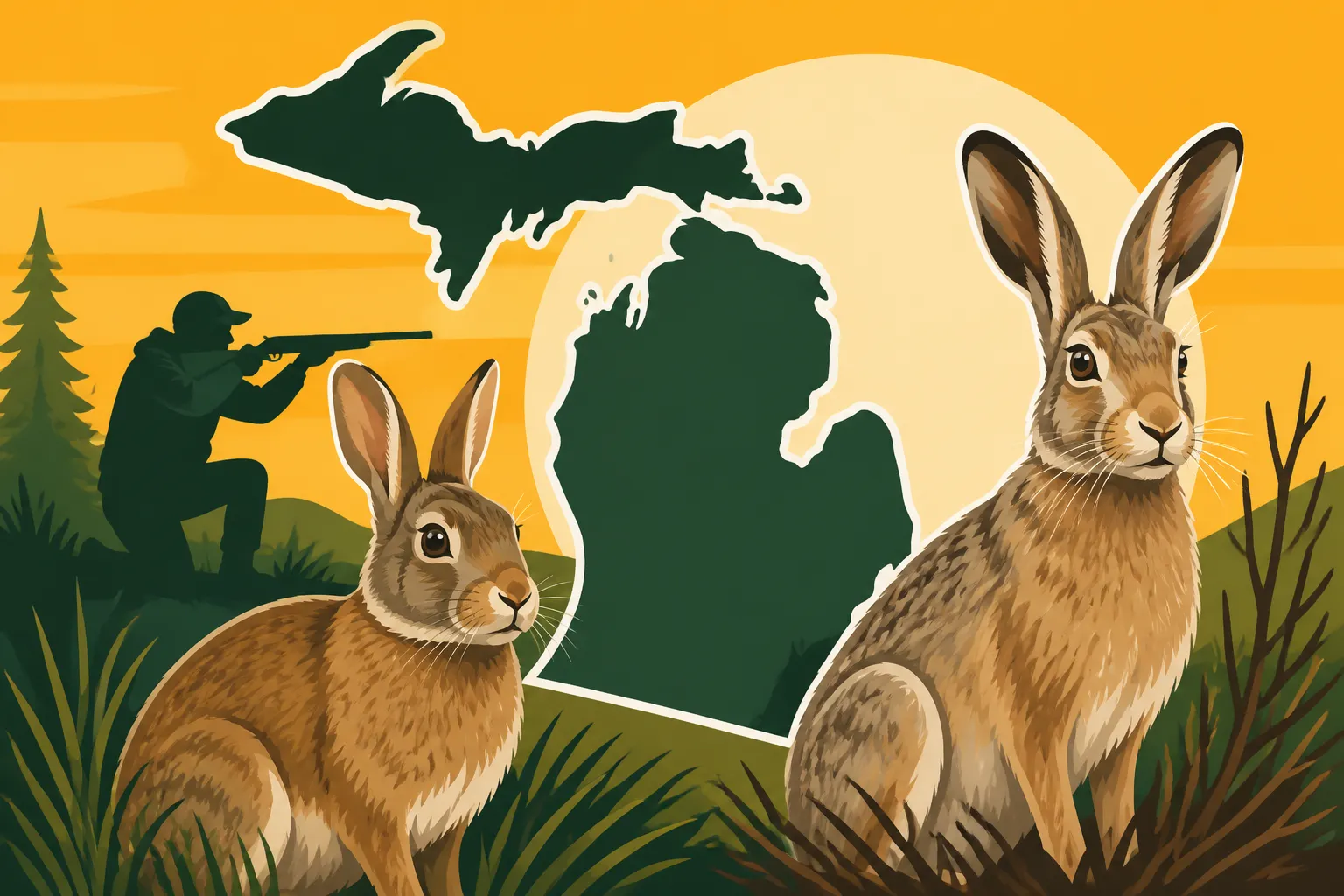
Michigan is a fantastic state for small game hunting, offering opportunities for both the common cottontail rabbit and the more northern snowshoe hare. While their habitats and even their appearances differ, their hunting seasons often share a similar window, making it convenient for small game enthusiasts. However, knowing the precise dates and any regional nuances is key to a successful and legal hunt.
Key Dates for Cottontails and Snowshoe Hares
For most of Michigan, the small game season for rabbits and hares opens in mid-September, offering a long stretch of hunting opportunities. Specifically, cottontail rabbit and snowshoe hare season typically runs from September 15th through March 31st of the following year. That's a generous window, spanning late summer, fall, winter, and even into early spring, which really allows hunters to experience these animals in a variety of conditions, from green foliage to deep snow.
The early season, from mid-September through late October, can be a challenging but rewarding time. The dense cover is still thick, making it tough to spot fast-moving rabbits, but it also means less hunting pressure in many areas. As leaves fall and snow begins to accumulate, the dynamics shift significantly. The winter months, especially from December through March, are often considered prime time for both species, as their tracks are easier to follow in the snow, and cover becomes less impenetrable. This extended season really offers something for every type of small game hunter, whether you prefer the mild days of fall or the crisp, challenging conditions of a Michigan winter.
Regional Variations and Why They Matter
Unlike some other game species in Michigan that might have distinct season dates between the Upper Peninsula and Lower Peninsula, or even within certain deer management units, the season dates for cottontail rabbits and snowshoe hares are generally uniform across the entire state. This simplifies things considerably, as you don't typically need to worry about crossing an invisible line that changes your legal hunting window. However, "Michigan Small Game and Furbearer Seasons" does detail all species, so it's always wise to consult the Michigan DNR's latest Hunting and Trapping Digest each year, just in case there are any minor adjustments.
While the season dates are consistent statewide, the quality of the hunting can vary significantly by region due to habitat and snow conditions. For instance, northern Michigan and the Upper Peninsula are where you'll find the best snowshoe hare hunting, precisely because those regions reliably receive abundant snow, which these animals are adapted to. Cottontails, on the other hand, are more widespread but tend to be more prevalent in the agricultural and brushy areas of the Lower Peninsula. The consistency of the statewide season means you can plan a trip north for hares or stay closer to home for rabbits without juggling different calendars, but understanding the regional habitat differences will dictate your success.
Essential Licensing and Regulations
Before you even think about hitting the brush, understanding the necessary licenses and adhering to bag limits is paramount. Michigan is serious about its wildlife management, and knowing the rules ensures you're contributing to sustainable hunting practices while staying on the right side of the law.
What License You Need to Hunt Small Game
To hunt rabbits and hares in Michigan, you'll need a valid Michigan Base License. This license is your fundamental ticket to hunting nearly all small game species in the state, including squirrels, grouse, pheasants, and, of course, rabbits and hares. It's an annual license, typically valid from March 1st through the end of February of the following year. This means that if you're hunting in March, you'll need the Base License for the new license year, not the one that expired at the end of February.
The cost of this license can vary depending on your residency status. For Michigan residents, the Base License is usually quite affordable, making small game hunting an accessible pursuit for many. Nonresidents, naturally, will find their "Michigan Nonresident Base Licence Cost" to be higher. Regardless of whether you're a lifelong Michigander or just visiting, purchasing this foundational license is your first step. Remember, you can typically purchase your license online through the DNR website, at a retail license agent, or using the Michigan DNR Hunt Fish App. Using a platform like GoHunt can help you keep track of your license renewals and other vital hunting information, making sure you're always squared away before heading afield. If you're considering hunting with a younger family member, remember to check out "The Michigan Mentored Youth Licence Package" for specific rules and opportunities that make it easier for kids to get into hunting.
Daily Bag Limits and Possession Limits
Michigan implements daily bag and possession limits to ensure healthy populations of small game animals. For cottontail rabbits and snowshoe hares, these limits are quite generous, reflecting robust populations in many areas of the state. Typically, the daily bag limit for both species combined is five animals. This means on any given day, you can harvest up to five rabbits or hares, in any combination (e.g., three cottontails and two snowshoes, or five of one species).
The possession limit, which refers to the maximum number of unskinned or uncleaned animals you can have in your possession at any time, is usually ten. This allows for multi-day hunting trips without immediately having to process all your game. For instance, if you hunt on a Friday and harvest five rabbits, you can hold onto those while hunting again on Saturday, potentially harvesting another five, bringing your total to the possession limit of ten. Once you've reached that possession limit, you'll need to process some of your harvested animals before you can take more. These limits are a crucial part of wildlife management, designed to prevent overharvesting and ensure that future generations of hunters will also have opportunities to pursue these sporting critters. Always double-check the current year's Hunting and Trapping Digest for precise figures, as these regulations are subject to review and potential minor changes each season.
Where to Find Rabbits and Hares in Michigan
Michigan's diverse landscape offers prime habitat for both cottontails and snowshoe hares, but knowing where to look is the difference between a successful hunt and a long walk. Their preferences are quite distinct, largely dictated by vegetation and climate.
Habitat for Cottontails in the Lower Peninsula
Cottontail rabbits are truly creatures of the edge. In the Lower Peninsula, you'll find them thriving in areas where different types of cover meet, especially near agricultural fields, overgrown pastures, old farmsteads, and brushy fringes. They absolutely love dense thickets of multiflora rose, hawthorn, dogwood, and other thorny or woody shrubs that offer protection from predators and the elements. These areas provide both cover to hide in and nearby food sources like grasses, clover, and young shoots. Think of neglected fence rows, abandoned orchards, clear-cuts that are growing up in dense brush, or the edges of woodlots bordering open fields.
When you're out "Scouting Michigan Public Land Before Season" for cottontails, pay close attention to satellite imagery on mapping apps. Look for those irregular patterns of dense cover intermixed with more open areas. State Game Areas in the southern half of the Lower Peninsula are often prime locations, as they frequently contain a mix of fields, wetlands, and successional forest that caters perfectly to rabbits. Walking creek bottoms that are lined with brush and small trees can also be incredibly productive. Mapping tools like those offered by GoHunt, which integrate with Michigan's Mi-HUNT map data, are invaluable for pinpointing ideal cottontail cover on public land, allowing you to identify these brushy edges and pockets of dense cover even before you step out of your truck.
Snowshoe Hare Havens in Northern Michigan
Snowshoe hares, true to their name and their adaptation to colder climates, are almost exclusively found in the northern parts of the Lower Peninsula and throughout the Upper Peninsula. Their preferred habitat is vastly different from cottontails; they seek out dense coniferous cover, particularly cedar swamps, spruce thickets, and young aspen stands. These thick, often damp, environments provide critical year-round cover and protection, especially when heavy snowfalls blanket the landscape. During the winter, their white pelage provides incredible camouflage against the snow, making them incredibly difficult to spot until they burst from cover.
You'll find snowshoe hares thriving in areas with regenerating timber, dense conifer swamps, and even alder runs, which provide a tangled mess of branches to navigate. Places like the Ottawa National Forest or parts of the Huron-Manistee National Forest in the northern Lower Peninsula, and nearly any state forest land in the U.P. will hold snowshoes. When you're considering "Reading a Michigan Cedar Swamp for Deer," many of those same characteristics – the dense undergrowth, the thermal cover of conifers – are exactly what attracts snowshoe hares. Look for areas with heavy snowfall and thick, young timber growth; these are their preferred hideouts. For detailed information on their populations, reviewing resources like "Snowshoe Hare Numbers in Michigan" can provide insights into regional concentrations.
Effective Hunting Tactics and Gear
Hunting rabbits and hares in Michigan is a classic small game pursuit, often characterized by active walking and quick shots. The tactics and gear you choose will largely depend on whether you're chasing cottontails in a brushy field or snowshoes in a snowy cedar swamp.
Techniques for Flushing Rabbits
The most common and often most effective tactic for both rabbits and hares is simply walking through their preferred cover. This "still-hunting" approach, or more accurately, a slow, methodical push, involves moving deliberately through thickets, pausing frequently, and scanning for movement. Rabbits and hares will often sit tight until you are almost on top of them before bursting out, so being ready for a quick shot is essential. Concentrate on the densest parts of the cover, kicking at brush piles and downed logs where they might be hiding.
For many, hunting rabbits with dogs is the quintessential experience. Beagles, with their keen noses and persistent baying, are legendary for their ability to root out cottontails and run them in circles. If you have a good pack of beagles, or join friends who do, it can be an incredibly exciting and productive day. "Rabbit Hunting With Beagles in Michigan" details this classic method, often leading to more consistent flushes and clear shots. Without dogs, consider organizing small "drives" with a few friends, carefully pushing sections of cover towards designated blockers. This can be particularly effective in larger, contiguous patches of thick stuff, creating a higher probability of flushing game. Safety is paramount here; always know where your hunting partners are and what's beyond your target.
Recommended Gear for Small Game Hunting
When it comes to firearms, shotguns are overwhelmingly the most popular choice for rabbit and hare hunting due to the close-range, fast-flushing nature of these animals. A 12-gauge or 20-gauge shotgun, typically with an improved cylinder or modified choke, is ideal. Shot sizes like 6 or 7.5 are common, offering a good pattern density for small, quick targets. Some hunters also enjoy the challenge of a .22 rifle for rabbits, especially when still-hunting in more open areas or targeting them when they are "sitting" still, but this requires more precision and offers fewer snap-shot opportunities.
Beyond your firearm, durable clothing is a must. You'll be pushing through dense, often thorny, cover. Heavy-duty brush pants, like those discussed in "Brush Pants for Michigan Alder," are invaluable for protecting your legs from thorns, briars, and abrasive vegetation. Waterproof, comfortable boots are also essential, as you'll likely encounter damp ground, snow, or even standing water, especially in swampy snowshoe habitat. Don't forget hunter orange; in Michigan, if you're hunting small game during the open firearm deer season, you are required to wear hunter orange. Even outside of firearm deer season, it's a smart safety practice to wear a hunter orange hat or vest, making yourself visible to other hunters. Keeping a detailed log of your hunts, including gear used and areas explored, can be simplified with features found in GoHunt's mobile app, which helps you refine your approach year after year.
Here's a quick look at recommended shotgun setups for Michigan rabbit and hare hunting:
| Shotgun Gauge | Recommended Choke | Recommended Shot Size | Typical Range (yards) | Notes |
|---|---|---|---|---|
| 12-Gauge | Improved Cylinder | 6 or 7.5 | 15-30 | Most versatile, good for dense cover and fast flushes. |
| 20-Gauge | Modified | 6 or 7.5 | 20-35 | Lighter to carry, excellent for all-day walks. |
| .410 Bore | Full | 7.5 or 8 | 10-20 | Challenging, best for experienced hunters or very close quarters. |
Disclaimer
Please note that hunting regulations, season dates, and licensing requirements are subject to change. Always consult the most current Michigan Department of Natural Resources (DNR) Hunting and Trapping Digest or visit the official DNR website before planning any hunting trip to ensure you have the most up-to-date information.