Michigan Goose Management Unit Rules
Trying to make sense of Michigan's goose hunting regulations can feel like trying to hit a fast-flying teal with a slingshot – confusing, frustrating, and often leaving you scratching your head. With different seasons, varying bag limits, and distinct management units, it’s easy to get lost in the details. This comprehensive guide is here to untangle the complexities of Michigan's goose management unit rules, helping you understand where and when you can chase those honkers, and more importantly, how to maximize your success in the field.
Understanding Michigan's Goose Management Philosophy
Michigan, blessed with abundant wetlands, agricultural fields, and major flyways, is a prime location for goose hunting. However, this also means managing both a healthy resident Canada goose population and the influx of migratory birds. The Michigan Department of Natural Resources (DNR), in cooperation with federal agencies, employs a system of management units and staggered seasons to balance hunter opportunity with population sustainability. It’s a delicate dance, and understanding the 'why' behind the rules can make the 'what' and 'how' much clearer.
Why Michigan Divides Its Goose Seasons
The primary reason Michigan segments its goose seasons and establishes different management units boils down to the distinct life cycles and migration patterns of the geese themselves. We have a robust population of resident Canada geese that breed and live within Michigan year-round. These are the birds you see grazing in parks and golf courses, often becoming quite habituated to human presence. Then, starting in the fall, we witness significant migrations of Canada geese, often from the Arctic and subarctic regions, passing through or wintering in Michigan. These migratory birds often behave differently and are less pressured by local hunters early in the season.
The DNR's goal is to provide ample opportunity to harvest resident geese, which can sometimes overpopulate local areas and cause agricultural damage, while also ensuring that the migratory populations are managed sustainably across their entire flyway. Without this division, hunting pressure could be unevenly distributed, potentially impacting either population negatively. For example, a blanket statewide season might reduce opportunities for resident goose hunters in early September, or it might place too much pressure on vulnerable migratory birds during crucial staging periods. By creating distinct seasons like the early goose season and then the regular season splits, the DNR aims to tailor hunting pressure to specific goose populations as they become available.
The Role of Federal Guidelines and State Regulations
Goose management isn't just a Michigan-centric affair; it’s part of a much larger federal framework. The U.S. Fish and Wildlife Service (USFWS) sets broad guidelines for migratory bird hunting based on extensive population data gathered across North America. These guidelines determine the maximum number of days states can offer for hunting and the overall bag limits. Michigan, like other states in the Atlantic and Mississippi Flyways, then works within these federal frameworks. The state DNR, in collaboration with the Mississippi Flyway Council, develops specific regulations that fit Michigan's unique geography, habitat, and goose populations.
This means that while Michigan has flexibility, it must operate within the larger conservation goals established at the federal and flyway levels. The DNR conducts its own population surveys, monitors harvest rates, and assesses habitat conditions to fine-tune the regulations annually. These state-specific rules often determine the precise opening and closing dates, the boundaries of the various management units, and any specific restrictions within those units, such as special regulations for controlled hunting areas. It's a system designed to ensure healthy goose populations for generations to come, while still providing meaningful hunting opportunities for Michigan's sportsmen and women.
A Closer Look at Michigan's Goose Management Units
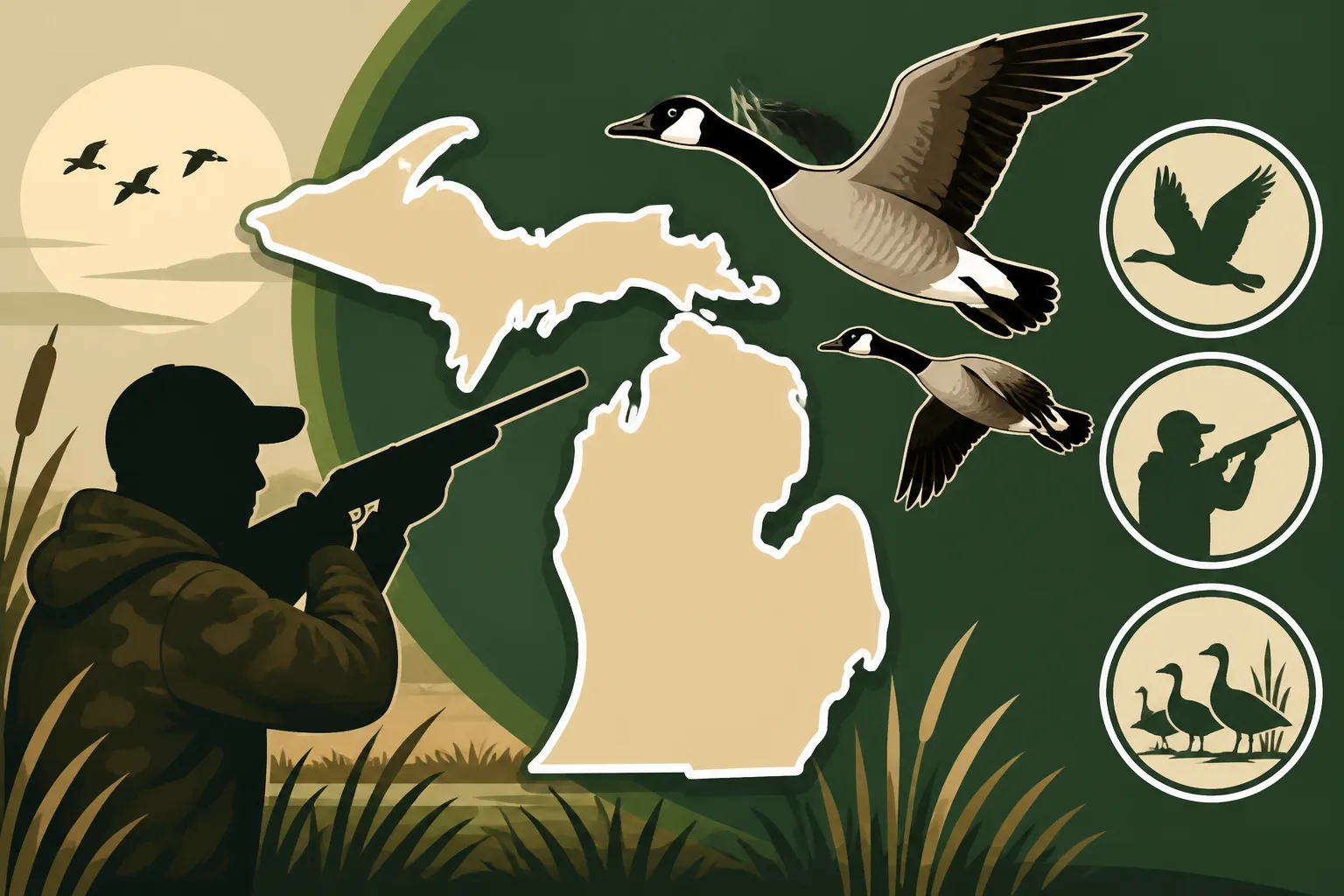
Michigan’s goose management is broken down into three primary zones, each with its own set of rules and season dates. Understanding these zones and their specific boundaries is the first step to planning a successful goose hunt in the state. These divisions aren't arbitrary; they reflect differences in goose populations, habitat types, and hunting pressure across the Lower and Upper Peninsulas.
The Three Main Goose Zones: A General Overview
Michigan's Lower Peninsula is divided into two primary zones for goose hunting: the North Zone and the Middle Zone, while the entire Upper Peninsula constitutes its own zone. Each of these zones has different season dates and bag limits, especially for the regular goose season. The early goose season, targeting resident birds, often has similar dates across much of the state, but even then, there can be subtle variations.
The Upper Peninsula (U.P.) Zone is characterized by vast tracts of public land, including state and national forests, interspersed with smaller agricultural areas. Goose hunting here often involves targeting birds in remote beaver ponds, smaller lakes, and rivers, as well as some agricultural fields, particularly closer to population centers or along major migration routes near the Great Lakes. Geese here can be less pressured in general, but access can be more challenging.
The North Zone of the Lower Peninsula covers the upper half, stretching from Lake Michigan to Lake Huron. This zone offers a mix of agricultural land and expansive wild areas. Geese utilize the numerous inland lakes, rivers, and coastal wetlands, as well as grain fields. Hunting pressure can vary greatly depending on proximity to towns and major migration corridors. Hunters here often focus on a combination of water-based and field-based hunting.
Finally, the Middle Zone covers the lower half of the Lower Peninsula, a region dominated by agriculture, greater population density, and significant numbers of resident geese. This zone often sees higher hunting pressure and offers abundant field hunting opportunities, especially in cut corn and bean fields. It also includes major staging areas for migratory geese arriving later in the season.
Specific Unit Boundaries and Key Features
To ensure you're hunting within the correct unit, it's crucial to know the precise boundaries. These are typically defined by county lines or major roads. For instance, the dividing line between the North and Middle Zones for goose hunting purposes is quite specific. The Michigan DNR provides detailed maps and descriptions each year, and it’s always a good idea to consult the current year's hunting digest.
- Upper Peninsula Zone: This is straightforward – it encompasses all land and waters of the Upper Peninsula.
- North Zone (Lower Peninsula): This zone includes all of the Lower Peninsula north of a line beginning at the Michigan-Wisconsin boundary in Iron County, extending east along the northern boundaries of Menominee, Delta, and Schoolcraft counties, then east along the northern boundaries of Alger and Luce counties, then east along the northern boundaries of Chippewa and Mackinac counties to Lake Huron. More simply, it covers the northern counties of the Lower Peninsula.
- Middle Zone (Lower Peninsula): This zone covers the remainder of the Lower Peninsula not included in the North Zone. It’s essentially the southern half of the Lower Peninsula.
While these are the three broad management units for geese, remember that individual season dates and bag limits can still vary slightly within these zones, particularly for the early goose season or late season extensions. Always double-check the specific regulations for the current hunting year. Tools like those offered by GoHunt, which provide detailed mapping overlays, can be incredibly helpful for visualizing these boundaries and ensuring you’re on the right side of the line when scouting or hunting.
Here’s a simplified breakdown of the main units:
| Goose Management Unit | General Location | Key Characteristics | Primary Goose Type Targeted |
|---|---|---|---|
| Upper Peninsula Zone | All counties of the Upper Peninsula | Vast public lands, smaller agricultural pockets, remote waters | Mix of resident & migratory (late season) |
| North Zone | Northern Lower Peninsula (north of major county lines) | Mix of agriculture, wildlands, inland lakes, Great Lakes shore | Mix of resident & migratory |
| Middle Zone | Southern Lower Peninsula (south of North Zone boundary) | Predominantly agricultural, higher population density, many lakes | High concentration of resident geese, significant migratory influx |
Special Management Areas and Local Rules
Beyond the three main zones, Michigan also has specific Managed Waterfowl Areas that operate under unique, often more restrictive, rules. These include renowned spots like Pointe Mouillee Managed Waterfowl Hunts, Nayanquing Point Waterfowl Draws, and Fish Point Waterfowl Area Hunting. These areas often require an application and drawing to gain access, or operate on a first-come, first-served basis for daily permits. The rules for hunting within these areas can differ significantly from general state regulations. For example, shooting hours might be curtailed, certain types of blinds or decoys might be prohibited, and scouting might be restricted.
It's absolutely critical to understand that if you plan to hunt in one of these managed areas, you must consult their specific regulations, which are usually available on the Michigan DNR website or at the area headquarters. These unique rules are designed to control hunting pressure, provide quality hunting experiences, and manage waterfowl populations more intensively in these prime habitats. Often, these managed areas are fantastic places for hunting geese, but they require careful planning and adherence to their specific permit and operational guidelines. Don't show up without doing your homework; you'll likely be turned away or, worse, cited for a violation. This is where researching ahead of time, using resources like the DNR's online guides, or even talking to seasoned hunters about Hunting a Michigan Managed Waterfowl Draw, really pays off.
Navigating Key Regulations and Season Dates by Unit
The heart of successful goose hunting in Michigan lies in understanding the season dates and bag limits, which, as we've established, vary significantly between the management units. Missing a key date or misinterpreting a bag limit can quickly turn a great hunt into a legal issue.
Early Goose Season Opportunities and Rules
Michigan's early goose season is a fantastic opportunity to target local, resident Canada geese before they become heavily pressured or migratory birds flood into the state. This season typically kicks off in early September, often starting around September 1st, and can run for about two to three weeks, depending on the zone. For most of the Lower Peninsula (both North and Middle Zones), and usually the U.P., the early season dates are fairly uniform, aiming to reduce the population of resident geese that often contribute to nuisance issues in agricultural and urban areas.
The daily bag limit for the early season is often generous, sometimes as high as five or even eight geese per hunter, reflecting the DNR’s intent to manage these local populations. It's a prime time for Early Goose Season Tactics in Michigan like field hunting over decoys, pass shooting flight lines between roosts and feeding areas, or setting up on smaller ponds and rivers where resident birds gather. Because migratory birds typically haven't arrived in large numbers yet, identifying the birds as Canada geese is usually straightforward. Remember, a valid Michigan Base License with a Waterfowl License (which includes the state waterfowl stamp) and a federal duck stamp, along with HIP certification, are all mandatory before you even step foot in the field.
Regular Season Dates and Splits
As autumn progresses, Michigan's goose seasons become more complex, often featuring splits and varying end dates across the different management units. These splits are strategic, designed to coincide with major migrations and manage hunting pressure.
The Upper Peninsula Zone generally has a continuous season from late September into early December, with potential late-season extensions into January if goose populations warrant it. The bag limits are typically lower than the early season, often 2-3 geese per day, as this period includes both resident and migratory birds.
The North Zone of the Lower Peninsula also sees its regular season kick off in late September, usually running into mid-December, sometimes with a brief closure in between. Again, daily bag limits are typically in the 2-3 goose range.
The Middle Zone often has the most intricate season structure, frequently featuring two or three distinct periods. For example, it might open in late September, close for a period in mid-October, and then reopen for an extended period from early November through late December or even into January. These closures are often designed to allow newly arrived migratory birds to settle in before being subjected to intense hunting pressure. The bag limits typically follow the U.P. and North Zone, at 2-3 geese per day.
These split seasons can be a blessing and a curse. They offer prolonged opportunities but demand meticulous attention to the hunting digest to ensure you're hunting legally. The regular season is when you'll encounter a wider variety of geese, including larger "honkers" and potentially cackling geese or greater white-fronted geese. It's essential to be able to identify your target and understand the specific rules for Michigan Goose Seasons and Units.
Late Season Extensions and Winter Hunting Considerations
Many hunters eagerly anticipate Michigan's late goose season extensions, which can offer some of the most rewarding hunting of the year. These extensions typically occur in December and January, often continuing after other waterfowl seasons have closed. They are predominantly found in the Middle Zone, particularly in the highly agricultural southern counties, and sometimes in the North Zone. These late seasons are designed to capitalize on large concentrations of migratory geese that have settled into Michigan for the winter, often feeding heavily in harvested corn and soybean fields.
The daily bag limits during these late seasons can sometimes be slightly more generous than the regular season, though it varies year to year. Hunting during this period presents unique challenges: bitter cold, snow, and often frozen water bodies. Hunters need to be prepared with appropriate Cold Weather Sitting Strategy, insulated gear, and reliable equipment. Finding open water can be key if you're not field hunting, as geese will gravitate towards any ice-free areas for roosting and loafing. Successful late-season hunting often hinges on diligent scouting to locate feeding patterns and roosting sites. This is where many hunters rely on tools like GoHunt or similar mapping services to pinpoint fields, water bodies, and potential flight lines, especially when deep snow might obscure access points or field conditions.
Strategies for Hunting Each Michigan Goose Unit
While the rules set the stage, successful goose hunting in Michigan often comes down to understanding the local terrain and adapting your tactics to the specific behaviors of geese within each management unit. What works well in the vast Upper Peninsula might fall flat in the farmlands of the Middle Zone.
Hunting Northern Unit Geese
Hunting geese in Michigan's Northern Lower Peninsula (North Zone) is a diverse experience, blending opportunities in both agricultural fields and more wilderness-like settings. Many areas here have fewer large, dedicated commercial farm fields compared to the south, meaning geese often utilize smaller agricultural parcels, local pastures, and natural food sources in wetlands and marshes. Waterfowl hunting often involves targeting birds on bigger bodies of water or in the expansive river systems like the Manistee or Au Sable.
Tactics here often involve a mix of traditional field hunting where available, but also more subtle approaches. Scouting is paramount. Look for geese feeding in small grain plots or loafing on remote inland lakes and beaver ponds. Pass shooting can be effective along river corridors or between these water bodies and feeding grounds. You might find success by setting up on edges where hardwoods meet marshes, or along points on larger lakes where geese stage. Decoy spreads might be smaller and more mobile, as you might be setting up quickly in less-pressured spots. Consider utilizing ground blinds brushed into natural cover rather than elaborate commercial blinds, especially if you're hunting public land. Remember, the North Zone can be vast, and finding ground others walk past can be key to success. For specific guidance, learning about Great Lakes Waterfowl Hunting in Michigan can provide useful crossover strategies.
Mid-Michigan Goose Hunting Tactics
The Middle Zone of the Lower Peninsula is a prime goose hunting area, characterized by extensive agricultural lands interspersed with numerous lakes and rivers. This region holds a significant population of resident geese and is a major destination for migratory birds passing through the state. Hunting pressure can be considerable, especially on opening days and weekends.
Tactics in Mid-Michigan often revolve around Field Hunting Geese in Southern Michigan. This means diligently scouting cut cornfields, soybean fields, and winter wheat fields to identify where geese are actively feeding. You'll need a good spread of full-body decoys or silhouettes, a comfortable layout blind, and excellent calling skills. Concealment is absolutely crucial; geese in this zone are educated. Pay close attention to wind direction when setting up your spread, placing your blinds strategically to give the birds a clean, close look at your decoys. Also, remember that geese often use local water bodies for roosting, so understanding their flight paths between roosts and feeding areas is critical. Many hunters employ mapping tools to identify these patterns and pinpoint potential setup locations. For those on a budget or without private land access, finding public land adjacent to known feeding areas and setting up along flight corridors can still yield results.
Maximizing Success in the Southern Unit
While technically part of the Middle Zone for general goose management, the southernmost counties of Michigan present some of the best, albeit most challenging, field hunting opportunities due to immense agricultural acreage and high goose populations. This is where geese can become incredibly wary, having been hunted across multiple states. Maximizing success here demands meticulous preparation and adaptable strategies.
Your success will largely depend on dedicated scouting. Geese here are patterned to feed at specific times in specific fields. You need to locate their current preferred feeding field, gain permission if it's private land, and set up your spread accordingly. Full-body decoys are often preferred for their realism, especially if birds are circling high. Focus on creating a realistic, dense spread, and don't skimp on the finishing decoys closest to your blinds. Effective calling, ranging from soft clucks and moans to aggressive flagging, is essential to draw in wary birds. Using large numbers of decoys, sometimes hundreds, can also be beneficial to imitate large feeding flocks. Reading Roost-to-Field Flight Lines becomes an art form; understanding how geese move from their roost on a lake or river to a distant field is the key to intercepting them. For this type of detailed scouting and identifying property ownership for permission, tools like GoHunt are invaluable. They allow you to overlay public and private land boundaries, pinpoint landowners, and effectively navigate the complex landscape to find unpressured opportunities or contact information. Even with pressure, consistent scouting and adapting to changing goose behavior will put you in the best position for success.
Disclaimer
Please be aware that hunting regulations, seasons, and bag limits are subject to change. Always consult the most current Michigan DNR Waterfowl Hunting Digest before planning any hunting trip. This information is intended for general guidance and educational purposes only.