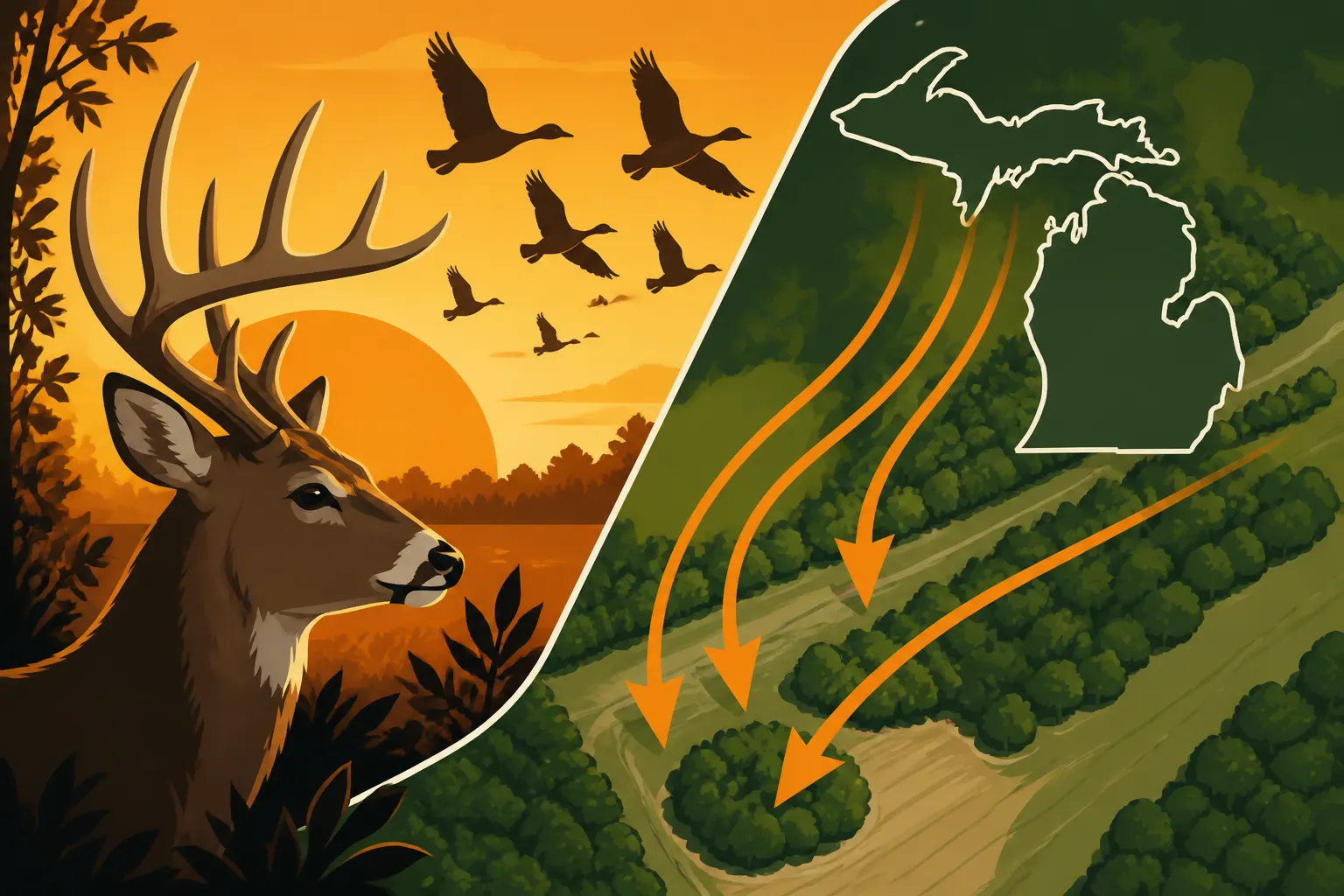
Reading Roost-to-Field Flight Lines
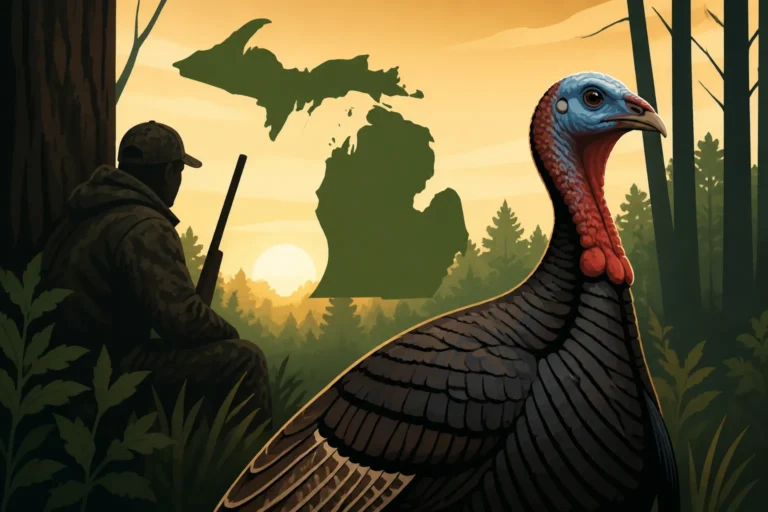
There’s nothing quite like the anticipation of a Michigan spring morning, tucked into your blind or against a big oak, waiting for the woods to wake up. But that excitement can quickly turn to frustration when those gobblers you heard hammering on the roost fly down in the exact opposite direction you expected, leaving you high and dry. Understanding how to read those invisible flight lines – the paths turkeys take from their nighttime roosts to their morning feeding areas – is absolutely critical for consistently putting yourself in the right spot for a shot. This guide will walk you through the nuances of Michigan turkey behavior, helping you decipher their morning commute and set up smarter.
The Basics of Turkey Roosts and Flight Patterns
Turkeys are creatures of habit, especially when it comes to their daily routine. They'll spend the night safely tucked away in the treetops, and as dawn breaks, they'll make their descent to the ground. But it's rarely a random jump; there's often a method to their morning madness.
Why Turkeys Roost in Specific Trees
It’s not just any tree that a gobbler will choose for his nightly slumber. Turkeys are looking for safety, stability, and good visibility. In Michigan, this often means mature hardwoods like oaks, maples, or even tall pines, especially those with sturdy, horizontal limbs that offer plenty of perching space. They'll frequently choose trees near water sources, along ridge lines, or bordering open fields – places that provide a quick escape route or an easy transition to feeding grounds.
Think about it from a turkey's perspective: a high vantage point protects them from ground predators like coyotes and bobcats. They'll often pick the tallest trees in a given area, giving them a commanding view of their surroundings. You might find several birds, or even an entire flock, using the same group of trees night after night, as long as they feel secure. This consistent behavior is what allows us, as hunters, to predict their general areas of activity. Pay attention to stands of mature timber adjacent to open areas or dense cover, as these are prime roosting locations.
Understanding Morning vs. Evening Flights
The direction turkeys fly down in the morning can be quite different from where they fly up to roost in the evening. In the morning, their primary goal is usually to get to food, water, or strutting grounds. They’ll fly down towards these resources. If they're roosting on a ridge overlooking an alfalfa field, they'll likely fly off the edge of the ridge directly into that field. However, if they're roosting deep in a swamp, they might fly a short distance to a drier edge before walking to their feeding area.
Evening flights, on the other hand, are driven by safety and the need to get off the ground before dark. Turkeys might spend the late afternoon feeding in a field, then work their way to a nearby timber block and fly straight up into the tallest trees available. These two flight patterns aren't necessarily mirror images, which means scouting both morning and evening movements is crucial. Often, birds will stick to the same general area for roosting, but their exit points can vary slightly depending on their daytime plans. This is where understanding factors like preferred feeding areas or established strut zones really comes into play.
Factors Influencing Flight Path Choices
A multitude of factors dictate where a turkey will land once it leaves its perch. Wind direction is a big one; turkeys, like most birds, prefer to take off and land into the wind for better control. If there's a strong westerly wind, a bird might adjust its flight to land facing west, even if its usual drop zone is slightly to the east. Topography also plays a huge role. Turkeys will often fly downhill or along contours rather than directly uphill, conserving energy. A steep slope leading down to a creek bottom might be a preferred flight path.
Lastly, and perhaps most importantly, is the destination itself. Is there an oak flat full of acorns? A freshly tilled field with easy bug access? A clearing where a dominant gobbler likes to strut and gather hens? Turkeys will almost always fly directly towards their desired destination, often minimizing time spent on the ground in vulnerable, open areas. Early in the season, during Michigan Spring Turkey Season Dates, these destinations are often strutting grounds where gobblers try to attract hens. Later, as hens start nesting, food sources become more paramount. Being able to pinpoint these destinations is a game-changer.
Identifying Key Flight Line Indicators on the Ground
Spotting the subtle clues turkeys leave behind can feel like detective work, but it’s immensely satisfying when it all comes together. Knowing what to look for can drastically improve your chances of intercepting a gobbler on his morning commute.
Scouting for Visual Cues
This is where the boots-on-the-ground effort truly pays off. When you're scouting, especially in the off-season or a few weeks before your hunt, look for several distinct indicators near potential roosting areas. Droppings are a huge clue. Fresh droppings under certain trees indicate active roosts. Gobblers tend to leave larger, J-shaped droppings, while hens leave more coiled or blob-shaped ones. If you find a concentration of droppings, you’ve found a consistent roost.
Feathers, especially primary wing feathers, are another strong sign. Turkeys often preen vigorously before flying up or down, shedding loose feathers. Look for them on the ground directly below sturdy limbs. Perhaps the most overlooked visual cue is scratched leaves and disturbed soil. When a turkey flies down, especially if it’s a big gobbler, they often land with a thump, scattering leaves and digging their claws in for traction. You might see small "slide marks" or disturbed areas in the leaf litter, pointing in the direction they launched themselves. These signs are often faint but can be incredibly telling. Take your time and scrutinize the ground carefully.
Using Technology for Pattern Recognition
In today's hunting world, technology can be a huge asset in piecing together these flight line puzzles. Mapping apps like GoHunt have become indispensable tools for many Michigan hunters. You can use these apps to mark potential roost trees (those tall pines or mature oaks), food sources, water, and known strutting zones. By doing this, you start to build a visual representation of how turkeys might travel between these key points.
Using the topographical and aerial imagery layers on GoHunt allows you to identify subtle elevation changes, creek bottoms, and timber edges that turkeys might use as natural travel corridors. For example, if you hear birds gobbling from a specific ridge, you can drop a pin, then identify the nearest open field or oak flat downwind. That’s your probable flight path. You can even track past successful hunt locations or observations within the app, building a personal database of turkey behavior in your hunting area. This digital scouting, combined with physical scouting, creates a powerful strategy.
Utilizing Mapping Features for Flight Line Analysis
When using tools like GoHunt, pay close attention to the following features to help map out those flight lines:
| Feature | How it Helps with Flight Lines |
|---|---|
| Aerial Imagery | Shows canopy cover, clearings, fields, and water. Helps visualize potential landing zones and travel corridors. |
| Topography | Identifies ridges, saddles, and drainages. Turkeys often fly downhill or along contours. |
| Waypoints | Mark confirmed roost trees, gobbling locations, droppings, strut zones, and feeding areas. |
| Distance Tool | Measure distances from roost to feeding areas, helping estimate flight range and potential setup locations. |
| Wind Forecast | Check predicted wind direction for morning hunts to anticipate preferred landing angles. |
By layering this information, you can make an educated guess about where a turkey will fly down and where it will aim to go next. This predictive power is a massive advantage when trying to intercept a tom.
Seasonal and Weather Impacts on Flight Lines
Just like deer, turkey behavior shifts with the seasons and the weather. Early in the spring, when gobblers are focused on breeding, they’ll often fly directly to established strut zones or areas where they expect to find hens. This might be a clear-cut edge, a logging road, or a small field. Later in the season, as hens begin nesting and gobblers become more solitary, food sources might become the primary driver for their morning flight path. They might fly down closer to dense cover to feed more discreetly.
Weather also plays a significant role. On calm, clear mornings, turkeys might fly down with less hesitation, traveling further to more open areas. On windy, rainy, or foggy mornings, they tend to be more cautious. They might fly down to the nearest cover, or even drop to a limb lower in the tree before making their final descent, effectively shortening their flight line. Cold snaps can make food sources even more appealing, influencing their morning destinations. Always check the forecast and consider the current conditions when trying to predict their flight. Understanding these shifts is key to success when Hunting Turkeys in Upper Peninsula Timber or the farmlands of Southern Michigan.
Setting Up for Success Along Flight Lines
Once you've done your homework and have a good idea of where those birds are roosting and where they want to go, the next step is putting yourself in the perfect ambush position. This isn’t just about getting close; it’s about being invisible and irresistible.
Optimal Decoy Placement
Decoys can be your best friend when hunting flight lines, but their placement is absolutely critical. You want your decoys to be directly in the path of where you expect the turkeys to land or walk. For a morning fly-down, consider placing your decoys 20-30 yards from your hidden position, facing the direction you anticipate the birds will approach from. This gives them a clear target to fly toward.
If you're using a full strut gobbler decoy, ensure it's positioned to challenge a real gobbler who's just hit the ground. A good trick is to place a hen decoy within a few yards of the gobbler, making it look like he's already got a lady. Often, I'll place my decoys just over a slight rise or at the edge of a field, so they aren’t visible until the gobbler is committed to flying down. This creates an exciting moment of revelation for the bird, encouraging him to land close. For Decoy Placement for Pressured Birds, sometimes less is more, or a single hen might be all you need.
Concealment Strategies
Being perfectly concealed is paramount when hunting turkeys, especially on their flight lines. Remember, their eyesight is incredible, and they’ll spot any movement or unnatural shape. This means finding a natural blind, like a thick cedar tree, a dense brush pile, or setting up against a big oak that breaks up your silhouette. If you're using a ground blind, set it up well in advance of the hunt, brushing it in thoroughly with local vegetation so it blends seamlessly with the environment.
Always ensure you have a clear shooting lane to your decoys and along the expected flight path. You don't want a branch obstructing your shot at the moment of truth. Consider what the background looks like from the turkey's perspective; a dark background will help you disappear. When you're Setting Up Against a Big Oak, make sure your body is completely hidden and you have plenty of natural cover to your sides. Remember to wear a full head net and gloves to hide any exposed skin. Patience and stillness from your well-concealed spot are what will seal the deal.
Timing Your Approach and Setup
This is perhaps the trickiest part of hunting a turkey’s flight line. You need to get into your setup location well before any hint of dawn. Turkeys have exceptional hearing, and any unnatural noise will send them flying in the opposite direction. This often means walking in the dark, using a red-light headlamp to minimize disturbance, and moving at a slow, deliberate pace.
Aim to be settled in and ready at least 45 minutes to an hour before civil twilight. This gives the woods time to settle after your approach and allows you to calmly arrange your gear and decoys. If you hear a gobbler sound off while you’re still approaching, freeze. Wait until he gobbles again and he is moving in the right direction. Sometimes, especially when Calling a Michigan Gobbler Off the Roost, you might need to make very subtle calls once settled, but often, the visual of your decoys on the flight path is enough to pull them in. It’s a delicate balance of stealth, timing, and patience.
Disclaimer
Hunting involves inherent risks, including but not limited to those associated with firearms, archery equipment, and outdoor conditions. Always prioritize safety, follow all local, state, and federal hunting regulations, and consider taking a certified hunter safety course. The information provided in this article is for educational and entertainment purposes only and should not be considered a substitute for professional instruction or official regulations.