Michigan Bear Harvest Trends
Trying to make sense of the Michigan bear harvest numbers can feel like staring into a thick cedar swamp at dusk – a lot of information, but hard to discern what truly matters. As hunters, we want to understand if our bear population is thriving, if opportunities are stable, and how our efforts contribute. This comprehensive guide will untangle the complexities of Michigan's black bear harvest trends, offering insights into what these numbers mean for you and the future of bear hunting in our great state.
Understanding Michigan's Bear Management Philosophy
The Michigan Department of Natural Resources (DNR) doesn't just pull numbers out of a hat when it comes to bear management. There's a deeply rooted philosophy behind how they monitor and manage these magnificent animals, aiming for a sustainable population that offers consistent hunting opportunities.
The Role of Harvest Data in Conservation
At the heart of Michigan's bear conservation efforts lies the meticulous collection and analysis of harvest data. Every bear reported by a hunter provides a piece of the puzzle, helping wildlife biologists understand everything from population health and age structures to cub production rates and overall survival. This data isn't just a tally; it's a vital feedback loop. Without accurate harvest information, the DNR would struggle to make informed decisions about future hunting seasons, potentially leading to overharvest in some areas or underutilization in others. The goal is always to strike a delicate balance: ensuring a robust, healthy black bear population for future generations while providing reasonable hunter opportunity today.
Adaptive Management and Permit Adjustments
Michigan's bear management is a prime example of adaptive management in action. This means the DNR constantly evaluates the previous season's data, current population estimates, and environmental factors to make adjustments. For instance, if winter survival rates for cubs were particularly low due to a harsh season, or if nuisance bear complaints spike in certain areas, these factors directly influence the number of Michigan Bear Licences Issued and distributed across the state's various Bear Management Units (BMUs). Factors like the availability of natural food sources (such as acorns and berries), changes in habitat due to logging or development, and even human-bear conflicts all play a part in how permit quotas are set. It's a dynamic process, and understanding it helps hunters appreciate why the number of available tags or the success rates might fluctuate from one year to the next.
A Look at Recent Michigan Bear Harvest Trends
When we talk about harvest trends, it's not just about the big picture. Michigan's bear population is spread across two distinct regions, the Upper Peninsula (UP) and the Northern Lower Peninsula (NLP), each with its own dynamics and management strategies.
Overall Statewide Harvest Numbers
Michigan's black bear harvest has generally been stable over recent years, a testament to effective management. Typically, the statewide harvest hovers somewhere between 1,500 to 2,000 bears annually. These numbers, while showing some year-to-year variation, indicate a healthy, productive population that can sustain regulated hunting pressure. A successful season for the DNR isn't just about high numbers; it's about achieving the desired harvest within specified quotas for each BMU, ensuring population goals are met without negatively impacting the long-term health of the bear population. Hunters often wonder what contributes to these stable figures, and it really comes down to a combination of strong recruitment, ample habitat, and the DNR's careful allocation of permits.
Harvest Differences Between the Upper and Lower Peninsulas
There's a significant and consistent disparity in harvest numbers between Michigan's two main bear hunting regions. The Upper Peninsula consistently accounts for the vast majority of Michigan's bear harvest, often upwards of 80-90% of the statewide total. This isn't surprising when you consider the UP's expansive, contiguous tracts of wilderness, including vast state and national forests, which provide ideal bear habitat. The bear density is simply much higher in the UP, leading to more encounters and, consequently, higher harvest rates.
In contrast, the Northern Lower Peninsula, while home to a healthy bear population, sees a considerably lower harvest. The NLP's landscape is more fragmented, with a mix of smaller forest blocks, agricultural lands, and more human development. This often means bears are more dispersed, and hunting opportunities are different. Understanding these geographical differences is crucial for anyone planning their hunt and considering Where Michigan Bears Range.
Factors Influencing Annual Bear Harvests
Ask any seasoned bear hunter, and they'll tell you that every season is different. A myriad of factors, often beyond our control, can significantly influence how many bears are harvested in a given year.
Weather Conditions and Bear Activity
The weather plays an enormous role in bear activity, and by extension, hunter success. An unseasonably warm fall, for example, can keep bears active and dispersed for longer, making them harder to pattern and harder to bring into bait stations. Conversely, a sharp cold front or early snowfall can kick bears into high gear as they try to gorge before denning, potentially concentrating them and increasing harvest success. Heavy rain or strong winds can also suppress bear movement and reduce hunter effort. We’ve all been out there on a miserable, rainy day, knowing the bears are likely hunkered down just like us. These conditions directly impact when and where bears feed, travel, and ultimately, how likely they are to cross paths with a hunter.
Acorn and Mast Crop Fluctuations
Perhaps no single environmental factor influences bear harvest more than the annual acorn and mast crop. Bears are opportunistic omnivores, and when natural food sources like acorns, beechnuts, or berries are abundant, bears will often abandon bait piles, or at least visit them less frequently, choosing to forage naturally. A bumper mast crop can lead to a lower harvest, not because there are fewer bears, but because they are well-fed and less reliant on supplemental food. On the flip side, a poor mast crop can concentrate bears around reliable food sources, including agricultural fields or, indeed, hunter-provided bait, often leading to a higher harvest. Many hunters pay close attention to the local mast crop predictions before the season, knowing it could dramatically alter their strategy. Knowing these trends can inform your scouting and hunting plans, whether you're looking for Late-Season Food Sources for Whitetails or planning your bear hunt.
Hunter Effort and Success Rates
The number of hunters in the woods and their individual effort levels are also critical components of the harvest equation. Michigan's bear hunt is a limited-entry draw, meaning not everyone who applies gets a tag, especially in the more popular BMUs. This selectivity ensures that hunter pressure is controlled. However, even with a tag, success isn't guaranteed. Hunter effort, which includes scouting, maintaining bait stations, or simply spending enough time in the woods, directly correlates with success rates. The more dedicated and prepared hunters are, the higher the overall success. This is where tools like GoHunt can be invaluable, helping hunters analyze historical success rates for specific units and understand the level of effort required to increase their odds. For those who meticulously plan their hunts, understanding these variables can be the difference between filling a tag and going home empty-handed.
Regional Harvest Breakdown by Bear Management Units (BMUs)
Michigan is divided into several Bear Management Units (BMUs), each with its own population goals and permit quotas. This localized approach allows the DNR to manage bears effectively across diverse habitats and population densities.
Upper Peninsula Bear Management Units
The Upper Peninsula is a bear hunter's paradise, boasting the highest bear densities and, consequently, the highest harvest numbers. Key BMUs in the UP include Baraga, Bergland, Carney, Amasa, Gwinn, Newberry, Red Oak, and Ontonagon. Year after year, these units collectively contribute the vast majority of Michigan's bear harvest. The Baraga and Bergland units, for instance, are often among the top producers, thanks to their extensive timberlands and relatively low human population density. Hunters applying for these highly sought-after units often need to accumulate many Michigan Bear Preference Points to draw a tag, reflecting their consistent success and popularity. Each BMU has slightly different characteristics, from vast swamp systems to mixed hardwoods and conifer forests, which influence bear movement and hunting tactics.
Northern Lower Peninsula Bear Management Units
While the Northern Lower Peninsula doesn't yield the same raw numbers as the UP, it still offers excellent bear hunting opportunities for those willing to put in the effort. The NLP BMUs include Baldwin, Gladwin, and others within the broader Northern Lower Peninsula region. Harvests here are generally lower due to more fragmented habitat and lower bear densities. However, these units often have excellent-quality bears, and drawing a tag can be less competitive than in some UP units. The hunting experience in the NLP often involves a mix of state forest lands, private holdings, and more agricultural interfaces. Hunters here might find bears more dispersed, requiring different scouting and hunting strategies than their UP counterparts. The harvest trends in the NLP, while smaller, are just as important to the DNR for managing this segment of the state's bear population.
The Impact of Hunting Methods on Harvest Data
The methods hunters employ play a significant role in determining annual harvest numbers and success rates. Michigan allows several legal methods for bear hunting, each with its own set of challenges and advantages.
Baiting Versus Hound Hunting Success
In Michigan, baiting and hound hunting are the two most prevalent and often most successful methods for pursuing black bears. Baiting involves establishing and regularly refreshing a bait station, typically with sweet and high-calorie foods, to attract bears. This method accounts for a substantial portion of the annual harvest, particularly in areas where bears are more accustomed to foraging on human-provided food sources. Success with baiting often hinges on consistency, proper placement, and minimizing human disturbance.
Hound hunting, on the other hand, involves using trained dogs to track and tree a bear. This method is incredibly demanding, requiring specialized dogs, extensive training, and a deep understanding of bear behavior and local terrain. Hound hunting often yields high success rates once a bear is located and treed, and it's particularly effective in dense cover where bears are difficult to spot otherwise. You can read more about the intricacies of Baiting and Hound Hunting for Michigan Bear to understand the commitment involved in both methods. Both methods contribute significantly to the overall harvest, and their relative success rates can fluctuate based on bear activity, weather, and hunter skill.
Spot and Stalk Opportunities and Limitations
While less common and generally less successful in terms of pure numbers, spot-and-stalk hunting for bears is a challenging and rewarding method, particularly in the vast wilderness areas of the Upper Peninsula. This method, often referred to as Hunting Bear Without Bait or Dogs, relies on extensive scouting, keen observation, and stealth to locate and approach a bear. Hunters might glass clearcuts, burns, or natural food sources, or still-hunt through dense cover hoping to jump a bear.
The limitations are obvious: bears are elusive, have incredible senses, and often inhabit very thick terrain, making a close-range, ethical shot difficult. As such, the harvest numbers attributed to pure spot-and-stalk are much lower than those from baiting or hound hunting. However, the satisfaction of harvesting a bear purely through woodsmanship is unparalleled for many hunters. These individual successes, though fewer, are still captured in the overall harvest data, providing a complete picture of how Michigan bears are being pursued.
Long-Term Trends and Future Outlook for Michigan Bear Hunting
Looking beyond the immediate season, it's important to consider the long-term health of Michigan's black bear population and what the future might hold for hunters.
Population Stability and Growth
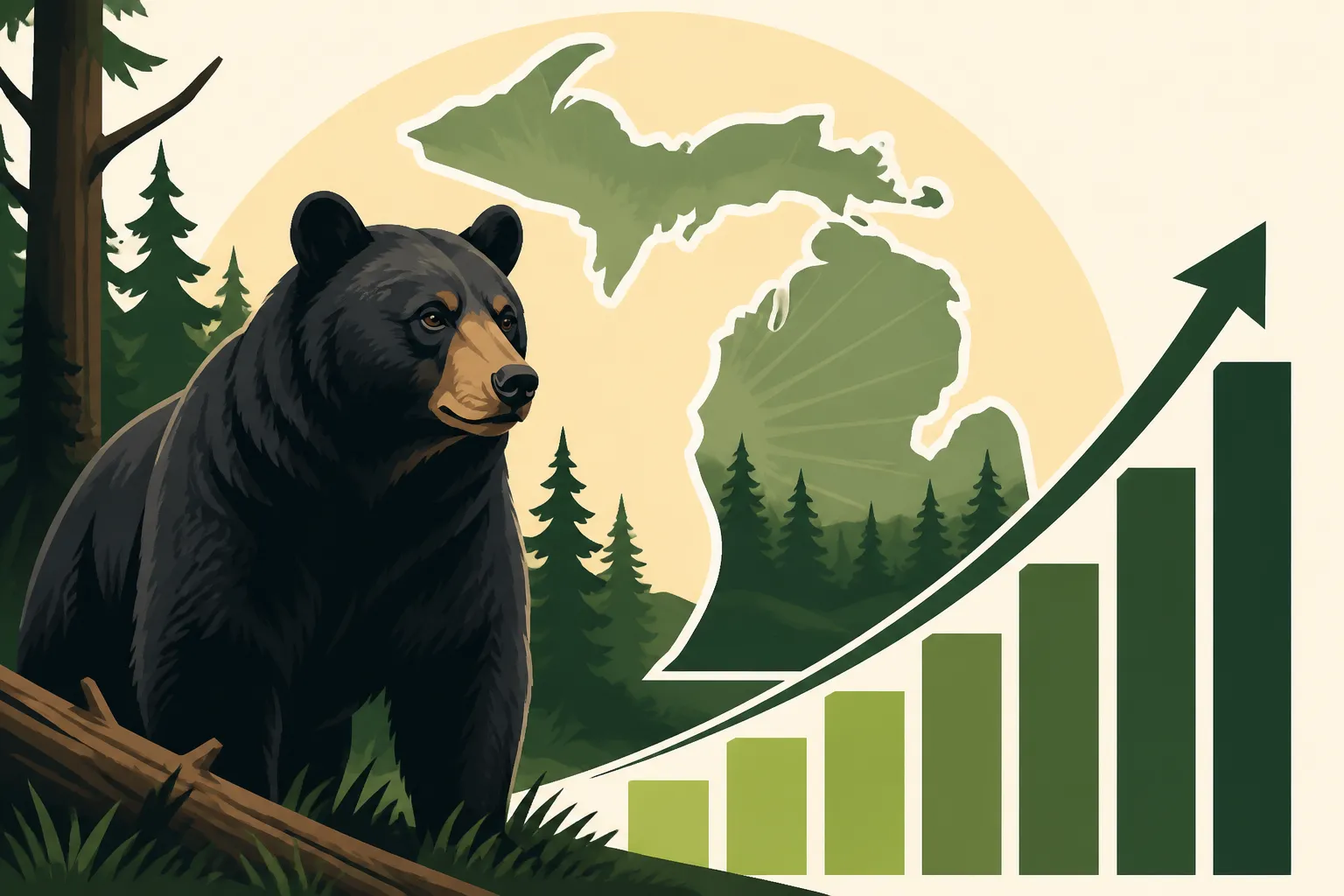
Current data and historical harvest trends paint a picture of a remarkably stable and, in some areas, growing black bear population in Michigan. The DNR conducts extensive population modeling, often relying on data derived from harvest reports, nuisance complaints, and specialized research to estimate How Many Michigan Black Bears There Are. These estimates consistently show a healthy population, particularly in the Upper Peninsula, which boasts some of the highest bear densities in the Midwest. The robust nature of the population allows for continued hunting opportunities, provided that harvest quotas are set conservatively and adjusted adaptively based on annual data. This long-term stability is a testament to sound wildlife management and the resilience of the black bear.
Challenges and Future Considerations
While the outlook for Michigan's black bear population remains positive, there are always challenges on the horizon. Habitat fragmentation due to development, particularly in the Northern Lower Peninsula, poses a long-term threat to bear habitat connectivity. Climate change could also impact natural food sources, altering bear distribution and denning patterns. Furthermore, as human populations expand, so does the potential for human-bear conflicts, which can influence public perception and management strategies. The ongoing debate surrounding baiting and other hunting methods also keeps the management conversation dynamic.
The DNR is committed to monitoring these factors closely, using the detailed harvest data and population studies to inform future decisions. Hunters can play a vital role in this by continuing to report their harvests accurately, following all regulations, and supporting conservation initiatives. The future of bear hunting in Michigan looks bright, but it requires continued vigilance and adaptive management to ensure these incredible animals continue to thrive.
| Year | Total Harvest (Estimate) | UP Harvest (Estimate) | NLP Harvest (Estimate) | Statewide Success Rate |
|---|---|---|---|---|
| 2023 | 1,800 – 2,000 | 1,500 – 1,700 | 300 – 400 | 25-30% |
| 2022 | 1,980 | 1,650 | 330 | 27% |
| 2021 | 1,723 | 1,445 | 278 | 24% |
| 2020 | 2,279 | 1,911 | 368 | 31% |
| 2019 | 1,770 | 1,480 | 290 | 26% |
| Note: Numbers are approximate based on recent Michigan DNR harvest reports and may vary slightly upon final data compilation. 2023 data is an estimated range. |
Disclaimer
Always consult the Michigan Department of Natural Resources (DNR) official regulations for the most current and accurate hunting seasons, bag limits, and rules. Hunting laws and regulations can change, and it is the hunter's responsibility to stay informed.