Where Michigan Bears Range
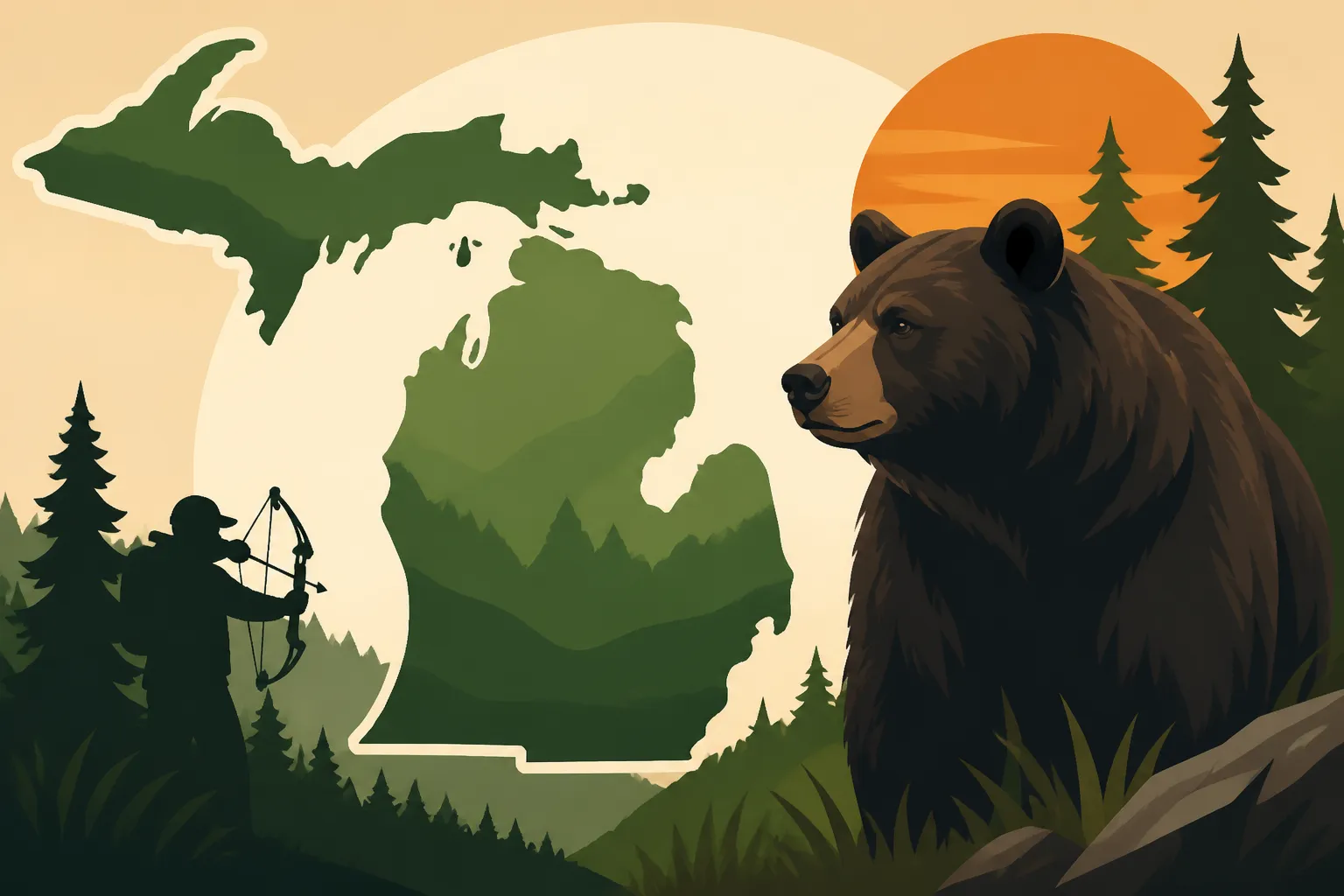
It can feel like finding a needle in a haystack trying to figure out where Michigan's elusive black bears actually live and roam. For many of us, the image of a bear is tied to the deep wilderness of the Upper Peninsula, but the reality is a bit more nuanced and constantly evolving. This guide will meticulously break down the historical and current distribution of black bears across our great state, helping you understand their preferred habitats and where you might encounter them, whether you're a hunter, a hiker, or just curious about Michigan's amazing wildlife.
Understanding Michigan's Bear Landscape
Michigan's black bear population has seen some remarkable shifts over the decades. What was once a struggling population confined to remote pockets is now a thriving one, expanding into new territories as habitats recover and management strategies mature. Understanding this historical context is crucial to appreciating their current distribution.
Historical Overview of Bear Distribution
Historically, black bears were found throughout Michigan. However, logging, agricultural expansion, and unregulated hunting through the 1800s and early 1900s severely impacted their numbers and pushed them into the most isolated corners of the state. By the mid-20th century, the Upper Peninsula and the northernmost parts of the Lower Peninsula were the primary strongholds. These areas offered the vast, unbroken forests and minimal human disturbance bears need to thrive. For a long time, if you mentioned bears in Michigan, everyone's mind immediately went north of the Mackinac Bridge.
As conservation efforts gained traction, including regulated hunting seasons, habitat protection, and public education, bear populations began to rebound. The reforestation of many cutover lands also played a significant role, providing new areas for bears to establish territories. This recovery has been a slow but steady process, demonstrating the resilience of these incredible animals and the effectiveness of sound wildlife management. It’s a testament to what we can achieve when we prioritize wildlife.
The Role of Habitat in Bear Survival
Black bears are creatures of opportunity and require diverse habitats that provide food, cover, and denning sites. Think dense forests, thick swamps, and areas with a mix of hardwoods and conifers. They are omnivores, meaning their diet changes seasonally, and their habitat needs shift with it. In spring, they seek out fresh greens and carrion. Summer brings berries and insects, while fall is all about acorns, beechnuts, and other mast crops to pack on weight for winter hibernation.
The presence of water sources is also critical, as bears need to drink frequently, especially during warmer months. Remote, undisturbed areas are paramount for denning, where sows can safely raise their cubs, and bears can comfortably sleep through the winter. This is why you often find higher bear densities in state forests, national forests, and other large tracts of public land, which offer the kind of expansive, diverse habitat that private, fragmented lands often lack. These vast tracts of wilderness also provide ample space for bears to establish their expansive home ranges, which can be hundreds of square miles for a single male.
The Upper Peninsula: Bear Country Supreme
When you talk about black bears in Michigan, the Upper Peninsula is the undisputed heavyweight champion. It's the region that immediately comes to mind for a reason – it boasts the highest density and largest population of black bears in the state. This expansive wilderness offers ideal conditions for bears to thrive, much to the delight of hunters and wildlife enthusiasts alike.
Dense Forests and Remote Wilderness
The U.P. is characterized by its vast, unbroken tracts of mixed conifer and hardwood forests, abundant wetlands, and relatively low human population density. This creates an environment perfectly suited for black bears. From the deep cedar swamps to the rocky ridges and expansive aspen stands, there’s no shortage of cover, food, and denning opportunities. Areas like the Ottawa National Forest and the Hiawatha National Forest provide enormous blocks of public land where bears can roam largely undisturbed.
Hunting in these dense, remote areas can be challenging, but incredibly rewarding. Bears are often found utilizing the thickest cover, especially during the day, making them tough to spot. However, understanding their seasonal food preferences and travel corridors is key. For example, during the fall, bears will often concentrate in areas with abundant mast crops like acorns and beechnuts. Knowing the U.P.'s landscape means recognizing where those food sources are likely to be found. If you're looking for an unforgettable hunt, you'll want to read up on Spot-and-Stalk Bear in the Upper Peninsula.
Key U.P. Bear Management Units (BMUs)
Michigan's Department of Natural Resources (DNR) manages bear populations through a system of Bear Management Units (BMUs). These units are designed to ensure sustainable harvests and healthy bear numbers. In the U.P., several BMUs consistently have the highest bear densities and offer the most permits. The Bergland, Baraga, Carney, and Gwinn BMUs, for example, are renowned for their robust bear populations. These units encompass some of the most remote and wild parts of the Upper Peninsula, offering prime bear habitat.
Hunters often focus on these units because of their higher success rates and the quality of bears they produce. However, drawing a tag in these popular units can be tough due to the quota system and preference points. Understanding the nuances of the Michigan Bear Licence Drawing is crucial if you dream of hunting the U.P. for bear. The DNR regularly conducts surveys and monitoring to assess bear health and population trends within these BMUs, adjusting permit numbers annually to maintain balance. This careful management ensures that future generations will also have the opportunity to experience bear hunting in Michigan’s wild north.
Northern Lower Peninsula: A Growing Bear Presence
While the U.P. might steal the spotlight, the northern Lower Peninsula (NLP) has seen a significant and encouraging expansion of its black bear population over the last few decades. What was once considered a fringe area for bears is now a solid secondary stronghold, offering excellent hunting and viewing opportunities.
Forest Recovery and Bear Expansion
The story of bears in the northern Lower Peninsula is largely one of forest recovery. Much of this region was heavily logged in the late 19th and early 20th centuries, leaving behind fragmented forests and a less-than-ideal bear habitat. However, with time, natural regeneration, and active forest management, the northern Lower Peninsula has regrown vast expanses of suitable woodland. Areas like the Huron-Manistee National Forest and numerous state forests now provide the continuous cover and diverse food sources that bears need.
This habitat restoration has allowed the bear population to expand southward from its traditional U.P. strongholds. It’s not uncommon anymore to hear of bear sightings in counties that were once considered devoid of resident bears, such as Oscoda, Montmorency, and Ogemaw. This expansion signifies a healthy and adaptable bear population, capable of utilizing available resources. As the forests mature and human development is carefully managed, we can expect to see bears continue to consolidate their presence throughout this region. For more information on this growing presence, check out our guide on Bears in the Northern Lower Peninsula.
Navigating Bear Hunting Units in the NLP
Just like the U.P., the northern Lower Peninsula is divided into several Bear Management Units (BMUs) for hunting purposes. These include units like Red Oak, Baldwin, and Gladwin, among others. While the bear densities might not be as high as in the most prime U.P. units, these NLP units offer fantastic opportunities, often with slightly better draw odds for tags. This makes them an attractive option for hunters who might find the U.P. draw too competitive, or for those who simply live closer to the NLP.
The habitat in these NLP units can vary, ranging from dense pine plantations and cedar swamps to mixed hardwoods. Hunters often employ different strategies here, sometimes relying more on baiting (where legal) or scouting for natural food sources like wild berries and mast crops. Using scouting tools like GoHunt can be incredibly helpful for identifying these varied habitat types and potential bear sign on public lands. GoHunt's mapping overlays can show you different forest types, terrain, and even recent timber cuts that bears love to frequent. This strategic approach, combining on-the-ground scouting with advanced mapping technology, can greatly improve your chances of success.
Southern Michigan: Occasional Visitors and Transient Bears
While the northern parts of Michigan are home to established bear populations, the southern Lower Peninsula generally sees bears as occasional visitors or transient individuals rather than having resident breeding populations. This doesn't mean you'll never see a bear south of the Bay City-Muskegon line, but it’s a much rarer occurrence.
Dispersion vs. Established Populations
The bears sighted in southern Michigan are almost exclusively young males dispersing from established populations further north. As juvenile bears reach maturity, they often strike out to find their own territories, sometimes traveling great distances in search of new habitat and to avoid competition with older, larger bears. These adventurous young males can traverse hundreds of miles, following river corridors, wooded ravines, and other natural cover, eventually making their way into more populated areas.
These individual bears are typically just passing through and rarely settle down to establish a breeding population. The habitat fragmentation, higher human population density, and extensive agricultural development in southern Michigan simply don't offer the remote, undisturbed conditions necessary for bears to thrive long-term. They might find pockets of good habitat for a short while, but the continuous pressure from human activity usually moves them along. It’s a fascinating aspect of bear behavior, highlighting their incredible drive to explore and find suitable living space.
What to Do if You See a Bear in Southern Michigan
Encountering a bear in southern Michigan can be quite a surprise, and it's natural to feel a mix of excitement and apprehension. The most important thing is to remember that these are wild animals, and caution is always warranted. The Michigan DNR strongly recommends never approaching or feeding a bear. If you see one, give it plenty of space. Make noise, wave your arms, and try to make yourself look as large as possible. Typically, the bear will move off on its own.
Reporting a bear sighting to the Michigan DNR is also important, especially in the southern Lower Peninsula. These reports help wildlife biologists track movements and understand how far bears are dispersing. The DNR can also provide guidance if a bear is causing property damage or exhibiting unusual behavior. While it's thrilling to see a bear in an unexpected location, it's vital to remember that we share the landscape with these animals, and responsible actions on our part help ensure both human safety and the bear's well-being.
Factors Influencing Bear Movement and Density
Understanding where bears range isn't just about drawing lines on a map; it's about appreciating the dynamic factors that influence their movements, population densities, and overall health. From what they eat to how they interact with us, several elements shape the life of a Michigan black bear.
Food Sources and Seasonal Foraging
A bear's diet is incredibly varied, and their movements are often dictated by the availability of food. As omnivores, they consume everything from tender spring grasses and insects to berries, nuts, and even carrion. Early spring sees bears emerging from dens, often seeking out fresh vegetation and any available protein. As summer progresses, they turn to berries like raspberries, blueberries, and chokecherries, which are crucial for putting on weight. This is often why you might find bears frequenting forest edges or clearcuts where berry bushes thrive.
Fall is arguably the most critical foraging period, as bears enter hyperphagia – a state of excessive eating – to build up fat reserves for winter. This is when mast crops, such as acorns from oak trees and beechnuts from beech trees, become immensely important. A good mast crop year can lead to fatter, healthier bears, and sometimes even higher cub survival rates. Conversely, a poor mast year can force bears to travel further in search of food, potentially leading to increased human-bear conflicts as they venture closer to residential areas. Hunters should pay close attention to mast crop forecasts when planning their fall expeditions, as areas with abundant food will likely concentrate bears. For those interested in this aspect of bear behavior, exploring Baiting Bears in the Upper Peninsula can offer further insights into how food influences their habits.
Human-Bear Interactions and Management Challenges
As bear populations expand, especially in areas like the northern Lower Peninsula, interactions between humans and bears become more frequent. While most interactions are benign, conflicts can arise, particularly when bears become habituated to human food sources. This can include raiding bird feeders, garbage cans, or even outdoor pet food. These conflicts pose a significant management challenge for the DNR, as habituated bears can quickly become a nuisance or even a danger. The department actively works to educate the public on "bear-proofing" their properties, which includes securing garbage, removing bird feeders during bear season, and managing attractants.
Another aspect of human interaction is hunting. Regulated bear hunting is a vital tool for managing bear populations, helping to control numbers in areas where they might otherwise overpopulate or cause excessive conflict. The Michigan DNR sets specific quotas for each BMU, carefully balancing population objectives with hunter demand. This ensures that the bear population remains healthy and sustainable for future generations. For hunters keen on understanding the broader picture, our article on Michigan's Black Bear Population offers comprehensive data on current estimates and trends.
Leveraging Modern Tools for Bear Scouting
In today's hunting world, technology has revolutionized the way we scout and understand game. For black bears, with their vast home ranges and preference for thick cover, modern mapping and data analysis tools are indispensable. Gone are the days of relying solely on paper maps and word-of-mouth.
Mapping Applications for Habitat Analysis
Applications like GoHunt have become game-changers for hunters looking to identify prime bear habitat. These platforms provide detailed satellite imagery, topographic maps, and public/private land ownership overlays, allowing you to scout from your couch. For bear hunting, you can use GoHunt to identify:
- Dense Conifer Swamps: These are often bedding and denning areas.
- Hardwood Ridges: Especially those with oak or beech trees, indicating potential fall food sources.
- Aspen and Clearcut Areas: Excellent for early successional growth, which provides berries and other forage.
- River Bottoms and Drainages: Natural travel corridors and sources of water.
By overlaying different map layers, you can start to connect the dots and predict where bears might be moving or concentrating. For instance, a secluded cedar swamp bordered by an oak ridge and a nearby water source creates an ideal "bear magnet." You can also identify access points to public land, allowing you to plan your approach and exit strategies, minimizing disturbance to prime areas. This kind of detailed analysis is a far cry from just hoping to stumble upon a bear. Many hunters also find value in other mapping tools like onX Layers for Michigan Land Status when planning their expeditions.
Understanding Bear Activity Patterns Through Data
Beyond just static habitat mapping, modern tools and resources can help you understand bear activity patterns. The Michigan DNR provides a wealth of information through its annual harvest reports, which can give insights into which BMUs consistently produce bears and even general trends in bear size and age class. While these reports don't pinpoint exact locations, they help you focus your efforts on areas with historically high bear activity.
Furthermore, some advanced scouting platforms, including GoHunt, are starting to integrate features that allow users to mark observations or review community-sourced data (while respecting privacy and specific hunting regulations). This kind of collective intelligence, combined with your own scouting and an understanding of seasonal food availability, can provide a more complete picture of local bear movements. Imagine identifying an area with great mast crop potential, then confirming recent bear activity through trail cameras or even anecdotal reports from trusted sources. This layered approach, using both broad data and localized observations, significantly improves your chances of finding where the bears are truly ranging.
Michigan Bear Range Summary Table
To give you a clearer picture of where Michigan's black bears are primarily found and what characteristics define these regions, here's a helpful summary table.
| Region | Primary Bear Range | Habitat Characteristics | Population Density | Hunting Opportunity | Common Sighting Likelihood |
|---|---|---|---|---|---|
| Upper Peninsula | Widespread and Dense | Vast, unbroken mixed forests, dense swamps, remote wilderness | High | Excellent | High |
| Northern Lower Pen. | Moderate to High, Expanding | Recovered mixed forests, state forests, pine plantations, swamps | Medium to High | Good | Medium to High |
| Southern Lower Pen. | Occasional, Transient | Fragmented woodlands, river corridors, agricultural lands, urban fringe | Very Low | Rare | Very Low (mostly dispersals) |
This table clearly illustrates the core truth: if you're looking for bears in Michigan, your best bet is to head north. Whether you're planning a hunting trip or just hoping for a rare wildlife encounter, understanding these regional differences is key. For more detail on the numbers, our guide on How Many Black Bears Michigan Has can provide exact figures and trends.
Disclaimer
The information provided in this guide is for general informational purposes only and is not intended to be a substitute for professional advice. Hunting regulations, seasons, and wildlife distribution can change. Always consult the current Michigan Department of Natural Resources (DNR) regulations and local ordinances before engaging in any hunting or outdoor activity. Safety should always be your top priority.