Michigan Trespass and Permission Law
Michigan offers incredible hunting opportunities, but navigating land access can often feel like solving a puzzle, especially when it comes to understanding private property boundaries and the laws around them. It's a common source of anxiety for hunters, worried about inadvertently stepping onto forbidden ground or simply unsure how to respectfully gain access. This guide will meticulously break down Michigan's trespass and permission laws, offering practical advice and clarifying the nuances so you can hunt with confidence and respect for all landowners.
Understanding the Basics of Michigan Trespass Law for Hunters
Before you even step foot into the woods, knowing the foundational principles of Michigan's trespass law is paramount. It’s not always as simple as a "No Trespassing" sign, and ignorance of the law is never an excuse. Understanding these basics protects you, the landowner, and the future of hunting access.
What Constitutes Trespassing in Michigan?
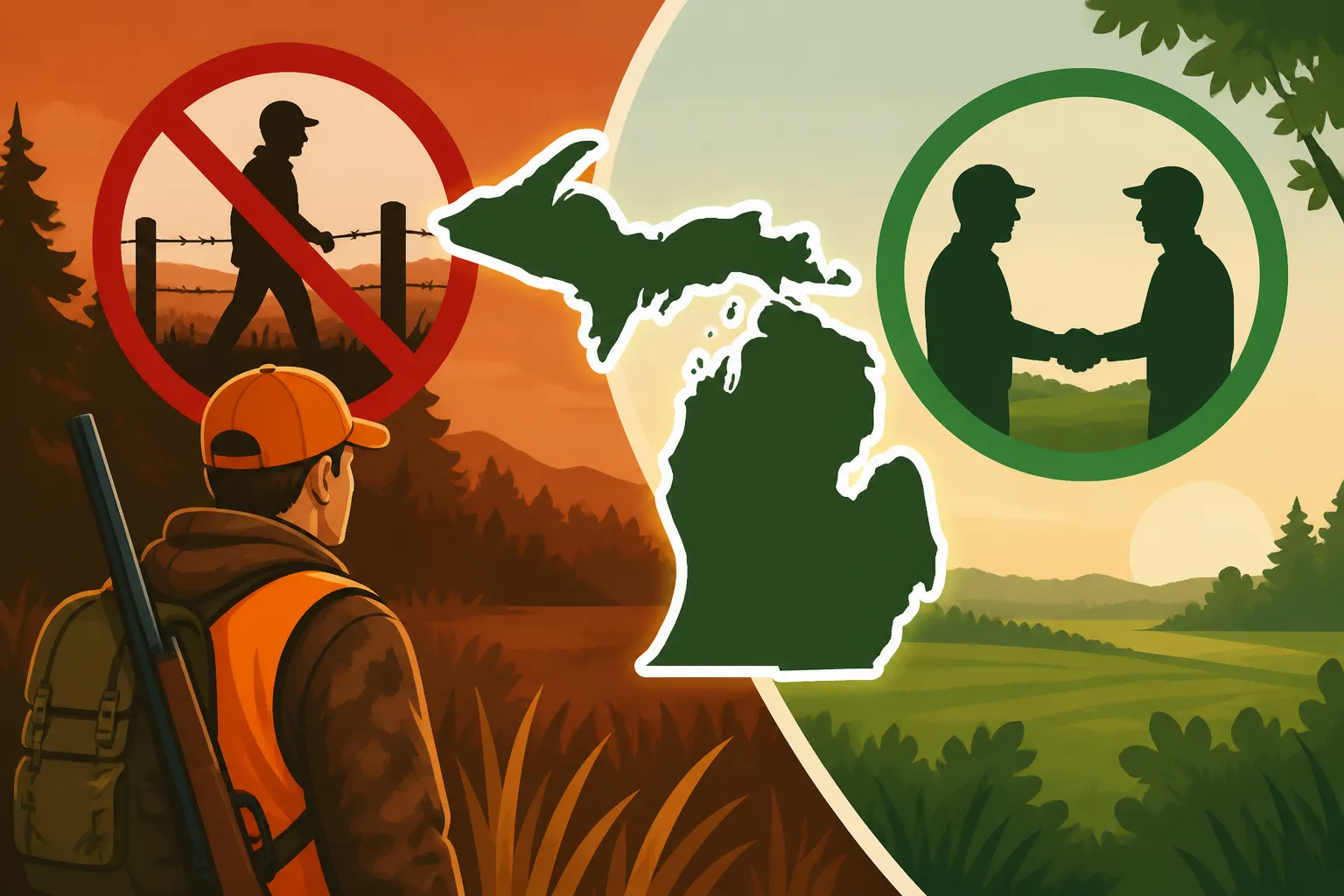
In Michigan, trespassing generally means entering or remaining on someone else's property without their express or implied permission. For hunters, this is particularly crucial. "Express permission" is straightforward: the landowner or their authorized agent explicitly tells you, either verbally or in writing, that you can be on their property. This might be a simple handshake, a signed permission slip, or even an email.
"Implied permission," however, is a bit trickier and far less common in a hunting context. It typically refers to situations where a reasonable person would assume they are welcome, like walking up to a front door to knock. For hunting, you should never assume implied permission. If the land isn't clearly public, you must secure permission. A landowner doesn't need to have a fence or "No Trespassing" signs to prohibit entry. Their property is theirs, and without their consent, you're trespassing. This means that beautiful, unposted woodlot you've been eyeing, if privately owned, is off-limits until you've spoken to the owner.
The Importance of Posted Land and Signs
While explicit "No Trespassing" signs aren't legally required to make land private and off-limits, they serve as a clear, unmistakable warning. In Michigan, posted land simply provides unequivocal notice to potential trespassers. A sign doesn't create the private property status, but it reinforces it. Many landowners use various types of signs, from official "No Trespassing" placards to simple handwritten notes. The legal weight isn't necessarily in the sign's aesthetic but in its message: you are not welcome here.
Imagine you're hunting an area you believe is public, but you suddenly come across a fresh, bright orange "No Trespassing" sign with a clear address or name on it. Even if you hadn't seen one five minutes earlier, that sign immediately tells you that you are on private land and need to exit. It's your responsibility to heed such warnings. What happens if signs are old, faded, or torn down? The landowner's rights don't disappear with their signage. The onus is always on the hunter to know where they are. This is why tools like the onX Hunt app or GoHunt are becoming indispensable for distinguishing boundaries in the field. They can show you in real-time if you're approaching or have inadvertently crossed a property line, regardless of whether a physical sign is present.
Legal Shooting Hours
While not directly a trespass issue, understanding Michigan Legal Shooting Hours is closely intertwined with respecting private property. Being on private land, even with permission, outside of legal shooting hours can raise questions and concerns for landowners. It's not just about when you can legally fire your weapon; it's about when you can be on the property.
Most landowners granting permission expect hunters to be respectful of their routine, their family's schedule, and the peace and quiet of their property. Showing up hours before dawn or staying long after dark, even if legal for shooting purposes on public land, can be perceived as disrespectful or even suspicious on private property. Always clarify these expectations with the landowner when you obtain permission. Some landowners might specify access times that are even stricter than state law allows, and their wishes, of course, supersede the general state regulations on their private land.
Navigating Private Land Permission for Hunting
Securing permission to hunt private land is a skill, an art form even. It's not always easy, but the rewards—access to less pressured game, new friendships, and unique hunting experiences—are well worth the effort. It all starts with respect and a clear understanding of what you're asking for.
How to Ethically Ask for Permission
Approaching a landowner about hunting access can feel intimidating, but a thoughtful, respectful approach goes a long long way. My first piece of advice is always: choose your timing wisely. Don't show up on a Sunday morning when they're getting ready for church, or during dinner, or in the middle of harvest season. A mid-week afternoon, perhaps, or a Saturday morning after chores are likely done, tends to be best. Dress neatly, but practically, showing you're a hunter but also someone who respects appearances. Leave your hunting clothes at home for this initial meeting; you're not there to hunt, you're there to introduce yourself.
When you speak to them, be clear, concise, and polite. Introduce yourself, explain why you're interested in their property (e.g., you've seen good deer sign, it connects to public land), and state exactly what you're asking for. Are you asking to bow hunt deer? To run rabbits with dogs? To bird hunt a specific cover? Be specific. Always offer your contact information and ask for theirs. Be prepared for a "no," and accept it graciously. A polite "no" today doesn't mean a "no" forever. You might be surprised how often a respectful approach years later, after the initial refusal, can turn into a "yes." This is really a critical skill, and you can learn more about Asking a Michigan Farmer for Permission by reading up on it.
What to Discuss When Seeking Permission
Once a landowner indicates they might be open to the idea, this is your opportunity to establish clear boundaries and expectations. Don't rush this part; it's vital for a good relationship. First, define the exact boundaries you're allowed to hunt. Walk the property with them if possible, or use a mapping app like onX Hunt to draw out the agreed-upon areas. Discuss where you can park your vehicle, if vehicle access is permitted, and on what types of roads (two-tracks, field edges). Many landowners are particular about vehicles tearing up soft ground.
Next, talk about what game you'll be pursuing and during what seasons. If they only want you hunting deer with a bow and not small game with a firearm, you need to know that upfront. Clarify if you can set up a portable treestand or ground blind, and for how long it can remain. Remember, any structures you leave behind become their problem if you don't remove them. It's also wise to discuss harvest reporting – many landowners appreciate knowing what game is being taken from their land, especially if they are trying to manage the deer herd. Finally, make sure to ask about any specific rules or concerns they might have, such as avoiding certain fields, staying away from buildings, or respecting livestock. A thorough conversation upfront prevents misunderstandings later.
Written vs. Verbal Permission
This is where things can get a little grey, but as hunters, we should always strive for clarity. Verbal permission is legally binding in Michigan, meaning if a landowner tells you, "Yes, you can hunt," and you act on that, you have permission. However, verbal permission can be problematic. Memories fade, interpretations differ, and landowners can change their minds or sell their property. If a conservation officer approaches you, it's your word against the landowner's, which can be a stressful situation.
For this reason, I always advocate for written permission whenever possible. A simple written note, signed and dated by the landowner, stating who has permission, what game they can hunt, during which seasons, and for what duration, is ideal. It eliminates ambiguity and provides proof. Some landowners may use formal permission slips, while others might just sign a note you've prepared. Tools like the onX Hunt app even allow you to digitally share and receive permission slips, which is incredibly convenient and provides a clear record for both parties. While Do You Need Written Permission in Michigan? is not strictly required by law, it is absolutely the best practice for everyone involved. It builds trust and protects you if any questions arise.
Inadvertent Trespassing and How to Avoid It
Even the most conscientious hunter can find themselves in a precarious situation near a property line. It happens, especially in Michigan's diverse landscapes where boundaries can be subtle or poorly marked. The key is knowing how to prevent it and what to do if it occurs.
Dealing with Property Line Disputes
Michigan's terrain often makes property lines less than obvious. A dense cedar swamp, a thick aspen cut, or a vast hardwood ridge might show no discernible change at the survey line. This is where relying solely on physical markers can fail you. One of the biggest advancements for hunters has been the advent of GPS mapping apps like onX Hunt and GoHunt. These apps layer property ownership data over detailed satellite imagery and topographic maps, showing you exactly where the public/private lines are, often down to the individual parcel.
Before you ever leave your truck, spend time scouting the boundaries on your app. Identify key landmarks near the property lines – a certain bend in a creek, a specific cluster of pines, a change in elevation. Mark these as waypoints. In the field, reference your GPS frequently, especially if you're still-hunting or moving through thick cover. Nothing ruins a hunt faster than realizing you've crossed onto land where you don't have permission. If you find yourself in a dispute, remain calm, polite, and apologetic. Never argue with a landowner. If you have permission for adjacent land, show them your written permission or your map with the agreed-upon boundaries. Understanding Finding Michigan Property Lines is crucial for avoiding these potentially awkward or even legal confrontations.
Retrieving Game from Adjacent Properties
You've made a perfect shot, but the deer, with its last burst of adrenaline, leaps over the property line onto land where you don't have permission. This is a common and agonizing scenario for Michigan hunters. The good news is that Michigan law generally permits you to track wounded game onto private land if it is not posted and you do not have a firearm or bow. However, to actually retrieve the animal, or if the land is posted, you absolutely need the landowner's permission.
The best course of action is always to immediately contact the landowner. Even if you have permission to hunt your side of the line, tracking onto the neighbor's property requires a separate conversation. Be prepared to explain the situation clearly, offer to show them the animal, and if they allow you access, be quick, respectful, and leave no trace. Never attempt to retrieve a deer after dark without explicit landowner consent and potentially an escort. The last thing you want is to be caught on someone else's property in the dark without permission. Being upfront and respectful here will go a long way. The rules for Retrieving Game From Private Land are designed to balance landowner rights with the ethical recovery of game.
Accidental Entry onto Posted or Undisclosed Private Land
Despite your best efforts with maps and careful observation, it's possible to inadvertently wander onto private land, especially in remote areas or where boundaries are unclear. Perhaps you were following a game trail, focused on the terrain, and simply missed a subtle property marker. The moment you realize you've crossed onto posted or unpermitted private land, the protocol is simple and firm: stop hunting, unload your weapon, and immediately exit the property in the most direct and least intrusive way possible.
Do not try to hide or sneak out. Do not attempt to justify your presence to yourself. The priority is to correct the mistake quickly and respectfully. If you encounter a landowner or their agent, be honest and apologetic. Explain that it was an honest mistake, that you're leaving immediately, and that you respect their property. This approach, while potentially embarrassing, is far better than being confronted and having to explain why you were trying to evade detection. Your integrity in these moments is paramount, not just for your own record, but for the reputation of all Michigan hunters.
Public Land Hunting: Knowing Your Rights and Responsibilities
Michigan is blessed with an abundance of public hunting land, offering incredible opportunities for hunters. But even on public ground, there are specific rules and etiquette to follow. Understanding the differences between public land types and their regulations is just as important as knowing private land laws.
Differentiating Public and Private Land Boundaries
The vast stretches of state and federal land in Michigan are a treasure, but these public areas often abut private parcels. The crucial distinction is knowing exactly where one ends and the other begins. This is another area where modern mapping technology shines. Apps like onX Hunt and GoHunt allow you to overlay public and private land boundaries directly onto your device's map, often color-coding them for easy identification.
Michigan's public lands include millions of acres of State Forest land, State Game Areas, and National Forests like the Huron-Manistee, Ottawa, and Hiawatha. Each category generally permits hunting, but specific rules can vary. For instance, designated Michigan State Forest Hunting Rules might differ slightly from those in Michigan State Game Areas. It's your responsibility to know the land status before you hunt. Don't rely on old paper maps alone; verify with current digital tools. Many hunters keep their GPS running in the background, offering a constant check on their position relative to those critical public/private lines. This diligence helps prevent accidentally crossing into private property and ensures you're always within your rights on Public Hunting Land in Michigan.
Accessing Commercial Forest Act and HAP Lands
Michigan also has unique programs that expand hunting access beyond traditional public land. The Commercial Forest Act (CFA) allows private landowners, primarily timber companies, to receive a tax reduction in exchange for allowing public access for purposes like hunting and fishing. These lands are generally open to foot traffic for hunting, but vehicle access and placing permanent structures are often restricted or require additional permission.
Similarly, the Michigan DNR's Hunting Access Program (HAP) leases private farmland from landowners and opens it to public hunting. These properties are often in agricultural areas where public land is scarce, providing valuable opportunities for deer, pheasant, and rabbit hunting. HAP lands are clearly marked with distinctive signs, and specific rules for each property (like what game can be hunted, parking areas, and allowed weapons) are outlined on signs and online. It's critical to read and understand these rules, as they can vary significantly from one HAP property to another. Always check the DNR website for current HAP property listings and regulations, and respect the landowner's specific requirements. These programs are invaluable for expanding access, and details on Michigan Commercial Forest Land Access and How the Hunting Access Program Works are readily available.
Safety Zones and Other Restrictions
Even on public land, there are areas where hunting is either restricted or prohibited entirely to ensure public safety. The most prominent example is Michigan's safety zone rule: you cannot discharge a firearm or bow within 150 yards of an occupied building, house, structure, or any barn or building used in connection with a farm operation without obtaining the landowner's explicit permission. This rule applies even if you are on public land and the structure is on adjacent private land. This is a critical safety measure, and violating it can carry serious penalties. Always give ample space around any occupied structures you encounter.
Beyond safety zones, there are other restrictions to be aware of. Certain public lands, like state parks or designated recreational areas, may have specific rules regarding hunting or weapon use that differ from general state land. Some trails, campgrounds, or picnic areas may have temporary or permanent hunting closures. It's always best practice to check the specific regulations for the particular public land unit you intend to hunt. Also remember rules around leaving equipment: Treestand Rules on Michigan Public Land and Ground Blind Rules on Michigan State Land typically prohibit leaving stands or blinds up permanently and require them to be clearly marked with your DNR license number. Always double-check current regulations to ensure you're in compliance. Michigan Safety Zone Rules are non-negotiable and designed for everyone's protection.
Consequences of Trespassing and Enforcement
Trespassing is not just an ethical breach; it's a legal one, and the consequences in Michigan can be significant. Understanding these repercussions should underscore the importance of securing permission and knowing your boundaries.
Penalties for Hunting on Private Land Without Permission
Hunting on private land without permission in Michigan carries a range of penalties, depending on the severity and frequency of the offense. At a minimum, you could face fines that vary based on the specific charge, and these can quickly add up. Beyond monetary penalties, a conviction for trespassing while hunting can result in the revocation or suspension of your hunting license for a period of time, meaning you might not be able to hunt at all for a season or more. This is a severe blow for any dedicated hunter.
In more serious cases, especially if property damage occurs, or if you're found to be illegally taking game, you could face misdemeanor charges, which can include jail time. Repeat offenders face even harsher penalties. It's not just a slap on the wrist; Michigan takes property rights and ethical hunting seriously. A conviction can also create a criminal record, impacting future employment or other opportunities. The potential legal and financial headaches, not to mention the stain on your reputation as a hunter, are simply not worth the risk of cutting corners on permission.
Reporting Violations and the Role of the DNR
If you witness someone trespassing or poaching, it's natural to feel frustrated or even angry. However, it's crucial not to confront individuals directly, especially if they are armed. Your safety should always be the priority. Instead, record as much information as possible: vehicle descriptions (make, model, color, license plate), physical descriptions of individuals, the specific location, the time, and what you observed.
Once you have this information, contact the Michigan Department of Natural Resources (DNR)'s Report All Poaching (RAP) hotline or a local conservation officer. The DNR is the primary enforcement agency for hunting and fishing laws in Michigan. They have the authority to investigate, issue citations, and make arrests. By reporting violations, you're not just protecting a specific piece of property; you're contributing to the overall health of Michigan's wildlife populations and upholding the integrity of ethical hunting. Knowing how and when to be Reporting a Poacher in Michigan is a vital part of being a responsible outdoor enthusiast.
Hunter Responsibility and Ethical Conduct
Ultimately, responsible hunting boils down to ethics. Respect for the land, wildlife, and landowners is the cornerstone of our hunting heritage. When you seek and obtain permission, you're not just getting access to a hunting spot; you're entering into a relationship of trust with a private citizen. Leaving gates as you found them (open or closed), picking up any trash (even if it's not yours), avoiding unnecessary damage to crops or fences, and providing updates on game seen or taken all contribute to maintaining that trust.
A good relationship with a landowner can last for years, potentially providing unique hunting opportunities that public land simply cannot offer. Conversely, one careless act can ruin access for many hunters for years to come. Every hunter carries the torch for the entire hunting community. By consistently demonstrating ethical conduct and respect for private property, we ensure that hunting remains a cherished and accessible tradition in Michigan.
| Aspect | Private Land (without permission) | Private Land (with permission) | Public Land (State/Federal) | HAP / CFA Lands |
|---|---|---|---|---|
| Hunting Status | Illegal (Trespassing) | Legal, based on agreement | Legal (generally) | Legal, with specific rules |
| Permission Needed? | Absolutely | Yes, explicit (preferably written) | No (generally) | Yes, implied by program rules |
| Signage | "No Trespassing" signs common, but not required for trespass to occur | May have signs, check property lines | Public land markers, but lines can be unclear | HAP/CFA signs indicate access |
| Retrieving Game | Requires landowner permission | Part of initial permission discussion | Usually permitted if legal | Check specific program rules |
| Vehicle Access | Illegal | As agreed with landowner | Restricted to designated roads/areas | Check specific program rules |
| Treestands/Blinds | Illegal | As agreed with landowner | Rules apply (e.g., portable, marked) | Check specific program rules |
| Safety Zones | Always applies (150 yds) | Always applies (150 yds) | Always applies (150 yds) | Always applies (150 yds) |
| Legal Consequences | Fines, license revocation, jail | None, if adhering to agreement | None, if adhering to rules | None, if adhering to rules |
Disclaimer
This article is for general informational purposes only and does not constitute professional advice. Laws, prices and regulations vary by location and change over time. Consult a qualified professional for guidance on your specific situation.