Shooting Sticks From a Ground Blind
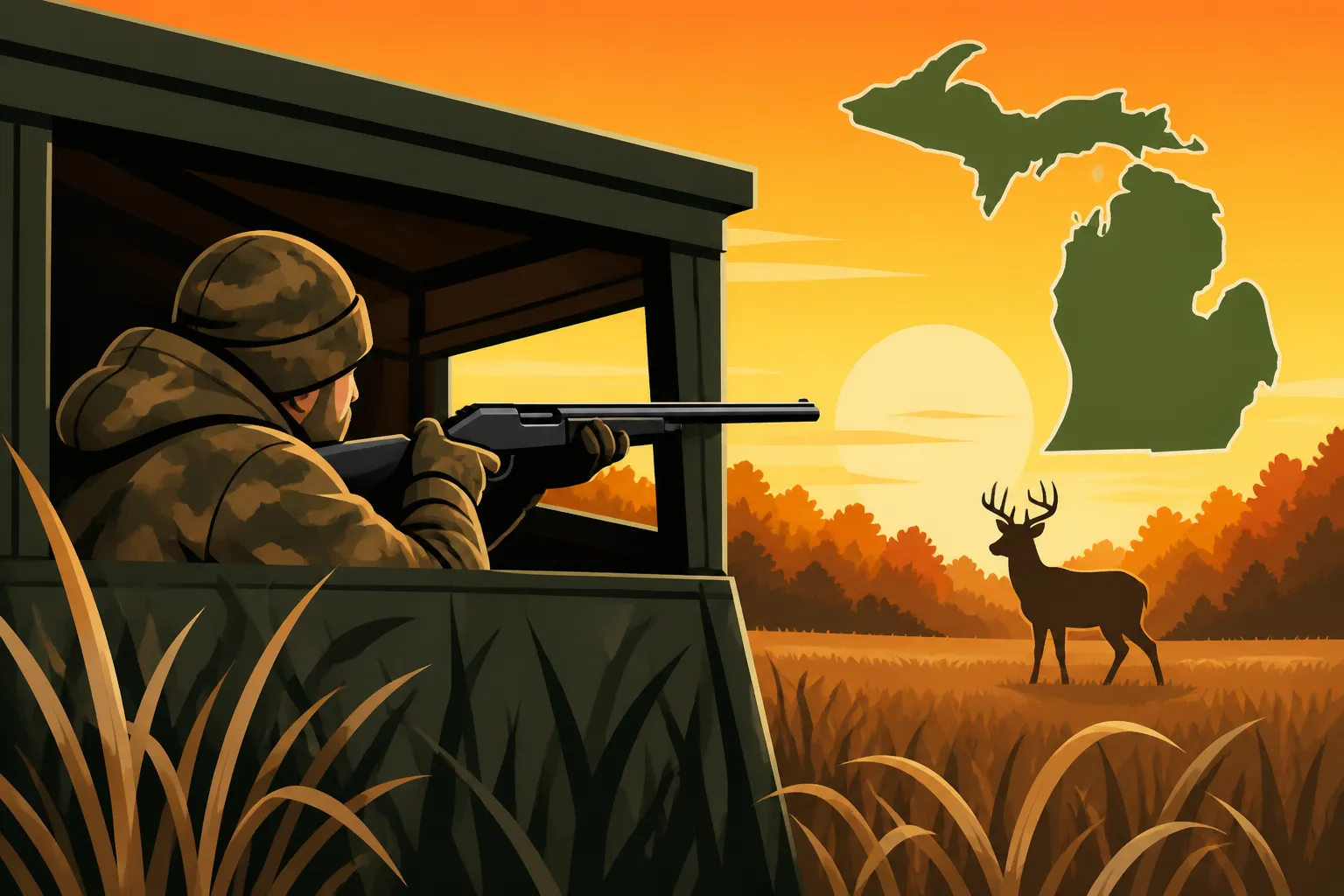
It’s a scene all too familiar to Michigan hunters: you’re tucked into your ground blind, scent-controlled and ready, when that magnificent buck finally steps into view. But wait – he’s not exactly where you expected him, and now you’re trying to contort your body, brace your rifle against a flimsy blind wall, or perch precariously to get a stable shot. It's frustrating, often leading to missed opportunities or, worse, a less-than-ideal shot. This guide is all about turning those wobbly, uncertain moments into rock-solid confidence by integrating shooting sticks into your ground blind setup, ensuring you’re ready when the moment of truth arrives for any Michigan game.
Why Shooting Sticks are a Game-Changer in a Ground Blind
Hunting from a ground blind offers so many advantages, especially here in Michigan where public land can be heavily pressured, and deer get wise to treestands. Blinds offer warmth, concealment, and a great way to introduce new hunters to the sport. However, they also present a unique set of challenges when it comes to getting a truly stable shot. That’s where a good set of shooting sticks can completely revolutionize your blind hunting experience.
The Unstable Reality of Blind Hunting
Think about it: you're often sitting on a stool or a chair, which might be comfortable, but isn't always conducive to a stable shooting platform. You're trying to peer through a mesh window, maybe kneeling, perhaps even trying to balance your firearm on a small, fabric shelf that was really designed for your sandwich. The angles are often awkward, forcing you to twist or lean in ways that make it incredibly difficult to hold perfectly still, especially when your heart is pounding with adrenaline as that mature Michigan buck steps out. I’ve been there, trying to steady a rifle with my elbows tucked into my knees, feeling like a pretzel, only to have the crosshairs dance just enough to make me hesitate. It’s a common frustration, and one that often leads hunters to abandon their blinds for other methods, even when a blind might be the best strategic choice for a particular location.
Sometimes, the windows are too high for a comfortable sitting shot, forcing you to half-stand, which can be noisy and make you less stable. Other times, the opening is just a slit, giving you limited visibility and even less room to maneuver your firearm for a solid rest. Many hunters simply "deal with it," hoping for an easy broadside shot they can take freehand, or worse, they rush a shot because they're tired of trying to hold steady. This isn't just about comfort; it's about ethical hunting and making sure every shot you take is as accurate as possible to ensure a quick, humane harvest.
The truth is, while blinds are fantastic for concealment and comfort, they're rarely designed with built-in, adjustable shooting rests that accommodate every hunter, every chair height, and every possible shot angle. We rig up pillows, backpacks, or even our knees, but these are often compromises at best. We’re left wishing for the kind of stability a treestand offers with its shooting rail, but within the confines of our pop-up.
The Stabilizing Power of Shooting Sticks
Enter the humble shooting stick. This simple piece of gear can transform an unstable situation into a rock-solid platform. By providing a consistent, adjustable point of contact for your firearm, shooting sticks virtually eliminate the wobble and shake that can plague freehand shots. When that trophy buck finally steps out into your shooting lane, and your adrenaline spikes, having a steady rest can be the difference between a clean kill and a frustrating miss or, worse, a wounded animal.
The beauty of shooting sticks is their adaptability. You can quickly adjust their height to match your specific chair, the window opening, and the height of the animal you're aiming at. Whether you're sitting on a low stool aiming at a coyote or standing to shoot a deer that's closer than expected, the sticks can be adjusted to provide that crucial stability. This means you spend less time trying to find an improvised rest and more time focusing on your target, breath control, and trigger squeeze. That confidence translates directly into more precise shots on vital organs, which is always the goal.
Moreover, shooting sticks allow for subtle movements and adjustments without losing your entire sight picture. If a deer takes another step or slightly changes its angle, you can gently pivot your rifle on the sticks, maintaining your stable rest. This is a far cry from trying to shift your entire body and re-acquire your target while balancing your firearm against an uneven surface. They give you the edge you need when patience and precision are paramount.
Beyond Deer: Versatility for All Michigan Game
While we often think of deer hunting when discussing shooting sticks, their utility in a ground blind extends far beyond just whitetails. Here in Michigan, many hunters pursue turkeys, predators, and even small game from blinds, and shooting sticks are equally valuable in these scenarios. For spring turkey hunting, a stable rest is absolutely critical for a clean head or neck shot on a wary gobbler. Imagine that long-beard finally coming into range, and instead of wrestling with your shotgun, you simply settle it into the V-yoke of your sticks, taking a breath, and making a confident shot.
Predator calling, especially for coyotes, often involves taking precise shots at varying distances. From a ground blind, with the element of surprise, you might have a coyote pause at 100 yards or more. A good set of shooting sticks allows you to dial in that shot, eliminating movement that could cause you to miss a vital area on such a cunning animal. The stability helps you hold your aim through the entire trigger pull, which is crucial for those longer-range precision shots. GoHunt often features articles on efficient blind setups, including discussions on how to get stable for various game, so it’s worth checking their insights for maximizing space and stability.
Even for small game, if you're using a rimfire rifle from a blind, sticks can make a big difference. Squirrel hunting, for instance, requires accurate shots on small targets, and a stable rest can turn a challenging shot into a routine one. The point is, once you incorporate shooting sticks into your ground blind routine, you’ll wonder how you ever hunted without them, no matter what species you're after.
Choosing the Right Shooting Sticks for Your Blind
Selecting the right set of shooting sticks for ground blind use isn't just about grabbing the first pair you see. The unique environment of a blind, with its confined space and varied shooting positions, demands specific features. Thinking through these options beforehand will save you a lot of headaches – and potentially missed shots – once you’re in the field.
Monopods, Bipods, and Tripods: Pros and Cons in a Confined Space
When it comes to shooting sticks, you generally have three categories: monopods, bipods, and tripods. Each has its own strengths and weaknesses, especially when trying to deploy and use them inside a ground blind.
-
Monopods: These offer quick deployment and are great for minor adjustments when you need to shift your aim rapidly. They provide a single point of contact with the ground, giving you more stability than freehand, but less than a bipod or tripod. In a very cramped blind, a monopod can be easier to maneuver since it only has one leg. However, if you need ultimate steadiness for a longer shot, especially after a long, cold sit where your muscles are fatigued, a monopod might leave you wishing for more support. They are excellent for quick, upright adjustments, but you're still doing a lot of the work to maintain lateral stability.
-
Bipods: These are often the preferred choice for many ground blind hunters, striking a good balance between stability and portability. With two legs, they offer much greater stability than a monopod, effectively creating a stable "V" for your firearm. They are still relatively easy to set up and adjust quietly, and they don't take up an excessive amount of floor space. The trade-off is that they are not quite as rock-solid as a tripod, and if you need to quickly pivot a full 180 degrees, it might require lifting and repositioning the entire unit. However, for most deer and turkey hunting scenarios where you have a general idea of your shooting lanes, a bipod provides excellent support.
-
Tripods: For absolute maximum stability, a tripod is king. With three points of contact on the ground, a tripod creates an incredibly stable platform, virtually eliminating all wobble. This is fantastic for long-range precision shooting or when you need to hold steady for an extended period. The downside, however, is their bulk. Inside the often-cramped confines of a ground blind, a tripod can feel cumbersome, difficult to deploy quietly, and might restrict your movement. They take up more floor space and can be challenging to reposition quickly if game appears unexpectedly from a different window. If your blind is unusually spacious, or if you primarily hunt from a fixed position with known shooting lanes, a tripod could be a great choice. But for dynamic hunting, especially with deer that might circle, they can be a hindrance.
| Stick Type | Stability | Portability/Maneuverability in Blind | Best Use Case in Blind |
|---|---|---|---|
| Monopod | Moderate | Excellent | Quick, minor adjustments, very tight spaces |
| Bipod | Good | Very Good | All-around deer, turkey, predator hunting |
| Tripod | Excellent | Fair (can be bulky) | Long-range, precision, static shooting |
Height and Adjustability Considerations
The key to effective shooting sticks in a ground blind is their ability to adapt to your specific setup. You need sticks that can go from kneeling height to standing height with quick, quiet adjustments. Many hunters sit on lower chairs or buckets in their blinds, which means your sticks need to be able to extend to comfortably support your firearm while you maintain a natural shooting posture. Conversely, if you need to stand to shoot over tall vegetation or to get a better angle through a window, your sticks must extend to accommodate that as well.
Look for sticks with quick-release levers rather than twist locks. When that Michigan buck suddenly appears, you don't want to be fumbling with slow, noisy twist mechanisms. Levers allow for rapid, silent adjustments, letting you get your rest set up in seconds. The "sweet spot" for adjustability is usually a range that covers seated positions from a standard blind chair (typically 18-20 inches off the ground) up to a standing eye-level position for most adults, generally around 60-70 inches. Some sticks even have a low profile option, which can be great if you’re using a very low seat or trying to shoot from a prone position through a smaller window flap.
Consider whether the sticks are telescoping, meaning they collapse straight down, or folding, where they break into sections. Telescoping sticks are often quicker to adjust, but folding ones can be more compact for transport to and from your blind. Either way, the mechanism for extending and collapsing needs to be smooth and, most importantly, quiet. A loud clank or scrape as you adjust your sticks will send every deer within earshot scattering into the next county.
Material and Features for Michigan Conditions
Michigan hunting conditions can be tough – wet, cold, and often muddy. The material of your shooting sticks matters. Aluminum sticks are generally more affordable and robust, but can be a bit heavier and may feel colder to the touch. Carbon fiber sticks are significantly lighter and often quieter, but come with a higher price tag. The weight difference might not seem huge if you're just carrying them from your truck to a nearby blind, but if you're packing into a remote spot on public land, every ounce counts. Packs for a Day on State Land are important for carrying your gear comfortably.
Beyond the material, look at the feet. Rubber feet offer good grip on the smooth floor of a blind and are silent. Some sticks come with interchangeable spiked feet, which are great for digging into soft ground outside the blind but can be noisy and potentially damage your blind’s floor inside. A good compromise is a stick with a rubber foot that can be twisted or retracted to expose a spike.
Finally, consider the head of the sticks. Most come with a V-yoke, which cradles your firearm’s fore-end nicely. Ensure it’s made of a durable, non-marring material, preferably rubberized, to protect your gun and prevent slipping. Some V-yokes can pivot or swivel, allowing for even smoother lateral adjustments. Others are removable, allowing you to attach a universal camera mount or spotting scope, adding to the versatility of your sticks, which can be useful for scouting or filming your hunts. The less noise these components make, the better, so check for any loose parts or rattles before you buy.
Mastering the Setup and Shot from Your Blind
Having the right shooting sticks is only half the battle; knowing how to integrate them into your hunting setup and using them effectively is where you truly gain an edge. This isn't just about throwing them in the corner of your blind; it's about making them an extension of your hunting strategy, ready at a moment's notice for that critical shot.
Pre-Season Practice and Blind Familiarization
The biggest mistake many hunters make is waiting until opening morning to truly familiarize themselves with their gear. This is especially true for shooting sticks in a ground blind. Before the season even starts, take your blind, your chair, your firearm, and your new shooting sticks out to your backyard or a local range. Set up your blind exactly as you would in the field. Spend time sitting in your chair, adjusting your sticks, and practicing shouldering your rifle or shotgun.
Practice taking imaginary shots from various windows and different angles within the blind. Raise the sticks, lower them, extend them, collapse them – do it all quietly and smoothly. Adjust your chair height if needed to find that optimal, comfortable shooting position that allows for maximum stability with the sticks. This dry run will highlight any issues with stick height, chair placement, or even blind window configuration long before a trophy buck is staring at you. You want the movements to be second nature, almost muscle memory, so that when the real deal happens, you're not fumbling around. Remember, a silent, efficient setup is crucial when dealing with wary Michigan whitetails. Using a Ground Blind on Michigan State Land means you often need to move quietly to avoid spooking game that might be close by.
Think about common scenarios: a deer walks in close, requiring you to lower the sticks quickly. Another one stops farther out, needing a higher rest. A deer is quartering away, requiring a slight shift in your body and stick angle. Rehearsing these actions repeatedly will build your confidence and ensure that when the actual opportunity arises, you can execute the shot flawlessly. Don't underestimate the value of this pre-season ritual; it truly makes a difference.
Integrating Sticks into Your Hunting Flow
Once you're familiar with your sticks, the next step is seamlessly integrating them into your hunting flow inside the blind. The goal is to keep them accessible without them being in the way or creating unnecessary clutter that could hinder a shot. Many hunters prefer to keep their sticks folded or collapsed, propped quietly in a corner or alongside their chair, ready to be deployed. Others might have them partially extended, leaning against a blind wall, if their setup allows for it and it doesn't impede their view or movement.
When game approaches, the deployment of your sticks needs to be smooth and silent. Avoid banging them against the blind frame or floor. Gently lift them, extend them to the desired height, and settle your firearm into the rest. This is where those quick-release levers shine; they allow for rapid height adjustments without making a sound. It's also critical to have a clear understanding of your shooting lanes from each window before the hunt begins. Mentally rehearse which window you'll use for different approach vectors, and how you'll position your sticks accordingly. GoHunt often features articles on efficient blind setups, including advice on how to get stable for various game, which can be invaluable for maximizing space and getting the most out of your sticks.
Sometimes, a deer might move into an unexpected position, forcing you to shift quickly. This is where practice pays off. Instead of panicking, you'll instinctively know how to quietly adjust your position, re-extend or shorten your sticks, and get back on target. Always remember to maintain that mental checklist: identify target, get stable, control breath, squeeze trigger. The sticks are there to support the "get stable" part of that equation. Cold Weather Sitting Strategy also plays a role here, as numb fingers can make handling gear awkward; practice helps overcome this.
Dealing with Tight Spaces and Awkward Angles
Ground blinds, by their nature, can be tight. Even the largest pop-up blinds can feel cramped when you add a heater, a chair, a backpack, and now, shooting sticks. Learning to maneuver your sticks quietly within these confined spaces is essential. If you're using a bipod or tripod and find that space is truly limited for a certain shot, don't be afraid to use a single leg of the unit as a monopod, especially for minor shifts. This might not be as stable as using all the legs, but it's better than no rest at all.
Sometimes, the angle of the shot might be awkward – too steep, too low, or off to the side of your primary window. In these situations, getting creative is key. Can you use a corner of the blind, or even a sturdy blind shelf, to supplement the rest provided by your sticks? The sticks are meant to provide a primary point of stability, but in a pinch, additional bracing can help. Just be mindful of noise. Using the sticks allows you to minimize body movement, which is critical in a small blind where every twitch can be seen or heard by approaching game.
Always remember the fundamentals of good shooting form. Even with a solid rest from your sticks, proper cheek weld, shoulder placement, and follow-through are crucial. The sticks are an aid, not a magic bullet. They enhance your ability to make a precise shot, but you still need to do your part. By practicing and understanding how your sticks interact with your blind and your body, you can overcome almost any tight space or awkward angle Michigan's diverse hunting landscapes throw at you.
Tips for Maximizing Accuracy and Ethics
The ultimate goal of using shooting sticks in a ground blind is to improve your accuracy, which in turn leads to more ethical harvests. A clean, quick kill is always the aim of any responsible hunter, and the added stability from sticks directly contributes to achieving that. It's about empowering yourself to make the best possible shot when the opportunity presents itself, rather than settling for a risky one.
The Importance of a Solid Anchor
Even with the best shooting sticks, the fundamentals of shooting still apply. Your body is the ultimate platform, and the sticks are there to enhance it, not replace proper form. Focus on establishing a solid anchor point with your cheek weld firmly against the stock, and your shoulder properly seated to absorb recoil. The sticks will support the front of your firearm, but your rear hand and shoulder still need to do their job, pulling the rifle into your body for maximum stability.
Breathing techniques are also paramount. Take a deep breath, slowly exhale half of it, and then pause before squeezing the trigger. This brief pause, often called the natural respiratory pause, is where your body is most still. Combining this controlled breathing with the rock-solid rest provided by your sticks creates a synergy that dramatically reduces movement at the moment of truth. Shooting sticks make it easier to maintain this steady state, especially when adrenaline is surging. They give you the time to focus on that perfect trigger squeeze without worrying about your crosshairs wandering.
Think of it this way: the sticks act as a consistent forward support, but your core, your grip, and your breathing are what lock that rifle in for the shot. Don't rely solely on the sticks; integrate them into your overall shooting posture for maximum effect. This means finding a comfortable, repeatable position in your blind that allows you to easily shoulder your rifle onto the sticks, establish your anchor, and control your breathing.
Adapting to Changing Situations
Hunting is rarely static, and a ground blind hunt in Michigan is no exception. Deer can appear and disappear quickly, or move erratically. Your shooting stick setup needs to be adaptable. If a deer steps into your shooting lane and pauses, you have the luxury of making careful adjustments to your stick height for the perfect rest. But what if it keeps moving, or suddenly takes off?
This is where understanding the limitations and capabilities of your setup comes into play. If a deer is moving too quickly for you to safely get a stable rest on your sticks, you need to be prepared to make a judgment call. Sometimes, a quick, well-practiced freehand shot might be necessary if it's a close, standing target, and you absolutely cannot get the sticks deployed fast enough. However, the goal of using sticks is to minimize those hurried freehand shots, so always strive for stability first. If the shot doesn't feel right, don't take it. Cold Weather Sitting Strategy is crucial here, as cold-numbed fingers can impede quick adjustments; practicing deployment even in uncomfortable conditions will pay off.
The true value of sticks shines when a deer pauses, offering you a precious few seconds. Those seconds are all you need to fine-tune your rest, settle your breathing, and make a precise shot. Practice quick adjustments: lowering the sticks silently for a deer feeding close to the blind, or raising them a few inches for a buck that just lifted its head to scan the field. It's about being prepared for a dynamic environment, even from a stationary blind.
Ethical Shooting and Shot Placement
Ultimately, shooting sticks are a tool for ethical hunting. They significantly increase your chances of making a clean, one-shot kill by minimizing human error caused by instability. This means less chance of wounding an animal and having to track it for miles through Michigan’s thick woods or swamps. When you have a solid rest, your confidence skyrockets, allowing you to focus purely on shot placement – putting that bullet or arrow exactly where it needs to go for a humane harvest.
Always prioritize knowing deer anatomy. Whether you’re aiming for the heart-lung vitals, or a neck shot on a turkey, understanding exactly where your projectile needs to impact is critical. Shooting sticks make it easier to hold steady on that small, precise spot. Resources like those offered by GoHunt often include detailed diagrams and advice on ethical shot placement from various angles, which can be invaluable for blind hunters aiming for maximum efficiency. Don't just aim for "the shoulder" or "the chest"; visualize the exact location of the vitals.
A responsible hunter never takes a shot they aren't 100% confident in. Shooting sticks bolster that confidence by providing a level of stability that's otherwise impossible in a blind. If, despite your best efforts and your sticks, the shot doesn't feel perfect, let the animal walk. There will always be another opportunity. But when that perfect shot presents itself, you'll be glad you invested in your setup and practiced with your sticks. And if, by some chance, you do need to track, a well-placed shot makes Tracking a Deer in Michigan Snow or Blood Trailing After Dark in Michigan far more straightforward.
Disclaimer
This article is for general informational purposes only and does not constitute professional advice. Laws, prices and regulations vary by location and change over time. Consult a qualified professional for guidance on your specific situation.