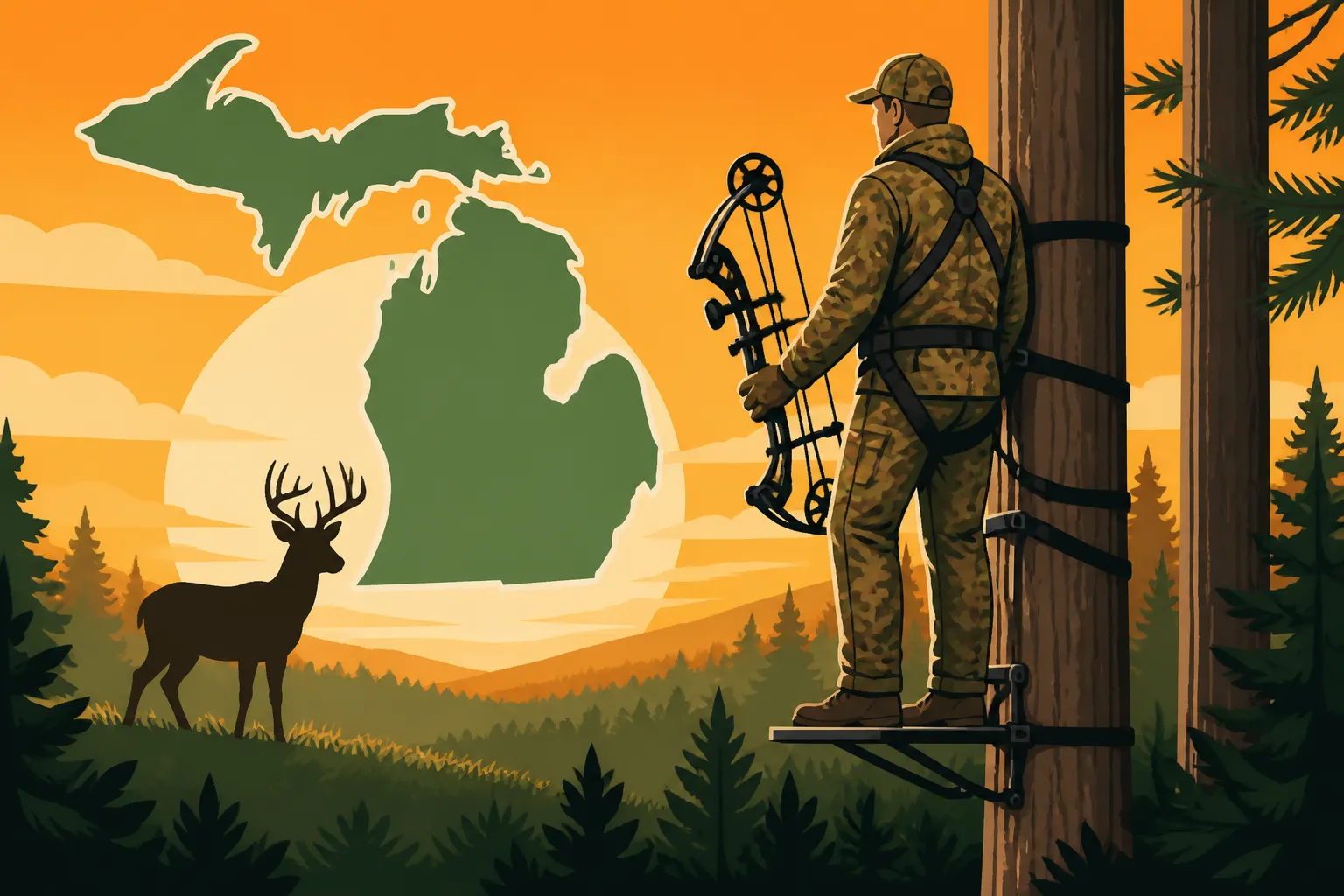
Climber Stands on Straight Trunks
One of the biggest frustrations in Michigan deer hunting is committing to a stand location, only to find the deer have shifted their patterns, or worse, that your perfect tree just isn't working out. This guide will walk you through the ins and outs of using climber stands, specifically focusing on how to effectively deploy them on Michigan's plentiful straight-trunked trees, offering you the mobility and adaptability to stay on the deer, no matter how fickle they become.
The Mechanics of Climber Stands: A Michigan Perspective
Climber stands are a fantastic tool for the mobile hunter, especially when you’re dealing with Michigan’s ever-changing deer movements and the vast expanses of public land. Unlike hang-on stands that require steps or a climbing stick setup, climbers are a self-contained unit that allows you to ascend a tree using your own body weight and a bit of technique.
How Climbers Work and Why Straight Trunks Matter
At its core, a climber stand consists of two main pieces: a top section, which acts as your seat and often has armrests, and a bottom section, which serves as your platform. Both sections have cables or chains that wrap around the tree trunk. The magic happens when you alternate "standing" on the platform and "sitting" on the seat, allowing the stand to grip the tree and move upwards or downwards in small increments. This "sit-stand" method is surprisingly efficient once you get the hang of it.
The critical factor for a climber stand is the tree itself. It absolutely needs a straight, limb-free trunk from the ground up to your desired hunting height. Any significant branches or sharp changes in diameter will prevent the stand from climbing smoothly or, worse, safely. Michigan, with its diverse forests, offers a surprising number of suitable trees. Think about those beautiful, tall red pines in the northern Lower Peninsula, the straight-growing oaks in certain hardwood ridges, or even some of the perfectly columnar aspens you find in cuts. These are the trees that make climber stands shine. If you try to force a climber onto a crooked tree or one with too many lower limbs, you're just asking for a frustrating, and potentially dangerous, experience.
Advantages for Michigan Hunters
The beauty of a climber stand for a Michigan hunter lies in its unparalleled mobility. Instead of pre-setting multiple hang-on stands and hoping the deer show up, a climber allows you to scout, adapt, and move with the deer. Imagine you’ve been watching a weather pattern shift, and you know the deer are going to hit a specific stand of oaks dropping acorns, but you hadn't hung a stand there yet. With a climber, you can be in that tree, silently and effectively, within minutes of arriving. This adaptability is crucial when hunting pressured public land, where deer frequently alter their routes due to hunter presence. You can leave your truck before daylight, walk to a new area, set up your climber, and be hunting a fresh spot without leaving any permanent sign.
Another huge benefit is quiet access. Since you're not clanging metal climbing sticks or struggling with screw-in steps, the process of getting into a tree with a climber is often much quieter. This is especially important in the still, crisp mornings of Michigan's archery or muzzleloader seasons. When every little sound carries, minimizing disturbance is key. Plus, carrying one self-contained unit is often lighter and less cumbersome than hauling multiple sticks and a hang-on stand through thick Michigan cover. You can slip through dense pine plantations or along swamp edges with less fuss, increasing your chances of reaching your spot undetected.
Selecting the Right Climber for Michigan's Forests
Choosing the right climber stand isn't just about picking one off the shelf; it's about finding one that fits your hunting style, your body, and the specific types of trees you'll encounter in Michigan. There are a few key features that can make or break your experience.
Key Features to Look For
First and foremost, consider the weight of the stand. You'll be packing this in, often for considerable distances, especially on state land. A lighter stand, typically made from aluminum, will save you a lot of energy. However, lighter often means a higher price tag. Steel stands are usually more affordable but significantly heavier, which can be a real burden after a long day of still-hunting or packing out a deer. Think about your physical condition and how far you realistically plan to walk.
Next, look at the platform size and seat comfort. Michigan hunters often endure long sits, especially during the colder firearm and late archery seasons. A larger platform offers more room to shift, stretch, and get comfortable, which is crucial for staying focused. A comfortable seat, whether it's a sling seat or a padded bench, will also extend your sit time. Some stands offer a 'sit-and-stand' bar that can double as a shooting rail, which is a great feature for firearm hunters or those wanting extra stability for archery shots. Pay attention to the seat design – some are more accommodating for larger hunters or those wearing bulky cold-weather gear.
Finally, prioritize safety features and packability. Integrated safety harnesses are a must, though you should always invest in a separate, high-quality full-body harness. Look for features like sturdy cables, reliable quick-release buckles, and a design that minimizes snag points when climbing. For packability, check how the two sections nest together for transport. Some stands are designed to cinch down tightly, preventing noise and making them easier to carry through brush. Many hunters add extra straps or bungee cords to ensure their stand is silent on the walk in. When you're using a tool like onX Layers for Michigan Land Status to find those perfect, overlooked spots deep in the timber, a quiet, packable stand is invaluable.
Materials and Durability in Michigan Weather
Michigan weather is notoriously unpredictable. One day it's mild and sunny, the next it's sleeting sideways. This means your stand needs to be durable and weather-resistant.
Aluminum stands are the champions of lightweight portability. They resist rust much better than steel, which is a significant advantage in Michigan's damp forests, especially if you're leaving your stand out overnight (though always retrieve it when you leave the area for an extended period). However, aluminum can be noisy if it flexes or scrapes against the tree, and it can also become extremely cold to the touch in freezing temperatures. If you go with aluminum, consider adding rubber coatings or silent strips to critical points to reduce noise.
Steel stands, while heavier, are often more rigid and can feel more stable, which some hunters prefer. They are also generally more affordable. The downside is rust. If you choose a steel stand, ensure it has a robust powder coating or paint finish to protect it from the elements. After a season of being exposed to rain, snow, and ice, any exposed steel can quickly start to corrode. Regular maintenance, like checking for rust and touching up paint, will extend the life of a steel stand in Michigan's climate. Both materials will have nylon straps and cables, so inspect these regularly for wear and tear, especially around connection points.
Master Your Climb: Setup and Safety Tips for Michigan Terrain
Using a climber stand safely and effectively is a skill that improves with practice. The more comfortable you become, the more confident you'll be in accessing those prime hunting spots high in the canopy.
Finding the Ideal Tree
This is where your Michigan woods knowledge really comes into play. You need a tree that's straight, healthy, and has the right diameter, with no limbs to obstruct your climb up to your desired height.
- Straightness and Limb-Free Zone: This is non-negotiable. Look for trees that are like telephone poles for at least 20-30 feet. Many Michigan red pines, jack pines, and even some straighter white pines fit this bill perfectly. In hardwood areas, younger, vigorous oak, maple, or even poplar trees can offer excellent climbing opportunities. Avoid trees with dead limbs that could snap off or soft, punky wood.
- Tree Diameter: Most climber stands have a specified range for tree diameters they can safely accommodate. Too small, and the cables won't grip; too large, and they won't reach around. A good general rule is to look for trees between 8-20 inches in diameter. Always check your stand's specific limits.
- Tree Health: Never climb a dead tree, one with significant decay, or one that looks diseased or stressed. A strong gust of wind or your own weight could bring it down. Always give the tree a good once-over before you commit.
- Common Michigan Trees:
- Red Pines/Jack Pines: Often found in dense, uniform stands, these are frequently excellent climber trees due to their tall, straight growth and minimal lower branching. Just watch out for pitch on your clothing.
- Oaks/Maples: In mature hardwood forests, you might find some straighter trunks, especially if they’ve grown up in a dense canopy, forcing them to grow tall to reach sunlight. However, they can often have more lower limbs.
- Aspen/Poplar: Younger aspen stands can offer perfect, straight trunks for climbers, particularly after a clearcut has regenerated.
- Cedar Swamps: Generally not ideal due to the irregular growth patterns and often small, multi-trunked nature of cedars. It's usually better for Still-Hunting Michigan Cedar Swamps rather than climbing.
| Tree Type | Suitability for Climber Stands | Notes |
|---|---|---|
| Red Pine | Excellent | Often very straight, few lower limbs, consistent diameter. |
| Jack Pine | Excellent | Similar to Red Pine, though sometimes smaller diameter. |
| White Pine | Good to Excellent | Can be very straight, but sometimes wider or with more lower branches depending on age/density. |
| Oak (Red/White) | Good | Look for younger, straight oaks that have grown in dense stands. Mature oaks can be too limby. |
| Maple (Sugar/Red) | Good | Similar to oaks; best on younger, straight growth. Can have rougher bark. |
| Aspen/Poplar | Good | Excellent in younger, regenerating clearcuts. Smooth bark but can be soft. |
| Beech | Fair | Smooth bark is great, but often has many low, small branches. |
| Cedar/Balsam Fir | Poor | Rarely straight or clear enough. Usually too small or too limby. |
| Birch | Fair to Good | Can be straight, but bark can be flaky and less secure for stand grip. |
Step-by-Step Setup and Ascent
Safety is paramount when using a climber. Never, ever attempt to climb without a full-body harness, and ensure you're tethered to the tree from the moment your feet leave the ground until they return. Many hunter safety courses, which are mandatory for new hunters in Michigan, emphasize this heavily.
- Inspect Your Stand and Tree: Before leaving the ground, check all cables, straps, bolts, and the tree itself. Look for anything loose, damaged, or compromised.
- Attach the Stand: Securely attach both sections of the climber to the tree at ground level. Make sure they are level. The platform usually goes first, then the seat.
- Attach Your Safety Harness: Clip your tether to the tree with enough slack to move but not enough to fall far. As you climb, you’ll constantly adjust this tether or use a secondary rope-style safety line that slides with you.
- Practice the Climb (Low to Ground): Before going high, practice the sit-stand motion a few feet off the ground. Get a feel for how the stand grips and how your weight shifts it.
- Ascend:
- Stand on the platform, allowing the seat section to hang freely.
- Lift the seat section up the tree as far as you can comfortably reach.
- Sit on the seat, lifting the platform section up with your feet.
- Repeat, making sure the stand is level at each step. Adjust your tether as you go.
- At Hunting Height: Once at your desired height, ensure both sections are firmly seated and level. Secure any loose straps or lines. If your stand has a safety strap connecting the top and bottom sections, ensure it's in place. You can use mapping tools from GoHunt to mark specific trees you've identified as ideal climber spots during your off-season Scouting Michigan Public Land Before Season.
Overcoming Michigan-Specific Challenges
Michigan weather will test your gear and your resolve.
- Wet Bark: Rain or morning dew can make bark slippery. Ensure your stand’s teeth or grip points are sharp and bite into the tree. Take it slow and be extra cautious.
- Ice and Snow: These are serious hazards. A thin layer of ice can make climbing impossible and extremely dangerous. Snow can obscure the tree surface and make the stand slip. During Michigan's late archery or muzzleloader seasons, it's often best to avoid climbing trees if there's significant ice or fresh, heavy, wet snow. If you must, ensure your stand's gripping mechanisms are clear and bite firmly, and proceed with extreme caution. Keeping your hands and boots warm and dry with proper Cold Weather Sitting Strategy gear will also help with grip.
- Public Land Rules: Always be aware of the rules regarding leaving stands on public land. While climbers are mobile, many regulations state that stands must be removed daily. Never leave a stand out for extended periods unless explicitly allowed and tagged.
When to Choose a Climber: Tactical Applications in Michigan
Climber stands aren't a one-size-fits-all solution, but they excel in specific hunting situations that are very common across Michigan. Understanding when to deploy your climber can dramatically increase your success.
Scouting and Adaptability
One of the greatest strengths of a climber is its ability to facilitate on-the-fly decision-making. Michigan deer, especially on public land, are notorious for changing their patterns due to hunting pressure, food availability, or weather shifts. If you've spent time Reading Aerial Photos for Swamp Deer or scouting a new area with the GoHunt app and found fresh sign—a new scrape line, a hot bedding area, or a fresh rub—a climber lets you capitalize on that information immediately. Instead of needing to go back to your truck, grab a hang-on, and spend time putting up sticks, you can simply find a suitable tree near the fresh sign and be hunting within minutes.
This adaptability is particularly useful during the rut when deer movement is highly unpredictable. A buck might follow a doe through a rarely used pinch point for just one day. If you can quickly set up a climber to intercept that movement, your chances skyrocket. It turns every scout into a potential hunt. You can hike miles into remote state forest, locate a promising area, and get into a tree, all in one seamless operation. This kind of flexibility is a game-changer for serious Michigan hunters.
Hunting the Michigan Hardwoods and Pine Stands
Climber stands truly shine in specific Michigan habitats.
- Hardwood Ridges: In the rolling hardwood ridges of the northern Lower Peninsula or parts of the U.P., where oaks and maples grow tall and relatively straight, a climber allows you to get above the deer's line of sight and gain a better vantage point. You can quickly move along a ridge, popping up in different trees to observe or intercept deer moving between bedding and feeding areas. If you find a hot acorn drop, you can be in the optimal tree within minutes. This is especially effective during early archery season when deer are still focused on natural food sources.
- Pine Plantations: Many areas of Michigan, particularly state forests, have extensive pine plantations. These often feature dense rows of straight-trunked pines, which are absolutely perfect for climber stands. Deer will often use the edges of these plantations as travel corridors or bed deep within them for security. A climber allows you to easily set up on the edge of a dense pine thicket, overlooking a funnel or transition zone, or even slipping into the pines to hunt a bedding area with the wind in your favor. Hunting Michigan Clearcuts and Aspen Cuts often involves using the adjacent pine or hardwood edges, making climbers an ideal choice. The ability to climb above the lower branches of the pines gives you a clearer shot and a wider field of view.
Ultimately, the climber stand is a tool for the hunter who values flexibility and efficiency. It demands a bit more physical effort and careful tree selection, but in return, it offers the freedom to hunt where the deer are, not just where your stands are already hung.
Disclaimer
This article is for general informational purposes only and does not constitute professional advice. Laws, prices and regulations vary by location and change over time. Consult a qualified professional for guidance on your specific situation.