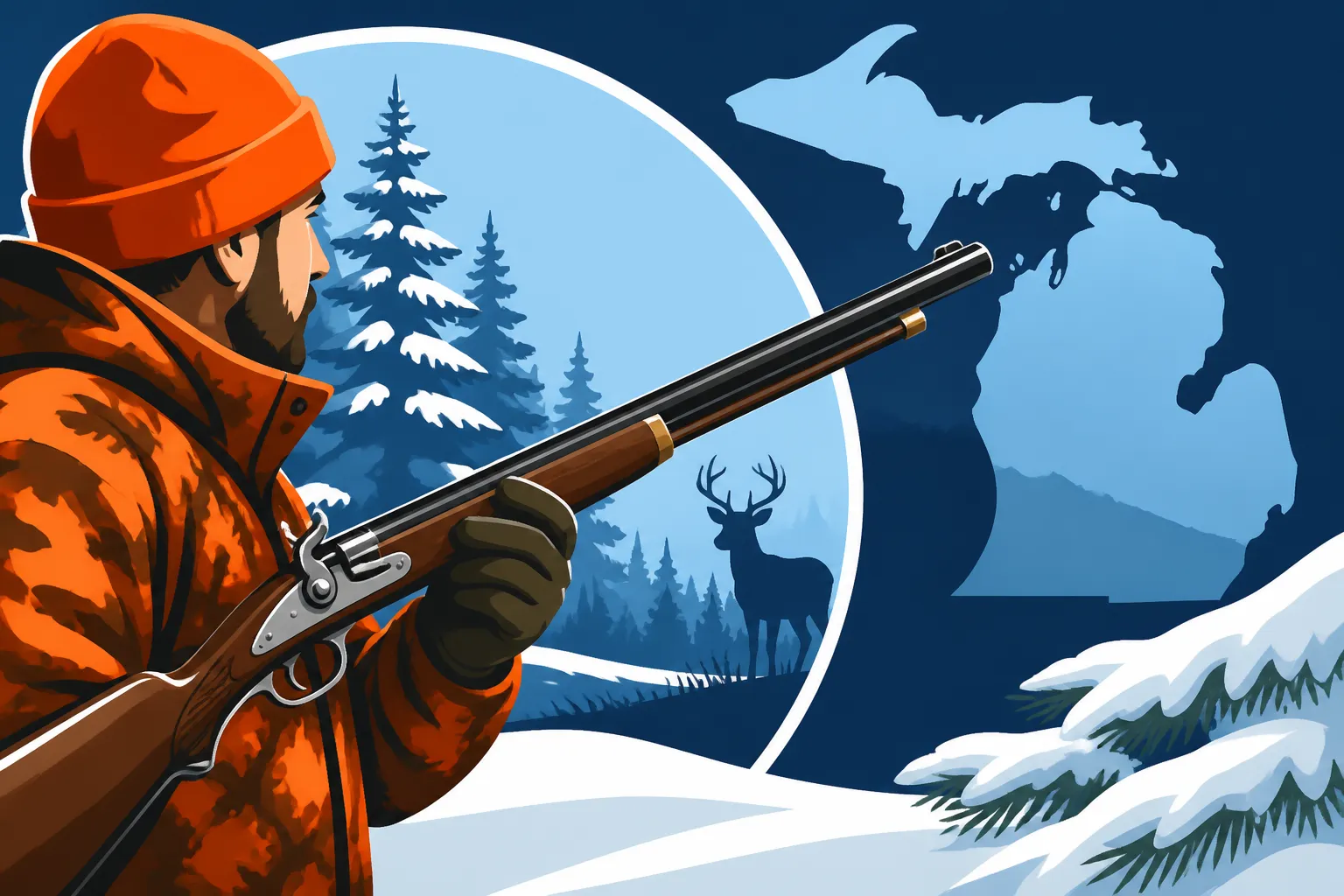
Choosing a Muzzleloader for December Cold
The bitter cold of a Michigan December, often accompanied by wet snow, sleet, or freezing rain, presents a unique challenge for muzzleloader hunters. You've spent countless hours scouting, bundled up against the elements, and finally, that opportunity presents itself—only to have your antique-style flintlock or a less-than-ideal cap-and-ball misfire due to damp powder or a frozen primer. This guide is here to help you navigate the choices and prepare your muzzleloader setup to reliably perform when those late-season whitetails step out, ensuring your hunt isn't ruined by equipment failure.
The Michigan December Muzzleloader Challenge: Why Gear Matters
Hunting Michigan's muzzleloader season, which typically falls in December, means facing some of the most challenging weather conditions of the year. We're not talking about crisp fall days here; we're talking about bone-chilling cold, often with wet, heavy snow or sleet, and sometimes even torrential rain that turns quickly to ice. This isn't just uncomfortable for us as hunters; it's absolutely brutal on our gear, especially a firearm that relies on black powder or its substitutes and external ignition.
The frustration of a misfire or hangfire when a big buck is standing broadside is something no hunter wants to experience. It’s not just a missed opportunity; it’s a failure of preparation, and in these conditions, preparation is everything. Your choice of muzzleloader and how you prepare it directly impacts your success and enjoyment. We need a setup that can withstand the Michigan winter, fire consistently, and deliver the punch needed for a clean harvest in heavy cover or against thick winter coats. This is why paying close attention to the features designed for all-weather reliability is paramount.
Understanding the Climate's Impact on Muzzleloaders
December in Michigan is a fickle beast. One day, you might have a mild, snow-free morning, perfect for a long walk. The next, a lake-effect snowstorm could roll in, dumping a foot of wet, heavy snow, or a cold front might drop temperatures well below freezing, turning everything to ice. These wild swings are tough on equipment, particularly on traditional muzzleloaders that have more exposed components. Black powder and its substitutes are hygroscopic, meaning they readily absorb moisture from the air, which can lead to slow ignition or complete failure.
Beyond the moisture, extreme cold also affects performance. Primers can become sluggish, and even the lubricants on your moving parts can thicken, making the action stiff. Your projectile could even be affected, though to a lesser extent, by the extreme temperature changes from storage to firing. When you're out there Muzzleloader Tactics in December Cold, waiting patiently in a stand or still-hunting through a cedar swamp, you need absolute confidence that your rifle will perform precisely when you ask it to. This isn't the time for guesswork or wishful thinking; it's the time for reliable, purpose-built gear.
What Late-Season Whitetails Demand from Your Muzzleloader
By December, Michigan whitetails have been hunted hard through archery and firearm seasons. They're wary, often nocturnal, and seeking refuge in the thickest cover available, usually around late-season food sources like standing corn or forgotten apple orchards. This means shots are often taken at close to moderate ranges, but almost always through dense timber or brush. You need a muzzleloader that is accurate enough for vital zone hits, even if you're taking a shot at 75 yards in a driving snow.
The deer themselves are also different. They've put on their heavy winter coats, adding an extra layer of protection. This means your projectile needs to retain enough energy to punch through that thick hide, muscle, and potentially bone to reach the vitals effectively. A clean, ethical kill is always the goal, and your muzzleloader choice plays a significant role in achieving that in these tougher, late-season conditions. Considerations like caliber, bullet weight, and how well your system handles moisture become even more critical when every shot counts.
Choosing the Right Muzzleloader Action and Design for Winter
When it comes to selecting a muzzleloader for Michigan's demanding December season, the fundamental design and action type are incredibly important. Forget the quaint romance of traditional flintlocks for a moment; what we're after is unwavering reliability in adverse conditions. This often steers us towards modern in-line muzzleloaders, which offer significant advantages in terms of weather resistance, ease of use, and consistent ignition.
The market offers a variety of styles, from traditional side-lock designs reminiscent of pioneer days to cutting-edge in-lines that look more like modern centerfire rifles. For December cold, the more enclosed and protected the ignition system, the better. This reduces the risk of moisture getting into the primer or powder charge, which is a common cause of misfires when the weather turns sour.
In-Line Muzzleloaders: The Winter Workhorse
Modern in-line muzzleloaders have become the gold standard for hunters seeking reliability in challenging weather. The "in-line" refers to the firing pin striking the primer directly behind the powder charge, creating a more efficient and sealed ignition system compared to older side-lock designs. Many of these models feature fully enclosed breech designs that protect the primer from moisture, snow, and ice, making them vastly superior for cold, wet Michigan hunts.
Consider models with a robust, heavy-duty build. Polymer stocks are excellent as they won't warp or swell like wood, and they're impervious to moisture. Stainless steel barrels and actions offer superior corrosion resistance, which is a huge plus when you're dealing with constant exposure to snow and rain, followed by the inevitable condensation when you bring the gun inside a warm cabin or truck. Brands like CVA, Traditions, and Thompson/Center are well-regarded for their dependable in-line options, often featuring easy-to-remove breeches for cleaning—a critical factor after a wet day in the field.
| Muzzleloader Type | Ignition System | Weather Resistance | Cleaning Difficulty | Reliability in Cold/Wet | Typical Price Point |
|---|---|---|---|---|---|
| Flintlock | External Flint/Pan | Low (highly exposed) | Moderate | Very Low | Moderate to High |
| Percussion (Cap & Ball) | External Cap on Nipple | Low (exposed cap/nipple) | Moderate | Low | Low to Moderate |
| In-Line (Exposed Primer) | 209 Primer on Nipple | Moderate | Easy | Moderate to High | Moderate |
| In-Line (Enclosed Primer) | 209 Primer (sealed breech) | High | Easy | Very High | Moderate to High |
Barrel and Caliber Considerations for December
When selecting a barrel for your December muzzleloader, accuracy and durability are key. Stainless steel is often preferred over blued carbon steel for its weather resistance, preventing rust that can quickly form in humid, freezing conditions. A fluted barrel can help reduce overall weight and increase surface area for cooling, though in December cold, cooling isn't usually the primary concern. Length is a balance; a shorter, more compact barrel (24-26 inches) can be advantageous for maneuvering through thick brush or in and out of a treestand, which is common when Treestand Setups in Michigan Hardwoods or navigating Hunting Michigan Swamp Edges for Deer.
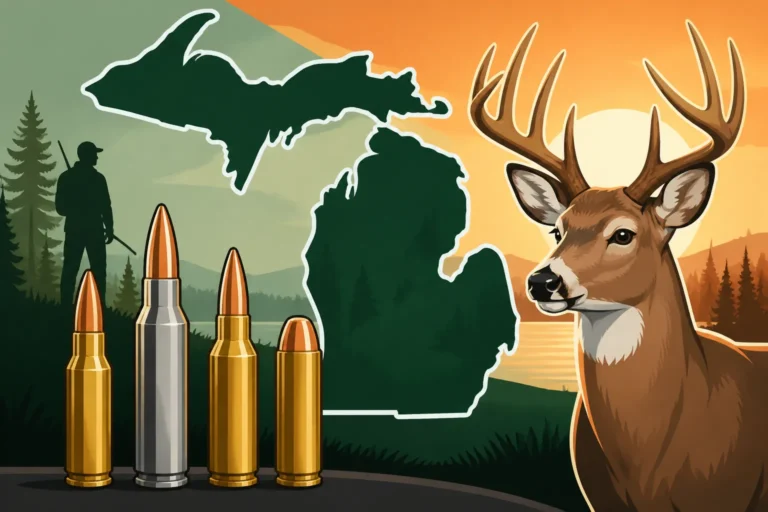
For caliber, the .50 caliber is overwhelmingly popular for Michigan deer hunting, and for good reason. It offers an excellent balance of power, trajectory, and bullet availability. A .50 caliber projectile carries plenty of kinetic energy to ethically take a large whitetail, even with its heavy winter coat, at typical muzzleloader ranges. While .45 caliber is also effective, especially with modern sabot loads, the .50 generally provides a wider range of projectile options, particularly for those who prefer full-bore conical bullets over sabots. The wider meplat (nose) of many .50 caliber conicals can also be advantageous for energy transfer in thick-skinned game.
Ignition and Propellant: Ensuring Reliability in the Cold
The heart of a muzzleloader's reliability, especially in adverse conditions, lies in its ignition system and the powder charge. A misfire often traces back to one of these two components failing to perform under pressure, usually due to moisture or extreme cold. For December hunting in Michigan, you absolutely want the most robust and weather-resistant setup you can get. This means moving away from the charm of traditional methods and embracing modern advancements designed for consistency.
This isn't just about buying a good muzzleloader; it's about understanding how the system works and how to protect it. Even the best in-line rifle can fail if its ignition or powder is compromised. Think about how many times you've heard stories of a hunter pulling the trigger, only to hear a click instead of a bang. That's a moment of truth, and in freezing, wet conditions, these moments become far more common if you haven't prepared correctly.
The 209 Primer Advantage
For hunting in cold and wet conditions, the 209 shotgun primer is king. These primers are designed to produce a powerful, hot flash that reliably ignites the powder charge, even in sub-freezing temperatures. Crucially, they are also relatively self-contained and resistant to moisture compared to musket caps or percussion caps. When paired with an enclosed breech system in a modern in-line muzzleloader, the 209 primer creates a highly weather-resistant ignition package.
Always use fresh, clean primers. Storing them in a waterproof container is a must for Michigan's damp December air. Many hunters carry a small, sealed bag or tin with extra primers, keeping them warm in an inside pocket until needed. Some even apply a tiny dab of clear nail polish around the perimeter of the primer after seating it, or a bit of silicone grease, to create an even more effective seal against moisture, though this should be tested at the range first to ensure it doesn't interfere with reliable ignition. Every little bit of protection helps when you're dealing with conditions that are trying to conspire against your shot.
Choosing the Right Powder for December Cold
While traditional black powder has its place, for December hunting, most modern muzzleloader hunters opt for black powder substitutes like Pyrodex, Triple Seven, or Blackhorn 209. These substitutes offer cleaner burning, less corrosive residue, and often, more consistent performance. However, they are not all created equal when it comes to moisture sensitivity.
Blackhorn 209 is a popular choice among serious hunters for its extreme resistance to moisture and its ability to maintain consistent ignition even in humid or cold conditions. It's also non-corrosive and much cleaner burning, which means less fouling build-up during a hunt and easier cleanup afterward. If you're using Pyrodex or Triple Seven, ensure they are stored in a dry, airtight container, and always load fresh powder for each hunt. Avoid leaving a loaded muzzleloader out in the rain or snow for extended periods, as moisture can migrate down the barrel and compromise the charge. Even a small amount of moisture can turn a reliable powder charge into a slow burn or a dud.
Essential Muzzleloader Accessories and Field Prep for December Hunts
Choosing the right muzzleloader is only half the battle; how you equip it and prepare it for the field is equally vital, especially when facing Michigan's challenging December weather. Neglecting proper accessories and field preparation can quickly negate the advantages of a well-chosen rifle. This is where attention to detail really pays off, ensuring that your system is not only reliable but also safe and effective for harvesting that late-season whitetail.
Beyond the rifle itself, consider the ancillary gear that supports its function. Every item, from your bullet starter to your cleaning kit, needs to be up to the task of operating in freezing, wet conditions. A poorly maintained or ill-equipped muzzleloader is a liability, not an asset, when you're hundreds of yards deep into public land in a snowstorm.
Protecting Your Muzzleloader in the Field
Keeping your muzzleloader dry in Michigan's December weather is paramount. A good scope cover is non-negotiable, protecting your optics from rain, snow, and condensation. Beyond that, consider a barrel cover or even a simple piece of electrical tape over the muzzle to prevent snow, dirt, or moisture from entering the bore. Just remember to remove it before taking a shot! When carrying your muzzleloader, a high-quality sling made from synthetic material is better than leather, as leather can absorb water and freeze.
For a long walk to your stand, especially through wet brush or snow, a heavy-duty gun case or even a simple, waterproof sock-style cover can make a huge difference in keeping your firearm dry until you're ready to hunt. If you're sitting in a ground blind Using a Ground Blind on Michigan State Land or Brushing In a Blind on a Field Edge, keep your muzzleloader elevated off the wet ground and consider wrapping it in a piece of waterproof cloth or a small tarp if conditions are particularly nasty. During a hunt, if it starts to rain or snow heavily, wiping down exposed metal surfaces frequently can help prevent rust and keep the action moving freely.
Loading and Cleaning Tools for Cold Weather
Your loading and cleaning tools need to be robust and functional in cold, gloved hands. A quality bullet starter is essential for seating projectiles without fumbling. Look for one with a good grip and solid construction. Similarly, a durable ramrod, preferably one that can be stored securely on the rifle but also easily deployed, is a must. Fiberglass or carbon fiber ramrods are often preferred over aluminum as they are less prone to bending or freezing to the bore in extreme cold.
For cleaning, especially after a wet hunt, having a solvent and brushes specifically designed for black powder substitutes is critical. Consider a compact, waterproof cleaning kit that you can take to deer camp or even keep in your vehicle. After a particularly wet hunt, a full breakdown and thorough cleaning of the breech plug and barrel are non-negotiable to prevent corrosion. Pay close attention to the breech plug, ensuring the flash hole is clear and unobstructed. Applying a light, all-weather lubricant to moving parts after cleaning will help prevent them from freezing up on your next hunt.
When scouting with tools like GoHunt, you can identify potential water crossings or deep snow areas that might make carrying a heavier cleaning kit impractical. Plan your hunt around easier access points if post-hunt maintenance is a concern due to harsh conditions.
Practicing in Cold Conditions
This might sound obvious, but it's often overlooked: practice shooting your muzzleloader in conditions similar to what you'll face in December. Don't just shoot it on a sunny 70-degree day in October. Take it out when it's cold, wet, and windy. This will not only give you confidence in your gear but also help you identify any issues that only surface in extreme weather. It also lets you practice loading with cold fingers or gloved hands, which is a very different experience than loading in comfort.
Pay attention to how your powder and primers perform after sitting in the cold for a while. Test different bullet-to-bore fits—a slightly looser fit might be easier to load in the cold, but could affect accuracy. This kind of real-world testing is invaluable and will reveal any weak links in your system long before you encounter that trophy buck. It’s a great way to fine-tune your setup and truly understand its capabilities in the brutal Michigan December conditions. Using a platform like GoHunt, you can even mark down notes about how your muzzleloader performed at different locations or under specific weather conditions for future reference.
Disclaimer
This article is for general informational purposes only and does not constitute professional advice. Laws, prices and regulations vary by location and change over time. Consult a qualified professional for guidance on your specific situation.