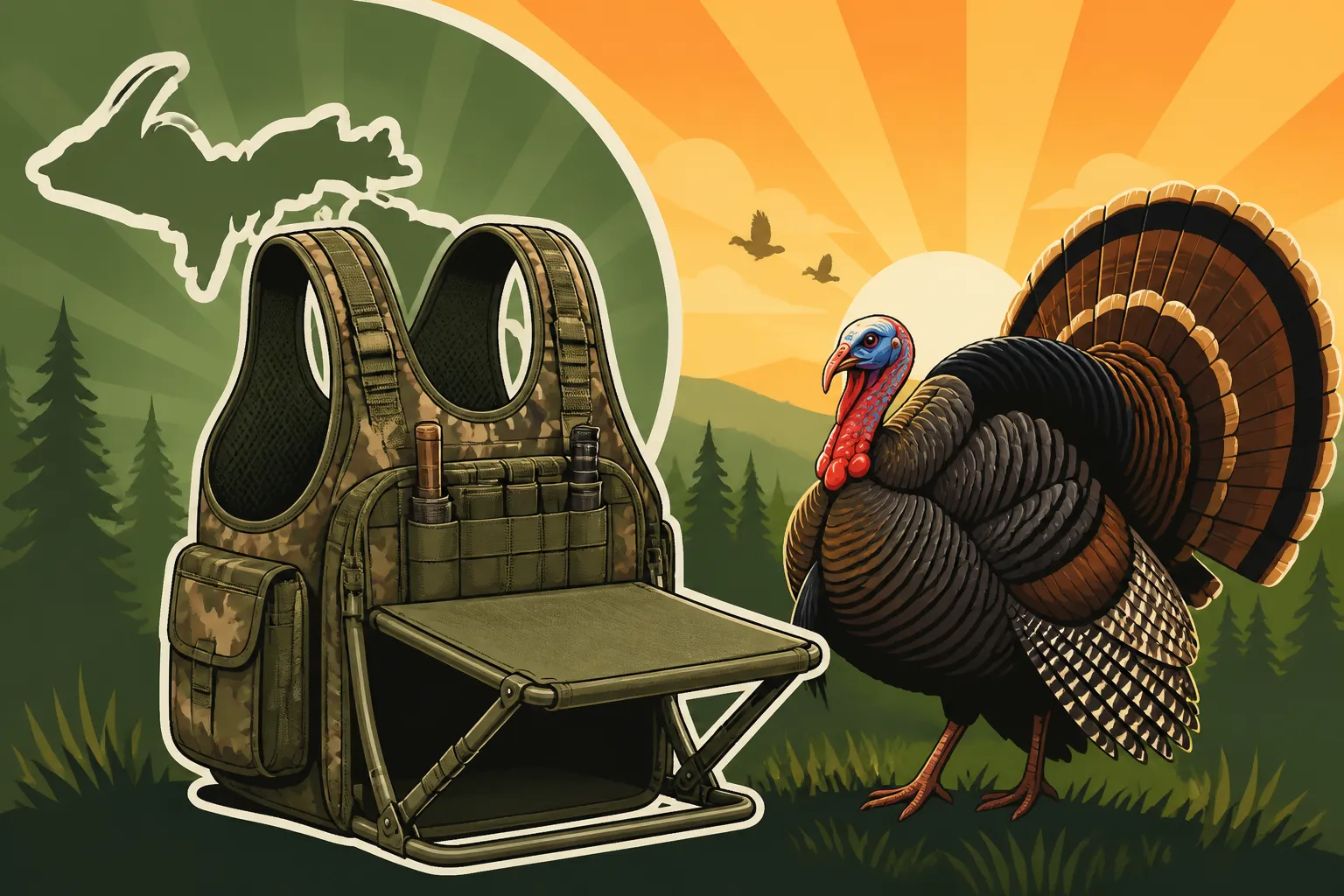
Turkey Vests With a Kickstand Seat
It's a frustrating scenario many Michigan turkey hunters know all too well: you've been working a hot gobbler for what feels like miles, finally get him to commit, and now you need to set up right now. But the perfect tree for concealment is surrounded by mud, or it's a small sapling that offers no back support, leaving you squirming and uncomfortable while a wary tom eyes your fidgeting. This guide will dive deep into how turkey vests with integrated kickstand seats can be a game-changer for staying comfortable, mobile, and ultimately more successful when chasing Michigan's wild turkeys, no matter where your hunt takes you.
Why a Kickstand Vest Makes Sense for Michigan Gobblers
Chasing turkeys in Michigan often means covering a lot of ground, especially on public land where you might be Run-and-Gun Turkey Tactics on State Land. You're moving from woodlots to field edges, across thick brush, and through various terrain types. Unlike deer hunting, where you might sit in a treestand for hours, turkey hunting demands adaptability and the ability to set up quickly and comfortably wherever the situation dictates. A traditional vest might carry your calls and shells, but it does little for your comfort when the ground is cold, wet, or just plain uncomfortable.
The Michigan Terrain Challenge
Michigan's diverse landscape, from the rolling hardwoods of the northern Lower Peninsula to the mixed forests and farmlands of the south, presents unique challenges. You might find yourself calling a bird in a swampy alder bottom, where sitting directly on the ground means getting soaked. Or you could be on a dry, rocky ridge with no decent backrest in sight.
Imagine this: you've just called a gobbler across a clear-cut. He's fired up, but he's hung up at 80 yards, just out of range, surveying the scene. You know he's looking for a hen, but also for any movement. You've got to sit still, completely still, for what could be 15, 20, or even 30 minutes. If you're perched uncomfortably against a spindly tree or on damp ground, every rustle, every shift, every cramp, increases your chances of giving away your position. A kickstand vest provides that instant, comfortable, elevated seating solution, allowing you to focus purely on the bird and your calling, not on your aching back or numb rear. It minimizes fidgeting and makes those long, tense waits much more bearable.
Enhancing Mobility and Quick Setups
One of the biggest advantages of a kickstand vest is how it facilitates a truly mobile hunting style. When a gobbler is answering but not closing the distance, or you need to reposition to get ahead of him, you're constantly on the move. Every time you stop, you need to be able to get comfortable and steady almost instantly. Fumbling with a separate cushion or small stool is extra noise, extra movement, and extra time – all things you can't afford when a sharp-eyed gobbler is getting closer.
With a kickstand vest, the seat and back support are built-in. You literally drop down, deploy the kickstand legs with a quick motion, and you're ready. This seamless transition from walking to sitting is invaluable. It means you can break up a flock of fall turkeys and immediately sit down for a comeback call, or slide into position on a field edge when you spot a lone tom strutting. This efficiency is especially critical when Calling a Michigan Gobbler Off the Roost at first light, where every second counts, or when you're trying to stay ahead of a bird that's constantly moving through thick cover.
Key Features to Look for in a Kickstand Turkey Vest
Not all kickstand vests are created equal. When you're investing in one, you want to make sure it's going to stand up to the rigors of Michigan hunting and provide the comfort and utility you need. Consider these features carefully to find the right one for your style.
Comfort and Ergonomics
The primary reason to get a kickstand vest is comfort, so this should be your top priority. The seat cushion itself is crucial. Look for thick, high-density foam that will provide insulation from the cold, wet ground and absorb impact over hours of sitting. Some vests even feature a detachable cushion for versatility.
Beyond the seat, consider the back support. Is it well-padded? Does it offer lumbar support? A good kickstand vest will allow you to lean back comfortably without feeling rigid or creating pressure points. Adjustable straps are also key. You'll want to be able to cinch the vest down so it sits securely on your body, distributing the weight evenly across your shoulders and hips. This prevents the vest from shifting or bouncing as you walk, which can be incredibly annoying during a long hike. Some vests, like those you might find featured on GoHunt, are designed with specific anatomical considerations to maximize comfort and reduce fatigue. Think about how the vest will feel over a long morning hunt, not just for a quick sit in the store.
Stability and Durability of the Kickstand Mechanism
The kickstand itself is what makes this vest revolutionary, so its design and construction are paramount. Look for a robust, lightweight frame, often made of aluminum, that can easily support your weight without creaking or wobbling. The legs should deploy and retract smoothly and silently. Noise is a turkey hunter's worst enemy, so any squeaks or rattles from the kickstand mechanism are immediate deal-breakers.
Consider the feet of the kickstand legs. Do they have wide, stable pads that won't sink into soft earth or slip on slick surfaces? Some vests feature rubberized or textured feet for better grip. Durability is also a huge factor. These vests are exposed to the elements – mud, snow, rain, and repeated deployment. You want a mechanism that can withstand abuse without bending or breaking. If you find yourself in a situation where you need to Setting Up Against a Big Oak on uneven ground, a sturdy, well-designed kickstand will keep you stable and still.
Storage and Organization for Michigan Hunts
A turkey vest is essentially a mobile command center, and a kickstand model is no different. It needs to hold all your essential gear, from calls to decoys, and keep them organized and accessible. Look for a variety of pockets in different sizes and configurations.
- Call Pockets: Dedicated pockets for slate calls, box calls, and mouth calls are a must. They should be easy to access with one hand and offer protection from the elements. Some vests have magnetic closures for silent access, while others use quiet zippers or elastic loops.
- Shell Holders: Conveniently placed shell loops or pockets ensure quick reloads.
- Accessory Pockets: Think about what else you carry: rangefinder, GPS, water bottle, snacks, headlamp, face mask, gloves. A good vest will have pockets for all these items, often with internal dividers or elastic straps to keep things from rattling around.
- Decoy Storage: Many kickstand vests include a large, expandable back pocket or a strap system for carrying a decoy or two. This is particularly useful if you're deploying a strutter or hen decoy on a field edge.
- Game Bag: A large, easily accessible game bag is essential for carrying out your harvested gobbler. It should be blood-proof and easy to clean.
A well-organized vest means less fumbling and more focus on the hunt. When scouting for gear, think about what you actually carry in the field and how you'd access it quickly in a high-pressure situation.
Material and Weather Resistance
Michigan weather can be unpredictable, especially during spring turkey season. You could start the day with frost and end it with a warm rain shower. The material of your vest needs to be up to the challenge. Look for durable, quiet fabrics like brushed tricot or quiet nylon blends that won't make noise as you move or brush against branches.
Water resistance is also important. While no vest is completely waterproof, a DWR (Durable Water Repellent) coating or a water-resistant lining will help keep your calls and gear dry in light rain or heavy dew. Consider how quickly the material dries if it does get wet, and if it's easy to clean off mud and dirt. These considerations will ensure your investment lasts for many seasons of Spring Turkey Hunting in Michigan.
Setting Up for Success: Tactics with Your Kickstand Vest
A kickstand vest isn't just about comfort; it's a tactical tool that can give you an edge in the field. Understanding how to integrate it into your hunting strategy can dramatically increase your chances of success.
Mastering the Quick Setup
The speed at which you can get comfortable and still is paramount when a gobbler is on the move. With a kickstand vest, practice deploying and retracting the legs silently. The goal is to drop down, get your calls out, and be ready in mere seconds. This skill becomes invaluable when you're working a bird that's coming in fast, or when you need to make a sudden move to get a better angle.
Imagine you're still-hunting through a woodlot, softly clucking and purring, when a gobbler suddenly answers directly ahead, much closer than you anticipated. Instead of scrambling to find a suitable tree or fumbling with a seat cushion, you can immediately drop to the ground, extend the kickstand, and settle in. This instant stability allows you to remain motionless and composed, even as your heart pounds. Being able to go from standing to fully set up in a flash can be the difference between getting a shot opportunity and having a gobbler spot your movement. This rapid deployment works perfectly when you're trying to Run-and-Gun on Michigan State Land.
Leveraging the Elevated Position and Stability
The slightly elevated position a kickstand vest provides can offer a couple of subtle but significant advantages. Firstly, it often gives you a clearer line of sight over small brush and ground clutter that might obscure a ground-level view. This can be crucial for spotting a gobbler's head or fan earlier. Secondly, the stable backrest and seat make it much easier to maintain a rock-solid shooting position, whether you're using a shotgun or a crossbow.
When a gobbler steps into range, you need to be able to shoulder your firearm smoothly and take a steady shot. The support from the vest minimizes body movement and helps you hold your aim true. This stability is particularly helpful in situations where you might be Hunting Turkeys in Upper Peninsula Timber, where uneven ground and limited visibility are common. The ability to sit absolutely still, even for extended periods, is a major factor in fooling wary gobblers. When using a tool like the GoHunt app for scouting, visualizing your setup points can help you understand how even a slight elevation can benefit your sight lines.
Comparing Kickstand Vests to Other Seating Options
To truly appreciate the kickstand vest, it's helpful to see how it stacks up against traditional methods of seating in the turkey woods.
| Feature | Kickstand Turkey Vest | Traditional Turkey Vest (with separate cushion) | Portable Stool/Chair (separate) | Sitting on Ground (no aid) |
|---|---|---|---|---|
| Setup Speed | Very fast; integrated seat & back support. | Moderate; need to retrieve and position cushion. | Slow; need to unpack and set up chair. | Instant, but often uncomfortable. |
| Comfort | High; padded seat, stable backrest. | Moderate; cushion provides some relief, no back support. | High; usually good back support, often cushioned. | Low; cold, wet, uneven ground, no back support. |
| Mobility | High; all-in-one, quick transitions. | High; vest is lightweight, cushion can be clipped. | Low; extra piece of gear to carry, cumbersome to move. | High; no extra gear. |
| Stealth | High; silent deployment, aids stillness. | Moderate; potential for noise with cushion. | Low; often noisy to set up and adjust. | High; no extra gear. |
| Weight/Bulk | Moderate; slightly heavier than traditional vest. | Low; minimal extra weight for cushion. | High; bulky and heavier than a vest. | Very low. |
| Back Support | Excellent; integrated frame. | None. | Excellent; designed for back support. | None. |
| Cost | Higher. | Lower. | Variable (can be low for simple stool, high for chair). | Free. |
| Michigan Relevance | Ideal for varied, often wet/uneven terrain & mobility. | Good for lighter packing, but less comfortable. | Best for stationary setups like blinds, not run-and-gun. | Only for short sits or when absolute minimal gear is key. |
As you can see, the kickstand vest occupies a sweet spot, combining the mobility of a traditional vest with much of the comfort and stability of a separate chair, all while maintaining stealth and quick deployment. It addresses the common frustrations of discomfort and instability that often plague turkey hunters trying to stay still for extended periods.
Maintaining Your Vest for Seasons to Come
Your kickstand turkey vest is an investment, and like any good piece of gear, it needs proper care to last. Regular maintenance will ensure it's always ready for Hunting Michigan's Fall Turkey Season or chasing spring gobblers year after year.
Cleaning and Storage
After each season, or even after a particularly muddy hunt, it’s a good idea to give your vest a thorough cleaning. First, remove all calls, shells, and any other items from the pockets. Gently shake out any loose dirt, leaves, or debris. For general cleaning, spot clean with a damp cloth and mild soap. Avoid harsh detergents or bleach, as these can damage the fabric and its water-resistant properties. If the vest is heavily soiled, some manufacturers recommend hand washing in a large tub with lukewarm water. Always check the care label on your specific vest for detailed instructions.
Pay special attention to the kickstand mechanism. Wipe down the frame and legs to remove any mud or grime that could impede its smooth operation. Ensure all moving parts are free of obstruction. Once clean, hang the vest to air dry completely in a well-ventilated area, away from direct sunlight, before storing it. Storing a damp vest can lead to mildew, which not only smells terrible but can also degrade the fabric and components.
Inspecting for Wear and Tear
Before and after each season, take some time to inspect your vest for any signs of wear and tear. Check the seams for fraying or loose threads, especially around stress points like shoulder straps, pocket attachments, and where the kickstand frame connects to the vest. Look at all zippers and buckles – do they operate smoothly? Are any teeth missing on zippers, or are buckles cracked? A quick repair of a minor issue can prevent a major failure in the field.
Examine the kickstand legs for any bends, cracks, or excessive looseness. The deployment mechanism should still be fluid and silent. If you notice any issues with the kickstand, check if replacement parts are available from the manufacturer. Also, inspect the seat cushion. Is it still providing adequate padding, or has it compressed and lost its loft? Many cushions are replaceable, extending the life of your vest. Addressing these small problems promptly ensures your vest remains reliable and comfortable when you're counting on it most. Using high-quality gear from reputable brands, which you might research on GoHunt, often means better durability and access to support for repairs.
Disclaimer
This article is for general informational purposes only and does not constitute professional advice. Laws, prices and regulations vary by location and change over time. Consult a qualified professional for guidance on your specific situation.