Why Michigan Splits Its Archery Season
Many Michigan bowhunters, especially those new to the state or coming from areas with continuous archery seasons, often scratch their heads wondering why Michigan implements a split in its deer archery season. That mid-November break can feel frustrating, right when the woods are alive with rutting activity. This guide will dive deep into the reasoning behind Michigan's unique split archery season, explaining the biological and management factors at play and how hunters can best adapt their strategies to these distinct periods.
Understanding Michigan's Archery Season Structure
Michigan's archery deer season isn't a continuous stretch from October 1st to January 1st like in many other states. Instead, it features a distinct mid-season interruption. This structure can initially confuse hunters, especially those accustomed to uninterrupted bowhunting opportunities. Let's break down how the calendar typically unfolds for Michigan archers.
The Archery Season Calendar Explained
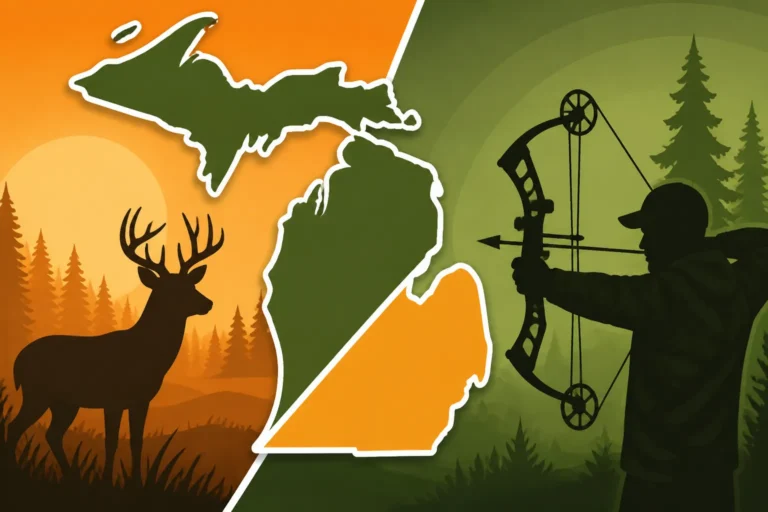
Michigan's archery season begins on October 1st and runs through November 14th. This is often referred to as the "early archery season." During this period, hunters can pursue deer with a bow or crossbow, enjoying the changing autumn leaves and the building excitement of the pre-rut. It's a time of cooling temperatures, deer shifting from summer patterns to fall food sources, and bucks beginning to show more daylight activity as the rut approaches. Hunters focus on acorn flats, agricultural field edges, and established travel corridors between bedding and feeding areas.
Then, abruptly, the archery season closes. From November 15th to November 30th, the Michigan firearm deer season takes center stage. This two-week period is a tradition for hundreds of thousands of hunters across the state and is, for many, the most anticipated hunting event of the year. During this time, archery equipment is generally not permitted for deer hunting, effectively creating a pause for bowhunters. It's a period of intense activity in the woods, with a significant increase in hunter numbers and deer movement. You can find more details about this period in our comprehensive guide on Michigan's November Firearm Deer Season.
Once the firearm season concludes, typically on December 1st, the archery season reopens. This second stretch, known as the "late archery season," continues through January 1st. This late season presents a completely different set of challenges and opportunities. The landscape is often blanketed in snow, temperatures are significantly colder, and deer have been heavily pressured by the firearm season. They've shifted their focus from rutting activity to survival, seeking out thermal cover and reliable food sources to get through the lean winter months.
The "Why" at a Glance: A Quick Overview
At its core, Michigan splits its archery season primarily to prioritize the firearm season, which is deeply ingrained in the state's hunting heritage and serves as the primary deer harvest period. This break ensures that all available hunter effort during the peak rut and post-rut is directed towards the most popular hunting method, allowing for a focused and culturally significant hunting event. It also plays a role in managing hunter pressure and offering varied experiences throughout the hunting calendar. Unlike some other states where archery seasons run continuously, Michigan's approach reflects a unique balance of tradition, hunter opportunity, and wildlife management objectives.
The Logic Behind the Mid-November Break
Understanding why the Michigan Department of Natural Resources (DNR) chose to implement and maintain this split requires looking beyond just hunter preference. There are historical, cultural, and practical management reasons that contribute to this unique season structure.
Prioritizing the Firearm Season Tradition
The firearm deer season, particularly the November 15th opener, holds immense cultural and economic significance in Michigan. For generations, it has been a time when families and friends gather at deer camp, an annual pilgrimage that transcends just hunting. It's a tradition that draws hundreds of thousands of participants each year, making it the most impactful single hunting period for deer harvest. The DNR recognizes this deep-seated tradition and structures the seasons to ensure its prominence.
By closing the archery season during the peak of firearm season, the state aims to concentrate hunter effort and focus resources. This minimizes potential conflicts between different hunting methods in the woods during the most crowded period. Imagine the complexities of managing safety and hunter interference if archers were silently pursuing deer while firearm hunters were actively pushing timber or setting up on traditional stands. The concentrated firearm season streamlines enforcement and public safety efforts.
Furthermore, the November 15th opener often coincides with the tail end of the deer rut, a time when deer are most active and vulnerable. Prioritizing the firearm season during this crucial period allows for a significant and efficient harvest, which is vital for overall deer population management across Michigan's diverse landscapes, from the thick cedar swamps to the vast agricultural fields.
Managing Hunter Pressure and Opportunity
Michigan boasts a massive hunting population, one of the largest in the nation. With so many individuals venturing into the woods, managing hunter crowding and ensuring quality experiences is a continuous challenge. The split archery season is one tool in the DNR's belt to address this.
By dividing the archery season into two distinct periods, it helps to distribute hunter pressure throughout the fall and early winter. Hunters can choose to focus their efforts in October and early November, or they can wait and concentrate on the late season after the firearm hunters have largely packed up their gear. This separation can help prevent over-saturation of public lands during any single extended period, potentially offering a more solitary experience for archers during both segments. Some might prefer the quieter woods of the early season, while others relish the challenge and unique opportunities of the late season.
Moreover, the break provides different "looks" at the deer herd. The early season targets deer that are less pressured and more predictable, following their natural feeding and bedding routines. The late season, conversely, tests a hunter's ability to adapt to a pressured herd focused on survival. This dual approach essentially offers two distinct hunting scenarios within one archery license, appealing to different skill sets and preferences.
Deer Biology and Behavior Considerations
While the primary driver for the split is often cited as prioritizing the firearm season, deer biology and behavior also play a role, albeit a secondary one. The firearm season falls squarely within the rutting period, a time of increased deer movement and vulnerability. A continuous archery season through this period, combined with the pressure of hundreds of thousands of firearm hunters, could theoretically lead to an overly concentrated period of intense hunting pressure on the deer herd.
The two-week break from archery pressure allows the deer herd a brief respite from bowhunters, even as firearm season ramps up. When the late archery season reopens in December, deer have often reverted to more predictable post-rut survival patterns, seeking out crucial thermal cover and remaining food sources. This creates a different hunting dynamic, allowing archers to target deer in their wintering grounds and transition areas, rather than solely during the peak of breeding activity.
This structure also aids in data collection and harvest reporting. By having distinct seasons, the DNR can better track harvest trends across different periods and understand the impact of various hunting methods. For instance, understanding the harvest during the Early Antlerless Firearm Weekend versus the peak of firearm season, or the late archery season, helps refine management strategies.
How the Split Impacts Archery Hunters
The split archery season isn't just a calendar quirk; it fundamentally changes how bowhunters approach their craft in Michigan. It demands adaptability, strategic planning, and a willingness to embrace two very different hunting experiences within a single season.
Adapting Strategies for Two Distinct Periods
The early archery season, typically October 1st to November 14th, is often characterized by relatively mild weather. Deer are still largely focused on food sources. Hunters often concentrate their efforts near acorn flats, soft mast trees, standing crops, or destination food plots. This is a prime time for patterning deer based on their feeding routes and bedding areas. Scouting before the season, perhaps using mapping tools from GoHunt to identify key terrain features and potential bedding thickets, is absolutely critical. Setting up treestands along frequently used trails between these areas is a common tactic. You might focus on Treestand Setups in Michigan Hardwoods or hunting productive oak ridges.
The late archery season, from December 1st to January 1st, is a completely different ballgame. The leaves are down, the temperatures are often well below freezing, and snow is a common companion. Deer have experienced significant pressure from the firearm season, making them warier and more nocturnal. Their primary focus shifts from breeding to survival. Hunters need to adjust their strategies to locate thermal cover – think dense cedar swamps, thick conifer stands, or steep, south-facing slopes that catch sunlight – and remaining high-calorie food sources like leftover standing corn, brassicas, or late-dropping acorns. This is a time for patience, meticulous cold-weather gear, and often focusing on smaller, overlooked pockets of cover. Our guide on Late-Season Food Sources for Whitetails offers invaluable advice for this period.
Challenges and Frustrations
One of the most common frustrations for Michigan archers is the "rut hiatus." The firearm season, November 15th-30th, often coincides with the absolute peak of the whitetail rut in many parts of Michigan. This means that bowhunters are sidelined during what many consider the most exciting and target-rich time to be in the deer woods. Missing those frantic daylight scrapes, chasing bucks, and intense grunting matches can be a real bummer for dedicated bowhunters.
Another challenge is the transition. Essentially, hunters have to re-scout and re-think their approach between the early and late seasons. Deer patterns, bedding locations, and feeding habits will have changed drastically due to both the changing season and the intense pressure of the firearm season. What worked in October likely won't work in December. This requires additional effort in identifying new patterns and finding undisturbed areas. Furthermore, the aftermath of firearm season can leave deer extremely skittish, making close-range bow encounters harder to come by. Hunters might find themselves adapting their tactics, perhaps by Still-Hunting Michigan Cedar Swamps or using ground blinds more often.
Unique Opportunities the Split Provides
Despite the challenges, the split season also creates unique opportunities for Michigan archers. The break itself offers a chance to hit the reset button. Hunters can process any deer taken in the early season, catch up on life, or simply take a breather from the woods. This mental and physical break can be rejuvenating.
For the truly dedicated, the firearm season can be an excellent (and legal) time for "reconnaissance." While you can't hunt deer with a bow, you can observe deer activity from a distance, noting new travel patterns or overlooked pockets of cover that might become productive for the late archery season. This careful observation, without interfering with firearm hunters, can pay dividends. Mapping platforms like GoHunt can be invaluable here, allowing you to mark observations and potential late-season hotspots without disturbing the area.
The late archery season, though cold, offers a serene and often magical hunting experience. With snow on the ground, tracking becomes a viable tactic, and deer are often concentrated in specific thermal cover or around key food sources. The woods are much quieter after the firearm season crowds have dispersed, potentially leading to encounters with mature bucks that have survived the gauntlet. This period can be incredibly rewarding for patient hunters willing to brave the elements and adapt to the post-rut landscape. You might even find opportunities for Hunting Michigan Swamp Edges for Deer during this time.
Navigating the Split Successfully
To truly make the most of Michigan's split archery season, it's not enough to simply understand why it exists; you need a solid strategy for how to hunt both segments effectively. This involves proactive planning, adapting your gear, and understanding post-firearm season deer behavior.
Pre-Season Planning and Scouting
Successful hunting in a split season hinges on comprehensive pre-season planning. You essentially need to plan for two distinct hunting seasons: October/early November and December/January. For the early season, focus on identifying primary food sources like oak stands and agricultural fields, as well as bedding areas and the travel corridors connecting them. This is where tools like GoHunt really shine. Their detailed mapping layers allow you to pinpoint subtle terrain features, analyze timber cuts, and identify potential bedding cover from your armchair before you even step foot in the woods. This foresight allows you to plan your Entry Routes on Flat Michigan Ground well in advance.
As you plan, consider potential late-season spots too. While deer patterns will shift, knowing where thick thermal cover is located, or where specific late-season food plots are planted, can give you a head start for December. Think about how deer will react to cold weather and pressure. Will they move into dense conifer stands? Are there unpicked cornfields nearby? Understanding the local Michigan Deer Management Units and their specific regulations, including antler point restrictions, is also crucial before you head out.
Gear and Clothing Adjustments
Your gear setup for early archery will likely differ significantly from what you need for the late season. October bowhunting can be comfortable, requiring lighter layers and focusing on scent control. However, by December, Michigan weather can be brutally cold and snowy, demanding serious insulation and protection from the elements.
For the late season, invest in quality base layers, mid-layers, and an outer shell system designed for extreme cold. Wool and synthetic blends are often preferred for their warmth-to-weight ratio and ability to retain heat even when damp. Insulated, waterproof boots are non-negotiable for navigating frozen ground or slushy snow. You'll want to review your Cold Weather Sitting Strategy and potentially invest in hand warmers and a good insulated seat pad to make all-day sits bearable. Remember, staying warm and comfortable directly impacts your ability to remain still and focused. Don't forget proper rain gear, as late-season precipitation can quickly turn from snow to freezing rain.
Post-Firearm Season Adaptations
When the archery season reopens on December 1st, deer are a different animal. They've just endured two weeks of intense pressure from firearm hunters. Their immediate priority is survival, not breeding. Expect them to be warier, move primarily during low-light hours, and seek refuge in the densest, most remote cover available.
Your strategy must adapt to this. Focus on areas that offer sanctuary – thick swamps, hard-to-access pockets of public land, or isolated patches of cover that firearm hunters might have overlooked. Deer will be conserving energy, so their movement will often be purposeful, aimed at getting from bedding to food with minimal exposure. Look for renewed activity on Scrape Lines Along a Two-Track as some does may have a second estrus cycle, but don't expect the same frenzy as early November. Use a mapping app, like those offered by GoHunt, to identify those overlooked spots that show minimal road access or dense canopy. These can be prime areas for a late-season surprise encounter.
Patience becomes your greatest ally. Long sits in cold weather are often required, as deer might not move until late in the day or during brief weather windows. Tracking in fresh snow can also be an incredibly effective late-season tactic for identifying active deer, their travel routes, and even their bedding areas.
Maximizing Your GoHunt Membership
For Michigan bowhunters navigating the split archery season, a GoHunt membership can be an incredibly powerful tool. Their comprehensive mapping software allows you to overlay various data layers, helping you analyze terrain, identify public and private land boundaries, and mark potential hotspots for both early and late seasons. For instance, you can scout potential early-season food sources like oak stands or agricultural fields, and then, with the click of a button, switch to identifying dense thermal cover for the late season.
GoHunt also provides valuable information on harvest data and regulations, helping you understand population dynamics in your chosen Michigan Deer Management Units. This data-driven approach, combined with aerial imagery, allows for smarter stand placement and more efficient scouting, saving you precious time in the woods. You can use their tools to plan exact entry and exit routes, minimizing disturbance to bedding areas, which is especially critical when hunting pressured deer in December. Furthermore, their historical data can give insights into typical deer patterns that might influence your setup for both parts of the split season, ensuring you're making informed decisions every time you head afield.
| Archery Season Period | Dates (Approx.) | Key Deer Behavior | Typical Weather | Hunter Strategy Focus |
|---|---|---|---|---|
| Early Archery | Oct 1 – Nov 14 | Pre-rut, early rut, food-focused | Mild to cool, rainy, crisp | Food, travel routes, early scrapes, natural funnels |
| Firearm Break | Nov 15 – Nov 30 | Peak rut, high hunter pressure, increased movement | Cold, potentially snowy | No archery hunting; observe from distance (safely) |
| Late Archery | Dec 1 – Jan 1 | Post-rut, recovery, survival, less pressured | Cold, snowy, often freezing | Thermal cover, late food, tracking, overlooked sanctuaries |
Disclaimer
Hunting is an inherently risky activity. This article is for informational purposes only and does not supersede official Michigan Department of Natural Resources regulations. Always consult the most current Michigan Hunting and Trapping Digest and local DNR offices for precise season dates, rules, and regulations before engaging in any hunting activities. Safety should always be your top priority.