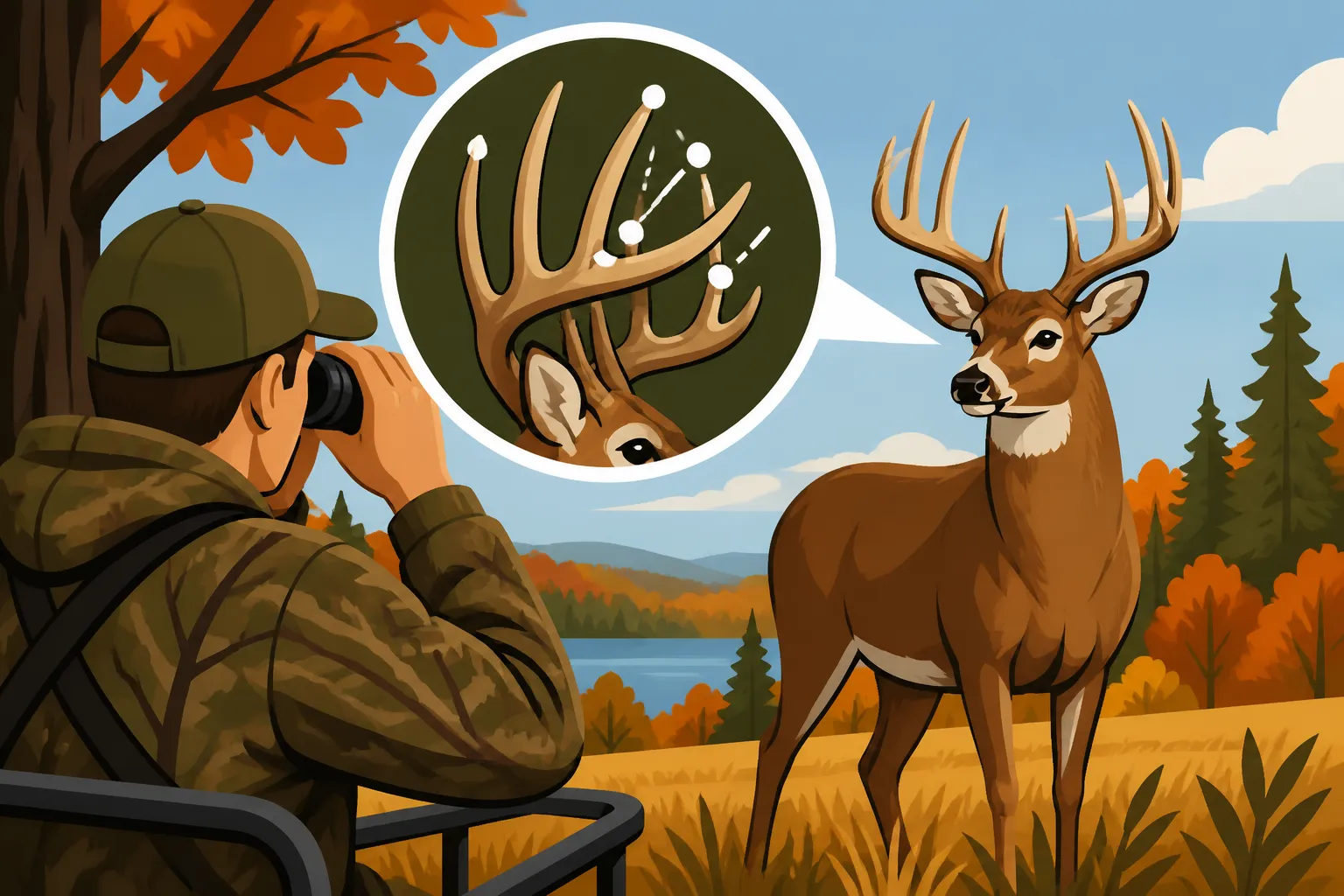
Counting Antler Points From a Stand
We’ve all been there: perched in our treestand, the woods finally quiet, when a buck steps out of the cover. Your heart leaps, adrenaline surges, and suddenly, the simple task of counting antler points feels like a calculus exam under pressure. This guide is here to help you navigate those intense moments, providing actionable strategies to accurately count antler points from your stand and ensure you make ethical and legal decisions in Michigan's deer woods.
Why Accurate Antler Point Counting Matters in Michigan
For Michigan deer hunters, counting antler points isn't just about admiring a buck's rack; it's a critical component of legal and ethical hunting, especially with the state's diverse regulations. A simple miscount can lead to a violation, a lost hunting opportunity, or worse.
Understanding Michigan's Antler Point Restrictions APRs
Michigan has specific Antler Point Restrictions (APRs) in various Deer Management Units (DMUs) across the state. These regulations are designed to manage deer populations, improve buck age structure, and enhance the quality of hunting. Essentially, in certain areas, you might only be allowed to harvest a buck if it has a minimum number of points on one or both antlers. For instance, some DMUs might require a buck to have at least three or four points on one side, excluding the brow tines.
Navigating these rules can be complex. You might be hunting in a DMU with strict APRs, while a friend hunting just a few miles away in a different DMU has different rules, or even no APRs at all. It’s absolutely vital to know the specific regulations for the DMU you are hunting in before you ever climb into your stand. Many hunters find it helpful to review the DNR’s interactive map or consult their copy of the Michigan Hunting Digest to understand the current rules for their chosen hunting spot. This knowledge forms the baseline for any antler point counting you'll do in the field. Understanding "What Counts as an Antler Point in Michigan" is also crucial, as definitions can sometimes differ from what a hunter might instinctively assume. Typically, a point must be at least one inch long and protrude from the main beam or another tine.
The Ethics and Legality of a Miscount
The consequences of miscounting points can range from a minor frustration to a serious legal headache. Ethically, passing on a buck you think might be too small, only to realize later it was legal, is disappointing but ultimately harmless. However, shooting a buck that does not meet the minimum APRs can lead to significant penalties, including fines, loss of hunting privileges, and even confiscation of your firearm and the deer itself. The Michigan Department of Natural Resources (DNR) takes these regulations seriously, and ignorance is not a valid excuse.
Imagine the scenario: you've been sitting all morning in your treestand. A decent buck steps out, and in the low light and excitement, you quickly count what you believe are three points on one side. You make the shot, recover the animal, and only then, in hand, realize that one of those "points" was merely a small burr or a broken stub that doesn't meet the one-inch requirement. The immediate rush of success quickly turns to dread and regret. This is a common and incredibly frustrating situation that highlights why careful, methodical counting is so essential, especially during high-pressure moments like the peak rut in November when legal bucks might be moving quickly.
The Challenges of On-the-Fly Antler Assessment
Let's be real, the woods are not a sterile lab where you can leisurely inspect a deer's antlers. There are countless variables working against you when you're trying to make a snap judgment from your perch.
Factors Obscuring Your View
One of the biggest hurdles to accurate point counting is simply a lack of clear visibility. Think about it:
- Dense Cover: Michigan is full of thick timber, cedar swamps, and brushy clearcuts. A buck might only offer a partial view of its rack as it slips through the alders or stands behind a downed log. You might see the main beams but only catch glimpses of the tines. This is particularly challenging when hunting Michigan swamp edges for deer, where cover can be incredibly thick.
- Poor Lighting: Early morning or late evening, when deer are most active, often means low light conditions. Shadows cast by trees, heavy cloud cover, or even just the dim light filtering through a dense canopy can make distinguishing between a small point and a stub, or even just a clump of mud, incredibly difficult.
- Distance: The farther away the buck, the harder it is to discern fine details. What looks like a point at 70 yards might just be an optical illusion.
- Buck Movement: Deer rarely stand still for a detailed antler assessment. They're usually walking, feeding, or pausing for just a few seconds, turning their head only slightly. Trying to count points on a moving target is like trying to solve a puzzle while someone shakes the table.
- Angle: The angle at which you view the buck can significantly impact your perception of its antlers. A point might be perfectly visible from one angle but completely hidden or distorted from another. A buck quartering away or straight on can make a symmetrical rack look uneven or obscure points on the far side.
All these factors conspire to make a difficult task even harder. It's why relying solely on a quick glance can be a recipe for a miscount.
The "Buck Fever" Phenomenon
Beyond the physical limitations, there's the psychological impact of "buck fever." This isn't just a catchy phrase; it's a real physiological response to adrenaline. Your heart rate skyrockets, your hands might shake, your breathing becomes shallow, and your focus can narrow dramatically. In this state, your ability to make rational, detailed observations can be severely impaired.
I've seen it countless times, and I've felt it myself. You spend hours, days, sometimes weeks scouting, setting up treestands in Michigan hardwoods, and patiently waiting. When that moment arrives, and a target buck steps out, all that anticipation boils over. Your mind races, and the only thing you can think about is making the shot. In this heightened state, your brain might even "fill in the blanks," making you see points that aren't quite there or overlook others entirely. It's a natural reaction, but one we absolutely need to manage to avoid making a mistake. It’s an almost uncontrollable surge of excitement that can make even the most seasoned hunter question their own observations.
Proven Strategies for Accurate Counting from Your Stand
While the challenges are real, there are concrete strategies you can employ to improve your accuracy when counting antler points from your stand. Patience and preparation are your best allies.
The "Slow and Steady" Approach
When a buck appears, the absolute worst thing you can do is rush. Take a breath, compose yourself, and employ a systematic counting method:
- Assess the Body First: Before even looking at the antlers, quickly assess the buck's body size. Is it a mature deer or a young one? While body size doesn't determine antler legality, it can help you mentally categorize the buck and slow down your decision-making process.
- Focus on One Side, Then the Other: Don't try to count all the points at once. Pick one antler – usually the one closest to you or the one offering the clearest view – and methodically count each point. Start with the brow tine (if present), then move to the G2, G3, and so on, working your way up the main beam. Once you're confident in that side, shift your focus to the other antler and repeat the process.
- Confirm the Definition of a Point: As you count, mentally confirm that each protrusion meets Michigan’s definition of a legal point (typically 1 inch in length). A small burr or a broken tip that's less than an inch doesn't count, and in the heat of the moment, it's easy to mistake them for legitimate points.
- Wait for a Clear View: This is perhaps the most critical step. If the buck is moving, partially obscured, or at a poor angle, do not force a count. Wait for the deer to pause, turn its head, or step into a clearer opening. This might mean letting a shooting opportunity pass, but it’s far better than making an illegal harvest. Often, bucks will follow common deer trails, offering momentary windows of opportunity.
- Re-count if Necessary: If you have any doubt, recount. Go back to one side, then the other. Repeat until you are absolutely certain. This methodical approach will slow your heart rate, allow you to gather more information, and significantly increase the accuracy of your assessment.
Utilizing Optics and Technology
Modern hunting gear isn't just for finding deer; it's invaluable for identifying them. Don't leave your stand without these tools:
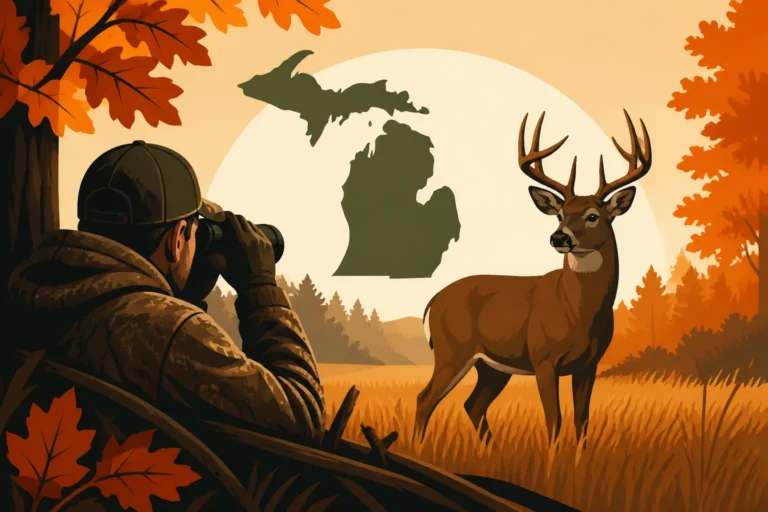
- Binoculars: High-quality binoculars are your best friend for antler assessment. Use them immediately when a buck is spotted, even if it's relatively close. An 8x or 10x magnification can make all the difference in distinguishing a legitimate point from a non-scoring stub, especially in low light conditions. Good optics gather more light and offer a clearer, magnified image, allowing you to scrutinize every inch of the antler. When choosing optics, consider the "Binocular Choice for Michigan Whitetails," as factors like field of view and low-light performance are crucial.
- Rangefinders: While primarily used for shot placement, a rangefinder can also give you a better sense of distance, which helps in judging antler size and clarity. Knowing the exact yardage can reduce the mental strain of estimation and allow you to focus more on the antlers themselves. Plus, a buck that seems "close enough" might be farther than you think, making accurate counting even harder. Utilizing a quality rangefinder can confirm your target's distance, giving you the confidence to focus on the points rather than worrying about the shot distance itself.
- Smartphone Apps/Mapping Tools: While you can't use your phone for counting in the exact moment of truth, pre-season preparation with apps like GoHunt or the Michigan Mi-HUNT map can embed the specific APR rules for your DMU firmly in your mind. Reviewing aerial photos for swamp deer or marking known buck bedding areas can also help you predict where a quality buck might appear, giving you a mental edge. These tools are fantastic for "Scouting Michigan Public Land Before Season," identifying potential hotspots where you might encounter larger, older bucks that fit the legal criteria.
Learning Common Antler Configurations
Familiarity with antler growth patterns can give you an edge. While every buck is unique, most follow general tendencies:
- Typical vs. Non-Typical: Michigan's APRs generally focus on typical points (tines that grow off the main beam in a symmetrical fashion). Non-typical points, or abnormal points (like kickers, stickers, or drop tines), often do not count towards the minimum point requirement. This is a critical distinction. For example, "The Three-Point Rule in Michigan" usually refers to typical points on one side.
- Main Beam Points vs. Abnormal Points: Practice distinguishing between a true main beam point (like a G2 or G3) and an abnormal growth. Look for symmetry and the general flow of the tines off the main beam.
- Practice with Trail Camera Photos: Spend time reviewing your trail camera photos from your hunting area. Analyze the bucks caught on camera, counting their points and making the distinction between legal and illegal deer. This is invaluable practice for high-pressure situations. Many hunters use their cameras to find "Where Big Woods Bucks Bed in Michigan," but they also serve as excellent training tools for antler identification.
- Visual Aids: Look at diagrams or photos of various antler configurations, specifically noting how points are counted. The DNR often provides examples in their regulations. The more you familiarize yourself with what a "legal" point looks like, the faster and more confident you'll be in the field.
By understanding these common configurations, you'll develop a quicker eye for legal bucks and be less likely to miscount in the heat of the moment.
What to Do When You Can't Be Sure
Even with the best preparation and optics, there will be times when doubt creeps in. What's the protocol then?
The "When in Doubt, Don't Shoot" Philosophy
This is the golden rule, and it cannot be stressed enough. If you are standing in your treestand, binoculars to your eyes, and still can’t confidently confirm a buck meets the APRs for your DMU, the only ethical and legal choice is to pass. It’s hard, agonizing even, to watch a buck walk away, especially one that looks like a shooter. However, the potential ramifications of an illegal harvest far outweigh the disappointment of letting a questionable deer go.
Think of it this way: Michigan's deer herd is robust, and there will always be another opportunity. Rushing a shot on an unconfirmed buck not only risks a legal violation but also risks wounding an animal that you might not be able to recover, which is a tragedy in itself. Many seasoned hunters will tell you that the bucks you pass on often teach you more than the ones you harvest. This philosophy also contributes to the overall quality of the herd, supporting the very goals of the APRs themselves. Embracing this mindset will make you a more responsible and ultimately more successful hunter in the long run. It's truly a testament to the "Passing a Buck You Cannot Count" ethic that many Michigan hunters hold dear.
Post-Season Scouting and Trail Camera Insights
Your learning doesn't stop when you tag out or the season ends. Post-season scouting and diligent use of trail cameras can provide invaluable insights for future hunts and help you hone your antler counting skills without pressure.
- Walk Your Property: After the season, walk the areas you hunt. Look for shed antlers. Picking up sheds allows you to hold them, inspect them, and understand the subtle nuances of point growth. This hands-on experience is an excellent way to train your eye for next season. You might even find sheds from a buck you passed on, confirming your decision or showing you what you missed.
- Analyze Trail Camera Data: Set up trail cameras year-round, especially in areas with known deer activity. Use these cameras to monitor bucks throughout the summer and fall. Keep a log of individual bucks, noting their antler growth and point count. This allows you to "pre-scout" individual animals, so if you see "that big 8-point with the broken brow tine" in person, you'll already know he's legal (or not). Reviewing camera photos from areas like a scrape line along a two-track or a funnel between two swamps can reveal consistent buck movement and help you identify specific deer.
- Use Tools for Identification: Take advantage of advanced trail camera features or online tools that allow you to organize and analyze your photos. Some apps can even help you track specific bucks over time, giving you a detailed history of their antler development. This detailed insight, especially when using an app like GoHunt to track potential deer, will build your confidence for when you're face-to-face with a live buck.
By continuously learning and using all the tools at your disposal, you'll steadily improve your ability to accurately count antler points from your stand, making your Michigan hunting experiences safer, more ethical, and more successful.
| Antler Counting Tip | Description | Why it Helps |
|---|---|---|
| Breathe and Slow Down | Take a few deep breaths to calm adrenaline before counting. | Reduces "buck fever" and improves focus. |
| Use Quality Optics | Always use binoculars for magnification, even at close range. | Clarifies details, distinguishing real points from stubs or debris. |
| Count One Side at a Time | Focus on counting points on one main beam, then move to the other. | Prevents confusion and ensures a systematic, accurate tally. |
| Confirm 1-Inch Rule | Mentally verify each point is at least one inch long. | Ensures compliance with Michigan's legal definition of an antler point. |
| Wait for Clear View | Be patient; wait for the buck to stop, turn, or clear obstructions. | Avoids rushed decisions on partially obscured or moving deer. |
| Review APRs Pre-Hunt | Know the specific Antler Point Restrictions for your DMU before you hunt. | Prevents unintentional violations by being informed of local regulations. |
Disclaimer
Hunting is an inherently dangerous activity. The information provided in this article is for educational and informational purposes only and should not be considered a substitute for official Michigan Department of Natural Resources (DNR) regulations or professional guidance. Always consult the most current Michigan Hunting Digest and DNR resources for specific rules, regulations, and licensing requirements before engaging in any hunting activities. Adhere to all local, state, and federal laws. Stay safe and hunt responsibly.