Getting a Deer Out of a Michigan Cedar Swamp
Hitting a deer perfectly is an incredible feeling, but that elation can quickly turn to dread when you realize your quarry has bolted straight into the thickest, nastiest Michigan cedar swamp you know. Trying to recover a deer from such a challenging environment is one of the toughest tests a hunter faces, turning a successful hunt into a grueling, often wet, and physically demanding ordeal. This guide is here to walk you through the realities, preparations, and on-site strategies to help you successfully retrieve your deer from the clutches of a Michigan cedar swamp, preserving your harvest and your sanity.
Understanding the Unique Challenges of Michigan Cedar Swamps
Michigan's cedar swamps are absolutely beautiful, but they are also notoriously difficult to navigate, especially when you're trying to haul out a mature whitetail. These aren't just wet woods; they're unique ecosystems that present a gauntlet of obstacles designed to make deer recovery as miserable as possible.
The Terrain and Undergrowth: A Hunter's Nightmare
Imagine trying to walk through a maze of tightly packed cedar trees, their lower branches forming an impenetrable wall of green. Beneath your feet, the ground is a mix of knee-deep muck, tangled roots, and unseen logs that wait to trip you up. The water can be deceptively deep in spots, often cold enough to numb your legs, even on a warm day. This dense undergrowth, combined with the soft, uneven terrain, makes every step a deliberate effort. Add a downed deer to that equation, and you're no longer just walking; you're slogging, pulling, and pushing through a natural obstacle course. The low light under the dense cedar canopy further complicates matters, making blood trailing incredibly difficult. It's truly a place where you earn your venison many times over.
Temperature, Time Pressure, and Preservation
The challenges don't end with the physical exertion. Temperature plays a critical role, especially during Michigan's early archery season or even a mild November firearm season. Even if the air is cool, the water in a swamp can act as a conductor, slowly chilling the deer's carcass. Moreover, if the deer is lying in standing water, the cooling process can be compromised, and the meat can begin to degrade more quickly than if it were on dry ground. The clock starts ticking the moment your deer hits the ground, and in a swamp, that clock often feels like it's speeding up. Rapid recovery is paramount to ensure proper meat preservation and quality. Neglecting this crucial step can lead to spoilage, making all your hard work for naught.
Pre-Hunt Preparation for Swamp Recovery
You know the old saying: an ounce of prevention is worth a pound of cure. When it comes to hunting near Michigan cedar swamps, this couldn't be truer. Preparing for a swamp recovery before you even step foot in the woods can drastically increase your chances of success and minimize your misery.
Essential Gear for Swamp Expeditions
Don't even think about tackling a Michigan cedar swamp in hip boots or flimsy rain gear. You need serious protection and specialized tools. Full-chest waders, preferably insulated, are an absolute must. Make sure they're in good repair – a leak in a cold swamp is a fast track to hypothermia. A durable, waterproof backpack is essential to keep your extra layers, first-aid kit, and snacks dry. Beyond personal comfort, think about recovery tools. A high-quality bone saw is invaluable for quartering a deer if a full drag is impossible. Carry at least 50 feet of robust rope or even a lightweight tow strap, as you'll likely need to tie off to trees or pull the deer through thickets. A bright, reliable headlamp with extra batteries is non-negotiable, as tracking often extends into low light or darkness. For more ideas on what to carry, check out our guide on Boots and Packs for Michigan Swamps.
Scouting and Planning for Swamp Access
The best time to figure out how to get a deer out of a swamp is before you shoot one. Utilize mapping tools like GoHunt or Michigan's Mi-HUNT map to thoroughly scout the area. Look for subtle ridges or slightly higher ground that might run through the swamp, acting as natural deer travel corridors. These spots can also offer more solid footing for a recovery. Identify potential entry and exit points, even if they seem like long detours. A longer, drier path is almost always better than a shorter, mucky death march. Pay attention to ditches, old logging roads, or clearings that could provide a better angle for a drag or even a place to gut the deer. Understanding the terrain beforehand allows you to visualize a recovery plan. This kind of detailed reconnaissance is a skill every Michigan hunter should hone, and it's especially critical when hunting near challenging cover. Our article on Reading a Michigan Cedar Swamp for Deer delves deeper into understanding these unique environments.
On-Site Recovery Strategies and Tactics
Okay, the moment of truth has arrived. You've made a good shot, and your deer is down, but deep in the cedar swamp. This is where patience, teamwork, and a strategic approach become your best friends.
Initial Tracking: Patience is a Virtue
The instant gratification of a quick recovery rarely happens in a cedar swamp. After giving the deer ample time, approach the last known location slowly and methodically. Mark your entry point with flagging tape or a unique marker on your GPS (many modern hunting apps like GoHunt allow you to drop pins easily). Blood trailing in a cedar swamp can be incredibly frustrating. The dense canopy often means less light, and the thick undergrowth can wipe blood off quickly. Look for disturbed leaves, broken twigs, and bent-over cedars, not just blood. If you lose the trail, spread out and walk in ever-widening circles. Mark every piece of sign you find. If you're tracking into darkness, be prepared with your powerful headlamp. We cover more detailed advice on Blood Trailing After Dark in Michigan if you find yourself in that tough spot. Remember, the deer is likely not going anywhere quickly once it's expired, so a slow, deliberate approach is better than a rushed, lost one.
The Extraction: Manual Strength Versus Smart Methods
Getting a deer out of a swamp is often an epic battle of wills. Here are the primary methods you'll typically employ:
Manual Dragging: The Brute Force Approach
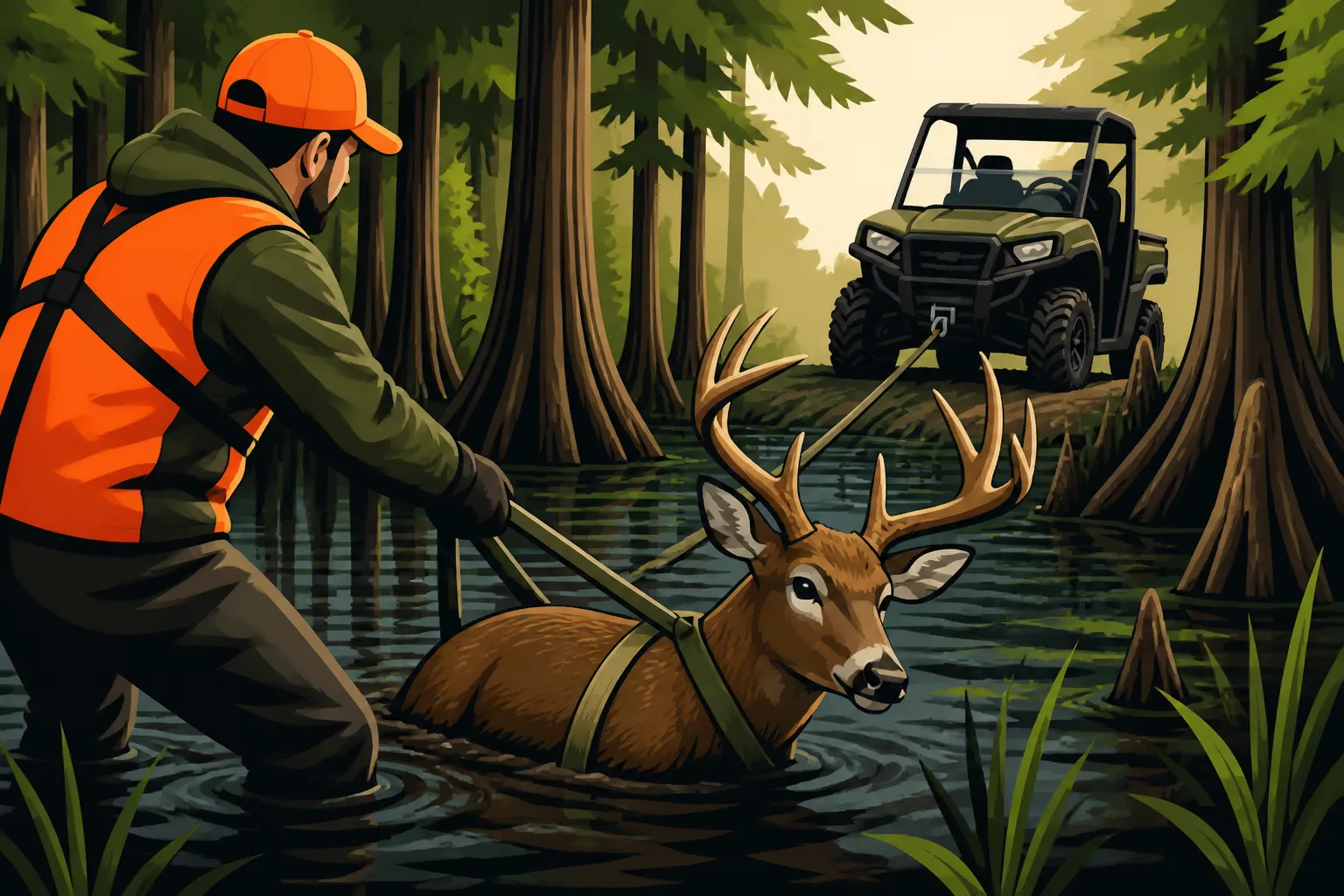
This is the most common method, and it often requires multiple people. If you're alone, it's going to be a monumental effort. Attach your rope securely to the deer's antlers or neck. One person should lead, clearing a path of small branches and debris if possible, while others pull. If you have extra people, have them strategically position themselves to lift and push the deer over obstacles. Communication is key here. "Lift over this log!" "Watch out for that root!" The dense cedars might require you to cut branches to create a narrow lane. This is where that bone saw or even a sturdy pair of loppers can be a lifesaver. Be prepared for mud, water, and exhaustion. Remember, it's not a race; it's a marathon.
Sleds and Game Carts: When the Terrain Allows
While a full-sized game cart might be useless in the deepest parts of a cedar swamp, smaller, more maneuverable game sleds can be incredibly helpful once you hit slightly firmer ground or a well-defined deer trail within the swamp. A simple plastic utility sled, often used for ice fishing, can glide surprisingly well over wet muck and shallow water, making the drag significantly easier. Some hunters even fashion homemade sleds from durable plastic sheets. The trick is getting the deer onto the sled without sinking it further. If you're working with a partner, one can lift while the other slides the sled underneath. Again, this requires planning and a clear path.
Prioritizing Safety in the Swamp
The physical demands of a swamp recovery can be immense, leading to exhaustion and potentially poor judgment. Always prioritize safety. Tell someone exactly where you are going and when you expect to return. Carry a fully charged cell phone (in a waterproof bag!) and consider a satellite communication device if you're deep in a remote Upper Peninsula swamp. Dress in layers to manage your body temperature, as you'll be alternating between intense exertion and standing still. Hypothermia is a real risk in Michigan's cold waters. If you're with a partner, stick together and communicate constantly. A small first-aid kit is also a wise addition to your pack, especially when dealing with slippery logs and sharp branches. For more on preparing for remote hunting, read our article on First Aid Kits for Remote Upper Peninsula Ground.
Post-Recovery and Meat Care in Challenging Conditions
You've done it. The deer is finally out of the thickest part of the swamp. But the job isn't over. Proper handling after recovery is crucial to ensure you have quality venison to enjoy.
Field Dressing in Difficult Spots
Ideally, you'd field dress your deer on solid, clean ground. In a cedar swamp, that's often a fantasy. You might have to field dress in knee-deep water or muck. If that's the case, work quickly and as cleanly as possible. Try to find the firmest, driest spot you can manage. If it's truly impossible to do a traditional field dress without contaminating the meat, consider the "gutless method." This involves skinning and quartering the deer in the field, leaving the entrails behind. It's a skill that takes practice but can be a game-changer for swamp recoveries, reducing the weight and bulk you have to drag. Our guide on Knives and Saws Worth Carrying offers advice on tools for this process. Even if you're doing a full field dress, get it done as soon as possible to begin the cooling process.
Transporting and Cooling the Carcass
Once the deer is field dressed and out of the swamp, your next immediate concern is cooling the carcass. If it's a warm day, a deer that has been laying in water might already be warming up internally. Get it to a cooler location as quickly as possible. If you're at camp, hang it in a shady, airy spot. If you're heading straight home, ensure good airflow in your vehicle. For early season hunts, having large coolers with ice ready to go is critical. You might even need to quarter the deer into manageable pieces to fit them into coolers for immediate icing. Don't underestimate the importance of rapid cooling for meat quality. For more insights on meat care, especially in warmer conditions, check out our piece on Coolers and Game Bags for Early Archery Kill. If it's cold enough, and the deer is on solid ground, our article on Field Dressing a Deer in Cold Weather can help you properly handle it.
Ultimately, getting a deer out of a Michigan cedar swamp is a rite of passage for many hunters. It’s physically demanding, often frustrating, but incredibly rewarding. By preparing wisely, approaching the task strategically, and prioritizing safety, you can turn a challenging recovery into another successful Michigan hunting memory.
Recovery Method Comparison
| Method | Pros | Cons | Ideal Scenario |
|---|---|---|---|
| Manual Drag | No special equipment needed; immediate | Extremely strenuous; slow; high risk of injury; can damage carcass in rough terrain; often requires multiple people | Short distances; minimal obstacles; solid ground nearby |
| Game Sled/Toboggan | Reduces friction; protects carcass; easier than dragging | Requires a path wide enough for the sled; can get stuck in deep mud/water; still requires effort | Intermediate distances; varying ground but some open areas; snow or ice can greatly improve efficiency |
| Quartering | Drastically reduces weight; easier to navigate dense cover; aids cooling | Requires additional field dressing skill/time; risk of meat contamination; usually requires a pack frame | Long distances; extremely dense cover; very rugged or deep swamp; solo hunter; warm weather |
| Boat/Canoe | Minimal effort; can access otherwise impassable areas | Requires water access to the deer; difficult to load deer; risk of capsizing; limited use | Deer is down near a navigable waterway within the swamp |
Disclaimer
Hunting is an inherently dangerous activity. Always prioritize safety, understand local regulations, and be prepared for all conditions. The information provided in this article is for educational and informational purposes only and should not be considered a substitute for professional training, personal judgment, or official Michigan Department of Natural Resources guidelines. Always consult the current Michigan Hunting Digest for the most up-to-date rules and regulations.