Decoy Placement for Pressured Birds
There’s nothing quite as frustrating as doing everything right – waking up early, getting to your spot in the dark, setting up what you think is a perfect spread – only to watch birds flare at 100 yards, skirt your decoys, or land far out of range. If you hunt public land or popular spots in Michigan, you know this pain all too well. These birds aren't dumb; they've seen it all before. This guide is all about giving you the edge, teaching you how to strategically place your decoys to finally bring those pressured birds into shooting range, even when they’re acting extra shy.
Understanding Wary Birds and Their Habits
When you're dealing with "pressured birds" in Michigan, you're not just talking about any old duck, goose, or turkey. These are intelligent creatures that have learned to associate certain sights and sounds with danger. They've been shot at, spooked, and observed hunters from afar, and they've developed a deep-seated wariness that makes them incredibly challenging to decoy. It’s like they have a sixth sense for anything that looks even slightly out of place.
The Psychological Impact of Hunting Pressure on Game
Think about it from a bird's perspective. In heavily hunted areas, especially during intense seasons like Michigan's November Firearm Deer Season (even though we're talking birds, deer pressure can spill over and make all game more skittish), they quickly learn that certain patterns mean trouble. A typical, cookie-cutter decoy spread that works wonders on uneducated birds in private fields just won't cut it on Saginaw Bay or at a crowded state game area. They learn to identify human presence, unusual noise, or anything that breaks the natural flow of their environment. This sustained pressure rewires their behavior, making them prioritize survival above all else. They become hyper-vigilant, constantly scanning for threats, and quick to react to anything suspicious. This is why a static, unrealistic decoy spread often fails; it simply doesn't mimic the natural safety they crave.
Reading the Signs: How Pressured Birds Behave
The first step to beating pressured birds is to recognize their tells. They're practically screaming at you that they're wise to your game, if you just know what to look for. When ducks are circling high, never fully committing, or flaring violently well outside of range, that's a classic sign. Geese might land a quarter-mile away in the next field, opting for safety over your meticulously crafted spread. Turkeys, especially old Toms during Spring Turkey Hunting in Michigan, might gobble their heads off but refuse to come closer than 80 yards, or they'll strut just out of sight, always behind a rise or a thicket, wary of walking into an ambush.
They'll often follow distinct flight paths or approach routes that offer them the most cover or the best vantage point. For example, ducks might always land into the wind, but pressured ducks will often swing wide downwind, gaining altitude to get a better look at your spread before making any commitment. They might skirt the edges of marshes, refusing to fly directly over open water where they feel exposed. Pay close attention to how they approach, where they look, and how quickly they react. Are they cup-winging in confidently, or are they flapping hard, keeping their distance, and eventually peeling off? Learning to read these subtle cues will tell you exactly what adjustments you need to make to your decoy placement.
Strategic Decoy Setups for Pressured Waterfowl
Waterfowl, especially ducks and geese, are some of the most commonly decoyed birds in Michigan, and they are also some of the fastest to get wise to standard tactics. Whether you're hunting the vastness of the Great Lakes Waterfowl Hunting in Michigan or a smaller marsh, adapting your decoy spread is paramount.
Adapting Duck Spreads for Wary Dabblers
Dabbling ducks, like mallards and wood ducks, are often found in shallower water and feed by tipping up. When they're pressured, they won't hesitate to fly right past a spread that looks too dense, too perfect, or too unnatural. For these birds, subtlety and realism are key.
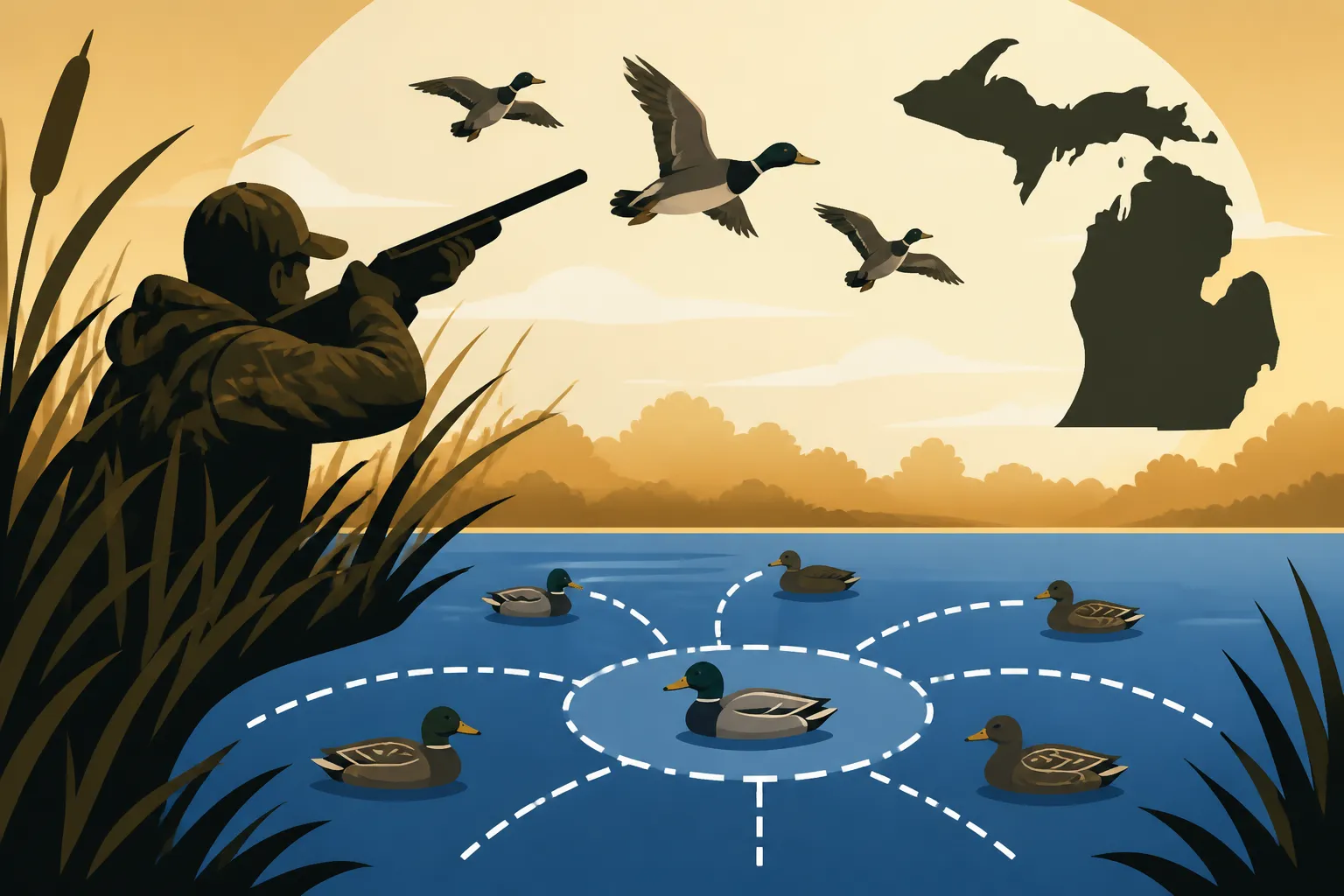
- The "J" Hook or "U" Shape: Instead of a tight cluster, think about an open landing zone. A loose J-hook or U-shape spread, with the open end facing into the wind (and towards where you expect birds to approach), creates a natural funnel. This tells wary birds, "Hey, there's a safe spot right here, come on in!" Keep the main body of decoys away from your blind, perhaps 20-30 yards out, to draw attention away from your hiding spot.
- Less is More: Sometimes, especially later in the season or on heavily hunted public spots, a massive spread of 100 decoys can actually deter birds. It looks unnatural, almost like a trap. Try scaling back to a dozen or two high-quality, realistic decoys. Focus on creating smaller, realistic family groups or pairs that look like they're feeding or resting naturally. Mix up species if your area has them – a few pintails, a couple of widgeon, alongside your mallards, can add a layer of natural diversity.
- Active Feeders and Sleepers: Static, upright decoys look alert, which can be a red flag to pressured birds. Incorporate feeder decoys (ducks with their heads down, appearing to feed) and sleeper decoys (ducks resting with their heads tucked). These convey a sense of calm and safety, telling incoming birds that this spot is secure. Motion decoys, like jerk strings or vibrating butt-up feeders, are absolutely critical for adding that lifelike ripple and movement that weary birds look for. A slight ripple on the water can make all the difference, making even plastic decoys seem alive.
Fooling Finicky Geese in Open Fields and Waters
Canada geese are incredibly intelligent and have phenomenal eyesight. They often feed in large flocks in cut cornfields or loaf on open water, making them highly visible and notoriously difficult to approach once they've been shot at.
- The Landing Strip: Geese, especially pressured ones, need a clear, unobstructed path to land. They don't want to navigate a dense maze of decoys. Create a wide "V" or "U" shape in your field spread, with the open end facing into the wind. This "landing strip" should be expansive, giving them plenty of room to commit and glide in. Place your blind at the closed end of the V, or along one of the arms, ensuring you're downwind or crosswind from the landing zone for the best shot opportunities.
- Family Group Clusters: Unlike ducks, geese often travel and feed in distinct family units. Mimic this by creating small clusters of 3-5 full-body goose decoys, spaced realistically. Have some actively feeding, some sentries (heads up, alert), and some loafing. The key is natural spacing; avoid rigid lines or overly symmetrical patterns. Spread these clusters out over a larger area to simulate a natural feeding flock without appearing too concentrated.
- Full-Body Decoys and Motion: For field hunting geese, full-body decoys are almost a necessity for pressured birds. Silhouettes or shells often look flat and unconvincing from above. The three-dimensional realism of a good full-body decoy, especially those with flocking for reduced shine, can be the difference-maker. Add motion by using Texas Rags or flags to simulate feeding or landing geese, but use them sparingly and naturally; over-flagging can be just as detrimental as no flagging. If you're hunting water, look into floating full-body decoys and even a few sleeper shells along the bank to convey total comfort. Remember to scout the fields to understand where they usually land and feed when not pressured, as this will inform your ideal spread. Often, tools like GoHunt can provide satellite imagery to help identify these key locations.
Convincing Gobblers with Realistic Turkey Decoy Placements
Turkey hunting, especially for big, old Toms that have survived a few seasons, can be incredibly rewarding but also exceptionally frustrating. They're smart, and they remember bad experiences. When it comes to Decoy Placement for Pressured Birds, turkey tactics differ significantly from waterfowl.
Less is Often More for Pressured Toms
Forget the idea of a whole flock of decoys. For pressured gobblers in Michigan's timber or open fields, simplicity is usually the best approach. An overly elaborate spread can look unnatural and alarm wary birds.
- Single Hen or Breeding Pair: A lone hen decoy, or a breeding pair (one hen, one jake or a submissive tom), often works best. The message this sends is clear: "Here's an interested hen, and maybe a young rival." An aggressive, strutting tom decoy might intimidate younger birds, but an old, pressured gobbler might see it as too much competition and hang up just out of range, unwilling to confront a perceived dominant rival on open ground. If you're using a jake, make sure it's a submissive posture.
- Strategic Distances: Place your decoys at a realistic distance from your blind – often 15-20 yards. This gives you time to make a shot as the bird approaches, and it keeps the bird focused on the decoys, not your blind. If the decoy is too far, the bird might hang up farther out, feeling safe. If it's too close, you risk spooking it as it closes the distance and notices your blind.
- Facing Away: Position your hen decoy facing away from the approaching gobbler, or slightly quartering away. This simulates a hen that is "playing hard to get" and often entices the gobbler to circle and come into prime shot range, trying to get her attention. It also presents the gobbler with a broadside shot as he tries to get in front of her.
Maximizing Realism and Movement for Close Encounters
Realism in turkey decoys is paramount, especially when dealing with birds that have seen every plastic hen on the market.
- High-Quality Decoys: Invest in high-quality, realistic decoys. Flocked decoys that reduce glare and have natural feather details can make a huge difference. Think about the subtle details like head position, feather texture, and coloration. Avian-X or Dave Smith Decoys are examples of brands known for their realism, though they come with a price tag. For a Michigan hunter trying to hunt the peak rut week in Michigan for turkeys (which we don't have, but imagine a similar intensity for deer), attention to detail is crucial.
- Subtle Movement: Static decoys can look lifeless. Incorporate subtle movement where possible. A fan on a stake that rotates gently in the wind, or a simple string that allows you to subtly move a decoy's head, can add lifelike appeal without being overtly artificial. Be cautious with aggressive fanning; while it can work in some scenarios, it can also spook a wary Tom. A subtle head turn or tail fan wobble is often more effective for pressured birds.
- Decoy Placement with Terrain: Use the natural terrain to your advantage. If you're set up on a slight rise, place your decoys just over the crest where they appear suddenly to an approaching gobbler. If you're in open timber, use the sparse cover to break up your silhouette and the decoys' lines. Always consider the sun's position – never put the decoy directly between you and the sun, as glare can make it look unnatural and blind the approaching bird. Also, avoid placing them where you'll have a cluttered shot due to trees or brush. Remember that a gobbler will try to come in and circle a hen to display, so give him that space.
General Principles for Decoy Placement in High-Pressure Scenarios
Regardless of the species you're chasing, certain overarching principles apply when you're trying to outsmart birds that have graduated from the school of hard knocks. This isn't just about putting plastic birds out; it's about creating an illusion of safety and opportunity that overcomes their ingrained fear.
The Role of Concealment and Approach Routes
You can have the best decoy spread in the world, but if your blind isn't concealed properly or your entry route spooks birds, it's all for naught. Pressured birds are hyper-aware of human presence.
- Blending Your Blind: Whether it's a layout blind in a cornfield or a pop-up blind in the timber, it must disappear into its surroundings. Brush it in heavily with natural vegetation from the area. Don't just throw a few branches on top; make it look like a natural part of the landscape. For goose hunting in Michigan's agricultural areas, matching the color and texture of the stubble or cover is critical. For instance, in a cut bean field, ensure your blind doesn't stick out as a dark blob.
- Concealed Entry and Exit: Plan your route to and from your hunting spot meticulously. Walk around known feeding or roosting areas, never directly through them. Use hedgerows, ditches, thick timber, or changes in terrain to keep you out of sight. Getting caught walking across an open field at dawn can ruin your hunt before it even begins. This is where scouting with tools like GoHunt, which offers detailed satellite imagery and property lines, becomes invaluable. You can map out your approach and identify natural funnels or pinch points that birds use, allowing you to intercept them discreetly.
- Wind and Sun Considerations: Always try to have the wind at your back or quartering to you. Birds almost always land into the wind, and this setup puts them directly in front of you. Also, be mindful of the sun. Avoid having the sun directly in your eyes during prime shooting hours, and position your decoys so they aren't glaring unnaturally in the sun, which can give them away as fakes.
Adjusting Your Spread to Changing Conditions
Hunting isn't static, and neither should your decoy strategy be. The weather, the time of day, and how birds are reacting should all dictate adjustments to your spread. This dynamic approach is what separates consistent hunters from those who just get lucky.
- Weather Changes: A sunny, calm day might call for a looser spread, conveying relaxation. A windy, overcast day, however, might benefit from a tighter spread that suggests birds are huddling for protection. Rain can make decoys look shinier, so duller, flocked decoys become even more important. Snow can blanket decoys, making them disappear; you might need to kick snow off them or use darker decoys that stand out against the white. When Hunting After an Acorn Failure, birds might be scattered and you'll need to adjust your decoy tactics based on what little food sources remain.
- Bird Reactions: If birds are consistently flaring at a certain distance, pull your decoys closer to your blind, or adjust their spacing to be even more open. If they're landing short, move a few decoys further out to help draw them in. Sometimes, simply taking a few decoys out can make the spread look more natural and less threatening. Pay attention to their specific flight path – are they favoring one side of your spread? Move some decoys to that side to reinforce the illusion.
- Time of Day: Early morning might see birds more eager to feed, so a spread with more feeder decoys is appropriate. Mid-day might be more about loafing and resting, so more sleeper or upright decoys can work. Late afternoon, as birds head back to roost, might call for a more concentrated spread resembling a staging area. The more flexible you are with your decoy placement, the better your chances of fooling Michigan's wary game birds.
Here’s a quick overview of decoy strategies for pressured birds:
| Species | Typical Behavior When Pressured | Recommended Decoy Strategy | Key Placement Considerations |
|---|---|---|---|
| Dabbling Ducks | Circling high, landing short, flaring at a distance | Loose "J" or "U" shape; 6-12 high-quality decoys; mix of feeders/sleepers; subtle motion | Open landing zone into the wind, away from blind; utilize natural cover; avoid dense clusters |
| Diver Ducks | Landing far out, avoiding shorelines, tight circling | Large "V" or "hook" spread; multiple lines; focus on diver species | Far out in open water; main body closer to deep water; large, clear landing zone for incoming birds |
| Canada Geese | Landing far in adjacent fields, wide circles, extreme caution | Expansive "V" or "U" landing strip; 1-2 dozen full-body clusters (3-5 decoys each) | Wide, clear landing zone; blind downwind/crosswind of strip; mimic family groups; minimize shine |
| Wild Turkeys | Gobbling from a distance, hanging up, skirting cover, no-show | 1-2 realistic hens, or hen/jake combo; submissive poses; no aggressive strutting toms | 15-20 yards from blind, facing away; utilize terrain breaks; sun at your back for best visibility |
Disclaimer
Hunting is an activity with inherent risks. Always prioritize safety, follow all Michigan Department of Natural Resources regulations, and obtain proper licensing. The information provided here is for educational purposes and should not replace professional guidance or personal experience. Conditions in the field can change rapidly, and hunters must use their judgment to ensure a safe and ethical hunt.