Michigan Turkey Harvest Reporting Rules
Trying to figure out all the Michigan hunting regulations can feel like navigating a dense cedar swamp in the dark, and turkey harvest reporting is one of those crucial steps that sometimes gets overlooked or misunderstood. You've just experienced the thrill of a successful spring gobbler hunt or a challenging fall outing, and now you're wondering, "What's next? How do I make sure I've dotted all my i's and crossed all my t's with the Michigan Department of Natural Resources (DNR)?" This comprehensive guide is here to walk you through every aspect of Michigan's turkey harvest reporting rules, ensuring you're compliant and contributing to the health of our state's wild turkey population.
Why Reporting Your Turkey Harvest Matters
After the adrenaline of a successful hunt, it’s easy to focus on processing your bird or recounting the tale to friends and family. But pausing to properly report your turkey harvest isn't just a bureaucratic hurdle; it's a critical component of wildlife management and your ethical responsibility as a Michigan hunter. Without accurate data, the DNR can't make informed decisions, and that impacts everyone who cherishes our wild turkey resource.
The Importance for Wildlife Management
Think of every reported turkey harvest as a vital piece of the puzzle that the DNR uses to understand the overall health and trends of Michigan's wild turkey population. When you report your bird, you're not just confirming your success; you're providing data points on harvest rates, success rates, and even the general distribution of birds. This information helps biologists track population estimates, identify areas of high or low pressure, and understand the impact of various environmental factors. It’s how they determine if Michigan Turkey Population Estimate is growing, stable, or declining in specific regions. Without this real-time feedback from hunters, the DNR would be largely in the dark, making it harder to set appropriate Michigan Turkey Licence Quotas or adjust season lengths for future years. This collective effort ensures that the resource remains sustainable for generations to come, allowing future hunters to enjoy the same opportunities we have today.
Understanding Your Role as a Hunter
Beyond the scientific data, reporting your harvest is a fundamental part of being a responsible and ethical hunter. It demonstrates respect for the resource and acknowledges the privilege of hunting in Michigan. Imagine a scenario where a significant number of hunters simply didn't report their successful hunts. The official harvest numbers would be artificially low, potentially leading the DNR to believe the population is struggling or under-harvested. This could result in changes to regulations, such as reduced tag allocations or shorter seasons, which would negatively impact everyone. Your report, no matter how small it might seem to you, contributes to a larger picture that directly influences the hunting opportunities available to all of us. It's a testament to the fact that hunters are the primary conservationists, actively participating in the management of the game they pursue. This commitment to reporting is as important as adhering to legal shooting hours or ensuring you have the proper Michigan Hunting Licences and What They Cost. It’s all part of the unwritten contract we have as stewards of the land and its wildlife.
Step-by-Step Guide to Reporting Your Michigan Turkey
Alright, you've got your turkey tagged, photos taken, and you're ready to report. The Michigan DNR has made this process quite straightforward, offering a couple of convenient options. The key is to do it promptly and accurately. Let's break down exactly how you get it done.
Online Reporting Through the DNR Website
This is often the most popular method for hunters who have easy access to a computer or smartphone. The DNR's online system is user-friendly and guides you through the process step-by-step.
- Access the DNR Website: Head over to the official Michigan DNR website (Michigan.gov/DNR). Look for the "Harvest Reporting" or "Hunt Fish" section.
- Log In or Create an Account: You'll need to log in using your DNR customer ID number and date of birth. If you don't have an account, you'll be prompted to create one, which usually just involves providing some basic personal information. Your customer ID is typically found on your hunting license.
- Select "Report a Harvest": Once logged in, navigate to the harvest reporting section. You'll usually see an option to report deer, bear, or turkey. Select "Turkey."
- Enter Tag Information: The system will prompt you to enter the kill tag number from your physical turkey license. This is crucial for verifying your harvest. Double-check that you're entering the correct numbers.
- Provide Harvest Details: This is where you'll input the specifics of your hunt:
- Date of harvest: The day you actually shot the turkey.
- Time of harvest: As close an estimate as possible.
- County of harvest: Where you took the bird.
- Turkey Management Unit (TMU) or Hunt Unit: This will correspond to the unit printed on your license (e.g., Hunt Unit M, ZZ, or NN).
- Land Type: Whether it was taken on public or private land.
- Sex of the bird: Hen or gobbler.
- Beard Length (for gobblers): An estimated measurement.
- Spur Length (for gobblers): Again, an estimated measurement.
- Weight (optional but helpful): If you have a scale.
- Review and Submit: Before finalizing, the system will show you a summary of the information you've entered. Take a moment to review everything for accuracy. Once confirmed, hit "Submit." You'll usually receive a confirmation number or email, which is a good idea to save for your records.
The online system is available 24/7, making it incredibly convenient for reporting your harvest as soon as possible after the hunt. This helps ensure that the Michigan Turkey Harvest Numbers are as accurate and timely as possible for wildlife managers.
Using the Michigan DNR Hunt Fish App
For many modern hunters, especially those constantly on the go or hunting in areas with spotty cell service, the official The Michigan DNR Hunt Fish App is a game-changer. This app, available for both iOS and Android devices, allows you to report your harvest directly from your smartphone or tablet.
- Download and Install: If you haven't already, download the "Michigan DNR Hunt Fish" app from your device's app store.
- Log In: Just like the website, you'll log in using your DNR customer ID and date of birth. The app keeps you logged in, making subsequent reports even quicker.
- Navigate to Harvest Reporting: Within the app, there's a prominent "Harvest Report" or similar button. Tap on it.
- Select Turkey: Choose "Turkey" from the list of species available for reporting.
- Enter Information: The app will guide you through the same data entry fields as the website: kill tag number, date, time, county, hunt unit, land type, sex, beard, and spur length. The app often uses your phone's GPS to pre-fill the county, which can be a nice time-saver, but always double-check.
- Offline Capability: One of the biggest advantages of the app is its ability to function even when you don't have a cellular signal. You can enter all your harvest data, and the app will store it. Once your device reconnects to a signal, it will automatically upload and submit your report to the DNR. This is fantastic for those of us who hunt deep in the woods where connectivity is often nonexistent.
- Confirm Submission: After submitting, you'll get an on-screen confirmation. Again, it’s wise to take a screenshot or note the confirmation details.
The app is incredibly handy for those who want to get their reporting done quickly and efficiently, often before they've even left the hunting grounds. It streamlines the process, making compliance less of a chore and more of an integrated part of your hunting experience.
Required Information for Reporting
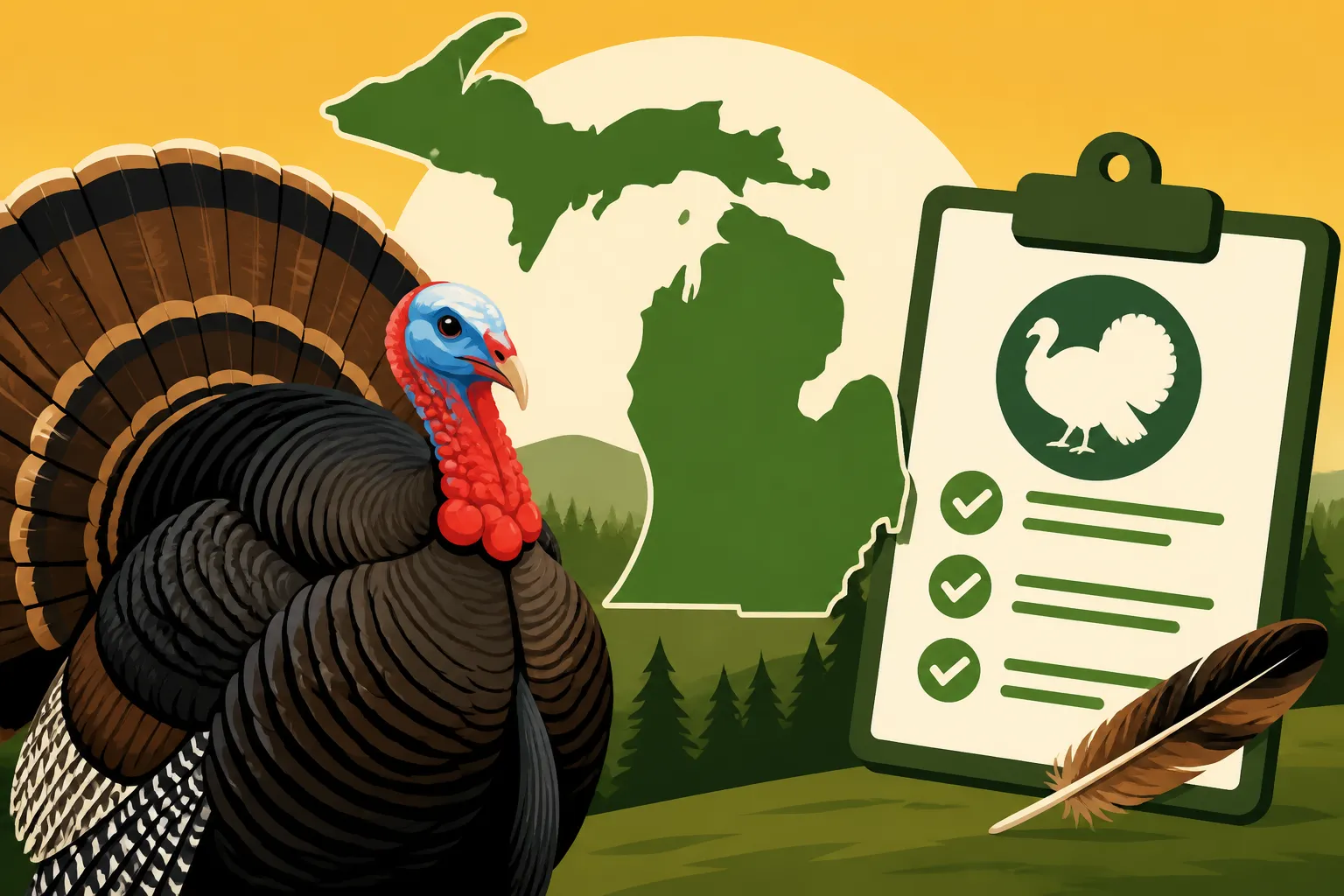
To make sure you're fully prepared, here's a quick checklist of the information you'll need when reporting your Michigan turkey harvest. Having this handy will ensure a smooth and quick process, whether online or through the app:
- DNR Customer ID: Your unique identifier on all Michigan hunting licenses.
- Kill Tag Number: Found on your physical turkey license. This number is essential for linking the harvest to your specific license.
- Date of Harvest: The exact day you harvested the bird.
- Time of Harvest: An estimated time of day (e.g., "morning," "mid-day," "afternoon," or a specific hour if you know it).
- County of Harvest: The Michigan county where the turkey was taken.
- Hunt Unit: The specific turkey management unit (e.g., Unit M, NN, ZZ) your license was valid for, as indicated on your kill tag.
- Land Type: Indicate whether the harvest occurred on public land (like state forests or game areas) or private property.
- Sex of Bird: Was it a gobbler (male) or a hen (female)? This is often easy to tell by the presence of a beard or spurs.
- Beard Length: For gobblers, an approximate measurement from where the beard emerges from the chest to its tip. Even a rough estimate (e.g., "7 inches," "10 inches") is helpful.
- Spur Length: For gobblers, the length of the longest spur, measured along its outside curve from the leg to the tip. Again, an estimate will suffice.
- Weight (Optional): While not mandatory, providing the bird's weight can offer additional valuable data to the DNR.
Having these details ready before you start the reporting process will save you time and potential frustration. A simple field note or a quick mental run-through after you tag your bird will do the trick.
Common Questions and Troubleshooting
Even with clear instructions, questions and unexpected situations can arise. It’s normal to have concerns, especially when you want to ensure you're following the rules correctly. Let's tackle some of the common scenarios hunters face when it comes to Michigan turkey harvest reporting.
What if You Miss the Deadline?
One of the most crucial aspects of harvest reporting is timeliness. The DNR expects hunters to report their turkey harvest within 72 hours (3 days) of the kill. But what happens if life gets in the way, or you simply forget?
The DNR's system is designed to track harvests within that 72-hour window. If you miss it, you technically become non-compliant. While the DNR may not immediately send out a SWAT team for a late turkey report, consistently failing to report or reporting significantly late can lead to issues. For individual hunters, it might result in a warning, and in extreme or repeated cases, could potentially affect future license applications or carry penalties, although this is rare for a single, accidental oversight.
What to do if you miss the deadline:
- Report Immediately: The best course of action is to report your harvest as soon as you realize you've missed the 72-hour window. The system generally still allows you to submit late.
- Be Honest: If you need to contact the DNR, explain the situation honestly. They generally understand that mistakes happen.
- Don't Avoid Reporting: The worst thing you can do is not report at all because you're worried about being late. An accurate, albeit late, report is still far more valuable to wildlife management than no report.
- Learn from It: Set a reminder on your phone for future hunts! It's an easy way to stay on top of this important requirement.
Remember, the goal of the DNR is to gather accurate data, not to penalize honest hunters for minor oversights. However, intentional non-compliance is taken much more seriously.
Reporting a Tagged But Unrecovered Bird
This is a scenario every hunter dreads: you make what you believe is a good shot, but despite your best efforts, you can't recover the bird. It's a disheartening experience, and it raises a critical question: Do you still need to report it?
Michigan's regulations generally require you to report a harvested animal if it was shot and wounded, even if unrecovered, and you applied your kill tag to it. However, the nuances for turkey are a bit different than deer, where a kill tag must be immediately applied to a downed animal. For turkeys, the regulations focus on "taking" the bird, which implies possession.
Ethical Consideration and Best Practice:
- If you applied your kill tag: If, in the confusion or hope of recovery, you validated and attached your kill tag to a bird you then lost, you must report that tag as a harvest. That tag is considered "used."
- If you did not apply your kill tag: If the bird was lost and you never actually put your tag on it, you do not technically report it as a harvest. However, you should consider that tag "burned" for the season if you believe the bird was mortally wounded. Ethically, you have still "taken" that animal, even if you couldn't recover it. Most hunters would not then go out and try to harvest another bird on the same license.
- Contact the DNR for Clarity: If you're truly in doubt, especially after an extensive search, it's always best to contact your local DNR office or the Wildlife Division directly. Explain the situation clearly. They can provide guidance specific to your circumstances and ensure you remain compliant without feeling like you're gaming the system.
- Preventive Measures: This difficult situation highlights the importance of shot placement, using proper Turkey Shotguns and Chokes, and having a clear understanding of your effective range, especially when Calling a Michigan Gobbler Off the Roost where shots can be quick and challenging.
While it's a tough pill to swallow, being transparent and understanding the rules surrounding unrecovered game is part of responsible hunting.
Where to Find Help and Resources
Sometimes, you just need to talk to a human or find additional information. The Michigan DNR provides several avenues for support:
- DNR Wildlife Division: This is your primary resource for questions related to specific hunting regulations, harvest reporting, and wildlife management. You can usually find contact information for the Wildlife Division on the main DNR website.
- Local DNR Offices: Many counties have a local DNR office. Calling or visiting in person can often get you direct answers from staff familiar with local conditions and rules.
- DNR Website FAQs: The Michigan DNR website has extensive FAQ sections covering various hunting topics, including harvest reporting. A quick search there can often answer common questions.
- The GoHunt Platform: While primarily known for its comprehensive Western hunting draws, platforms like GoHunt also offer incredible resources for hunters across the country, including educational materials and forum discussions where experienced hunters often share advice on state-specific regulations. While not a direct reporting platform for Michigan, it can be a good place to double-check general procedural questions or learn from others' experiences, complementing the official DNR channels.
- Hunter Education Resources: If you completed a Michigan Hunter Safety Requirement course, you likely have access to materials or instructors who can still provide guidance.
Don't hesitate to reach out if you're unsure. It's always better to ask a question than to inadvertently break a rule.
Beyond the Report: What Happens Next?
You've done your part. You tagged your bird, you filed your report within the 72-hour window, and you can now confidently enjoy your harvest. But what happens to all that data you just provided? Your individual report becomes part of a much larger dataset that has significant implications for Michigan's wild turkey management and the future of hunting.
Impact on Future Turkey Seasons and Quotas
Every piece of information you provide – the date, county, hunt unit, sex, and even beard and spur lengths – feeds into the DNR's biological models. Here’s how that data gets used:
- Population Estimates and Trends: By tracking total Michigan Turkey Harvest Numbers year after year, combined with other survey methods like drumming counts and poult-to-hen ratios, biologists can get a clearer picture of the overall turkey population health. If harvest numbers are consistently high and stable, it suggests a healthy population. If they dip unexpectedly, it prompts further investigation.
- Success Rates: The number of reported harvests compared to the number of licenses sold gives the DNR a crucial success rate metric for each unit. This helps them understand hunting pressure and turkey behavior. For example, if success rates in one unit are consistently lower, it might indicate a more challenging hunt or a need to adjust future quotas.
- Season Structure Adjustments: Based on harvest data and population trends, the DNR makes informed decisions about the structure of future turkey seasons. This could involve adjusting Michigan Spring Turkey Season Dates or Michigan Fall Turkey Season Dates, modifying the length of seasons, or changing the total number of available licenses (quotas) in specific Turkey Management Units (TMUs). Your report helps ensure that these adjustments are based on real-world data, not just speculation.
- Bag Limits: While Michigan's turkey bag limit is generally one bird per license, consistent harvest data helps confirm if that limit is appropriate or if changes might be needed in the long term to balance hunter opportunity with population sustainability.
Essentially, your report is a vote for informed, science-based wildlife management, directly influencing the regulations and opportunities available for hunters in the coming years.
Contributing to Michigan's Turkey Legacy
Michigan's wild turkey story is a remarkable conservation success. Once extirpated from the state, turkeys were successfully reintroduced and have thrived, providing incredible hunting opportunities across both peninsulas. Your act of reporting plays a tangible role in continuing this legacy.
By participating in the reporting process, you contribute to:
- Data-Driven Conservation: You provide the raw material that allows wildlife biologists to monitor and manage the turkey population effectively, preventing overharvest and promoting healthy growth. This commitment to data is a hallmark of modern wildlife conservation.
- Sustainable Hunting: Your compliance ensures that the DNR has the necessary information to set sustainable hunting seasons, guaranteeing that wild turkeys will be here for future generations of Michigan hunters, whether they're learning to Hunting the Liberty Hunt With a Youth or pursuing a wary gobbler on their own.
- Funding for Wildlife Programs: Hunting license sales and associated fees often directly fund DNR wildlife management programs, including research, habitat restoration, and enforcement. Your participation in the full hunting cycle, from license purchase to harvest report, supports this vital work.
When you take a moment to report your Michigan turkey harvest, you're doing more than just fulfilling a requirement; you're actively engaging in the ongoing conservation effort that makes Michigan a fantastic place to hunt. It's a small but significant act that ensures the gobblers continue to strut and drum across our beautiful state for many years to come.
Michigan Turkey Harvest Reporting Summary
Here's a quick overview of the key rules for reporting your Michigan turkey harvest:
| Requirement | Detail | How to Do It |
|---|---|---|
| Who Must Report | Any hunter who successfully harvests a wild turkey in Michigan. | Not applicable (it's a requirement for all successful hunters) |
| Deadline | Within 72 hours (3 days) of harvest. | Online via DNR website or through the DNR Hunt Fish app. |
| Information Needed | DNR Customer ID, Kill Tag #, Date/Time/County of Harvest, Hunt Unit, Land Type, Sex of Bird, Beard/Spur Length (for gobblers), Weight (optional). | Have your license and bird details ready. |
| Methods | Online DNR website or the Michigan DNR Hunt Fish App (iOS/Android). | Choose the method most convenient for you. |
| Late Reports | Report immediately if the deadline is missed. Do not avoid reporting. | Submit online or via app; contact DNR if significant delay. |
| Unrecovered Birds | If kill tag was applied, report as harvested. If not, ethically consider tag used. | Contact DNR if unsure, especially with unique circumstances. |
Disclaimer
The information provided in this guide is for general informational purposes only and is subject to change. While we strive to keep the information accurate and up-to-date, hunting regulations can be complex and are regularly updated by the Michigan Department of Natural Resources (DNR). It is the hunter's sole responsibility to review and comply with all current Michigan hunting laws, regulations, and proclamations issued by the DNR. Always consult the official Michigan DNR hunting guide or website (Michigan.gov/DNR) for the most current and authoritative information before heading afield.