Do Wolves Drive Michigan Deer Numbers?
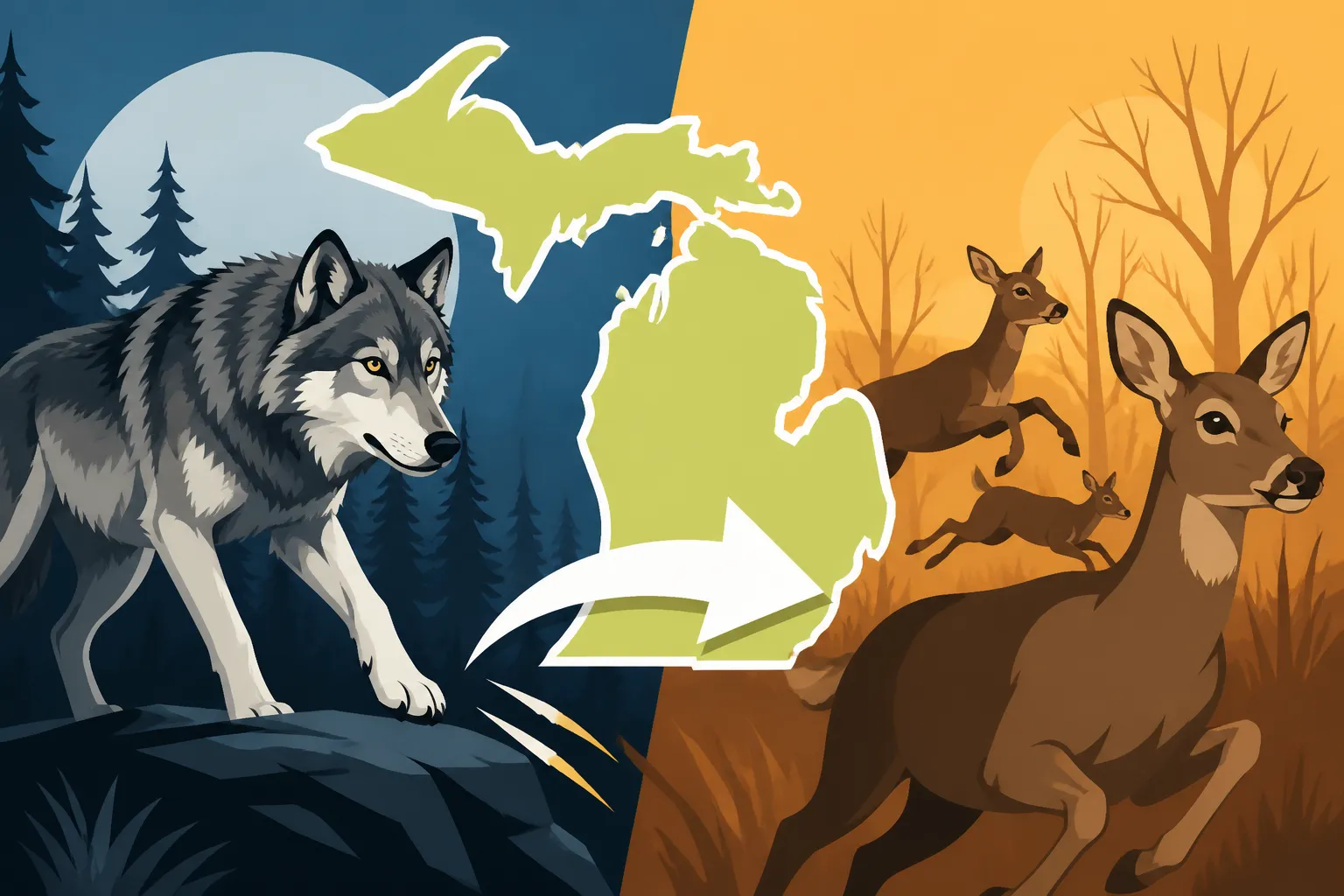
It’s a question that echoes through deer camps and public land parking lots across Michigan, especially as you head north: "Do wolves drive Michigan deer numbers?" Many of us have seen fewer deer in our traditional spots, and it’s natural to look for a reason. This guide is going to dig into that question, separating the whispers from the research, and help us understand the complex reality of how deer populations thrive—or struggle—in a landscape shared with formidable predators like the gray wolf.
The Resurgence of Wolves in Michigan's Landscape
For many long-time hunters, the idea of wolves roaming Michigan's woods is a relatively new phenomenon, at least in recent memory. Yet, their presence is undeniable, and their impact on the ecosystem is a constant topic of discussion.
A Brief History of Wolf Recovery
Wolves were once abundant throughout Michigan, just like much of North America. However, European settlement brought widespread habitat loss and intensive eradication efforts, pushing the gray wolf to the brink. By the mid-20th century, wolves were essentially gone from Michigan, with only a few lingering in the most remote corners of the Upper Peninsula. Their return, largely through natural recolonization from Wisconsin and Canada, began in earnest in the 1980s and 90s, with protected status helping their numbers slowly climb. It’s a conservation success story, depending on your perspective, but it also introduced a significant new variable into the deer hunting equation.
Current Wolf Population and Range
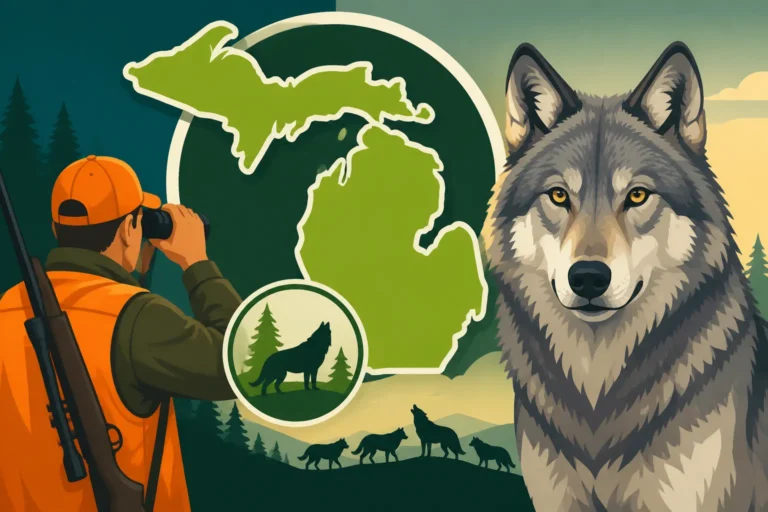
Today, Michigan's wolf population is predominantly found in the Upper Peninsula. While precise numbers can fluctuate and are always a hot topic of debate, wildlife biologists diligently monitor their presence and health. You can easily find information on how many wolves Michigan has through the DNR's resources. While isolated sightings can occur, especially in the northern Lower Peninsula, the established packs and breeding populations are firmly rooted in the U.P.'s vast forests. For hunters in the northern Lower, wolf sightings are still rare enough to be noteworthy, but in the U.P., it’s a reality of the woods. Understanding their core range helps to frame the discussion around their impact on deer, as their presence is not uniform across the entire state.
Understanding Deer Dynamics in Michigan
Before we point fingers, it’s crucial to remember that deer populations are incredibly complex. They're like a giant, intricate puzzle with many pieces influencing whether numbers go up, down, or stay the same. Wolves are just one piece, albeit a significant one in certain areas.
Factors Influencing Deer Populations
When we talk about deer numbers, it’s never as simple as "predator X eats deer, so deer numbers go down." The biggest drivers of Michigan Deer Herd Size, especially in the Upper Peninsula, are almost always habitat and winter conditions. Deer need food, cover, and a reasonable balance of males and females to thrive. If the forest matures and loses browse, deer numbers will drop, regardless of how many wolves are around. Likewise, if a new clearcut comes in, deer might flock to the new growth, artificially boosting numbers in a specific localized area. Diseases, too, can devastate local deer populations, as we’ve seen with concerns like Chronic Wasting Disease and EHD die-offs in other states. Even human hunting pressure and harvest rates play a major role in shaping the deer herd. It's a constant balancing act, and trying to isolate a single cause for a decline or boom is often an oversimplification. Utilizing a tool like GoHunt or Michigan's Mi-HUNT map can help visualize habitat changes over time, offering insights into where deer might be finding the best resources.
The Role of Winter Severity
This can’t be stressed enough, especially for anyone who hunts the Upper Peninsula. Winter is arguably the most brutal, consistent, and impactful predator on Michigan's deer. A long, cold winter with deep snow, often referred to by the DNR as the Winter Severity Index, can decimate a deer herd. When the snow piles up to multiple feet, deer struggle to move, find food, and escape from predators – any predator. They expend massive amounts of energy just to survive, often yarding up in dense cedar swamps where they hope to find some protection and limited browse. These conditions lead to deer starvation and greatly reduce the fawn crop in the spring. We've seen periods like "The 111 Days of Deep Snow in the U.P." that can set a herd back for years. A severe winter directly impacts how many deer survive to breed, and it weakens those that do, making them more susceptible to disease, coyotes, and yes, wolves. It’s a natural culling, but one that leaves a lasting impression on overall deer numbers.
The Hunter's Perspective: A Valid Concern
It’s easy for academics to talk about complex ecological models, but for many of us, the proof is in what we see—or don't see—from our treestand. When you spend countless hours scouting and hunting, changes in deer activity are immediately noticeable and can be incredibly frustrating.
Real-World Observations and Frustrations
I’ve heard it countless times around the campfire, and felt it myself: "The deer just aren't here like they used to be." Hunters often report seeing fewer deer, less sign, and sometimes, direct evidence of wolf kills near their hunting grounds. There's a profound sense of connection to the land and its wildlife, and when that connection feels disrupted by a new, formidable predator, it naturally raises alarms. When you've invested time and money into a hunting trip, only to see fewer deer tracks or hear fewer deer moving, it's demoralizing. These are not imaginary concerns; they are real observations from people who are intimately connected to the woods, often for generations. Some hunters also find that deer behavior seems to change, becoming warier, more nocturnal, or moving out of traditional areas, possibly in response to predator presence. It's tough to adjust your hunting strategy when the landscape itself feels different. A resource like GoHunt can help you analyze harvest data over time, which might correlate with these anecdotal observations, but it won't tell you why your favorite buck just isn't showing up anymore.
Anecdotal Evidence vs. Scientific Data
Here’s where the conversation can get tricky. Our personal observations, while valid and important for understanding local conditions, are considered "anecdotal evidence." They are specific to our experience, our particular hunting spot, and our specific season. Scientific data, on the other hand, comes from broad, systematic studies, population counts, research into deer health, and predator-prey dynamics over large areas and many years.
The challenge is that scientific data, while robust, often doesn't capture the hyper-local, day-to-day fluctuations that hunters experience. A regional deer population might be stable overall according to the numbers, but your favorite 40 acres could be a ghost town due to specific wolf activity, localized habitat changes, or a micro-climate effect from a harsh winter. Both perspectives hold truth, and the disconnect often leads to friction. The key is to understand that both are pieces of a larger picture, and neither completely invalidates the other. Hunters contribute invaluable knowledge from their time in the field, and that information, combined with broader scientific surveys, helps form the most complete understanding of our deer herds.
What Biologists Say Limits U.P. Deer
When you ask wildlife biologists about what truly limits deer numbers in the Upper Peninsula, the answer is rarely a simple "wolves." Instead, they paint a much more nuanced picture, highlighting the interconnectedness of the ecosystem.
The Complex Predator-Prey Relationship
Biologists emphasize that the relationship between wolves and deer is not a simple linear equation. Wolves are incredible predators, no doubt, but they are also opportunists. They generally target the weak, the old, the sick, or the very young. This culling, while tough to witness, can actually keep the deer herd healthier and stronger by removing individuals that might struggle to survive anyway or spread disease. A healthy deer herd, with robust fawns and prime-age adults, is harder for wolves to impact significantly, especially if food and cover are abundant. When the deer herd is already stressed by other factors, however, wolves can certainly amplify those declines. It's a dance where the health and numbers of one species profoundly affect the other, but other partners are always on the dance floor.
Other Predators and Competition
It's easy to focus on wolves because they are large, iconic, and efficient predators, but they're not the only ones influencing deer. Coyotes, for instance, are significant predators of fawns, especially in the spring. Even black bears can prey on fawns, particularly when they emerge from dens hungry after a long winter. These other predators, working in conjunction, can have a cumulative impact on deer recruitment. Then there's competition. When deer densities are high, deer compete with each other for limited food resources, leading to poorer body condition and reduced fawn production. When you combine all these pressures—wolves, coyotes, bears, and competition—it quickly becomes clear that deer face a gauntlet of challenges. You can explore topics like Michigan Black Bear Hunting to understand how other large game animals fit into the Michigan ecosystem.
Habitat as the Overarching Factor
Above all, biologists consistently point to habitat as the primary driver of deer populations. Good habitat provides ample food (browse), secure cover for bedding and fawning, and shelter from harsh weather. If the habitat isn’t there, deer numbers will suffer, regardless of predator presence. Think of it like this: if you build a fantastic restaurant (great habitat), people (deer) will come and thrive. If the restaurant has poor food and shelter, people won't stay, even if there are no competing restaurants (predators).
In the U.P., where timber practices have changed over decades, and forests have matured, suitable deer habitat can be less abundant than it once was. This means less young forest browse and less dense cover that deer rely on. Even in areas with wolves, a strong, regenerating forest will support more deer, allowing both species to coexist more effectively. Scouting Michigan Public Land Before Season with tools like GoHunt, which can overlay habitat data, can give you a better understanding of these dynamics on the ground. Hunters can even become advocates for active forest management that creates more early successional habitat, which benefits deer and a host of other wildlife.
A Summary of Factors Affecting Deer Populations
To help consolidate these complex ideas, here's a quick overview of the main factors influencing Michigan's deer numbers:
| Factor | Impact on Deer Population | Primary Influence |
|---|---|---|
| Habitat Quality | High: Abundant food, cover, fawning areas, shelter. | Direct: Influences food availability, security, and overall health. |
| Winter Severity | High: Starvation, increased vulnerability to predators, low fawn survival. | Direct: Causes energy loss, reduces access to food, increases mortality. |
| Predation (Wolves) | Moderate to High: Focus on weak/sick/young. Can amplify declines in stressed herds. | Indirect/Direct: Removes vulnerable individuals, can impact fawns, shapes behavior. |
| Predation (Coyotes/Bears) | Moderate: Significant fawn predation, some impact on adults. | Direct: Primarily impacts fawn recruitment and survival. |
| Disease (e.g., CWD) | High: Direct mortality, reduced health, long-term population decline. | Direct: Causes illness and death, can spread rapidly. |
| Human Harvest | High: Direct removal of individuals, shapes age structure and antler genetics. | Direct: Regulated by Michigan Deer Seasons and Tags to manage population goals. |
| Food Competition | Moderate: Reduced body condition, lower fawn rates in high-density areas. | Indirect: Limits individual health and reproductive success when resources are scarce. |
So, do wolves drive Michigan deer numbers? The simple answer is that they influence them, particularly in the Upper Peninsula where wolf populations are established. However, to say they drive them is to overlook the much larger, more powerful forces at play: the quality of the habitat, the severity of the winter, and the cumulative impact of other factors like disease and human hunting pressure. Wolves are part of the natural cycle, and their presence adds another layer of challenge and complexity to deer management, but they are far from the sole or even primary determinant of how many deer we see in our Michigan woods. Understanding these dynamics is key to being a more informed and effective hunter, and to appreciating the intricate beauty of Michigan's wild places.
Disclaimer
This article is for general informational purposes only and does not constitute professional advice. Laws, prices and regulations vary by location and change over time. Consult a qualified professional for guidance on your specific situation.