Hunting Divers on Lake St. Clair
For many Michigan waterfowlers, the thought of hunting diver ducks on Lake St. Clair can bring a mix of excitement and apprehension. This massive, shallow lake, often referred to as the "sixth Great Lake," is a world-class waterfowl destination, but its vastness, unpredictable weather, and specific hunting challenges can be daunting. This comprehensive guide will equip you with the knowledge and strategies needed to successfully pursue divers on this iconic Michigan waterway, from understanding their movements to navigating the unique conditions.
Understanding Lake St. Clair's Diver Duck Habitat
Lake St. Clair isn't just a big lake; it's an incredibly rich ecosystem that serves as a vital stopover and wintering ground for a staggering number of migratory waterfowl, especially diver ducks. Its shallow depths and abundant aquatic vegetation create a perfect storm of resources that attract species from across the continent. But to consistently find success, you need to understand why these ducks are here and where they prefer to be.
The Unique Allure of Lake St. Clair for Divers
What makes Lake St. Clair such a magnet for divers like canvasbacks, redheads, and scaup (bluebills)? It boils down to two primary factors: food and shelter. The lake, despite its size, averages only about 10 feet deep, making most of its bottom accessible to diving ducks. This shallow nature allows sunlight to penetrate, fostering dense beds of submergent aquatic vegetation. These plant beds, primarily sago pondweed, wild celery, and various chara species, are like an all-you-can-eat buffet for these ducks, especially the coveted canvasback. They spend their days diving to pluck these plants, stems, and tubers from the lakebed.
Beyond the food, the sheer expanse of Lake St. Clair offers unparalleled sanctuary. While popular access points can see pressure, the lake's vastness means ducks can easily find undisturbed areas to rest and feed, especially when strong winds churn up other sections. It's a place where massive rafts of divers can gather, sometimes numbering in the tens of thousands, offering a truly spectacular sight to those willing to venture out. You'll often see them hunkered down in large bays or protected areas when the weather turns nasty, conserving energy until conditions improve.
Key Habitat Features and Food Sources
When you're out on Lake St. Clair, you're not just looking for open water; you're looking for subtle cues that indicate prime diver habitat. The vast beds of submergent vegetation are the primary draw. These aren't always visible from the surface, especially later in the season when they die back, but knowing where they generally grow year after year is crucial. The Michigan Department of Natural Resources (DNR) and local conservation groups often conduct surveys, and these results can be a goldmine of information for identifying prime feeding grounds.
Another key feature is the varied bottom structure. While much of the lake is mud or sand, patches of harder bottom or slight depressions can hold denser stands of preferred vegetation. These aren't deep holes, but rather subtle changes in depth or composition that create ideal growing conditions. You'll often find birds congregating along the edges of these "structure" changes, or in areas where currents create slight upwellings that keep food sources fresh. Understanding the lake's contours can be greatly aided by modern mapping tools, like those found on GPS units or apps that help you plot your course and identify potential hotspots, much like how many hunters use advanced mapping for deer in the U.P. when exploring unknown terrain. Even general hunting planning tools such as GoHunt can provide useful insights into public access and land features if you apply their principles to waterfowl.
| Diver Species | Primary Food Source | Preferred Depth (Approx.) | Key Identification |
|---|---|---|---|
| Canvasback | Wild Celery, Tubers | 6-12 feet | Long, sloping profile; red head, white body (drake) |
| Redhead | Sago Pondweed, Seeds | 4-10 feet | Rounded head; red head, gray body (drake) |
| Greater Scaup | Mussels, Snails | 8-20 feet | Peak at back of head; purplish-green sheen on head (drake) |
| Lesser Scaup | Insects, Small Fish | 2-8 feet | Peak at front of head; puripurplish sheen on head (drake) |
| Bufflehead | Small Fish, Crustaceans | 2-10 feet | Large white patch on back of head (drake) |
Knowing these preferences helps you narrow down where to set up. For instance, if you're targeting canvasbacks, focus on deeper areas with known wild celery beds. If you're after scaup, don't shy away from areas with abundant zebra mussel beds, a significant food source for them on Lake St. Clair.
Essential Gear and Setup for Diver Hunting
Hunting diver ducks on Lake St. Clair is a different beast than hiding in a cattail marsh for puddle ducks. The open water, potential for heavy seas, and the birds' unique behavior demand specialized gear and a well-thought-out setup. This isn't a place for cutting corners on equipment or safety.
Boat and Blind Considerations for Big Water
First and foremost, you need a capable boat. This is big water, and sudden changes in weather are common. A stable, seaworthy boat that can handle choppy conditions is non-negotiable. Many serious Lake St. Clair diver hunters opt for substantial fiberglass or aluminum boats, often 18-24 feet in length, with reliable outboards. A reliable motor is paramount, and often a kicker motor for backup is a smart addition. Navigation equipment, including a GPS and depth finder, is essential, especially when you're miles offshore and visibility might drop due to fog or snow.
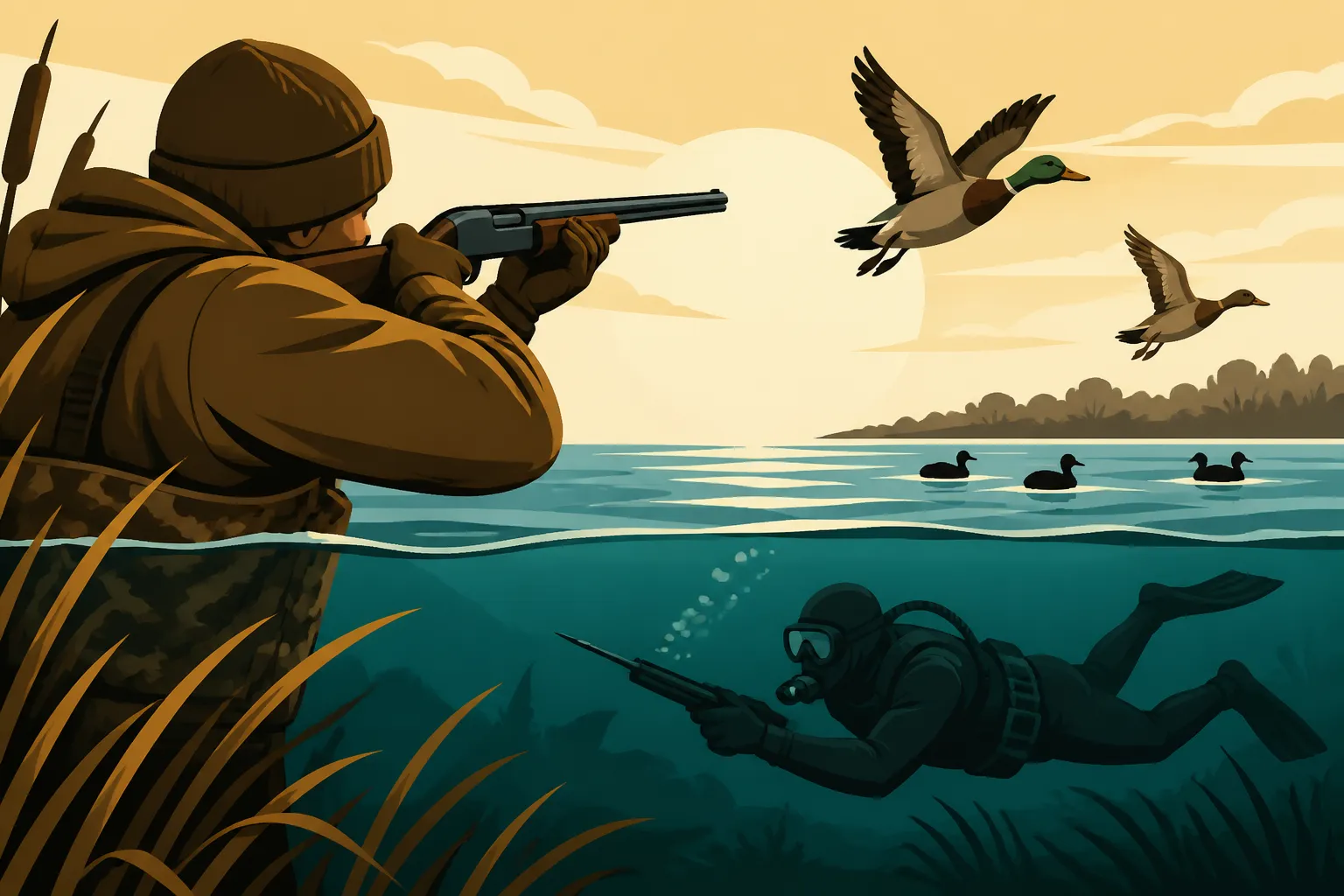
Blind choice is also critical. Layout boats are incredibly popular for hunting divers on Lake St. Clair, allowing hunters to lie flat, almost at water level, making them practically invisible to wary ducks. These specialized boats are typically deployed from a larger tender boat, which carries the decoys and serves as a base of operations. The tender boat then anchors a safe distance away, out of the spread, allowing the layout hunters to work the birds. If you're not using a layout boat, a well-camouflaged boat blind that truly breaks up your outline against the vast expanse of water is necessary. Remember, these birds are used to seeing open water, so anything that looks out of place will flare them. Understanding the nuances of Layout Hunting Michigan Big Water is key to successful diver hunts here.
Decoy Spreads and Calling Strategies
Diver ducks respond well to large decoy spreads. On Lake St. Clair, it's not uncommon to see spreads numbering 100, 200, or even more decoys. The goal is to mimic a massive raft of feeding and resting ducks, creating a beacon that passing birds can see from a great distance. A typical spread might include several long lines of decoys, anchored at one end and allowed to drift with the current or wind, creating a natural-looking flock. These lines often consist of a mix of canvasbacks, redheads, and scaup, strategically placed to create a landing zone in front of the layout boat or blind.
Placement matters. Divers generally prefer to land into the wind, so understanding wind direction and how it interacts with your spread is crucial. You want to create a clear "hole" or landing strip directly in front of your shooting position, where birds feel safe to commit. Many experienced hunters will use confidence decoys like loons or cormorants on the periphery of their spread to add realism, further convincing wary divers that the area is safe. When preparing your gear, consider how you'll manage these large spreads. Decoy anchors, heavy-duty lines, and efficient storage solutions are vital.
Calling for divers is less about intricate melodies and more about volume and consistency. Diver calls, often deeper and raspier than mallard calls, are used to grab attention from afar and then to reassure birds as they approach. The canvasback "burr" and the redhead "purr" are critical sounds to master. On large, windy water, powerful calls are needed to cut through the noise. Don't overcall; a few well-timed calls to passing flocks are often more effective than constant chatter. Just like Rattling Volume in Thick Cover for deer, the right volume and cadence are essential for diver calling.
Navigating Weather, Safety, and Regulations
Lake St. Clair is beautiful, but it's also a serious body of water that demands respect. Safety should always be your top priority, followed closely by a thorough understanding of Michigan's specific waterfowl regulations.
Reading the Water and Weather for Safe Hunting
The weather on Lake St. Clair can change in a heartbeat. What starts as a calm, clear morning can quickly turn into a white-capping gale with blinding snow or fog. Always check multiple weather forecasts before heading out, and pay close attention to wind speed and direction, as these are the primary drivers of dangerous conditions on the lake. Strong winds, especially from certain directions (e.g., northeast or southwest), can quickly build significant waves that make small boats unsafe and layout boats impossible to hunt from.
Beyond checking forecasts, you must learn to read the water itself. Look for changes in ripple patterns, distant whitecaps, or shifts in wind direction. If conditions start to deteriorate, don't hesitate to pull your spread and head for shore. No duck is worth risking your life. Ensure everyone in your party wears appropriate personal flotation devices (PFDs) – not just has them on board. Have spare dry clothing, first aid kits, emergency signaling devices (flares, air horn, VHF radio), and a fully charged cell phone in a waterproof container. A GPS system is not just for finding ducks, it's absolutely crucial for navigating back to safety, especially if fog rolls in. Consider using a dedicated navigation app on your phone or tablet, such as those that GoHunt might recommend for general outdoor use, layering it with NOAA marine charts. Safety on this scale of water is paramount, as detailed in our guide on Big Water Safety in a Layout Boat.
Specific Michigan Regulations for Lake St. Clair
Michigan has a specific set of rules for waterfowl hunting, and Lake St. Clair falls into the state's South Zone for duck hunting seasons. It's imperative to know the exact dates for Michigan Duck Season Dates by Zone, bag limits, and shooting hours. Diver ducks often have their own specific bag limits within the overall duck limit, so be sure you understand what you can legally harvest. For instance, canvasbacks often have a restrictive limit (e.g., two per day), while scaup limits can vary depending on population trends.
Beyond the general duck regulations, there are rules specific to hunting on large bodies of water. For example, hunter orange requirements typically don't apply to waterfowl hunters in boats or blinds. However, remember to display a Michigan State Waterfowl Stamp and a Federal Duck Stamp, and ensure you are HIP (Harvest Information Program) registered. These stamps are critical for funding waterfowl conservation efforts.
It's also important to be aware of any local ordinances or special regulations that might apply to certain sections of Lake St. Clair, especially near residential areas, wildlife refuges, or designated slow-no-wake zones. Respect private property boundaries if hunting near shorelines, and always be courteous to other boaters, anglers, and hunters. Ethical hunting practices, including quick and humane retrieves of downed birds, are expected. Never take more than your legal limit, and always correctly identify your target before pulling the trigger, especially with species that have differing bag limits.
Conclusion
Hunting divers on Lake St. Clair offers one of the most exciting and challenging waterfowl experiences Michigan has to offer. It's a place where you can witness incredible migrations and potentially harvest some of the most sought-after ducks on the continent. By understanding the unique habitat, equipping yourself with the right gear, meticulously planning your spreads, and always prioritizing safety and adherence to regulations, you'll be well on your way to a successful and memorable hunt on this iconic freshwater sea. Respect the lake, respect the birds, and enjoy the unparalleled wild beauty of Lake St. Clair.
Disclaimer
Hunting is an inherently dangerous activity. Always prioritize safety, understand and follow all local, state, and federal regulations, and obtain proper licensing. The information provided in this guide is for informational purposes only and should not replace professional safety training or official DNR publications.