Michigan Bear Season Dates by Unit
Figuring out Michigan's bear season dates can feel like trying to untangle a snarled fishing line – confusing, frustrating, and prone to making you want to just give up. With different management units spread across the Upper and Lower Peninsulas, and specific hunt periods within each, it's easy to miss a critical detail that could impact your bear hunting dreams. This guide is here to break down the Michigan bear season dates by unit, helping you navigate the complex regulations and plan your hunt with confidence.
Demystifying Michigan's Bear Management Units
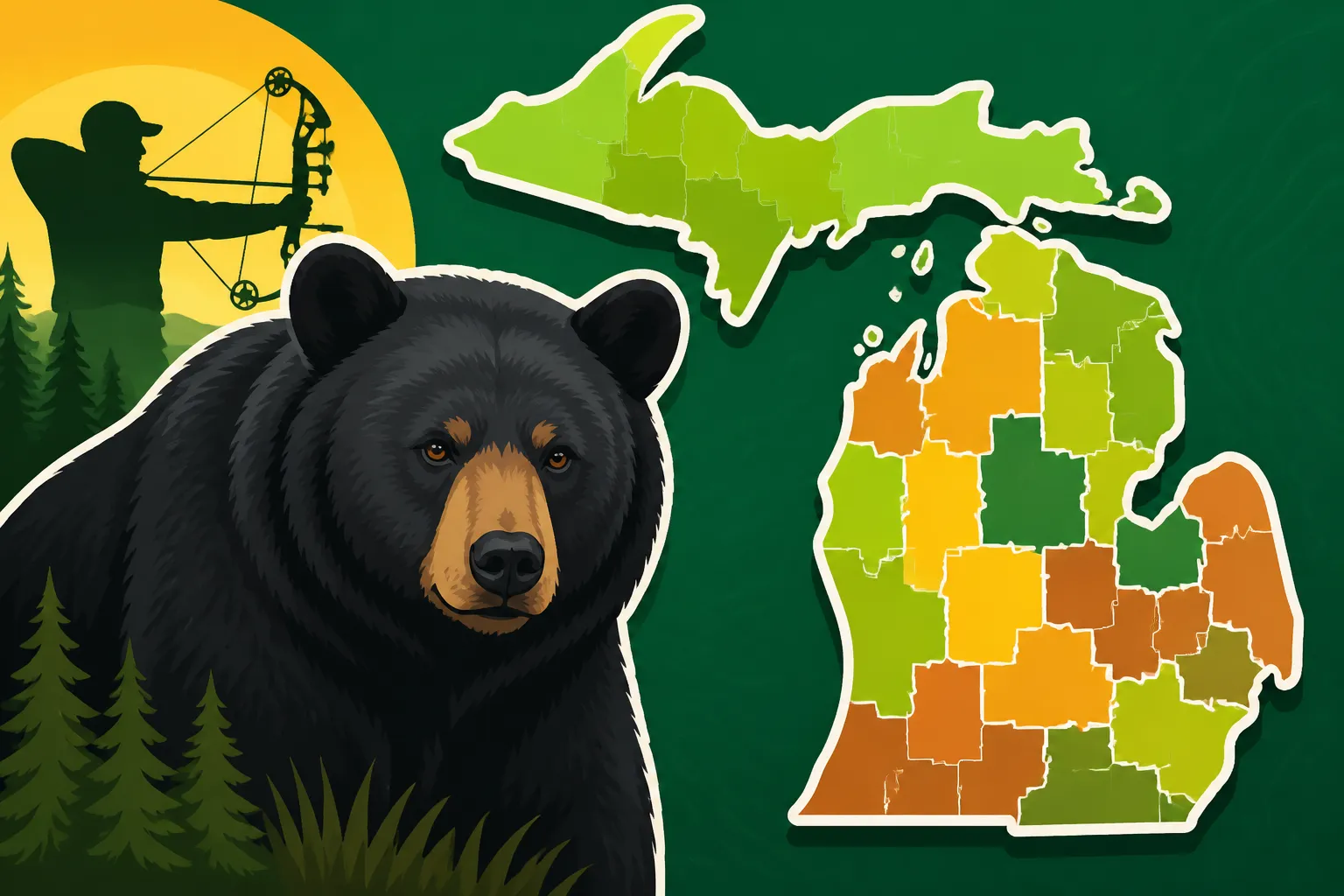
Before we dive into the specific dates, it's crucial to understand how Michigan manages its bear population through what are called Bear Management Units, or BMUs. These aren't just arbitrary lines on a map; they're carefully drawn geographical areas where the Michigan Department of Natural Resources (DNR) sets specific quotas and hunting regulations to maintain healthy bear populations and manage human-bear interactions. Each BMU has its own unique characteristics, bear density, and hunting pressure, which directly influences the number of licenses issued and the length of the season within that unit.
The Rationale Behind Bear Management Units
The concept of BMUs is rooted in sound wildlife science. Bears don't roam uniformly across the state; their populations are denser in certain forested regions, particularly in the Upper Peninsula and the northern Lower Peninsula. If the DNR were to issue a single statewide bear license, it would quickly lead to overharvesting in accessible areas and underharvesting in more remote ones. By segmenting the state into these units, the DNR can precisely manage the harvest in each area, ensuring that the bear population remains robust. This localized approach allows for adaptive management, where quotas can be adjusted based on population surveys, cub production, and hunter success rates in specific units. It’s a complex system designed to keep "Michigan's Black Bear Population" thriving for generations of hunters.
Navigating the Upper Peninsula BMUs
The Upper Peninsula is bear country, plain and simple. It boasts the vast majority of Michigan’s bear population and, consequently, has the most BMUs and license opportunities. These units often correspond to large tracts of state and national forest land, encompassing the dense cedar swamps, expansive hardwoods, and aspen regeneration that bears thrive in. Familiar units like Baraga, Bergland, Escanaba River, Gwinn, Newberry, and Ontonagon are household names among U.P. bear hunters. Each of these units represents a significant block of habitat, and understanding their boundaries – often delineated by roads, rivers, or county lines – is paramount once you draw a tag. Many hunters dedicate significant time to scouting these vast areas, trying to pinpoint ideal bait sites or natural travel corridors, which is a key part of "Michigan Black Bear Hunting". For more on the specifics of these regions, you might look into "Upper Peninsula Big Woods Counties".
Exploring the Lower Peninsula BMUs
While the Lower Peninsula doesn't have the same extensive bear range as the U.P., it still offers quality bear hunting opportunities, primarily in the northern half. Units like Baldwin, Gladwin, Newaygo, and Roscommon are the mainstays for Lower Peninsula bear hunters. These units are often a mosaic of state land, private timber holdings, and some agricultural areas, making for a different hunting dynamic than the vast northern forests. Bear densities might be slightly lower than in the U.P., but the hunt can still be incredibly rewarding. The Lower Peninsula units are typically smaller and sometimes more fragmented, which means hunters often need to be acutely aware of property lines and potential changes in habitat type as they track bear sign. Knowing "Where Michigan Bears Range" can help you understand these differences.
Decoding Michigan Bear Season Dates by Hunt Period
Now for the nitty-gritty: the actual dates. Michigan's bear season isn't a single, continuous block of time. Instead, it's broken down into specific "hunt periods" within each BMU. This staggered approach helps distribute hunter pressure, provides different hunting experiences (e.g., earlier periods might be warmer, later periods colder), and allows the DNR to fine-tune harvest goals by offering more or fewer tags for each period. It also means you need to be extra vigilant when checking your drawn license – it will specify both the BMU and the hunt period you're eligible for.
The Staggered System of Hunt Periods
Generally, Michigan bear seasons kick off in early September and can run into late October, depending on the unit and period. The Upper Peninsula typically has several hunt periods, while the Lower Peninsula might have two or three. Each period has a distinct start and end date. For instance, Period 1 might run for about 10-14 days, followed by Period 2, and so on. This structure gives hunters options, whether they prefer to hunt during warmer weather when bears are more active around bait sites, or later in the fall when cooler temperatures can make tracking easier. This also influences tactics, as hunters might choose different methods, like "Baiting Bears in the Upper Peninsula" for early seasons, or spot-and-stalk tactics as the season progresses.
Current Bear Season Dates Breakdown (Example for 2024)
To give you a clear picture, let's look at how these dates usually shake out. Keep in mind that these dates can shift slightly year to year, so always confirm with the Michigan DNR’s official hunting digests or website once they're released for the current year. I'm providing typical examples to illustrate the structure, as the DNR often combines dates for many U.P. units into longer periods while still managing quotas by sub-periods.
Michigan Bear Season Dates by Unit and Hunt Period (2024 Example – Subject to Change)
| Bear Management Unit (BMU) | Hunt Period 1 (Approx.) | Hunt Period 2 (Approx.) | Hunt Period 3 (Approx.) |
|---|---|---|---|
| Upper Peninsula Units | |||
| Baraga | Sep 9 – Oct 21 | (N/A) | (N/A) |
| Bergland | Sep 9 – Oct 21 | (N/A) | (N/A) |
| Carney | Sep 9 – Oct 21 | (N/A) | (N/A) |
| Escanaba River | Sep 9 – Oct 21 | (N/A) | (N/A) |
| Gwinn | Sep 9 – Oct 21 | (N/A) | (N/A) |
| Iron River | Sep 9 – Oct 21 | (N/A) | (N/A) |
| Newberry | Sep 9 – Oct 21 | (N/A) | (N/A) |
| Norway | Sep 9 – Oct 21 | (N/A) | (N/A) |
| Ontonagon | Sep 9 – Oct 21 | (N/A) | (N/A) |
| Red Oak (U.P.) | Sep 9 – Oct 21 | (N/A) | (N/A) |
| St. Ignace | Sep 9 – Oct 21 | (N/A) | (N/A) |
| Drummond Island | Sep 10 – Sep 16 | Sep 17 – Sep 23 | Sep 24 – Oct 30 |
| Lower Peninsula Units | |||
| Baldwin | Sep 9 – Sep 16 | Sep 17 – Sep 23 | Sep 24 – Oct 26 |
| Gladwin | Sep 9 – Sep 16 | Sep 17 – Sep 23 | Sep 24 – Oct 26 |
| Minden City | Sep 9 – Sep 16 | Sep 17 – Sep 23 | Sep 24 – Oct 26 |
| Newaygo | Sep 9 – Sep 16 | Sep 17 – Sep 23 | Sep 24 – Oct 26 |
| Red Oak (L.P.) | Sep 9 – Sep 16 | Sep 17 – Sep 23 | Sep 24 – Oct 26 |
| Rifle River | Sep 9 – Sep 16 | Sep 17 – Sep 23 | Sep 24 – Oct 26 |
| Roscommon | Sep 9 – Sep 16 | Sep 17 – Sep 23 | Sep 24 – Oct 26 |
Note: For many U.P. units, the dates might appear as one long period, but license quotas are often still tied to "hunt periods" that might not be explicitly listed as separate date blocks on general season summaries. Always check your specific tag and the DNR regulations for clarity. Drummond Island is often an exception with clearly delineated periods.
The Nuances of Hunt Periods
It’s not just about the dates themselves, but what those dates imply for your hunting experience. Early September periods, for example, often coincide with warmer weather, which can affect how you handle a harvested bear and how long you can leave bait active without spoilage. Bears are also actively feeding, trying to put on weight for winter, making baiting a highly effective strategy. Later periods, especially those stretching into late October, can mean cooler temperatures, potentially some snow in the U.P., and bears that are less focused on gorging and more on finding denning sites. This might necessitate different approaches, perhaps focusing more on still-hunting or using "Running Hounds for Michigan Bear" if that’s your preferred method. Every period offers unique challenges and opportunities, and choosing the right one (if you have the choice through the draw) should align with your preferred hunting style and availability. Many hunters use tools like GoHunt to analyze historical success rates for different periods and units before applying.
Applying for Your Michigan Bear License
Knowing the season dates is only half the battle; actually drawing a license for one of these coveted hunt periods in a specific BMU is the other, often more challenging, part. Michigan’s bear hunting is managed through a lottery system, meaning you have to apply and get drawn for a limited number of available licenses. It’s a competitive process, and understanding how it works is key to improving your odds over time.
The Application Process and Preference Points
The application period for Michigan bear licenses typically runs from May to early June each year. You apply for a specific BMU and a specific hunt period within that unit. This is where your strategy comes into play. Do you apply for your dream unit with lower odds, or a unit with higher odds of drawing but perhaps less prime habitat? If you're not drawn, you automatically receive a preference point. These "Michigan Bear Preference Points" accumulate year after year, increasing your chances in subsequent draws. It's a system that rewards persistence, so many hunters apply annually even if they don't expect to draw right away, just to build up those points. The more points you have, the better your odds of securing a tag for a desirable unit and period.
Drawing Odds and Strategic Choices
Drawing odds vary significantly by BMU and hunt period. Units with higher bear populations and easier access (or higher public land availability) tend to have lower drawing odds, requiring more preference points to draw. Conversely, units with lower bear numbers or more challenging terrain might have higher odds, meaning you could draw a tag with fewer points. It's a balancing act between your desired unit and your current number of preference points. For instance, if you have just a few points, you might look at units with higher draw rates if you're determined to hunt bear this season, rather than waiting several more years for a prime U.P. tag. Tools like GoHunt or the DNR's own statistics on "Michigan Bear Licence Drawing" success rates are invaluable for making informed decisions.
What to Do Once You Draw a Tag
Congratulations, you drew! Now the real work begins. First, double-check your license details to confirm the BMU and hunt period you were awarded. Next, immerse yourself in the regulations specific to that unit. Are there baiting restrictions? Specific CWD rules for carcass transport? This is also when scouting becomes critical. Even if you've hunted that unit before, conditions change. Food sources vary, bear patterns shift, and new clear-cuts or logging operations can alter travel routes. Familiarize yourself with the exact boundaries of your unit. Having a solid plan for "Shot Placement on a Black Bear" and understanding "Handling a Bear After the Shot" are also vital steps to ensure a successful and ethical hunt.
Key Regulations and Best Practices for Michigan Bear Hunters
Beyond just knowing the dates and how to get a license, successful and ethical bear hunting in Michigan requires a deep understanding of the broader regulations and best practices. Michigan has specific rules that apply to all bear hunters, regardless of their unit or hunt period.
Baiting and Dog Hunting Rules
Michigan allows the use of bait and hounds for bear hunting, but these methods come with their own set of stringent regulations. Baiting is a popular technique, especially in the earlier hunt periods, but there are rules about how much bait you can use, when you can start baiting, and the types of bait allowed. For instance, you can't use certain materials that might attract deer if you're in a Chronic Wasting Disease (CWD) surveillance zone, or if you're hunting in areas where "Hunting Without Bait in the Lower Peninsula" rules might apply to deer. Similarly, if you plan to hunt with hounds, you must possess a valid hound hunter endorsement, and there are regulations regarding when hounds can be trained and used for hunting. Always consult the current DNR digest for the most up-to-date information on these methods.
Hunter Orange and Safety Considerations
Safety is paramount in any hunting pursuit, and bear hunting is no exception. While bear season often runs concurrently with other hunting seasons, especially archery deer, the general rule is to be highly visible. If you're hunting during a firearm season (even for bear), "How Much Hunter Orange Michigan Requires" is clear: you need to wear at least 50% hunter orange on your outermost layer, visible from all sides. Even if it's archery-only, wearing some orange is a good safety practice, particularly on public land where other users might be present. Always let someone know where you're hunting and when you expect to return. Be prepared for emergencies, especially if you're venturing into remote areas of the Upper Peninsula or the "Northern Lower Peninsula".
Post-Harvest Requirements and Disease Monitoring
Once you've successfully harvested a bear, your responsibilities don't end there. Michigan has specific tagging and reporting requirements. You must immediately validate your kill tag and attach it to the bear. More importantly, you're required to report your harvest to the DNR, often within 72 hours, either online, via phone, or through the "Michigan DNR Hunt Fish App". Depending on the BMU, you might also be required to submit a tooth for aging and potentially a sample for disease testing, such as CWD or Bovine TB, if hunting in an affected area. These mandatory checks provide vital data for wildlife biologists, helping them monitor the health and demographics of Michigan's bear population. Following these rules ensures your hunt is legal and contributes to sound wildlife management.
Disclaimer
Please remember that hunting regulations, season dates, and unit boundaries can change. Always consult the official Michigan Department of Natural Resources (DNR) hunting digests and website for the most current and accurate information before planning any hunting trip. This guide is intended for informational purposes only.